The Splendor Of Moroccan Wine

By: Hanifa Sekandi

shadowed tropical trees

On a robust Saturday afternoon in Morocco, you wander through the souk looking for a stand that brews Maghrebi mint tea. You can feel the history of this land, rich with culture and spirit. Each artisan in this market holds ancient skills, and you know that rare treasures purchased here are indeed worth more than their weight in gold. Time has shown us that sometimes, as people strive for progress, what was once good eventually becomes lost. The souks and riads of Moroc-co allow you to step into the past where time moved slow and living in the moment was the only choice; that life is a series of moments meant to be seized. 

  When we imbibe, sometimes we get lost in the fun, but the true celebration occurs when we al-low our imagination to wander. Time-travel with the fermented grapes of a bottle of Moroccan wine, and ask questions: How did it get across the world to your local wine store? What is the journey and the untold story of the people whose hands brought it to life? Everything created has a story. Allow yourself to get lost in exploration as you travel to northern Africa for the splendor of Moroccan wine.

Slow Growing Vines in the Desert

  Like South Africa, Moroccan winemakers benefit from the favorable weather and terrain. Their proximity to the Atlantic Ocean and high mountains, coupled with cooling trade winds, allow low-lying vineyards to flourish in the foothills of the coastal Atlas Mountains.

  Although Morocco has been making wine for over 4,000 years and is the second-largest producer of table wines in Africa, it does not have a robust wine industry or a history comparable to South Africa. The beginning of viticulture in Morocco originates with the Phoenician settlers who ush-ered in trading colonies. Still, it was not until the arrival of French colonialists in 1912 who brought with them winemaking that the wine industry began to take form. Although this was the start of large-scale wine production, it was not a fortuitous upward venture. The Moroccan inde-pendence in 1956 saw a slump in wine production. When the French left, they took their wine-making expertise, leaving approximately 55,000 hectares of wine unattended. Morocco’s wine industry underwent a significant decline.

  Another roadblock for Morocco’s wines was in 1967 with the introduction of European Econom-ic Community quotas. Now, wines with the label made in France, for example, could not contain grapes from other countries. In turn, this exponentially reduced the exportation of wine to EEC countries. During this time, Moroccan vineyards were unable to thrive, with limited entry to time-honored markets. In addition, surplus production from Mediterranean wine-producing countries made it hard to measure up.

  Further, the infrastructure and the resources needed to scale production like its competitors proved uneconomically feasible for Moroccan vineyards. This led to vineyards planting and har-vesting different crops. In the early 1970s to the mid-1980s, vineyards were taken over by the state, and new protocols further diminished wine production. Additionally, vineyards could not compete due to fixed grape prices that were not determinant on the quality of the grape yielded. Most vineyards were deemed poorly operable due to insufficient production and management.

  The turning point for Morocco’s wine industry began in the 1990s under the rule of the second king of Morocco, Hassan II of Morocco, a graduate of the University of Bordeaux in France. He was known as the peacemaker for foreign relations in northwestern Africa, and, as a result, he parlayed the return of French investments and prowess in winemaking to Morocco. French inves-tors were offered long-term lease agreements for vineyards owned by the state agricultural com-pany. This offer was also extended to other foreign investors who could improve the Moroccan economy with industrious ventures. Tailan, William Pitters and Groupe Castel, well-known Bor-deaux-based wine companies, seized this opportunity and rejuvenated Morocco’s wine industry. It has proven beneficial on the world stage since Morocco’s Boulaouane a Castel is now a best-selling wine in France. Hassan II of Morocco’s efforts have been attributed to the revival of Mo-rocco’s wine industry and becoming the second-largest producer of wine in the Middle East. This accomplishment is worth mentioning given that Morocco is a predominantly Islamist governing country that prohibits the consumption of alcohol and sale of alcohol locally. Wine is sold at ho-tels and restaurants and contributes to keeping up with tourism demands.

What We Plant Grows

  The international wine export industry has helped Morocco gain recognition. France is the top consumer of Moroccan-made wine exports, followed by Belgium and England. There are five wine regions in Morocco, with fourteen AOGs and three AOCs. The difference between AOC, appellation d’origine contrôlée, and AOG, appellation d’origine garantie, is the grape quality control measures utilized. Popular and familiar tourist wine regions are Casablanca, Boulaouane, and Meknes. Since 75% of wine production is red wine, wine lovers will find an array of red grape Rhône varietals. Vin Gris makes up the remaining percentage of wines along with white wine and the beloved Moroccan Rosé. Vineyards grow Syrah, Merlot, Grenache, Cabernet-Sauvignon and the traditional Carignan grapes which once dominated. Other grape varieties in-clude Sauvignon Blanc, Chardonnay and Chenin Blanc. Vin Gris is a greyish-pink-hued wine blended with rosé and white wine.

  A blue-black grape table wine that is indigenous to Morocco is Taferielt. Its origin traces to the Moroccan wild vines that once cloaked the Rif mountains in the sixties. Before pre-phylloxera, where disease plagued vineyards, this vine, called Farrana Noir, could be found in the Balearic Islands. It has yet to make a name for itself but is known by those who visit Morocco. As with all hidden gems, it will have its moment in the sun as Morocco slowly gains recognition in the pres-tigious wine market.

  Wine revelers will note that the cost of Moroccan-made wines is reasonably cheap, but this does not denote the quality. However, some will say that since it is still a burgeoning wine market, people in Morocco are not as discerning about wine as they would be in Europe or North Ameri-ca, where wines are scaled differently.

  Only about 5% of the approximately 40 million bottles produced annually in Morocco are ex-ported. This number is quite eye-opening given the parameters around alcohol consumption in the country. The mystery of who is consuming these wines will only be revealed to those who consume them. That said, this staggering number demonstrates a demand for wine in Morocco even though it is not heavily promoted within the country. It could be a new generation of wine consumers, similar to Germany, where millennials are reviving the viticulture landscape. Those who study abroad return home with a palate that enjoys a glass of wine when dining. Further, they recognize that Morocco houses vineyards with delightfully good wines.

  The stories of Moroccan vineyards are waiting to be told. It is the people who own the land and are responsible for bringing the wine to life who hold what is still unknown. These vineyards are more than just land that grows vines. They demonstrate that what we plant grows, and growth is painful yet beautiful.

Notable Moroccan Wines Domaine des Ouled Thaleb Estate

Zenata Rosé – Domaine OTB

    Zenata Rosé – Domaine OTB is a crisp and refreshing plump cherry and cranberry wine with floral notes. It is made by the Domaine Ouled Thaleb Estate, the oldest and most well-known winery in Morocco. Established in 1923, the winery is named after the tribe that works the winery and owns the land. The composition of this concrete tank-fermented rosé is 30% Syrah, 20% Cinsault and 50% Grenache. This vineyard, known for its exceptional rosé, is located in the northeast Casablanca wine region.

Les Celliers De Boulaouane

Thalvin Boulaouane Vin Gris

  Vin Gris is a popular wine that is a beautiful blend of Cabernet Sauvignon, Cinsault and Grenache. This is an airy, refreshing wine with floral notes and hints of fresh berries that remind you of hot summer days. Smooth caramel, citrus and honeysuckle notes provide a nice overall finish. This is a popular Moroccan wine for tourists.

Winery Bonassia

Bonassia Cabernet Sauvingon

  Fruity, sweet, and warm with a hint of spice is the   best way to describe this smooth, rich red wine. It pairs well with flavorful Moroccan dishes such as Tagine. Aromatic notes of nutmeg and vanilla enhance the flavor of spices without overpowering the palate.

Barrel Sanitation: All Methods Are Not Created Equal

By: Gerald Dlubala

4 barrels smoked

Quality winemaking requires quality ingredients. Nothing new, you think. No big revelation there, you say. You take great care of your vineyard, with constant attention to the vines, fruit structure and soil. Your timing is just right for pruning, harvesting and the winemaking process. Then, after meticulously planning and carrying out the harvest, crush and fermentation with precision instruments and experience, it’s time to put that product into the barrels for aging.

  Are you as meticulous with your barrels? Even though grape quality is the main attribute in producing quality wine, there’s no doubt that cooperage is an expensive component in wine production, always coming in near the top of the expenditure list. Wooden oak barrels are challenging to clean and sanitize because they are, by nature, part of a living organism that is porous and layered. Combine this with a small access point, and you have an environment that is susceptible to micro-organisms that cause spoilage, with Brettanomyces being the primary concern.

  Often labeled as a winemaker’s biggest sanitation headache, Brettanomyces is a type of yeast found in nearly every stage of the winemaking process, from the grape skins to the barrels. It can be challenging to control or eradicate because it grows into the barrel wood and becomes hidden. Brettanomyces seldom reveal themselves during the fermentation process but rather prefer to flourish during aging. Some winemakers claim that a low level of Brettanomyces can give wine desirable characteristics, but any more than that will ruin the whole batch.

  In-barrel wine spoilage and short barrel life are problems facing the wine industry. Under the best conditions, wine barrels require a routine maintenance regimen to control taste- and aroma-fouling bacteria in affected barrels and keep them from taking over new, unaffected barrels.

Steamericas: Blending Science With

Eco-friendly Process

  “Winemakers should clean and sanitize their barrels absolutely after every use,” said Yujin Yoo Anderson, General Manager of Steamericas. “By sanitizing with a dry steam process, you can simultaneously sanitize and hydrate them to prepare them for their next use. The same goes for breweries and distilleries when hydrating vats or foeders before filling them.”

  Anderson told The Grapevine Magazine that there are many reasons that a sanitation program using dry steam is preferable over the lesser effective traditional methods.

  “The eco-friendliness aspect is always a priority,” said Anderson. “But ultimately, science has taught us that high heat effectively kills unwanted organisms. Dry steam, a gaseous state of boiled water above 212 degrees Fahrenheit, can penetrate barrel’s staves up to eight to nine millimeters depth and deliver high enough heat to remove Brettanomyces, which grows into the wood and is particularly hard to remove using other traditional cleaning methods. Additionally, there are quantifiable operational benefits to using dry steam sanitation for your barrels as well. Less water use means less time filling the barrels and less water and treatment costs. Dry steam uses as little as half a gallon of water per barrel in the entire sanitation process. Using dry steam is the quickest and most thorough way to sanitize a barrel, and it’s also a popular method to swell or rehydrate wooden barrels for not only wineries but also breweries and distilleries.”

  Anderson said that Steamericas’ Optima steamer uses only about a half-gallon of water to rehydrate and sanitize a barrel, and it accomplishes this in just a matter of minutes. The lack of wastewater production and the elimination of chemicals allow wineries to comply with the Clean Water Act.

  “The biggest challenge of using dry steam for your sanitation process is the upfront investment along with having enough power source,” said Anderson. “We typically recommend an 18kW steamer or higher for winery applications, requiring a three-phase power with preferably 480V. Wineries with 208-230V will need much more amperage. This type of investment may not make sense for a micro-winery with lower production rates and no bottling line. But to help offset the cost, a dry steamer with the proper accessories can serve as a winery and vineyard pressure washer without the wastewater runoff to clean equipment, fermentation tanks, floors and facilities, and whatever else needs a thorough cleaning.”

  Steamericas’ Optima steamer can be used as a stand-alone cleaning station to sanitize two barrels simultaneously. For more extensive facilities, the Optima can be paired with an automatic barrel washer line and loading system to clean and sanitize four barrels at a time. Maintenance largely depends on the facility’s water quality. Softened water is a must, meaning water treatment may be necessary for some instances. Steamericas sells and services their equipment through local distributors, but the machines come with display screens for real-time communication, so remote service is available if needed.

The Hot Water Treatment

  Hot water treatments using water heated to 85 degrees Celsius for at least 20 minutes have proven to effectively clean oak barrels and remove the acetic acid bacteria, Brettanomyces and yeast from the wood surface down to a depth of five to nine millimeters. The disadvantage of using hot water exclusively is the amount of time spent filling the barrels, the amount of water used and the resulting amount of wastewater produced.

Specialty Chemicals Can Harbor Hidden Expense

  Some sanitation methods for barrels require the use of specialty chemicals. One of the most popular chemicals for barrel sanitation is a Sodium Bisulfite solution mixed with a specific recommended amount of citric acid solution. It’s added to a barrel with water, sealed tightly, and then agitated, so the solution comes in contact with all interior surfaces. Next, the barrel is drained, thoroughly rinsed, filled with fresh, clean water and left to soak overnight. Several more rinses are needed before the barrels are ready for use, so the time and labor required for this method may be a deterrent as a standard sanitation method.

Aggressive Sanitation Methods Include Barrel Deconstruction

  Dry ice blasting and shaving of the inner surface area of the barrel can be effective but require at least partial deconstruction of the barrel, resulting in a time-consuming, expensive process. These aggressive processes also strip the barrel of any oak flavors and other qualities built up from prior use. As a result, the barrel becomes neutralized and no longer imparts flavor to the wine. Some winemakers use neutral oak barrels intentionally, depending on the winemaker’s goals. Still, continued use of these more aggressive sanitation methods naturally decreases the number of times a barrel can be sanitized.

Bubble-tech gmbh: High Power Ultrasound Sanitization Retains Barrel History and Integrity

  “The location of viable micro-organism cells within any barrel environment determines their chances of survival,” said Darren Bates of Bubble-tech gmbh. “Populations located within the arc of the barrel between the head stave and bilge have the greatest opportunity to survive and proliferate. Our studies show that applying high pressure or hot water sprays to the interior of barrels does not completely inactivate Brettanomyces cells. Methods like power washing, scraping and blasting destroy the toasted oak aroma compounds formed and retained in the toasted layer of a barrel. When using High Powered Ultrasound, a sonotrode gets inserted into the barrel with a small amount of heated water. The barrels are cleaned and disinfected in five to 13 minutes with no need for additional chemical rinses and using minimal energy consumption. HPU has also shown to better retain the organoleptic properties that are present over other cleaning and sanitization methods.”

  Bubble-tech gmbh specializes in using ultrasonic technology in industrial processes for beverage industries, including cleaning, sanitation, extraction and defoaming methods. Bates has extensive experience providing industrial ultrasonic technology and solutions for the wine industry, successfully cleaning and sanitizing oak barrels ranging from one through seven years of age.

  “In terms of how long we can extend the life of a barrel, on the conservative side, I would say two years as a minimum, but realistically it could go up to four years with an HPU cleaning frequency of one-to-two-year intervals. The HPU sanitation procedure has been successful in eliminating tartrates and reducing and removing viable cells of Brettanomyces while preserving the toasted oak qualities that winemakers desire in their red wines.”

  The advantages of using a clean technology like HPU for barrel sanitation include consistent and repeatable results with no chemical residue that reduces sulfur dioxide and taint-causing or hazardous chemicals while lowering labor, energy and barrel costs.

Not All Barrels Are Salvageable

  Dr. Bates told The Grapevine Magazine that infections of barrels with spoilage micro-organisms like Brettanomyces could have a marked influence on whether a winemaker can reuse a barrel. By using HPU, he hopes to extend barrel life by effectively removing tartrates, solid residues, micro-organisms, biofilms and taint compounds from surfaces and pores, and also removing anthocyanin pigments that Brettanomyces can break down.

  “Additionally,” said Anderson. “If a barrel wasn’t stored properly and the gaps between staves are beyond repair with swelling, or the labor and time spent to sanitize an affected barrel outweighs the cost of a new one, then it may be time to call it quits and make it into a cool souvenir.”

Choose Environmentally Friendly Options

  “Mainly, you want to consider the amount of water used, the resulting wastewater that will require treatment, and the potential side effects to humans and the environment of any chemicals used,” said Anderson. “While ozone is a powerful sanitizer, it can adversely affect humans in contact with it before it’s dissolved in water, causing nausea, headaches and respiratory issues. Mainstream methods of barrel sanitation tend to use a lot of water and chemicals that need treatment to lower the Biological Oxygen Demand before disposal.

  Water with a high BOD level means less available oxygen for aquatic organisms, potentially stressing and killing them. A typical Burgundy barrel holds 60 gallons, and a medium-sized winery could have thousands of these barrels in use. Imagine how much water and ecosystem you could save if you do not have to fill the barrels to capacity to sanitize them. It’s easy to see that the sanitation method that you choose as a winemaker is important.”

Final Notes

  When using any sanitation method, it’s crucial to include a barrel inspection. Even under optimal conditions, the best sanitation practices can produce side effects, ranging from the production of unwanted byproducts, some of which may be corrosive, to causing damage to already degrading rubber fittings, gaskets and some metals.

Conquering Vineyard Diseases From Root to Fruit 

By: Cheryl Gray

hand inspecting grapes using magnifying glass

Vineyards are constantly on alert for bacteria and fungi, both of which can cause debilitating diseases––persistent threats to an otherwise healthy grape crop if not put in check right away.

  The names of these culprits sound ominous. They include black rot, grapevine trunk diseases, powdery mildew, Phomopsis, Phylloxera and Botrytis bunch rot. They are as intimidating as they sound, causing damage to plant roots, trunks, branches, leaves and ultimately, grapes.

  Madeleine Rowan-Davis, a senior viticulturist for Atlas Vineyard Management of Napa, California, describes the challenges of the vineyards in her region and throughout the country.

  “I don’t believe there is a grape grower in the U.S. that does not have a fungicide plan in place for prevention of powdery mildew. After powdery mildew, the next biggest culprit we deal with in wine grapes is Botrytis or grey mold. Botrytis grows under damp conditions and can damage the flowers during bloom, reducing yields; and also [damage] the nearly ripe fruit following heavy dew events or pre-harvest rain. It is absolutely crushing to spray all season preventing powdery mildew and then lose fruit right before harvest to bunch rot caused by Botrytis.”

  Almost anything that is not in a grower’s control, things like insects, weather and other environmental factors, can introduce bacteria and fungi to vineyard plants and, in turn, thwart a grape crop before it even starts. 

  On the flip side, experts say that some growers can unintentionally promote the growth of bacteria and fungi by doing what most consider routine tasks. For example, some industry experts caution that repeatedly using the same chemical treatment can lead to bacteria and fungi resistance, eventually rendering that treatment ineffective. Another problem is deploying flood irrigation, which promotes the growth of fungus-like powdery mildew and other culprits that feed on humidity. Still another practice is fall clean-up. After harvest, some growers use fertilizer and water as a clean-up spray. But just because there are no grapes around doesn’t mean that bacteria and fungi are absent. If growers aren’t careful, the practice of fall clean-up can create the perfect breeding ground for fungi and other pathogens. 

  Among the best at helping grape growers protect their fruit is Suterra, a global leader in the industry. In business for more than 30 years, the company produces hundreds of products used in growing regions across the globe, including more than 400,000 acres in California.

  Suterra’s state-of-the-art facility in Bend, Oregon, combines all aspects of its business under one roof. Research and development, product engineering, manufacturing and the company’s signature, large-scale pheromone synthesis work seamlessly to create innovative weapons for vineyards to use in guarding against damaging invasions of disease and fungi.

  Emily J. Symmes is Senior Manager of Technical Field Services for Suterra. She gives an overview of the major disease and fungi threats to vineyards.

“Some examples of common fungal diseases that are often considered perennial threats, meaning that they may appear each year and require some degree of management, are powdery mildew and Botrytis. While significant negative impacts can occur due to these types of infections, the spread of virus diseases in a vineyard is often more concerning.”

  Suterra partners with trial collaborators each growing season to innovate and continuously improve its products based upon what growers need. Its CheckMate VMB-F sprayable pheromone is now on the California Certified Organic Farmers list of allowable products for use by organic growers. The company also works with growers to tailor and improve dispenser design, longevity and ease of deployment. Suterra is currently working on a new type of dispenser for the vine market. According to the company, testing this latest innovation has produced favorable results from growers. 

  Symmes shares best practices on how vineyards can lessen the impact of disease and fungi on their plants and fruit. In many cases, she says, it’s virtually impossible to avoid them all. Rather, she cautions, mitigation is the operative word.

  “With the more perennial fungal pathogens, a number of factors can contribute to the severity of the problem. These are largely driven by weather conditions and microclimate factors within the vineyard canopy structure. Because of this, there are often cultural methods that can be implemented to discourage fungal growth. In addition, there are fungicides that, when applied properly and at the appropriate times, are effective at preventing severe damage. When it comes to viruses, unfortunately, there are no curative treatments. The goal then becomes preventing virus introduction and minimizing spread.”

  According to a study funded by the USDA and conducted by the University of Massachusetts Extension Plant Diagnostic Lab, one of the worst diseases for vineyards is the Grapevine Leafroll Associated Virus complex. While this virus has variations, all of them cause the dreaded symptoms of grapevine leafroll disease. Experts say its impact hits vineyards from California to New York state.

  Dr. Symmes describes Suterra’s products and how they function to protect vineyards from bacteria and fungi, some of which are carried from vine to vine by insects.

  Suterra manufacturers CheckMate VMB-XL, a membrane dispenser, and CheckMate VMB-F, a sprayable microencapsulated formulation. These products target vine mealybug, a highly efficient Grapevine Leafroll-associated Viruses vector. The active ingredient in both products is synthetic replicas of the vine mealybug’s sexual reproduction pheromone.

  By hanging VMB-XL dispensers or spraying VMB-F microcapsules, the natural ability of males to find females to mate is inhibited. These solutions limit reproductive capacity, lower populations, reduce direct crop damage caused by the pest and minimize the potential spread of GLRaVs.

Vine mealybug also produces large amounts of honeydew as a byproduct of their feeding. Sooty mold, another fungal pathogen, uses the honeydew as a substrate for development and can cause grape bunches to be unmarketable. By controlling VMB, the impacts of sooty mold can be avoided.

  ORCAL is another Oregon-based company specializing in industry-leading products that help vineyards develop best practices for protecting their grapes. The company was founded in 1997 and is located in Willamette Valley, a major agricultural region and home to a number of world-renowned vineyards.

  ORCAL promotes crop protection and sustainable farming through aggressive research and development, continuous education and innovative technology. It promotes its products as industry-leading and prides itself on building and maintaining integrity with its business clients and associates. Its services range from custom formulations to product packaging.

  One of the company’s game-changing products is Lime Sulfur Ultra, which is described as a three-in-one product, making it a viable weapon in the fight against vineyard diseases caused by bacteria and fungi. Thomas Putzel is Territory Manager for ORCAL. He describes how his company reinvented the use of an old-school method, transforming it for today’s needs.

  “When most people think of lime sulfur, they think of the high rates and that they are only safe to use during the dormant period. That might have been true 100 years ago with the older technology. This is not the case with Lime Sulfur Ultra. The reduced rates have many benefits—first, the fewer chemicals of any kind we are using, the better, including organic chemicals. Lime Sulfur Ultra is every bit as effective at controlling all the same pests as traditional lime sulfurs with a fraction of the rate. This reduces the carbon footprint and resources needed to control a wide host of pests plaguing growers today. Also, it isn’t just a fungicide; it is a miticide and insecticide as well. When we are able to do more with less, that not only has an impact on our environment but also a grower’s budget and bottom line.”

  For growers who want management services to mitigate the threat of disease in their vineyards, there are companies like Atlas Vineyard Management. As the firm’s senior viticulturist, Rowan-Davis says the responsibility to protect vineyards from disease is year-round, including guarding against the pests that can spread disease.

  “For each of our farming clients, we provide a pre-season customized chemical application plan and then support that plan in-season with our scouting service. This allows us to respond to seasonal shifts as well as new pests as they arrive. In some cases, our customers are very involved in these decisions, while in others, we simply act and do what is needed to produce high quality, clean fruit for harvest.”

  As there is no cure for many of the diseases caused by bacteria and fungi in vineyards, a plan of defense is key to fighting this ever-present danger. Clean planting, early treatment and strategic planning to thwart ingredient resistance are essential tools in minimizing the threat of vineyard disease.

Vineyard Equipment Reflects an Efficient, Organic & Multi-Functional Future

By: Gerald Dlubala

crop tractor in motion

Standard vineyard equipment is needed to work the ground around and in between rows and work above ground on the vine structure and leaf canopy. However, specialized machinery can be expensive. Rather than trying to afford and find space for each implement, tow-behind implements offer savings on storage, maintenance and downtime costs. Recently, equipment manufacturers and vineyard managers have started to realize that the wave of the future is efficient, easy-to-use, multi-function equipment that attaches to a tractor and may already be in the vineyard’s back yard.

Rinieri Delivers Innovation in Multi-Functional Equipment

  “When we talk to our customers, 90% say that in future purchases, they’ll look for equipment and tools that are efficient, multi-functional and easy to operate,” said Grant Allen, the current North American distributor for Rinieri equipment. “Orchard and vineyard owners drive our market and let us know what they want, and we do our best to satisfy that need. With our line of multi-functional equipment, all sizes of vineyards now have options that can save time, money and the cost of being short of labor at critical times. Upkeep on vineyards is time-sensitive. That, combined with record labor shortages, and there is a definite benefit to owning multi-function implements that can be used, maintained and switched out by a single user.”

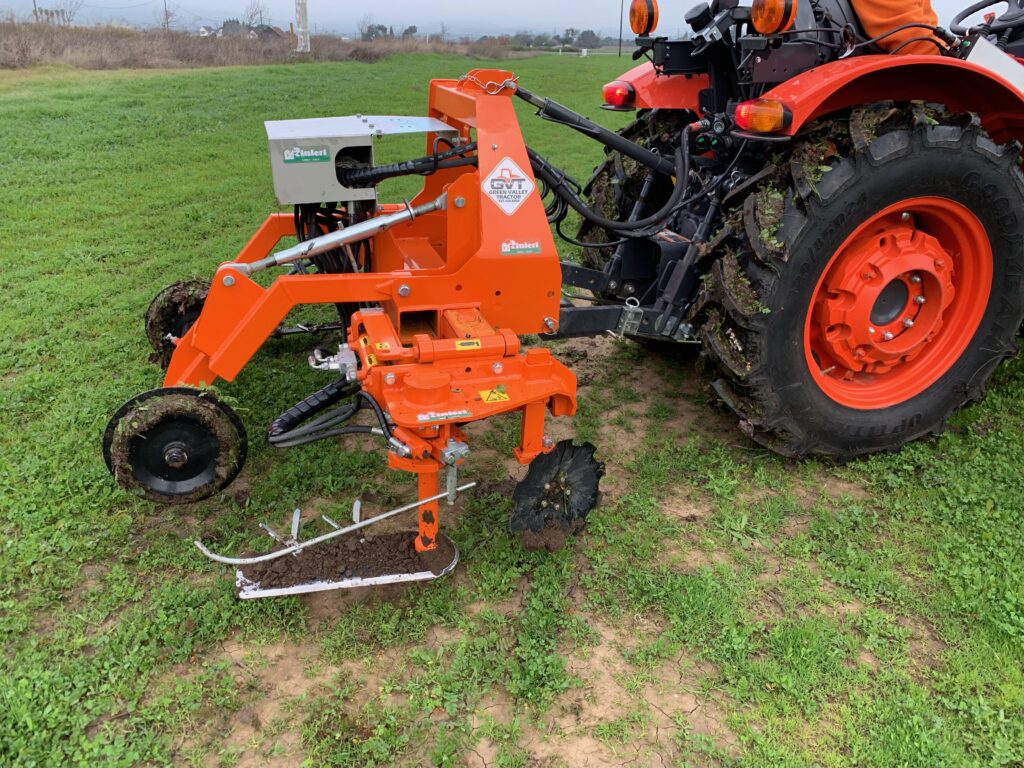
  Rinieri has spent over 100 years as a family-run manufacturer of innovative orchard and vineyard equipment. It offers a Turbo EVO line as just one way to accommodate consumer demand for multi-use, easy-to-operate equipment. Its other most popular implement, the Bio-Dynamic, is exceptional at fast weeding–up to seven mph–in between rows in orchards and vineyards. Rinieri multi-tools feature three-point hitch hookups and dual control adjustable hydraulics that maneuver the equipment in an inward and outward motion, offering increased speeds, performance and time savings over standard single hydraulic systems.

  “With the option of having interchangeable heads, vineyard managers get access to all the tools they need to do their mowing, cultivating, weeding, discing, plowing, sucker removal and more,” said Allen. “Smaller producing vineyards can start with the basics, maybe just the one or two heads that they use most often and add other heads if needed. Rinieri designs their equipment to be used with your current farm tractors, but if you don’t have the hydraulic capability on your current equipment, they can help with that as well.”

  Allen said that a significant advantage of using Rinieri’s multi-tool equipment is the ability of the vineyard to move into a more organic way of farming.

  “Organic farming practices are the future. Consumers have become invested in purchasing from organic producers, so vineyards must move to meet this demand. Our tooling helps alleviate the need for chemical use. With access to multiple implements to help maintain the vineyard, the pressure and need to use chemicals lessens. Organic farming practices are a major trend that is not going away. Consumers are looking for organic capabilities in their major purchases, so equipment designers and manufacturers have to respond.”

Optimizing time with efficiency: Tillage Management, Inc

  Typically, vineyard managers look to tillage equipment in the fall or early spring for working the ground and incorporating any cover crops into the soil. By offering implements that can perform the required operations without multiple passes over the area, Tillage Management Inc’s Project Manager Kat Coombes said that they save the vineyard owner time and money by increasing efficiency and ultimately spending less time in the fields.

  Comprised of working farmers and engineers, Tillage Management Inc. is a relative newcomer to the vineyard implement market, offering high quality, heavy-duty, multi-functional tillage implements for farms, orchards and vineyards. Their Optimizer one-pass tillage system combines disc and chopper blades to clear cover crops, uproot weeds, maintain level soil and keep berms clean using one-pass efficiency. A newer addition to their line-up, their chisel roller CR-series, works to break up soil compaction and leave a level working surface in the vineyard. Their heavy-duty equipment incorporates multiple operations in one pass, reducing labor, time and fuel use. Additionally, reducing the amount of tillage is key to preventing moisture loss and topsoil loss from dust. Tillage Management Inc has earned EPA certification for dust reduction with their equipment and offers a rental program for smaller vineyards that don’t need or require full-time ownership of their implements.

  “As working farmers, we know the benefit of equipment that is operator-friendly and time-saving,” said Coombes. “Both our Optimizer and CR series can be adjusted, hooked up and operated by a single user. We offer minimal adjustment points, maintenance-free bearings that limit the number of grease points, and larger than standard disc blades, 28 inches over the standard 22 to 24-inch blade. In addition to cutting down the number of passes an operator must perform, the larger disc blades are an advantage to the steadily growing organic farming sector. More farmers realize the benefit of growing cover crops to reduce the amount of spraying needed for pests. Those pests naturally get drawn to more and larger cover crops. Then, those cover crops are incorporated into the soil easier and more efficiently using our larger disc blades and one-pass system.”

  To get a timely return-on-investment benefit on Tillage Management’s high-quality, low-maintenance equipment, Coombes recommends its equipment for vineyards of at least 100 acres. Still, she wants vineyard owners to know that they will be investing in equipment that will last for decades and operate downtime-free when needed.

  “With the move toward automation and efficiency, investing in quality, labor and time-saving devices in the area of both maintenance and usage is an important consideration that all farmers should look for in any equipment or tooling purchase,” said Coombes. “As the trend towards organic farming continues to grow, companies like ours will continually be offering designs and equipment to support a more organic approach. It’s the best way to serve our customers.”

Put a charge into your spraying: On Target Spray Systems hits the spot

  Vineyard owners generally spend money on their most-used equipment, which indicates the importance of that task. For many vineyard owners, that means an efficient, reliable, quality sprayer, and Oregon-based On TARGET Spray Systems has long been the leader in electrostatic sprayers for all agricultural needs. Among their current offerings are newer, more compact units with either 50- or 100-gallon tanks, with the larger size allowing an operator to treat up to five acres without requiring a refill. In addition, the units feature reliable Honda motors and can be attached to or pulled by small tractors, ATVs or even side-by-side equipment that most vineyard owners already own.

  “They’re extremely valuable to a vineyard owner,” said Willie Hartman, President and owner of On Target Spray Systems. “With an outside tire-to-tire width of only 48 inches, the operator can apply the spray in either a single or double row application, even in tight rows, meaning less time in the field, less soil compaction, and less water and solution use. With winemaking trending toward a more organic future, it’s even more important to have a sprayer that provides complete, 360° contact coverage to keep the spray on the plants, not on the ground. On Target’s 360° underleaf technology provides precise delivery of foliar feeds and biorationals, uniform coverage and faster drying time with lower spray volume.” 

  Hartman told The Grapevine Magazine that using contact materials rather than systemic variations is critical with organic gardening, so it’s essential to get complete coverage that keeps the materials on the plant and off the ground. On Target’s sprayers are designed and manufactured with proprietary electrostatic technology that provides comprehensive coverage, including the undersides of the leaves and within the clusters, while using less water and materials. Their spray booms can be adjusted and turned on and off individually as needed. In addition, standard-equipped onboard rate controllers and GPS modules automatically adjust to the driver’s speed and location, slowing down or speeding up the spray rate and volume to keep it at the preferred level, creating a superior consistency in coverage.

  “A standard sprayer uses 100 gallons per acre sprayed, whereas our electrostatic sprayers will use 20 gallons over that same area,” said Hartman. “So we can spray 10 acres on a 200-gallon tank sprayer versus only two acres when using a standard sprayer. That’s an immediate opportunity to save money on water use. Add in the time saved with fewer return trips to refill the tanks, less overall material to spread, less time spent on the tractor, less money spent on fuel, and the advantages of electrostatic sprayers keep piling up. Environmentally speaking, by using less water and concentrated spray, electrostatic prayers result in less runoff, minimal drift and improved chemistry coverage, all essential aspects for moving away from systemic treatments and into a more organic way of farming.”

  With increases in sprayer use comes increases in sprayer maintenance. Hartman said that it is obvious to look for quality, serviceable parts when purchasing a sprayer. Still, as a consumer, you should also look for sprayers offering onboard solutions to make your daily job easier and more manageable. 

  “One of the most important maintenance issues with sprayers is rinsing after use,” said Hartman. “On Target’s sprayers feature onboard rinsing tanks that are accessible with the flip of a switch. In addition, all the components needed for droplet charging in electrostatic spraying, including the liquid, air and the 12-volt power source, are on board and separately enclosed.

Getting All Misty: A1 Mist Sprayers

  Mist sprayers are another option for vineyard owners. Versatile enough to apply insecticides, herbicides and fungicides throughout the growing process, misting sprayers send your spray applications to the target, both on top and underneath the leaf structure. Foliar feeding is beneficial for several reasons, including when insufficient fertilizer exists, rapid or accelerated growth is wanted, the nutrients are locked in the soil or soil temperatures are not conducive to using the applied fertilizer. Foliar feeding gets absorbed and utilized quickly, starting within minutes of application and completed, with most nutrients, within one to two days.

  “A1 Mist Sprayers enable you to create spray barriers to help not only your vineyard crops, but also your livestock and feedlots, and truck farming crops,” said Jon Kulzer, A1 Mist Division Manager. “Our units utilize a high-velocity air technology system that enhances coverage while using 90% less chemical and 50% less water. The two-way volute gets pumped through nozzles into the created air stream, creating a fine mist solution specifically designed to allow the operator to reach the preferred target areas on each side of the sprayer in one simultaneous action.”

  A1 Mist Sprayers can work with the equipment that a vineyard already utilizes, including tractors, trucks, ATVs and side-by-sides, so finding a unit to fit your needs is never an issue.

  Kulzer told The Grapevine Magazine that any grower needs access to a cost-effective, versatile and user-friendly sprayer in today’s market. A1 Mist Sprayers feature powder-coated frames for chemical resistance and easy calibration systems, with the ability to spray from 100 to 800 micros and reach an 18-foot vertical pattern. Additional options include a backflush feature available on some units, making switching between applications quick and easy.

Pros, Cons & Best Uses For Various Winery Tanks

By: Alyssa Ochs

huge winery tanks in a facility

The cost of winery tanks tends to increase each year and can be heavily taxed in certain situations. So, it is wise to do your research and stay up-to-date about what types of tanks are available, effective and trending. Choosing a winery tank may seem straightforward enough, but there are a lot of factors and considerations to keep in mind before making a purchase.

  Various types and styles of tanks are available to wineries today based on size, material, and function. Fortunately, there are businesses specializing in tanks and tank-related products for the wine industry. These companies can offer a wealth of information about the best uses for this vital piece of equipment.

An Overview of Winery Tanks

  Tanks are used for many different purposes in a winery setting, including clarifying and removing tannins, proteins, and other solids. Tanks aid the prolonged aging of wine and assist with wine fermentation so that yeast grows properly and oxygen is controlled. Certain tanks can make wine smoother, fuller or fruitier in taste.

  A variety of materials are used for constructing wine tanks, including steel, wood and concrete. Porcelain, oak, clay/amphorae and plastic are other tank materials used by wineries.

Pros & Cons of Stainless-steel Tanks

  The type of tank chosen for your winery will depend on the purpose, budget and availability. For example, both general and multi-purpose tanks are used to make wine. Meanwhile, wineries use tanks for non-winemaking purposes, such as storing water for irrigation, collecting wastewater generated from winemaking, collecting chemicals for cleaning and having emergency water on hand for potential wildfires.

  Stainless steel tanks are cost-effective and last a long time. They come in different shapes and don’t add tannins or flavors, which is desirable for many wines. However, lately, there has been more international demand for stainless steel bought in bulk, making the costs higher than in the past.

  Scott Dapelo, the sales manager for Quality Stainless Tanks, told The Grapevine Magazine that enclosed, top fermentation and storage tanks are the most popular type that his company sells to wineries.

  “We make them in sizes from 500- to 50,000-gallon capacities,” Dapelo said. “The most common are the 2,000- and 6,500-gallon versions.”

  Based in Windsor, California, Quality Stainless Tanks provides custom-designed and ready-made tanks for wine, beer, spirits and special applications. The company hand-crafts its products in Northern California’s wine country and has the wine industry’s largest line of in-stock fermentation and storage tanks.

  “The sanitation aspects of stainless is a great advantage, as is its unparalleled longevity when compared to wood, plastic or concrete vessels,” Dapelo said.

  Julien Roussel from Algor, a stainless steel tank producer in Italy, told The Grapevine Magazine that his company’s most popular models are the FVPP and FCPT. These are pre-configured variable capacity tanks that come standard with welded legs, a sample valve, drain and racking ports and a complete floating lid kit.

  “FVPP tanks have flat bottoms with sump and accommodate volumes of 230 to 1,500 liters, or 60 to 396 gallons,” Roussel said. “FCPT tanks come with dish bottoms and accommodate volumes of 2,000 to16,000 liters or 528 to 4,226 gallons. Additionally, FCPT vessels come standard with a man-way door, 360-degree cooling jacket, thermometer and pulley arm. These versatile lines offer aseptic environments and can be used for vinification and storage. Moreover, our customers value the fact that all the accessories are manufactured in-house for seamless integration and consistent quality.”

  Roussel said Algor uses certified European AISI 304 and AISI 316 grade stainless steel alloys for its tanks. Both tanks offer high corrosion resistance and ease of cleaning, resulting in negligible product contamination.

  “The 304 is perfect for most applications and budget-friendly,” Roussel said. “The 316 can be worth the expense if you need to have superior corrosion resistance, such as if the tanks live outside and in the proximity of the ocean or if you produce wine vinegar. Our customers also opt for 316 when producing some specific wines such as whites from the Burgundy and the Chablis regions in France.”

Pros & Cons of Other Types of Tanks

  Wood tanks intentionally change the flavor and texture of wine. They are usually cylindrical and often used for decades; however, they offer the best sensory changes within the first two to three years of use. Wood tanks keep the fermentation at a warmer temperature, making it necessary to monitor that temperature closely and requiring more labor hours.

  Meanwhile, concrete tanks are porous and let some oxygen in during fermentation. Concrete offers more gradual fermentation and a more authentic representation of the wine without adding oak. However, concrete tanks can be challenging because of sanitation difficulties and cracking due to temperature changes.

  Amphorae is a nostalgic and historically used tank material that offers a natural approach to winemaking. These types of tanks come in various sizes but are not readily available and are more labor-intensive to use than the other options.

  Plastic tanks started being more widely used for wine in the 1980s and are still cost-efficient today. They can help wineries maximize their floor space and allow oxygen to permeate through the tank walls because of the polymer construction. There have been concerns about the quality of wine produced in plastic tanks, the wine’s lack of character, and the plastic odors left behind in wine from the tanks. Yet the stigma of plastic tanks has been fading away with the emergence of higher quality polyethylene tanks that defy all of these concerns and are safe for food and beverage purposes.

Other Wine Tank Considerations

  Cost is always a huge consideration when choosing wine tanks. Stainless steel tanks are often produced locally, making them easier to find and eliminating high shipping costs. Also, stainless-steel tanks tend to last considerably longer than oak and can save a winery money over time. Variable-capacity tanks commonly run between $500 and $5,000, based on size and features. But don’t forget about the costs of tank accessories and ongoing maintenance, so they don’t exceed the equipment budget for the year.

  Another consideration is how to keep tanks and their contents safe and protected in case of an emergency or natural disaster. Onguard Seismic Systems is a New Zealand-based company that provides patented seismic systems for liquid storage tanks that protect the tank, its contents, the people and the environment from earthquakes.

  “Losses suffered from earthquakes in global wine regions are numerous and include loss of product, loss of market share, insurance deductibles and compromised infrastructure,” Will Lomax, Onguard’s founder and managing director, told The Grapevine Magazine. “These losses can be avoided with the use of the Onguard seismic system. Unlike most incumbent anchoring methods seen in the U.S., Onguard’s energy-dissipating anchors also meet the U.S. building code’s seismic requirements for the design and construction of liquid storage tanks. The Onguard system can be installed on new tanks or retrofitted to existing tanks to improve seismic performance and resilience.”

  Lomax explained that winery tanks are generally either mounted onto elevated stands or placed directly onto a concrete slab or elevated pedestal. He said that tanks on stands require a full engineering design of the stand and the tank, which often gets overlooked.

  “Optimum seismic performance of tanks on stands is achieved by detaching the tank from the stand and installing the Onguard anchors between the two, rather than at the feet,” Lomax said. “Tanks mounted onto concrete are a simpler structural system, as loads are transferred directly from the tank to the concrete. In recent years, some owners in the U.S have elected to mount the tank onto a stainless steel ‘skirt’ which is then infilled with a concrete slurry after the tank has been placed on the concrete slab. This method is very common in New Zealand and results in a very clean and tidy facility, with no projections for hoses to catch on and easy wash-down.”

  While some tank styles were once commonly used for winemaking, they are becoming less common now in modern times. For instance, concrete has been a less common material for wine tanks in recent decades due to safety concerns and the popularity of stainless-steel tanks. Yet more recently, concrete has become much safer to use and comes in egg shapes and square shapes to increase the surface area contact between the wine and yeast. Clay/amphorae tanks are rarely used today but are a historical relic and throwback to old times for wineries looking to tap into their customer’s sense of nostalgia.

  “Historically, it was common to leave tanks unanchored or poorly anchored,” Lomax said. “Thankfully, things have changed, and more attention is now paid to improving seismic performance. Unanchored or poorly anchored tanks should be assessed and retrofitted. The investment is well worthwhile given the potential for significant losses and can also lead to preferential insurance terms.”

Choosing the Ideal Tanks for Your Winery

  Stainless steel is timeless and long-lasting, so it is the material of choice for many wineries––at least at the start. Some wineries also prefer oak, but they need to be prepared for extra maintenance hours for cleaning, curing, topping off, emptying, and doing sulfur treatments.

  Lomax from Onguard Seismic Systems said that the structural design of tanks is a complex exercise and should only be undertaken by engineers who have the knowledge and experience to provide functional and compliant designs.

  “The tank, anchorage and foundation should be designed as one integrated system and should comply with the seismic requirements of the current building code,” Lomax said. “The code mandates ductility in the anchorage system and energy dissipation through the permanent stretching of the anchors in a seismic event. This is often overlooked, for example, when tanks are simply welded to steel plates embedded into the concrete foundation, which almost guarantees significant losses in a design-level earthquake.”

  Roussel from Algor said that some wineries make the mistake of believing that more expensive is always better. For example, there are two bottom configurations for Algor’s large tanks: dish bottom and slope bottom.

  “The dish bottom is rounded with a drain at the center and lowest point of the dome,” Roussel said. “Slope bottom vessels have a flat bottom that slopes at a 5 % angle towards the drainage outlet. This design is recommended if you are frequently draining your tank. It is generally understood that dish bottom tanks are better for white wines and slope bottom vessels for red wines. However—and this may sound obvious—if budget is a concern and the goal is to make great wine, it is more important to focus on the quality of the grape than going over your budget to get all the possible bells and whistles.”

  Meanwhile, Dapelo from Quality Stainless Tanks told The Grapevine Magazine that a common mistake wineries make is buying cheap, imported tanks that are less durable and impossible to get repairs and parts when needed. He said wineries should “deal with a local provider that has a history of reliable performance, offers custom designs and keeps their promise on when you’ll receive your tanks.”

Vineyard Crop Insurance

By: Trevor TroyerVice, President of Operations for Agricultural Risk Management

vineyard soaked in water

Risk Management is always something that is subjective to a grower. How much risk do you feel comfortable with? Or maybe how much risk are you willing to take, even if you aren’t that comfortable? Farmers are naturally risk takers, otherwise they would not be farming. Mother nature is unpredictable, just when you think everything is going to turn out right it doesn’t. Obviously, it turns out ok more often than not. But what about those years when it doesn’t? Sometimes you can have several bad years in a row. Crop Insurance is a good tool for that.

  The Federal Crop Insurance Corporation (FCIC) was created in 1938. Originally coverage was limited to major crops. It was basically an experiment at that time, until the passage of the Federal Crop Insurance Act in 1980. The 1980 Act expanded the number of crops insured and areas in the US. In 1996 the USDA Risk Management Agency (RMA) was created. RMA’s purpose was to administer the Federal Crop insurance programs and other risk management related programs.

  Grape Crop Insurance goes back to 1998, the current policy was written in 2010. Crop insurance is a partnership with Insurance companies and the FCIC. Crop insurance is partially subsidized through the USDA. Currently there are 13 Approved Insurance Providers authorized to write crop insurance policies with the USDA. Prices and premiums are set by the USDA per crop, state and county. There is no price/premium competition from one company to the next because of this. Independent insurance agents sell for these 13 different insurance providers. They may specialize in crop insurance or other lines of insurance. It is always best to work with an experienced agent that has crop insurance as their main focus.

  Grape crop insurance is available in the following states; Arkansas, California, Colorado, Connecticut, Idaho, Maryland, Massachusetts, Michigan, Minnesota, Mississippi, Missouri, Nebraska, New Jersey, New York, North Carolina, Ohio, Oregon, Pennsylvania, Rhode Island, Texas, Virginia and Washington. Crop insurance is not available for grapes in all counties though. Insurable varieties are also different between states and counties. As I mentioned before prices are different between states and counties as well. The USDA price for a ton of Pinot Noir in Oregon is different than a ton of Pinot Noir in New York.

  Grapes are insured under an Actual Production History (APH) plan of insurance. An average of the vineyard’s production per variety is used. Grapes need to be in their 4th growing season to be insurable. A minimum of 4 years is needed to do the average, if the grapes have just become insurable then a Transitional Yield (based on the county and variety) is used in place of any missing years. A maximum of 10 years can be used to determine the average if a vineyard has been in production for that amount time. Basically, you are insuring an average of your tons per acre per variety.

  With crop insurance you cannot cover 100% of your average production. You can choose coverage levels from 50% to 85%. There is a built-in production deductible. Coverage levels are in 5% increments. Coverage levels are relative to premium, the lower the coverage the lower the premium, the more coverage you buy the higher the premium. It comes back to how much risk you feel safe with. You can also For example, if you have Cabernet Sauvignon in California and your average is 5 tons per acre. At the 75% coverage level you would be covered for 3.75 tons per acre. You would have a 25% deductible (1.25 tons per acre). To have a payable loss you would have to lose more than 25% of your average production.

  The Causes of Loss per the policy are; 1. Adverse weather conditions; 2. Fire; 3, Insects; 4. Plant disease; 5, Wildlife; 6. Earthquake; 7. Volcanic eruption; and 8. Failure of irrigation water supply. There are more details to the causes of loss, you can’t have a loss due to plant disease if you are not applying sufficient and proper applications of control measures. Adverse weather conditions can be excess moisture, drought, extreme heat, frost, freeze etc. Fire can cause “smoke taint” and that is covered. Inability to market the grapes for any reason other than physical damage from an insurable cause is not covered. Damage due to phylloxera is also not covered.

  There are sign up deadlines with all crop insurance policies. This is the same for Grape crop insurance as well. The deadline for all states other than California is November 20th. For California the deadline to sign up is January 31st. Premiums are not due at the time of sign-up; premium billing is done in August.

  Agricultural Risk Management is a national crop insurance agency with offices in Florida, California and Pennsylvania. 2022 will be our 20th year of selling crop insurance.

 For more information, please email info@agriskmgmt.com or call (239) 789-4742, Trevor Troyer: Vice President of Operations for Agricultural Risk Management

Domaine Nicolas-Jay: Melding Burgundian & Willamette Valley Wines

By: Becky Garrison

Jay estate winery & tasting room
Nicholas- Jay estate winery & tasting room, Dundee Hills AVA, Willamette Valley, Oregon

While many winemakers in the Willamette Valley wondered how they could survive during this ongoing global pandemic, Domaine Nicolas-Jay opened their new winery and tasting room in April 2021. When asked about the unique characteristics of this sustainability-focused winery situated on 53 acres in the Dundee Hills AVA, co-founder Jay Boberg mentions the Tolix benches from France. These benches gracing the deck of their tasting room situated in Newberg, Oregon represent a nod to the winery’s French influences courtesy of winemaker and co-founder Jean-Nicolas Méo.

  Upon initial glance, one may wonder why when asked, Boberg focused on the architecture and not their wines in describing his winery. But for Boberg, one cannot separate the experience of drinking wine from the wines themselves.

  In curating their winery’s ambiance, Boberg and Méo worked together to meld Burgundian and Oregonian influences. Inspired by a visit to the Monterey Bay Aquarium in Monterey, California, they sought to provide their visitors with a similar immersive experience. The end result is a welcoming space with a European country flair that distinguishes itself from the rustic or industrial architectural styles that define many Pacific Northwest wineries’ tasting rooms.

  Guests sit at a kitchen island near the fireplaces as they savor a rotating selection of wines. These wine tastings are paired with locally sourced food served in dishes from New York City-based Lucy Park Ceramics. The tasting room’s wooden floor and two long modern tables were crafted out of the seventeen trees they had to knock down in order to plant their vineyard. Also, Boberg sourced and refurbished the mid-century modern chairs from a local Portland restaurant. Other homey touches include Gold records and other artifacts from Boberg’s decades as a music entrepreneur, a career that included cofounding I.R.S Records and serving as President for MCA/Universal Records for more than ten years. Boberg reflects, “We wanted our tasting room to feel like you’re coming into our living room and so we have lots of personal effects in there.”

The Intersection of Wine and Music

  Boberg began exploring music when he was seven, and later developed his passion for wine when he was in college. His college roommate worked for a wine distributor, a connection that enabled him to taste wines from Napa Valley at a time when his peers were consuming Jack Daniels and Budweiser. Then he met Méo in 1988 courtesy of his sister as both his sister and  Méo were attending Penn State.

  In his journey exploring wines, Boberg met importers Kermit Lynch and Neal Rosenthal, and noted their approach to wines paralleled his interests in music. “Just as these men were championing original wines, I was trying to find artists who were creating music that was truly unique and extraordinary.”

  Boberg finds many parallels between creating music and creating wine. Each year they begin their season in the vineyard with a new canvas. Factors such as weather combined with the particular vines they’ve planted, crop load, canopy management, harvest time, and other winery practices will inform how each particular wine will turn out.

  During his travels as a music executive, Boberg had ample opportunities to connect with such luminary winemakers as Henri Jayer, who is considered the “Godfather of Burgundy,” and known for the quality of his Pinot Noir. Also, Boberg continued his friendship with Méo. As owner and winemaker of the Côte d’Or’s Domaine Méo-Camuzet, Méo spent nearly 30 years making wines from vineyards like Richebourg, Clos de Vougeot, Corton Clos Rognet, and Échezeaux.

Applying Burgundian Influences to Willamette Valley Vines

  Both Méo and Boberg became entranced by the potential and quality of Oregon’s Pinot Noirs. They decided to combine their respective backgrounds in winemaking and marketing to a new region replete with new vineyards, new soils, and a new climate. In this quest, Boberg took the same approach to creating wine that he did when signing artists. “I never signed a band because I thought they were going to be a big hit. I signed them because their music touched me emotionally,” Bobeg reflected. In the same vein, Boberg and Méo wanted to make a wine they wanted to drink in the hopes there were enough people out there who had similar palates.

  In Oregon’s Willamette Valley, they found the kind of balanced, terroir-driven wines they like to drink. In addition, they were drawn to the wine community that considers other winemakers to be collaborators not competitors. Also, the economics of Oregon enabled them to start a viable business compared to launching a winery in California.

  After visiting over two hundred Oregon wineries over a two year span, they learned to recognize the vineyards they loved, as well as the practices in the vineyards and wineries that produced the wines that best suited their palettes. In 2014 they purchased Bishop Creek, an organic vineyard in the Yamhill-Carlton AVA planted in the 1980s. This north-facing site provides cooler temperatures that allow for later ripening Pinot Noir and Chardonnay along with Jory volcanic soils. In 2016, they launched their first release, a 2014 Willamette Valley Pinot Noir that was selected as one of Wine Spectator Magazine’s Top 100 Wines of the year.

  While their initial focus was on Pinot Noir, they expanded their offerings to include limited releases of Chardonnay and Rosé. In addition to the Bishop Creek vineyard, they planted three acres of Pinot Noir on their Dundee Hills property. They will also plant vines that were imported from Méo-Camuzet, which need to be quarantined for a year. Eventually, they plan on having 25 acres of Pinot Noir and Chardonnay in all. Also, they select grapes from other Willamette Valley vineyards including Nysa, Momtazi, Hyland, and La Colina.

Applying Burgundian Winemaking Techniques to Oregon Pinot Noir

  Even though Méo is based in France, he communicates with Associate Winemaker Tracy Kendall and Boberg to collaborate on all aspects of winemaking from harvest to elevage to bottling. In Kendall’s estimation the biggest difference between Nicolas-Jay and other wineries she’s worked with in New Zealand, Australia, Washington, and Oregon is Nicolas-Jay’s refusal to accept the status quo. “Because we’ve always done it that way is never an acceptable explanation for why we do what we do,” Kendall notes. Also, another big difference she found is Nicolas-Jay’s focus on structure and texture in the wines rather than flavor. As she states, “The flavor of Pinot Noir develops if the grapes are picked for texture and weight and if fermentation is handled in such a way as to create the desired textural outcome. This to me is an old world approach to winemaking and I’ve been excited to see the success it has with Oregon Pinot Noir.”

  A key difference they noticed between Méo’s wines produced in Burgundy versus Oregon is the amount of new oak used. While Méo uses somewhere between 50% and 100% new oak in his Burgundian wines, they found the terroir of Oregon meant they needed to use 30% new oak in order to get the taste they desired for their Oregon wines.

  According to Kendall, Nicolas-Jay’s use of a gravity flow passive winery means that from the time the grapes reach the winery to the time they get to their fermentation vat they are not pumped anywhere or mechanically moved from location to location. “This allows for a gentle, reductive process that keeps the grapes and juice protected prior to fermentation,” she observes. Their winery is designed appropriately with an upper deck where the fruit is received and sent down the sorting line where it drops into the destemmer and then into the fermentation vat in a seamless manner. 

Moving Forward Post Covid

  When Covid-19 began impacting Oregon businesses in 2020, Nicolas-Jay began offering virtual wine tastings. Initially, they focused on Méo who led masterclass tastings on topics such as winemaking techniques and soil types. Then they pivoted to joint community tastings with other Pinot Noir winemakers. 

  Like some other local vintners, they chose not to release a red Pinot Noir in 2020 due to the smoke caused by multiple Oregon wildfires. However, they did take their Pinot Noir grapes and crush them immediately and not give them any skin contact, which resulted in a white Pinot Noir. Also, in 2020 they produced a Chardonnay and a Rosé. 

  According to Kendall, they harvested earlier in 2021 than they did historically to fight the cumulative heat that caused the grapes to ripen sooner than usual. “We always strive to make a wine with lower alcohol, higher acidity and more overall balance and in this new climate that often means starting harvest at the end of August or early September.” Also, they left more leaf canopy in the vineyard to protect the grapes from sun and heat, which helps to delay ripening as much as possible. 

  As part of their commitment to farming their vineyards using organic and sustainable means, they will be introducing Oregon’s first electric self-driving tractor from Monarch. In addition to reducing their fossil fuel consumption, this tractor brings a software system into play that will enable them to have more control and precision in terms of their farming practices.

  In 2021, Nicolas-Jay produced over 4,000 cases. The winery can make up to 7,500 cases, a goal Boberg thinks they might reach in five years. However, they do not intend to expand their winemaking production beyond this capacity, choosing instead to remain a boutique winery catering to those who share Boberg and Méo’s tastes in wine.

Wine Competitions: Are They for You?

By: Nan McCreary

Every year, hundreds of wine competitions are staged throughout the world. As the wine industry becomes more crowded, winning a medal—especially a gold or a Double Gold—can attract consumers and build brand recognition. But the option may not be for everyone. It’s up to the winery to decide whether entering these events should be part of your marketing strategy.

  Wine competitions run the gamut from enormous international shows to small local events that only feature wines from a specific region or appellation. Typically, wineries submit entries to various classes. The wines are judged by a diverse group of wine experts, who sit in panels of three to five people to taste and consider each wine. Judging is all blind, with the panel only knowing grape variety and class. Wines are evaluated on their own merits—color, clarity, aroma, taste, finish and overall quality—rather than as part of a ranking and, based on voting by the judges, are awarded a gold, silver or bronze medal, or perhaps no medal.

  The Decanter World Wine Awards, the world’s largest and most influential wine competition, defines a gold medal as “an outstanding and memorable wine within its category,” a silver as “a high-quality wine of excitement and personality within its category,” and a bronze as “a well-made and satisfying wine within its category.” Many competitions offer a Double Gold medal, where all members of the panel unanimously award the wine a gold rating. In most competitions, wines advance through a series of rounds: the initial medal round, semi-finals, and the super panel or “sweepstakes” round, where the overall winners are selected.

  Beyond these basics, each wine show varies in size, entry requirements and benefits. Here are three wine competitions that offer a broad range of what to expect when considering entering your wines.

The Decanter World Wine Awards

The Decanter World Wine Awards, founded in 2004, is the world’s biggest and most prestigious wine show. Organized by Decanter—the world’s leading wine media brand—the London-based competition is recognized by wine lovers globally for its world-class judging panels and a rigorous judging process. In the 2021 event held in June, entries set an all-time record of 18,094 wines from 56 countries. Wines were judged over the course of two weeks by more than 160 wine experts, including 44 Masters of Wine and 11 Master Sommeliers, evaluated in flights by country, region, color, grape, vintage and price point. Categorizing wines by price ensures wines are judged against their peers.

  As in all wine competitions, judging is blind, with the panel knowing nothing about the producers. Entry fees are $230 per entry plus a $21 surcharge per order, plus shipping fees. Wineries must provide four samples of each entry. According to DWWA, winning a medal is a “trusted mark of approval for buyers globally and has been proven to increase wine sales, secure distribution in new markets and improve brand awareness.”

Medal winners may purchase DWWA bottle stickers and receive promotion from Decanter through its global digital network, wine tastings, presence at major wine trade shows and exposure to leading retailers throughout the world. For more information, visit www.decanter.com

The San Francisco International Wine Competition

  The San Francisco International Wine Competition is America’s largest international wine competition. Founded in 1980, the three-day event is one of the oldest international competitions in the world. In 2019, there were 4,500 entries judged by 60 experienced and internationally recognized wine experts. Winners are awarded a gold, silver or bronze medal or a Double Gold. The cost per entry is $110, along with the submission of three 750 ml bottles of each entry. Winners receive a marketing toolkit that offers tips for building brand recognition, boosting customer acquisition and retention, and generating publicity and trade attention. Winners also have access to pre-printed bottle stickers; medallion artwork to use in print, internet and social media promotions; discounted point-of-sale promotional materials; and participation in tasting events that provide exposure to target markets. For more information, visit www.sfwinecomp.com

Houston Livestock Show and Rodeo: Rodeo Uncorked! International Wine Competition

  Now in its nineteenth year, Rodeo Uncorked! highlights wine production in agriculture. The event sets itself apart for two reasons: Judging is based on a double-blind procedure, and it is audited onsite by PricewaterhouseCoopers, ensuring the highest integrity. This year’s competition featured 2,862 entries from 17 countries, including 480 wineries from Texas and several hundred entries from this year’s featured region, Washington State.

  Judges for the three-day event include local, national and international representatives from the supplier, wholesale, retail and restaurant branches of the wine trade, as well as members of the press and a select group of knowledgeable local consumers. Winners of the top 13 awards receive custom, hand-tooled leather trophy saddles. Class and Reserve Class Champions are awarded custom belt buckles. All winners have access to high-resolution formats for point of sale materials, including digital medals for online and print marketing and printed bottle stickers.

  The cost to enter the competition is $60 per bottle for early bird entry, along with five bottles of wine per entry. After the show, winners of the top award have an opportunity to participate in three wine-related fundraising events for the Houston Livestock Show and Rodeo. They include Rodeo Uncorked! Roundup & Best Bites Competition, where 400-500 award-winning wines are served with gourmet foods from top Houston restaurants to over 5,000 attendees; the Champion Wine Auction & Dinner, rated by Wine Spectator Magazine as one of the top five wine auctions in the country; and Rodeo Uncorked! Champion Wine Garden, which offers winning wines for sale during the annual Rodeo in March. Every year, these events generate approximately $6 million charitable dollars to support Rodeo’s mission. For more information on the competition, visit www.rodeohouston.com/wine

What competitions should you enter?

  If brand building is key to your marketing strategy, look at each competition and consider the exposure you will receive as a participant or winner in the event. Also, look at the reliability of judging as a benchmark against your peers, access to digital marketing materials to promote your brand, options for participation in consumer events and cost of entries and bottles versus benefits offered by your entry.

  “The purpose of wine competitions is to advance the brand,” said Paul V. Bonarrigo, co-founder of Messina Hof Wine Cellars, Inc. in Bryan, Texas, and winner of thousands of medals in local, national and international competitions. “Many established wineries that sell out each year do not enter competitions.”

  While some wine competitions may promote an increase in wine sales for winners, that may not be true for all events. “Years ago, wine competitions were tied to retail promotion,” Bonarrigo told The Grapevine Magazine. “When Messina Hof Angel late harvest riesling won a gold medal at the Dallas Morning News, the next week we sold 700 cases to retail in Dallas. Due to the sheer number of competitions, there is very little impact on retail sales today.”

  Bonarrigo, who has entered six competitions per year for the past five years, claims his success comes from building brand recognition. “Today, medals help to reinforce your fan base and can help promote new varieties and new wines. The People’s Choice Competition in Grapevine is an outstanding consumer participation competition. We have consistently won best of class in 75 to 100% of our entries. It has helped us secure a very loyal fan base in Dallas/Ft. Worth and especially in Grapevine.”

  Bonarrigo said he enters some shows simply because he supports and believes in the cause. “A great example,” he said, “is the Houston Livestock Show and Rodeo. Merrill (Bonariggo’s wife and co-founder) and I helped launch the competition.

  “We have won seven saddles—six for Best Texas Winery and one for Top Overall Winery. The Rodeo does a great job promoting the winners with a Grand Tasting and a Wine Auction. Messina Hof holds the record for the highest price paid for a Texas wine at the auction. Our Tawny Port fetched $105,000.”

Sponsorship

For the sponsors of wine competitions, the goal is to market their event to wineries. Jennifer Lindsay, director of the Rodeo Houston Wine Show, said, “We work with local distributors through our winery relations committee to reach out to their suppliers and encourage them to enter. We also offer incentives, such as exposure through the Roundup & Best Bites Competition, the Champion Wine Auction & Dinner and the Champion Wine Garden, ‘the biggest bar in Texas.’”

  Rodeo Uncorked! awards also generate interest in the event. “Our top awards are very unique,” Lindsay told The Grapevine Magazine. “When people see the saddles and buckles in tasting rooms around the world, the word gets around and helps grow our competition internationally.”

  In the world of wine competitions, there is something for everyone. Besides national, international, regional and local shows, wineries can enter competitions that feature women winemakers or specific typologies or varieties. There’s even a competition that judges wines alongside other wines in their particular terroir—the Grand Harvest Awards in California. New classes are continually added: canned and flavored wines, saké and even CBT-infused wines are making their way into wine shows. Whatever your interest, there may be a competition for you.

Free Sulfur Dioxide: Aeration Oxidation Test (Tried & True)

By: Tom Payette, Winemaking Consultant  

woman reacting negatively to a wine

A precise test for a winery to measure the free Sulfur Dioxide in juices, musts, wines and at bottling is critical.  Selecting the proper test can be challenging due to cost and expertise.  Make certain to investigate the options of the many available tests to determine which one gives reliable results when working with your wines.  Having the precise number is imperative to take proper action if needed.  One of the tests, aeration oxidation, is discussed below.  It may seem antiquated but many well established cellars still adhere to this testing system.

  The equipment to run the aeration oxidation test is not inexpensive, the chemistry somewhat daunting, and the glass apparatus has the appearance of being overly fragile and complicated.  The units are expensive however, since we are seeking to measure a chemical in parts per million. A tool to do just that is bound to be costly.  The mechanics and chemistry are not complicated.  Without drawing large chemical equations a summary follows:  Free SO2 is drawn off of a sample of wine after a shift in the pH brings the sample to a very low ph range allowing all the free SO2 to be released and measured.  Once in the gaseous state, the gas is pulled through a hydrogen peroxide reaction flask with an indictor in the flask’s solution.  The hydrogen peroxide (H2O2) reacts with the SO2 to form H2SO4 (a very low concentration sulfuric acid) and H2O (water).  This in turn lowers the ph of the Hydrogen Peroxide collection flask and then the lab technician can titrate this sample with a weak base.  The weak base is measured volumetrically to determine how much of the base it took to neutralize the acid sample and then mathematically use that to formulate the Sulfur Dioxide content of the wine being tested.

Tools and Chemicals

•   25% Phosphoric acid

•   30% Hydrogen Peroxide

•   0.01 Normal Sodium Hydroxide

•   0.01 Normal Potassium Acid Phthalate or Hydrochloric acid.

•   Aeration oxidation indicator dye

•   10 milliliter burette – class A volumetric

•   20 milliliter pipette – class A volumetric

•   25 milliliter delivery cup squeeze bottle set at 10 milliliters delivery –  approximate.

•   100 milliliter graduated cylinder

•   Burette stand and a burette clamp

•   Vacuum source (adjustable) – only a light vacuum source is needed.

•   Aeration oxidation apparatus

•   Distilled water

Mixing and Standardizing Chemicals

•   Purchase or pre-mix your sodium hydroxide to 0.01 Normal.

•   Standardize the 0.01 Normal Sodium Hydroxide against the 0.01 Normal Potassium Acid Phthalate or 0.01 HCL.  Do this daily before each day’s work with this unit to be certain your results will be accurate.  This is a critical part of this test because it must be exact!

•   Purchase or premix the 25% Phosphoric acid.  Pre-mixing may be done by adding 1 portion of 85% phosphoric acid to 2 portions of distilled water. Example:  333.33 milliliters phosphoric acid to 666.33 milliliters water to make one liter.  Transfer a portion of this mixture to the preset squeeze bottle, set at 10 milliliter delivery, so it is ready for use.

•   Purchase the dye indictor because making it is much too daunting.

•   Purchase 30% Hydrogen Peroxide and mix 3.0 milliliters into 97.0 milliliters of distilled water (this should be ample to cover very high free SO2’s).  Add about 2 drops of 0.01 Normal Sodium Hydroxide to this fresh stock mix to shift the pH slightly to the basic side.  This will help the indictor solution to give a vivid “seawater” green at the beginning of each test and after the titration is complete.  Do not use store purchased hydrogen peroxide from a local pharmacy.

Procedure

1.  Make sure your apparatus is clean, set up properly and in good working condition.   After cleaning, rinse all of the lab ware with distilled water to remove any minerals and residues.  Allow to dry.

2.  Make sure the chemicals are readily available and mixed to the proper concentrations.

3.  Fill the 10 ml volumetric burette with 0.01 N. NaOH and make sure all air bubbles are out of the stopcock and delivery tip area.  Inspect.

4.Standardize the 0.01 N NaOH if not already done above.  This is crucial for good measurement.

5.  Rinse the reaction flask with a small amount (5 milliliters) of the premixed 0.3% (or greater) hydrogen peroxide (H2O2).

6.  To the Hydrogen peroxide reaction flask add the amount of 0.3% H2O2 (approximately 10 mils) and 5-6 drops of dye indicator.

7.  Attach the reaction flask into the clamp holder and place the glass bubbler portion back into the reaction flask.

8.  Select a fresh representative sample of the wine to be tested that was already collected and placed in the lab.  Using the 20 milliliter volumetric pipette transfer exactly 20 milliliters of wine into the lower boiling flask.

9.  Be ready to place the wine sample boiling flask onto the remaining glassware to complete the set up.

10.      Add 10 milliliters of the 25% phosphoric acid to the wine sample in the lower boiling flask.  [Be careful with this phosphoric acid since it may splash onto you or into unwanted areas of the apparatus.  Perhaps hold it away from the Aeration-Oxidation set up and over a sink.

11.      Immediately place the rubber stopper onto the wine sample boiling flask making the assembly complete and a “closed system”.

12.      Now turn on the vacuum source to vacuum air through the complete set up.  You should see a “boiling” action in both the wine sample boiling flask and the reaction flask.  This should be vigorous but not so vigorous that effluent is being transferred from one reaction vessel to the next – only air should be moving through the tubing.

13.      Time the operation of the units vacuum for 10 minutes – note the reaction flask should have turned purple in color in the first minute – if any Free Sulfur Dioxide is present.  Continue to monitor the test during the timed 10 minute interval making adjustments to the vacuum source, if necessary.

14.      Turn off the vacuum source after the desired 10 minutes.

15.      Disconnect the reaction flask (the one that turned purple) – from the rest of the lab set up assembly.  This will be done by removing the bubbler assembly from the unit and rinsing off any remaining solution on the bubbler tip with a small amount of distilled water.

16.      Turn to your pre-prepared and standardized 0.01 Normal Sodium Hydroxide burette and record the amount of solution in that burette.

17.      Titrate the solution in the reaction flask from the bright purple it has become back to the seawater green it was before starting the test. 

      (Note: Make sure to capture this endpoint since overshooting it will result in an inaccurate calculation of the sulfur dioxide on the high side)

18.      After the seawater green has been achieved, record the number of milliliters in the burette and write this number down on a piece of paper or in the lab book.

19.      Subtract the number of milliliters used to titrate the solution in the reaction flask and record this number to be used in the calculation portion of the test.  Obtain the exact volume of NaOH, to the tenth, used to neutralize the reaction flask content.  Example: 2.3 mils.

Calculation:

  Here is the formula to calculate the free sulfur dioxide:

Free SO2    =    Milliliters of NaOH * Normality of NaOH * 32000

                                          20 milliliters of wine sample tested

The Knowns Above Are:

  The milliliters of sodium hydroxide used to titrate the reaction flask effluent from purple to green as calculated from the reading on the burette.

  The normality of the sodium hydroxide used above since it was standardized recently.

  The given 32000 number

  The sample size of 20 milliliters.

  From this formula we now have enough information to calculate the free sulfur dioxide in the sample of wine.  If the Normality of the Sodium hydroxide is exactly 0.01N one may see results as follows:

  Let’s assume 2.3 milliliters of Sodium hydroxide was used to titrate the reaction flask effluent back to the seawater green color.  So 2.3 times 0.01 times 32000 divided by twenty yields 36.8 parts per million free sulfur dioxide present in the sample tested.  Part per million is also equal to milligrams per liter.

Summary

  This test is really very simple once one gets over the intimidation of the unit and chemistry.  It is recommended to follow these directions in the lab for 8 to 10 test runs and then to run several dozen others to commit the process to memory.  After running this process approximately one hundred times – read this procedure over again and much of the process will become crystal clear.  When learning this test, try to find a time when few interruptions will be expected so focusing on the task at hand will be easy.

Other Helpful Tips

  Once the phosphoric acid is added to the wine sample – all of the free SO2 is released – it is important to capture all of this SO2 in the Hydrogen peroxide solution – hence the need for connecting the wine sample boiling flask as rapidly as possible to the complete set up.  Make sure the Pasteur pipette is positioned to extend to the bottom of the boiling flask, well below the liquids surface, for best results.

  Set your aeration oxidation unit up as the manufacture has intended for the unit to be assembled.

  While performing the test make sure there is not an exogenous source of Sulfur Dioxide in the area of the testing – such as weighing metabisulfite and creating a dust or pungent aroma.  This may throw off the test leading to false readings on the high side.

  Endpoint: Be sure to catch the end point during titration at exactly the precise time the color changes being sure to swirl the reaction flask during titration.

  Send samples to an outside lab for a free sulfur dioxide test to see if the results achieved “in house” are in range with the certified labs.  Once accuracy is achieved, one may wean themselves off the outside lab but periodically send a random sample to an outside lab to pick up on any discrepancies.

  Wine samples tested should be at or below 68 degrees F and preferably at a cool 55 degrees F cellar temperature.

  Wines abnormally high in volatile acidity and carbon dioxide may give false high reading with this test.

  Water system pressure tanks, with many rural water systems, may cause a fluctuation in the vacuum source while oscillating between the pressure switch settings.  Be ready to compensate for this in the lab, adjusting the vacuum if an aspirator is used.

  The author does not recommend using this set up for total SO2 because it is time consuming, hard on the apparatus’s rubber parts and gives the unit a burned dirty look.  For total SO2 the author recommends the Ripper Method, provided ascorbic acid has not been used in the wine or any components of the blend.   An outside lab may be best for this test in terms of total SO2 as many wines rarely reach very high total SO2’s with today’s winemaking.

Reminders:

•   Make sure all chemicals and reagents are standardized and strengths known.

•   Make sure only gases transfer in the hoses – not liquids.

•   Keep a watchful eye on the vacuum to ensure it is proper and even.

•   Be patient and have quiet time to learn this procedure.

•   Sulfur dioxide is important.  An accurate measurement of the free sulfur dioxide in your wine, in PPM, is critical to your winemaking choices.

Other Suggestions to Consider:

1.  Run several tests on the same wine to see if the number can be reproduced. (?)

2.  Have an outside lab run some tests on the same wine.  Are your numbers in line?

3.  If using sorbates in wine – make sure you have ample SO2 in them at bottling.

4.  Run this test, at a minimum, monthly and more so as adjustments are needed and toward bottling.

5.  Consult a winemaker to determine an appropriate storage free SO2 of your wine and the correct bottling measurement.

  Tom Payette, Winemaking Consultant, has over 30 years’ experience with winery start-ups and assisting wineries already established in the industry.

What Spotted Wing Drosophila Means for the Wine Industry

By: Annie Klodd, University of Minnesota Extension

woman picking grapes
Using a small mesh cage to infest a grape cluster with SWD; Ebbenga, PhD Candidate, Dept. of Entomology, UMN

In case you haven’t heard about invasive fruit fly spotted wing drosophila (SWD), this is the infamous pest that pierces the skin of soft fruits like raspberries and strawberries to lay eggs inside. It costs the US fresh berry industry millions of dollars each year.

  As viticulturists whose businesses rely on high quality fruit, we may be tempted to assume that SWD will also decimate our vineyards in the same way it does berries. However, this might be a poor assumption that causes us to spend more on insecticides with no real benefit.

  The question I will explore today is: How big of a problem is SWD, really, for vineyards? Is it actually any worse for grapes than other fruit flies?

  For SWD to impact grapes like it does to other soft berries, it would have to be able to pierce the grapes’ skin and lay eggs inside. But grape skin may be just thick enough to deter them. Entomology researchers at University of Minnesota recently published a study that found that out of 34 different cold climate hybrid and vinifera grape varieties, SWD was only able to pierce the skin of 4 varieties.

  SWD is more likely to impact vineyards by introducing sour-rot causing bacteria to split or injure grapes. However, common fruit flies already do this, and we already know how to control them. The difference may be that SWD are attracted not only to overripe berries but to ripening berries as well, stretching out our timeline for management.

The Big Fuss About Spotted Wing Drosophila

  SWD is not native to the United States or Canada, but it is now prevalent throughout fruit-growing regions of North America. It was accidentally introduced from east Asia in 2008, likely via cargo as with many invasive pests. It quickly spread throughout the continent, costing the US strawberry, blueberry, cherry, and raspberry industries millions of dollars; in Minnesota raspberries alone, the pest causes over $2M per year. The costs come in the form of damaged fruit, lost marketable yield, and frequent, expensive insecticide applications.

  The feature that makes SWD special from other fruit flies is that the females have a serrated “ovipositor” that they use to pierce the soft skin of ripe berries to lay eggs inside the fruit. Those eggs become larvae (maggots) that feed on the fruit, making it mushy and unsalable. Both male and female SWD can also introduce bacteria to the berries that cause fruit rots. They begin to become attracted to fruit when it is ripe or nearly-ripe fruit and do not infest green, unripe berries.

  Learning what problems SWD poses for the grape industry will help growers decide if spraying for SWD is a worthwhile expense.

Injury from birds, wasps, and splitting makes grapes attractive to fruit flies, which then introduce sour rot-causing bacteria to the berries. Photo: Dominique Ebbenga, UMN.

Researchers Explore the Impact of SWD on Wine Grapes

  Entomology researchers at University of Minnesota recently found that the skin of many cold climate and vinifera grape varieties may actually be too thick for SWD to penetrate. This begs the question: Is SWD really a big deal for the grape and wine industry?

  To find out if SWD can pierce grape skin, the researchers trapped male and female flies in vials with individual grapes, forcing them to mate and attempt to pierce the grapes to lay their eggs. After two weeks, they observed the grapes to see how many varieties the flies were able to infest, and how many grapes were still intact.

The researchers trapped individual grape berries in vials with male and female SWD flies to test which, if any, varieties the flies are capable of penetrating. Photo: Dominique Ebbenga, UMN.

  The grapes they used were harvested weekly between veraison and harvest, to find out whether riper berries were easier for flies to infest.

  Out of 34 hybrid and vinifera varieties tested, the flies were only able to break the skin of 4 varieties: Swenson Red, Vanessa, and two non-released hybrids from the University of Minnesota breeding program. Popular cold- and cool-climate hybrids like Itasca, Marquette, Jupiter, Petite Pearl and Frontenac were unimpacted. Vinifera varieties Chardonnay, Riesling, Malbec, Valde Penas, and Pinot Noir were also unaffected by the flies.

These results suggest a few key lessons:

●   Grapes are much more resilient to SWD than other berries like strawberries, raspberries, and blueberries.

●   Since intact grapes are unlikely to be punctured by SWD, growers should not rush to spray for them if the grapes in the vineyard are healthy and intact.

SWD and Sour Rot Disease

  The researchers’ next question was whether the flies might impact already-damaged grapes, by introducing sour-rot causing bacteria. This was likely, considering that other common fruit flies already do this.

  Common fruit flies like Drosophila melanogaster carry acetobacter, the bacteria responsible for grape sour rot. They are attracted to grapes that have been split open from rain or hail, or have been pierced by birds and wasps.

  When fruit flies feed on leaking, damaged grapes, the acetobacter they carry is converted to acetic acid, infecting the grapes with sour rot. When winemakers use sour rot-infected grapes in wine, the wine has an undesirable flavor and aroma.

  To learn whether SWD can introduce sour rot like other common fruit flies, the researchers did a field study in the vineyard. Mesh bags were used to trap groups of SWD flies on individual grape clusters. They tested Marquette, Itasca, Frontenac, and LaCrescent, four popular cold climate hybrid cultivars from the University of Minnesota.

Mesh bags trap SWD onto grape clusters, to test how they impact the grapes. Photo: Dominique Ebbenga, UMN.

  After about 2 weeks, they processed the grapes into wine and measured the amount of acetic acid in the wine through laboratory analysis. They found that when SWD landed on grapes with split skin, they did introduce acetic acid flaws to the wine.

  This finding is consistent with other studies on sour rot, which have found that fruit flies are necessary to introduce the sour-rot causing bacteria to injured grapes.

  For most cold climate grape growers, SWD may not cause any more problems than common native fruit flies already do. The biggest risk they pose for most varieties may simply be introducing infection to berries that are already injured by splitting, birds, and wasps.

  Watch for SWD from veraison to harvest and consider control measures if berry injuries are observed, to reduce the risk of sour rot in the wine. This University of Minnesota study focused on cold climate hybrid varieties, testing 5 Vinifera varieties and 29 cold climate hybrids. Therefore, more research is needed to learn which Vinifera varieties are more or less susceptible to SWD infestation.

Key Points:

●   Research from University of Minnesota found that spotted wing drosophila (SWD) are unlikely to pierce the skin or infest most grape varieties; only 4 of the 34 cold climate and Vinifera varieties were damaged.

●   Like common native fruit flies, SWD are attracted to injured fruit and can introduce sour-rot causing bacteria that creates acetic acid flaws in the wine.

●   Growers should monitor for grape injury from veraison to harvest, use measures like bird netting to reduce grape injury, and only if needed, apply insecticides that target fruit flies.

●   Dispose of sour-rot infected grapes and do not allow them to be used in wine.

●   Initial berry injury by SWD can predispose the fruit to attraction by other fruit fly species common to Midwest grapes, and thus increase overall damage and risk to juice quality.

●   SWD is attracted to ripe or ripening fruit from veraison to harvest. They are not attracted to green, unripe fruit. Injuries on unripe fruit are likely due to other causes besides SWD.

Read the full study here:

  Ebbenga, DN, EC Burkness, MD Clark, and WD Hutchison. 2021. Risk of Spotted-Wing Drosophila Injury and Associated Increases in Acetic Acid in Minnesota Winegrapes. American Journal of Enology and Viticulture 72(1): 106-112.

For more information on SWD, see University of Minnesota FruitEdge:https://fruitedge.umn.edu/