For the love of wine and Mother Earth
By Hanifa Sekandi
As sentiment that many Millennial and Gen Z consumers hold dear in a modern world where consumerist practices often lead to cutting corners to yield profits. It’s true, these wine enthusiasts value sustainable cultivation practices as much as they value the quality of the wine. They are also willing to pay premium prices for brands that go the extra mile. Just like fast fashion has seen its demise, drinking for sport is also at its tipping point. It’s not just a matter of what looks good or about feeling that buzz. One could call it a renaissance that is calling consumers back to the formalities of the past, where wine is sipped slowly over a slow-cooked meal. Each bottle is selected with care. The quality of the wine is just as important as the quality of the food served.
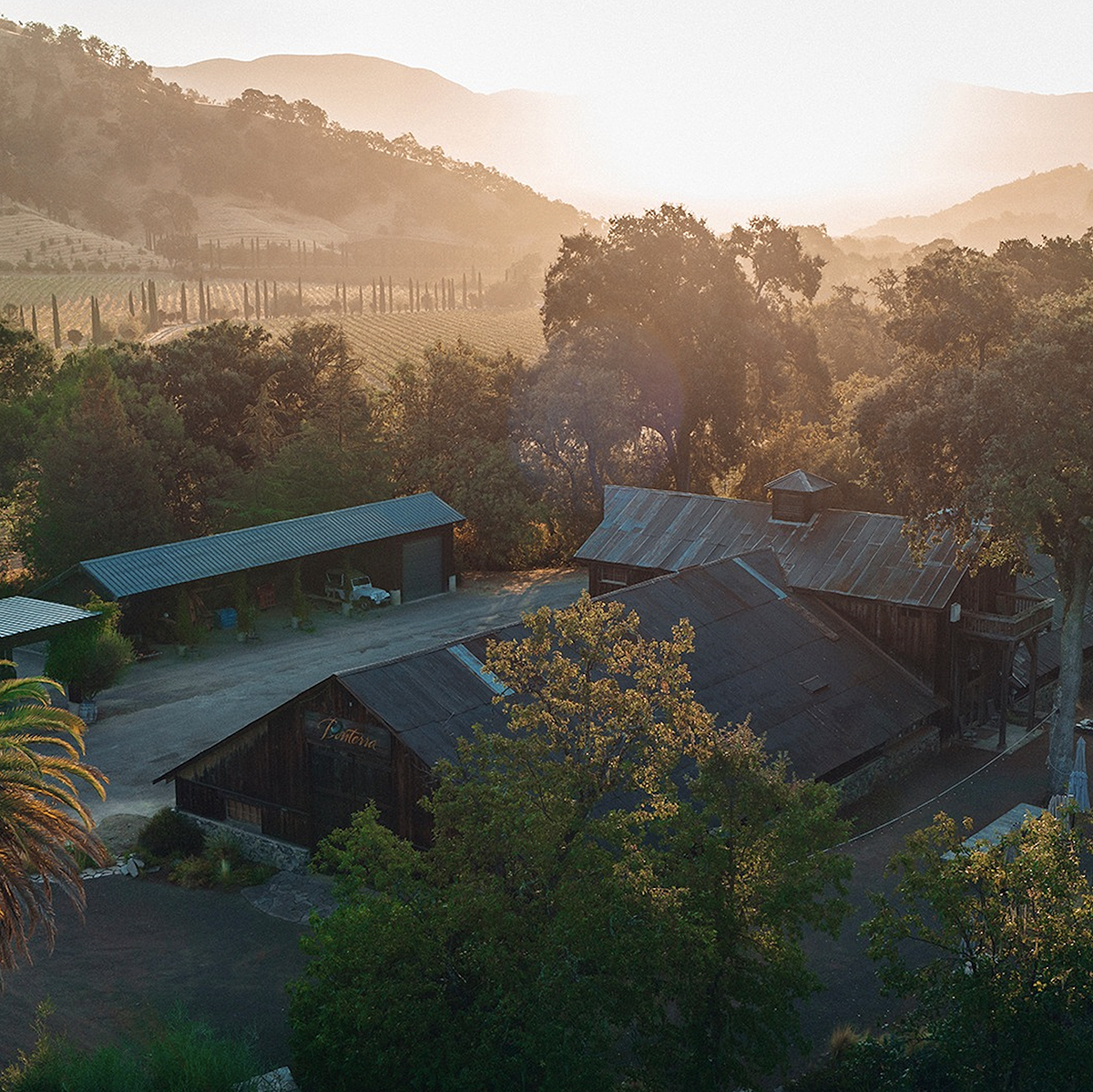
Every bottle of wine has a story that is more than meets the eye. As you stroll through the vineyards you will feel the rich soils that feed the vines that intertwine and gently kiss one another; a story of how a wine is brought to life with love. At Bonterra Organic Estates, each bottle tells a story that calls to a future where planet, society, and industry harmoniously co-exist. Where nature and wine are not in opposition.
We had the pleasure of gaining insights from Joseph Brinkley, Bonterra’s Senior Director of Regenerative Organic Development. Bonterra is heralded as America’s #1 Organic Winery due to its commitment to regenerative organic agriculture.
Bonterra is the largest producer of Regenerative Organic Certified® wines in the U.S. Are there specific biological products that have delivered the biggest measurable improvements in soil health and vine resilience?
As a part of our ongoing commitment to holistic farming and operational excellence, we trial and use a variety of organic-approved products and methods. To date, the most effective biological tool has been the use of predatory mites in some years when we have had mite flare-ups. We have also used soil-applied biologicals to maximize root growth and increase nutrient availability. As far as the aerial plant parts go, we have used an organic-approved biofungicide tank mixed with our more commonly used organic fungicides to activate the vines’ physical and biochemical defenses, thus reducing the amount of sulfur or oils needed to keep the fruit free of powdery mildew.
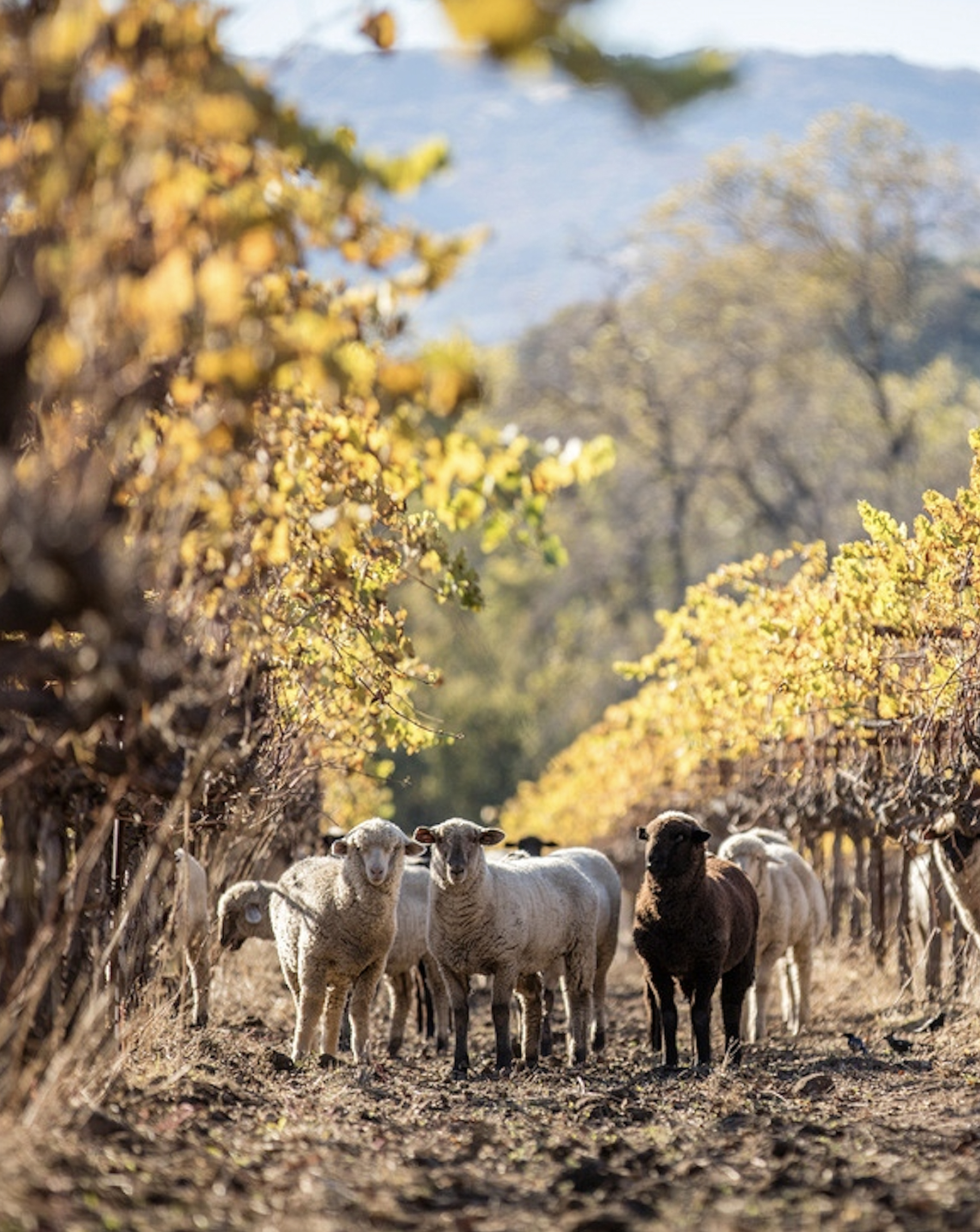
You use sheep, chickens, and insectaries extensively. Can you describe one “closed-loop” biological system you’re proud of?
We have used sheep in our vineyards for about 15 years. The benefits they bring to our soil health, including weed management and soil fertility, are noteworthy and something we are proud of. The integration of ruminants in a perennial cropping system using cover crops is a great example of a “closed-loop” system. We sow a cover crop in the fall. We bring the sheep in late winter once we have a good stand of forage for them. They eat the cover crop down as well as any other plants growing in the middles and under vine. We typically get about 2 to 3 rotations, allowing for re-growth and multiple grazing passes.
Each one of these growth cycles adds organic matter, root exudates, and other necessary soil health components. The sheep not only save us multiple tractor passes, saving both diesel usage and the associated emissions, but additionally, the sheep provide living fertility to the vineyards – something that tractors can’t provide. In this way, we are utilizing the wisdom of the natural world and life processes to create healthy and resilient farm systems with great yields, high-quality fruit, and minimizing the potential negative impacts of what could otherwise be an extractive, high-input farming approach.
How do you track and measure carbon sequestration or biodiversity gains from your biological practices?
In addition to biennial soil sampling with more traditional organic matter testing, in 2024, we installed several Agrology meters in our vineyards. These are devices that measure soil and environmental parameters to assess soil health, moisture levels, and other factors critical for regenerative agricultural practices. More specifically, the meters measure soil respiration, transpiration, and CO2 flux in the canopy, all of which can be used as indicators of healthy soil functioning.
Climate change is generating hotter summers. How are biological inputs helping you manage water stress and canopy health?
Biological inputs are just one tool, but it’s really our holistic, regenerative farming system that makes the biggest impact. By creating healthier soils through cover crops, compost, integrating sheep, reduced tillage, and well-timed farming practices, we improve water retention and root strength, which helps vines stay resilient during extreme heat events. That translates to more balanced canopies, better protection for the fruit, and less stress during hotter, drier summers, all yielding higher quality fruit.
What’s the biggest myth conventional growers still believe about scaling biological and organic farming?
I’d like to start by saying that growers, like in any other business, respond to market signals and consumer demand. The best way to increase the uptake of regenerative farming in any sector is for our customers to support, via their dollar, those growers and businesses committed to these practices. As more distributors, retailers, restaurants, and individual consumers demand products grown and produced regeneratively, the more uptake we will see on the grower side of regenerative farming.
There is also the myth that organic and regenerative farming cannot scale because it is inherently too expensive or too complex. What is often labelled as “higher cost” is a short-term view that ignores the true cost of conventional farming, including impacts to clean air, water, soil health, and community well-being. When those externalities are accounted for, organic systems are far more economically rational in the long run.
Consumer buying decisions indeed fuel the market. Concerning the organic wine category, it is an integral element to building a community where regenerative farming is not shied away from due to cost or the myth that scaling is impossible. What makes this possible is a growing community of vineyards practicing regenerative farming, highlighting the benefit of sustainable wine cultivation beyond a singular point of view. Bottomline, what happens on farms is not isolated. It is important to see where and how your food grows and understand that it is part of an ecosystem that must coexist.
Is organic wine a niche? Older demographics may believe so and lean towards non-organic wines due to cost. A buying decision that may also be rooted in the idea that all wines are the same. Or that don’t be fooled by the sticker adage, a common viewpoint held by older wine consumers. Many people do not think about agriculture’s reliance on pesticides and synthetic fertilizers when purchasing a bottle of wine. What is needed to change this? More education and entry to the industry. The more the merrier will help this niche category become an industry standard, encouraging those who may be price-conscious to see the personal benefits of consuming organic wines. The benefits will outweigh the cost when they are pushed to the forefront of marketing initiatives.
Grgich Hills Estate began farming organically without synthetic inputs in 2000. Their holistic approach to organic farming and winemaking, while building a community by fostering education, is promising for the future of organic winemaking. Ivo Jeramaz, Head Winemaker and VP of Vineyards and Production at Grgich Hills Estate, believes it is possible to farm without pesticides and fertilizers, a belief rooted in his formative years in Croatia. He provides great insights into the benefits of regenerative agriculture.
Grgich Hills earned Regenerative Organic Certification in December 2022. Which biological amendments do you rely on most for your famous Rutherford Dust Cabernet?
Vermicompost tea, fish emulsion/hydrolysate, and liquid kelp are the amendments we find are most useful across all our vineyards, including in Rutherford.
How does reducing soil compaction tie into your overall biological soil-health strategy?
Reducing soil compaction is vital to our soil health strategy. Because compacted soil is lacking in porosity, oxygen and water are unable to be easily stored – a substantial hindrance to the development of microbial life. Maintenance of our soil microbiome is a pillar of our soil health strategy, so compaction is something we prevent and attempt to undo wherever possible. The most effective strategy to limit soil compaction is through the root growth of plants.
Can you describe your cover-crop and compost program and how soil organic matter has increased over the decades?
The primary purpose of our composting regimen is to enhance the growth of our cover crop. The composition of seeds we sow varies from year to year, as we take note of which plants do best in each of our different vineyards. The combination of compost and cover crops enriches microbial life, which directly contributes to increases in SOM, as their remains become a part of that metric.
It was my goal when I began managing our vineyards to increase SOM across our vineyards, but I found that organic and even biodynamic methods were unable to affect growth meaningfully, and we remained at around 2.5% SOM across our vineyards. After the implementation of regenerative farming, we saw a 2% increase in SOM as of 2025 across our 360 acres of vineyard.
With Napa getting hotter and drier, which biological practices are now essential to achieve physiological ripeness without excess sugar?
Companion planting is the most salient way to see the benefits of regenerative agriculture when it comes to the changes in climate that have been on the rise in recent years. Not only do the root systems of these plants structure soil, improving water holding capacity, but they also act as soil armor. We allow the dead plant matter to remain in our rows throughout the summer, as it creates a barrier against the sun that keeps our soil cool. This is crucial during late summer heat waves, as bare soil cooked in the sun allows heat to rise and cook the ripening grapes on the vine. This protection means we don’t have to worry about overripening even in the most excessively hot years.
Mike Grgich proved California could beat France in 1976. What would he say today about farming regeneratively and biologically on the same Rutherford Bench?
When Mike Grgich was growing up in former Yugoslavia prior to the Second World War, all farming was performed naturally, without chemical additions. I was brought up much the same way in the Croatian town where I grew up, so we had that advantage when coming to the United States; we knew that farming without artificial pesticides and fertilizers was feasible. Mike was a big supporter of our natural farming initiatives, and I know he would be proud to see how far we’ve come.
Both wineries exemplify hope in a bottle. A return to the past and a leap forward into a future. Regenerative farming is a great possibility. Those who question this surely have never experienced the delight of opening a Grgich Hills Estate 2014 Miljenko’s Selection Cabernet Sauvignon or felt the wonders of a Biodynamic®, Single Vineyard 2020 ‘The McNab’ Cabernet Sauvignon by Bonterra Organic Estates dance on their palate. But when they do, there is no denying that the hands that nurture the soil and harvest each grape with the utmost respect in Mother’s garden, free from pesticides and fertilizers, made this. No, not all wines are the same; some are simply unique and of value, wines worth more than their weight in gold. Wines that give more than they take.

