Q&A with Winemaker Eric Martella
By: Allie Nelson
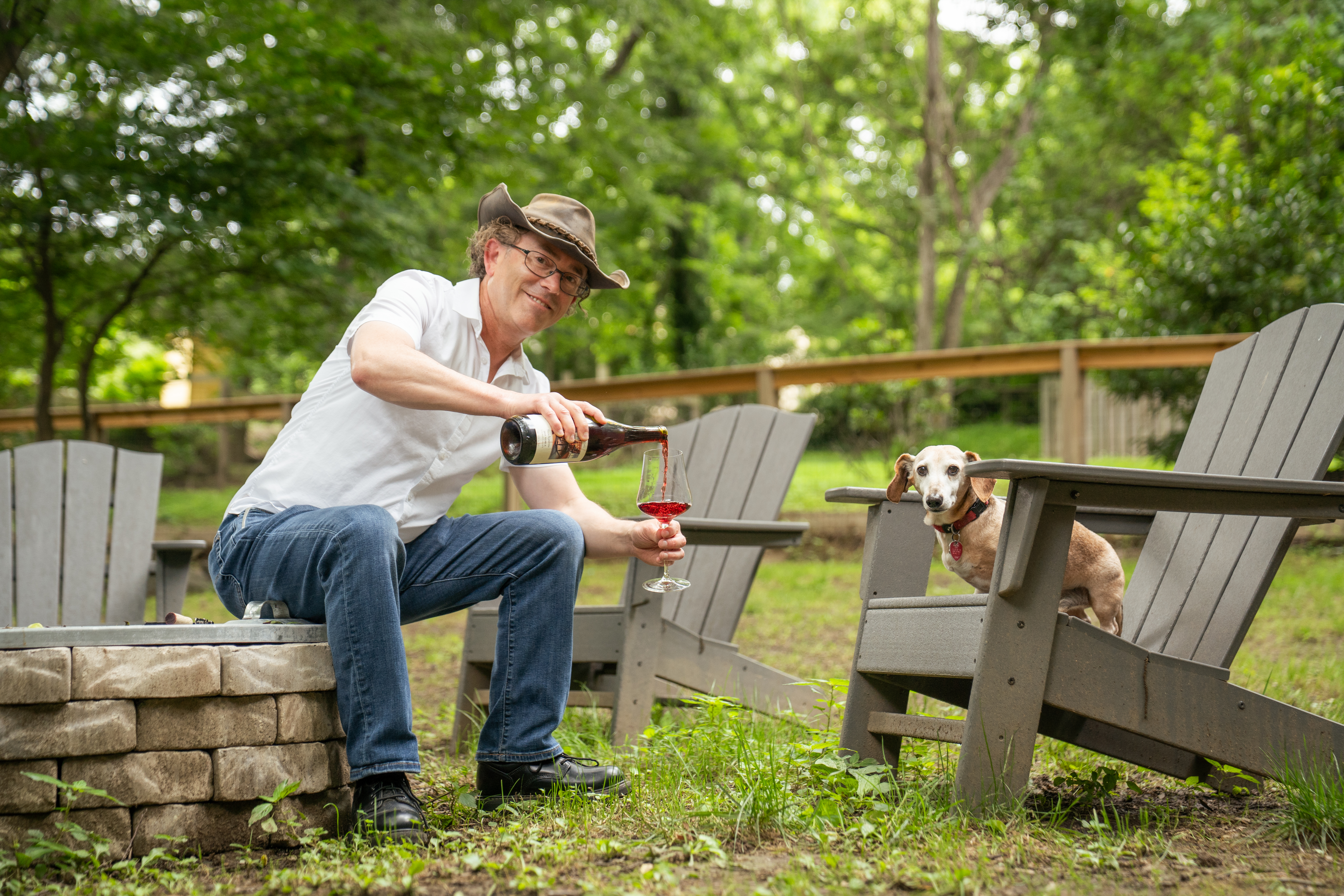
As both an educator and winemaker, Erik Martella has spent decades thinking about how people encounter wine, not just as a beverage, but as an experience shaped by history, hospitality, and human connection. A Lecturer and Wine Specialist in Appalachian State University’s Department of Chemistry and Fermentation Sciences and proprietor of Erik Martella Wines, Martella brings together industry experience and a deep belief in experiential learning.
That philosophy is at the heart of the Wine and Fine Dining for Emerging Professionals Program, a two-day immersive initiative Martella created at the university. The program introduces participants to the fundamentals of wine, fine dining, and professional etiquette through behind-the-scenes restaurant experiences, tastings, and a culminating fine-dining meal shared with local business and community leaders.
Martella reflects on the motivations behind the program, what students are seeking from wine experiences, and how innovation in education and American viticulture can shape a more engaged wine culture for the next generation.
How did the idea for the Wine and Fine Dining for Emerging Professionals program come about? The idea was actually born of frustration with all the hand-wringing within the industry about decreasing wine sales. While those conversations are important, it seems that the only solutions being offered are either technology (social media, AI, novel packaging) or the old “make wine accessible” trope. I wanted to do something concrete to get more people excited about the history, traditions, stories, and experiences associated with fine wine.
What gap did you see in students’ preparation for professional life that this program is designed to fill?
The disruptions from the COVID shutdown meant that many families were simply unable to include fine dining experiences in their lives while these students were growing up. And, as young adults, they haven’t been of drinking age long enough to have had much of an opportunity to explore the world of wine. This program walks students through the fundamentals of wine and fine dining, including table manners and etiquette, from the perspective of the Business Meal, an experience they are likely to encounter very soon after graduating.
What did you want students to feel and understand at each stage of the course?
I wanted students to feel like they had a back-stage pass to the world of wine and fine dining. The first session is a behind-the-scenes tour focusing on how restaurants operate, how service works, how intention shapes experience. Students see that what can seem fancy for its own sake is actually based on core ideals of quality and creating amazing experiences. But all this requires the efforts of real people, so I thought it was important to also inspire empathy among the students for hospitality professionals.
The wine session provides basic vocabulary and orientation to wine without overwhelming them. We emphasize that tasting is subjective, but language matters. By the time they reach the final dinner at Artisanal, the goal is for students to feel curiosity and excitement about tasting unfamiliar wines, not anxiety or self-consciousness.
In the etiquette session, I wanted the information to be very tactical. While a lot of this information seems like common sense, people don’t know it unless they’ve been taught it. Having the students pre-read the materials puts everyone on a level playing field and prepares them for the group exercises that make up the session. Here, I wanted students to come away feeling like they had real strategies for presenting themselves well and putting others at ease during fine dining experiences.
For the culminating dinner, I wanted students to understand first-hand how amazing good wine, good food, and good company can be, and I wanted them to come away with one thought: “I want more of this!”
What conversations did you see unfolding at the culminating dinner between students and community leaders, and why are those intergenerational interactions so important?
What stood out most was how quickly the conversations moved beyond career advice. Yes, there were questions about graduate school and career paths, but real connections were made. In a post-event survey, the Table Hosts overwhelmingly supported keeping the ratio of three students to one Host rather than increasing the number of students at each Host’s table. They valued the opportunity to make deeper connections as much as the students did.
Those intergenerational interactions matter because they humanize success. Students see accomplished professionals as people who once felt unsure themselves. At the same time, the professionals are reminded what it feels like to be new to the world of wine and fine dining.
How would you describe the mindset of this new generation when it comes to wine? What are they curious about? What turns them off?
Most students see wine as just another option in the world of beverage alcohol, and they see it primarily in terms of its intoxicating effect. Most students have no idea what the world of wine has to offer in terms of aroma, flavor, and food pairing experiences, let alone its variety, history, and geographical and cultural significance, until someone opens that door for them. Opening that door also helps them understand why some wines are so expensive and others quite affordable. High prices are a major turn off, especially when students don’t understand how they might be justified. Interestingly, for some, knowing that high-priced wines exist makes them suspicious of lower-priced wines. So they avoid wine all together: “I can never afford the good stuff and the cheap stuff must be bad!” Fortunately, students are curious about everything and they’re surprisingly adept at taking individual wines on their own terms.
What role does education play in shaping how this generation will engage with wine long-term?
Unfortunately, the attention economy seems to reward three main voices related to wine: wineries with big advertising budgets, the ‘no safe level of alcohol’ crowd, and those who use the wine snob trope for humor or derision. Educational programs such as this one are ways to provide this generation with a broader perspective on wine and to bring context to what those voices are saying. I think efforts like this, driven by the industry and by enthusiasts rather than by individual brands, is the key to reaching this generation. We need to be telling the story of Wine, with a capital W, and we need to do it in-person with glasses and open bottles in front of us. That’s what gets students excited and engaged, and it just so happens that’s also the foundation that gives every winery’s brand story its power, including my own.
You’ve spent more than two decades in wine, and now focus on muscadine-based fine wines. How do you define “innovation” in American viticulture today?
I think a lot of innovation in American viticulture falls into the category of increasing precision. Take irrigation as an example. It’s only been about 75 years since flood irrigation and movable sprinklers were replaced by PVC-piped permanent overhead sprinklers, which were themselves replaced by drip and root-zone irrigation. Now, some vineyards are focusing on irrigation strategies that encourage vines to develop the deep root systems compatible with dry farming. It’s always been about giving vines water, but leveraging science and technology to do it ever more thoughtfully and precisely.
There’s also a lot of exciting work happening around developing new varieties and rediscovering old ones to meet changing or challenging growing environments. I’m a big fan of this kind of innovation: matching the grape variety to the ecosystem instead of asking the ecosystem to bend to the grape you want to grow. We just need some marketing innovation to go along with it to help sell esoteric varieties!
What excites you most about the potential of native American varieties, like muscadine, that haven’t historically been seen as “classical” fine-wine grapes?
Cabernet Sauvignon, Chardonnay, etc. are global. There’s good reason for that – they turn into amazing wine! Working with native varieties is an opportunity to create wines with totally unique characteristics that can’t be found anywhere else in the world. I secretly enjoy it when people are somewhat befuddled by their first glass of dry muscadine wine. By the second glass people usually have a pretty good idea what the wine is all about and how its parts actually do fit together. But you only get one opportunity to taste it for the first time!
If you could offer one piece of advice to young professionals feeling intimidated by wine, what would you tell them?
If you’re intimidated by wine, you’re probably worried about getting the show aspects of the experience wrong. There’s really only one component of the show that you need to worry about: smelling and tasting wine with focus and intent. You can know nothing about a wine and even mispronounce its name, but if you take your time to authentically experience the wine, to savor it, your audience will be happy…even if the audience is yourself and you’re second-guessing the bottle you picked up at the grocery store for no other reason than it was on sale.
About the Author: Allie Nelson is a communications professional specializing in food and beverage, with more than nine years of industry experience working with small wineries and hospitality-driven businesses. She holds the WSET Level 3 Award in Wines and is a French Wine Scholar and American Cider Professional. She currently serves as PR Manager and Digital Marketing Specialist at Tabletop Media Group in North Carolina, where she works with food and beverage clients including the North Carolina Wine & Grape Council.

