Addressing Smoke-Impacted Wines

grapevine field with fire in the background

By: Becky Garrison 

In a press release dated May 5, 2023, Willamette Valley Vineyards, Brigadoon Wine Co., Samuel Robert Winery, Retraite, LLC (F/K/A Lingua Franca – LS Vineyards Holdings, LLC) and Elk Cove Vineyards Inc. announced they hired a well-known legal team to investigate filing suit against Pacific Power, a division of PacifiCorp, in the Oregon state circuit courts. The wineries issued this joint statement:

  “These fires devastated our industry, and we believe it’s time we investigate seeking compensation. We are encouraged by the recent news reports that the other fire victims in the state are finally able to settle their claims against Pacific Power (PacifiCorp). We have hired the lawyers who led the $13.5 billion recovery for the 70,000 victims in the PG&E bankruptcy in California and who recently settled their lead fire victims’ claims against PacifiCorp in the Archie Creek Fire litigation in Douglas County, Oregon.”

  As evidenced by the wildfires impacting the West Coast in subsequent years, coupled with the current wildfires raging in Canada impacting the East Coast and the Midwest, the issue of smoke damage to wine grapes remains an ongoing concern. During the Oregon Wine Symposium held on February 14-15, 2023, moderator Greg Urmini, operations lead for White Rose Estate in Dayton, Oregon, led a panel of winemakers and researchers to discuss smoke-impacted wine. Urmini pointed to the significance of this topic, noting, “It’s important to understand what winemakers are doing to help save their wine because we have to continue to make wines, and we want to be able to provide a good product.”

CASE STUDY: Barrel 42 & Quady North Winery (Jacksonville, Oregon)

  As a founding member of the West Coast Smoke Exposure Taskforce, Nichole Schulte, winemaker and partner of Barrel 42 and Quady North Winery, has experienced trial by fire literally while dealing with multiple smoke indigents over the past decade in Oregon. Overall, she stresses the need to collaborate with local winegrowers and winemakers ahead of time so there’s a strategy already in place regarding what can be done in the winery and the vineyard.

  In assessing the risk of a particular wildfire, Schulte looks at three factors. First, she observes the proximity of the smoke event to the vineyard, adding that the AQI (Air Quality Index) measurements do not provide a direct relationship between air quality and the volatile smoke-related compounds (“phenols”) floating around in the air. Also, she examines the freshness of the smoke, adding that these phenols can degrade or drop out over time.

  The grapes soak up these phenols, which bind to sugar though how much sugar is absorbed by the grapes depends on the varietal and the growing stage. Some grapes ranked from highest to lowest risk for negative effects from smoke damage include pinot noir, grenache, sangiovese, cabernet franc, primitivo, zinfandel, cabernet sauvignon, merlot and syrah.

  While the most vulnerable times for grapes coincide with wildfire season, there’s no carryover impact in the vineyards from previous wildfire events. Preliminary indications of using barrier sprays in the vineyard show to be very promising. In addition, hand harvest reduces maceration time from harvest to the fermenter. Sort out as much MOG as you can, which means not doing a full cluster ferment. Whole berry ferments tend to produce fruity aromas and esters that can, to some degree, mask the smoke characteristics in the wine. Along those lines, there’s some indication that washing ash off the fruit clusters can help reduce the presence of smoke.

  As you handle smoke-impacted grapes from fermentation to élevage, be mindful that volatile phenols will express early in fermentation. When doing trials where they separated press factions, the data showed that the compounds were still present but that the sensory profiles differed from a light to a heavy press. 

  When conducting experiments to see how certain barrels interact with smoke-impacted wines, they found that the higher the toast of the barrel, the more it interacts positively with the smoke impact of the wine. Also, untoasted oak chips can mask and bind up some phenols, while toasted oak can provide sweet, more complex tannins.

  In Schulte’s estimation, white wine is easier to deal with since you can get the juice off the skin as soon as possible. Hand-harvest the grapes and minimize skin contact and maceration time. Press gently, keeping heavy-pressed juice segregated for possible treatment later or just to keep it out of the main juice. Be sure to discard the solids, though this can be tricky as yeast will need some solids. So, consider using solids and lees from non-impacted lots. But if you can clarify before fermentation, then there’s almost no smoke at the end. For fining, they had success with bentonite, activated carbon and PVPP, as well as Clanil SMK (Enartis), which is a blend of activated carbon, chitosan and pea protein.

  Finally, wine made from smoke-impacted grapes should be bottled and consumed early. Aging these wines will not improve their quality.  

CASE STUDY: Battle Creek Cellars (Portland, Oregon)

  Winemaker Sarah Cabot focused specifically on fruit from Willamette Valley’s 2020 harvest. When presented with smoke-impacted grapes, her first question was whether or not to ferment on skins or go directly to the press. With white varietals, she went directly to the press. Conducting a berry analysis proved to be a good way to determine how much smoke is too much with regard to fermenting on skins.  

  When making white and rosé wines from smoke-impacting grapes, Cabot found that floating was an effective way to clarify the juice, though it only works if there’s a pretty significant volume. Also, the first eight to 10 gallons were discarded. She succeeded with gentle pressing and pre-fermentation, fining with carbon and bentonite with daily stirring for three days, then settling for three days. In her anecdotal sensory analysis, the pre-fining juice smelled like a campfire, though the post-fining juice smelled good. According to Cabot, spending the extra money on pre- and post-treatment before deciding to bottle is worth it in the long run.

  Next, she proceeded with fermentation as usual, adding that this worked best when they chose to go through the process quickly. She took some extra measures during fermentation, finding that there was some evidence that chitosan mitigates the effect of smoke. Also, mannoproteins/polysaccharides, untoasted oak tannins and a vigorous yeast strain with a short lag phase produced high esters. Then she suggested bottling at or above three grams per liter of residual sugar, adding that the higher the sugar, the more pleasing the experience.

  When addressing protocols for red wines, Cabot observed that the best sensory analysis results came when using a high temperature with a heavy mace ratio. The more heavily extracted, fruit-forward wines before smoke mitigation treatments yielded the most balanced and enjoyable wines after treatment.

  Going into élevage, she kept the free run and press fractions separate, adding that the press fraction required a much heavier treatment. If there are a lot of bound compounds, a winemaker can attempt enzymatic hydrolysis in the tank. By holding the wine at a temperature of approximately 64 degrees Fahrenheit for four to six weeks with regular agitation, the results were anywhere from a 15 to 75 percent reduction in glycosylated markers and a corresponding increase in free volatile phenols on all samples analyzed. While this method proved to be effective for her, she admitted it was a pretty extreme thing to do.

  Based on her experience with the 2020 vintage, Cabot concluded that it is possible to make an enjoyable, early-release wine from smoke-affected fruit at a slightly higher final production cost that people will enjoy. With red wines, especially pinot, a heavy extraction approach yielded the best post-treatment result. Also, the commonly publicized “Best Estimate Sensory Thresholds” for VPs seem accurate according to most tasters. In the event of another smoke event, Cabot would stick with the early release and early consumption wines. Also, she would repeat her decision to produce only the sub-$25 SRP pinot noirs due to insufficient data on the long-term bottle aging effects of smoke markers.

For Additional Information

  Those wishing to delve further into the burgeoning research into sensory analysis that includes information on smoke-impacted wine should check out Elizabeth Tomasino’s work as associate professor at Oregon State University: Department of Food and Technology (https://foodsci.oregonstate.edu/users/elizabeth-tomasino) and the Oregon Wine Board: Wildfire Smoke Toolkit (https://industry.oregonwine.org/resources/toolkits/wildfire-smoke-toolkit/). Among the recommended labs for their work with smoke-impacted grapes include The Australian Wine Research Institute (https://www.awri.com.au/), ETS Labs (https://www.etslabs.com/) and UC Davis College of Agriculture and Environmental Sciences (https://caes.ucdavis.edu/).

Should I Open Up a Claim?

close-up of a plant crop

By: Trevor Troyer, Agricultural Risk Management

When to open up a claim on your grape crop insurance is important.  A lot of growers say that don’t know if they have a payable loss early in the season.  With grape crop insurance you are covering an average of your production per grape variety. Depending on what coverage level you have chosen this could mean you have a large deductible or small one.  I agree it is hard to tell how much early season damage will affect tons harvested.

  Mid May this year there was a bad freeze/frost event in the Finger Lakes region of New York.  While late spring frosts are not uncommon, this one was really bad.  There was widespread damage to grape vines across the Finger Lakes.   The extent of the damage is not fully known at this time.  But there will be a reduction in the tons harvested this year for sure.

  In a situation like the above a claim should be opened immediately.  More than likely, due to the severity of the frost, an adjuster will come out and inspect the vineyard.  I always tell growers that they should take pictures of the frost damage that morning.  It is always good to document damage as close to the time it occurred as possible.

  It may be that some varieties of grapes show more damage than others.  This is to be expected as some are more resistant to cold.  And from what I have seen over the years with frost and freezes is that it doesn’t affect a vineyard or field evenly.  You might have more damage on one side of the vineyard or more damage on the lowest part of the blocks etc.  Damage varies but just because one variety or one area looks better than others doesn’t mean that you should not open a claim on that variety or block.

  I know that secondary and tertiary buds will emerge in the next few days or weeks after a freeze.  You should open up a claim now regardless.  The damage may be less than you think and you don’t end up having a payable claim.  But it is still best to get one opened up right away.  Don’t wait to see how many tons you harvest before opening a claim! 

  Here is an excerpt from the “How to File a Crop Insurance Claim” Fact Sheet from the USDA:

  Most policies state that you (the insured) should notify your agent within 72 hours of discovery of crop damage.  As a practical matter, you should always contact your agent immediately when you discover crop damage.

  That same night in May, that saw the frost/freeze in the Finger Lakes region, also saw damage to vineyards along the coast of Lake Erie.  I received calls and emails from growers stating that they had had frost as well.  Obviously, the damage was not as bad as the Finger Lakes, but frost on new buds is not something any vineyard owner wants to see.  I opened claims for all of them even though the extent of the damage was not known.

  I cannot stress enough the importance of opening up a claim early. 

  A lot of claims with grapes are relatively routine.  Once the claim is opened an adjuster will come out and document the damage.  You will continue to grow your crop and try to mitigate any damage received. Once you harvest grapes you will meet with the adjuster and give him your production records that show your tonnage per variety.  He will then adjust the claim based your guarantee (average tons per acre per variety and the price for that variety in the county.)

  In some circumstances you will need to get direction from the adjuster before doing anything.

What are your responsibilities after damage if the grapes have not matured properly and will not?  What if they have been rendered unusable (smoke-taint has been a major cause of this in California)? 

  Here is a section from the Grape Crop Provisions that goes over this:

11. Duties in the Event of Damage or Loss.

In addition to the requirements of section 14 of the Basic Provisions, the following will apply:

(a) You must notify us within 3 days of the date harvest should have started if the crop will not be harvested.

(b) If the crop has been damaged during the growing season and you previously gave notice in accordance with section 14 of the Basic Provisions, you must also provide notice at least 15 days prior to the beginning of harvest if you intend to claim an indemnity as a result of the damage previously reported. You must not destroy the damaged crop that is marketed in normal commercial channels, until after we have given you written consent to do so. If you fail to meet the requirements of this section, all such production will be considered undamaged and included as production to count.

  It is important to stay in contact with your adjuster during a claim.

  A lot of things can happen to your vines that could cause them not to produce a full crop.  The insurance period is long and it is important to report everything that may reduce your crop.

  When you sign up for crop insurance, coverage for grapes starts on February 1 in Arizona and California.  It begins on November 21 in all other states.  The end of insurance unless it is otherwise specified by the USDA RMA, is October 10th in Mississippi and Texas, November 10 in Arizona, California, Idaho, Oregon and Washington.  In all other states the end of insurance is November 20th.  Crop insurance is continuously in force, once signed up for, unless cancelled or terminated.  Your coverage for following years, will be the day after the end of the insurance period for the prior year.

Here are the Causes of Loss per the Grape crop provisions:

(1)   Adverse weather conditions;

(2)   Fire, unless weeds and other forms of undergrowth have not been controlled or pruning

       debris has not been removed from the vineyard;

(3)   Insects, except as excluded in 10(b)(1), but not damage due to insufficient or improper

       application of pest control measures;

(4)   Plant disease, but not damage due to insufficient or improper application of disease control

       measures;

(5)   Wildlife;

(6)   Earthquake;

(7)   Volcanic eruption; or

(8)   Failure of irrigation water supply, if caused by an insured peril that occurs during the

       insurance period.

  Adverse weather conditions could be anything that could cause damage to your grapes. For

example; drought, frost, freeze, excess moisture etc. Wildlife could be bird damage, deer etc.

Fire would also include smoke taint as that is a result of a fire.

  Crop insurance does not cover, the inability to sell your grapes because of a buyer’s refusal or contract breakage. It also doesn’t cover losses from boycotts or pandemics. Phylloxera is not covered, regardless of the cause. Overspray or chemical damage from a neighboring farm is not covered either.

  So, get those claims opened up early and stay in contact with your agent and adjuster.

Permit-Required Confined Spaces

Occupation Safety and Health Act

By: Steven R. Sawyer, ARM, MS, CSP

As many employers have learned over the last few years, employees are a valuable resource.  The ability to find and keep employees has become a challenge for many employers in a variety of industries, including food and beverage agriculture.  Therefore, keeping employees safe is a top priority.

  Employers in the food and beverage agriculture industry, like vineyards and wineries, may have multiple confined spaces in which employees encounter in their daily job tasks.  These include vats, tanks, storage bins, tunnels, duct work, pits, drain systems, and liquid tanks and containers.  Many industry employees are required to enter these spaces as part of their jobs.

  Occupational Safety and Health Administration (OSHA), in their Permit-Required Confined Spaces standard 29 CFR 1910.146, describes a confined space as a space that is large enough for an employee to bodily enter and perform assigned work tasks, has a limited or restricted means of entry or exit, and is not designed for continuous employee occupancy.  Additionally, OSHA defines a Permit-Required Confined Space as a confined space with one or more of the following characteristics:  the confined space contains or has the potential to contain a hazardous atmosphere; the confined space contains a material that has the potential for engulfing the entrant; the confined space has an internal configuration with inwardly converging walls or a floor that slopes downward and tapers to a smaller cross section which could trap or asphyxiate an entrant; and contains any other recognized serious safety or health hazard. (OSHA.gov)

  The first step in protecting employees from the hazards of confined spaces is to evaluate the workplace to determine if the workplace contains permit-required confined spaces.  An initial survey or workplace evaluation should be conducted to locate and identify all confined spaces.  This initial workplace evaluation should be conducted by a qualified person who is familiar with the hazards and types of confined spaces.  Although this is the initial step, workplace evaluation must be ongoing for confined spaces which may change over time with the addition of new processes, equipment, or facilities.

  Once a confined space is identified in the workplace, the confined space should be treated as a hazardous area until a qualified person can determine the specific hazards.  Additionally, the qualified person will determine if the confined space is a permit-required confined space or a non-permit confined space.  Hazards an evaluator will look for include atmospheric hazards such as oxygen deficient or toxic atmosphere, biological hazards, mechanical hazards, physical hazards, and chemical hazards.

  If the qualified person has found permit-required confined spaces at the workplace, the employer must notify the employees.  Employees must know their workplace contains permit-required confined spaces, where the spaces are located and the hazards associated with those spaces.  Then, the employer must post signage to inform the employees of the permit spaces.  This signage can read “Danger – Permit-Required Confined Space, Do Not Enter” or a similar statement.  The signs should be posted on the entrance or in close proximity to the entrance of the permit space.

  At this point, an employer has a decision to make about their Permit-Required Confined Spaces:  either allow employees to enter or do not allow employees to enter.  If the employer makes a decision to not allow employees to enter permit spaces, then the employer should take effective measures to secure the spaces.  Some examples of securing permit spaces to prevent entry are padlocks, bolts, chains, and wire cables.

  If entry is necessary for employees to service or clean permit-required confined spaces, the employer must develop and implement a written permit-required confined space program and make the program available for employee inspection.  This written program should include written entry procedures for the permit-required confined spaces along with the hazards present, and how to eliminate or control the hazards. 

  The written permit-required confined space program should include an entry permit.  The entry permit is a document to be used for all permit-required confined space entries.  The entry permit should include the date of entry and authorized duration of the entry, the location of the entry, the names of all entrants, and the work that is being conducted in the confined space.  Additionally, the permit must include the names of attendants, the name of the entry supervisor, the hazards present in the space to be entered, how the hazards will be eliminated or controlled before entry, acceptable entry conditions, results of initial and periodic tests performed along with the names of the testers and when tests were performed, rescue and emergency services to contact in the event of an emergency, communication procedures between the entrant and the attendant, equipment necessary including personal protective equipment, testing equipment, communication equipment, alarm systems, and rescue equipment, other information deemed necessary for safe entry, and any additional permits such as hot work permits.  Lastly, the permit should have a signature line for the entry supervisor to authorize the entry, including the date and time of the entry.  The entry supervisor should communicate the contents of the entry permit to the authorized entry personnel and may wish to post the entry permit in a designated location.

  OSHA requires that employers provide training for all employees who must work in permit-required confined spaces.  The training should occur before the initial work assignment, when job duties change, employee performance deficiencies occur, or when the permit-required confined space program changes or operations change.  Although it is not required to train all employees to the extent of the authorized entrants training, it is a best practice to inform all employees of the confined spaces present in the workplace and the hazards that accompany the confined spaces.  

  If entry is required in a permit-required confined space, the employer must provide an authorized entrant (the person who enters the space and conducts maintenance or cleaning operations), an attendant (a person who remains outside of the confined space), and an entry supervisor (the person who oversees the entry operations and ensures the entrants follow the permit and are safe).  These personnel have specific duties that must occur to ensure safe entry into permit spaces.  Their duties must be followed in order to comply with the OSHA Permit-Required Confined Spaces standard.

  When the entry into the permit space is complete, the entry supervisor terminates the confined space entry.  The entry supervisor can also cancel the entry of the confined space if the conditions within the space are no longer safe for the entrant.  As a best practice, when the entry is complete, a debrief should be conducted with the entry personnel to determine if any changes are needed for future entry procedures.  Employers are required to keep canceled entry permits for one year.  Any deviations or problems with the entry should be noted on the canceled permits.

  Even with a permit-required confined space program in place, emergencies can happen.  It is important that local emergency responders are aware of the specific hazards associated with confined spaces in the workplace.  Invite local emergency agencies to the workplace and evaluate their knowledge of confined space rescue, their rescue equipment, and their capabilities. 

  Having a permit-required confined space program in place will help vineyards and wineries avoid catastrophic incidents and costly OSHA citations.  To learn more about Permit-Required Confined Spaces, go to osha.gov or ansi.org.

  Steven R. Sawyer, ARM, MS, CSP, is the owner/operator of LSW & Associates Safety Consulting Services, LLC.  Sawyer has been active in the safety industry since 1999, much of that time working with multi-faceted, high-hazard agribusinesses, developing a special expertise in grain bin engulfment and prevention; OSHA grain handling standards; lockout/tagout (LOTO); machine guarding; confined spaces; heavy equipment and specialized equipment operations; and safety program development and training.

Website:  sawyersafetysolutions.com

New Grapevine Insurance Program

By: Trevor Troyer

Grape crop insurance has been available for many years now.  You can protect an average of your historical tonnage per variety.   But there has not been an insurance program for grape vines.   There are subsidized insurance programs for apple trees, orange trees, avocado trees, mango trees etc. through the USDA Risk Management Agency.  But there has not been anything for vineyards, until now.

  AgriLogic Consulting, LLC is consulting company that develops crop insurance products for the USDA.  They do feasibility studies and evaluations of existing and potential programs.  AgriLogic Consulting, LLC has been working on a Grapevine insurance program.

  Here is what was just released on the AgriLogic website, agrilogicconsulting.com

  The Grapevine Insurance Program has been approved by the Federal Crop Insurance Corporation for implementation in the following states: California, Idaho, Michigan, New York, Ohio, Oregon, Pennsylvania, Texas, and Washington. Insurance industry representatives in key production regions requested a product to protect producers against perils that can destroy vines. The list of perils to be included are freeze, hail, flood, fire, and failure of the irrigation water supply (if caused by an unavoidable naturally occurring event during the insurance period). Claims will be limited to loss due to complete destruction or death of the vine. Losses for partial damage are not included under the program. While both programs are federally subsidized and administered by the USDA Risk Management Agency (RMA), the vine replacement program is different and separate from the existing Grape and Table Grape Crop Insurance Programs, which cover losses related to the production of the fruit itself. Producers will be able to purchase the vine insurance program through existing crop insurance agents once the program becomes available.

  I don’t have to tell you that this is a big deal.  I know vineyards that have wanted this for years and nothing has been available.  I have seen vineyards devasted by fire in California and Oregon in recent years. I have seen damage from early freezes in Pennsylvania and New York.  This program will give growers much needed protection for their vines.

  The policy documents are set to be released to the approved insurance providers by no later than August 31, 2023.  The sign-up deadline for the new Grapevine Insurance program will be November 1st, 2023.  Availability maps should be released at the end of August as well.

  At this point we do not have any information than the above.  I look forward to helping vineyards get coverage for their vines.

Could the Wine Industry Benefit from Virtual Assistants?

what can i help you with
AI Chatbot smart digital customer service application concept. Computer or mobile device application using artificial intelligence chat bot automatic reply online message to help customers instantly.

By: Craig Goodliffe, Founder & CEO — Cyberbacker

Digital innovations within the workplace are nothing new these days. With more and more people working from home, employees are becoming accustomed to relying on technology to help with work-related tasks that used to be completed in person.

  Today, virtual assistants (VAs) are changing the way companies interact with and engage customers, get their name out into the market, and improve overall profits. VAs are part of the digital revolution that has reinvented the landscape of modern work, and business leaders across a wide array of industries are leveraging the skills these professionals offer to help scale their businesses, manage tasks, and free up their time.

  When one thinks about viniculture and the wine industry, it may bring to mind images of vast fields of grapevines, wineries with knowledgeable sommeliers giving in-person recommendations, and an age-old, often family-based company structure. One’s mind typically will not jump to a tech-heavy culture.

  However, according to a recent article in Forbes, many wine companies have not only adapted to changes in technology, but debuted some wine industry-specific innovations. For instance, some companies have outfitted their wine labels with QR codes that give consumers greater insight into the wine’s origins. The company Sparflex has developed a wine foil that allows the consumer to access animations straight from the label, and WineCab is a robotic, AI-powered sommelier; some wineries are even using drones and satellites to collect data on their vineyards.

  Although the viniculture industry may not seem one “ripe for the picking” for help from virtual assistants, the wine industry has a history of adaptation to new technologies and innovations. This could make them the perfect industry to adopt the use of VAs. 

What Value can VAs Bring to Winemakers and Viniculture?

  Virtual assistants are remote workers who can help companies with a number of tasks, and their role has taken on new meaning as remote work has grown in popularity. Once used for mainly administrative tasks, VAs are now heading up social media campaigns, handling the entire accounting or customer service department of companies, and — in some cases — even stepping into C-suite leadership roles.

  Throughout the past several years, the wine industry has faced the same challenges that many other industries have run across, including customer service concerns, supply chain issues, and a focus on employee retention in the wake of the Great Resignation. Virtual assistants can help winemakers navigate these challenges as well as many others.

  One of the biggest benefits a VA can bring to the wine industry is their ability to take on tasks that may not be in the wheelhouse of a business owner, CEO, or other leaders. VAs can also be instrumental in helping leaders better focus on the tasks where they excel. Attempting to scale a business on one’s own is remarkably difficult, especially in an industry as inherently collaborative as viniculture, where different teams are responsible for harvesting the grapes, making, selling, and marketing the final product.

  Studies have shown that taking on a VA can improve productivity overall in one’s business, including the wine industry, where overall productivity could make or break a winery. VAs can also help lower overall operating costs by up to 78%, which could provide crucial savings for a startup in the wine industry.

  Virtual assistants can give an owner more time to focus on what they really want to do: building their businesses. Winemakers may be surprised at how adaptable and multi-faceted VAs are, and what they can do to help a winery, vineyard, or wine store scale.

  Running and managing social media accounts

It can be difficult — if not completely impossible — to run a successful business these days without using social media effectively. Many people may not know how to leverage social media for their wine business, but there are VAs who are highly skilled in areas of social media marketing and engagement that can help one uplevel their business.

  Social media is largely about visuals, and one may wonder how someone who may work halfway around the world can help with the visual marketing of a business that is in, say, Napa Valley. Yet, because so many aspects of the modern workplace have been digitized, it’s extremely easy for a VA to take images or videos from a winery’s events — or even its wine-making process itself — and use those on social media sites to further establish its brand presence.

  VAs can also handle the engagement side of social media, which can be one of the most time-consuming aspects of digital marketing. After all, customers who are interested in your product because they saw some compelling images online will want to engage with your brand by liking, following, and sharing your content on social media.

Facebook

  According to research, 70% of adults use Facebook, many of whom use their connections to brands on social media to make purchase decisions. When a brand actively engages with followers online, it increases the likelihood that the person with whom they are engaged will return to make a purchase.

  In this regard, VAs can also handle the involved job of social media advertising. Running social media ads is highly effective. In fact, that same research shows that 49% of people will be more apt to purchase an item if they see an ad for it on social media. However, running, organizing, and keeping on top of social media ads can be tricky — even for social media-savvy CEOs. Having a person whose top priority is to run and track social media ads can greatly improve a company’s reach and revenue.

Instagram

  Instagram is where social media users go for imagery, and where a winery’s brand presence could easily entice customers with beautiful pictures and engaging video content. Instagram is all about meeting wine enthusiasts where they are, as these consumers are the ones sharing their own pictures of vineyards, bottles, and glasses of their favorite wines.

  Instagram posts that tend to garner the most engagement are those that highlight the human element of the business behind the screen. A great example is Tank Winery, which has harnessed the power of Instagram with personal, informative, and entertaining stories and posts that grab attention. Virtual assistants that are well-versed in the visual-heavy Instagram approach can help uplevel a business’ presence on the platform by consistently posting engaging content.

Tiktok

  As of September 2022, TikTok is the most downloaded social media app in the US for the third year in a row. Many VAs are also TikTok experts and can help a winery or vineyard get its head around what is likely to “go viral” on the popular platform. TikTok can be a great platform for robust marketing strategies and interesting dives into wine-related content, be they virtual tastings, or informative videos about a particular wine or brand.

  Consistency is key with all social media platform posting. Some studies show that businesses should post 1-4 times a day to have a chance of reaching viral status, but most winemakers simply do not have the time to consistently post on platforms for maximum engagement. This is where hiring a VA can help their business achieve the consistency they need to best leverage social media.

Customer Service

  If there is anything that can make or break a business, it’s customer service. No matter how great a winery’s product may be or how skilled its wine experts are, its entire operation can steadily dry up if its customer service is lacking.

  Customer service needs to be top-notch with not only consumers, but suppliers and the stores that carry one’s product. Even when they are positioned halfway around the world, VAs can field phone calls, respond to emails in a timely manner, manage chatbot functionality on your website, and provide assistance with issues that may arise. If a company is looking to expand on a global scale, having a VA in a different time zone could prove to be a massive asset.

  Additionally, as online shopping has become the norm since the pandemic, it is now even more crucial that the wine industry master omnichannel marketing tactics and remain able to pivot alongside changes in consumers’ purchasing habits. Wineries, vineyards, and other businesses in the industry need their customers to be informed and taken care of during every stop in the engagement and purchasing process. VAs can help cover the omnichannel bases, assisting with social media channels, mobile communication, and customer support online.

  By utilizing VAs on the customer support end, customers will feel heard and vendors will feel secure in knowing someone is on top of their needs. Founders and CEOs cannot possibly be everywhere at once, but allowing a VA to help with some of the ongoing customer service tasks allows them to concentrate more on the crucial aspects of their wine business requiring their attention.

  Establishing and building an online presence

A skilled VA can handle a business’s entire online presence, from website design, to updates, to running its online e-commerce store. They can spearhead the time-consuming tasks such as uploading images and information for each product that you sell, writing blog posts that further engage clients and customers, or stepping in at a moment’s notice if one’s website experiences issues and goes down. VAs experienced in event management can even host online events, such as virtual tastings or wine workshops.

  The last few years have been instrumental in building online sales innovation for the wine industry. One study showed that online wine sales skyrocketed during the pandemic and held steadily above pre-pandemic levels, even as in-person tasting rooms reopened.

  Overall, wineries stepped up their online offerings during the pandemic, with 44% of them offering online tastings and other incentives to engage online shoppers; only 22% of wineries neglected their online presence during the pandemic. The online shopping capabilities of a wine business are important for attracting and retaining loyal customers, as well as maintaining their position amid heavy competition.

  Virtual assistants can help with a number of other tasks outside of those mentioned here. Other tasks that are essential to a business, but that leaders may need a VA’s support with, run the gamut from accounting to HR, to SEO and admin. As the wine industry increasingly adapts digital tools and technologies, virtual assistants will take their place as some of the industry’s most invaluable employees.

  As a leader in your wine business, no one is expecting you to be an expert in everything. But by utilizing virtual assistants, you can outsource the expertise necessary to keep your wine business thriving and growing year after year.

Craig Goodliffe is the Founder and CEO of Cyberbacker, an innovative, mission-driven company that connects small to medium-sized businesses with the top-flight support staff that they need in order to grow. Cyberbacker is the leading provider of world-class administrative support and virtual assistant services from anywhere in the world to anyone in the world.

Sandy Road Vineyards

Blends Family, Nostalgia, & Passion into Award-Winning Texas Wines

a wide vineyard

By: Gerald Dlubal

Sometimes stars align in a way that leads you down a particular path. That is certainly the case with the origin of Sandy Road Vineyards, located in the Texas Hill Country near Hye, Texas.

  “It all started when Reagan Sivadon married into the family,” said Bryan Chagoly, one of the owners of Sandy Road Vineyards. “Reagan is a winemaker and had previously worked with his childhood friend, Ron Yates, at Spicewood Vineyards in different capacities within the vineyard and cellars, eventually becoming associate winemaker under head winemaker Todd Crowell. The two are responsible for all wine production at Spicewood Vineyards and Ron Yates Wines. Reagan wanted to take a shot at growing grapes for his own wine brand, and we happened to have available land in the Texas Hill Country, so we decided to put it to use and give grape-growing a try. We’ve never looked back since.”

  Sandy Road Vineyards is a family-run vineyard located on the site of the Dixon Ranch, named after the grandparents of sisters Adrienne and Kristina. Adrienne and Kristina’s family have owned the land for almost 100 years, purchasing it in the early 1900s. Bryan and Reagan married sisters Adrienne and Kristina, respectively, and now all four are actively involved in running and maintaining the family vineyard.

  “The farm was always the gathering place for family dinners and events,” said Chagoly. “It’s where we would all come for get-togethers, and it became a custom to sit on that great farmhouse porch, enjoy a glass of wine and watch the beautiful sunsets that naturally occur in the Texas Hill Country. We absolutely fell in love with the experience and knew this would be an awesome venue to share with others. Visitors will definitely see and experience a piece of our family history while enjoying our new chapter as vineyard owners and winemakers.”

  “The farm literally sits at the end of a sandy road, a name given to the road by the locals that once lived in the small town of Sandy,” said Chagoly. “It’s just how the locals all came to know the road, and it’s still a sandy road to this day. As kids, our wives would turn down “Sandy Road” to go to the farm. Now, driving down the road reignites those special memories and feelings, making this place more than just a family property. So as the old farmhouse comes into view, it’s a feeling of nostalgia, reliving the farm experiences and passing on some of those same great feelings and memories to future generations.”

Location, Location, Location

  Chagoly told The Grapevine Magazine that the old farm property was used for growing cotton in the 1920s until the Great Depression, when people were forced to move west to find work. Sandy Road Vineyard is about four miles from the Pedernales River in the Texas Hill Country and features a unique blend of soils, including chalky limestone, iron-rich clay and primary riverbed sand, allowing the owners to play around and experiment with a variety of terroirs.

  “We took numerous four-to-five-foot depth samples at various places on the farm to determine where a vineyard might perform best,” said Chagoly. “Interestingly enough, we found an eastwardly sloped area that provided excellent drainage and was comprised of three distinct layers of soil, each offering unique properties and growing conditions for different varietals of grapes. Chalky limestone covered the top, over a middle of iron-rich clay laying on riverbed sand. We could plant a variety of grapes in this one area and match the depth of planting to the type of soil that offered each particular varietal the best chance for success.”

  “Our vision, then, was to plant unique varietals across the 16-acre plot,” said Chargoly. “We wanted to feature wine grapes that would thrive in the unique soil makeup and also handle our climate and the hot Texas sun to ultimately produce delicious wines. While researching these variables, we found that our hill country soil and climate closely resembled the southern Mediterranean. So, why not grow grapes that would love these conditions? That led us to choose Spanish, Italian and French red varietals.”

  “Our tempranillo, mencia, and prieto picudo are Spanish-inspired, with a plan to try a traditional Spanish blend in the future,” said Chargoly. “Our French varietals (southern Rhone Region) feature a grenache, Syrah, Mourvèdre and a marselan, a cross between a cabernet sauvignon and a grenache. Marselan is pretty rare around here and was first attempted as a way to grow cabernet sauvignon grapes in warmer climates due to global warming concerns. So far, it seems to like our Hill Country climate and soil attributes. And our Italian varietal is a great sangiovese. We also offer white wine selections, sourcing Texas high plains fruits for production from our neighbors within the state. Additionally, we just planted reisen varietals for a neighbor, so we’re anxious to see how that goes.”

Unforgettable Sunsets, Tastings, & Food Pairings

  Visitors to Sandy Road Vineyards will be guided by signs pointing them to the vineyard, where they will see the old farmhouse and the vineyards at the back of the property. Chagoly said that once visitors arrive, there is a pavilion on the premises that offers an indoor-outdoor casual area for tasting, hanging out with friends or just relaxing and enjoying the serene experience and views of the farm and vineyard. No reservations are necessary, but they are accepted for those that are planning to visit and want to ensure seating. The shaded pavilion has fans and a cool breeze in the summer and is enclosed with heaters and a fire in the winter to maintain a warm and cozy atmosphere for experiencing the wines, farm and vineyard. A standard wine tasting will last approximately one hour and include a tasting of five of Sandy Road Vineyard’s 100 percent Texas wines. After the tasting, visitors are welcome to stay and enjoy the vineyard for the rest of the day if they choose to do so.

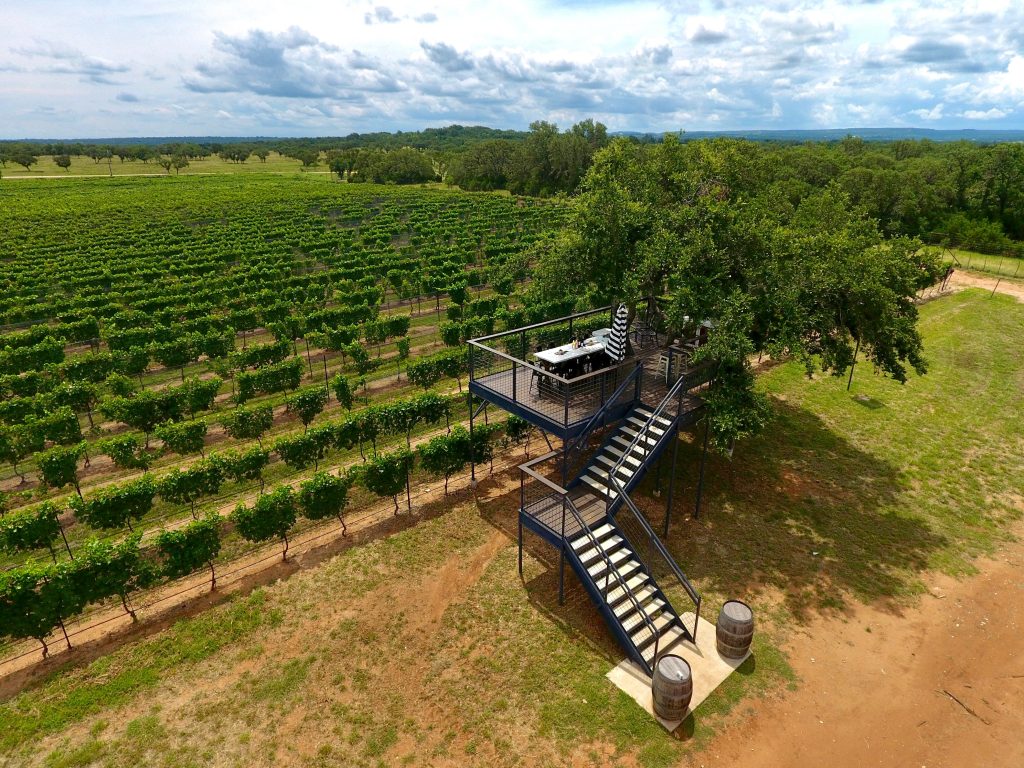
  For an enhanced tasting experience, the vineyard offers a popular “treehouse venue” available only by reservation.

  “We realized that we needed a place for consumers to taste and purchase our wine once we made it, and we wanted to provide that in a creative and fun way,” said Chagoly. “We ended up taking an old mobile home on the farm and stripping it down to its 60-foot metal trailer frame. Then, we transformed it into a fun treehouse venue that overlooks the awesome views of the farm and vineyard.”

  The enhanced experience is a creative adventure based on the belief that everyone deserves to slow down, relax and enjoy a great-tasting glass of wine with their friends. The treehouse overlooks the vineyard and farm and offers a private, seated, outdoor tasting event with the owners of Sandy Road Vineyards. During the tasting, visitors can expect to learn about the owners, the vineyard’s unique terroir, how it benefits the grapes they choose to grow here and the wines they produce.

  “We want to create a deeply meaningful wine-tasting experience that has the potential to become a special lifelong memory,” said Chagoly. “The peaceful scenery, the table overlooking the vineyard and the heartfelt stories from the owners who personally farm and produce their own wine brand are all presented within the unique experience of being outside, in a tree, with the sun on your face and the wind in your hair, overlooking the very vineyard that produced the wines that you are tasting. It will leave you wanting to experience more.”

  The treehouse venue tastings feature food and wine pairings presented in an educational format that not only shares insights into Sandy Road Vineyard wines but also teaches the visitors about Texas wines in general. After your wine tasting, visitors are free to stroll through the vineyard to explore the challenging terroir of the rocky hillside to see what it takes to grow award-winning wine in the Texas Hill Country. The wine-tasting experience

at Sandy Road Vineyards is an exclusively outdoor experience within the vineyard. Chagoly says visitors should plan for a fantastic nature-based experience with the sun, wind, dirt, rocks and all the Texas outdoors offers.

Successful Winemaking Is a Blend of Several Businesses

  “It’s truly been a family affair,” said Chagoly. “Both families are involved in running the winery and vineyards from start to finish, and if there’s one piece of advice I can give to aspiring vineyard owners and winemakers, it would be to seek experience regarding any help or needed advice, because you end up running three separate businesses. In our case, we are growing grapes, making wine,and then marketing and selling our wine all from this one location. At its core, winemaking is a manufacturing and production process demanding a perfect blend of scientific principles and art. Selling the wine is crucial, especially for a new winery like ours. We have to be able to effectively market our wines and get folks out here to try and hopefully buy what we’ve produced. And finally, the actual farming, which is the hardest by far, especially trying to figure out what Mother Nature will bring us here in Texas. The farming aspect can be especially challenging.”

Sustainable Practices, Personal Attention & Precision Care Produce Award-Winning Wines

  The owners of Sandy Road Vineyard believe that the best fertilizer is the farmer’s own shadow, and the best wines are produced in small batches in a sustainable environment, with the individual attention and respect of the winemaker. This means being constantly and consistently in the vineyard, working and harvesting the vines and grapes by-hand to create a wine with perfect balance. They will not put that wine on the market until they find that balance. Therefore, everything is hand-grown, hand-pruned and hand-harvested to produce the highest quality Texas wine for their consumers.

  On a related note, Chargoly has started a website to promote the best in Texas wines. Top Texas Wines features inclusive lists and descriptions of the best 100 percent Texas wines, making it easy for visitors to locate the best of the best in Texas winemaking. At a minimum, each wine listed on the site will be Texas designated, produced by a Texas winery and won a gold medal in blind judging at an international wine competition. Entries include the awards won and the prices per bottle, should you decide to purchase the wine online directly from the producing Texas winery. Chargoly says that every Texas wine on his site is exceptional and worth tasting.

  “Our mission is to bring the highest quality farming and winemaking to Texas wines and to continuously raise your expectations for fine Texas wine.”

  For more information about Sandy Road Vineyards, their award-winning wines, other Texas Hill Country wines or to make a reservation contact…

Sandy Road Vineyards

383 Vineyard Row

Johnson City, Texas 78636

Phone: (512) 589-1826

Website: www.sandyroadvineyards.com

Grapevine Leafroll Disease Management & Control in Vineyards

close-up of grape trees

By: Judit Monis, Ph.D. – Vineyard and Plant Health Consultant

Transmission and spread of leafroll viruses have been documented in all grape growing areas worldwide.  Specifically, leafroll disease has been reported spread in Australia, Argentina, Europe, New Zealand, South Africa, USA, and other important viticulture areas in the world. Different types of mealybugs and soft scale insects can transmit some species of leafroll virus and Vitiviruses. However, long distance dispersion of viruses (as well as other pathogens) is most effective by producing cuttings and grafting.  If you follow my work, you know that I recommend that you plant healthy vines to prevent virus infection in the vineyard.

Grapevine Leafroll Disease

  The most important effect of leafroll disease is the production of small grape clusters with uneven ripeness.  The grapes have lower sugar content (reduced brix values). Foliar symptoms include downward rolling, reddening or yellowing of leaves and vary depending on the grapevine variety or winegrowing area. The leaf veins may remain green or take many other colors (yellow, purple, red, etc.).   Sadly, some wine and tourist magazines use photos of infected vineyards to promote their wine regions.  Although all leafroll associated viruses belong to the Closteroviridae (Greek, clostero: thread-like) family, the only species known to be transmitted by insects are found in the Ampelovirus genus (Greek, ampelos: grapevine). Ampeloviruses include the majority of Grapevine leafroll associated viruses (GLRaV-1, -3, and -4). So far, no vector has been reported for GLRaV -2 or GLRaV-7 (but as other viruses are propagated by cuttings). Research has shown that leafroll viruses are able to recombine in mixed infections, generating many variants of similar viruses that scientists define as a quasispecies (i.e., almost a species). These genomic changes have serious implications on virus detection as standard methods may miss infection. Transmission by mealybug and soft scale insects has been reported for GLRaV-1, -3, and -4. Different mealibugs such as the grape (Pseudococcus maritimus), citrus (Planococcus citri), long-tailed (Pseudococcus longispinus), obscure (Pseudococcus viburni) and vine (Planococcus ficus) are able to transmit Ampeloviruses and Vitiviruses non-specifically. Furthermore, work in South Africa has shown that a single individual of vine or long-tailed mealybug is capable of starting a GLRaV-3 infection.

Sampling in The Vineyard

  The correct identification of the disease causal agent is critical for devising a control strategy. Regular visual inspections and sampling of grapevines should be performed to monitor the disease status of a vineyard. It might not always be possible to correlate the presence of virus infection with symptoms, especially with new viral infections. Complicating matters, other viruses, fungi, or nutritional deficiencies can cause similar symptoms in grapevines. Furthermore, vines planted on their own roots do not develop typical symptoms. Symptoms may appear two or more years after top-working a vineyard with a new variety. Viruses associated with leafroll move slowly in the vine and may remain undetected by laboratory testing, unless sampling is done correctly. Collection of representative samples will allow the laboratory to detect the presence of viruses associated with leafroll. The season for testing is important and samples should be collected from vines late in the summer throughout dormancy.

Virus Testing

  Two methods can be used for the detection of leafroll-associated viruses: ELISA and RT-PCR.  Each method is designed to detect different portions of the virus. ELISA detects the capsid protein (coat or protective cover), and RT-PCR detects the viral genomic RNA (genetic information).  Therefore, ELISA and RT-PCR complement each other on the detection of virus and virus variants. ELISA stands for enzyme-linked immuno-sorbent assay, and consists of trapping the virus protective protein on a plastic test plate containing specific viral antibodies.  The detection is done through a colorimetric enzymatic reaction (positive samples yield a yellow color). The method is limited to the amount of virus present in the sample (i.e., there is not amplification or danger of laboratory contamination). RT-PCR, is the abbreviation for reverse transcription-polymerase chain reaction.  The method involves the amplification or multiplication of viral RNA present in the vine. The process is specific, and utilizes a couple of primers to start the amplification process.  Primers are essentially artificial copies of a portion of the viral genome. The amplification is repeated many times, each step or cycle continues to makes more copies of the viral segment. Consequently, RT-PCR is a sensitive technique for the detection of plant viruses. As mentioned above, the sensitivity and specificity of the detection of viruses associated with leafroll is dependent on the method used for diagnostics.  However, detection it is also influenced by the season and part of the vine from which samples were collected as well as the quality of reagents used. While ELISA is known to be less sensitive than RT-PCR, the ELISA has a broader spectrum of detection (i.e., it detects virus variants). On the other hand, RT-PCR (especially Taqman PCR) may be too specific, and could miss the detection of a virus with small changes due to mutation or recombination (e.g., variant species). Lately, fewer quality ELISA reagents are being developed as designing PCR primers is less time consuming. My recommendation is to use ELISA initially (commercial reagents work well for GLRaV-1 to -4) and RT-PCR to confirm infection (or lack of infection).  When mapping infection in a white fruited grape block such as Chardonnay or Sauvignon Blanc, ELISA may be the only economical way of determining the leafroll disease status of specific vines as many samples must be tested in a yearly basis. 

Leafroll Disease Management & Control Strategies

  To manage leafroll disease, it is important to develop a map of virus infected vines. The map will provide information of virus spread and determine the pattern of infection.  A random distribution of symptomatic vines would generally be associated with planting infected vines. While symptomatic vines aggregated or clustered in one area of the vineyard block is an indication of virus spread.  The initial assessment must be done using a testing lab to determine the presence of a virus species capable of being transmitted.  Once the vineyard manager is familiar with symptoms, the mapping could be done by visual observation.  It is much easier to determine the characteristic leaf roll disease symptoms in red fruited varieties.  In white varieties it may be possible to train eyes to determine the presence of infection but likely will rely on the confirmation of the presence of virus by testing vines.

  Effective disease control requires the availability of clean planting stock (i.e., certified disease-free tested). However, to ensure that the vineyard remains disease free, the grower must be aware of the presence of virus infection in neighboring vineyards. It is important to devise procedures to protect a healthy vineyard from potential disease introduction. The presence of insect vectors and ants should be routinely monitored and controlled. Unfortunately, mealybugs are not always easy to observe in the vineyard, however the presence of ants are usually associated with the presence of mealybugs. Special traps (including pheromone traps) are available to monitor the presence of mealybug infestation. The dispersal of mealybugs by birds, wind, field equipment, and/or workers are responsible for long distance spread of virus. Sanitary practices such as fallow periods, sanitation of equipment, and sanitation of field worker’s clothing are recommended to avoid moving disease vectors from one vineyard block to another.  I always recommend to start work in the non-infected blocks and move workers to infected blocks at the later part of the day.

  Controlling the spread of viruses requires strict protocols for handling vines and performing cultural practices in the vineyard and nursery. Hot water treatment of vine cuttings and grafted vines are effective controlling the movement of mealybugs

from one site to another. Other recommended practices include establishing wind traps, planting insecticidal cover or border crops, using site dedicated clothing and/or shoes for workers, and avoiding the use of potentially contaminated equipment in the vineyard.

  Ultimately, the removal of infected vines or entire blocks will be key to reducing the source of infection.  Guidelines call for rouging (removal of individual infected vines) if there is less than 25% disease incidence and entire blocks (greater than 25% disease incidence). A common mistake is the removal of a portion of the infected vineyard block (see photo 2).  This decision is made to avoid production losses at the vineyard. However, in no time, the newly planted vines will become infected by the same virus present in the other portion of the vineyard.

  The control of leafroll spread needs to be based on a concerted effort among growers. In California the development of a network of neighboring growers has allowed open discussion of infection status of blocks and applied control measures. The use of cultural practices (especially sanitation and insect control applications) should be coordinated and scheduled to include area-wide treatments as grapevine viruses and their vectors do not know or respect neighboring borders

  Judit Monis, Ph.D. provides specialized services to help growers, vineyard managers, and nursery personnel avoid the propagation and transmission of disease caused by bacteria, fungi, and viruses in their vineyard blocks.   Judit (based in California) is fluent in Spanish and is available to consult in all wine grape growing regions of the word.  Please visit juditmonis.com for information or contact juditmonis@yahoo.com to request a consulting session at your vineyard.

Exploring the Diversity of European Grenache Wine  

grenache planted signage

By: Becky Garrison

Grenache has the distinction of being one of the world’s most widely planted wine grapes. Additionally, this versatile wine pairs very effectively with food. Grenache wines have diverse levels of texture and depth with a slight spiciness that work well with a wide range of braised, grilled and stewed meats, as well as the milder styles of Asian cuisine. 

  As part of Feast Portland 2019, a regional food and drink festival with international appeal, Hoke Harden, SWE Certified Spirits Educator, offered an industry presentation into European Grenache wine. He focused on those wines that range in cost from $10 to $20. At this reasonable price point, Harden describes the wines as “not wine you take home and save, but wine you take home and drink.”

  Although lower priced Grenache may not be the sort of wine one ages in a cellar, these wines have a distinguished history that belies their price tag. Carbon dating of seeds and leaves discovered at archeological sites indicate Grenache was planted as early as 153 BCE. Most likely, Grenache originated in the region of Spain now known as Aragon, where it goes by the name Garnacha. However, some have speculated the grape originated in Sardinia, where the grape is called Cannonau.

  As these vines flourish best in hot, sunny and dry conditions, the Mediterranean climate proved to be ideal for growing them. Grenache vines were then planted in Catalonia and then in places outside of Spain that were under the Crown of Aragon, such as France, Corsica, Southern Italy, Sicily, Croatia and Greece.

  The old vines currently growing in the region can be over one hundred years old. They tend to produce a finer and more complex wine than Grenache produced in areas where the vines are much younger.

  The grape comes primarily in three versions: red—Grenache Noir, white—Grenache Blanc, and a version of white known as Grenache Gris. The Grenache Noir is round and smooth with notes of prunes, cherries and other red-pitted fruits. Conversely, Grenache Blanc has a combination of floral, fruity and herbaceous notes and fresh aniseed licorice flavors for a fleshy, mellow wine of medium intensity, a medium to high acidity and high levels of alcohol. The Grenache Gris produces pale rosés and mineral-driven whites with copper hues and citrus notes that are fleshy, round and elegant.

  Additionally, there are two less common Grenache grapes—the Lledoner Pelut (black) and Garnacha Peluda (hairy). The Lledoner Pelut, which is a cousin to the Grenache Noir, is very similar but has more structure and a bluer color. Garnacha Peluda, which gets its name from its hairy leaves, has a lower alcohol content, medium acidity, aromas of red fruits, and rapid oxidation.

  From these varieties of grapes, winemakers can produce a vast array of wines ranging from light- to full-bodied red or white wines, as well as rosé wines, fortified wines, natural wines and sparkling wines. Each of these varieties is highly sensitive to the growing conditions of a particular region. Depending on the soil, climate and elevation, wines produced from these grapes can vary dramatically from one appellation to another. For example, one appellation may yield full-bodied, black-fruited wines, while a nearby region produces a more light-bodied wine made with red fruits. 

  While Grenache can grow in a diverse range of soils, the vines respond best to the schist, limestone and clay soils abundantly found in Northeastern Spain and the Roussillon in southern France. Here the grapes’ tight clusters make it a perfect choice for these hot and dry soils. However, the same tight grape clusters make Grenache prone to downy mildew and bunch rot when grown in humid or rainy locations. Also, as the grapes ripen relatively late, they work best in very warm regions.

  Another positive attribute of these hardy and vigorous Grenache vines is that they use less natural resources than many other vines. In fact, Grenache could be seen as the world’s most eco-friendly and sustainable grape. As this grape adapts to arid weather conditions, it can be grown using environmentally friendly vineyard practices. For instance, these vines are not dependent on rainwater because their roots can delve deep into subterranean water tables. In addition, the plant has a robust wooden frame that is drought and disease resistant. Often Grenache is grown as a free-standing bush with its strong, sturdy trunk able to survive in strong winds. In consideration of all these attributes, in 2011, the World Climate Change and Wine Conference with Kofi Annan in Marbella, Spain recognized Grenache as a product well prepared for climate change.

  Currently, over 90 percent of Grenache grows in Spain and France. The regions have been certified in two European Union quality schemes: PGI (Protected Geographical Indication) and PDO (Protected Designation of Origin). The EU established these schemes in 2012 for agricultural commodities to ensure that the products originated in this particular region. Also, these schemes ensure that the product has been produced in accordance with European agricultural production methods that focus on nutrition and health, food safety, traceability, authenticity and labeling.

  Five PDO vineyards in Spain specialize in the Grenache grape variety: Somontano, Terra Alta, Cariñena, Calatayud, and Campo de Borja. Within these regions exists 5,500 wine growers and 144 wineries, with Grenache repenting about 40% of their vineyards. (Other varieties are Tempranillo, Cabernet Sauvignon, and Syrah). Rosé and White Grenache is grown in the Terra Alta PDO, while Red Grenache is the main variety grown in the other four PDOs.

  Roussillon in France houses 2,200 winemaker families, 25 co-ops and 350 private cellars. The varied topography of this region produces a wide variety of Grenache grapes that can create a range of wine styles, including dry still wines and fortified sweet wines.  

  Most of the reviews about Grenache wines tend to focus on blends such as the Châteauneuf-du-Pape wine blend from France’s southern Rhône Valley. French winemakers discovered this variety in their search for a grape that would add alcohol, body and fruity flavors to their existing wines. Other noted blends made using Grenache can be found in Gigondas, and in the Priorat reds produced in the Priorat county, situated in the southwest of Catalonia in the province of Tarragona. Many of these wines tend to carry a significantly higher price tag than the moderately priced wines highlighted by Harden, with select bottles garnering a price as high as $800. 

  Harden noted throughout his talk that while winemakers continue to blend Grenache with other grapes, some producers have begun to make wines with 100% Grenache. Of the 10 wines Harden selected for his presentation, six wines were made with 100% Grenache. These wines ranged from light- to full-bodied reds.

  On its own, Grenache has historically tended to be a light red with very light tannins, fruity aromas, medium body, a low to medium acidity and high alcohol. But Harden spoke about a generation of winemakers who have begun a new approach to growing Grenache grapes. About twenty years ago, these winemakers discovered that by cultivating the older gnarled vines, limiting yields and seeking out the right terroir, they could grow Grenache grapes that possess a fuller, more robust flavor.

  Along those lines, some growers find that when they experiment with growing these older vines at higher elevations in colder climates, they can produce wines that are more complex, elegant and concentrated. These wines often benefit from bottle aging. When these vintages mature, winemakers will be able to compare the properties of the wines with those grown in hotter, drier climates where Grenache grapes have grown for centuries.

  Moving forward, some wineries are experimenting with growing organic and biodynamic Grenache wines, which favor the environment by limiting the use of chemicals. In a similar vein, some producers are experimenting with making Grenache wines without sulfites. All these developments appear to be creating a wine that is sustainable from both an environmental and an economic standpoint while also producing a wine that remains in line with EU quality standards.

  From an industry standpoint, Grenache wines—the single-varietal styles in particular—remain unknown to most U.S. consumers. Hence, many of these wines stay at an affordable price point even as the quality rises.

Women in Wine: Fermenting Change in Oregon

people inside a winery

By: Becky Garrison

The genesis for Women in Wine Oregon began in 2015 after Susan Sokol Blosser, founder and garden advisor for Sokol Blosser Winery, participated in a U.S.-based wine conference attended by 500 men and women. While serving on a conference panel, she spoke about the Oregon wine culture through the lens of a family business and generational planning.

  During the informal conversation that ensued following her comments, Blosser and others realized that even though the Oregon community hosted many collaborative events, these gatherings did not highlight women winemakers. Given Oregon’s history in forging new paths, such as putting wine in a can, becoming a leader in biodynamic farming practices and the farm-to-table movement, they felt the timing was right to launch an organization devoted to highlighting the contributions of women in this industry.

  As per the Women in Wine Oregon website, the organization’s mission is to “provide a platform of inclusion for the advancement of female leadership in the wine and beverage industry.” Its mission statement continues with, “We provide opportunities for personal and professional development through an annual conference, community engagement events and a mentorship program. As a membership-based nonprofit, we catalyze ‘fermenting change’ through empowerment, engagement, diversity and accountability.”    

Launching Women in Wine 

  The year 2019 marked the launch of Women in Wine: Fermenting Change, which was Oregon’s first event dedicated to empowering and advancing women in the wine industry. While this sold-out event had to be held virtually in 2020 and 2021 due to the ongoing global pandemic, it returned for a hybrid conference on July 19, 2022. By allowing people to participate virtually or in person, they could attract those who could not travel to Willamette Valley Vineyards in Turner, Oregon, where the conference was held.

  This hybrid conference attracted 240 in-person and 85 virtual participants for a day of educational programming led by 18 leaders within the wine industry, along with networking opportunities. Those gathered ranged from industry veterans who have been working in the wine industry since the 1970s to women looking to enter this industry. 

The Challenges of Diversity Within the Wine Industry

  A virtual session with the McBride Sisters highlighted the association’s commitment to diversity and inclusion, which they describe on their website as recognizing the rich diversity of voices in the region’s wine community, with a focus on opening doors for the many individuals who have been historically underrepresented or excluded.

  Raised among the vines of Marlborough, New Zealand and Monterey, California, respectively, Robin McBride and Andréa McBride never knew each other until they connected later in life. They discovered how their mutual familial love of wine stretched across two continents. In 2005, they found themselves in California, where they decided to shake up the industry with their unique blend of new-world finesse and old-world elegance. Thus, the McBride Sisters Wine Company was born in Oakland, California.

  Since then, this sisterly enterprise has grown into the largest Black-owned wine company in the United States and is one of the most inclusive, accessible, socially aware and sustainable U.S.-based wineries. Also, through their SHE CAN Professional Development Fund, they invest in the professional advancement and career growth of high-potential, professional women, with a particular focus on women of color working in leadership positions in the wine and spirits, hospitality and finance industries.

  Among their biggest challenges was the mistaken assumption that Black women don’t drink wine or they only drink certain types of wine. According to Robin, they addressed this bias by focusing on the aforementioned vision they’ve maintained from the beginning. “Our tenacity and our unrealistic optimism help because we see them as bumps in the road and not big game changers,” she notes.

  In a panel titled Connecting through Generations, Tiquette Bramlett, CEO of Our Legacy Harvested (Newberg, OR), and Ximena Orrego, Co-Owner and Winemaker of Atticus Wine (Yamhill, OR), spoke to how the power of community in enabling women of color to enter and succeed in the wine industry. For example, Bramblett founded Our Legacy Harvested with Diana Riggs in 2020 to educate, advance and empower the BIPOC community in the wine industry. In their exploration of how to keep people safe during the pandemic while also amplifying BIPOC businesses, they hosted a block party in McMinnville, Oregon. They knew they were on to something when a woman in her eighties came to them and said she had been waiting for an event like her entire life. “It just broke us to pieces,” Bramlett reflected.

  Since that inaugural event, Our Legacy Harvest launched an intern program in 2022 intending to help BIPOC people make connections within the Oregon wine community. Also, they created Diversity & Inclusion Training (DEI) via a partnership with Assemblage, which is an Oregon-based 501(c)(3) nonprofit organization aimed at addressing disparities within the global wine industry. A winery needs to have completed this DEI training to apply to host one of their interns.

  Along those lines, Orrego cited how connecting with Carla Rodriguez, Founder of Beacon Hill Winery & Vineyard (Gaston, Oregon), led to the launch of Celebrating Hispanic Roots. This small group of Oregon winery owners and winemakers who share a Hispanic background came together to celebrate Hispanic Heritage Month (September 15 to October 15). After hosting this event virtually in 2020 and 2021, they hosted their first in-person event in 2022.

  Jeri Andrews, founding partner of XOBC Cellars (Seattle, Washington), spoke to this winery’s unique role as one of the few LGBT wineries in the United States. The idea was never about money when this winery was founded in 2019. Instead, founders multi-Grammy-winning artist Brandi Carlile, her wife Catherine and their friends, Jeri and Amy Andrews, wanted to make epic wines out of Washington and Oregon that were representative of the terroir and to connect people who historically haven’t been welcomed at the table. “We want to bring other people to the table who maybe felt unwelcome. We’ve got this group of misfits that are part of our community of collectors, and we love it.”

  They weave activism into their winery with an organization called The Looking Out Foundation, founded in 2008 by Carlile, along with Tim and Phil Hanseroth. This organization seeks to amplify the impact of music by empowering those without a voice. From neighborhood to nation, they help fund causes and organizations that often go unnoticed.

  In Andrews’ estimation, if you want to create change, all you need is a small group operating on the same wavelength. “You’ve got to go where the players are and know how to bring people to the table.” As one example of bringing people together through wine, Andrews cites Brandi Carlile’s Seattle house parties, where music and wine connect people.

Moving from Talking about Diversity to Taking Action

  Maryam Ahmed, the owner of Maryam + Company and co-founder of the Diversity in Wine Leadership Forum, spoke about the practicalities of implementing diversity in the wineries. She stresses how it’s a privilege to talk about diversity, equity, inclusion and belonging rather than experiencing why these conversations are necessary. “We cannot aim to improve our professional environments without also improving the personal environment within which we live, including our bodies and minds,” she notes.

  According to Ahmed, what this privilege means from a hospitality perspective is the need to fight this notion that we have to check our stuff at the door. She opines, “As we serve other people, how could we possibly not bring our personhood into the service that we offer?” At a minimum, she feels when we make these changes, we open the door for more creativity, growth and innovation. That leads to higher retention, innovation and a better bottom line.

  She summarized her work to help create more diversity with the ACT (Accountability, Communication, Transparency) framework. The first step is accountability, which means taking ownership of our thoughts, beliefs and actions. We acknowledge there’s an issue and seek out how to fix it.

  The answers can be found in communication that can help us align our words with our actions, as well as welcoming the needs of others and sharing our needs with those around us. In our communication, we need to strive for transparency, which puts us in a place of honesty. In this place, we can be positioned to be effective and get the resources we need.

  In Ahmed’s experience, this ACT framework functions as a cycle, not a checklist. “This work is an ongoing, lifelong journey and commitment,” she says.

  This conversation will continue at Women in Wine Oregon’s fifth annual Fermenting for Change Conference, which will be held on July 18, 2023, at Stoller Family Estates in Dayton, Oregon. More information can be found on their website at…

https://www.womeninwineoregon.com

The Beaujolais “Nouvelle” Generation

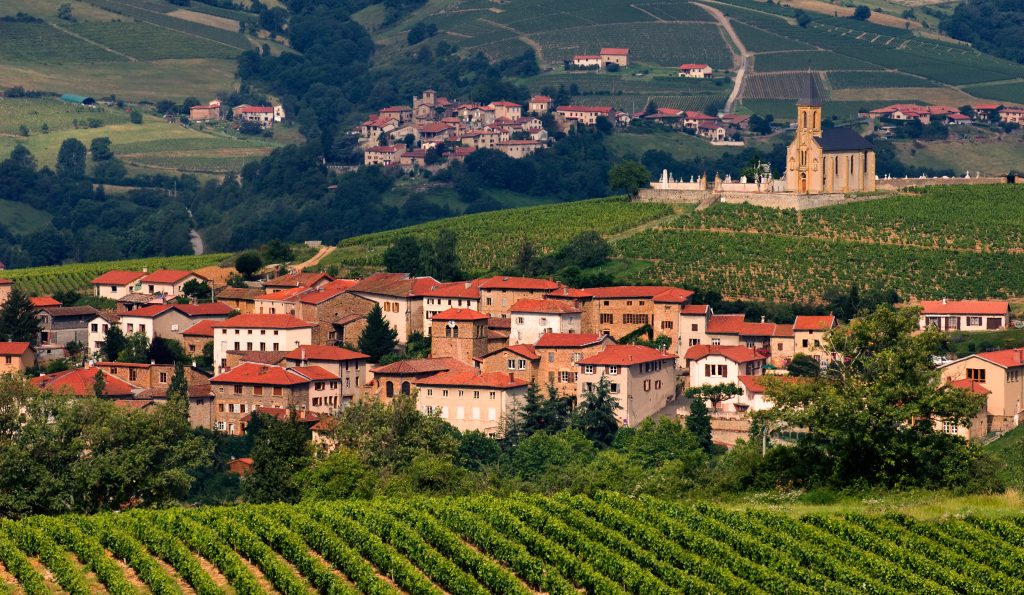
overlooking village surrounding a wine field

By: Tod Stewart

Le Beaujolais Nouveau est arrivé! Readers of a certain vintage may recall the pandemonium at the local wine purveyor upon the unleashing of that phrase. It was the official annual call for wine lovers to storm the shelves and grab as many bottles (or cases) of the year’s first ferment.

Beaujolais nouveau was never (and still isn’t) a particularly great wine, but then again, it wasn’t meant to be. The wine itself was simply “a means to an event,” for lack of a better way to state it. Originally meant to celebrate the vintage and slake the thirst of the French workers who’d been toiling in the vineyards, Beaujolais nouveau morphed into an international phenomenon, spawning a plethora of fun, fruity, fast-fermented wines around the globe – and also spawning global parties.

A major bonus of the nouveau craze, insofar as the region’s winemakers were concerned, was the spreading of the word Beaujolais far and wide. The downside may have been that all Beaujolais started to become lumped together in the minds of consumers, leading to the incorrect assumption that, in spite of the wine’s (subtle) diversity, it was all fun, fruity, light, and inconsequential.

“I would agree on the fun and fruity description. Light not so sure,” contends Phillippe Marx, Commercial Director for Vinescence, a 350-producer-strong cooperative established in 1929. With growers spread over 2,970 acres across the region, Vinescence is able to offer selections from every Beaujolais category. 

  “With the recent climate evolution, we have wines with 13 per cent alcohol that I would not describe as light,” he suggests [Indeed, I recently had one that was 14 per cent]. “If you are speaking about the structure, yes, we have less structure and body than wines made from Cabernet or Zinfandel, but what we do have is elegance -– something that a larger share of the consumers are looking for.”

  The profile of Beaujolais wines as being “elegant” rather than “opulent” stems from a couple factors. The first is the grape variety used. The second has to do with what’s done with it.

  The Gamay grape (Gamay Noir à Jus Blanc if you want to be precise) is the Beaujolais grape. Sure, there are plantings in other parts of France (notably the Loire Valley), and in pockets scattered around the globe (it does quite well in Ontario’s Niagara region), but in no other region is it as dominant as in Beaujolais. In fact, about 98 per cent of all vines planted in the region are Gamay. Thin-skinned, early-ripening, and moderately vigorous, Gamay more often than not yields red wines relatively high in acid, low in tannin, and eminently fruity -– both on the nose and in the mouth. The grape’s qualities are enhanced via a semi-carbontic fermentation process, where whole grape clusters (including stems) are, in the words of Jancis Robinson, MW, “…fermented whole, fast and relatively warm, with some pumping over and a high proportion of added press wine….” This can last for as little as three days (in the case of nouveau) and up to 16 for the more top-level cru Beaujolais.

  “The typical carbonic maceration of full grapes enables us to express all the aromatic potential of the Gamay grape,” Marx confirms. “In the last decade, we rediscovered the possibilities offered by using oak and some longer maceration time. For some of our crus like Morgon and Moulin à Vent, or some single vineyard wines, we are also working in a more Burgundian style of vinification, with destemming and longer skin contact. This adds more structure to the wine, and with soft oak aging, enables us to smooth the tannins and reveal the full depth of the wine. This approach enables us to take advantage of the versatility of Gamay, and give [it] the chance to show all [its] potential, from the soft juicy Chiroubles, to the earthy Côte de Brouilly, and the soft bodied Morgon,” he explains.

  Of course, the supple, easy-drinking nature of Beaujolais wines might have the Napa Cab crowd dismissing them as less than “serious.” Marx responds to such criticism in a way that leaves me nodding (rather enthusiastically) in agreement. “Regarding serious; who said wine has to be serious? Wine is about sharing pleasure and good vibes. Serious is such an old way of approaching wine; a time when it was reserved for serious [air quotes] people. Beaujolais is a wine that speaks to all consumers – young and old – who are looking just to enjoy a nice glass, or discover the complexity that a mature Gamay wine can offer.”

  Delving a bit more deeply into what differentiates the styles of various Beaujolais wines -– from Beaujolais, to Beaujolais-Villages, to the ten crus de Beaujolais -– Marx notes that a winemaker aims for different outcomes depending on the pedigree of the wine being produced.

  “We at Vinescence have the chance to produce all the wines from Beaujolais, from Beaujolais Nouveau to each of the single crus. When producing Beaujolais and Beaujolais Villages, you are trying to extract something different than when you produce, for example, a single vineyard Morgon. For the first ones, you look to keep the fruit, and the freshness. For the other one you are trying to have more extraction and reveal all the potential. This potential is the combination of the soil, the exposure, the altitude. So yes, nature gives you a different potential, and with your specific vinification style, you try to express the best of this potential. For instance, we age some of our crus in oak barrels to underline the structure … we decided that this is not an option for our Beaujolais Villages. This is not what we are looking for in a villages-level wine. In Beaujolais we are fortunate to have a whole spectrum of different profiles due to that combination of natural elements – our role is to express them in the best possible way.”

  Speaking of different profiles, there’s also been increased interest in Beaujolais Rosé and especially Beaujolais Blanc.

  Beaujolais Rosé remains, in my opinion a niche market. We are not competitive on prices because of our limited yield,” admits Cathy Lathuiliere, Export & Winemaking for Domaine de Lathuiliere-Gravallon, an estate that dates back to 1875. “On the other hand, it is another story for Beaujolais Blanc, which is becoming more and more in demand. Indeed it is a Chardonnay similar to Bourgogne wine, which is becoming more and more inaccessible in terms of price. Some customers who previously bought a generic white Burgundy at a reasonable price have switched to Beaujolais Blanc, which can be an excellent alternative.”

  In fact, one of the tenants of “Beaujolais Nouvelle Generation” -– the ten-year roadmap developed by Inter Beaujolais (the Beaujolais wine council) is to diversify the region’s wine portfolio by placing additional emphasis on rosé (short-term goal) and white wines (mid- to long-term goal).

  Of course, one element the winemakers of Beaujolais have had to contend with (touched on earlier in the story) -– and one with which they have no control over -– is the effect of climate change. Interestingly, winemakers in the region are not necessarily seeing this as a bad thing for them, understanding, of course, that it’s not the ideal situation globally.

  “We have observed during the decade a global warming, [that it] is totally beneficial for Beaujolais,” says Lathuiliere-Gravallon. “Now we make more balanced wines, with a little less acidity. Unfortunately, this warming has reduced the yield due to frost and hail,” not to mention drought conditions.

  Marx points out that when he came to Beaujolais 35 years ago, harvest started in mid- to late-September. The past vintage harvest started in mid-August. While he concedes the extra warmth ultimately leads to wines with more structure, there are some new challenges to deal with. “We need to work harder during vinification to maintain the balance between freshness and body, fruit and structure,” he notes.

  While Beaujolais producers can’t directly alter the effects of climate change, they can work together to ensure the byproducts of their profession contribute as little environmental impact as possible. In fact, winemarkers in the region have taken an active role in developing and encouraging sustainable practises on their own, initially with no government encouragement or support. Today they are leaders in promoting positive environmental, economic, and social aspects relating to their industry.

  Marx made some good points a few paragraphs back about the “serious” nature of wine. At the risk of going off on a personal opinion tangent (but since I’m the writer, why not?)… when you consider the rather “serious” state of the world these days, maybe what we could all use is a large glass (or three) of a wine that has been fermented for one reason only: to bring pleasure. It’s not meant to be analyzed, collected, cellared or, (shudder) scored. A few good, fruity gulps of Beaujolais Nouveau (sightly chilled) might be just what the doctor ordered. Of course this year le Beaujolais Nouveau n’est pas arrivé! -– at least here in Ontario (due to supply chain/due to inflation/due to Putin/due to COVID – pick one…or all). But thankfully there’s plenty of Beaujolais, Beaujolais Villages, and crus de Beaujolais to keep the party rolling.