Women and Winemaking-A Constellation of Stars Creating Stellar Wine

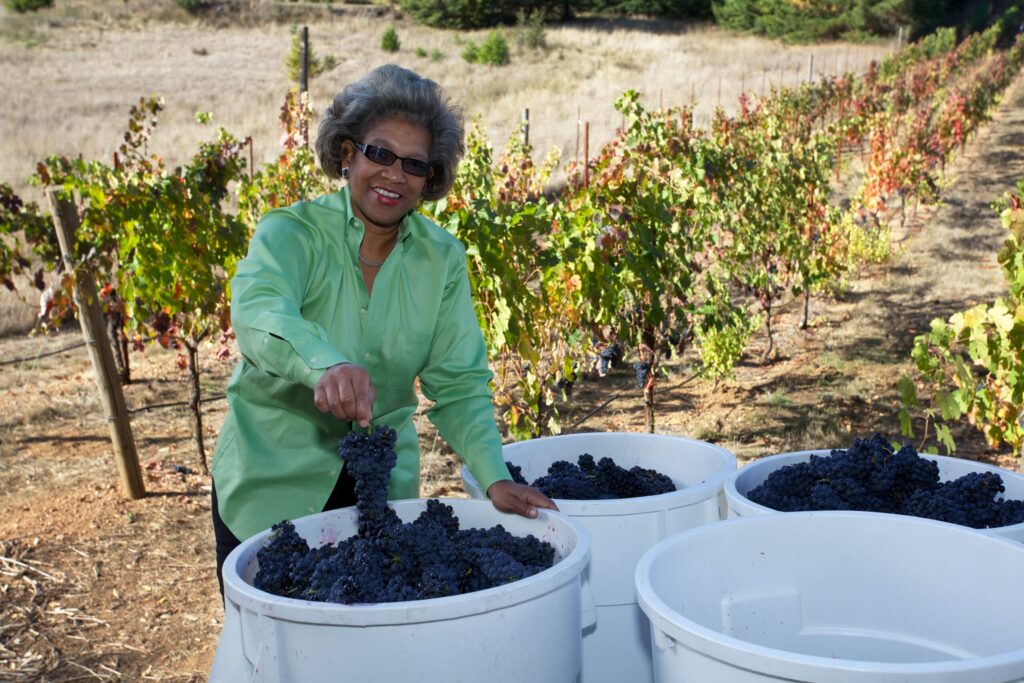
Attorney Theodora Lee-Owner of Theopolis Vineyards

By: Cheryl Gray

Women have been an integral part of winemaking since the days of ancient Egypt, Greece and the Roman Empire. Today, they own vineyards and wineries and have a hand in virtually all aspects of creating wines that earn accolades and appease palates around the world. 

  Among them is Attorney Theodora Lee, a senior partner in a San Francisco law firm who never imagined herself becoming a vineyard owner and winemaker. Lee’s groundbreaking step toward establishing Theopolis Vineyards came in 2003 when she bought several acres of land in the Yorkville Highlands region of Anderson Valley, a Northern California wine-growing region about two hours outside San Francisco. Anderson Valley is a designated AVA (American Viticultural Area) known largely for producing pinot noir and sparkling wines.

  Lee was no stranger to farming since she grew up around farms in her native Texas. As a seasoned litigator and trial lawyer, she also knew that she had to equip herself with knowledge about viticulture, which she did at UC Davis. However, Lee hadn’t planned on going solo when the time came for her first grape harvest, one that would result in her first award-winning wine.

  “From 2003 until 2012, I was quite content being a grape farmer, plowing the land, pruning the vines, fertilizing the vineyard, mowing, chopping, weed eating, erosion control, tying the shoots up to T-posts, fruit thinning and picking the grapes during harvest. As any winemaker will tell you, great wine starts in the vineyard.

  Then, in 2012, an ill-timed rain fell during harvest, and I rushed to pick my grapes at 22 brix. The buyer at that time had contracted for grapes at 25 brix, so they rejected the entire lot – 10 tons of fruit. Faced with no one willing to purchase fruit at a lower brix level at the last minute, I decided to have my fruit custom-crushed.”

  Lee’s pivot to a custom crush led to Theopolis Vineyards’ award-winning 2012 Estate Grown Petite Sirah, which earned a gold medal at an international wine competition. Her moniker in the wine industry is “Theo-Patra, Queen in the Vineyards,” part of which is a throwback to her pledge name as a Delta Sigma Theta Sorority member.

  “Now that I have a wine brand, the greatest motivator for me is to produce premium wine which is second to none. I love to bring folks pleasure in the bottle, and it is very important that I produce the best product to bring to the marketplace.”

  Theopolis Vineyards consistently rakes in awards, with 90 percent of its products sold directly to consumers. Lee says that as a small craft winery, a three-tier distribution system doesn’t make economic sense for her company. Instead, Theopolis Vineyards focuses on direct shipping to a customer base stretching across the United States and, more recently, Belize. Lee adds that the company has a few distributors focusing on its handcrafted products, and those relationships have worked well. The wine club approach, however, has been spot on. 

  Lee’s advice to other women who want to enter the world of winemaking is straightforward.

  “For anyone thinking about entering the viticulture industry, I suggest that you find your passion.   There are all aspects, from vineyard management to enology, business management, marketing, sales and wine education. So, my slice of advice: ‘Pursue your passion, educate yourself, work extremely hard, be persistent and be very patient, but never give up and keep climbing, then success is yours for the taking.”

  Cathy Corison, founding partner of Corison Winery in California’s Napa Valley, knows a thing or two about that advice. Corison took a career pivot of sorts and beat the odds. Corison’s journey to winemaking began in college when, as a biology major, she found herself drawn to the science of winemaking. A master’s degree in enology, followed by multiple opportunities to get hands-on experience, led to Corison finally making her breakthrough, establishing Corison Winery in 1987. She did it by purchasing grapes grown in the region between Rutherford and St. Helena, an area known for prime benchland vineyards. Purchasing barrels followed, and then, to produce the wine, Corison had to depend on vacant space in other wineries to create her first products. All the while, she was still moonlighting on other winery and vineyard jobs. 

  Corison Winery finally got its own estate vineyard in 1995 when the company bought the former Kronos Vineyard, which had operated as a farm for over a century. Corison would use part of the land purchase to build a winery in 1999, a Victorian-style winery barn structure designed by William Martin, an architect. In 2015, Corison Winery purchased the nearby Sunbasket Vineyard after sourcing grapes from it for more than 25 years. 

  Together with her husband and business partner, William Martin, Corison has established a reputation for the winery by producing cabernet sauvignons that are marketed as globally recognized wines noted for their distinctive taste, longevity and consistency. The majority of sales come through the winery’s wine club, visitors to the winery and online purchases, resulting in exports to 18 countries and a presence in several U.S. markets.

  Corison says her motivation is driven by a personal devotion to creating good products.

  “Wine is alive and grounds us. The best part is sharing it with friends, family and guests to the winery. I love the great wines of the world, and it is so gratifying to be a part of that.”

  Corison shares her advice to women who want to enter the viticulture industry. 

  “First, you need to be passionate about wine because this is a very difficult business. Then be prepared and start walking. Persistence and a long view will be required.”

  Persistence and the long view paid off for St. Clair Brown Winery and Brewery, a self-described boutique urban winery and nano-brewery headquartered in the city of Napa, California. What used to be a deserted lot and former machine shop is now production central for hand-bottled craft wines and beers.

  Longtime friends Elaine St. Claire and Laina Brown worked together at other wineries for the better part of 18 years before they took the leap to open the winery portion of their business in 2010, followed by the companion nano-brewery in 2018. St. Clair is the winemaker and brewmaster. Brown serves as the company’s president. 

  According to Brown, the duo’s years of experience at larger wineries gave them real motivation to put wines on the market that would distinguish their products from the rest. The two used that motivation to sit down and make a list of everything they wanted their own venture to encompass.

  “After working in the industry for over 10 years, 20 years for Elaine, we came to a point in      our careers where we just wanted to create wines that were crafted with respect, applying the attention to detail and a level of quality that we were truly proud of and then to share them with our community. Our vision was to make our products for the people around us and for the rest   of the wine industry out of honor for what could be created – not just create another brand wrestling for market share.”

  St. Clair got her wish by being part of creating the best of both worlds. As a UC Davis graduate and an award-winning winemaker and brewmaster, St. Clair had always wanted an opportunity to make both wine and beer, putting to use 30 years of experience in making wines in Napa Valley and a decade more as a head brewer.

  For Brown, experience as a wine industry executive came into play when deciding how to create what she describes as a place where craft wine and beer could be showcased in an inviting space. Brown describes the many different facets of how women can enter the winemaking space.

  “The wine industry is very diverse and creative. My advice is to think of what area speaks         to you and how you want to live. The viticultural side of the industry is the establishing and farming of vineyards. If you are more outgoing, you may prefer a career in sales and marketing or hospitality. There are also many fields that support the industry, which are as wide ranging as technology, accounting and culinary. This industry attracts a lot of talented people with different personality types who work hard and enjoy a great lifestyle. More and more women are working in the wine industry, and there is a place for everyone.”
Galena Cellars & Vineyard-Family Legacy Through Generational Contribution

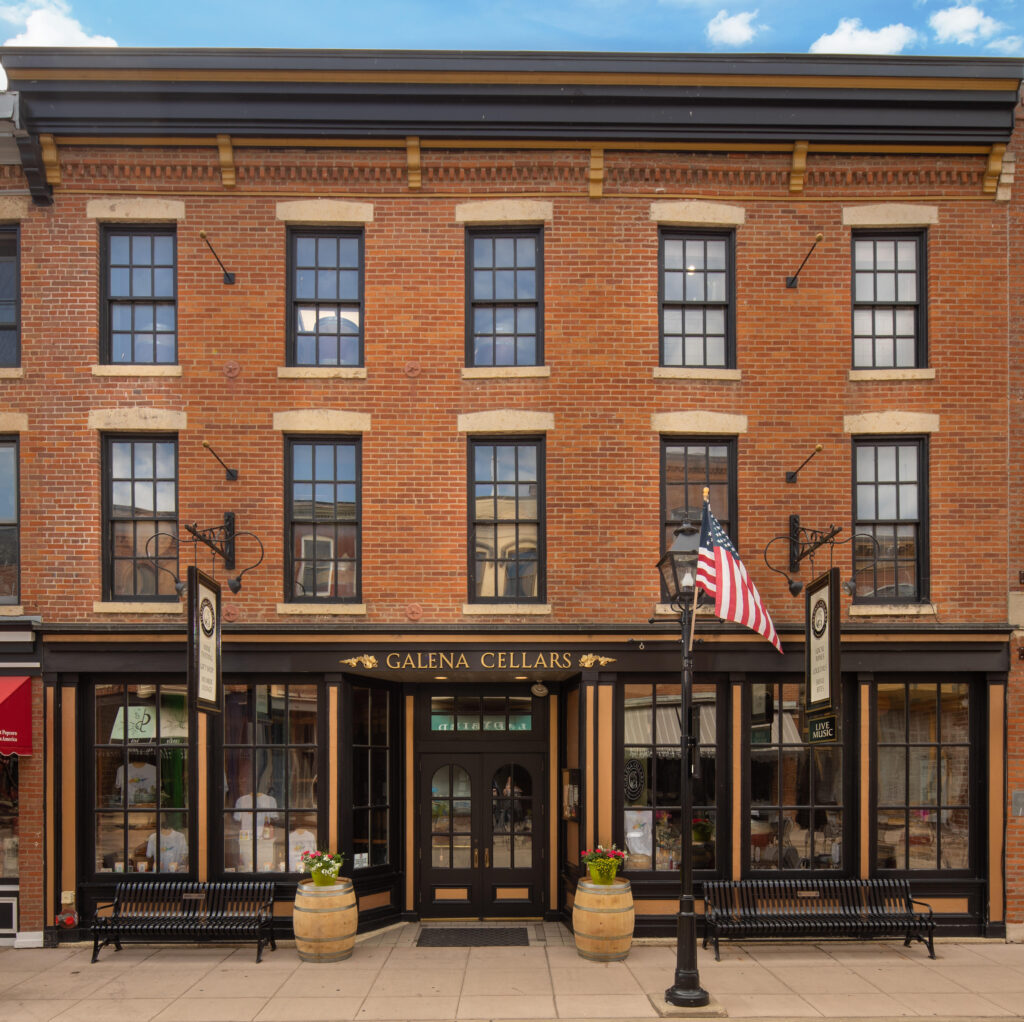
photo of front of Galena Cellars winery building

By: Gerald Dlubala

When a third-generation winemaker like Eric White, president and winemaker of Galena Cellars Vineyard and Winery in Galena, Illinois, calmly and confidently says that he’s still learning, it shows the dedication and continuous education that occurs in the winemaking industry. According to White, every harvest, every tweak in the process and every batch produced is a learning opportunity, and it’s part of the excitement of being a winemaker.

  White says that the family’s winemaking journey started with his grandparents. “My grandpa Lawlor is the root of Galena Cellars,” said White. “He was this eccentric guy who just liked to do things out of the ordinary. One day, he decided to take a home winemaking class at a community college in Cedar Rapids. At the time, the popularity of wine was taking off on the West Coast, but there were little to no actual wineries throughout the Midwest. Grandpa Lawlor thought this had a chance to be something special, something unique and something they could all enjoy as a family. The idea kind of spiraled from there, and now, three generations later, here we are.”

  The current Galena Cellars and Vineyard location is actually the third winery opened by the family. In 1976, after graduating with her degree in enology from Fresno State University, Christina Lawlor, the family’s second-generation winemaker, opened Christina Wine Cellars in McGregor, Iowa. She produced 200 cases of cherry wine. Four years later, in 1980, a second location opened in LaCrosse, Wisconsin, in an old Milwaukee freight depot.

Finding the Perfect Spot

  It was in 1983 that the Lawlor family came across the location in Galena, Illinois, while on a trip to purchase grapes. Christina recruited her brother Scott and his wife Karan for help with this new family project. Galena Cellars opened in 1985, taking up residence in a restored 1840s granary building on Main Street. Following the opening, Galena Cellars celebrated its first annual Beaujolais Nouveau Wine Celebration and, in the process, gained further recognition when they were featured on The Today Show.

  Galena Cellars wine production grew, resulting in the family purchasing a farm on North Ford Road, just outside of Galena. This made it possible to move their wine production here to the farm and vineyard. It allowed them to start growing experimental grape varietals. It also came with expanded responsibilities, so the family decided to close the McGregor and LaCrosse locations to focus all their energy and resources on the farm and vineyard location.

  “We currently grow La Crosse, Marechal Foch and Petite Pearl, Verona on 4.5 acres,” said Christina Lawlor-White, second-generation winemaker. “Additionally, we have an experimental one-acre vineyard that we work on in conjunction with the NIWG (Northern Illinois Wine Growers). We have 12 vines responsible for 23 varieties. It sounds like a lot, but for me, it’s not a job, it’s a lifestyle. It’s hard work, but it’s also invigorating work. It’s still exciting, and it never gets old.”

  Galena Cellars and Vineyard offers tastings, tours and music at the vineyard. Additionally, guests are always invited to simply hang out and take in the beautiful vistas and all that the farm and vineyard have to offer. If interested, guests can take a more intimate stroll through the vineyards or soak up the area’s picturesque sunsets while enjoying the award-winning wines made right there on site.

  In 2004, five years after releasing its flagship wine, “Eric the Red,” named after Christine’s son Eric, Galena Cellars added a suburban tasting room and gift shop in downtown Geneva, Illinois.

  While offering the same great wines as the farm and vineyard location, the downtown space also featured music, tastings, wine-infused cocktails and small bites available from a full kitchen that perfectly paired with their wines.

A New Generation Continues the Family Legacy

  Galena Cellars’ history reveals a true family business success story. Several family members were included along the way, some even moving to the area to join the business. During this time, Christine Lawlor-White would go on to be named “Winemaker of the Year” three separate years by the Illinois Grape Growers and Vintners Association, owning the title in 2002, 2008 and again in 2017.

  As additional family members completed their education in winemaking and joined the business, some of the others retired. It was in 2018 that Eric and Britt White were called on to continue the family legacy as third-generation winemakers. Eric is the current president and winemaker, and his sister Britt is Galena Cellars’ brand ambassador and wine club manager.

  Following family winemaker tradition, the Illinois Grape Growers and Vintners Association named Eric “Winemaker of the Year” in 2019. Enhancing the ceremony, his mother, Christine, was the one to hand him the coveted award. Eric and Britt are now moving the winery forward, infusing their ideas and techniques into what the family has done before them, and the future looks as bright as the morning dew glistening off of their grapevines.

Family’s Work Ethic Continues Through Generations

  “We grew up in a rural lifestyle that was very different and very unique,” said Eric. “I never really understood the magnitude of what everyone was doing and all of the accomplishments that happened along the way. Looking back, it was a lifestyle of invigorating, hard work.”

  That hardworking family tradition keeps Eric and Britt determined to push the envelope and never shy away from new ideas, as long as they do so in a way that honors the traditions and legacy of the family members who started and grew Galena Cellars to where it is today.

  While many winemakers I speak to dread the harvest season for the endless hours and continuous deadlines that present themselves to get the grapes gathered and processed, this family seems to relish the harvest season. “The harvest is the most exciting time of the year for me,” said Eric. “It’s a second chance on winemaking. It’s when I can assess what I did right and what I did wrong and constantly improve from there. It’s when we can bring in new varieties from the vineyards we worked with in the past and create new styles or variations to offer our guests.”

  “We have a strong passion for perfecting what we do,” said Britt. “We want to stay small and remain unique, and we want to grow our wine club offerings and membership. We offer everything from dry reds to a fruit and dessert selection and everything in between. There is truly something for everyone in our lineup. Additionally, our wine club gives us the unique opportunity to try out new ideas in our cellar and produce unique, small-batch wine exclusively for the members.”

  Galena Cellars Vineyard and Winery offers up to 70 varieties of wine. “We have five acres encompassing three varieties,” said Eric. “We use these three varieties to produce small batches of wine in various styles.”

  “We are working to find the perfect grape to grow in our climate,” said Christine Lawlor-White. “We have an experimental vineyard on the property that allows us to continue our quest to research these new varietals. Our terroir and environment matter as much as the finished product, so finding the perfect grape to grow in our climate can take years of research just on its own. Typically, our best sellers are our flagship, Eric the Red (marechal foch), our Oktoberfest (riesling and muscat blend), our General’s Reserve Red (a red blend of hybrid and vinifera varietals) and our locally sourced Edelweiss.”

  Lawlor-White also tells The Grapevine Magazine that the palates of their consumers continue to change, so their wines are evolving as well.

  “We work in depth with vinifera grapes and implement the education and technology learned from West Coast viniculture and apply that knowledge to our American French hybrid grapes,” said Lawlor-White. “Additionally, we focus on sourcing fruit from our local growers, as well as some of the best-growing regions available.”

  That strategy has served them well. Their awards are too numerous to list here. Yet, from Illinois State Fair Competitions to American Fine Wine Rosé Wine Competition and into Experience Rosé International Wine Competitions, there are enough silvers, golds and double-golds to impress even the most experienced wine consumer.

  “Winemaking is one of those businesses that typically is a family business,” said Lawlor-White. “It’s as if winemaking is in your blood! Each generation makes important contributions, and the wine just gets better and better.”

  “We are fortunate to work together and spend time as a family together doing things we all love to do,” added Britt.

Plan a Visit and Maybe Even a Stay

  Galena Cellars Vineyard and Winery offers an updated tasting room and a wraparound deck to enjoy the unmatched views of the surrounding farmland and picturesque vineyard vistas. Guests are encouraged to stroll through the vineyard

and end their day with a glass of locally made wine while experiencing a memorable sunset in a farm and vineyard setting. For those who want an extended stay, Galena Cellars offers a cozy guest suite and quaint guest house that would be perfect for an extended stay. Treat yourself to a romantic getaway, a family get-together or a simple night away from the rigors and stresses of daily life.

  For more information, including award lists, or to book a stay, contact Galena Cellars Vineyard and Winery at:

Galena Cellars Vineyard

4746 N Ford Road

Scales Mound, Illinois, 61075

815-777-3235

Galena Cellars Downtown

111 N Main Street

Galena, Illinois, 61036

815-777-3330

www.galenacellars.com

The Evolution of California’s Winery Industry (2013-2023)

A Decade of Challenge, Change and Resilience

Napa Valley Sign outside of Vineyard says Welcome to this world famous wine growing region

By: Mike McNulty, Managing Principal at EPIC Insurance Brokers & Consultants

Over the past decade, California’s wineries have witnessed changes in the property insurance marketplace that would have seemed impossible ten years ago. As an insurance broker focused on the winery industry, I have seen firsthand how movements in the insurance marketplace have reshaped how our wineries do business. As we look for a way forward, it helps to look back at the road that brought us to where we are today.

  Think back to harvest time in 2013; vintners prepared to reap the rewards of a long and sunny year, enjoying a high-yield, high-quality crop of fruit. We were all a little nervous about another dry year (California’s rainfall was less than 34% of what forecasters had hoped to receive). And while the state was in the grip of what we eventually realized was its worst drought in recorded history, there was no question that the California wine industry was ascending.

  There was so much confidence in the future of California’s wineries that insurers were fighting for the right to provide property and liability coverage. In 2013, the average winery owner/operator could expect four to five insurers to compete for their business, each offering broad coverage, low deductibles, and attractive pricing.

  As the wine industry grew and expanded, it sprawled, literally. New wineries were established further and further from urban centers, nestling closer to and even within California’s forests. Proprietors created tasting “experiences” as their properties became tourist destinations. They used the backdrop of California’s incredible geography to blend their wineries into the picturesque terrain with breathtaking results.

The Rise of Climate Change

  We would soon discover the unmanaged fuel in those woodland areas were ticking time bombs.

  The drought of 2013 would last for another 4 years in most of California – killing plant life, felling trees by the millions and creating acres of tinder ready for a spark. California is no stranger to wildfires, but most of the state’s coordinated efforts went into suppression, not prevention.

  According to the California Department of Forestry and Fire Protection, 601,635 acres of California burned in 2013 wildfires – worryingly ahead of 2013’s rolling five-year average of 449,178 acres of yearly wildfires.

  Our current five-year average for California wildfires has grown to 1,158,028 acres. To give a sense of scale, that is on par with the entire Grand Canyon National Park set ablaze every year. There is every indication that this is the “new normal.”

2023: The Dynamic Shifts

  The insurance industry was not ready for the increasing magnitude and severity of wildfires in California. Blazes like the Glass Fire of 2020, which spread from Napa into Sonoma Valley, threatened the stability of carriers who had once competed for the privilege of serving California wineries.

  Their retreat was not subtle. Coverage policies became more restrictive, narrowing the safety net wineries had come to rely on. For many, the cost of insuring their wineries became prohibitively expensive. And it was not just about the cost – the very availability of comprehensive insurance became a luxury item.

  Proprietors bolt sprinklers onto rooftops, create fuel breaks, remove trees, bushes, and anything else a blaze could use to sustain itself. In many cases, these owners are frustrated to learn their efforts are not enough to get insurers’ attention and support.

Embracing Technology and Collaboration

  We have discovered there is no turnkey answer to the threat of climate change. But wineries have two advantages that might have been unthinkable 10 years ago: emerging technologies and a willingness to collaborate with competitors for mutual survival.

  Early detection can make all the difference in responding to a wildfire event. Communities can install camera monitoring systems throughout the community in hopes of catching fires before they get out of control. Once a novelty, flying drones are now table stakes for many wineries. They conduct routine flyovers and capture aerial imagery that can persuade insurers of the comprehensive scale of their mitigation practices.

  These images and high-fidelity satellite imagery can now be used in tandem with data analytics to optimize fire mitigation planning and prevention. Companies like FortressFire use aerial assessments augmented with site inspections and other indices to identify and correct fire vulnerabilities that might otherwise have been overlooked.

  Wildfires do not respect property lines or municipal jurisdictions, so homeowners and businesses in wine country have banned together to coordinate their mitigation strategies collaboratively.

The New Normal

  Over the past few years, California wineries have undergone a profound transformation, confronting challenges that have reshaped their operational landscapes. As the threats of climate change and shifting insurance dynamics loomed, the industry’s response was pragmatic: leveraging technology, refining practices, and fostering collaboration.

  The road ahead for California’s wineries remains uncertain, with climate unpredictability and financial challenges. However, the past decade has shown the wine industry’s proactive strategy, built on innovation, collaboration, and strategic adaptation, has equipped their communities to overcome the challenges it faced. It’s a strategy of resilience we should all hope to emulate, including the insurance industry.

Mike McNulty headshot

Mike McNulty is managing principal at EPIC Insurance Brokers & Consultants. Mike holds over 30 years of experience in the insurance industry, specializing in cost and risk management. He oversees the delivery of extensive insurance and risk management solutions to clients in the consumer beverage business.

Custom Crush Host & Guest

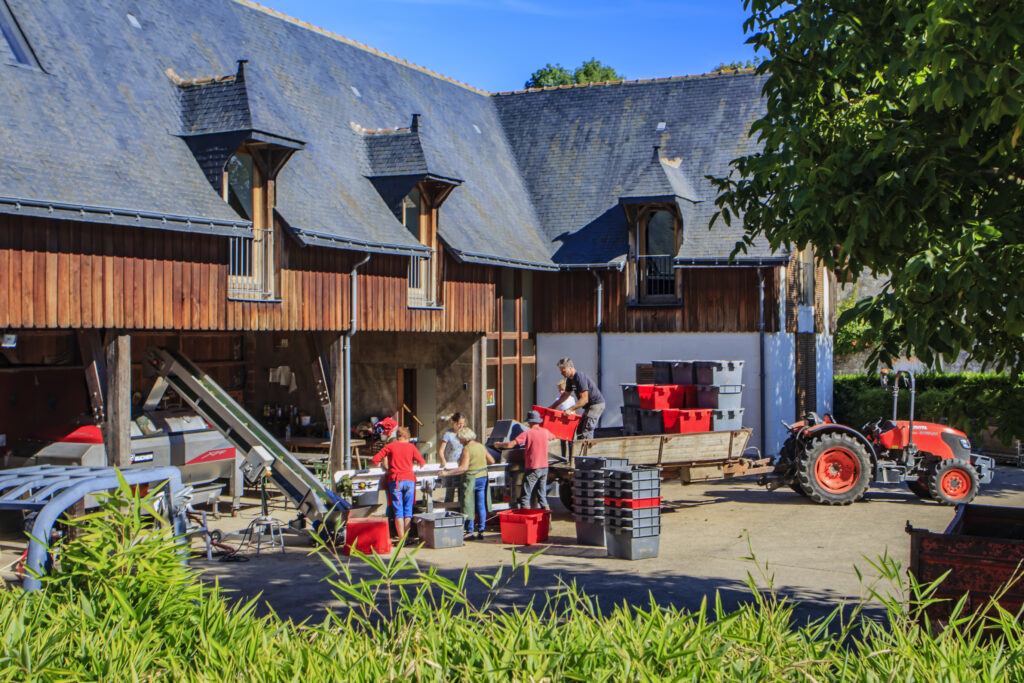
Photo of winery building with grape crushing equipment and people using bins to put grapes on crushing equipment

By: Thomas J. Payette, Winemaking Consultant

Having been on both sides of custom crush not only as a winemaker as a host winery but also as a winemaking client in another’s winery I feel especially adapted to help people with custom crush endeavors.  Making sure your grapes and wine get the excellent treatment they deserve is always the top consideration.  You want to make excellent wine, without winemaking flaw, as a bottom line.

Choosing Your Custom Crush Partner

  Make sure to choose a custom crush winemaking facility that is adapted to your size and style.  If you care for the products that winery makes that is a key asset that you can hopefully build on but it is not a given your wines will be as clean and assertive as the winery making your wines.  Research the winery you plan to be involved with and make sure they are the correct fit.  Research their sanitation and explore if brettanomyces could be a long term issue, especially if making reds and moving the bulk wine back to your facility.

Discuss How Far to Go

  Discuss with the winery how much of the process you plan to have done at their facility.  Will they just crush and ship? Will they crush, ferment, press and ship?  Will they crush, ferment, press, age, bottle and ship?  What should the label say?  What should they expect from you?  If you are building a new winery building are there contingencies’ for a construction delay on your end?  There are many ways to configure what your needs are and the winery should have some idea of how long you plan to stay and what their role is in your vision.

Communication

  Now we can see communication is already a huge part of this relationship.  Beyond how long you will stay at the winery leads into division of responsibilities.  Who will decide the yeast, enzyme, nutrient, style, maceration, whole cluster press, crush and press, etc?  Will tanks be available?   Should you bring your own tanks and barrels to the winery to be helpful?  What can the winery supply to you in the way of fermentation capacity and how soon will the wine get into your barrels so the production path is clear for their grapes and wines?  Map out a process with the winemaker and/or GM to make sure a plan is in place.

Priority

  Every harvest comes with new challenges.  Often winemakers are already stressed with their own fruit and winemaking demands only to find owners and GM’s piling more on them with custom crush.  Make sure the winemaking team really wants you there and that they will treat your fruit with the same respect as their own.  Is the winemaker being compensated extra for your presence?  Should they be?  Are they happy you are “on board” or is this process a thorn in their side?  Are you just in their way? This is hugely important to your success as a client in their cellar and what are your buffers or remedies if you find your expectations are not being met?  This happens and you need expertise to know when things are not just right.

Expertise

  Make sure you have expertise on hand to help coax your winemaking process along.  Make sure a detailed plan has been placed, on paper, for the resident winemaker to follow.  Make sure the plan has the flexibility needed to shift to address the potential abnormalities every harvest has.  This ability to make decisions on the fly will be imperative to your overall wine quality success.  Not knowing the ins and outs can lead you subject to agreeing to things you may not have agreed to and having the wines suffer in the process.  Make sure you don’t become “second fiddle” for the cost of a “front row seat”.

Being a Priority

  Keeping yourself in the forefront will be a delicate balance.  Harvest has everyone under stress and that starts to show quickly in the game.  Make sure level heads approach reactionary winemakers with compromise and offering solutions.  It will help the stress level of the onsite winemaker remain low and you will gain respect.  This will typically pay off later when you do need a little something extra from the winemaking team.  They will respectfully step forward and help on the back end.  Show that you understand the shoes they are in and that you are not only present to help them navigate the waters, with them, but ready to look after your wines, too. 

How to get the Best

  Getting the best is by getting along.Communication is the key.  If your fruit is being delayed from the 10:00am delivery slot originally planned – place the quick call to the proper winemaking team person and let them know calmly. 

Chances are something else has shifted that day already and the team easily navigates this new slot.  It always works out well beyond any planning but if the team is veteran – they have seen it all and will refocus their energy to a more immediate task that may have been slated for later that day.  This same approach goes for all during the year.  Plan and communicate.

Flexibility

  The above has certainly addressed the issue of flexibility.  This is farming at crush.  Harvesters break down, picking crews get out of sequence, lug deliveries may have been delayed or any other host of things could happen.  Many situations are out of your control so plan for the worst and accept a good day.  They happen more frequently than this article might suggest.

Good….Great Relationships

  Keep a great relationship, even at your own expense, while having wine made in another’s facility.  That doesn’t mean you need to role over and accept poor treatment of your fruit and wines but rather go the extra mile to have the winemaking crew want to help you.  Help them when possible on a task they are working on if the winery environment allows it.  If you can help them clear a path to work with your fruit – they will respect that.

Doing Work Yourself

  Will you be able to do work yourself on their premise and in their facility?  This can be key from crushing fruit to racking tanks and barrels or filtering wine.  If things are being slow to get done ask if you can come in and do the work yourself provided you have the knowledge and skills.  Some wineries will allow this and in some cases it is the best solution for on site quality control.  Will the custom crush winery assign their top personnel on your lots or will they focus on theirs?  Human nature comes into play here and you need to protect your investment.  If late Friday work orders delivered to a non veteran winemaking staff should become the norm for what needs to be done to your wines – this should sound alarm bells to you.

Lab Testing

  Will the custom crush winery supply lab numbers to you?  Do you trust their lab numbers, expertise and how will you know if the numbers are trust worthy?  The difference in a pH reading of 3.88 and 3.76 could have a huge influence on how you may want to handle that wine.  Make sure to use outside labs to help validate the internal numbers being supplied to you.  It is great insurance for your wines and you soon know how reliable the internal winery numbers are and how often you need to seek outside numbers.

Record Keeping

  How much access will you have in the record keeping?  Will the custom crush winery hold those records close to their chest or is it an open book?  Do they keep as detailed records as you hope to see?  Address this before becoming a client of theirs.  Is it up to them to keep track of blends or yourself?  Perhaps it is best to run the records parallel so you can confirm your confidence in what you receive.  It will help in any case especially in the event of a computer crash or other catastrophic events.

Sanitation

  When courting a winery, as a potential custom crush facility, make sure you are happy with what you see in terms of sanitation.  Don’t expect that the overall sanitation regime will change once you “get married”.  Look at the process and procedures that each winery might have in place to understand how they clean certain segments of the winery.  If you plan to move the wines in bulk to your facility be careful not to contaminate your brand new winery with spoilage microbes that could affect your wine styles for years if not forever.

Summary

  Make sure to look out for number one when looking to do custom crush.  Many honorable facilities exist but be on your toes to make sure you know when things are not headed in the proper direction for your wines.  Make sure you are getting your monies worth and that the wines you intend to craft are indeed shaping up in the proper fashion.

•    Know what your goals are and express them.

•    Explore the winery that will best fit the goals.

•    Make business arrangements to achieve the goals.

•    Communicate throughout all the winemaking process.

•    Have a commanding presence while remaining flexible.

  A big thanks to Rombauer, Laird, Braman, Prince Michel and numerous other wineries for allowing me custom crush access and experience.

Storms on the Way?  Hail No!

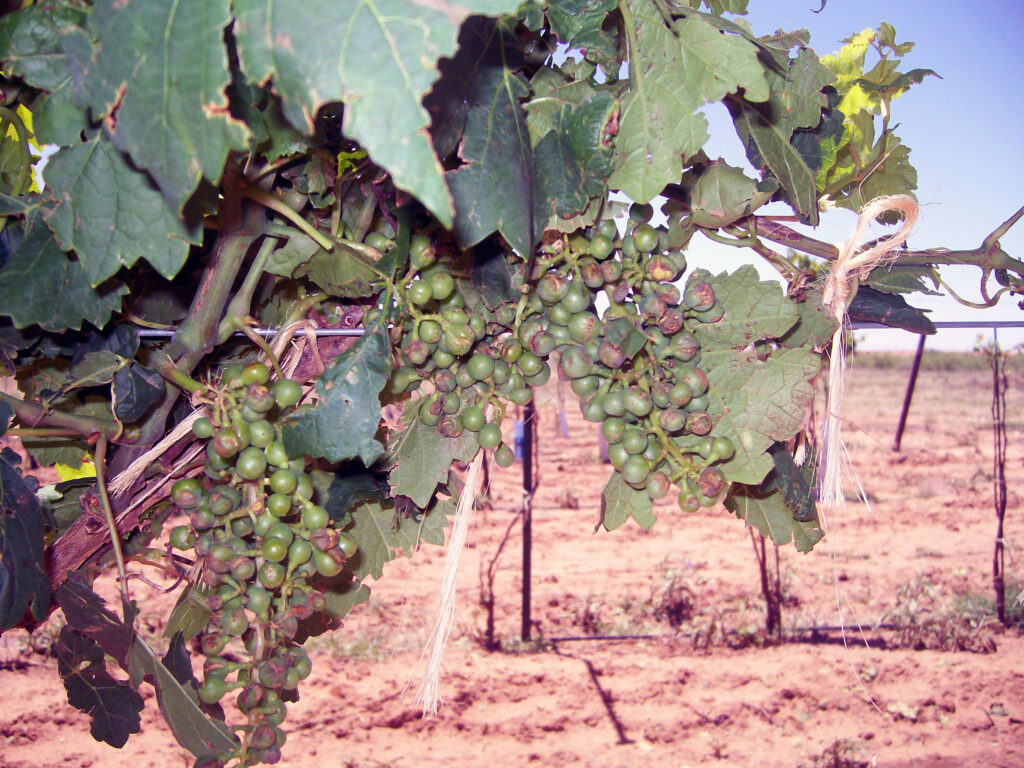
vineyard with hail damage

Image 1: Vineyard with hail damage

By: Kirk Williams, Lecturer-Texas Tech University

For many grape growers that are East of the Rocky Mountains, hailstorms can occur throughout the growing season from late Spring through the Fall.  Hailstorms can reduce shoot growth, reduce yield and occasionally damage the woody parts of the grapevine.   The severity of these hail events can be mild to severe.  Multiple hailstorms are possible in some years at hail prone vineyard sites.  An example of an extremely severe early season hail event is seen in Image 1.  Late season hail events can cause fruit damage, increase disease issues and cause leaf area loss which can impact fruit ripening.    Leaf area loss can decrease carbohydrate production and storage which can reduce bud hardiness in the dormant season as well as reduce growth and yield the following growing season.   An example of a late season hail event can be seen in Image 2:

Image 2 late season hail event

 Image 2: Late Season Hail Event

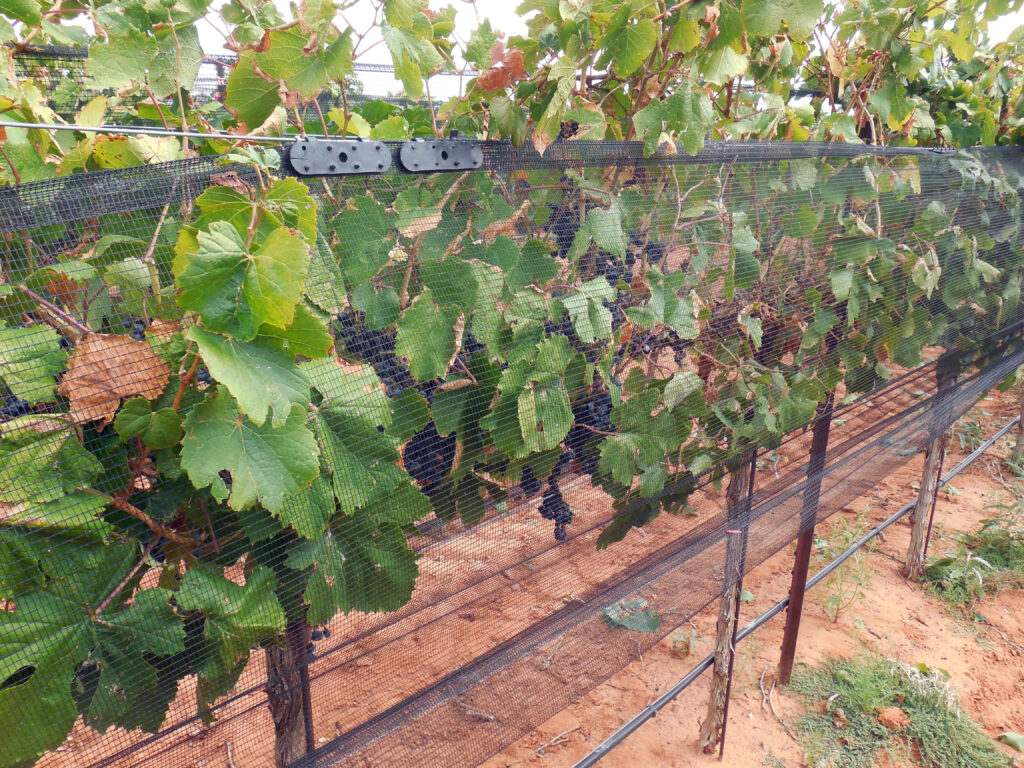
  A strategy that is being adopted for reducing the impact of hailstorms on grapevines is the use of hail netting.   Hail Netting is a high-density polyethylene woven fabric that is installed on both sides of the grapevine canopy.  The hail netting is flexible and can absorb energy from falling hailstones to prevent damage to the canopy and fruit.  The mesh spacing on hail netting is much tighter than on bird netting and is around 4mm by 6 mm (0.16 inches X 0.24 inches).   A common width of the hail netting is around 40 inches although other widths are available.  Most hail netting has reinforced edges on the top and bottom of the netting. 

  The hail netting is usually attached to the top catch wire using clips and then the netting is attached below the canopy, sometimes to the drip line or sometimes to an additional wire that is added for that purpose.   Hail netting use is limited to vertically shoot positioned trellis systems with catch wires high enough to spread the hail netting vertically.  Varieties that have a mostly upright growth habit are preferred but a wide range of varieties are being grown under hail netting.  Hail netting does promote upright shoot growth as the shoots are held in place vertically and compressed by the hail nets.   See Image 3 for an example of hail netting and its installation.  Hail netting is installed as a permanent part of the trellis system and is usually lowered soon after final pruning is completed to prevent damage from early season hailstorms.   Hail netting is usually installed after a vineyard has started producing fruit but when installed soon after planting, hail netting can prevent hail damage to the developing woody portions of the grapevine which can prolong the productive life of the grapevine.  

Image 3 showing hail netting and its installation in vineyard

Image 3: Hail Netting Installed 

While hail netting does prevent damage from hailstorms it does require extra steps to complete work in the vineyard.  To do work in the canopy, the hail netting must be raised up prior to the work and then lowered after the task is complete.   Having dedicated lower wires that the hail netting is attached to and are loose enough to move up to the cross arms can speed up raising and lowering of the nets.  Hailstorms can quickly develop especially in the late Spring and early Summer when canopy management practices are taking place so care should be exercised to raise the hail netting on just a few rows at a time.   At harvest time, the hail netting must be raised and rolled up to be out of the way of harvesting activities whether harvesting is done mechanically or by hand.  The hail netting will usually stay raised and rolled up until final pruning is completed.  

  Installing hail netting requires a substantial investment in vineyard infrastructure.  The hail netting and clips will cost around $1,600 to $2,000 per acre depending on the density of the vineyard.    Installation of the hail netting is estimated to take eight to ten hours of labor per acre.  While the cost of the hail netting and installation is expensive, the saving of a crop from a severe hailstorm or reducing crop loss from several small hailstorms will recover the cost of the hail netting.  The hail netting has an estimated life of eight to ten years when properly cared for. 

  In addition to prevention of damage from hail, hail netting can reduce bird damage.  If bird pressure is high, birds can still get into the hail netted grapevine canopy from either the bottom or top where there are narrow openings.  Tying the bottoms of the two panels of hail netting together can prevent most of the birds from getting into the grapevine canopy.   Under heavy bird pressure, the tops of the panels of hail netting may also need to be tied together. 

  Hail netting reduces hail damage but can the closely woven fabric impact the grapevine canopy?  In a study that took place on the Texas High Plains, two varieties of grapevines were studied with and without hail netting and it was found that there were differences.  Grapevines grown using hail netting had a change in the vine canopy’s microclimate. The hail netting was found to make the canopy cooler, reduced air and leaf temperatures and altered the moisture level in the canopy.  This change was likely due to reduced canopy airflow in the netted vines.  These canopy microclimate changes could cause increased disease pressure for grapevines grown under hail netting. 

  The change in temperature and light due to the netting affects the vine’s leaf gas exchange, a key process for the plant’s health and growth. Differences were also noticed between grape varieties in the study (Malbec and Pinot Gris). For instance, the rate at which the fruit matured was influenced both by the netting and the type of grape. 

  The study showed vines without netting had more clusters. The ‘Malbec’ variety, in particular, showed lower yields under netting. Additionally, netted vines, especially ‘Pinot Gris’, showed less vegetative growth. 

  Installing hail netting can prevent crop loss, preserve grape quality and improve grapevine longevity in areas that receive hailstorms during the growing season.  While hail-netting is beneficial for protection against hail, it is essential to understand its broader effects on grape growth, disease pressure and yield and adjust your vineyard practices accordingly. 

  References: Ruland KT, Montague T, Helwi P (2023) Impact of hail-netting on Vitis vinifera L. canopy microclimate, leaf gas exchange, fruit quality, and yield in a semi-arid environment. Viticulture Data Journal 555: e108805.

  Kirk Williams is a lecturer in Viticulture at Texas Tech University and teaches the Texas Tech Viticulture Certificate program.  He is also a commercial grape grower on the Texas High Plains.  He can be contacted at kirk.w.williams@ttu.edu

The Essentials of Grape Crop Insurance

By: Trevor Troyer – Vice President at Agricultural Risk Management, LLC

Grape cultivation is an art that dates back thousands of years, producing some of the finest wines and fruits enjoyed worldwide. However, vineyard owners face a range of challenges, from unpredictable weather patterns to diseases that can decimate their crops. That’s where grape crop insurance comes in. In this article, we’ll explore the importance of grape crop insurance, its benefits, and how it can safeguard the livelihood of vineyard owners.

The Importance of Grape Crop Insurance

  Grape crop insurance is a specialized form of crop insurance tailored to the unique risks associated with grape production. Grape crop insurance is an Actual Production History policy.  You are using an average of your historical production to determine the expected crop tonnage and value. It serves several critical purposes:

Protection Against Natural Disasters

  Vineyards are vulnerable to various natural disasters, including hailstorms, frost, excessive rainfall, and wildfires. A sudden and severe weather event can devastate a grape harvest, leading to significant financial losses. Grape crop insurance helps vineyard owners recover from these unexpected setbacks.  You are also covered for wildlife damage which could include birds, bears, deer etc.

Financial Stability

  Grape crop insurance promotes financial stability for vineyard owners. It provides a safety net that allows them to continue their operations even in the face of adversity. This stability is crucial, as the grape cultivation process is a long-term endeavor, with vines taking years to reach full production potential.  Grape Crop insurance is there to keep you growing.

Support for the Wine Industry

  The grape industry is a cornerstone of the global wine sector. Grape crop insurance not only benefits vineyard owners but also contributes to the overall success and sustainability of the wine industry. It ensures a consistent supply of high-quality grapes, which is essential for winemakers and consumers alike.

Types of Grape Crop Insurance

  There are several types of grape crop insurance policies available to vineyard owners:

Yield Protection

  Yield protection policies provide coverage based on the actual grape yield. If the yield falls below a certain threshold due to covered perils, the policyholder is compensated for the loss.  You can choose coverage levels from 50% all the way to 85% of your historical average.

Whole Farm Revenue Protection

  This type of insurance covers all the crops on the farm, including grapes, making it suitable for vineyards with diversified agricultural operations.  You can have yield coverage and have Whole Farm Revenue Protection (WFRP) in addition as an extra layer of security.

Government Assistance

  The USDA provide support to grape crop insurance programs. Subsidies and incentives make these policies more affordable for vineyard owners, encouraging wider adoption and helping ensure the sustainability of the grape industry.  Your premium is partially subsidized through the USDA, the amount of subsidy changes with coverage levels.

Availability

  Grape crop insurance is available in the following states; Arkansas, California, Colorado, Connecticut, Idaho, Maryland, Massachusetts, Michigan, Minnesota, Mississippi, Missouri, Nebraska, New Jersey, New York, North Carolina, Ohio, Oregon, Pennsylvania, Rhode Island, Texas, Virginia and Washington state.   Crop insurance may not be available in all counties in these states.  But in a lot of cases, if you have a mature producing vineyard, you may be able to get coverage through a special request to the USDA.

Conclusion

  Grape crop insurance is an essential tool for vineyard owners, protecting their investments and ensuring the longevity of their vineyards. It safeguards against the unpredictable challenges of nature and diseases while promoting financial stability and supporting the larger wine industry.

Preservation of the Genetic Diversity of Wine Grape Varieties

The Old Vine Conference

Old Vine From Angelica Vineyard - Ph Credit Catena Zapata

Old Vine From Angelica Vineyard – Photo Credit Catena Zapata

By: Judit Monis, Ph.D. – Vineyard and Plant Health Consultant

Recently, I did some research on “old vine” heritage  grapevines after seeing a post on LinkedIn that showed a vineyard with characteristic “red leaf” symptoms likely due to viral infection. There are “old vine” projects throughout important winegrowing regions in the word.  The definition of an old vine ranges from 35-50 years, but if you ever heard me give presentations at meetings, my motto is: “vineyards should live to be over 100 years”.  My search brought me to the Old Vine conference held last October. 

  A non-profit company registered in the United Kingdom with a mission to safeguard and preserve old grapevines through research and education.  The non-profit organizes yearly conferences.  In 2023, the old vine hero award was given to Dr. Laura Catena, the managing director of Catena Zapata winery.  Many of you know that I am originally from Argentina.  Hearing about an award given to a compatriot in my field inspired me to write about her presentation.  

Malbec, Argentina’s Signature Variety

 Dr. Catena’s presentation: “How an agricultural philosophy is using science to preserve the past” focused on the history of Argentine viticulture as it relates to old germplasm.  Especially, how her family’s winery put Argentine’s malbec wine into the world’s map.   The malbec variety is originally from France and was brough to Argentina in the mid-19th century by a French viticulturist named Miguel Pouget. Dr. Catena referred to her father, Nicolas, as responsible for starting to use malbec in a single variety wine in the mid-1990s. 

  After the vineyards  grown in France were affected by phylloxera in the 1800’s,  many malbec plantings (among other varieties of grapes)  were decimated by the pest.  However, in the absence of phylloxera, the plants brought to Argentina survived and became an important reservoir of malbec’s genetic material. The family business celebrated last year the 100th birthday of their Angelica vineyard planted in 1922. Presently, collaborative work with INTA (the equivalent to our USDA) is helping Catena and other vineyards characterize the present germplasm.

Dormant Old Vines in a California Vineyard

Dormant Old Vines in a California Vineyard

Sélection Massale, the Renewed use of an Old Practice

  In the past, and due to  economic restrictions, importations were not allowed into Argentina.  Therefore, it was unusual for grape growers to plant clones of specific varieties.  Instead,  cuttings of the original plants introduced from France in the mid-1800’s were propagated to make new plants.  These were generally planted on their own roots (i.e., not grafted).  The vineyards are most often planted with cuttings that have been selected in the vineyard based on visual observation or the quality of wine produced from its grapes. Generally, a number of “good looking” or well performing vines are marked in a vineyard and used to collect budwood that will be propagated or grafted to produce new vines. This process of field selection is known as sélection massale. Since the selection is done based on visual aspects and vines are generally not grafted, viral symptoms are generally masked, therefore vines infected with virus are often selected.

  The advantage of using field selections versus a clone of a given variety is the genetic diversity that can be found in the vineyard.  Of course, not always this is an advantage, as a vineyard with genetic diversity might be more difficult to manage because some vines may be taller or more vigorous than others, may need more or less water, nutrients, etc. As it relates to wine production, some of the fruit from some vines may mature earlier than others creating difficulty during the harvest of the fruit.  However, an interesting study from the Catena Wine Institute showed that the variation among the vines was so wide that some vines could produce only one bottle of wine, while others could produce up to seven bottles.  On the other hand, the genetic variation in the vineyard allowed more resilience as the vineyard overall was more resistant to inclement weather such as freeze, hail, or wind.

Viral Disease Introduction to Argentina Occurred with Imported Vines

  At some point in history Argentina’s nurseries and vineyards started their own clonal selection.  In addition, the Argentine market eventually opened its business to import plant material from nurseries in Europe and recently from California’s Foundation Plant Services (FPS).  According to Dr. Catena, this is when the majority of viral and fungal diseases were introduced into Argentine vineyards. Vineyards planted with older field selections at Catena Zapata appear to be healthier than the newer introductions planted.  This information matches research by Jimena Balic performed by Santa Carolina Winery  in Chile.  Dr. Balic reported at the 19th International Congress of ICVG the detection of more virus infected vines in nursery propagated clones compared to Santa Carolina’s own heritage field selections.  Interestingly, a study in California by  Kari Arnold determined that the older vines were infected with more viruses than the newer plantings

  We know that important viral diseases (fanleaf, leafroll, rugose wood, and red blotch) are present in Argentina.  Further, .  Many of the original field selections have now become infected with fanleaf (transmitted in the soil by nematodes) or leafroll (transmitted from vine to vine by mealybugs).    As a trained medical doctor, Dr. Catena mentions that the winery is serious about keeping viruses out of the vineyard.  However, the imported plants that brough the viral diseases have spread along different vineyards not only affecting a broad area since introduced.  Since virus testing is expensive and ranges between $150-$250/sample compared to the cost of $4 per plant, not every plant can be tested.  Catena Zapata’s strategy is to test their grafted clones but the field selections that are not grafted are rarely tested

Argentina Grapevine Certification Program is Different from California’s

  In Argentina each nursery is responsible for maintaining and testing their own mother and increase blocks.  In other words, there is not a central foundation block such as what is maintained by FPS. 

  Besides a few commercial nurseries, many wineries have nurseries that provide the cuttings or grafted plants grown in their own vineyards.  Just like in California, there is a list of viruses that the certified vines must be free of.  Similarly, the certification of grapevine plants in Argentina is optional.  In reality, very few vineyards are planted with certified vines and most vineyards are planted with non-grafted vines as phylloxera in not yet ubiquitous. 

Disease Testing and Elimination

  During my long career as a plant pathologist working in diagnostics and pathogen elimination, I was fortunate to have been able to apply tissue culture techniques to preserve heritage clones in California.  I am also fortunate to have visited vineyards planted with these clones. Feedback from clients has always been that the vines perform similar to the original selection or clones but have the advantage of being healthy and more productive, even 30 years after being planted.  I have covered diagnostic testing and tissue culture disease elimination in other articles. 

  I will mention here briefly, the meristem tissue culture technique.  The method relies in growing the apical meristematic dome of a vine cutting to create a new plant.  The smaller the meristem size is, the higher probability of eliminating viruses, especially those that are phloem limited.  In her presentation, Dr. Catena mentioned that she expects that the meristem culture method may improve over time.  In my opinion the method works very well.  It requires manual labor and experience but it is the best method available for disease eradication.   Perhaps one day, we could replace technicians with sophisticated robots with the capacity of dissecting minute portions of the meristem under the microscope! However, in my experience technicians I have worked with have been able to perform the repetitive tasks over and over with fine and quick precision (almost like robots!).   The meristem tissue culture is a true and tried method that promises to improve the health of new grapevine plantings.

Conclusions

  I have learned through Dr. Catena’s presentation and the Old Vine Conference  that there is a huge amount of generic diversity that needs to be preserved in grapevines.  The health status of different vineyards varies and depends a lot on their care and isolation.  The use of meristem culture for disease eradication offers an advantage in heritage selection preservation. One usually thinks that the method is used solely for virus elimination but an added bonus is the elimination of bacterial and fungal pathogens.  Tissue culture methods of grapevine heritage selections and  clones are performed in a laboratory in vitro under sterile conditions. Another tissue culture application is the preservation of plant material in small vessels creating a germplasm repository bank.  The preserved plant material would be readily available for propagation and planting to replace affected vines in the case of viral infection (or other issue) in a vineyard.

  Judit Monis, Ph.D. provides specialized services to help growers, vineyard managers, and nursery personnel avoid the propagation and transmission of disease caused by bacteria, fungi, and viruses in their vineyard blocks.   Judit (based in California) is fluent in Spanish and is available to consult in all wine grape growing regions of the word.  Please visit juditmonis.com for information or contact juditmonis@yahoo.com to request a consulting session at your vineyard or virtually.

B Cellars Embraces AI to Understand the Emotional Connection Between Brand and Consumers

Photo of B Cellars front entrance to their building

In the ever-evolving landscape of the wine industry, innovation is not just about viticulture and winemaking techniques; the new frontier is understanding the emotional bond between brand and customers. B Cellars, a trailblazer in the Napa Valley wine scene, took an early leap into the future by integrating artificial intelligence into its marketing and sales strategies. The results have allowed the company to carve out an enviable niche in the direct-to-consumer channel, which is the focus of their business model.

  In 2018, B Cellars distinguished itself as a pioneer in the winery-meets-AI space by employing Metis, a cutting-edge, AI-powered behavioral research program developed by a San Francisco-based company, Richey International. This move marked

B Cellars as among the first in the wine industry to seek consumer feedback through AI, with a focus on emotional connection to the brand.

  Metis, named for the Greek goddess of wisdom, was designed to delve deeper than traditional market research methods. It analyzes vast amounts of data, including social media and online review sites like TripAdvisor and Google Reviews, to provide insights into the emotional resonance a brand has with its customers and find best practices within specific industry segments. The AI searched for what consumers were saying about their experiences at B Cellars in comparison to a subset of other well-respected Napa Valley wine brands. It went a step further by also analyzing data from select non-winery businesses such as restaurants, hotels, and even retail stores; surprisingly, some of the most valuable insights for B Cellars came from analyzing the customer experience at Filson, the 130+-year-old Seattle-based outdoor clothing company.

  The next step was to invite past B Cellars guests to answer questions in writing. The instructions were clear and were meant to solicit thoughtful responses by noting respondents should “take as much time as you need to develop your response…we are listening carefully.” Participation in the survey was well above industry research norms.

  What Metis’ process revealed to B Cellars unlocked the essence of the relationships between B Cellars and their customers. Why did customers like the winery (apart from good wine)? What drove them to maintain a multi-year relationship? How could such a relationship endure when the customer was thousands of miles away?

  The answers became clear as Metis honed in on the core differentiators that consumers perceived about B Cellars: the “soul” of the brand was rooted in craftsmanship, terroir, and the idea of a lifestyle grounded in authenticity (as opposed glamour or floridity), plus appreciation of great quality wine, food, and entertaining in a manner that was elevated yet approachable. Metis found that while these elements were amply apparent to visitors to the B Cellars estate in Oakville, these factors were not highlighted effectively on the company’s website and online user experience. Simplifying and streamlining the website made it more inviting and accessible to potential customers and aligned better with the superior elements of the B Cellars brand. Once executed, the website simplification translated into a refined pre-visit experience between guests and the winery’s concierge team, which gave way to a unique arrival experience for guests.

  The insights B Cellars gained from the AI analysis of its in-person experience were also eye-opening. From Metis’ data analysis, the winery learned that their wine tastings were undervalued. So, they increased prices by an unprecedented 30%; this adjustment aligned the perceived value of their offerings with the high quality of their wines and curated food pairing experiences. The price increase also heighted the perceived luxury of the experience, which led to increased bookings to visit the estate.

  Furthermore, Metis’ insights led to a reimagining of B Society, an offering that encourages ongoing purchases of its wines. Before Metis, B Society wines were predetermined for its subscribers based on previous purchases; however, AI recommended a totally customizable wine purchase approach that allowed consumers more control over choosing selections for each shipment. Metis also challenged the B Cellars approach to Society gatherings. Today, gatherings are designed to encourage deeper connections between the B Cellars team and their clients by having more intimate gatherings and allocating visiting hours exclusively for returning guests. These changes have not only improved customer relationships but also reduced attrition rates, which now sit well below industry norms.

  The results of incorporating AI into the winery’s strategy have been remarkable. B Cellars enjoyed a 7% increase in annual winery visits with in the first year of implementing the Metis findings, plus a notable improvement in customer engagement, loyalty, and referrals. These changes underscore the potential of AI in transforming not just marketing strategies but the very fabric of the customer relationship. The key was deeply analyzing a comparable set of businesses and listening carefully to its customers, just as B Cellars had promised to do. In the final analysis, Metis showed that B Cellars customers wanted to believe in the winery’s ethos of integrity and authenticity. While most wineries market themselves based on what’s in the bottle, their scores, or a continuous stream of marketing campaigns,

B Cellars sought substance, which has translated into a durable emotional connection with its customers.

  The success of the B Cellars story provides a roadmap for other wineries to follow as AI inevitably becomes more integrated into all of our lives. The implications of the winery’s pioneering use of AI extend beyond their own success; it opens up a realm of possibilities for other wineries and vineyards. The wine industry, traditionally reliant on conventional marketing and customer relationship techniques, is already starting to think of AI as a viable tool for enhancing business models, especially in the DTC segment, which has grown significantly during and since the Covid-19 pandemic began in 2020.

  Moreover, the adaptability of AI tools like Metis means they can be tailored to different business needs, whether it’s refining product offerings, enhancing customer experiences, or developing more effective marketing strategies.

  The innovative approach of Be Cellars incorporating AI into their marketing and customer relationship strategies sets a new benchmark in the wine industry. As the industry continues to evolve, AI will undoubtedly play a significant role in shaping the future of winery and vineyard operations, not only in the sales and marketing spaces, but also in optimizing elements of the wine business like farming practices, supply chain, and even winemaking techniques. The experience of B Cellars using novel AI tools demonstrates that the fusion of technology and tradition can lead to unparalleled success in the wine world.

Exploring Accommodation Options at Wineries

Picture of front of a winery building entrance connected to 3 metal silos

By: Becky Garrison  

Wineries looking to provide their guests with elevated wine-tasting experiences might want to explore the option of offering accommodations at their winery or vineyard. Kristen Baxter, operations manager for Abbey Road Farm in Carlton, Oregon, said, “Our lodging is integral to our business model, as it allows winery guests and event guests to stay overnight while they are here enjoying wine or celebrating with us.”

  Carrie Bonney, general manager for Youngberg Hill (McMinnville, Oregon), concurs, adding, “Lodging contributes to our reputation for exceptional hospitality and helping to sustain and grow our overall operation.” In addition, their lodging serves as a revenue stream that supports their broader mission and allows them to invest in the enhancement and maintenance of their property.

  In Bonney’s estimations, this is just one piece of the experience they aim to provide our guests, and it complements their primary focus, wine. “By offering a range of comfortable and thoughtfully designed accommodations, we aim to create a welcoming environment where guests can relax, unwind and fully immerse themselves in a unique experience. This, in turn, enhances their overall visit and encourages return visits and positive word-of-mouth referrals,” Bonney adds.

Lodging Options Available at Wineries

  As noted by the following examples, the types of accommodations available at a given winery vary from a rustic cabin cozy for two to a luxury country-style mansion replete with five-star amenities.

  Lumos Wines’ (Philomath, Oregon) vineyard is situated on what was the H Bar H Dude Ranch back in the 1940s and 1950s. The one-bedroom cabin with indoor plumbing was one of the original guest cabins built in 1938 and can accommodate up to two people. They maintain this little cabin to keep the historical feel of the place. In another historical touch, their tasting room is in the old dude ranch’s dance hall barn.

  Colter’s Creek Winery & Vineyards (Moscow, Idaho) began offering lodging at their tasting room because they had an open space that needed remodeling, and they saw a hole in the Moscow lodging market to fulfill. They have four boutique rooms above their tasting room in Moscow available via self-check-in, with bookings that can be made through their website.  Different packages are offered, each room comes with a complimentary wine tasting and with enough planning, guests can visit the vineyard and production facility 45 minutes away in Juliaetta.

  Abbey Road Farm’s (Carlton, Oregon) Silo Suites B&B is housed in three-grain silos. Two of the silos were built in 2003 when the property was a grass seed farm. The third was added to complete the project the winery opened in 2019. The silos boast a grand entry and sitting area with a wet bar. Their five suites feature foam-topped beds, Jacuzzi tubs, luxurious bedding and ambient floor heating. Stays include a bounteous Oregon breakfast prepared by on-site chef/innkeeper Will Preisch.

  Youngberg Hill had already been functioning as an inn since 1989, when they planted their oldest blocks, the Natasha and Jordan blocks. They chose to maintain this inn as a nine-room bed and breakfast offering comfortable rooms and suites, an open-air deck, spectacular views for sunsets and stargazing, and a fireplace beside which to relax with a glass of wine. A two-course breakfast keeps guests fueled up for a day sightseeing around the Willamette Valley.

  In a similar vein, Hummingbird Estate (Central Point, Oregon) converted a historic private home and former orchard into a vineyard and tasting room, event space and inn. Renovating the home’s bedrooms into suites made the most sense for the space. Here, guests can enjoy a glass of chardonnay, syrah or pinot noir while taking in the view of grapevines from their windows. In addition, they have a vineyard cottage available for rent.

  Also, when Grosgrain Vineyards (Walla Walla, Washington) acquired their winery/vineyard property via a bankruptcy auction in 2017, the only structure on the property at the time was a house where the previous owner had made his wine in the garage.  They needed a significantly larger winery space, so they built their current winery and tasting room in an adjacent area. They considered moving into the house themselves but decided that it was better suited to use as a short-term rental, which would be a great way for them to provide a more immersive experience. The house has four bedrooms and four baths, all of which are en-suite, with the house rented as a single unit on a nightly basis.

  So far, the house has been a great way to host new customers who experience their winery for the first time, as well as their wine club members who can book further in advance and at a discounted rate. Also, this house provides a great way for them to host their national distributors and further educate them about their winery. While the revenue it generates has been significant, more importantly, staying at this home helps guests build a deeper connection with the winery.

  The Joy on the Anahata (which translates to the heart chakra in Sanskrit) Vineyard (Salem, Oregon) is a luxury wine country retreat and 6,500-square-foot home with seven bedrooms (four suites, two queen rooms and one twin room in the basement for a nanny or younger children.) This house sits on top of the vineyard at 550 feet with views in every direction, and the gated 30-acre property is fenced in for deer. Other amenities include a chef’s kitchen, living room, dining/family room and outdoor heated swimming pool and hot tub, as well as a basement with a wine cellar and ping pong and pool tables. This property is rented as a “hospitality home” designed for family retreats, work retreats, YPO retreats and, in some cases, smaller than 100-person weddings. As they don’t have a tasting room built yet with their wines poured at Carlton Winemakers Studio, this house provides an opportunity for guests to taste their products as they collect their information.

  Bianchi Vineyards (East Wenatchee, Washington) chose to rent the two-bedroom house on their property as a short-term Airbnb experience. In addition, they have two RV spots with power and water. Some guests visit the tasting room for their complimentary tasting. Others enjoy hiking, skiing and concerts at the Gorge Amphitheater.

Recommendations for Designing Lodging at a Winery 

  Bonney stresses that offering lodging is not for the faint of heart. “This can be a significant undertaking, but it is also an excellent enhancement to your guest experience and can put your winery on the map as a unique destination. While it can eventually enhance your overall revenue streams, a great deal of investment is involved.”

  Meghann Walk, general manager for Hummingbird Estate, reminds those looking to invest in lodging that while lodging is an extension of their long-standing tradition of hospitality, it is not passive income. She reflects, “The inn is our most stable but also, in many ways, the most constantly demanding aspect of our business. There is no such thing as only answering phone calls during open hours. Make sure you are prepared for this.”

  Before launching a lodging program, Bonney recommends conducting market research for your area, determining lodging demands and assessing the type of accommodations guests will want. Along those lines, familiarize yourself with zoning and permitting regulations for your area before you start any work.

  Also, Baxter notes that conducting market research into other lodging options in your area can enable you to curate a unique experience from competitors to help you stand out. “Consider putting together packages unique to your property and potential discounts for loyal wine club members for additional benefits,” she says.

  In designing the lodging, Bonney recommends ensuring that the overall design provides a comfortable and memorable experience for your guests. Think about room options and various views, private patios and accommodating children or pets, as well as sustainable practices, such as energy-efficient appliances, water conservation, composting and eco-friendly amenities. In addition, consider if you want to offer wine tasting and breakfast as part of the lodging experience or if those will be separate options for purchase.

  Don’t neglect security and safety. Consider outdoor lighting, security cameras and post-emergency exit procedures for guests to see.

  Also, Bonney stresses that wineries need to ensure they have the appropriate trained staff. In addition to scheduling and maintaining guest reservations, they must know local restaurants, tour operators, spa services and other area happenings. “Anyone from the front desk staff to the housekeepers who will be interacting with guests must excel in customer relations,” she said. Baxter offers this cautionary reminder, “Your housekeeper will be your most valuable and least replaceable employee.”

  A CRM (customer relationship management) staff member will be needed to help maintain contact with guests, book rooms and provide an online booking option. Along those lines, online travel agencies like Expedia and Tripadvisor can help expand exposure.

  Finally, Bonney recommends that those seeking to add lodging as a service, embrace it fully. She proclaims, “You and your staff can create a holistic and integrated experience, develop new ambassadors for your brand and most importantly, sell more wine!”

BlueJacket Crossing Winery & Vineyard  

Award-Winning Wines With Memorable Views in a Family Atmosphere

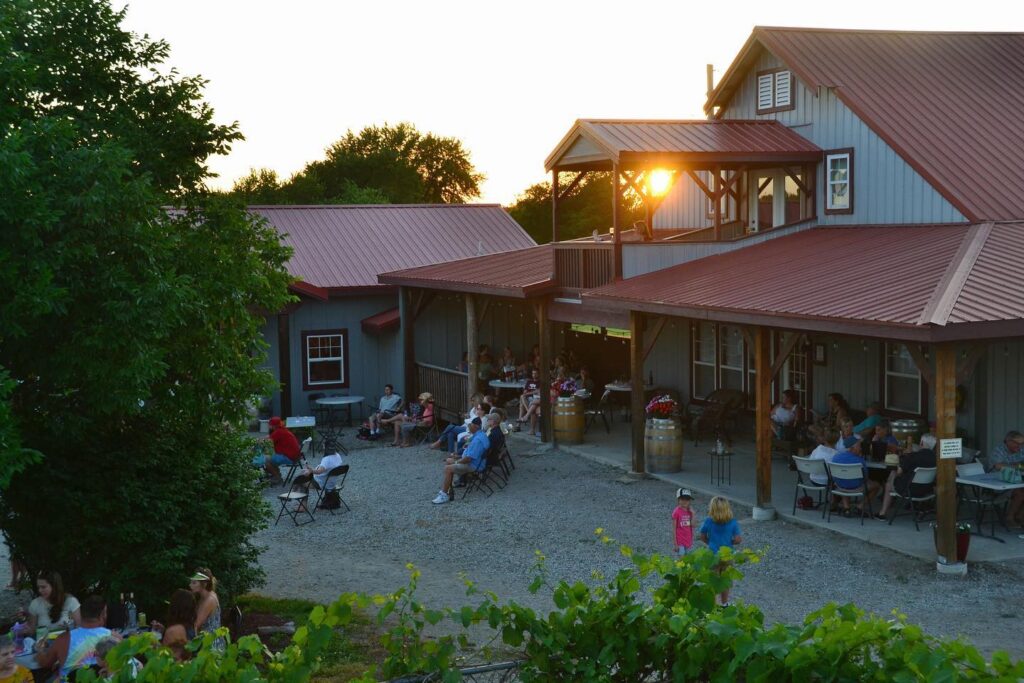
Picture of front of BlueJacket Crossing Vineyard and Winery building with people sitting and standing outside

By: Gerald Dlubala 

Follow the Oregon Trail through Kansas, and you’ll run right through the aptly named BlueJacket Crossing Vineyard and Winery in Eudora, about halfway between Kansas City and Lawrence. “There’s a historic landmark,” said Kandaya “Pep” Selvan, owner, vintner and viticulturist. “On the far side of the Wakarusa River, there was what they called a hotel, but really, it’s just a shelter that the Native Americans had established. That area was originally owned by the Bluejacket family, and where the ferry ran across the river became known as BlueJacket Crossing. So here we are. The watering hole and ruts are there for those interested and spend time researching those things.”

  BlueJacket Vineyard and Winery is part of a family farm. Selvan was originally from Kansas, leaving in the ’70s and working the construction trade in California. His construction experiences included building wineries in St Helena. Thirty-five years later, he returned to Kansas to help his elderly parents run their farm. But to his parents’ surprise, Selvan began planting grapevines instead of soybeans and corn in 2001.

  “From that time on, it was a learning curve,” said Selvan. “Kansas didn’t have any mature wineries at the time. Additionally, the wineries that were here were required to source at least 60 percent of their fruit from the state of Kansas. So, there were maybe seven or eight active wineries in our state. A handful were making a good product, but they were virtually unknown. We took the opportunity to spend five or six years working for these wineries to gain some experience.”

  Selvan planted 4,000 vines, and in 2008, when they matured, BlueJacket Crossing Vineyard and Winery was born. He began with an initial planting of Nortons. In subsequent years, Selvan expanded his Norton line and added St. Vincent, Seyval, Chambourcin, Fredonia, Vignoles and Traminette vines.

  “We methodically built the winery ourselves,” said Selvan. “There was a small tasting room in the winery building. We were comfortable and felt somewhat successful. After my time on the West Coast, my goal was to produce wines with good character and a local identity. In 2012, we expanded the tasting room and doubled our annual capacity, producing 6,000 to 7,000 gallons. That was and continues to be a comfortable level for us, and since then, we’ve been able to produce a modest yet successful product.”

  Selvan mixes the best Midwest winemaking practices with inspiration from his favorite wines from California, Missouri and Italy. BlueJacket Crossing wines include dry, off-dry, semi-sweet and sweet white varietals. Reds include sweet red, blush, dry rose and dry options, with an excellent selection of dessert wines. Many of Selvan’s wines have won awards across the U.S.

  “The labels are also significant to our area,” said Selvan. “I’ve always envisioned a wolf design on our label, but I didn’t want the usual type of image. It was by chance that we met a Native American impressionist painter named Brent Learned at our annual arts and crafts fair. His art reveals the life and culture of the Plains Indians. An original wolf print of his immediately attracted us and was exactly the type of image that I was looking for. We asked his permission to use his design on our labels and are grateful he agreed. We were lucky to run across him at the time. Today, he is  internationally known.”

Bring the Family and Dog to Relax, Unwind and Connect with Nature

  “Our goal from the beginning was for our guests to join us in a comfortable setting with a pleasant connection to nature,” said Selvan. “We aren’t your typical winery with a big venue. We’re about a mile off any main four-lane highways between Kansas City and Lawrence, with a rural setting and memorable landscape vistas. We have both patio and indoor seating to enjoy our remarkable farm vistas. We have included as many windows as possible to keep that connection with nature and the outdoors. Because of our location, we also have air conditioning and fireplaces to counteract the Midwest weather swings. We encourage families and well-behaved dogs to come and enjoy our setting and have good times and fun as a family. We feel that is important. We also occasionally feature live music and food trucks and do all we can to make our vineyard and winery a welcoming space for comfort and family fun.”

  Additionally, Selvan’s original tasting area is now an Airbnb. The original tasting room had an upstairs space that accommodated up to 20 guests and was used for small gatherings or as a business space. After constructing a new 2,000-square-foot tasting room, the old tasting room, now an Airbnb, features a living space and mini kitchen on the lower level with a large master bedroom and outside deck overlooking the farm.

  BlueJacket Vineyard and Winery can accommodate up to 200 people when hosting one of their many fundraisers for Alzheimer’s research, Habitat For Humanity, dog shelters and more. With these types of events, the upper level of the Airbnb, if not being used, can be transformed into VIP seating overlooking the activities. But the typical capacity of BlueJacket Vineyard and Winery is around 100, which Selvan says is a good amount for the solid group of people that come here to escape the exaggerated life we all now live.

Continuous Learning Helps Refine Winemaking Process

  Selvan comes from a non-winery background, having a construction and architectural engineering career. He began with 11 grape varietals. Over the past several years, Selvan has seen what his customers want and what works within his vineyard. He is now refining his wines to reflect those results.

  “What amazes me is that for some reason, Midwest wineries feel the need to have 25 to 30 wines available, whereas other locations seem to focus on consistently producing their best four or five,” said Selvan. “We’re refining our choices and narrowing from 25 wines to hopefully about a dozen. Doing this will help us maintain consistency and quality while remaining true to the qualities and characteristics of the chosen varietals. Our customers can also count on it, knowing that they will always get the same great quality with our wine.”

  Selvan’s barrel room can hold about 50 barrels at any given time. While working with sommeliers, he told The Grapevine Magazine that they found that when they allow the barrels to age for three to five years, they can deliver a noticeably better product while maintaining their production goals.

Additionally, Selvan has added a traditionally produced sparkling wine to his lineup and a unique and difficult-to-find cabernet franc to their French hybrids.

Today’s Winemakers Need Mentors and Mechanization

  “We had our family farm, but we had to learn the farming element of vineyards, determining which varietals are vigorous and which are, shall we say, moody,” said Selvan. “We eliminated three varietals just because they were fussy, and the amount of work needed for them wasn’t equal to the outcome. It would also be best to consider your geographical location and what those consumers want. We are in the rural Midwest. Here, sweetness sells, and we have developed a reputation for quality red wines in and around Kansas City and Lawrence, with a clientele that appreciates our dedication and commitment.”

  Selvan said that it’s essential for those who want to be in the business to spend time with experienced, successful winemakers to learn the process, amount and type of planning needed.

  “You’ll definitely have a more enjoyable time if your space and production areas are correctly laid out, but you need someone who has gone through it to guide you,” said Selvan. “Through the Missouri Winemakers Association, we met and became friends with the folks at Adam Puchta Winery in Hermann, Missouri. They use the same varietals as we do and have been a terrific resource for us. Having a winery and being a winemaker will be much more pleasing if your planning is good and the building is designed right with optimal access and thoroughly thought-out sanitation systems. We even took all the classes through VESTA, the Viticulture, Enology, Science and Technology Alliance. Still, we weren’t prepared to see how inefficient our awkward equipment and poorly accessible building would be. It wasn’t until we got together with Adam Puchta Winery 10 years into this process that we saw how his experience, organization and analytical skills enhanced and improved every aspect of the business.”

  “It’s all a big learning curve, but I certainly still enjoy it,” said Selvan. “Our education comes from many different areas that we didn’t anticipate. I have a master’s in architectural engineering, but I sure wish I had studied refrigeration, too. It’s easy to throw away tens of thousands of dollars on the wrong cooling systems. You need a real passion for the industry and what you’re doing.”

  Selvan says that the industry has changed over the last 10 years and that mechanization is a must for vineyard owners.

  “We need the equipment to be efficient and to balance continued shortages in the labor market as well as to help replace the people leaving,” said Selvan. “I’ve been lucky to have family involved along with people of our rural community with the passion and determination to work with us. Our daughter manages the tasting room, events and activities, but as a general rule, once kids get a higher education, they seldom want to come back to the farm. They do still support us but in other ways. Mechanization is the only way to keep up with or increase production when labor falls off. Immigration isn’t happening, and those that do immigrate tend to move on quickly to other positions that are more lucrative when possible.”

  Selvan says they are running a 20-acre farm with eight acres improved. He still has another 120 acres that are conventionally farmed and wrap around the winery, providing memorable views and breathtaking vistas.

  BlueJacket Crossing Vineyard and Winery is located four miles east of Lawrence, just south of K10.

To learn more, schedule a visit or book a stay:

BlueJacket Crossing Vineyard & Winery

1969 North 1250th Road

Eudora, KS 66025

785-542-1764

bluejacketcrossing@gmail.com