Coco Chanel once said, “The best things in life are free. The second best are very expensive.” The mistress of iconic fashion couldn’t have stated it more succinctly. Luxury today, as it was in Coco’s time, is not essential but continues to be highly desirable and prestigious because of the quality, price, and prestige it confers on its consumers.
However, when it comes to marketing, luxury brands are like any other brand. They market themselves to those who can afford to buy them and those who aspire to own something, anything, created by them. Like all brands, they battle for share of mind and wallet.
93% of Consumer Engagement withLuxury Brands Occurs on Instagram (Source: Digimind)
COVID accelerated a trend already in the making – the economy saw a massive shift to eCommerce, and marketing shifted accordingly to digital platforms. Not surprisingly, luxury fashion, jewelry, cars, and retail brands were the first to commit to social media. They immediately recognized that absent the ability to go to a store, the stories and images shared in the new virtual market will make up the building blocks of a brand’s image and equity. And these touchpoints, albeit digital, make for real and tangible engagement, interest, loyalty, and connections with their audience online, particularly on Instagram.
The Face of Affluence Is Changing
Affluent consumers are no longer just Baby Boomers and Generation X. Wealth is now multi-generational as large numbers of Millennials and Gen Z are prosperous and buy luxury goods. By 2025, Millennials and Gen Z will make up 50% of the total luxury market. Their spending habits will define and redefine what luxury goods and experiences will be in demand.
What We Do Know Is:
• Quality, prestige, brand reputation, plus a brand’s social values will drive luxury purchase decisions.
• They will look to social media, influencers, and reviews for confirmation of their brand choice.
• They will expect to be able to find the luxury brand they choose online and on Instagram.
As with any consumer audience, identifying demographics is only the first step. In their recent book “Luxury Wine Marketing: The Art and Science of Luxury Wine Branding,” Peter Yeung’s and Dr. Liz Thach’s research identifies four categories of luxury wine buyers: The aspirational buyer, the luxury buyer, the wine collector, and the wine geek. Each persona has its price points, brand loyalty, and trusted referral sources. A wine collector will listen to critics and other wine collectors, while celebrities and influencers might influence an aspirational buyer. Understanding your target and the segment(s) your wine resonates with is the key to success in this evolving landscape.
New School Marketing Toolsfor Old School Brands
A recent Social Media Industry Report on Luxury Brands by NetBase Quid digests and synthesizes the kind of social interactions driving authentic engagement and brand passion and how luxury brands are capitalizing (or not) on these experiences to drive consumers to do business with them. The report is a deep dive into the detail of several luxury brand’s social presences. While not everything in the report applies to wine, what is apparent from the research is that digital advertising, social media engagement, search engine optimization, and influencer marketing are now a staple for what could be called “old school luxury brands” like Hermes, Chanel, Burberry, LV, Ferrari, Jaguar, Gucci, Chopard, Cartier, Neiman Marcus, and Harry Winston.
So the next time you think that you’re too “unobtainable” to be on social media, luxury wines should take heed. The marketing tool kit has forever expanded to include digital channels, not by luxury brands themselves, but by today’s affluent consumers. The consumer desire to have access to everything right now and the desire to buy into luxury brands are successfully forcing luxury marketers to straddle the fine line of relevance and exclusivity.
Susan DeMatei is the founder of WineGlass Marketing, a full-service direct marketing firm working within the wine industry in Napa, California. For more information please visit…www.wineglassmarketing.com
Since grapes were first planted in 1825 at Fort Vancouver, Washington by the Hudson Bay Company, Washington State has emerged as the second-largest wine region in the United States with over 19 American Viticultural Areas. Despite its size, 90% of Washington State wineries produce less than 5,000 cases a year. As part of this commitment to producing wines using organic and sustainable means, the Washington State Wine Commission will launch its first statewide certified sustainable winegrowing certification in early 2022.
Moving south to Oregon, even though their 22 AVAs may produce only 1% of the wines made in the U.S., the state accounts for 52% of total vineyard acres in the U.S. with biodynamic certification from Demeter USA. To put this number into perspective, only 83 vineyards have received this certification as of 2020.
For those unfamiliar with biodynamic practices, certified farms, including wineries, adopt the practices outlined by Rudolph Steiner in 1927 and Demeter International formalized in 1985. These practices prohibit the use of synthetic chemical fertilizers, fungicides and herbicides. In addition, farmers can utilize specific treatments, called preparations, which comprise of medicinal plants, composted animal manure and minerals. Also, 10% of the farm’s total acreage must be devoted to biodiversity.
While these biodynamic vineyards produce wines pleasing to the planet and palette, what impact, if any, do biodynamic practices have when it comes to helping mitigate the impacts of wildfires on the West Coast and global climate change? Following are reflections from five Pacific Northwest Detmer Certified Biodynamic focusing on addressing these 21st-century challenges in their vineyards and wineries.
Brooks Wines,Amity, Oregon
Since the late Jimmy Brooks founded this medium-sized family winery in 1998, Associate Winemaker Claire Jarreau noted how Brooks Wines has remained passionate about its environmental impact. In addition to being Detmer Certified Biodynamic, they are members of 1% of the Planet, a nonprofit that certifies businesses and individuals that meet their high-bar commitment by donating 1% of their annual sales or salary to environmental causes.
While managing an old vineyard can be challenging at times, Jarreau attributes the overall health of their vineyard to their application of biodynamic principles. For example, they dry farm and source from dry-farmed vineyards, a practice that allows them to conserve resources by not irrigating the vineyards.
Over the past decade, this region has seen increased temperature fluctuations. According to Jarreau, as the winery is in the Eola-Amity Hills region, one of the cooler regions in the Willamette Valley, they can still produce fresh, acid-driven grapes despite ongoing temperature shifts.
Following the 2020 wildfires, Brooks Wines only made about 20% of its annual production due to the level of impact the smoke had on grape quality. “Once you’re under a blanket of smoke, there doesn’t seem to be much you can do about that,” Jarreau said.
As a biodynamic winemaker, Jarreau has a limited number of tools in her toolkit from an organic standpoint to alter their wines. “We did a number of experiments. Some wines were really nice and drinkable, but others were obviously smoke impacted.” Ultimately they chose to sell their wine in bulk, and it was bottled and used elsewhere. Also, they launched a fundraiser to compensate their growers for their losses.
Moving forward, they are exploring how animals can be part of the solution on site. Also, they seek to be even more selective in the cover crop usage and will try to leave a permanent ground cover in place, which will help lower tillage and soil destruction.
Cooper Mountain Vineyards,Beaverton, Oregon
Family-run Cooper Mountain Vineyards was founded 40 years ago and has been Detmer Certified Biodynamic and certified organic since 1998. Currently, they own and manage seven vineyards located within twenty miles of their winery.
According to winemaker Gilles de Domingo, climate change has influenced their vineyard, soil and lands. “We have seen more drought, different insects and a slow change of the ecosystem.” In biodynamic farming, they consistently adapt to nature. Because they spend their time observing the evolution of nature, they tune their method of farming in accordance with climate change.
As a result of the more frequent temperature fluctuations, de Domingo said they have more insects issues in their vineyards. “Therefore, we are focusing on the implementation of insect and predator habitats in order to create a more balanced biodiversity.”
While there are always challenges in farming, de Domingo believes that biodynamic principles work to prevent long-term challenges. “Because we are biodynamic farmers, our mind is focused on long term ecosystem establishment and not a ‘quick-fix-spray-toxic-product.’ We don’t fight nature, we embrace nature,” he said.
King Estate Winery,Eugene, Oregon
Situated on 1,033 acres in southwest Eugene near Lorane, Oregon, this family-run winery founded in 1991 has been certified organic since 2002 by Oregon Tilth and Salmon Safe. They became Detmer Certified Biodynamic in 2016. According to Raymond Nuclo, Director of Viticulture, they’ve seen a reduction in water stress and disease pressure since instituting these practices. “I think that’s primarily due to improvement in organic matter in the soil for water holding capacity. Also, healthier vines have a greater ability to withstand some of those stresses.”
Following the devastating 2020 wildfire season, Nuclo said they did a fair amount of due diligence in testing and micro fermenting to determine what areas could still be harvested and what areas were too heavily impacted to make quality wine. “You could not determine the impact the smoke had on the grapes simply by visual observation of smoke intensity in the vineyard. Vineyards that did not show noticeable visual differences in smoke intensity showed differences in both lab and sensory evaluations.”
Hence, they could not harvest their grapes until they conducted these evaluations. Nor did they feel comfortable sending workers into the vineyard until the Air Quality Index went down to a yellow moderate rating.
As 2020 was the first year the Willamette Valley experienced an issue with wildfire smoke that impacted the grapes, Nuclo believes they are relatively early in evaluating the long-term impact of wildfires on the region. In the event of another wildfire, Nuclo said there’s little known yet on how to protect crops from smoke.
In 2021, their harvest was earlier due to summer temperatures that reached over 115 degrees. This early harvest produced wines with a higher alcohol level because the sugar development got ahead of the flavor development. Should this trend continue in the ensuing decades, they may need to look at other varietals better suited to warmer climates.
Another impact of warming temperatures is the potential for the vineyard to become infested with those insect pests found in the warmer regions of Oregon and California. In Nuclo’s estimation, they can treat these pests using organically approved biodynamic practices such as releasing beneficial insects or utilizing organically approved sprays.
Maysara Winery and Momtazi Vineyards, McMinneville, Oregon
In April 1997, Moe and Flora Momtazi purchased 496 acres of an abandoned wheat farm and began planting in 1998. Their vineyard and winery became Demeter Certified Biodynamic in 2005 and 2007, respectively. Moe Momtazi chose this approach as it follows his ancestors’ 8,000-year-old Persian wine culture while allowing him to refine their practices as they gain additional knowledge. He estimates that in the past hundred years, conventional farming practices have contributed to a range of problems for the environment and the health and well-being of people and animals.
Situated in the Van Duzer Corridor, where the wind blows from the west towards the east, the vineyard did not suffer from the smoke damage that neighboring wineries endured in the 2020 wildfires. To help mitigate the hot days, Momtazi makes a tea from either mulberry leaves or stinging nettle. “This tea really calms down the plants, so you don’t have as much of an issue with heat.”
Conversely, Momtazi noted that too much water could also present an issue. He cited the early fall of 2013 as one example. They were expecting a big storm. To prevent the plants from absorbing all this water, he watered the vines a little before the rain, thus preventing any split berries in the grapes after the rains passed. He also made tea from valerian and rose hips to get rid of any excess water in the vines. Since the rose hips contained lots of vitamin C, it boosted the sugar contents quite a bit.
While his grapes cost more than other vineyards, he feels the customer gets rewarded due to the quality of their wines. “My hope is that we all wake up and realize what we have done to our environment and our own health. We shouldn’t have a bottom line that is only about making money; sometimes you make money by doing a bit of extra work.”
Wildridge Winery,Seattle, Washington
Founded in 1988, Wilridge, a small family vineyard, orchard, winery and distillery, has the distinction of being the oldest winery in Seattle. In 2007, they established their organic and Detmer Certified Biodynamic vineyard in the Naches Heights AVA near Yakima, Washington. In addition to applying biodynamic principles, their other green practices include using solar power and refillable bottles. Then in 2017, they launched their Detmer Certified Biodynamic distillery to utilize the product from their grape skins to make grappa.
Paul Beveridge, Wilridge Vintner and Distiller, chose Naches Heights and its high elevation with climate change in mind. “We get long hot summers with no rain at harvest. Also, we don’t get a lot of disease pressure,” he said.
According to Beveridge, from the vineyard standpoint, it’s amazing how resilient the vineyard is regarding weather fluctuations and fires. “We’re on a natural plateau. So we only feel the effect of a fire once it gets very close to us as there’s nowhere for the smoke to accumulate.”
His biggest problems stem from weeds. “The same biodynamic principles that make the grapes happy also make the weeds really happy.”
In his estimation, the reason there aren’t more organic vineyards in Washington is that the farmers rely on Roundup due to its ease and cost-efficiency.”You can spend $200 on Roundup and do your whole place and be done for the year. And I’m spending a couple of thousand dollars every two weeks having the vineyard hand weeded,” Beveridge said.
As these wineries prepare for the 2022 harvest, they will continue to monitor for signs of both wildfires and temperature fluctuations. In particular, Jarreau points to ongoing research on the impacts of smoke on grapes in the U.S. and Australia that she believes could be beneficial for growers on the West Coast.
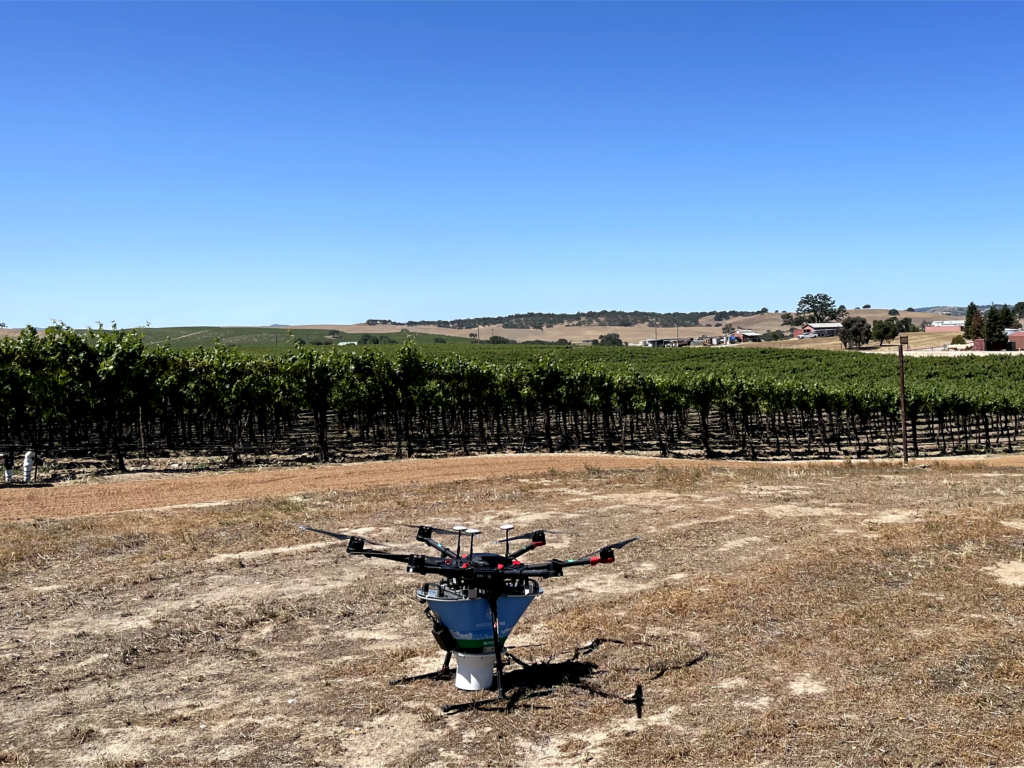
The writer, co-founder of UAV-IQ, through their BioDrop service, helps viticulturists implement biological pest control in an efficient and cost-effective manner by using drones to release beneficial insects into vineyards.
Regenerative agriculture has been one of the most discussed trends of the past few years. Still, the thought of transitioning from a conventionally managed vineyard to a regenerative one can be intimidating. A few of the reasons it is so daunting are that the risks of change are perceived to be extremely high, the rewards seem to be vaguely defined, and the process is not particularly well known within the industry. However, each of those concerns is addressable with a bit of research, so we decided to speak to someone who not only has done that research but became convinced that the transition was the right choice.
Meet Caine Thompson, managing director of Robert Hall Winery and sustainability lead for parent company, O’Neill Vintners & Distillers.
All of Robert Hall Winery’s estate vineyards and the external growers supplying the winery already follow California Sustainable Winegrowing Alliance (CSWA) guidelines. Transitioning to organic regenerative viticulture felt like the natural next step for the company, which started a regenerative and biodynamic trial on its estate vineyards in late 2020. The goals of this study are to understand what effects these practices have on yield, costs, overall fruit and wine quality, but also share the lessons learned along the way.
From Organic to Regenerative Viticulture
The main difference between regenerative organic certification and organic is the focus on the beneficial ecological and social outcomes. One of the three main objectives is to build soil organic matter to improve yield without the need for synthetic inputs while sequestering carbon as a way to fight climate change.
It also evaluates the social components of farming. “Without the people working in the vineyard, we wouldn’t have much of an industry. Looking after employees, giving them access to anything they need, and paying a living wage over a minimum wage is a big piece of the regenerative movement that no other certification really talks about.”
The third pillar of regenerative farming is animal welfare and using them to replace machines when possible. For example using sheep at the tail end of harvest to: clean up the weeds and cover crops, recirculate nutrients back in through manure and reduce the overwintering detrimental spores of disease.
Regenerative & Biodynamic Study at Robert Hall Winery
In 2020, Robert Hall initiated a multi-year trial of new tactics designed to profitably achieve regenerative and biodynamic certification in 43 acres of their Paso Robles estate vineyards’ 130 acres. The remaining 87 acres are still farmed under the sustainable guidelines and serve as control during the study.
The vineyard management – pruning, shoot thinning, wire lifting, etc. – is exactly the same in both blocks. The study compares multiple metrics in the control and trial blocks on an ongoing basis.
“We took some base level samples at the start of the study, and will keep performing tests over the next three years to assess the evolution.”
Measuring the impact of the new practices on soil health is one of the most important aspects of the trial because improved soil health can lead to improved yields as well as reduce input costs.
“We’re measuring soil organic carbon levels and the various elements within soil.”
Caine shares, “We put six tons to the acre of compost on the vineyard at the start of the trial. With the beneficial cover crops that are going in, it’s going to build organic matter and create a living soil. Soil can take a long time to change, but I feel like we’re making progress.”
Caine explains how the impact of improved soil health on grape characteristics is measured. “We’re doing fruit analysis at the time of harvest, including bricks, pH, titratable acidity, yield, phenolics, and yeast assimilable nitrogen levels.”
The changes resulting from the implementation of regenerative and biodynamic practices don’t stop in the vineyards. Caine comments that, “The idea is to take fruits from the regenerative block and bring them through the winemaking process with very minimal adds. For example, we’re using native yeast instead of conventional yeast.”
Robert Hall is tracking the costs of these new practices as well as what bottles the grapes in the trial end up filling, so when the wine is sold they will be able to calculate their marginal profit generated from regenerative management.
“We Are Very Encouraged bythe First-Year Results”
Completely stripping out fertigation, herbicides, conventional-based products, and starting farming under a regenerative mindset is a big change to the vineyard ecosystem. The benefits are often only noticeable in the second or third year.
However, Caine claims “We’re really encouraged by the results in terms of how the fruit came in, how the wine quality is looking, especially for year one in the conversion.”
He details that “There was a noticeable difference in fruit quality that we think is purely attributed to a larger canopy. The sustainable lot had a smaller canopy, with more sunlight going on the berries, provoking more dehydration. This reduces yield and tends to give the grape an overripe ‘jammy’ character. Whereas on the regenerative side, there was more shade and grapes were definitely less shrivelled.”
On the wine-making side, “Fermentations looked good. They went through quickly, the native yeast was healthy and we didn’t have a problem with any of the ferments.”
On a social aspect, Caine claims that “The staff working in the vineyards takes a high level of care because they feel like they are contributing to something that’s kind of larger. It’s great to see that level of commitment in the vineyard team. It’s one of the elements that I continue to be surprised about.”
The economic data will be published before spring and should “help guide some decisions of where to go next season.”
Biocontrol to Keep Mealybug in Check
A hesitancy to rely solely on non-conventional pest management is a strong barrier to the adoption of organic viticulture. However, there are proven strategies for managing many of the most significant pests. For example, vine mealybug (VMB) is currently the most significant pest in California vineyards. It transmits the very destructive leafroll-associated virus type III which can spread very rapidly within an entire vineyard if a monitoring and control program is not put in place.
“Once you do see the virus, it’s important to map its spread within your vineyard. We place identifying poles next to the infected vine, and then remove it to stop the spread,” explain Caine.
While removing and replacing vines is a significant upfront cost, Caine believes VMB poses a greater long-term threat. “If we want to be a great wine region in Paso Robles, vine age is going to be what gets us to greatness. We need to ensure that vines don’t suffer from the onset of leafroll virus.”
As part of their transition, the team at Robert Hall stopped using conventional insecticides. After investigating different options, they chose augmentative biocontrol as their main strategy to control VMB.
“We started working with UAV-IQ, which offers a service called BioDrop. They release beneficial insects in vineyards using drone technologies. They helped us identify Cryptolaemus, aka mealybug destroyer, as the predator of choice to target mealybugs in our vineyard. It’s a ladybird beetle which, at a larvae stage, looks very similar to a mealybug.”
The speed of the releases and solving labor-shortage issues are not the only advantages of using this release technology. “Using drones, you minimize the soil compaction caused by tractors. It’s pretty amazing seeing drones fly and drop predators throughout your property.”
Caine is pleased with the results, as “It achieved the same level of control as any other conventional based program that we’re running.”
He explains that they currently don’t have any other significant pests that they need to control but mentions that “It’s nice to know that whatever pest does emerge, we’ve got a partner like UAV-IQ to help solve that problem with biocontrol and integrate it in our existing program.”
Pest Management From aRegenerative Agriculture Perspective
Releasing beneficial insects is part of a larger plan to improve pest management without pesticides. “We are trying to build a more diverse ecosystem, adding more shelter and food sources to attract and retain natural enemies in the vineyard.”
Caine reports “We planted mixed species of oats, legumes, and flowering plants as cover crops just before the rain came at the end of 2021, so it should perform really well.” He emphasized the importance of choosing the correct species for local conditions. “It gets so dry in California that you’ll want to plant a cover crop that can grow on a small amount of water.”
Growers can also use different compost teas and biodynamic preparations to build healthier soil and vines that will be less prone to pests and disease attacks. While creating a perfect balance where vines don’t attract any pests is the “holy grail”, Caine believes that getting there is not necessarily reachable. “There are always external factors provoking mealybug outbreaks. What I’ve personally learned in agriculture is that every season is different and the environment is always changing.”
With that in mind, Caine emphasizes that complete pest eradication shouldn’t be the main objective anyway. “The goal is to build a more biologically diverse vineyard and create a balance where predators will prevent mealybugs from reaching outbreak levels, slowing down the spread of leafroll virus.”
As for preventing fungal diseases like botrytis, Caine believes that cultural management, detailed pruning to a balanced vine, practicing shoot thinning in order to have an open canopy, and checking that bunches are not intertwined, can go a long way.
As an industry veteran, he understands well the potential impact an issue in the vineyard can have on the long-term success of a winery. “The grapes we are growing turn into a bottle of wine, that turns into a brand that goes into our customers’ hands. So it’s important that we’re consistently delivering that wine to our customers. Having a reliable IPM and biocontrol toolkit that’s built for regenerative farming is going to be part of ensuring brand quality over time and helps de-risk this form of growing.”
Fostering the Change at an industry Level
One of the main goals of Robert Hall’s regenerative study is to share their experience with other growers so they can learn from their successes and failures.
Caine acknowledges that large wine companies which have access to vineyards in different areas like O’Neill does, are often better able to set up trials than small growers are. “For a five-acre grower, setting up a trial in the entire vineyard is a lot of eggs in the same basket.”
But that shouldn’t prevent them from starting to make changes on a small scale. He suggests that “You can stop using herbicide on a few roads, plant some cover crops on five rows and see what happens, or only apply sulfur instead of all the other products for powdery control, just on one block.”
When talented conventional growers have been farming in a particular way for 10, 20, 30 years, they need to build trust in new ways of growing.
“If there is an interest, anybody can start small, get the learning, build the confidence and then in time, bring that to the rest of the vineyard.”
Field days are organized on a regular basis at Robert Hall Winery, where growers, industry stakeholders, and consumers are invited to learn from their experience.
“We’re happy to share what we’ve learned along the way with other growers who want to come down this path.”
“We Need to Regenerate Our Soilsfor the Future Generations”
While achieving regenerative organic and biodynamic certifications can help meet the increasing customer demand and secure a premium bottle price, Caine believes the transition is the right thing to do for more than economic reasons.
“We need to remove harmful chemicals and farm in a way that regenerates our soils for the future generations. If we keep farming the way we currently are, we are going to find ourselves experiencing other problems in the future.”
To conclude our conversation, Caine shares that people within O’Neill Vintners & Distillers rally behind this transition to regenerative viticulture. “It’s pretty amazing to be able to work for a company that produces great wine while having a positive environmental and social impact.”
Readers, are you interested in starting the transition to regenerative agriculture? Make sure to attend upcoming field days at Robert Hall Winery and reach out to UAV-IQ.
For Italian wine lovers, the dream vacation would undoubtedly include a trip to Italy, a land of charming little villages and 21 different wine regions. But when international travel is out of reach, the next best thing is a visit to VJB Cellars in Kenwood, California, where you can experience a taste of Italy in the heart of beautiful Sonoma Valley.
“The vision of the founder, first-generation, Henry Belmonte, was to create a piazza like those in Italy,” said Lindsay McGorry, Vice President. “They wanted guests to feel like they had stepped into Italy when they walked through the gate to our property.”
Indeed, the VJB Cellars exemplifies the best of an Italian piazza, a “town square” where people can dine, drink and enjoy each other’s company. The property features a Tuscan-style villa with a tasting room and a barrel room, a deli and marketplace that offers imported Italian goods and a chocolate-gelato shop specializing in hand-crafted artisan chocolates and a dozen flavors of locally-made gelato.
The “little town within a little town” also has an outdoor kitchen that serves pizza, traditional sausage sandwiches and barbecued chicken and ribs. “We make many of our products in-house,” McGorry told The Grapevine Magazine. “For example, for our Margherita pizza, we make our own dough, sauce and mozzarella, and we grow our own basil. You can’t get any fresher than that.”
With stylish tables and chairs, guests can enjoy lunch with a bottle of wine in the outdoor open space or select from several tasting options led by the knowledgeable wine team. “It’s a lot of moving parts,” McGorry said. “You feel like you’ve actually come to Italy.
The history of this delightful gem can be traced back to Bonito, Italy, where Henry’s parents, Vittorio and Maria Belmonte, have their roots. Vittorio first picked grapes from the family vineyard when he was eight years old. There he developed an appreciation of the local wine varietals and their characteristics. Maria Belmonte learned to cook authentic southern Italian recipes from her mother and grandmother as a young girl. When Vittorio and Maria settled in Kenwood in 1976, they opened a family restaurant that featured her native Italian dishes. After receiving accolades from industry critics and the local community, the family opened a larger restaurant, Caffe Portofino, in downtown Santa Rosa. There, Maria worked tirelessly as executive chef, and Vittorio—with their two sons, Henry and Victor—ran the front of the house. Again, the restaurant earned rave reviews.
Henry and Victor, who grew up in the restaurant and continued to have a presence through high school and college, realized that they should be making their own wine to serve with their critically-acclaimed food. The brothers had their first harvest of Cabernet Sauvignon grapes in 1999, but before they could bottle that wine, tragedy struck: Victor died unexpectedly of a heart attack. To keep his memory alive—and his passion for wine—the family decided to plant a vineyard on their 12-acre property and open a tasting room. Henry created a label, VJB, named for Victor Joseph Belmonte, and the family began a new journey in the Sonoma Valley.
The Belmonte’s sold Caffe Portofino in 2002 and, in 2003, opened a 900-square-foot tasting room with five wines and an espresso bar. The wines were Cabernet Sauvignon and Chardonnay because they were popular in California, and Italian varietals Barbera, Sangiovese and their flagship wine, a Cabernet Sauvignon-Sangiovese blend made in honor of Victor’s two favorite wines. They called the blend Dante, a name Victor had chosen for his yet-to-be first-born son. Today, nearly 20 years later, VJB Cellars still produces Dante.
What started in a tiny tasting room quickly evolved into a dream for something more for the Belmonte family. “Sonoma County is a food mecca,” McGorry said, “so they decided to bring back Maria’s delicious cuisine. They wanted a place where people could gather and enjoy life’s milestones—not necessarily in the restaurant industry.”
In 2010 they broke ground on their current tasting room and marketplace and planted two acres of Montepulciano and Aglianico. In the summer of 2012, VJB Cellars celebrated its grand opening, introducing the public to a “taste of Italy” with authentic Italian foods, a growing list of Italian wines and true Italian hospitality. Their “little town within a little town” quickly became a go-to destination in the Sonoma Valley.
In 2014 the Belmontes purchased nearby Wellington Cellars from father and son John and Peter Wellington, who had been operating the vineyard for over 20 years. “This was a fantastic transition from father to son to father to son,” McGorry said. “The Wellingtons knew the vineyard would be in good hands as a family operation.”
The sale came with a full production facility and tasting room, plus 21 acres of vineyards planted with a focus on French varieties, including Marsanne, Roussanne, Malbec, Merlot, Cabernet Franc, Viognier and Bordeaux blends, as well as old-vine Zinfandel dating back to 1882. “The Old-Vine Zinfandels also include one dating to 1912 and another to 1924,” McGorry said. “These are a big draw for a lot of guests, who really enjoy sampling vineyards that are so old.”
When the Belmonte’s purchased Wellington Cellars—minus the inventory—they rebranded the wines, changed the style and limited production to small-lot, hand-crafted wines produced almost exclusively from the 24-acre estate. They now make wines for both labels at the winery: Annual production for VJB Cellars is 10,000 cases, and for Wellington Cellars, it’s 3000 cases. Wines are sold exclusively direct-to-consumer and from the wine clubs.
In 2020, the family acquired Kenwood Farms and Gardens, located across the street, which added 14 more acres to their vineyard holdings. The property includes a cottage, a barn with a bar and picturesque grounds with views of Sonoma County’s rolling vineyards. The space will enable the Belmonte family to host large events like weddings, retirement parties and corporate retreats.
Today, VJB Cellars produces 19 different wines, all Italian varietals except for Cabernet Sauvignon and Chardonnay. “There’s a lot of Chardonnay, Cabernet, Pino Noir and Sauvignon Blanc up and down the valley, so we wanted to offer something different,” McGorry told The Grapevine Magazine. “Our wine list includes Aglianico, Negroamaro, Montepulciano Dolcetto and more, which gives guests an opportunity to come and learn something new.”
Vittorio Belmonte serves as proprietor and supervises the vineyard management and winemaking teams. Maria is executive chef and director of the market, La Cucina and the Red Rooster Pizza Kitchen. She also hosts cooking classes. Henry, the “Big Parmesan,” oversees all aspects of the winery, ensuring that visitors have an opportunity to experience the Italian heritage and traditions of the Belmonte family.
VJB Cellars refers to its wines as “Italian varieties with a California flair,” according to McGorry. “We make traditional Italian wines with the flavor profile you would find in Italy, yet with the fruit element that is typical of California.”
From the beginning, the Belmontes have approached winemaking as a combination of old-world tradition and new-world innovation. “Vittorio grew up immersed in wine with his father and his uncle in the basement of their home,” McGorry said. “He learned the traditional flavors, and he wanted to keep those traditions alive. Yet he was not afraid to put his own spin on the wines.”
For example, McGorry explained that the flagship Dante wine is a traditional Super Tuscan Blend, with Cabernet Sauvignon and Sangiovese, but with the proportions reversed. While a Super Tuscan may usually be 85% Sangiovese and 15% Cabernet Sauvignon, the Dante is 85% Cabernet and 15% Sangiovese, making the wine unique to VJB Cellars.
As the Belmonte’s look to the future, their only plans for growth are renovating the tasting room at Wellington Cellars and producing more wine there. While producing high-quality wines, the ultimate goal is to offer exceptional hospitality.
“We’re in a land of a thousand wineries in Napa and Sonoma. There are other family-owned wineries, and there are others that produce Italian wines. But at both wineries, we make hospitality our top priority. We try to give people an unparalleled experience so that when they go home, they think about their visit and join the wine club because they want to be reminded of that experience. They come back again and again and bring friends because of how they were treated. In sharing their heritage, the Belmontes want people to come as visitors and leave as family.”
Excerpt from Malbec Mon Amour. By: Laura Catena and Alejandro Vigil
In Argentina, many people think of Malbec as a local variety. And those who know a little more about its history see the grape as an immigrant whose splendid adaptation makes her Argentine through and through. This would be all well and good if it weren’t for the fact that Malbec has been so extensively documented in France’s wine bibliography. It is impossible to deny the grape’s glorious European past.
Malbec’s long, eventful history in France is reflected in the number of different names it was given over the years. In the mid 1960s, the French ampelographer Pierre Galet identified more than a thousand different terms for Malbec depending on where it was grown or whomever introduced it to the region in question. For instance, it’s known as Côt in the Loire Valley, Malbec or Malbec Doux in Gironde, Luckens or Lutkens in Médoc, Pressac in the Libourne area of Bordeaux, Côte Rouge in Entre-deux-Mers and Lot-et-Garonne, and Auxerrois or Côt Noir in Cahors, capital of the former province of Quercy.
In the 18th and early 19th centuries, Bordeaux clarets were light and almost pink in color, as opposed to their competition, Burgundian Pinot Noir, which was dense, fruity and deeply colored. It is likely that Malbec was a catalyst for the transition of Bordeaux wines into the more concentrated style we know today. These days Pinot Noir is the lighter, paler and more delicate of the two.
DNA analysis carried out in France in 2009 determined that Magdeleine Noire was the mother of the Malbec, and Prunelard its father. The former, which also gave birth to Merlot, comes from the Charentes region, about 80 miles north of Bordeaux, while the fruity and tannic Prunelard hails from Gaillac, located between Bordeaux and Cahors. The cross-pollination probably occurred on the banks of the River Lot in Cahors, perhaps before France was conquered by Roman legions or later, in the Middle Ages.
Around 150 A.D., the city of Cahors, which was known as Divona at the time, was the Roman capital of the province of Quercy in what is now France. It was here that the first mention of the grape was recorded, although its precise origins continue to be a mystery. Malbec might have come to Divona from Italy, brought by the Roman invaders, or perhaps it was already in France when the Romans arrived in Gaul, and they simply adopted it and continued its cultivation. It is also featured in literary history: praise for the ancient wine of Cahors can be found in the Odes of Horace and in Virgil’s poems.
Historians agree that in spite of the foreign invasions that occurred during the decline of the Roman empire, Malbec retained its reputation and continued to be grown.
When we get to the Middle Ages, the story of Malbec becomes inextricably entwined with that of Eleanor of Aquitaine (1122–1204) the only woman ever to be queen of both France and England. Eleanor inherited a third of present-day France, the Duchy of Aquitaine, from her father. Malbec plantations are thought to have extended beyond Cahors down to the Pyrenees (Madiran) in the South and across the eastern bank of the Dordogne River from Saint-Émilion to Côtes de Bourg.
Eleanor preferred the wine from her region over the offerings from the Loire and Burgundy generally chosen by the Parisian aristocracy. At age fifteen, she was married to the man who would soon become Louis VII of France. Later on, the “black wine,” as Malbec would come to be known, most likely flowed at Eleanor’s Courts of Love, festivals of music and poetry where Malbec grew to be appreciated as the wine of the nobility.
According to oral tradition, the Malbec grape expanded from its native Cahors to Bordeaux in the 18th century, introduced by a Hungarian winemaker called Malbeck or Malbek. In Bordeaux, producers used it to lend more color to their clarets.
Why is the Malbec known as “the black wine?” The exact origin of the term is unknown. The epithet could be related to the belief that harvesting the grapes at night improved the quality of the wine, or to the fact that Malbec’s intense color left dark stains on teeth and tongue.
After fifteen years of marriage, Eleanor divorced Louis VII and renounced the French crown to marry Henry II of England. Their wedding was most likely drenched in Malbec, the royal wine, as chronicled by the era’s historians.
The union allowed Aquitaine, now under English rule, to sell the Cahors wines alongside those from Bordeaux across the channel. Malbec now was served at tables across England and Ireland. The children of Henry II and Eleanor who came to the throne, Richard the Lionheart and King John, continued to trade with Cahors and promote the wine.
But an enterprising bureaucrat also played a major role in the growth of wine exports from the Cahors region. In having the boulders removed from the River Lot, which runs through the area, he ensured that circulation and shipping from the interior would be greatly facilitated, much to the benefit of local wine producers. The move also spawned the birth of a rivalry with Bordeaux, whose officials introduced new taxes and restrictions to limit the spread of Malbec from Cahors. To stem this, Henry III of England placed Cahors wine under his personal protection, meaning that Bordeaux officials could not restrict its transport or sale.
English traders soon recognized a good business opportunity at hand, and turned Cahors into a major urban and financial center. The main thoroughfare to foreign markets was the port of La Rochelle, which also flourished as an economic powerhouse. Centuries later, Alexandre Dumas would choose the port as setting for his classic The Three Musketeers.
The grape’s prestige continued to rise, and by the 16th century, France’s Francis I, who was originally from Aquitaine, took such a great liking to Malbec that the grape came to be known as the Plante du Roi (the King’s Plant). The sovereign planted Malbec around his Palace of Fontainebleau and at his favorite retreat, the Vauluisant Abbey north of Dijon. It was also the dawn of the French Renaissance, and the king’s influence made itself felt in the art world. He brought none other than Leonardo da Vinci to his court. It is thanks to Francis I that the Mona Lisa hangs today in the Louvre Museum.
And let’s not forget that the Catholic Church uses wine in its central act of worship: the Mass. History records that when a cobbler’s son from Cahors was chosen to be Pope John XXII (1244–1334), he declared Malbec to be the preferred communion wine. When the Pope was living in Avignon during the Schism with Rome, he grew Malbec at his palace. That’s not all: By the end of the 17th century, the variety had also become the sacramental wine of the Russian Orthodox Church. Tsar Peter the Great had chosen it as a cure for his stomach ulcers. In fact, Peter had Malbec vines brought from Cahors to Russian Crimea, where it became known as Caorskoie.
Malbec’s storied past is marked by historical serendipity, territorial alliances, sacred uses and healthy attributes. Popes, kings, and nameless bureaucrats all had a role in establishing the grape as one of the most important varieties on the European viticultural stage.
On a robust Saturday afternoon in Morocco, you wander through the souk looking for a stand that brews Maghrebi mint tea. You can feel the history of this land, rich with culture and spirit. Each artisan in this market holds ancient skills, and you know that rare treasures purchased here are indeed worth more than their weight in gold. Time has shown us that sometimes, as people strive for progress, what was once good eventually becomes lost. The souks and riads of Moroc-co allow you to step into the past where time moved slow and living in the moment was the only choice; that life is a series of moments meant to be seized.
When we imbibe, sometimes we get lost in the fun, but the true celebration occurs when we al-low our imagination to wander. Time-travel with the fermented grapes of a bottle of Moroccan wine, and ask questions: How did it get across the world to your local wine store? What is the journey and the untold story of the people whose hands brought it to life? Everything created has a story. Allow yourself to get lost in exploration as you travel to northern Africa for the splendor of Moroccan wine.
Slow Growing Vines in the Desert
Like South Africa, Moroccan winemakers benefit from the favorable weather and terrain. Their proximity to the Atlantic Ocean and high mountains, coupled with cooling trade winds, allow low-lying vineyards to flourish in the foothills of the coastal Atlas Mountains.
Although Morocco has been making wine for over 4,000 years and is the second-largest producer of table wines in Africa, it does not have a robust wine industry or a history comparable to South Africa. The beginning of viticulture in Morocco originates with the Phoenician settlers who ush-ered in trading colonies. Still, it was not until the arrival of French colonialists in 1912 who brought with them winemaking that the wine industry began to take form. Although this was the start of large-scale wine production, it was not a fortuitous upward venture. The Moroccan inde-pendence in 1956 saw a slump in wine production. When the French left, they took their wine-making expertise, leaving approximately 55,000 hectares of wine unattended. Morocco’s wine industry underwent a significant decline.
Another roadblock for Morocco’s wines was in 1967 with the introduction of European Econom-ic Community quotas. Now, wines with the label made in France, for example, could not contain grapes from other countries. In turn, this exponentially reduced the exportation of wine to EEC countries. During this time, Moroccan vineyards were unable to thrive, with limited entry to time-honored markets. In addition, surplus production from Mediterranean wine-producing countries made it hard to measure up.
Further, the infrastructure and the resources needed to scale production like its competitors proved uneconomically feasible for Moroccan vineyards. This led to vineyards planting and har-vesting different crops. In the early 1970s to the mid-1980s, vineyards were taken over by the state, and new protocols further diminished wine production. Additionally, vineyards could not compete due to fixed grape prices that were not determinant on the quality of the grape yielded. Most vineyards were deemed poorly operable due to insufficient production and management.
The turning point for Morocco’s wine industry began in the 1990s under the rule of the second king of Morocco, Hassan II of Morocco, a graduate of the University of Bordeaux in France. He was known as the peacemaker for foreign relations in northwestern Africa, and, as a result, he parlayed the return of French investments and prowess in winemaking to Morocco. French inves-tors were offered long-term lease agreements for vineyards owned by the state agricultural com-pany. This offer was also extended to other foreign investors who could improve the Moroccan economy with industrious ventures. Tailan, William Pitters and Groupe Castel, well-known Bor-deaux-based wine companies, seized this opportunity and rejuvenated Morocco’s wine industry. It has proven beneficial on the world stage since Morocco’s Boulaouane a Castel is now a best-selling wine in France. Hassan II of Morocco’s efforts have been attributed to the revival of Mo-rocco’s wine industry and becoming the second-largest producer of wine in the Middle East. This accomplishment is worth mentioning given that Morocco is a predominantly Islamist governing country that prohibits the consumption of alcohol and sale of alcohol locally. Wine is sold at ho-tels and restaurants and contributes to keeping up with tourism demands.
What We Plant Grows
The international wine export industry has helped Morocco gain recognition. France is the top consumer of Moroccan-made wine exports, followed by Belgium and England. There are five wine regions in Morocco, with fourteen AOGs and three AOCs. The difference between AOC, appellation d’origine contrôlée, and AOG, appellation d’origine garantie, is the grape quality control measures utilized. Popular and familiar tourist wine regions are Casablanca, Boulaouane, and Meknes. Since 75% of wine production is red wine, wine lovers will find an array of red grape Rhône varietals. Vin Gris makes up the remaining percentage of wines along with white wine and the beloved Moroccan Rosé. Vineyards grow Syrah, Merlot, Grenache, Cabernet-Sauvignon and the traditional Carignan grapes which once dominated. Other grape varieties in-clude Sauvignon Blanc, Chardonnay and Chenin Blanc. Vin Gris is a greyish-pink-hued wine blended with rosé and white wine.
A blue-black grape table wine that is indigenous to Morocco is Taferielt. Its origin traces to the Moroccan wild vines that once cloaked the Rif mountains in the sixties. Before pre-phylloxera, where disease plagued vineyards, this vine, called Farrana Noir, could be found in the Balearic Islands. It has yet to make a name for itself but is known by those who visit Morocco. As with all hidden gems, it will have its moment in the sun as Morocco slowly gains recognition in the pres-tigious wine market.
Wine revelers will note that the cost of Moroccan-made wines is reasonably cheap, but this does not denote the quality. However, some will say that since it is still a burgeoning wine market, people in Morocco are not as discerning about wine as they would be in Europe or North Ameri-ca, where wines are scaled differently.
Only about 5% of the approximately 40 million bottles produced annually in Morocco are ex-ported. This number is quite eye-opening given the parameters around alcohol consumption in the country. The mystery of who is consuming these wines will only be revealed to those who consume them. That said, this staggering number demonstrates a demand for wine in Morocco even though it is not heavily promoted within the country. It could be a new generation of wine consumers, similar to Germany, where millennials are reviving the viticulture landscape. Those who study abroad return home with a palate that enjoys a glass of wine when dining. Further, they recognize that Morocco houses vineyards with delightfully good wines.
The stories of Moroccan vineyards are waiting to be told. It is the people who own the land and are responsible for bringing the wine to life who hold what is still unknown. These vineyards are more than just land that grows vines. They demonstrate that what we plant grows, and growth is painful yet beautiful.
Notable Moroccan WinesDomaine des Ouled Thaleb Estate
Zenata Rosé – Domaine OTB
Zenata Rosé – Domaine OTB is a crisp and refreshing plump cherry and cranberry wine with floral notes. It is made by the Domaine Ouled Thaleb Estate, the oldest and most well-known winery in Morocco. Established in 1923, the winery is named after the tribe that works the winery and owns the land. The composition of this concrete tank-fermented rosé is 30% Syrah, 20% Cinsault and 50% Grenache. This vineyard, known for its exceptional rosé, is located in the northeast Casablanca wine region.
Les Celliers De Boulaouane
Thalvin Boulaouane Vin Gris
Vin Gris is a popular wine that is a beautiful blend of Cabernet Sauvignon, Cinsault and Grenache. This is an airy, refreshing wine with floral notes and hints of fresh berries that remind you of hot summer days. Smooth caramel, citrus and honeysuckle notes provide a nice overall finish. This is a popular Moroccan wine for tourists.
Winery Bonassia
Bonassia Cabernet Sauvingon
Fruity, sweet, and warm with a hint of spice is the best way to describe this smooth, rich red wine. It pairs well with flavorful Moroccan dishes such as Tagine. Aromatic notes of nutmeg and vanilla enhance the flavor of spices without overpowering the palate.
Vineyards are constantly on alert for bacteria and fungi, both of which can cause debilitating diseases––persistent threats to an otherwise healthy grape crop if not put in check right away.
The names of these culprits sound ominous. They include black rot, grapevine trunk diseases, powdery mildew, Phomopsis, Phylloxera and Botrytis bunch rot. They are as intimidating as they sound, causing damage to plant roots, trunks, branches, leaves and ultimately, grapes.
Madeleine Rowan-Davis, a senior viticulturist for Atlas Vineyard Management of Napa, California, describes the challenges of the vineyards in her region and throughout the country.
“I don’t believe there is a grape grower in the U.S. that does not have a fungicide plan in place for prevention of powdery mildew. After powdery mildew, the next biggest culprit we deal with in wine grapes is Botrytis or grey mold. Botrytis grows under damp conditions and can damage the flowers during bloom, reducing yields; and also [damage] the nearly ripe fruit following heavy dew events or pre-harvest rain. It is absolutely crushing to spray all season preventing powdery mildew and then lose fruit right before harvest to bunch rot caused by Botrytis.”
Almost anything that is not in a grower’s control, things like insects, weather and other environmental factors, can introduce bacteria and fungi to vineyard plants and, in turn, thwart a grape crop before it even starts.
On the flip side, experts say that some growers can unintentionally promote the growth of bacteria and fungi by doing what most consider routine tasks. For example, some industry experts caution that repeatedly using the same chemical treatment can lead to bacteria and fungi resistance, eventually rendering that treatment ineffective. Another problem is deploying flood irrigation, which promotes the growth of fungus-like powdery mildew and other culprits that feed on humidity. Still another practice is fall clean-up. After harvest, some growers use fertilizer and water as a clean-up spray. But just because there are no grapes around doesn’t mean that bacteria and fungi are absent. If growers aren’t careful, the practice of fall clean-up can create the perfect breeding ground for fungi and other pathogens.
Among the best at helping grape growers protect their fruit is Suterra, a global leader in the industry. In business for more than 30 years, the company produces hundreds of products used in growing regions across the globe, including more than 400,000 acres in California.
Suterra’s state-of-the-art facility in Bend, Oregon, combines all aspects of its business under one roof. Research and development, product engineering, manufacturing and the company’s signature, large-scale pheromone synthesis work seamlessly to create innovative weapons for vineyards to use in guarding against damaging invasions of disease and fungi.
Emily J. Symmes is Senior Manager of Technical Field Services for Suterra. She gives an overview of the major disease and fungi threats to vineyards.
“Some examples of common fungal diseases that are often considered perennial threats, meaning that they may appear each year and require some degree of management, are powdery mildew and Botrytis. While significant negative impacts can occur due to these types of infections, the spread of virus diseases in a vineyard is often more concerning.”
Suterra partners with trial collaborators each growing season to innovate and continuously improve its products based upon what growers need. Its CheckMate VMB-F sprayable pheromone is now on the California Certified Organic Farmers list of allowable products for use by organic growers. The company also works with growers to tailor and improve dispenser design, longevity and ease of deployment. Suterra is currently working on a new type of dispenser for the vine market. According to the company, testing this latest innovation has produced favorable results from growers.
Symmes shares best practices on how vineyards can lessen the impact of disease and fungi on their plants and fruit. In many cases, she says, it’s virtually impossible to avoid them all. Rather, she cautions, mitigation is the operative word.
“With the more perennial fungal pathogens, a number of factors can contribute to the severity of the problem. These are largely driven by weather conditions and microclimate factors within the vineyard canopy structure. Because of this, there are often cultural methods that can be implemented to discourage fungal growth. In addition, there are fungicides that, when applied properly and at the appropriate times, are effective at preventing severe damage. When it comes to viruses, unfortunately, there are no curative treatments. The goal then becomes preventing virus introduction and minimizing spread.”
According to a study funded by the USDA and conducted by the University of Massachusetts Extension Plant Diagnostic Lab, one of the worst diseases for vineyards is the Grapevine Leafroll Associated Virus complex. While this virus has variations, all of them cause the dreaded symptoms of grapevine leafroll disease. Experts say its impact hits vineyards from California to New York state.
Dr. Symmes describes Suterra’s products and how they function to protect vineyards from bacteria and fungi, some of which are carried from vine to vine by insects.
Suterra manufacturers CheckMate VMB-XL, a membrane dispenser, and CheckMate VMB-F, a sprayable microencapsulated formulation. These products target vine mealybug, a highly efficient Grapevine Leafroll-associated Viruses vector. The active ingredient in both products is synthetic replicas of the vine mealybug’s sexual reproduction pheromone.
By hanging VMB-XL dispensers or spraying VMB-F microcapsules, the natural ability of males to find females to mate is inhibited. These solutions limit reproductive capacity, lower populations, reduce direct crop damage caused by the pest and minimize the potential spread of GLRaVs.
Vine mealybug also produces large amounts of honeydew as a byproduct of their feeding. Sooty mold, another fungal pathogen, uses the honeydew as a substrate for development and can cause grape bunches to be unmarketable. By controlling VMB, the impacts of sooty mold can be avoided.
ORCAL is another Oregon-based company specializing in industry-leading products that help vineyards develop best practices for protecting their grapes. The company was founded in 1997 and is located in Willamette Valley, a major agricultural region and home to a number of world-renowned vineyards.
ORCAL promotes crop protection and sustainable farming through aggressive research and development, continuous education and innovative technology. It promotes its products as industry-leading and prides itself on building and maintaining integrity with its business clients and associates. Its services range from custom formulations to product packaging.
One of the company’s game-changing products is Lime Sulfur Ultra, which is described as a three-in-one product, making it a viable weapon in the fight against vineyard diseases caused by bacteria and fungi. Thomas Putzel is Territory Manager for ORCAL. He describes how his company reinvented the use of an old-school method, transforming it for today’s needs.
“When most people think of lime sulfur, they think of the high rates and that they are only safe to use during the dormant period. That might have been true 100 years ago with the older technology. This is not the case with Lime Sulfur Ultra. The reduced rates have many benefits—first, the fewer chemicals of any kind we are using, the better, including organic chemicals. Lime Sulfur Ultra is every bit as effective at controlling all the same pests as traditional lime sulfurs with a fraction of the rate. This reduces the carbon footprint and resources needed to control a wide host of pests plaguing growers today. Also, it isn’t just a fungicide; it is a miticide and insecticide as well. When we are able to do more with less, that not only has an impact on our environment but also a grower’s budget and bottom line.”
For growers who want management services to mitigate the threat of disease in their vineyards, there are companies like Atlas Vineyard Management. As the firm’s senior viticulturist, Rowan-Davis says the responsibility to protect vineyards from disease is year-round, including guarding against the pests that can spread disease.
“For each of our farming clients, we provide a pre-season customized chemical application plan and then support that plan in-season with our scouting service. This allows us to respond to seasonal shifts as well as new pests as they arrive. In some cases, our customers are very involved in these decisions, while in others, we simply act and do what is needed to produce high quality, clean fruit for harvest.”
As there is no cure for many of the diseases caused by bacteria and fungi in vineyards, a plan of defense is key to fighting this ever-present danger. Clean planting, early treatment and strategic planning to thwart ingredient resistance are essential tools in minimizing the threat of vineyard disease.
Standard vineyard equipment is needed to work the ground around and in between rows and work above ground on the vine structure and leaf canopy. However, specialized machinery can be expensive. Rather than trying to afford and find space for each implement, tow-behind implements offer savings on storage, maintenance and downtime costs. Recently, equipment manufacturers and vineyard managers have started to realize that the wave of the future is efficient, easy-to-use, multi-function equipment that attaches to a tractor and may already be in the vineyard’s back yard.
“When we talk to our customers, 90% say that in future purchases, they’ll look for equipment and tools that are efficient, multi-functional and easy to operate,” said Grant Allen, the current North American distributor forRinieriequipment. “Orchard and vineyard owners drive our market and let us know what they want, and we do our best to satisfy that need. With our line of multi-functional equipment, all sizes of vineyards now have options that can save time, money and the cost of being short of labor at critical times. Upkeep on vineyards is time-sensitive. That, combined with record labor shortages, and there is a definite benefit to owning multi-function implements that can be used, maintained and switched out by a single user.”
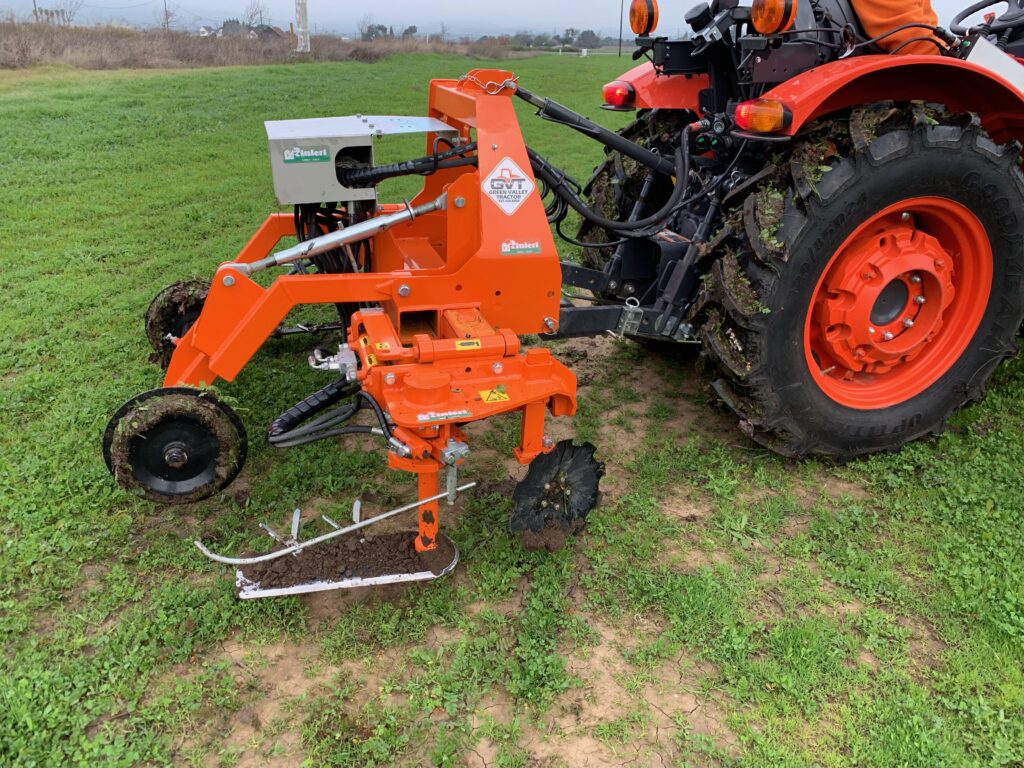
Rinieri has spent over 100 years as a family-run manufacturer of innovative orchard and vineyard equipment. It offers a Turbo EVO line as just one way to accommodate consumer demand for multi-use, easy-to-operate equipment. Its other most popular implement, the Bio-Dynamic, is exceptional at fast weeding–up to seven mph–in between rows in orchards and vineyards. Rinieri multi-tools feature three-point hitch hookups and dual control adjustable hydraulics that maneuver the equipment in an inward and outward motion, offering increased speeds, performance and time savings over standard single hydraulic systems.
“With the option of having interchangeable heads, vineyard managers get access to all the tools they need to do their mowing, cultivating, weeding, discing, plowing, sucker removal and more,” said Allen. “Smaller producing vineyards can start with the basics, maybe just the one or two heads that they use most often and add other heads if needed. Rinieri designs their equipment to be used with your current farm tractors, but if you don’t have the hydraulic capability on your current equipment, they can help with that as well.”
Allen said that a significant advantage of using Rinieri’s multi-tool equipment is the ability of the vineyard to move into a more organic way of farming.
“Organic farming practices are the future. Consumers have become invested in purchasing from organic producers, so vineyards must move to meet this demand. Our tooling helps alleviate the need for chemical use. With access to multiple implements to help maintain the vineyard, the pressure and need to use chemicals lessens. Organic farming practices are a major trend that is not going away. Consumers are looking for organic capabilities in their major purchases, so equipment designers and manufacturers have to respond.”
Optimizing time with efficiency:Tillage Management, Inc
Typically, vineyard managers look to tillage equipment in the fall or early spring for working the ground and incorporating any cover crops into the soil. By offering implements that can perform the required operations without multiple passes over the area, Tillage Management Inc’s Project Manager Kat Coombes said that they save the vineyard owner time and money by increasing efficiency and ultimately spending less time in the fields.
Comprised of working farmers and engineers, Tillage Management Inc. is a relative newcomer to the vineyard implement market, offering high quality, heavy-duty, multi-functional tillage implements for farms, orchards and vineyards. Their Optimizer one-pass tillage system combines disc and chopper blades to clear cover crops, uproot weeds, maintain level soil and keep berms clean using one-pass efficiency. A newer addition to their line-up, their chisel roller CR-series, works to break up soil compaction and leave a level working surface in the vineyard. Their heavy-duty equipment incorporates multiple operations in one pass, reducing labor, time and fuel use. Additionally, reducing the amount of tillage is key to preventing moisture loss and topsoil loss from dust. Tillage Management Inc has earned EPA certification for dust reduction with their equipment and offers a rental program for smaller vineyards that don’t need or require full-time ownership of their implements.
“As working farmers, we know the benefit of equipment that is operator-friendly and time-saving,” said Coombes. “Both our Optimizer and CR series can be adjusted, hooked up and operated by a single user. We offer minimal adjustment points, maintenance-free bearings that limit the number of grease points, and larger than standard disc blades, 28 inches over the standard 22 to 24-inch blade. In addition to cutting down the number of passes an operator must perform, the larger disc blades are an advantage to the steadily growing organic farming sector. More farmers realize the benefit of growing cover crops to reduce the amount of spraying needed for pests. Those pests naturally get drawn to more and larger cover crops. Then, those cover crops are incorporated into the soil easier and more efficiently using our larger disc blades and one-pass system.”
To get a timely return-on-investment benefit on Tillage Management’s high-quality, low-maintenance equipment, Coombes recommends its equipment for vineyards of at least 100 acres. Still, she wants vineyard owners to know that they will be investing in equipment that will last for decades and operate downtime-free when needed.
“With the move toward automation and efficiency, investing in quality, labor and time-saving devices in the area of both maintenance and usage is an important consideration that all farmers should look for in any equipment or tooling purchase,” said Coombes. “As the trend towards organic farming continues to grow, companies like ours will continually be offering designs and equipment to support a more organic approach. It’s the best way to serve our customers.”
Put a charge into your spraying:On Target Spray Systems hits the spot
Vineyard owners generally spend money on their most-used equipment, which indicates the importance of that task. For many vineyard owners, that means an efficient, reliable, quality sprayer, and Oregon-based On TARGET Spray Systems has long been the leader in electrostatic sprayers for all agricultural needs. Among their current offerings are newer, more compact units with either 50- or 100-gallon tanks, with the larger size allowing an operator to treat up to five acres without requiring a refill. In addition, the units feature reliable Honda motors and can be attached to or pulled by small tractors, ATVs or even side-by-side equipment that most vineyard owners already own.
“They’re extremely valuable to a vineyard owner,” said Willie Hartman, President and owner of On Target Spray Systems. “With an outside tire-to-tire width of only 48 inches, the operator can apply the spray in either a single or double row application, even in tight rows, meaning less time in the field, less soil compaction, and less water and solution use. With winemaking trending toward a more organic future, it’s even more important to have a sprayer that provides complete, 360° contact coverage to keep the spray on the plants, not on the ground. On Target’s 360° underleaf technology provides precise delivery of foliar feeds and biorationals, uniform coverage and faster drying time with lower spray volume.”
Hartman told The Grapevine Magazine that using contact materials rather than systemic variations is critical with organic gardening, so it’s essential to get complete coverage that keeps the materials on the plant and off the ground. On Target’s sprayers are designed and manufactured with proprietary electrostatic technology that provides comprehensive coverage, including the undersides of the leaves and within the clusters, while using less water and materials. Their spray booms can be adjusted and turned on and off individually as needed. In addition, standard-equipped onboard rate controllers and GPS modules automatically adjust to the driver’s speed and location, slowing down or speeding up the spray rate and volume to keep it at the preferred level, creating a superior consistency in coverage.
“A standard sprayer uses 100 gallons per acre sprayed, whereas our electrostatic sprayers will use 20 gallons over that same area,” said Hartman. “So we can spray 10 acres on a 200-gallon tank sprayer versus only two acres when using a standard sprayer. That’s an immediate opportunity to save money on water use. Add in the time saved with fewer return trips to refill the tanks, less overall material to spread, less time spent on the tractor, less money spent on fuel, and the advantages of electrostatic sprayers keep piling up. Environmentally speaking, by using less water and concentrated spray, electrostatic prayers result in less runoff, minimal drift and improved chemistry coverage, all essential aspects for moving away from systemic treatments and into a more organic way of farming.”
With increases in sprayer use comes increases in sprayer maintenance. Hartman said that it is obvious to look for quality, serviceable parts when purchasing a sprayer. Still, as a consumer, you should also look for sprayers offering onboard solutions to make your daily job easier and more manageable.
“One of the most important maintenance issues with sprayers is rinsing after use,” said Hartman. “On Target’s sprayers feature onboard rinsing tanks that are accessible with the flip of a switch. In addition, all the components needed for droplet charging in electrostatic spraying, including the liquid, air and the 12-volt power source, are on board and separately enclosed.
Getting All Misty:A1 Mist Sprayers
Mist sprayers are another option for vineyard owners. Versatile enough to apply insecticides, herbicides and fungicides throughout the growing process, misting sprayers send your spray applications to the target, both on top and underneath the leaf structure. Foliar feeding is beneficial for several reasons, including when insufficient fertilizer exists, rapid or accelerated growth is wanted, the nutrients are locked in the soil or soil temperatures are not conducive to using the applied fertilizer. Foliar feeding gets absorbed and utilized quickly, starting within minutes of application and completed, with most nutrients, within one to two days.
“A1 Mist Sprayersenable you to create spray barriers to help not only your vineyard crops, but also your livestock and feedlots, and truck farming crops,” said Jon Kulzer, A1 MistDivision Manager. “Our units utilize a high-velocity air technology system that enhances coverage while using 90% less chemical and 50% less water. The two-way volute gets pumped through nozzles into the created air stream, creating a fine mist solution specifically designed to allow the operator to reach the preferred target areas on each side of the sprayer in one simultaneous action.”
A1 Mist Sprayers can work with the equipment that a vineyard already utilizes, including tractors, trucks, ATVs and side-by-sides, so finding a unit to fit your needs is never an issue.
Kulzer told The Grapevine Magazine that any grower needs access to a cost-effective, versatile and user-friendly sprayer in today’s market. A1 Mist Sprayers feature powder-coated frames for chemical resistance and easy calibration systems, with the ability to spray from 100 to 800 micros and reach an 18-foot vertical pattern. Additional options include a backflush feature available on some units, making switching between applications quick and easy.
Risk Management is always something that is subjective to a grower. How much risk do you feel comfortable with? Or maybe how much risk are you willing to take, even if you aren’t that comfortable? Farmers are naturally risk takers, otherwise they would not be farming. Mother nature is unpredictable, just when you think everything is going to turn out right it doesn’t. Obviously, it turns out ok more often than not. But what about those years when it doesn’t? Sometimes you can have several bad years in a row. Crop Insurance is a good tool for that.
The Federal Crop Insurance Corporation (FCIC) was created in 1938. Originally coverage was limited to major crops. It was basically an experiment at that time, until the passage of the Federal Crop Insurance Act in 1980. The 1980 Act expanded the number of crops insured and areas in the US. In 1996 the USDA Risk Management Agency (RMA) was created. RMA’s purpose was to administer the Federal Crop insurance programs and other risk management related programs.
Grape Crop Insurance goes back to 1998, the current policy was written in 2010. Crop insurance is a partnership with Insurance companies and the FCIC. Crop insurance is partially subsidized through the USDA. Currently there are 13 Approved Insurance Providers authorized to write crop insurance policies with the USDA. Prices and premiums are set by the USDA per crop, state and county. There is no price/premium competition from one company to the next because of this. Independent insurance agents sell for these 13 different insurance providers. They may specialize in crop insurance or other lines of insurance. It is always best to work with an experienced agent that has crop insurance as their main focus.
Grape crop insurance is available in the following states; Arkansas, California, Colorado, Connecticut, Idaho, Maryland, Massachusetts, Michigan, Minnesota, Mississippi, Missouri, Nebraska, New Jersey, New York, North Carolina, Ohio, Oregon, Pennsylvania, Rhode Island, Texas, Virginia and Washington. Crop insurance is not available for grapes in all counties though. Insurable varieties are also different between states and counties. As I mentioned before prices are different between states and counties as well. The USDA price for a ton of Pinot Noir in Oregon is different than a ton of Pinot Noir in New York.
Grapes are insured under an Actual Production History (APH) plan of insurance. An average of the vineyard’s production per variety is used. Grapes need to be in their 4th growing season to be insurable. A minimum of 4 years is needed to do the average, if the grapes have just become insurable then a Transitional Yield (based on the county and variety) is used in place of any missing years. A maximum of 10 years can be used to determine the average if a vineyard has been in production for that amount time. Basically, you are insuring an average of your tons per acre per variety.
With crop insurance you cannot cover 100% of your average production. You can choose coverage levels from 50% to 85%. There is a built-in production deductible. Coverage levels are in 5% increments. Coverage levels are relative to premium, the lower the coverage the lower the premium, the more coverage you buy the higher the premium. It comes back to how much risk you feel safe with. You can also For example, if you have Cabernet Sauvignon in California and your average is 5 tons per acre. At the 75% coverage level you would be covered for 3.75 tons per acre. You would have a 25% deductible (1.25 tons per acre). To have a payable loss you would have to lose more than 25% of your average production.
The Causes of Loss per the policy are; 1. Adverse weather conditions; 2. Fire; 3, Insects; 4. Plant disease; 5, Wildlife; 6. Earthquake; 7. Volcanic eruption; and 8. Failure of irrigation water supply. There are more details to the causes of loss, you can’t have a loss due to plant disease if you are not applying sufficient and proper applications of control measures. Adverse weather conditions can be excess moisture, drought, extreme heat, frost, freeze etc. Fire can cause “smoke taint” and that is covered. Inability to market the grapes for any reason other than physical damage from an insurable cause is not covered. Damage due to phylloxera is also not covered.
There are sign up deadlines with all crop insurance policies. This is the same for Grape crop insurance as well. The deadline for all states other than California is November 20th. For California the deadline to sign up is January 31st. Premiums are not due at the time of sign-up; premium billing is done in August.
Agricultural Risk Management is a national crop insurance agency with offices in Florida, California and Pennsylvania. 2022 will be our 20th year of selling crop insurance.
Nicholas- Jay estate winery & tasting room, Dundee Hills AVA, Willamette Valley, Oregon
While many winemakers in the Willamette Valley wondered how they could survive during this ongoing global pandemic, Domaine Nicolas-Jay opened their new winery and tasting room in April 2021. When asked about the unique characteristics of this sustainability-focused winery situated on 53 acres in the Dundee Hills AVA, co-founder Jay Boberg mentions the Tolix benches from France. These benches gracing the deck of their tasting room situated in Newberg, Oregon represent a nod to the winery’s French influences courtesy of winemaker and co-founder Jean-Nicolas Méo.
Upon initial glance, one may wonder why when asked, Boberg focused on the architecture and not their wines in describing his winery. But for Boberg, one cannot separate the experience of drinking wine from the wines themselves.
In curating their winery’s ambiance, Boberg and Méo worked together to meld Burgundian and Oregonian influences. Inspired by a visit to the Monterey Bay Aquarium in Monterey, California, they sought to provide their visitors with a similar immersive experience. The end result is a welcoming space with a European country flair that distinguishes itself from the rustic or industrial architectural styles that define many Pacific Northwest wineries’ tasting rooms.
Guests sit at a kitchen island near the fireplaces as they savor a rotating selection of wines. These wine tastings are paired with locally sourced food served in dishes from New York City-based Lucy Park Ceramics. The tasting room’s wooden floor and two long modern tables were crafted out of the seventeen trees they had to knock down in order to plant their vineyard. Also, Boberg sourced and refurbished the mid-century modern chairs from a local Portland restaurant. Other homey touches include Gold records and other artifacts from Boberg’s decades as a music entrepreneur, a career that included cofounding I.R.S Records and serving as President for MCA/Universal Records for more than ten years. Boberg reflects, “We wanted our tasting room to feel like you’re coming into our living room and so we have lots of personal effects in there.”
The Intersection of Wine and Music
Boberg began exploring music when he was seven, and later developed his passion for wine when he was in college. His college roommate worked for a wine distributor, a connection that enabled him to taste wines from Napa Valley at a time when his peers were consuming Jack Daniels and Budweiser. Then he met Méo in 1988 courtesy of his sister as both his sister and Méo were attending Penn State.
In his journey exploring wines, Boberg met importers Kermit Lynch and Neal Rosenthal, and noted their approach to wines paralleled his interests in music. “Just as these men were championing original wines, I was trying to find artists who were creating music that was truly unique and extraordinary.”
Boberg finds many parallels between creating music and creating wine. Each year they begin their season in the vineyard with a new canvas. Factors such as weather combined with the particular vines they’ve planted, crop load, canopy management, harvest time, and other winery practices will inform how each particular wine will turn out.
During his travels as a music executive, Boberg had ample opportunities to connect with such luminary winemakers as Henri Jayer, who is considered the “Godfather of Burgundy,” and known for the quality of his Pinot Noir. Also, Boberg continued his friendship with Méo. As owner and winemaker of the Côte d’Or’s Domaine Méo-Camuzet, Méo spent nearly 30 years making wines from vineyards like Richebourg, Clos de Vougeot, Corton Clos Rognet, and Échezeaux.
Applying Burgundian Influences to Willamette Valley Vines
Both Méo and Boberg became entranced by the potential and quality of Oregon’s Pinot Noirs. They decided to combine their respective backgrounds in winemaking and marketing to a new region replete with new vineyards, new soils, and a new climate. In this quest, Boberg took the same approach to creating wine that he did when signing artists. “I never signed a band because I thought they were going to be a big hit. I signed them because their music touched me emotionally,” Bobeg reflected. In the same vein, Boberg and Méo wanted to make a wine they wanted to drink in the hopes there were enough people out there who had similar palates.
In Oregon’s Willamette Valley, they found the kind of balanced, terroir-driven wines they like to drink. In addition, they were drawn to the wine community that considers other winemakers to be collaborators not competitors. Also, the economics of Oregon enabled them to start a viable business compared to launching a winery in California.
After visiting over two hundred Oregon wineries over a two year span, they learned to recognize the vineyards they loved, as well as the practices in the vineyards and wineries that produced the wines that best suited their palettes. In 2014 they purchased Bishop Creek, an organic vineyard in the Yamhill-Carlton AVA planted in the 1980s. This north-facing site provides cooler temperatures that allow for later ripening Pinot Noir and Chardonnay along with Jory volcanic soils. In 2016, they launched their first release, a 2014 Willamette Valley Pinot Noir that was selected as one of Wine Spectator Magazine’s Top 100 Wines of the year.
While their initial focus was on Pinot Noir, they expanded their offerings to include limited releases of Chardonnay and Rosé. In addition to the Bishop Creek vineyard, they planted three acres of Pinot Noir on their Dundee Hills property. They will also plant vines that were imported from Méo-Camuzet, which need to be quarantined for a year. Eventually, they plan on having 25 acres of Pinot Noir and Chardonnay in all. Also, they select grapes from other Willamette Valley vineyards including Nysa, Momtazi, Hyland, and La Colina.
Applying Burgundian Winemaking Techniques to Oregon Pinot Noir
Even though Méo is based in France, he communicates with Associate Winemaker Tracy Kendall and Boberg to collaborate on all aspects of winemaking from harvest to elevage to bottling. In Kendall’s estimation the biggest difference between Nicolas-Jay and other wineries she’s worked with in New Zealand, Australia, Washington, and Oregon is Nicolas-Jay’s refusal to accept the status quo. “Because we’ve always done it that way is never an acceptable explanation for why we do what we do,” Kendall notes. Also, another big difference she found is Nicolas-Jay’s focus on structure and texture in the wines rather than flavor. As she states, “The flavor of Pinot Noir develops if the grapes are picked for texture and weight and if fermentation is handled in such a way as to create the desired textural outcome. This to me is an old world approach to winemaking and I’ve been excited to see the success it has with Oregon Pinot Noir.”
A key difference they noticed between Méo’s wines produced in Burgundy versus Oregon is the amount of new oak used. While Méo uses somewhere between 50% and 100% new oak in his Burgundian wines, they found the terroir of Oregon meant they needed to use 30% new oak in order to get the taste they desired for their Oregon wines.
According to Kendall, Nicolas-Jay’s use of a gravity flow passive winery means that from the time the grapes reach the winery to the time they get to their fermentation vat they are not pumped anywhere or mechanically moved from location to location. “This allows for a gentle, reductive process that keeps the grapes and juice protected prior to fermentation,” she observes. Their winery is designed appropriately with an upper deck where the fruit is received and sent down the sorting line where it drops into the destemmer and then into the fermentation vat in a seamless manner.
Moving Forward Post Covid
When Covid-19 began impacting Oregon businesses in 2020, Nicolas-Jay began offering virtual wine tastings. Initially, they focused on Méo who led masterclass tastings on topics such as winemaking techniques and soil types. Then they pivoted to joint community tastings with other Pinot Noir winemakers.
Like some other local vintners, they chose not to release a red Pinot Noir in 2020 due to the smoke caused by multiple Oregon wildfires. However, they did take their Pinot Noir grapes and crush them immediately and not give them any skin contact, which resulted in a white Pinot Noir. Also, in 2020 they produced a Chardonnay and a Rosé.
According to Kendall, they harvested earlier in 2021 than they did historically to fight the cumulative heat that caused the grapes to ripen sooner than usual. “We always strive to make a wine with lower alcohol, higher acidity and more overall balance and in this new climate that often means starting harvest at the end of August or early September.” Also, they left more leaf canopy in the vineyard to protect the grapes from sun and heat, which helps to delay ripening as much as possible.
As part of their commitment to farming their vineyards using organic and sustainable means, they will be introducing Oregon’s first electric self-driving tractor from Monarch. In addition to reducing their fossil fuel consumption, this tractor brings a software system into play that will enable them to have more control and precision in terms of their farming practices.
In 2021, Nicolas-Jay produced over 4,000 cases. The winery can make up to 7,500 cases, a goal Boberg thinks they might reach in five years. However, they do not intend to expand their winemaking production beyond this capacity, choosing instead to remain a boutique winery catering to those who share Boberg and Méo’s tastes in wine.