Eagles Landing Winery

Award-Winning Wines In Northeast Iowa

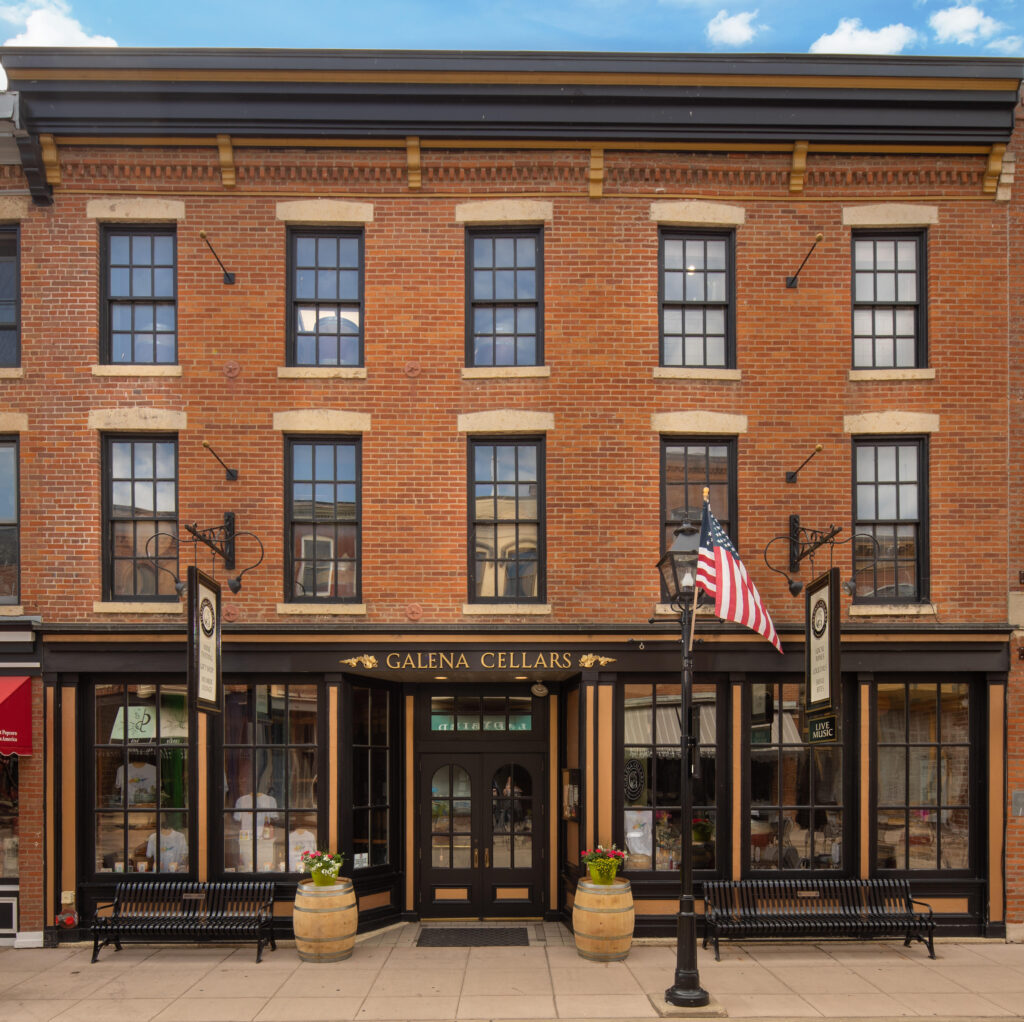
Picture of Eagles Landing Winery from the street with red car in front on street

By: Gerald Dlubala 

Marquette, Iowa, is built for tourism, especially outdoor enthusiasts. The quaint, welcoming town of 429 offers premium hiking, fishing, hunting and camping, along with some of the best fall leaf peeping available. The natural beauty of Marquette’s landscape against a backdrop of the Mississippi River bluffs will put you into a postcard-type setting. And while there, the welcoming residents and hometown feel Iowa is known for will always make itself known. Additionally, nestled in the bluffs of this driftless area of Iowa, the scenic town of Marquette also draws in tourists for their award-winning winery, Eagles Landing Winery.

  Eagles Landing Winery and Vineyard has been serving Iowa and Wisconsin since 2003, with their success driven by a mantra that includes being patient, paying meticulous attention to quality and continuing to focus on their wine’s drinkability and taste.

  Roger and Connie Halvorson launched the winery in 2000 as a retirement hobby. Their son, Jay Halvorson, joined the business in 2003 as the master winemaker. By 2007, Eagles Landing Winery was not only doing well, but they were taking home awards for their wines. Cindy Halvorson joined the company in 2009, and just a few years later, Jay and Cindy Halvorson officially took over the winery from his retiring parents. Since that day, Eagles Landing Winery has received over 400 medals and awards. These coveted awards include the Governor’s Cup and Best of Show at the 2022 Iowa State Fair for their wine, Constance, a clean, crisp and subtle American white wine. In 2022, Jay and Cindy Halvorson also went the route of retirement, selling Eagles Landing winery to current owners Scott and Sharon Patten.

Love at First Sight

  “It was just a wonderful experience and a place that felt familiar and welcoming,” said Sharon. “We literally fell in love with the winery when we visited. The town was so attractive and welcoming, so we knew we had to look into acquiring this place. Scott had experience in winemaking and homebrew brewing, built on a general science background and engineering experience. He was looking to make a change, and we started exploring different businesses available to purchase and came upon Eagles Landing. Scott’s previous background gave him an understanding of the winemaking process and the different production elements, and it all just kind of seemed to click.”

  The Pattens hadn’t previously visited the winery, only making the trip to Marquette a couple of times after seeing that it was available for purchase. They lived in Cedar Rapids at the time, a little less than two hours away.

  “When we visited, it just seemed like a wonderful business, and everyone was super friendly and helpful,” said Sharon. “Jay and Cindy Halvorson were so accommodating and helpful with the transition phase. The winery and the area just became a really good fit.”

  With four children at home and multiple pets to consider, completing the Pattens’ move to Marquette will take some time. In the meantime, there are scheduled days and trips between the two places. Scott runs things at the winery several days a week and comes home on off-days.

  “We are still very much a small family winery,” said Scott. “Everyone pitches in. We include the children on some weekends to help with tasks and gain experience in the different tasks needed around the winery, like different processes, restocking and the never-ending cleanup duties. We’ll produce between 6,000 and 7,000 cases of wine annually, with the main distribution going to Iowa and nearby Wisconsin.”

Wines for Every Palette

  Eagles Landing currently produces 36 wines ranging from dry selections to sweet, dessert-style wines. About two dozen wines are usually available onsite to sample at any given time, including some seasonal blends produced in smaller batches.

  “We source a lot of different kinds of fruit and make a lot of different types of wine,” said Scott. “We offer a little bit of everything in the hopes that our customers will find something they like. Most are what we refer to as Midwestern-type wines. We have a good selection of sweet-style wines because those are typically our best sellers and are always in demand, but when we came on, I wanted to add other types and styles of wines for those who are interested in that as well. And if you’re looking for something seasonal or a unique blend, we do produce those in smaller batches. We’re working on a pear and currant blend that seems to work well. Sometimes, it’s all about trying new things.”

  “And we have to mention our Campfire Hootch,” said Sharon. “It’s a blend of four to seven different berries, grapes and other fruits. The flavor comes through as a sweet, very adult juice that even dry drinkers seem to enjoy. If someone comes in and says they’re not really a fan of wine or a wine drinker, we have them try this, and it usually changes their perception of what a wine can offer. It’s absolutely nontraditional, unlike anything that most people have ever had, so it’s something worth trying when you come in.”

  Grape varieties grown at the nearby vineyard include Edelweiss, Marquette, Marechal Foch, Petite Pearl, Brianna and Frontenac Gris. Patten tells The Grapevine Magazine that the vineyard was not included in the original sale but is contracted to supply grapes to the Eagles Landing. They didn’t want to be overwhelmed with trying to learn the winery plus the farming and agriculture business simultaneously. However, they still use those grapes in their wine production, as well as some coastal grapes for their dry reds and quality Midwest sources for their fruit needs. Patten is hoping to increase the Midwest sources in the future. In addition to its wide-ranging lineup of wines, Eagles Landing Winery offers a large selection of fruit and berry wines and a gold medal-winning honey and blackberry mead.

Come for the Wine, Stay for the Atmosphere, Hospitality and Craft Pizza

  Eagles Landing Winery is a perfect reflection of Marquette, Iowa. The quaint, welcoming surroundings draw you into the small-town hospitality feel of the winery, where samples are always on the menu. Located in downtown Marquette, patrons of Eagles Landing Winery are welcome to sit inside or enjoy themselves outdoors. Visitors can enjoy the outdoor wine garden, complete with an arbor and trellis that supports a network of natural grapevines over the top to make the experience authentic, memorable and relaxing.

  “We wanted a place where people felt relaxed, appreciated and comfortable,” said Patten. “And that attitude includes our drink offerings. We want to offer wines that people like, regardless of their preference. Additionally, we feature live music on the weekends and offer different cheeses and snacks to nibble on while enjoying your time with us. But that’s about to change as well. We’re in the process of installing a pizza kitchen for craft pizzas to enjoy with your wine while hanging out with us. It’ll be a game-changer for us and the total experience we can offer our guests.”

  Patten said that the oven will likely be ready to go when you read this. He projects a November 2023 start date to fire up the pizza oven and make delicious craft pizzas for their patrons to enjoy while drinking Eagles Landing wines.

Eagles Landing Winery Looks to the Future

  “In the short term, we’d like to increase our vendor market,” said Scott. “We currently distribute to Iowa and Wisconsin and have about 200 vendors. We think we can double that in the future. In maybe three to five years, we’d love to have a second location somewhere, but that adds a lot of logistics.”

  Coming from a science, engineering and homebrewing background, you may wonder if another craft beverage endeavor is on the Pattens’ radar as I was.

  “Now that you mention it, we’ve been debating that perhaps we would do something in the future,” said Scott. “We’ll have to see what the market looks like. The future trends and demographics of wine are okay but not entirely sunshine right now, and the numbers for beer aren’t really great right now, but spirits are picking up, so I may be leaning towards adding that.”

Advice to Potential Winery Owners

  Asked for any advice they could provide future winery owners, the Pattens laughed and replied that the experience would be different than they initially expected and planned.

  “Well, Scott and I had a whole strategic plan in place for the first six months,” said Sharon. “But we’ve had to reevaluate that plan simply because knowing things now is much different than going in as first-timers. There are a lot of new things we can bring to the table. It’s important to have a plan, but it’s just as important to be willing to be flexible with that plan. For example, we decided to add the pizza oven, meaning we had to add a previously unplanned physical structure to our site. With this new addition, people will be staying here for longer periods of time, so that has us reevaluating our building’s infrastructure to accommodate those longer stays.”

  “Additionally, everything takes a little longer than we had planned, so I guess if I could go back and change something, I would try to get a jump on some things earlier,” said Scott. “We undertook a rebranding of sorts and wanted to update the look of our product and packaging. It’s the same award-winning wine, but we wanted to freshen up the logos and labeling. That process is taking much longer than a couple of months that we planned for it to take. It’s starting to present some challenges. We could’ve planned that better.”

  “And just knowing how much wine to make for the season will be easier,” said Sharon. “We had to go through the high season of fall, so knowing how much wine to make and when to get it out will be much smoother next season. We had to improvise a bit and update plans on the fly.”

Preserving History

  The Eagles Landing Winery’s offices are located in the historical home of Emma Big Bear. She was the last full-blooded American Indian to live in Clayton County, Iowa. Originally from Wisconsin, Emma Big Bear spent most of her life living by the traditional Winnebago (Ho-Chunk) customs and traditions, known for the handmade woven baskets she made and sold within the McGregor and Marquette regions. She passed away in 1968 at the age of 99, and there is a memorial statue in her honor at the Mississippi River Sculpture Park on St. Feriole Island, Prairie Du Chien, Wisconsin.

  For more information on Eagles Landing winery and to plan a trip to Marquette, Iowa, visit:

Eagles Landing Winery

127 North Street

PO Box 472

Marquette, Iowa 52158

(563) 873-1905

info@eagleslandingwinery.com

An Overview of Washington State’s Vineyards & Wineries

Picture of rose of grape vineyards mountain and blue sky

By: Becky Garrison  

Since the first planting of wine grapes in Fort Vancouver, Washington in 1825, Washington State has risen to become the second-largest producer of wine, with an annual production of approximately 17.7 million cases and a total annual in-state economic impact of $8.4 billion. Currently, the state has 1,070 wineries, with over 400 grape growers and over 60,000 acres of grapevines planted, which produce over 80 varieties of grapes. Of these wineries, 90 percent would be classified as boutique wineries, producing less than 5,000 cases annually.        

Tour of Washington State’s AVAs

  Established in 1983, the Yakima Valley AVA is the state’s oldest AVA, with 708,710 total acres, of which 18,580 are planted acres. This area’s diverse growing region, with an annual rainfall of eight inches, allows for a wide range of wine varieties and styles. Approximately a quarter of the grapes grown in this AVA are chardonnay, with riesling, merlot, cabernet sauvignon and syrah among this region’s other most popular grapes.

  The Columbia Valley AVA was founded the following year and consists of 11,308,636 total acres, 8,748,949 of which are in Washington State. Cabernet sauvignon, chardonnay, riesling, merlot and syrah represent the most popular varieties planted in this area. This region is home to 99 percent of Washington’s total wine grape acreage, with the vast majority of Washington State’s 20 AVAs located within the Columbia Valley.  

  Four of Washington State’s AVAs are cross-border appellations. Columbia Valley, Columbia Gorge and Walla Walla Valley are shared with Oregon. Lewis-Clark Valley is shared with Idaho. 

  The Columbia Gorge represents the state’s westernmost appellation east of the Cascade Mountains. Founded in 2004, this AVA is noted for the diversity that produces a greater variety of wines than other AVAs. This AVA consists of 186,610 total acres, 66,604 of which are in Washington State, with 381 planted acres in this state. Rachel Horn, winemaker at Aniche Cellars in Underwood, Washington, states how the western end of the Columbia Gorge AVA is similar in many ways to her favorite cooler climate growing regions in Europe, including Alsace and the Wachau. She observes, “I find that many of the white varieties so seldom grown in the U.S. can thrive here.” Unlike most farms in eastern Washington, they can dry-farm, as the slopes and cooler nights on Underwood Mountain provide enough rain that, according to Horn, can make some gorgeous ripeness in phenolics without becoming jammy or too high in alcohol. “We can focus on elegance and finesse without huge extraction and muscle in our wines,” she said.

Growth of Seattle Urban Wineries

  When Tim Bates, Andy Shepherd and Frank Michels of Eight Bells Winery and Lacey and Charlie Lybecker of Cairdeas Winery launched their respective wineries in 2009, they were among the first winemakers to set up shop inside Seattle’s city limits. Bates reflects on how consumers had a hard time understanding how they could have a winery in the city. “Everyone expected you to be surrounded by vineyards. People are pretty amazed when they come in and see a real winery in action, especially during crush.” Lacey adds, “When we first started making wine, the urban wine scene was concentrated in South Park and Georgetown. It’s now in SODO, West Seattle, Ballard, and beyond. It’s great to see the expansion.”

  As part of this expansion, after the Lybeckers moved their winery from West Seattle to Lake Chelan, they established a second tasting room at SODO Urban Works, a collective of ten of Washington’s finest wine and food crafters situated in one communal space. Nine Hats Winery followed a similar model, with a winery based in Walla Walla and a tasting room at SODO Urban Works. According to Ryan Shoup, who oversees this tasting room, having a presence in this bombing-bustling neighborhood enables them to pivot off this urban energy. “This, in turn, results in a more casual and upbeat feel to their tasting room that attracts a younger audience,” he reflects.

Promoting WA State Wines

  The Washington State Wine Commission designated August as Washington Wine Month (WAugust). During this month, consumers can find special deals and events all month long at wineries, tasting rooms, restaurants, grocery stores and backyards across the state. Also, as part of WAugust, the Washington State Wine Commission partnered with Ste. Michelle Wine Estates in 2022 to bring on Wine Spectator as a national media partner for an expanded Washington Wine Month campaign.

  In addition, 2023 marked the return of Taste Washington in March, which is the nation’s largest single-region wine and food festival. This week is marked with a dinner series, seminars and parties. A key highlight of this week is the Grand Tasting, which includes selections from over 200 wineries alongside more than 50 regional restaurants. This event will return in March 2024, with the Grand Tasting slated for March 16 and 17, 2024.

  Another series of statewide events that have returned post-COVID are those from the Auction of Washington Wines. This nonprofit organization seeks to raise awareness of Washington wine through a series of events benefiting their community. Events happen throughout the year, including an online holiday bottle auction, Wine Country Celebration dinners, and a trade-focused Private Barrel Auction. The largest events happen in August and include TOAST!, an industry-focused recognition dinner; the Winemaker Picnic & Barrel Auction, a casual event featuring wines, food and a consumer barrel auction. Their largest fundraising event of the year, a formal gala, where unique auction lots are available through a live auction and money is raised for Seattle’s Children’s Hospital, Washington State University Viticulture & Enology Department and various industry grants.

  On a more regional level, Walla Walla Wine on Tour allows 45 member wineries to pour to sold-out crowds in Seattle and Portland, as well as reconnect to the wine trade and media. In 2023, they expanded this tour to include Boise, Idaho. In 2024, they will return to Seattle on January 29, Portland on February 26 and Boise, Idaho on March 3-4. In 2023, 60 percent of ticket purchasers were first-time attendees to the Seattle and Portland events.

  Along those lines, Horn points to events like the Blood Of Gods 2023 Annual Merrymaking event held in Walla Walla that work to create space and voice for alternative people in the wine industry, including queer, punk, BIPOC and female voices. She proclaims, “I like that people like us are finding wine and taking some ownership.”

  Renea Roberts, the director of community engagement for the Lake Chelan Wine Alliance, points to the importance of in-person events as an essential part of any local wine community. As she notes,

“They provide an opportunity for wine enthusiasts to gather and share their passion for wine while also promoting local wineries. Being able to host wine events means that the wine community can come together to celebrate their love for wine, learn from each other and support local businesses. It also allows wineries to showcase their products and connect with potential customers.”

  Currently, Washington’s wines can be found all over the state in some unexpected settings. Onboard Amtrak Cascades trains from Eugene, Oregon to Vancouver, British Columbia, travelers can savor Chateau Ste. Michelles’ chardonnay and cabernet sauvignon. Most hotels offer Washington wine to their guests, with the Kimpton Hotels hosting Washington-focused happy hours featuring Washington wines. Other places to find Washington wines include the Seattle Space Needle, Washington State ferries and various performing arts venues, such as the Seattle Art Museum, Seattle Symphony Orchestra and the Fifth Avenue Theatre.

Recent Washington State Winery Trends 

  After Paul Beveridge of Wilridge Vineyard, Winery and Distillery in Yakima led the lobbying effort to permit wineries to hold a distilling license, a select number of wineries have followed suit. Like Beveridge’s winery, most of these other wineries also distill the must from their grapes and other fruits to produce grappa and fruit brandies though a few produce grain spirits. For example, Browne Family Vineyards in Walla Walla established  Browne Family Spirits in Spokane, focusing on locally sourced, limited-edition bourbon and rye whiskeys by Kentucky-native master distiller Aaron Kleinhelter.

  Another growing trend with Washington wineries is offering lodging options onsite. Presently, nine wineries based in either central or eastern Washington offer lodging ranging from guest cottages to yurts, cabins and more palatial offerings.

Challenges

  Moving forward, the biggest challenge for Washington State vineyards remains wildfire smoke, though the 2023 harvest was not impacted as in the case of some previous years. Also, in August, Ste. Michelle Wine Estates announced to its contracted Washington wine grape growers that it’s not taking nearly half of its contracted fruit this fall. The long-term impact of this decision is not known at this writing.

For updates about Washington wine, visit https://www.washingtonwine.org   

Malic Acid & Chromatography

box of grapes

By: Tom Payette – Winemaking Consultant 

Malic acid is one of the major acids in grapes used to make wine.  In most cases it is secondary only to tartaric acid in quantity and then followed by succinic, citric, fumaric and other small quantity acids all contributing to a total acid or titratable acidity. 

  Every variety of grapes has a potential difference in the amount of malic acid that may proportionately exist in the grapes at harvest and much of this is predicated by the growing season, amount of rainfall, overall heat summation temperatures and night time temperatures.  Cool climates often have grapes higher in malic acid and warmer climates often have lower quantities of malic acid in the fruit.  Riper fruit generally has less malic than under ripe and so on; yet, winemakers should be cautioned not to try and use a measurement of malic acid as a sole predictor to grape ripeness for winemaking.  Further note fruits other than grapes such as cherries and apples have wide ranges of malic contents.  Cherry’s and apple’s principal acid is malic.

  In some traditional roles of winemaking such as wines made from the Bordeaux varieties, Burgundy varieties and Rhone varieties a decision by the winemaker may need to be made as to whether or not to perform a malo-lactic fermentation on those wines.  In making that decision, many factors come into consideration:  How much malic is present?  What is the pH now?  What will the pH be after alcoholic fermentation?  What is the predicted pH to be after malo-lactic conversion?

Malo-lactic Fermentation

  Unlike what the term indicates, this is not a fermentation done by yeast.  This process of converting the harsher malic acid, the acid dominant in most apples, to lactic acid, the softer acid dominant in most milk and cheeses is done by malo-lactic bacteria. This small bacterium is a Leuconostoc

oenos  and predominantly responsible for the “sterile filtration” standards of 0.45 absolute microns used as a wine industry standard today.  These small bacteria, often rampant in nature, can cause serious issues to any wine in the bottle or cellar that may undesirably undergo a potentially unwanted, uncontrolled wild fermentation.

  Many winemakers today control the malo-lactic fermentation process through cleanliness, pH, sulfur dioxide, temperature and controlled conditions to support or suppress the bacterial growth. Outside of these conditions, winemakers often select a desired malo-lactic bacterium to perform the desired job, giving a wine a desirable flavor and aroma attribute, while eliminating malic acid from the wine, or less likely, the must/juice.

Supporting the Growth

  Malo-lactic bacterial fermentations can be a challenge to any cellar.  Humorously, in some cases a winemaker who wants to suppress a malo-lactic will find one starting spontaneously and one that wants to encourage a malo-lactic will find the microbe to be stubborn.  The author has seen a huge correlation toward the microbes’ growth in relationship to the pH, temperature of the wine at inoculation and the temperature during microbe growth, sulfur dioxide use and timing of encouraging the process.  The pH of wine should be in certain recommended ranges hopefully above 3.10. 

  If below this pH, the microbe may be in serious jeopardy of surviving to do its functions of converting malic acid.  The temperature of the wine for a successful Malo-lactic should be slightly above 70 degrees F if possible.  This temperature (72 degrees F) will allow the microbe to perform rapidly and with success.  T he malo-lactic bacterial fermentation should be complete in twenty days or less on the average.  The sulfur dioxide of most wines must be relatively low from near zero ppm to about 15 or 20 ppm at a maximum.  Levels above 15 or 20 ppm may show signs of no to sluggish or incomplete activity.  The timing of a malo-lcatic is often best just after alcoholic fermentation has taken place.  This often turbid, nutrient and yeast rich solute can be a healthy environment for the microbe to grow and succeed consuming malic acid.

Suppressing Malic Bacteria Growth

  Referencing the above paragraph, many readers can draw their own conclusions on how to suppress the malo-lactic fermentation.  Colder temperatures especially below 50 degrees F will help slow or stop the bacteria, a free sulfur dioxide of 35 parts per million (PPM) or higher may help suppress the microbe and lower pH’s offer a more hostile environment to the microbe.  Most winemakers use temperature and sulfur dioxide adjustments to suppress a spontaneous malo-lactic before resorting toward potentially undesired pH adjustments in a must or wine.

PH Shifts During Malo-lactic

  The shift of a wine’s pH after a successful malo-lactic fermentation is difficult to predict.  Many times a wine pH may go up by 0.1 or even as high as 0.20 pH units or more.  This is dependent on the amount of malic acid content in the wine and how much was converted during the malo-lactic fermentation.  One must recognize at this time also that there are two different configurations of malic acid.  One is consumable by the malo-lactic microbe and one is not.  Therefore, some winemakers that have performed what they believe to be a successful complete malo-lactic fermentation process may, after performing a quantifiable test on the malic acid content, find some malic acid is indeed left of over.  This can be in the range of 22-30 milligrams per liter.  Each winemaker is left to his or her own decision as to what is an acceptable level and risk.

Filtration

  Winemakers that know their wines have come into contact with the malo-lactic bacteria often elect to filter those wines to a pore size of 0.45 microns.  We often show these wines as ML positive on our cellar inventories.  Other winemakers often assume, wisely so, that any wine in their wine cellar with malic acid is considered ML positive to be on the safe side.  With these assumptions, all the wines that have any malic acid in them should be filtered to a 0.45 micron level – just to be certain.

Paper Chromatography

  A non-quantifiable inexpensive process to measure malic content in wine, must and juices is the use of paper chromatography.  Winemakers are urged to use this crude, easy process in their cellars to measure their progress of a malo-lactic fermentation.  After using this “in house” testing technique winemakers are best served to measure the amount of malic acid in their wines in some quantifiable way to get an exact number to understand how much malic is still present in a wine or not.  Well-funded internal winery labs may have the tools in their own lab to measure this acid.  Others may find it cost effective to ship a small sample to an outside lab and have it measured at an external laboratory. 

Process

  The process of paper chromatography is very simple and very affordable.  Acids are carried, by way of a solvent, up the paper a distance related to each acid and or it’s standard.  After the paper dries one may look at the “developed picture” to understand what wine may contain what types of acid.  This is non-quantifiable as previously mentioned.

Tools and Chemicals

•    Chromatography paper

•    Chromatography solvent solution

•    Hematicrit tubes  0.05 (AKA Capillary tubes)

•    Malic acid standard

•    Lactic acid standard (Note I am leaving

      tartaric out)

•    Sharp #2 pencil

•    Straightedge or ruler

•    Paper towels

•    Well ventilated work area

•    Wines to be tested ;   10 milliliters or more.

•    Standard lab safety gear

  Some winemaking supply stores have affordable pre-assembled chromatography kits with instructions.

Procedure

1.   Clear and clean a space in the laboratory to be your workspace.

2.   Make sure the area is well ventilated since the solvent for the paper chromatography is very pungent and possibly harmful over a large period of time.

3.   Wash your hands thoroughly, twice, before handling the paper used with the paper chromatography.  This will remove any grease or dirt that may interfere with the results and action of the chromatography process.

4.   Place several pieces of clean dry paper towel on the countertop area to be the workspace.  This will be another layer of protection.

5.   Retrieve a piece of the chromatography paper from its container being very careful to handle it by the edges only.

6.   Place the chromatography paper on the paper towel work area.  Place the days date at the paper at the top of the paper.

7.   Using the straight edge and pencil, draw a straight line about one inch above the bottom of the chromatography paper.

8.   With the pencil, make small dots about 1.25 – 1.50 inches apart across the page along the freshly drawn straight line at the bottom of the paper.

9.   Under each dot make a code to reference the intended product or standard so one will be able to know what was placed at each dot.  Eg:  M= Malic   L= Lactic   Mer= Merlot   PN= Pinot noir and so on.

10. Retrieve from the cellar representative samples of each wine desired to be tested.  Only small quantities are needed.  Less than 40 milliliters.

11. Line each standard and wine sample up in front of the chromatography paper work space from left to right to equate what was drawn on the paper.

12. Take a hematicrit tube for each wine out of the hematicrit tube storage container for these.  Handle them only by the end that will not be in contact with the chromatography paper.

13. Holding the hematicret tube by the top end, quickly dip the receiving end into the acid standard or wine sample desired to be tested for each mark on the chromatography paper.

14. Once a small amount of the acid standard or wine is inside the hematicrit tube quickly touch the pencil spot made that is labeled for that standard or wine.  Be very careful to keep this organized and that each spot is exactly what it is labeled.  If in doubt – re-sample and start over.

15. Rotate left to right until all of the spots have their corresponding liquid on them.  (Do your best to make these spots very small with hopes they do not grow any larger than the size of a pencil eraser head.  Just a quick touch to the paper is plenty.

16. Wait about 4 minutes for each spot to dry and the reapply with the same appropriate hematicrit at each spot a second small spot of resultant correspondent liquid.

17. Allow these spots try roughly 10-15 minutes.

18. Prepare the solvent holding vessel with about one half to five eighths an inch of chromatography solvent.  (This solvent may remain in this vessel for subsequent uses and it should remain fresh for about 8 months)

19. Gently lower the chromatography paper with the wine and standard sample on it into the solvent.  Make sure the paper is level so the solvent will travel equally, and at the same speed, up the paper.  This takes about three to five hours.

20. Replace the lid on the container and set the apparatus where it will not be disturbed, moved or knocked accidentally.  One may check this container from time to time in order to estimate when to remove the paper.

21. After the solvent has visibly moved 95% of the way up the paper, one may remove the paper from the chromatography solvent vessel.

22. Replace the lid to the chromatography vessel.

23. Hang the freshly solvented paper in a well ventilated area to dry.  Make sure the drying process takes place away from any sulfur dioxide, bleach or other similar chemicals.  This paper should dry 10 hours or more and most winemakers allow it to dry overnight.

24. Read the chart the next day by looking at it.  Resist the temptation to look at it up close.  The author prefers to look at it about 5-7 feet away to get a true picture of what is happening.  The results will not be well defined and often ghostly or blurred.  This is normal.

25. Relate the distance the standards traveled to the distance the acids in the wine spots travel.  Try to ignore any colors from the wine such as potential red stains, etc.

26. Remember while reading this “film” that this is only used to get an idea of whether some malic acid is left in certain wines or not.  Some wines will have a more defined spot and others may be less easy to read. 

Calculation

  There is no real mathematical calculation as one can see.  One should relate where the malic and lactic acid standard spots are on the chromatography after the drying time and look horizontal to see if resulting spots exist in the same horizontal area above the wine spots.  This is an indication there is some of the same acid in the wine.

Mixing and Standardizing Chemicals

  Due to the difficulty of making these chemicals and the reasonable cost of the chemicals, it is recommended to order the chemicals from an outside lab.  Making the solvent is especially cumbersome with separation flasks and other tedious time consuming issues.

Other Helpful Tips

  Plastic gloves and goggles may be worthwhile to use if one finds they cannot handle the paper without getting skin oils and other contaminants on the chromatography paper, etc.

  NOTE: Always perform this test in a well ventilated area – the solvent is odorous and unpleasant.

References

Amerine, M.A., Berg, H.W., Cruess,W.V. 1972. The Technology of Wine Making

Zoecklein, B.W., Fugelsang, K.C., Gump, B.H., and Nury, F.S. 1999. Wine Analysis and Production

Verbal discussion with:  Mr. Jacques Boissenot, Mr. Chris Johnson, Mr. Joachim Hollerith and Mr. Jacques Recht.

Up The Creek Winery

Award-Winning Kentucky Wines

house surrounding trees

By: Gerald Dlubala 

There are those who believe that award-winning wine couldn’t possibly come from a Kentucky winery. After all, Kentucky is known for bourbon and horses, right? The innovative, welcoming, award-winning gold medal folks at Up The Creek Winery would like to speak with you.

  It started in the early 2000s when Up The Creek co-owner Greg Haddle began looking at property in Oregon to start a vineyard and winery in his retirement years. His brother, David, recommended he look closer to home, where his money would likely get twice the land. So, while looking at an old tobacco farm, Possum Hollow Farms, in Cumberland County, Kentucky, they both knew this was the place for their future vineyard and winery.

  “It was just the feeling we got when we were there,” said Haddle. “It felt right. It felt like a place that takes all the stress away from your life and allows a person to enjoy nature as intended. Those feelings and the fact that the field layout was already somewhat parceled out due to its previous life as a tobacco farm made us believe it would work, so much so that it was the only offer we made on a property. It took about a year before we got a final contract, so the real work began in 2002.”

  The old tobacco farm was tremendously overgrown, with weeds and brush topping out at 10 feet tall, so Haddle said that they first had to buy a tractor and a bush hog and start clearing the land. Gary lives on the second floor of a cabin he and others built on the property, while the lower level houses the winery.

  “We started clearing the overgrown brush and weeds immediately in the fall of 2002 and planted the vineyard in spring 2003,” said Haddle. “It was a quick turnaround that was helped along with the property already being partitioned. When we initially started making wine, we relied on juice purchased from New York until our fields matured. Since then, we’ve used only Kentucky-grown products. Things we don’t grow ourselves, we get from local farms. For example, the blueberries used in our popular blueberry wine options come from a local farm maybe 12 miles from us. They’re certified organic berries, and when I need them, I can call and make an order, and the berries show up at our garage door ready to process. You can’t beat that.”

Delicious, Healthy Wine through Natural, on-the Fruit Fermentation

  “It’s a real slow, healthy ferment,” said Haddle. “After the first two weeks of fermentation, we turn off all temperature controls and let the juices self-regulate, with nature taking over. We do nothing to hinder that process, letting our wine ferment on the fruit for over 90 days. In the case of our blueberries, after that 90-day natural fermentation, those blueberries are completely broken down and absorbed to provide an incredible tasting, healthier wine that is noticeably different from more traditionally fermented wines.”

  “It’s just a noticeably different mouth feel you’ll experience,” said Lisa Thomas, Haddle’s assistant extraordinaire, handling everything from events to tastings through sales and beyond.  “And fermenting our wine this way retains the best flavor and health benefits from the actual fruit.”

  “And it works,” said Haddle. “Except for our blackberry wine, because blackberries tend to be a little less stable, all our fruit wines are fermented this way. We keep the juices intact with the fruit skins and seeds, and this method has won us Best Boutique Wine Gold Medals.”

  “The naturally fermented fruit wines are all popular because they are exploding with flavor and health benefits, but our blueberry collections may be our most popular,” said Haddle. “We ferment in stainless steel tanks using oak chips. And because we are all sensitive to SO2 (sulfur dioxide), we keep its use to a bare minimum within the winery, which we believe makes a big and positive difference in our wines.”

  The sweeter, liquored-up wines are generally the top sellers in Kentucky. Still, we provide wines for the different, more educated palates for the increasing number of tourists and visitors that come and stay for our great outdoor recreational opportunities. Our whites are generally semi-dry, as are our reds, which can lean towards dry. Our fruit-based wines are the sweeter ones.”

  The vineyard has over 1,200 wine grapevines and 700 trellised blackberry and red raspberry bushes. The grape varietals include golden muscat, an American variety and hybrid varieties of chambourcin, seyval blanc, vignoles and marquette. Haddle and his team also produce popular wine grape and fruit blends that are only available on-premise, like their extremely popular Jalapeno Wave. All Up The Creek’s Kentucky wines display a tobacco barn on the label, signifying the winery’s farm and Commonwealth heritage.

History Provides a Bountiful Landscape

  The property sits on a rock bed, so much so that there’s no drilling down available around the landscape. Haddle tells The Grapevine Magazine that the property was home to an ancient sea, entirely underwater and the resulting terroir is 335 acres of well-drained soil with dark slate, quartz-like rock, fossils, sea urchins and other shellfish and limestone. Kids love to walk the creek and discover relics from history, including fossils and geodes. Because of the natural hills and valleys associated with the landscape, Haddle estimates it would be about a seven-mile walk to get around the property navigating the ups and downs.

  The vineyards are sloped to the south or face straight up the valley line for maximum sun exposure. There’s always a battle with the various vineyard pests over the grapes and berries, but it’s part of the job for the Up The Creek core group, including Gary, David, Lisa and Hailey. David manages the operation, including spraying and fertilizing schedules. Everyone pitches in to help with the crop and canopy management, including the extensive pruning, mowing and weeding needed to keep the vineyards manicured. The group manages to stay ahead of the pests by regularly picking the berries before the animals make quick work of them and netting all their grapevines to reduce product loss.

Experiencing Award Winning Kentucky Wine

  Up The Creek has regular open hours on Friday and Saturday from 10 AM to 6 PM, but Haddle says anyone can call and arrange a visit on other days. In many instances, especially with groups or events, that’s preferred so the visitors can get the full attention and unique experience with the staff.

  “The tasting room is a welcoming 1950-style, converted, three-bedroom house,” said Thomas. “It’s small, so big groups are either urged or known to call ahead. We may be outside at the picnic table for a tasting or inside at a table made by Gary. Our vineyards are well-manicured, so visitors can even stop by to go into the vineyard or fruit fields and have a picnic or relaxing break. Visitors are welcome to grab sandwiches at the nearby Amish store or stop in to grab a bottle or two and some snacks and navigate our drivable vineyard to find that perfect spot that speaks to them and have a picnic, relax and leave all of their stresses behind for a bit. We encourage a healthy mental break from our crazy world, and you will forget the world when you get here,” said Thomas. “It’s my happy place, for sure.”

  The personal experience you get at Up The Creek Winery is unmatched. Vineyard and winery tours are available, including self-guided walks when weather permits. And if you should be lucky enough to be there and see a staff member walk around with a mason jar, you need to thank your lucky stars and prepare yourself for a possible first taste of one of their new creations. Yes, it really happens, said Thomas, and as their regular customers can attest to. If you know, you know, and you should be excited.

  Up The Creek Winery is known to be so picturesque and peaceful that the local creative community, including painters and master gardeners, holds classes and outings on the property. You may see some of the paintings displayed throughout the winery and tasting room on consignment from the artists.

  The winery is host to hayrides throughout the vineyard and farm and also offers a beautiful backdrop for events. In addition to her many duties at the winery, Thomas is a private chef for a local farm-to-table restaurant, able to construct memorable dishes and snacks for any parties or events held on the property. And visitors may even be treated to a fish fry should they be lucky enough to visit on a good fishing day for Haddle.

In the Works

  “We are always trying new combinations and blends,” said Haddle. “For example, last year, we harvested our chambourcin grapes and were backlogged, so we were trying to devise a way to use some of the grapes. While brushing my teeth one morning, I thought about gathering the ripest chambourcin grapes with the best red raspberries, then mashing them all together with juice using a potato masher.”

  “The result is a delicious, unique blend, and tastings are a success, so our new Rebel Red will likely be released around Christmas to help folks get their Christmas spirit on,” said Thomas. “But while we experiment, we always remember that it’s all about keeping the health benefits of wine intact. That principle is a main part of our product offerings”.

  “We’re a little guy in Kentucky’s big scheme of horses and bourbon,” said Thomas. “But we did help pass a law that allows small, boutique wineries like ours to be able to deliver our products ourselves without the need for a distributor because, let’s face it, a distributor isn’t willing to waste their time and energy working for a small, craft winery like ours. Additionally, we’ve discussed coming out with a brandy. Southern Kentucky Distillery is on the horizon as a new distillery in our area, and we may partner with them on something, but of course, that could be five years away. At any rate, we’ll keep doing what we do and enjoy the fact that our beautiful little part of Kentucky is starting to get the recognition that we always knew it deserved.”

Final Thoughts

  Success and happiness come in many forms, and by doing what he loves while being surrounded by his family and friends, Haddle is a happy person.

  “Happiness is personal, so I don’t base it solely on the money,” said Haddle. This business can bring self-happiness and self-reward, but at the same time, it takes a special person to stick with it. But no one should give up on their dream. Our vineyards and winery are so beautiful, and I love that we are taking responsibility for the land and property while creating products that make other people happy. Being a vineyard owner means more than just making great award-winning wine. We take care of this beautiful land by being responsible gardeners and respectful stewards of our natural resources while keeping the property, landscape, and entire area a beautiful, happy place. Doing this with family and friends allows for a lot of extra personal attention to detail, providing a hometown feel and experience that simply cannot be matched at the larger commercial wineries.”

For more information or to schedule a visit:

Up The Creek Winery

930 Norris Branch Road

Burkesville, Kentucky 42717

upthecreekwinery@gmail.com

(270) 777-2482

Open Fridays and Saturdays from

10:00 AM until 6:00 PM or by appointment

A Glass a Day Keeps Stress at Bay

Embracing Wine in the Lives of Everyday People

hand pouring wine to glass

By: Heidi Moore, Host – Wine Crush Podcast

The number of factors bringing stress into our lives has increased exponentially over the past few years. First, there was a global pandemic that brought a wicked mixture of fear, isolation, and uncertainty to our lives. The pandemic was followed quickly by economic instability, in which inflation drove up prices of everything from eggs to oil to airfare. Seeking ways to deal with the economic fallout from inflation, many businesses turned to layoffs, leaving hundreds of thousands of employees suddenly without a paycheck.

  As Americans seek to deal with these and other stressors they face in today’s world, they often turn to activities like hitting the gym, getting out in nature, or talking with a therapist. One of the simplest formulas for keeping stress at bay, however, is taking the time to enjoy a glass of wine.

Sipping the Stress Away

  Wine’s ability to calm us down is founded in science. Specifically, wine contains a compound called resveratrol that has been shown to bring our emotions back into balance.

  Resveratrol is a chemical compound found in grape skins and is often associated with red wines because red grapes typically have thicker skins. However, all grapes are known to produce resveratrol.

  Resveratrol’s stress-reducing properties are related to the effect it has on the body’s stress hormones. In times of stress, the hormone cortisol is released to help the body respond, but when stress is not addressed, an overabundance of cortisol can be released, leading to anxiety and depression. Studies have shown that resveratrol keeps stress hormones from getting out of control, helping our bodies avoid the type of feelings that we typically describe as “stressed out.”

Taking a Break from Stress

  While the presence of resveratrol certainly contributes to the stress relief wine can bring, it is not the only factor at play. Sitting with a glass of wine at the end of the day can help us to embrace a number of other stress-relief strategies.

  For example, stopping our work at “wine-o-clock” is an excellent way to assert boundaries. Stress often flows out of being overloaded, which drives long workdays and restless nights. Sitting with friends and loved ones for a glass of wine is one way to say that our lives are about more than just work.

  Having a glass of wine with friends also creates a space for us to talk about our stress. In many cases, simply talking about the stressful things in our lives can reduce their emotional impact. Sharing our feelings can also lead to finding the support we need to make it through stressful situations.

  Laughter is another common side effect of a glass of wine that can help us with our stress. Laughing releases endorphins that improve our mood and our resiliency. It can also help us reframe our perspectives, taking the power away from temporary situations that trigger stress.

Measuring the Popularity of Wine

  Despite its obvious benefits as a stress-relief tonic, everyday people in the US typically don’t turn to a glass of wine when they want to unwind. Recent stats on alcohol sales show that beer is the drink of choice for most Americans, with beer sales having accounted for 54 percent of all alcohol sales in the US in 2022. Liquor, such as tequila and vodka, were next in line, accounting for 24 percent of retail spending.

  Wine is at the bottom of the list in terms of alcohol sales at just under 23 percent, which represents a decline from sales in 2019. Reports from the wine industry anticipate that sales of wine will continue to go down because millennials don’t appreciate it as much as the baby boomers who came before them.

  The apparent lack of interest in wine in the US doesn’t track with alcohol consumption in the rest of the world. In fact, in terms of per capita wine consumption, the US does not even make the top 10. Portugal is at the top of the list with 67.5 liters per capita, followed by France with 47.4 liters per capita. In comparison, the number for the US is 12.6 liters per capita.

Understanding the Way we See Wine

  To understand why wine is not embraced by more people in the US, one must understand its reputation in US culture. Compared to other alcoholic drinks, wine is more often portrayed and perceived as a drink of the high class and elite. As often portrayed in Hollywood films, wine is typically referenced as a beverage that wealthy people drink on their yachts or order in exclusive restaurants.

  Wine is not seen as a drink for everyday people. When the working class unwinds and cracks open a cold one, they are typically reaching for a beer. Beer is commonly considered the go-to drink for sporting events and family picnics. It is what you’ll find at campus parties, where Americans typically develop their drinking habits.

  If wine is enjoyed by everyday people, it is typically only for a special occasion. A couple will share a bottle of wine on their anniversary, but have a draft on a typical date night. Beer is the “everyman” drink seen as more accessible, more masculine, and — by many — more patriotic.

  This attitude toward wine is not universal, which is clearly shown by the stats on per capita wine consumption. In Italy, for example, drinking wine is considered an everyday custom, not a luxury for special occasions. Similarly, in Argentina, one of the world’s top wine producers, wine is present at virtually every meal, but especially when families gather.

  In France, wine is something that is enjoyed every day, often at lunch and dinner, by a large part of the population. In fact, it is said that parents in the Champagne region of France give their children a taste of their famous wine even before they give them breast milk.

Seeing Wine in a New Way

  To promote the image of wine as an everyday drink for everyday people, the wine industry has launched many new initiatives in recent years. Educating consumers is at the forefront of these initiatives. The belief is that a deeper understanding of wine will lead to more appreciation and greater comfort.

  Enhancing the information available on a wine label’s website is one way to educate consumers. Through online blogs, companies can go beyond product information to share ideas on when, how, and why to drink wine.

  Providing educational information via social media is another promising strategy to increase the public’s appreciation for wine. With social posts, wine companies can target certain demographics or join ongoing conversations. Social media also allows companies to gain a deeper understanding of how their products are perceived by the public, and to address misconceptions.

  Bringing potential wine drinkers into wineries and wine shops is another way to further their education. This can include winery tours, which build an appreciation for the care involved in the wine-making process, and classes or seminars on wine-making. Wineries can also offer tasting room experiences specifically designed for those new to wine.

  Podcasts provide another excellent opportunity to increase the general public’s wine IQ. There are a host of popular podcasts available today on wine that introduce listeners to wine culture, helping them navigate the process of buying, serving, and enjoying wine. Many of the podcasts feature episodes for those who are new to wine. Some podcasts focus exclusively on wine newbies.

Bringing Inclusivity to the Wine Industry

  Boosting inclusivity in the wine industry is another initiative launched in recent years to make wine more accessible to the masses. Several years ago, media reports drew attention to the fact that minority communities were largely underrepresented in the wine industry. The reports argued that wine’s image as an exclusive drink was something that the wine industry perpetuated by failing to promote diversity and inclusivity in its ranks.

  In response, the wine industry has sought to make wine culture more accessible by increasing its inclusivity. In 2020, for example, Napa Valley Vintners (NVV) committed $1 million to efforts to increase diversity in the wine industry. NVV is a trade association that represents more than 500 wineries in the US.

Addressing the Affordability Issue

  Affordability is also a factor that needs to be considered in efforts to inspire everyday people to add wine to their routines. Because wine is viewed as a more exclusive drink, it is also considered a more expensive drink. Helping consumers understand that inexpensive wine is available and enjoyable is an important part of the education process.

  Sharing tips for buying wine on a budget is one way to make it more accessible. By buying directly from the winery, for example, consumers can avoid paying mark-up costs. Consumers may also not be aware that they can get good wine at good prices by shopping for it at grocery stores, discount outlets, and warehouse clubs.

  A variety of factors have led to the perception that wine is not a drink for everyday people. The truth, however, is that everyone can enjoy wine and, more importantly, everyone can benefit from its stress-reducing properties. Now is a perfect time to change the narrative on wine, rewriting the story so that a more diverse group of people can call themselves wine lovers.

  Heidi Moore is an insurance broker by day with a special focus on wine, craft beer, cider, and farming. Ten years ago, she was not a wine drinker, but when the opportunity to learn about wine presented itself, she jumped at the chance to learn something new. She ended up falling in love with the personalities, the process, and the farming surrounding the wine industry. After that, she created the Wine Crush Podcast and felt it was a great opportunity to showcase the personalities in the wine industry, dispel the myths surrounding wine, and encourage those unsure about it to step up and try it!

Wines of Argentina

charcuterie board with wine

 By: Tod Stewart

Bonnie and Clyde. Jekyll and Hyde. Bread and butter. Salt and pepper. Some things are so synonymous with something else that it’s almost impossible to mention one without the other. In the oenophilic world, it’s hard to mention Argentina without mentioning (or at least thinking about) malbec.

  Personally, I can’t think of any other country whose vinous history is so inexorably linked to a single grape variety. (Okay, New Zealand and sauvignon blanc; I’ll give you that.) So important is malbec to Argentina’s wine industry that it accounts for almost 40 percent of all Argentine wine sold. And each year, April 17 is celebrated as Malbec World Day, a global initiative created by Wines Of Argentina (the organization responsible for, among other things, promoting the country’s wines) that seeks to position Argentine malbec as one of the most prominent varieties in the world. 

  First introduced in the mid-19th century, malbec vineyards in Argentina continue to expand, with close to 110,000 acres in the ground today.

When I visited Argentina a few years ago, I got a first-hand look at what progressive winemakers were doing in terms of technological improvements, vineyard site selection and viticultural and vinicultural practices. In other words, serious winemaking practices by dedicated, quality-oriented vintners. It wasn’t always like this.

“Until the late 1980s, Argentina was probably the worst wine producing country in the world,” admitted California vintner Paul Hobbs during an interview (and being careful not to mince words).” Having established a number of successful partnerships in California, Hobbs set out to prove to himself and the rest of the world that, when treated with respect, Argentine malbec could yield wines as good (and in the case of those from his Argentinian venture Viña Cabos, often better) than the best any country has to offer. The reason for the poor quality was simple: nobody really wanted to make anything better.

“Wine was strictly for consuming, not selling in bottle,” Hobbs maintained, “and for the most part it was all oxidized. There was really no concept of how to make good wine.”

  Thanks in large part to the pioneering efforts of local winemaker Nicolás Catena, whose epiphany came while in Napa Valley (and who took inspiration from Robert Mondavi’s contribution to the wine scene there), the scene began to change. Hobbs experienced a similar epiphany on a road trip from Santiago, Chile, to Mendoza, Argentina, at about the same time that Argentina’s winemakers were starting to get serious.

  “I saw what was possible,” he recounted. “There was a strong culture of wine, but a lack of practical knowledge. The vineyards were poorly farmed. The vines, especially for malbec, were over-irrigated, and in an effort to mitigate the threat of hail, trained far too low to the ground.”

  However, he saw a strong work ethic in the people and the potential in the land to support a world-class wine industry. “What I saw,” he says, “was an unpainted canvas.” Transforming this canvas into a vinous Rembrandt has been, essentially, what Hobbs has been able to do.

  While controlling yields and bringing more modern winemaking equipment and techniques to bear has certainly led to the continuing improvement in the overall quality of Argentina’s wines, perhaps the most significant factor behind the positive developments in the country’s wine industry hasn’t been so much about how to treat the fruit, but rather, where to plant the fruit. And as winemakers began to explore grape varieties beyond malbec, it has become apparent that they behave quite differently depending on where they are planted.

  “In our case [site selection] is the most important thing,” admitted Germán di Césare, winemaker at Bodega Trivento. “The vineyard selection is critical because it is where the whole process begins. Each site provides different characteristics to the wine, so we plant according to the wine we want to produce.”

  I also asked Gonzalo Bertelsen, general manager and chief winemaker at Mendoza’s Finca el Origen, who elaborated further:

  “Every vineyard suits a particular vine and wine,” he told me. “And even within the same vineyard, we see big differences in how the vines behave depending on weather, grape variety, soil, rootstock, irrigation, canopy management, hang time, and so on.” He notes that merlot wines made from fruit grown in the eastern part of Mendoza are typically very different than those sourced from the region’s western part, which is 600 meters higher.”

  In fact, elevation has turned out to be one of the most critical considerations in the critical process of vineyard location. The vines for Hobbs Viña Cobos wines are planted in numerous high-elevation vineyards throughout the Uco Valley and the department of Luján de Cuyo. The soils in these vineyards tend to be poor in organic material and blessed with deep layers of rock and mineral, as well as good drainage, resulting in fruit with concentration, structure and complexity.

  “High-altitude vineyards provide a wide temperature range,” Di Césare confirmed, going on to explain that “low temperatures at night and higher temperatures during the day make for perfect conditions for the harvesting of perfectly ripened fruit.” 

  As alluded to a few paragraphs back, malbec might be the preferred weapon in most Argentinian winemakers’ arsenal. Still, plenty of other red and white varieties are being used with generally favorable results.

  “We are sure that we can show there is much more Argentina can offer than just malbec,” Julián Iñarra Iraegui, commercial director for Proemio wines, told me. “The region we are in, Maipú, from my understanding, is the best region for growing cabernet sauvignon. We also make wines from petit verdot, syrah, grenache and cabernet franc.” Iraegui said that Proemio is looking to “deconstruct and reconstruct” classic French blends to craft wines that are both single varietal expressions and blends featuring those same grapes. He stated the winery’s style is “more French.”

  “We avoid over-extraction and the heavy use of oak,” he said. “We import our barrels from France, and we are also using some barrels that are made from tree branches rather than trunks. We are the first winery to use these in Argentina.”

  Tasting through a range of Proemio wines with Iraegui, I was impressed by the complexity, poise 

and refinement of the wines crafted by French-thinking (though of Italian descent) Marcelo Bocardo. “Marcelo loves blends,” Iraegui revealed when asked whether malbec might be better as part of a blend than as a single varietal.

  Though the winery makes a couple of 100 percent malbec wines, Iraegui said that the winery “loves cabernets.”

  Indeed, the Proemio cabernet sauvignon “Reserve” 2016, with its aromas of tobacco, black currant, mint, pepper and dark plum, more than adequately showed the potential of this grape variety. Juicy and dense, it was nonetheless perfectly balanced and elegant, with a hint of spice intermingling with the chewy cassis fruit.

  Just as Argentina isn’t solely about malbec, it’s also not strictly about vino tinto. Most of the main international white varietals (chardonnay, sauvignon blanc, viognier, semillon, chenin blanc and muscat) have taken root in the country’s soil. But the most interesting white variety is something unique to Argentina.

  A cross between the Listán Prieto and Muscat of Alexandria varieties, Torrontés (or more precisely, Torrontés Riojano (there are three variations of the grape), gives white wines with intense aromatics and lively flavors (very much like a dry muscat…not surprisingly).

  “Torrontés is a magnificent variety, with a high oenological value and [versatility] to obtain different wine types,” Susana Balbo of the Eponymous Winery explained to me. “In our case, we produce low-alcohol wines, natural sweet wines, dry wines, barrel fermented wines and late harvest wines from Torrontés grapes. Due to its great aromatic richness and its adaptability to diverse types of climate, Torrontés provides an interesting range of aromas that makes each wine unique.”

  I’m not sure if the situation is different in the United States, but in Canada, the wines of Argentina have generally been relegated to the “cheap and cheerful” category, which isn’t really fair and certainly doesn’t allow consumers to experience what the country really has to offer, wine-wise. Sure, you can get perfectly acceptable wines for under $20 (that’s CDN, so apply the current conversion factor for USD). But I highly recommend springing for something a bit more upmarket. You’ll likely find that the flavor profile will increase dramatically even though the price will still be below that of wines from more recognized countries and regions.

Raising the pH of Wines by Easy De-acidification Trials

scientist pipetted wine

By: Tom Payette – Winemaking Consultant 

In the previous issue of The Grapevine Magazine the topic of lowering the pH was reviewed.  This issue will cover the reverse situation winemakers may have in the cellar with wines that are too acidic or with pH’s too low.  These are critical choices for the winemaker to make with the proper balance and style of wine anticipated to be made.  Following the trials below will help the winemaker review, in the lab first, lowering the acidity to achieve the proper acid palate structure and chemistry.  Finesse must be used at this decision making process time using both the lab and the wineglass.  Keep in mind this trial and mechanism may best be suited for wines from grape base and may not apply to fruit wines.

Trials in the Lab

  The lab is the first place the winemaker should turn to experiment with small batches of wine to make a winemaking addition decision.  This will give nearly concrete evidence from the lab as well as tasting trials to determine the appropriate amount and kind of de-acification tool(s) to use in each individual instance of a wine.

When?

  The acid and pH of a wine should be addressed as early on in the winemaking process as possible.  Often this decision is predicted just before harvest from previously collected data and made at harvest or just after fermentation.

Why and Where?

  The reason we do trials is to experiment with refinement and correction of a juice or wine.  Always work in small quantities, in the lab, with a sample so one does not potentially create a larger issue, in the cellar.  Trials can be tested and tasted to see what the results would or will have been if the addition was made to the actual tank or vessel of juice/wine.  This eliminates guesswork and unnecessarily shooting from the hip of which many winemakers can find themselves guilty of during critical times.

Tools Needed

•    Scales that measure in grams preferably to a tenth of a gram.

•    4 – 600 milliliter beakers or larger for mixing

•    1 – 500 milliliter graduated cylinder

•    100 gram lab sample of Potassium Bicarbonate  (KHCO3).

•    100 gram lab sample of Calcium Carbonate   (CaCO3).

•    5 – 375 milliliter wine bottles with T-tops

•    Magnetic Stir plate with stir bars and retriever for the stir bars.

•    Representative sample(s) of each wine to be worked with (2.5 liters).

•    Clean wineglasses

•    Watch glasses to cover each wine glass.

•    Spit cup

•    Other testing equipment to answer other lab questions if needed.

•    Sharpie™ pen or pencil for marking beakers.

•    95% ethanol to remove Sharpie™ pen marks off glassware.

How?

  Start with something simple where results can be easily determined with the wineglass to give the confidence needed to build upon this procedure.  An example of this may be an acid reduction trial for pH lowering and/or palate modification.  Let’s go over this process.

1.    Start with an ample quantity of wine to work with in the lab – perhaps just over 2.5 liters of a representative sample from a wine vessel to be reviewed.

2.    Label the 375 milliliters bottles noted above to reflect their contents as noted below.  Be sure to include a control by filling one bottle with a portion of the sample collected in step #1 and label it control.

3.    Label one beaker 0.5 grams per liter KHCO3 (Potassium bicarbonate) and another beaker 1.0 gram per liter KHCO3.

4.    Label another pair of beakers to represent the CaCO3(Calcium Carbonate) rates of 0.5 grams per liter and 1.0 gram per liter. {See caution below}

5.    Using the 500 milliliter graduated cylinder divide the wine into the four – 500 milliliters labeled beakers that were just labeled.

6.    Accurately weigh 0.25 grams of KHCO3 and fully dissolve in the 500 milliliters labeled appropriately.  Use the stir bar and plate for this process. ( 0.5 grams per liter )

7.    Accurately weigh 0.50 grams of KHCO3 and fully dissolve that quantity in the beaker that represents that rate.  ( 1.0 gram per liter )

8.    Repeat the same process above using the CaCO3 additions and place them in the beakers.

9.    Allow the beakers to settle and set (loosely covered) after the reactions have fully taken place and all the products have dissolved or finished their action.  There may be some gassing.

10.  Once the reactions are complete (two hours roughly depending on the wine and room temperature) transfer the mixed samples into their respective labeled 375 milliliter wine bottles and about 50 milliliters into a small wine glass.

11.  Degas and run chemistries on the remaining sample left over (roughly 65 milliliters) measuring pH and TA readings at a minimum.  Include the chemistry of the control.

12.  Place the wine bottle samples off to the side to be tasted in a week to 10 days.  [Placing them in a refrigerator may also help precipitate tartrates giving the tasters a better indication of the final acidity after cold stabilization.]

13.  After the week to ten days : re-taste and retest the chemistries to further help make the final decision on what action to take or furthering trials in the lab for better refinement.

14   .Be sure to record all data and tasting notes in the lab so they can be used as a reference for future trials on the same wine or for predictions on other wines to have trails performed.  Each wine does behave differently; however, so always do trials.

Set up the Tasting Trial a Week to Ten Days Later

1.     Pour about 50 milliliters or a quantity one desires to smell and taste, of the control wine prepared in step #2 above, into a wine glass and place it to the left hand area of the tasting glass orientation.  (It is a common practice industry standard to always taste against a control from left to right.)

2.     Pour the trials to be tasted, made in steps 6,7 and 8 above, in the wineglasses to the right of the control.  Mark their contents and perhaps place the two lower additions closer to the control and the larger rate additions to the far right.

3.     Add to this flight any wines from past vintages you may want to review or any other blind samples from other producers you may care to use as a benchmark.  Only do this step if needed.  Mark their contents.

4.     Taste and smell each wine several times.  Go through the flight and detect what wine/juice may best match or improve the desired style one is trying to achieve.  Review the chemistry data generated in step 13 above while tasting the trials.

5.     Select the best match and leave the room for 1 to 2 hours so your palate may return to equilibrium.

6.     Return and re-taste to confirm your previous decision with a fresh palate.

  If chemistries should play an important role be certain to run a necessary panel of lab test to ascertain the proper numbers are achieved.  One may need to balance taste, flavor and chemistry to make some of these choices.  Have all the data necessary available to make those choices.  

Calculation:

  Let’s take the above trial as the example.  If we dissolved 0.5 gram of KHCO3 into 500 milliliters of wine we now have 1 gram per liter equivalent.  If this was the chosen amount we simply take the amount of wine, in liters, and multiply that by one.  This will represent the amount of KHCO3, in grams, to be added to the tank of wine.  Dividing the grams by 454 will give the number of pounds if your cellar has scales that measure in pounds. 

Spicing it Up!

  Once the first set of trials is mastered one may build on to the next step projecting out what one may want to do with the juice or wine.  This could eventually, and perhaps should, build out to treating large enough samples that one could cold and protein stabilize the wine in the lab, filter to the projected desired micron size and taste with a panel.

  Recall there are other ways to reduce total acid when making wine.  Be sure to keep malo-lactic in your tool box as an option to review.  Some yeast also reduce malic acid and amelioration (not a first choice mind you) can be explored.  Blending can also be used to make a resulting wine with reduced acid.

Double Checking the Results

  From experience, one can get so creative in a lab it can be difficult to trace exactly how one arrived at a certain desired concoction.  Copious notes should be taken throughout the complete process in the lab.  Given a tank of juice or wine can often equate to hundreds of thousands of dollars or more it may be prudent to run the selected trial a second time, and compare, to confirm any addition rates before performing the final action in the cellar.

Action in the Cellar

  This is often the simple part.  Using the above KHCO3 addition as an example, weigh the desired amount of KHCO3 in a bucket or appropriate container.  Start mixing the wine and start slowly adding the product.  Be sure to make note how full the tank is and to make sure that gassing may not be an issue.  Continue to mix until the addition is fully integrated based on your knowledge of your tank size and/or pump speed and then select a sample from the sample valve for tasting, a pH and titratable acidity analysis.   This will confirm the task was achieved and on target to the lab results.

  Some winemakers, especially when using CaCO3, will split the wine volumes and treat only a portion with the full amount of the CaCO3 and then blend the two wines back together after the reaction has taken place. This could be roughly a 50-50 split.  Potentially less chalkiness is detected and the pH shift may be advantageously less.

Summary

  Given time and experimentation with this system many pH-raising trials with additions will become easy and systematic.  Trials will often take less time to prepare and one may taste at several points during the day.

Other Helpful Tips

  Caution: Using CaCO3 may result in excess calcium and the potential for calcium tartrates to form.  Be sure to monitor this since these tartrates do not react the same as potassium-bi-tartrates.  There is no affordable way to test a calcium excess instability known at this time.

  Make sure the wine samples are not too cold, during the lab additions, since this may slow the reaction and delay the gassing off that may occur making the 375 bottles, after filling, popping their corks or T-tops.  Make sure the reactions are complete before filling the 375’s.

  Makes sure all solids are dissolved and dispersed equally into any solution.

  When a wines pH is raised it may lower the amount of free SO2 available in that wine.  Be sure to monitor the free SO2 very closely after performing a de-acidification.

  Winemakers may also be able to blend two trials in 50% to 50% solutions to get an example of a trial in the middle without having to make one up specifically to match the amount desired.  An example may be blending the 0.5 gram per liter with a 1.0 gram per liter to understand what a 0.75 gram per liter addition may result.

  Always remember your palate may become desensitized while tasting and to step away from tasting for an hour or two and then return to taste ones preference.  You may be shocked you had become used to certain levels because of tasting such extremes.

  Keep in mind not to over scrutinize your accuracy in the laboratory.  By this I mean make sure that if we measure something very exactly in the laboratory make sure this action will be able to be replicated outside the lab in the cellar.  It is not uncommon, early on, for winemakers to get extremely exact in the lab only to step into the cellar with sloppy control over what they had just experimented with.

  Best of luck, take your time and be sure to review all angles before taking action in the cellar.  That is what trials are all about!

GLACIAL TILL VINEYARD & WINERY

Crafting World-Class Nebraska Wines and Ciders

3 woman chilling under sunset

By: Gerald Dlubala

Nebraska entrepreneur and Glacial Till Vineyard and Winery owner Mike Murman spent much of his free time in the 1980s making beer and wine as a hobby. However, when the demands of family life and work travel increased, he put those hobbies on the back burner: Priorities, you know.

  Years later, Murman noticed the increasing number of vineyards and wineries popping up in his home state of Nebraska, renewing his previously tabled interest in winemaking. That spark was enough of a catalyst that Murman joined the Nebraska Winery and Grape Growers Association, attending numerous seminars and workshops over the next two years.

  In 2003, Murman acquired six acres of land located southeast of Lincoln, Nebraska, in Otoe County and near the township of Palmyra, for personal and family use. Primarily purchased as a place to enjoy outdoor sporting and recreation activities, the spacious acreage was close to his family residence and presented the potential for Murman to rekindle his love affair with grape growing and winemaking. The terroir consisted of glacial till, a fertile, rocky soil left behind thousands of years ago after the glaciers that once covered North America receded. Grapevines tend to like this soil mix, so in the spring of 2003, Murman planted the first vines. He approached grape growing in an organized, systematic way, attending additional classes while studying vineyard orientation, preferred soil mixes and all things necessary for grape growing. A local professor from the University of Nebraska helped with soil testing, confirming that the soil was favorable for growing grapes. All property facets met the desired vineyard success criteria except for the slope orientation, his being northward rather than the preferred southward.

  A record harvest in 2006 prompted the Murman’s to share the great wine with others, and Glacial Till Winery was born. In 2008, Glacial Till Vineyard became a bonded winery, which opened to the public in the summer of 2009.

Ability to Adapt Along the Way is Critical

  “We were set on proving to the world that we could make and sell world-class wine in Nebraska,” said Murman. “But we quickly found that in addition to being a very competitive market, it was difficult to change consumers’ mindsets and convince them that world-class wines can come from the Midwest region, specifically the state of Nebraska. We knew then that we wouldn’t make it by solely selling wine, so we started to host events at our production vineyard.”

  “We started an event called Fermented Fridays, regularly hosting live music and food trucks on our property while featuring a local craft brewery,” said Murman. “These became very popular and successful and, for the most part, brought in more money than initially trying to get our wines on the shelves. In fact, the events became popular enough that visitors started requesting the use of our space for weddings and events. Unfortunately, we weren’t set up for that type of event, so we decided to build a venue with proper facilities to host weddings, get-togethers or any other events. It turned into another business element for us, and we continue to expand business elements when we feel it’s beneficial.”

  Murman told The Grapevine Magazine that farm wineries in Nebraska can operate up to five locations, so expansion is always a possibility. In 2010, he took a storefront in downtown Ashland, Nebraska, and transformed it into the Glacial Till Cider House and Tasting Room, offering food service and event space. With subsequent expansion into adjacent available buildings, the space is now 13,000 square feet. Murman believes that any future expansion must include Omaha as a logical location, with the Tri-City area, including Hastings, Grand Island and Kearney, also in consideration.

Early Adversity Leads to a Shift in Direction

  “In 2014, our area had a severe frost and freeze event causing us to lose pretty much all of our grape product,” said Murman. “In Nebraska, by law, our wines have to use at least 75 percent Nebraska-based product, so gaining access to grapes grown in-state for wine production was next to impossible. My youngest son, Craig, came up with the idea of producing a hard apple cider using pressed apple juice. After some thought and knowing that hard ciders were the fastest-growing liquor segment at the time, we started producing our hard cider using pressed apple juice from Kimmel Orchard and Vineyard in Nebraska City. Hard cider is just apple wine that’s carbonated, so we believed it would be a good fit for us and our business. We produced our first batch, and the distributor that sampled it said he would immediately buy all we had. Well, that was all we had, but right then and there, we told him we’d consider making more if there was interest.” 

  Glacial Till’s hard ciders proved very successful, with Murman recognized as Nebraska’s and possibly the Midwest Region’s most prominent hard cider producer. Murman said that when comparing the production and sales between his wine and cider segments, the cider business is actually outpacing the wine segment. In addition, Glacial Till’s hard cider won the Grand National Championship in the U.S. Open, the youngest cidery ever to accomplish that honor. Murman’s knowledge and winemaking history were credited with helping him win that prestigious award.

It’s Okay to Deviate from Original Plans

  With his entrepreneurial background, it was maybe more natural for Murman to adapt to changes in his original plans than it may be for others. Still, he tells The Grapevine Magazine that the ability to adapt and adjust goes a long way in being successful.

  “It really is important not to get stuck in your original plan,” said Murman. “Embracing the entrepreneurial spirit, remaining adaptable and remaining open enough to see, realize and embrace the fact that there may be a different path to success than you originally planned is critical. Here in Nebraska, we’re somewhat restricted from growing as fast as we might like because of the 75 percent rule. Our growth can be restricted based on the accessibility of the product. So it’s perfectly okay to take a different-than-expected path to success.”

  “For example, we never intended to offer a food service, but we also knew we wanted to offer charcuterie or something comparable. COVID hit right after our new building was constructed, and it was then that we decided to open a kitchen and hire a chef because, according to the rules during COVID, places like ours could only stay open if we served food. As a result of that decision, offering food service has now become a priority for us and an important part of our business model. A third of the revenue out of our Ashland tasting room location is derived solely from our food service. It’s just another example of how being open to change and new direction can work to advance your business.”

facade of a rest house

Advice for Those Getting Started

  “For any grape growers or someone looking to start a vineyard, it’s important to know what varieties do well in your terroir, as well as what varieties are in demand should you look to sell them to wineries,” said Murman. “If you’re just growing grapes for your own consumption, then by all means, grow what you want, but for business purposes, you have to know the types of grapes that are in demand and easier to sell. We researched what varieties would grow best in our area, initially planting eight to 10 varieties, some we knew to be borderline varieties. For those just starting, I think it would be beneficial to concentrate on getting more production from a smaller number of varietals already proven successful in your environment.”

  Currently, Murman grows several varieties on the estate property. Red grape varieties include Frontenac, Chambourcin, St. Vincent, Marquette and a newer offering, Petite Pearl. White grape varieties include Edelweiss, their most popular white, and La Crosse, Seyval Blanc, Vignole and Traminette.

  “In addition to quality grapevine choices, the vine placement matters,” said Murman. “Grapes don’t like wet feet, so it’s important not to plant in low-lying areas because they can be colder, frost-prone and more likely to retain water. Our glacial till terroir provides excellent well-drained soil suitable for grapevines. Grapes like to put down roots with the potential of reaching 20- to 25-foot depths. Since planting in 2003, we’ve never had to irrigate, and our vines do well. We periodically put down nutrients and then do routine maintenance, like mowing, pruning and all the normal expected chores to keep proper airflow throughout the vineyard. What we do have to deal with here in the Midwest is herbicide drift. It’s a concern because most surrounding farms contain row crops like corn and beans, and any herbicides applied have the potential to travel three to five miles under the right conditions. And then we’ve been through battles over the last couple of years with Asian beetles, turkeys, raccoons, birds and other wildlife problems. Some things we can control, and some we can’t. Our weather and climate are changing in that we don’t seem to get the long stretches of extreme winter weather anymore, but rather we have events that are shorter and at times more severe or impactful.”

The Future Is in the Capable Hands of Family

  Murman says that he now considers himself semi-retired, serving in more of a mentor role for the vineyard and assisting with strategy and long-term planning. At the same time, his three sons handle the day-to-day vineyard and winery needs. All contribute in their own way to continue Glacial Till’s quality, consistent production of great-tasting wine and cider year in and year out. Mike’s oldest son, John, studied under his father and took additional courses to assume the role of winemaker while also running the production and vineyard operations. Tim serves as the general manager, responsible for the back office, including accounting, distribution and distributor relationships, while also looking over the event and tasting room staff. Craig, the youngest, is responsible for all of the creative and technical aspects of the winery, including TTB compliance and reporting, wine labeling, web and social presence and marketing. Glacial Till Vineyard and Craft Cider House employs approximately 15 full-time and 65 seasonal or hourly employees.

  For more information or to plan a visit to Glacial Till Vineyard and Craft Cidery call:

Glacial Till Vineyard and Winery

344 S. 2nd Road

Palmyra, NE 68418

402.610.3068

Glacial Till Cider House and Tasting Room

1419 Silver Street

Ashland, NE 68003

402.944.2546

Permit-Required Confined Spaces

Occupation Safety and Health Act

By: Steven R. Sawyer, ARM, MS, CSP

As many employers have learned over the last few years, employees are a valuable resource.  The ability to find and keep employees has become a challenge for many employers in a variety of industries, including food and beverage agriculture.  Therefore, keeping employees safe is a top priority.

  Employers in the food and beverage agriculture industry, like vineyards and wineries, may have multiple confined spaces in which employees encounter in their daily job tasks.  These include vats, tanks, storage bins, tunnels, duct work, pits, drain systems, and liquid tanks and containers.  Many industry employees are required to enter these spaces as part of their jobs.

  Occupational Safety and Health Administration (OSHA), in their Permit-Required Confined Spaces standard 29 CFR 1910.146, describes a confined space as a space that is large enough for an employee to bodily enter and perform assigned work tasks, has a limited or restricted means of entry or exit, and is not designed for continuous employee occupancy.  Additionally, OSHA defines a Permit-Required Confined Space as a confined space with one or more of the following characteristics:  the confined space contains or has the potential to contain a hazardous atmosphere; the confined space contains a material that has the potential for engulfing the entrant; the confined space has an internal configuration with inwardly converging walls or a floor that slopes downward and tapers to a smaller cross section which could trap or asphyxiate an entrant; and contains any other recognized serious safety or health hazard. (OSHA.gov)

  The first step in protecting employees from the hazards of confined spaces is to evaluate the workplace to determine if the workplace contains permit-required confined spaces.  An initial survey or workplace evaluation should be conducted to locate and identify all confined spaces.  This initial workplace evaluation should be conducted by a qualified person who is familiar with the hazards and types of confined spaces.  Although this is the initial step, workplace evaluation must be ongoing for confined spaces which may change over time with the addition of new processes, equipment, or facilities.

  Once a confined space is identified in the workplace, the confined space should be treated as a hazardous area until a qualified person can determine the specific hazards.  Additionally, the qualified person will determine if the confined space is a permit-required confined space or a non-permit confined space.  Hazards an evaluator will look for include atmospheric hazards such as oxygen deficient or toxic atmosphere, biological hazards, mechanical hazards, physical hazards, and chemical hazards.

  If the qualified person has found permit-required confined spaces at the workplace, the employer must notify the employees.  Employees must know their workplace contains permit-required confined spaces, where the spaces are located and the hazards associated with those spaces.  Then, the employer must post signage to inform the employees of the permit spaces.  This signage can read “Danger – Permit-Required Confined Space, Do Not Enter” or a similar statement.  The signs should be posted on the entrance or in close proximity to the entrance of the permit space.

  At this point, an employer has a decision to make about their Permit-Required Confined Spaces:  either allow employees to enter or do not allow employees to enter.  If the employer makes a decision to not allow employees to enter permit spaces, then the employer should take effective measures to secure the spaces.  Some examples of securing permit spaces to prevent entry are padlocks, bolts, chains, and wire cables.

  If entry is necessary for employees to service or clean permit-required confined spaces, the employer must develop and implement a written permit-required confined space program and make the program available for employee inspection.  This written program should include written entry procedures for the permit-required confined spaces along with the hazards present, and how to eliminate or control the hazards. 

  The written permit-required confined space program should include an entry permit.  The entry permit is a document to be used for all permit-required confined space entries.  The entry permit should include the date of entry and authorized duration of the entry, the location of the entry, the names of all entrants, and the work that is being conducted in the confined space.  Additionally, the permit must include the names of attendants, the name of the entry supervisor, the hazards present in the space to be entered, how the hazards will be eliminated or controlled before entry, acceptable entry conditions, results of initial and periodic tests performed along with the names of the testers and when tests were performed, rescue and emergency services to contact in the event of an emergency, communication procedures between the entrant and the attendant, equipment necessary including personal protective equipment, testing equipment, communication equipment, alarm systems, and rescue equipment, other information deemed necessary for safe entry, and any additional permits such as hot work permits.  Lastly, the permit should have a signature line for the entry supervisor to authorize the entry, including the date and time of the entry.  The entry supervisor should communicate the contents of the entry permit to the authorized entry personnel and may wish to post the entry permit in a designated location.

  OSHA requires that employers provide training for all employees who must work in permit-required confined spaces.  The training should occur before the initial work assignment, when job duties change, employee performance deficiencies occur, or when the permit-required confined space program changes or operations change.  Although it is not required to train all employees to the extent of the authorized entrants training, it is a best practice to inform all employees of the confined spaces present in the workplace and the hazards that accompany the confined spaces.  

  If entry is required in a permit-required confined space, the employer must provide an authorized entrant (the person who enters the space and conducts maintenance or cleaning operations), an attendant (a person who remains outside of the confined space), and an entry supervisor (the person who oversees the entry operations and ensures the entrants follow the permit and are safe).  These personnel have specific duties that must occur to ensure safe entry into permit spaces.  Their duties must be followed in order to comply with the OSHA Permit-Required Confined Spaces standard.

  When the entry into the permit space is complete, the entry supervisor terminates the confined space entry.  The entry supervisor can also cancel the entry of the confined space if the conditions within the space are no longer safe for the entrant.  As a best practice, when the entry is complete, a debrief should be conducted with the entry personnel to determine if any changes are needed for future entry procedures.  Employers are required to keep canceled entry permits for one year.  Any deviations or problems with the entry should be noted on the canceled permits.

  Even with a permit-required confined space program in place, emergencies can happen.  It is important that local emergency responders are aware of the specific hazards associated with confined spaces in the workplace.  Invite local emergency agencies to the workplace and evaluate their knowledge of confined space rescue, their rescue equipment, and their capabilities. 

  Having a permit-required confined space program in place will help vineyards and wineries avoid catastrophic incidents and costly OSHA citations.  To learn more about Permit-Required Confined Spaces, go to osha.gov or ansi.org.

  Steven R. Sawyer, ARM, MS, CSP, is the owner/operator of LSW & Associates Safety Consulting Services, LLC.  Sawyer has been active in the safety industry since 1999, much of that time working with multi-faceted, high-hazard agribusinesses, developing a special expertise in grain bin engulfment and prevention; OSHA grain handling standards; lockout/tagout (LOTO); machine guarding; confined spaces; heavy equipment and specialized equipment operations; and safety program development and training.

Website:  sawyersafetysolutions.com

WINE PACKAGING: More Than Just a Pretty Face

wine bottles grabbed by a machine

By: Cheryl Gray

Wineries depend upon the knowledge of packaging companies, not only to boost their products’ aesthetic quality but also to maximize time and minimize product loss when it comes to filling, sealing, shipping and other aspects of the packaging process.

  Among the experts is A-B-C Packaging Machine Corporation, based in Tarpon Springs, Florida. Bryan Sinicrope is the vice president of marketing and integrator sales. As an engineer with 46 years of industry experience, Sinicrope describes what is essential in helping wineries to get started, maintain and eventually expand with A-B-C products and services.

  “As far as essentials, I would say having clear goals on what the winery wants to accomplish is highly important. Many wineries are looking for automation to protect their employees from potential injury in handling heavy cases of glass bottles, whether filled or unfilled. Others need increased production speeds, and still, others want automated flexibility to run multiple product lines or bottle styles. So, it’s important to identify which areas will benefit most from automation. This is even more important if the winery has a conservative budget or will need to automate incrementally over time. 

  When working with wineries, our first priority is reviewing their needs and (if not already determined) helping them set their goals. Wineries have traditionally been labor-intensive operations, particularly for smaller producers. They may feel it is difficult to budget for automated equipment. However, once the labor, insurance and liability costs are calculated, even for low-volume wineries, automation can make good financial sense.”

  Sinicrope describes the company’s vast wine packaging expertise, which he says has earned the respect of wineries that range from smaller operations to some of the most prominent names in the wine industry.

  “As a supplier of secondary packaging machinery for the dry end of wineries since the early 1960s, A-B-C has extensive experience in the intricacies of wine packaging. Notably, the visual appeal of the product is paramount. Packaging machines must handle the glass gently to prevent defects that could lead to breakage and spillage on the line, in distribution or at the end user. Also, the packaging machinery must maintain optimal finished package integrity so the product looks great at the retailer with no scuffed or damaged labels or closures.

  Our equipment is designed with features to protect the package throughout the packaging process and beyond so the wines reach the consumer in perfect condition. Some specific examples are our decasers and depalletizers that unload and single file bottles under complete control and with minimum contact to eliminate potential damage that can cause failure on the bottling line or in distribution.

  Our case erectors have exclusive features to ensure square cases that perform bottle inserting at the packer. And all our packers are no-drop, with bottle handling devices that ensure soft loading while protecting the labels and closures, including foil closures used for sparkling wines.”

  Sinicrope gives an overview of A-B-C’s equipment offerings and what makes the company stand out from its competitors.

  “Our experience in wine packaging sets us apart, as we have provided packaging for many styles of wine packaging, from standard glass to reverse taper bottles, bottles of all sizes, cartoned wine and more. We manufacture a wide range of solutions, from empty bottle decasers and depalletizers to case erectors, partition inserters, packers, sealers and palletizers for many sizes, speeds and applications. So, when a winery comes to us, we can offer a customized solution from our standard line of equipment. This keeps costs down and minimizes delivery time. 

  Our equipment is built for reliable performance and low maintenance, which reduces the cost of ownership. All our machines, from semi-auto to high-speed systems, are built with heavy-gauge steel frames and all components, whether made in-house or sourced from our suppliers, are made for long-term operation. They are designed and manufactured in the U.S. and offer smart technology for connectivity to winery automation and remote connectivity for service calls. Our service technicians are PMMI-certified trainers.   

  Finally, our machines are built for flexibility and quick changeover. For example, our depalletizers can run glass, plastic, composite containers or cans interchangeably, with no changeover or change of parts. Our palletizers offer simple touchscreen control for product changes and new pallet configurations. Our standard case erectors and sealers run a range of cases with a two-minute changeover, with optional auto-changeover for wineries running many case sizes.”

  Sinicrope highlights some of the most popular products offered by A-B-C.

  “A-B-C decasers are a staple in many wineries for unloading and single filing bottles from necks-down reshipper cases. These machines are valued for their gentle handling during unloading and features that minimize bottle-to-bottle contact during single filing. Larger wineries that purchase bottles in bulk utilize A-B-C depalletizers for unloading the bottles and feeding the line. For reverse taper bottles, A-B-C has a proprietary handling solution that keeps these inherently unstable bottles upright from pallet to the production line. An advantage of our depalletizers is their flexibility to run a range of bottle styles with no change parts or downtime for the changeover, allowing a winery to feed multiple production lines from one depalletizer.

  Palletizers are also popular with wineries, and we offer a selection of standard models for many requirements. All are low-level designs, enabling floor-level installation and maintenance, which minimizes costs. They offer full flexibility to build new pallet configurations on the production floor at the operator station. All functions can be controlled and set at the panel, which also shows maintenance alerts and fault detection, ensuring top productivity.

  We also supply case erectors, partition inserters and packers for bulk packaging lines.”

  Where space and budgets run tight, Sinicrope says the company has a new product called the 72AN Palletizer designed to address both needs.

  “For wineries with either limited floor space or a small budget, this fully automatic, compact palletizer offers a simple and economical solution to increase production and eliminate the issues related to manual operation. It occupies from 10 to 30 percent less floor space than conventional low level palletizers and offers complete flexibility for product feed and pallet configuration.”

  Prospero Equipment Corporation is a family-owned and operated business that began in 1972 when founder Tony Prospero started selling wine-making equipment from Italy to winemakers who had immigrated from Europe to America. The company has since expanded its product lines and services to address the needs of commercial wineries with offices across North America, including packaging solutions for wineries of virtually any size.

  Andy Robinson represents the company’s sales division from its West Coast offices in Windsor, California. With nearly 35 years in the wine industry, Robinson lends his expertise to winery clients looking to Prospero for packaging essentials.

  “Prospero offers sales consulting, engineered drawings, parts departments and a technical team for service, installation and training. Having effective product and packaging consultation allows direct discussions for future growth and wiser investment strategies. Providing engineered drawings allows for a seamless installation, parts to be on hand if needed and a direct format for our technical team to follow.”

  Robinson explains how Prospero helps its customers build toward the future.

  “A company should plan for future development of products and production volumes. This also includes added closures and perhaps canning. Investing in high quality equipment helps guarantee longevity, ease in maintenance and the finest quality finished product. Prospero technicians fully train all new equipment owners after installation to guarantee all operators are knowledgeable about the machinery and the supporting equipment. This support is backed up by our service and parts department for maintenance and repairs.”

  In addition to its existing lineup, Robinson says that Prospero has added some new products to its roster designed to assist with packaging for wineries and other beverage industry sectors.

  “Prospero represents GAI Machinery in the USA. GAI sets the upper standard of machine manufacturing and offers the highest quality packaging equipment available. Prospero now offers a revolutionary new technology with the UNICA filling valve, an Electro-Pneumatic filling valve capable of filling from 0-6 BAR pressure. This has allowed many companies to expand their product lines and be able to package all of them within the same Monoblock. The UNICA filling valve is now also available with a Volumetric Electro Pneumatic filling valve, offering the most precise filling for a wider range of container sizes and formats. 

  Offering still and counter pressure filling in the same filling valve has brought new technologies to the forefront of packaging for the beverage industry. The UNICA filling valve is also offered on the GAI canning Monoblocks. The GAI Monoblock design is engineered so all main gears are interlocking and connect all turrets, thus eliminating any risk in loss of machine timing.”

  Among the companies in the packaging industry delivering products with the environment in mind is Encore Glass, headquartered in Fairfield, California, right outside the Napa and Sonoma wine regions. As its name implies, Encore Glass recycles bottles for wineries, a practice it began some 40 years ago. The company has since expanded its services to include custom-printed boxes, decorated bottles and even custom molds, allowing clients to create bottles exclusive to their brand. Consulting services include assisting clients with choosing bottle styles, how many bottles to order, setting timelines, and even how best to use existing stock such as labels, corks and even bottles. 

  Encore Glass touts an extensive quality assurance program. Its field support prioritizes testing labels, closures and capsules before placing any bottle order. It offers clients in-house 3D print prototypes designed to shorten development time for custom molds. Wineries that offer wine clubs can ship their products in specially designed shippers that are lightweight, meet commercial shipping standards and are biodegradable.

  Packaging experts help wineries avoid missteps by not wasting product, time and money. Choosing the right packaging company, experts say, depends largely upon a winery’s immediate needs, budget and long-term goals.