The Vineyard Stewards’ Stewards

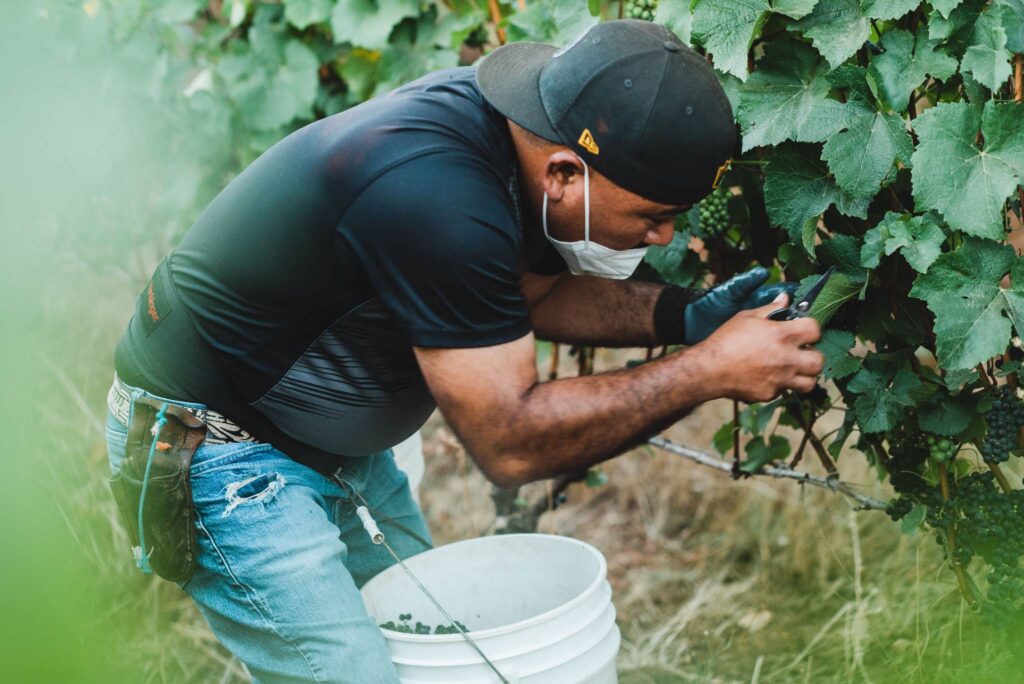
vineyard staff cutting leaves

By: Neal D. Hulkower

Two were born in Mexico and one in the US to parents from Oaxaca. Each had carved a path to success in Oregon’s wine industry and wanted to pay it forward by easing the way for those at the beginning of the winemaking process, the vineyard steward.  An association they created not that long ago has been fulfilling their vision.

The Trio of Founders 

  After obtaining a degree in Computer Systems Engineering in Chihuahua, Mexico, in 2002, Jesús Guillén came to the United States to learn English.  His father, Jesús senior, who then as now was managing the vineyards at White Rose Estate in Dayton, Oregon, put him to work. Blossoming under the guidance of mentors including White Rose’s owner Greg Sanders, consulting winemaker Mark Vlossak, who also owns St Innocent, and the late Gary Andrus, the younger Guillén quickly moved from the fields to the cellar. In 2008, he became the first Mexican head winemaker in Oregon. He also started his own brand, Guillén Family Wines.

  Mexico City native Sofía Torres McKay was working in the technology field when she met her husband, Ryan, in San Francisco in 2001.  After they married in 2005, they acquired 10-acres in the Dundee Hills American Viticultural Area and planted Cramoisi Vineyard. They bottle estate Pinot Noir, red and rosé, and Chardonnay under the Cramoisi label.

  Native Oregonian Miguel Lopez was born to immigrants from Oaxaca and raised in wine country. His resume includes positions at several wineries and a distributor.  He now dedicates his time to Red Dirt Vineyard Management and Winemaking, a venture he started with his sister, Eva Lopez, in 2018.

From Idea to Reality

  That same year, Guillén, Torres McKay, and Lopez went public with their plans to form an organization named the Asociación Hispana de la Industria del Vino en Oregon y Comunidad or AHIVOY (ahivoyoregon.org), which is Spanish for “there I go”.   Tragically, Guillén died at age 38 on November 5, 2018, after a short battle with an aggressive form of cancer.  His widow, Yuliana Cisneros-Guillén, took his place with the other founders and also maintains the family’s label.  She promotes the importance of those the group is dedicated to supporting: “AHÍVOY vineyard stewards are tending the vineyards that capture our Oregon wine region in every wine that is being produced.”

  The association adopted an ambitious and sharply focused mission statement: “AHIVOY strengthens the Oregon wine community by empowering Vineyard Stewards through education.” It collaborated with Chemeketa Community College’s Wine Studies program at the Eola campus in Salem to develop the Wine Industry Professional Training Program tailored to the constraints of full-time vineyard workers.  AHIVOY held its first public event in November 2019 to raise funds for this project and to announce that it had begun selecting members of the first cohort. The Oregon wine industry and supporters quickly rallied to the nascent organization. A major boost came from The Erath Family Foundation which covered the expenses for all students in the inaugural class.

The First Cohorts

  On January 15, 2020, a small group of vineyard stewards gathered in a Chemeketa classroom for the first time to expand their view of the wine industry.  Over the two 10-week terms, topics covered the entire process from vineyard to glass, incorporating the details of grape growing and vinification as well as tasting and marketing the final product. Along with the rest of the world, the program came to a sudden halt on March 13, one week shy of the end of the first term.

  During the forced hiatus, the now tax-exempt association, with officers, a volunteer board, and committee structure in place, continued to raise funds for a second cohort and to recruit students.  They successfully accumulated enough to fund the second cohort which started on January 13, 2021, one day after the first cohort returned to class.

On a cloudless March 3, 2021, the dream of the three founders commenced dreams coming true for eight men, the first to complete the program. The second cohort comprised of four women and six men celebrated its graduation on April 27.

Reactions, Initial Impact, and Follow On

  Jessica Sandrock, a member of the AHIVOY education committee and coordinator of programs and grants, was instrumental in designing the English-language curriculum for the program. She collected and shared feedback from students in both cohorts and their employers. “Overall, the reaction to the program has been really positive,” said Sandrock.   She added that, not surprisingly, the students overwhelmingly liked gaining more advanced technical knowledge on vineyard management.

  One wrote: “Vineyard management classes are very good. [It was c]hallenging and I learned new things that I am using at work already.” But as they got into winemaking topics, they got interested in those. One student in the first cohort is pursuing winemaking and his own label. Another valued “learning more about all of the things that go into growing grapes and making wine. I will use all of this in my work.”  Most enjoyed visiting different vineyards and wineries, learning different ways to train the vines and the work of the winery.  Three members of the second cohort really appreciated the WSET Level 1 training and certification which was added this year and will pursue the higher levels. Several plan to continue their education by taking classes to deepen their knowledge of vineyard management, to study enology, to learn English, or to get a General Educational Development (GED) certificate. The respondents unanimously plan to recommend the program to other vineyard stewards.

  Employer reaction was also strongly positive. All agreed that “the vineyard steward [is] showing increased eagerness to learn” while 80% affirmed that “the vineyard steward [is] demonstrating more versatility.”

  Jesse Lange of Lange Winery wrote “We’ve been fortunate to have two, very valued and experienced, employees participate in the AHIVOY program for each of the two years the program has been available.

  “Continuing education has a holistic [effect] on any student- one that has the potential to positively permeate many aspects of job performance. We’ve seen that [to] be the case here at Lange Estate- from the viticulture, wine-production, and even sales and marketing. Both Benjamin and Enrique have shown higher levels of enthusiasm, deeper levels of questioning, and general happiness with the opportunity to expand a knowledge base and skill set. Also, the chance to learn amongst peers allows for interactions that can [be] cohesive and collaborative- especially coming out of the pandemic. All of this is healthy indeed!  “We would definitely recommend this program to other folks in the industry- no doubt!”

  Sam Stetser of Atlas Vineyard Management sent one of his employees to the second cohort: “The great thing about AHIVOY is both myself and Roman were on board with doing it, it wouldn’t work if that wasn’t the case.” He hopes to “to transition Roman into a management role with more responsibility.”

  Sandrock said that they will track graduates and are trying formal and informal ways to keep them connected to the association as ambassadors or board members. She also stated that AHIVOY is working with Oregon State University to support graduates interested in pursuing a bachelor’s degree.  This can be an attractive option since the graduates accrued continuing education credits that can be used to place out of the 3 introductory courses at Chemeketa in its Wine Studies Program whose credits, in turn, readily transfer to OSU.  More immediate opportunities are with the OSU extension.  Discussions are underway with Prof. Patricia Skinkis, Viticulture Extension Specialist, about specific topics she can support such as pest management.

The Future

  Thus far, AHIVOY’s reach has only extended to the Willamette Valley, and mostly the north at that, but there has been outreach to Southern Oregon and The Rocks District.  But more involvement is needed to spread the word and do all of the other critical functions of the growing organization.

  Resources for the 2022 class have been secured and applications for membership in the third cohort are being accepted through November 15, 2021. Classes are scheduled from January 5 to April 27, 2022 on Wednesday from 9 am to 3 pm. In the meantime, fundraising continues to ensure classes can continue beyond next year and perhaps even expand to include larger numbers of students.

  In less than 3 years, the vision of the founding trio has taken hold, gathering widening support from an industry known for collaboration and concern for all of its members.  With momentum building, AHIVOY looks to be as successful as ¡Salud!, the organization that has been providing medical services to Oregon vineyard workers and their family for over 25 years.  While ¡Salud! maintains the health of the vineyard stewards, AHIVOY enriches their intellect and feeds their curiosity. As founder Torres McKay asserts: “The more we empower vineyard stewards through education, [the more] we will become the best wine growing community, making the best wines in the world.”

How Does Your Safety Program “PAIR” With Your Workers?

repairman at maintenance work

By: Michael Harding, Senior Risk Solution Specialist, Markel Specialty

With the intensity of the wine season gearing up and peak times just around the corner, how prepared are you to protect the health and safety of your workers? Protecting your employees is crucial to attaining your orchard and vineyard goals and having a successful operation. Having a solid and functioning safety plan in force results in better productivity, enables your workers to thrive and contribute to the performance of your business.  A good safety program is a win –win for everyone!

  Regardless of the size of your operation, it is your responsibility as an employer, to have a safety program in place.  Depending on the size of your operation, your safety program may be informal or it may need to be more formal in nature – every winery is different. You’ll obviously want to abide by any government safety regulations that apply but there are also several safety management practices that will help you better demonstrate your commitment to safety, provide a safer working environment for your workers and yield you more efficiencies within your business. 

  It is not uncommon for a winery to produce a safety manual from an online template, issue it to their workers, briefly review it during a new employee training session and in turn, believe they have an effective safety program. Even though doing this is important, there are additional ways to visibly support your safety program to the point where it actually becomes “operationalized” into your day-to-day activities.  Outlined below you will find some of the ways we have found to be very effective to visibly demonstrate your support of your safety program.

Effective Ways to Promote a Safety Program at a Winery Safety Policy and Program

1.  Draft a safety policy statement and sign it, better yet, have all of your supervisors sign it too.

2.  Make sure that your workers receive this policy statement either through an employee handbook, an employee bulletin board posting or through new employee orientations and meetings.

3.  Safety responsibilities should be formally assigned to a single individual to coordinate safety compliance efforts, accident investigation, and emergency procedures.

4.  Verify that appropriate safety responsibilities are also defined for everyone else.

5.  Work with either your insurance carrier or your insurance broker to establish an internal claims cost containment or return to work policy to reduce post-accident injury expenses.

6.  Hold supervisors accountable in annual performance reviews in part for safety objectives and/or the accident results of their workers.

Safety Rules and Standards

1.  Workers need to know how to safely do their job by having general work procedures and safety rules developed for your winery operation. High risk procedures like confined space entry, lockout / tagout, any work at heights, etc., need to be in writing.

2.  Safety rules are as important as any other part of your business. Write them so they are simple and easy to understand. Distribute them to all workers and have them sign an acknowledgment of understanding. Also post them in a common area as a reminder to everyone.

3.  Have a disciplinary system in place to deal with any safety rule violations.

4.  Develop a plan for winery emergencies like natural disasters and fires to make sure your workers know how to effectively respond in emergency situations.

Safety Training

1.  Make sure you have a safety orientation plan in place. Complete the orientation before workers begin a new job. Workers need hands on job training.

2.  Train your supervisory personnel so they can conduct safety inspections related to workplace safety hazards or applicable regulations in their area on a regular basis.

3.  Review your winery operations to determine the safety training needs for all work areas. This would include areas such as: emergency response to fire or injury, confined space, electrical safety, handling of chemicals, fall prevention and wearing of personal protective equipment, just to mention a few.

4.  Supervisory safety training sessions should be held regularly, addressing the following: accident investigation, conducting safety talks, understanding workers compensation, complying with government safety regulations, completing safety inspections, and controlling employee accident costs, as needed.

Safety Inspections

1.  Formal safety inspections should be conducted regularly by supervisors or other management staff. Document the results of these inspections.

2.  On a daily basis, supervisors should routinely conduct informal safety inspections with any negative findings documented and corrected.

3.  Consider developing customized safety inspection checklists for each area to ensure your inspections are thorough and consistent.

4.  Have a follow-up system in place to make sure that systematic corrective action is being taken on the deficiencies noted during safety inspections.

5.  Regularly update your safety inspection procedures and checklists by utilizing information generated in accident investigation reports so you can prevent recurring incidents.

Accident Investigation

1.  Have a supervisor (of the employee) investigate all injuries requiring medical treatment along with any “near misses” to make sure they don’t happen again.

2.  Maintain accident statistics about injuries that occur in your winery operation and review them regularly in management staff meetings. An accident occurring within your facility should be considered a significant winery operational deficiency and you should appropriately take corrective measures for each one.

3.  Focus on fact finding, not fault finding to avoid attributing accident causes to employee carelessness or possible fraud on accident investigation reports. Identify the underlying root cause(s) for each accident.

4.  Have a first aid treatment procedure in place to help effectively reduce the severity of work-related injuries. You should include:

a)  A properly stocked first aid kit. The American Red Cross recommends: https://www.redcross.org/get-help/how-to-prepare-for-emergencies/anatomy-of-a-first-aid-kit.html

b)  Eye wash station(s). Grainger has an article describing where eye wash stations should be placed: https://www.grainger.com/content/qt-emergency-shower-eye-wash-stn-req-120

c) Employees trained / certified in first aid. First aid training is often available through local organizations such as the Red Cross, local fire departments, EMS, etc. Check your local area listings.

Personal Protective Equipment (PPE)

1.  Conduct a hazard assessment of your winery operations to determine any personal protective needs and requirements for your workers. Make sure appropriate PPE is readily available to all workers, they are trained in its use and they follow all established requirements.

2.  Hold your supervisory personnel responsible for enforcing the use of PPE devices. This would include such items as safety glasses, proper footwear, gloves, and hearing protection, etc.

3.  On a periodic basis, review accident and inspection reports to evaluate the use or need for any additional personal protective equipment devices.

Motivation

1.  Demonstrate safety is a priority at your winery by holding regular meetings with your workers and supervisors to talk about any safety concerns. Keep minutes of each of these meetings with what was talked about and who attended.

2.  Have an “alternative duty” transitional work program in place to encourage injured workers to remain on the job in restricted capacity.

3.  Consider having a constructive policy in place to address workers who have had two more injuries or property damage accidents during any twelve-month period of time.

4.  Establish ideas and plans to motivate all workers to follow existing safety policies/procedures in an effort to achieve specific safety goals through such methods as personal recognition, bonuses, awards, etc.

Mechanical Safeguards

1.  Survey any high accident areas, materials, processes or buildings annually if you are having occurrences to specifically evaluate the adequacy of your equipment safeguards and/or OSHA machinery guarding compliance.

2.  Identify and provide appropriate signage where guarding is required. Develop procedures when guards are required to be removed for service or maintenance.

3.  If protected by interlocks or safety switch, inspect these systems regularly to verify that they have not been disabled or bypassed.

General Operating Conditions

1.   Maintain good housekeeping practices in all of your working areas so as to reduce slip, trip and fall hazards.

2.   Prohibit the climbing on racks in any storage or warehousing operations. Provide and encourage the use of sound, sturdy ladders.

3.   If forklifts are used, provide required training to all operators. Order pickers, if used, must work from an approved platform and wear appropriate fall protection.

4.   Tractors, mowers and other power equipment should be provided with appropriate rollover protective devices (ROPS).

Vehicle Safety

1.   Motor vehicle records should be routinely obtained for all new drivers and updated annually.

2.   Motor vehicle records should be evaluated using a defined point system for all drivers on an annual basis.

3.   A record of training should be maintained on file for all personnel who have access to and operate vehicles, farm equipment, vans or other powered equipment during the course of their employment.

4.   Accident reporting kits should be kept in all vehicle glove compartments.

5.   Drivers should conduct vehicle inspections daily.

Conclusion

  At the end of the day, safety doesn’t need to be complicated. You can keep your program simple so that it meets the needs of your winery. Remember that:

•    Safety doesn’t happen without the person in charge and everyone else standing up and taking responsibility.

•    No one single person can be responsible for safety – more people making safety a priority correlated to fewer people being injured.

•    Stay with it – safety isn’t about written rules and handbooks, it’s about thinking about the potential dangers and what needs to be done to keep everyone safe.

By “pairing” these safety program components with what you and your workers do, you’ll be better prepared to meet the busy times ahead with safer and fewer injured employees. You, your employees and your business will all benefit!

  The information provided in this article is intended for general informational purposes only and should not be considered as all encompassing, or suitable for all situations, conditions, and environments.  Please contact us or your insurance professional if you have any questions. Products and services are offered through Markel Specialty, a business division of Markel Service Incorporated (national producer number 27585).  Policies are written by one or more Markel insurance companies. Terms and conditions for rate and coverage may vary.

For More Information Please Call Us At: 800-814-6773 Or Visit Our Website: markelinsurance.com/winery

Post-Pandemic: How Small Wineries & Vintners Can Get Back to Business, Better!

people toasting with wine glasses

By: Rod Hughes

Wildfires, faulty tanks, flooding, a pandemic, lockdowns, water shortages, tornados, tropical storms – the past two years have been, in a word, biblical in terms of challenges faced by vintners and winemakers.

  However, like the rest of the U.S. economy, there are signs of positivity on the horizon. Pandemic restrictions are loosening, and Americans seem eager to travel and resume their former leisure activities. This includes touring wineries as well as resuming their search for those great bottles to share with friends.

  This reality presents both opportunities and challenges to those in the winemaking industry.

  The challenges are not inconsequential: Northern California wineries faced savage wildfires in 2017, 2019 and 2020, leaving many around the country with the impression California wineries were irreparably harmed. In parts of Maryland, some wineries are still trying to put the pieces back together after Tropical Storm Isaias last summer. And let’s not forget the pandemic shutdowns, limited capacity re-openings and economic pain felt universally across all wineries. 

  However, the opportunities for those that made it through may be just as powerful.

EAST COAST SOLUTION

  One example is Old York Cellars Winery in Ringoes, New Jersey. Shutdown in March 2020 like much of the country due to COVID-19, owner David Wolin — a former attorney — gathered his staff and brainstormed.  (Photo: David is 3rd on the left)

  “We knew what we couldn’t do, and it was a lot,” Wolin explained. “The question was what could we do in this new environment?”

  Wolin and his team quickly turned to one of the major challenges for independent wineries: direct shipping to consumers.

  Winery direct-to-consumer shipping is legal in 47 U.S. states, each of which regulates its own system. Regulations, taxes and various packaging requirements can vary. However, Wolin and his team had time on their hands (they would reopen, albeit under strict New Jersey Department of Health restrictions, with limited capacity in June 2020). So Wolin put his legal training to work and secured approval to ship his Old York Cellar wines to 15 other states as well as Washington, D.C.

  In short order, he found a niche market and started shipping wine as far as California and Oregon. Much of the direct shipment was coupled with virtual wine tastings as customers reached out from all over the U.S. looking for creative ways to stay connected with friends and family through virtual activities. By the end of 2020, Old York Cellars experienced a 545 percent increase in online sales and swung from an early 2020 revenue loss of more than 70 percent to end the year up by 13 percent overall.

  For this New Jersey winery, its pandemic recovery began when it took on one of an independent winery’s biggest sales obstacles and found a way to turn it into a success.

WEST COAST SOLUTION

  Another example of finding opportunity amid challenge is Healdsburg’s Longboard Vineyards in California’s famous Sonoma wine region. Like Wolin in New Jersey, Longboard’s Head of Hospitality Heidi Dittloff and Oded Shakked, the owner and winemaker, had to reinvent the business following the March 2020 shutdowns.

  “We were at a stand-still, like a lot of businesses at that point, trying to figure out how to stop hemorrhaging cash while also looking for new revenue sources,” explained Dittloff. Like many pre-pandemic wineries, Longboard’s online sales were only between 1 and 3 percent of its annual revenue.

  “Of course, looking back, ecommerce seems like the default route. Just take your sales online. Simple, right? Um, no,” said Dittloff.

  Like many small wineries, outdated software and robust websites tailored for ecommerce sales had not been a priority. Before COVID-19, it could take shoppers up to 10 clicks to purchase a bottle of wine on a typical small winery’s website. In the age of Amazon’s One-Click mindset, that’s nine clicks too many.

  Dittloff’s solution was to re-examine the sales funnels for Longboard.

  The majority (more than 70 percent) of sales for most wineries before the pandemic came from three areas: tasting rooms, wine clubs and wholesale. The shutdowns and later limited capacity requirements of 2020 effectively took in-person sales off the table, as wholesale transactions dipped temporarily. Pivoting to touchless curbside pick-up and leveraging their wine clubs helped, but the key to surviving was replacing the lost tasting room sales funnel. Longboard accomplished this through what Dittloff called “data hygiene.”

  This meant closely examining all consumer data available, understanding new buyers versus pre-COVID buyers, and designing offers that matched buyers’ needs. To do this well, Longboard also had to reinvent its website as well as completely overhaul its shopping cart to create a more user-friendly environment that limited clicks, provided buyers with their order history and created stunning visuals. This also meant updating the winery’s Point-of-Purchase system.

  “None of this was cheap,” Shakked noted. “But it was either invest or vanish because no one knew back then how long the pandemic shutdowns would last.”

  With improved customer reach and systems tied to aggressive outreach on social media to bloggers and area businesses, Longboard grew its online sales from 1 to 30 percent of its revenue, replacing nearly all of its lost tasting room sales. The key to growth in 2021 and beyond, said Dittloff, is to maintain those online sales as restrictions ease and the tasting room business returns.

  “There’s a lot of opportunity for wineries like ours to come out of this pandemic stronger than when it began,” said Shakked. “Pursuing those new sales funnels and making better, smarter use of data will be critical to that future growth.”

ONGOING SOLUTIONS

  For many independent wineries and vintners, undertaking the paperwork headaches, sales tax collection and reporting, as well as the logistics of shipping wine to dozens of other states, is too heavy of a lift. For some, so is a complete overhaul of its web, ecommerce and POS systems.

  This is where a solid communications strategy can play an integral role in helping independent wineries rebound from both the pandemic and all that came before it.

REINVENTION

  One early and likely ongoing solution that will continue to be needed is the reinvention of outdoor spaces. Despite re-openings, some customers aren’t going to be completely comfortable going back indoors. This means, especially for the purposes of enticing wine club and other regional customers, developing seasonal or quarterly “makeovers” of outdoor spaces. While the upfront costs and sweat equity can be considerable, they can be recouped through a thoughtful email and social media campaign promoting the spaces. Done well, these reinvented spaces can present customers with something new or different to see several times per year while also purchasing your wines.

  Old York Cellars has done this successfully, creating a Winter Wine Village on its 28-acre property in late 2020 and early 2021, complete with decorative cabanas, high-end fire pits and posh outdoor furniture. A tented “Spring Wine Village” offers a similar vibe at Old York Cellars with a focus on new views, a dining menu and a return of outdoor entertainment, as well. Cana Vineyards & Winery in Middleburg, Virginia took a similar approach, creating 10 cozy fire pit areas on the lawn overlooking its 43-acre property and nearby mountains. Patio heaters on the winery’s outdoor decks and front porch created warm winter spaces along with ceiling heaters and an outdoor pavilion with stunning stone fireplace. S’more kits were also available for purchase.

  By mixing up the outdoor experience for customers, small wineries can offer something fresh and new for regional customers, road-trippers and wine club members to bring them back. These outdoor makeovers also present opportunities for email marketing and public relations to introduce customers to a remodeled venue as well as special offers.

A COLLECTIVE VOICE

  Additionally, small wineries should closely examine working with their local grower’s associations and/or chambers of commerce to come together with a single voice on their industry. Consumers are likely to remain unsure of what is and isn’t possible with travel and tourism businesses for some time. Using a collective voice to let travelers know that area wineries are open for business is key.

  Partnering with other business or marketing associations can also reveal additional opportunities for wineries to grow their way out of the pandemic and its economic challenges. A great example of this type of partnership is the collaboration of the Napa and Sonoma wineries working with LuxeSF, a B2B partner network comprised of sales and marketing professionals focused on luxury marketing in the Bay Area. As recently as April 2021, LuxeSF hosted a panel of small wine producers to talk about what happened in their industry in 2020 and offer tips and best marketing practices going forward for independent vintners.

MAINTAINING THE PULSE

  Surveys, of course, are an ideal way to stay connected to winery customers. They have the added value of not being seen as an overt sales tactic. Not only can these surveys help to keep small wineries top-of-mind, but they can also be great tools for gauging customer sentiment and crowdsourcing ideas as the country reopens. For instance, a survey about how customers might feel about a “garden party event” this summer or fall is a great way to gauge how to best address the potential use of masks as well as possible turn-out.

  Surveys about continued virtual tastings, satisfaction with prior wine shipments and ecommerce experiences can also provide vital insights into the continued strength and likelihood of these pandemic-induced sales channels.

BECOMING PUBLISHERS

  Finally, and this is a recommendation that should not be dismissed out of hand, wineries need to become content publishers.

  The world has changed, and we’re now in the experience economy. A consumer’s personal experience with a brand, service or winery can drive sales. And in a world where smartphones are ubiquitous and even grandparents are mostly on one form of social media or another, wineries need to feed consumers’ insatiable appetite for content.

  If wineries produce no other form of content (and they should produce a variety, just like their wines), it must be video. Video content should run the gamut, including tours of the vineyards, the first crush of the season, 3 to 5-minute video winemaker interviews on topics for aficionados, as well as casual tasting room tourists, 30-second event update videos and more. These videos should be shared across all the winery’s social platforms and promoted via email marketing and the website. Consumers are 37 times more likely to engage with a piece of video content than a newsletter, blog or long-form article.

  But that video needs to be brief and packed with good, non-sales information. They also need not be slickly produced. In fact, millennials and Gen Z consumers find simple smartphone videos to be “more authentic.”

  The pandemic is just the latest in a string of challenges to wineries, but it’s also likely to have one of the most profound and lasting effects on the industry. The good news is all wineries will have ample opportunities to rebound from this latest challenge, but it won’t be a return to normal or even a “new normal.” Rather, what comes next must be a new approach to how the business of wineries and vineyards are conducted and how they engage with their customers.

ABOUT THE AUTHOR  Rod Hughes is vice president and principal with Kimball Hughes Public Relations. A former journalist and frequent public speaker, he can be reached via email at rhughes@kimballpr.com or by phone at (610) 559-758

Royal Slope Designated as Washington State’s Newest American Viticultural Area

a vast green vineyard

By: Becky Garrison

In September 12, 2020, the Alcohol and Tobacco Tax and Trade Bureau published the final rul-ing for Royal Slope American Viticultural Area, making it Washington State’s 15th AVA, de-fined by variation in elevation, slopes and aspect. A month after the publication of the ruling, wineries within this new AVA were eligible to submit a Certificate of Label Approval request to the TTB using the Royal Slope AVA as an appellation of origin.

  Royal Slope AVA, contained wholly within the Columbia Valley AVA, consists of 156,389 acres, with the majority of the area’s soils formed of windblown silts, or loess, from the Ice Age Missoula Floods. The AVA includes Frenchman Hills, a 30-mile long east-west trending ridge with a gentle to medium steep southfacing slope. Situated between Wenatchee and Tri Cities and about two and half hours from Seattle, Royal Slope AVA has the potential to become a tour-ist destination within the growing agritourism industry.

  About 90% of Royal Slope’s area consists of gently to somewhat steeply south-facing slopes. These southern slopes represent the best aspect for wine grapes in the Pacific Northwest due to the northerly latitude. According to lore, this gentle south aspect led to the origin of the name. Apparently, a pair of Scotsmen climbed the Saddle Mountains in the 1880s and drank in the view to the north of the south-canted topography and exclaimed, “Now that’s a Royal Slope!’

  Along those lines, the name “Royal Slope” has been printed on USGS topographic maps of vari-ous scales as far back as the 1950s to indicate the general area. The term has been in common usage for more than 50 years to describe this rich agricultural district of tree fruit orchards, row and field crops, and, increasingly since the 1980s, wine grapes.

  Dr. Alan Busacca, Ph.D., Vinetas Consulting, LLC and a certified soil scientist, co-wrote the royal Slope AVA petition with Richard Rupp, Ph.D., on behalf of the Royal Slope Wine Grower’s Association. The petition was delivered to the TTB on February 23, 2017. This approximately four-year delay from filing to approval was attributed to a TTB backlog exacerbated by COVID-19.

  In a press release issued by the Washington State Wine Commission, Busacca described the Royal Slope AVA as something of an island geographically, surrounded on all sides by very different lands.

  “North of the AVA are generally flat lands of the Quincy Valley with soils on shifting dune sands. To the east and south of the AVA, the landscape falls away into the harsh, basalt bedrock-dominated cliffs of Crab Creek Coulee gouged out by Missoula Floods, and on the west, the bedrock cliffs fall away steeply to the Columbia River.”

  Overall, this AVA has an average elevation of 1,300 feet, compared to the Wahluke Slope AVA, about 15 miles to the south, which has an elevation of about 600 feet. In the Royal Slope AVA, the 10-year average heat units, or growing degree days, is 2,900, whereas the average heat units of the three hottest AVAs in eastern Washington is over 3,300.

  The difference in elevation allows for slightly cooler growing conditions, which, in turn, produces wines somewhat more refined than those grown in the hottest areas of the state.

  The first grapes were not planted in Royal Oak until 1983 when federal irrigation water first be-came available to farm these soils. From the first 40 acre vineyard in 1998, the AVA has grown to more than 1,900 acres of wine grapes in 2020.

Producing Award Winning Wines Within the Royal Slope AVA

  Within the Royal Slope AVA, one can find more than 20 varieties of wine, including Cabernet Sauvignon, Syrah and Chardonnay. Pinot Noir grapes have been planted more recently and ap-pear to have potential in certain locations. Some of the AVA’s vineyards, such as Stillwater Creek, Stoneridge and Lawrence, have become nationally and internationally known.

  Despite the hyper-fast growth of vineyard acreage, the Royal Slope area is not growing anonymous grapes for bulk wines. In fact, the opposite is true: References to wines from Royal Slope grapes are commonly associated with scores as high as 100 points by national and international wine publications such as Wine Spectator, Wine Enthusiast, Robert Parker and Vinous.

Josh Lawrence, owner of Lawrence Vineyards, points to the value in designating some of his vineyards as part of the Royal Slope AVA. “We’re one of the northernmost red producers in the state, as well as being known as a great food and wine pairing location.”

  The higher elevations lead to the production of more structured and pronounced reds and rosés. Also, white wine production has been on the rise within the AVA, with the high elevations re-sulting in a more angular feel to their white wine grapes.

Establishing the Candy Mountain AVA

  On September 25, 2020, the TTB also published the final rule for the Candy Mountain American Viticultural Area, thus making this 815 acre AVA the Washington State’s 16th AVA and the smallest AVA in the state. This AVA, southeast of Red Mountain, lies within the Yakima Valley AVA and the larger Columbia Valley AVA. To fully encompass the Candy Mountain AVA, the TTB expanded the existing Yakima Valley AVA boundary by 72 acres.

  Kevin Pogue, Ph.D., Professor of Geology at Whitman College, who wrote the AVA petition for Candy Mountain, offers a summary of the AVA. “Candy Mountain is distinct from the surrounding lowlands that are also within the Columbia Valley and Yakima Valley AVAs. It has a longer growing season due to very good cold air drainage, and its south-facing slopes allow the soils to warm more quickly and to higher temperatures. It also has higher average wind speeds and shal-lower soils, particularly on the upper slopes, than the surrounding lowlands. The soils, especially on the upper slopes, are composed of wind deposited silt and sand that overlies silt, sand and gravel deposited by ice age floods on the lower slopes of the mountain, and basalt bedrock on the upper slope. These factors, many of which are shared with the nearby Red Mountain AVA, can contribute to grapes that are riper and more stressed, which can produce lower yields of smaller berries with thicker skins, producing full-bodied, robust wines.”

  Currently, 110 acres of vineyards grow in Candy Mountain, almost all red varieties. Seth Kitzke of Kitzke Family Vineyards points to the unique attributes of this AVA. “Candy Mountain is distinctive, having a lot of deposited old granite in the soils and then your fractured basalt in places. It is one of the warmer AVAs that brings a big fruit profile to the wines that we love.”

  While winemakers Lawrence and Kitzke feel the Columbia AVA is known for producing quality wine, both believe that diversification within the Columbia Valley AVA is needed to show why their respective AVAs shine. In Kitzke’s estimation, having both Royal Slope and Candy Moun-tain designated as separate AVAs provides an opportunity to educate consumers about why their wines taste the way they do.

  “As a connoisseur or professional in the business, you want to be able to associate distinctive wine profiles with a place. Without AVAs in place, it makes this tough,” he said.

  Lawrence concurs, “A consumer can’t just buy a Columbia Valley AVA wine and expect this bottle to have similar characteristics to other vines from the region because of the massive area of the Columbia Valley. Hence, having smaller AVAs is very valuable for both the consumer and us.”

How Vineyard Management Adapted to the COVID-19 Pandemic

staff roaming around the vineyard

By: Judit Monis, Ph.D.

 I attended an interesting session at the 2021 Unified and Wine Symposium.  As most of the meetings and seminars during the COVID pandemic, all sessions were held virtually.  We learned from three different vineyard professionals:  Sadie Drury (North Slope Management, Washington), Tony Bugica (Atlas Vineyard Management, Mendocino, Napa, and Sonoma, California) and Craig Ledbetter (Vino Farms, Lodi, and California Central Coast).  The presentations focused on the changes viticulturists and their crews had to implement in their vineyards and offices to adapt to the requirements of physical distancing, isolation, and quarantine during the COVID 19 pandemic.

  On March 11 last year, the World Health Organization declared the outbreak of SarsCoV-2 (the virus that causes of COVID-19) a pandemic.  At the time I was In Argentina and had to cancel most of my vineyard visits to return home on the last available flight.  Since then, most of my work has been done using Zoom, email, and phone calls.  In this article I describe how vineyard personnel, who do not have the luxury to work from home, managed their field work during the pandemic.

  Lise Asimont (the session moderator) opened the session reminding everyone that 2020 was a challenging year for vineyard operations due to labor shortages, global pandemic, and wildfires (especially throughout the United States West Coast).  In her words “this session is about making lemonade out of lemons”.  The speakers were chosen to represent growers in different viticulture regions in the Western United States to discuss how vineyard operations and labor practices adapted to the COVID 19 Pandemic.  It is expected that the information presented on the contingency planning of these professionals made will help others cope in the future.

Changes Implemented Due to the Pandemic Common to all Speakers

  Everyone concurred that the most important issue was to keep all employees safe (people first attitude). Right away internal management discussed safety and well-being of teams.  Physical distancing and mask wearing was immediately made mandatory.  Keeping employees six feet apart in the vineyard is not a difficult task, as crews can work every other planted row.  When maintaining physical distance, the workers were allowed to take their masks off which made their work easier (especially in hot days or for workers who wear glasses).  There was a large investment in cleaning, disinfecting supplies, and bottled water. 

  There was an increase of communication and frequent meetings to update and train employees on COVID 19 symptoms, how SarsCoV-2 spreads, local resources, company rules, community outreach, etc. Because of the influx of information, it was important to stop misinformation from the media.  Training included: the need for increased sanitation frequency, hand hygiene, use of sanitizer, avoiding touching each other (shaking hands, hugging, etc.) Van and food sharing was immediately stopped.  Equipment and properties were assigned to specific operators providing greater comfort on sanitation.  Affiliating a crew with a property and equipment allowed them to develop a complete understanding of the safety processes and expectations.  At the same time the amount of contact needed was reduced. Family units constituted a work group as people who live together do not present an increased transmission risk while working together

Lessons Learned from Individual Speakers

  Sadie Drury’s management purchased thermometers for each employee to perform self-temperature monitoring.   Because her company employs people living in two different states (Oregon and Washington), there was a need to be aware of health directives from both states and communicate this accordingly.  The management planned on secondary pandemic challenges, such as potential reduced labor. To circumvent this, there was a focus on cross training and determine how to reduce labor.  One strategy was to adopt a crawling canopy in the vineyard.  Therefore, shoot thinning or leaf pulling were not performed.  The strategy paid off yielding good quality fruit while utilizing a reduced number of field workers.   This allowed the company to sell the produce at a discounted price.  What made the company successful was the flexibility, change of farming practices, managing people, and communication.    With the challenge of new COVID variants there is still uncertainty and It is expected that the changes adopted by this vineyard management will continue through 2021 and beyond. 

  Tony Bugica was quick to apply his knowledge on medical procedure as his background includes pre-med and EMT training.  These skills became helpful during the pandemic.   Atlas Vineyard Management (Atlas) operations were decentralized and immediately eliminated in person meetings. Whoever could work from home did so. There was no knowledge on the use of masks and face shields but it was applied to the everyday farming activities.  Atlas developed training programs that were rolled out to the personnel to promotes a sense of community and teamwork.  Future training in larger formats include employees in their own cars like a drive-in movie.   Communication has always been a challenge for the business and the pandemic forced the staff to be out of their comfort zone of relying on in-person meetings.  Tony mentioned that he was vaccinated as he is a member of the board of “La Familia Sana”.   La Familia Sana, a grassroots organization in Northern Sonoma County with the mission of providing health and wellness through education, direct support and advocacy to Latinx and Indigenous communities.

  This group has been providing education to farmworkers about COVID prevention, vaccine safety, and how and where to get the immunized.  The plan is to develop a brochure to encourage workers to become vaccinated against the COVID virus.  Atlas hopes to organize on site group vaccinations for workers willing to get immunized.  The response to illness in the pandemic has helped the company to slow down and get away from the workaholic mentality.  They have learned that pushing people to come to work when not feeling well can spread disease.  In his words “workaholics transmit disease”. The year 2021 will bring a new way of working, for example:  meeting in trucks rather than in the office.  Fires and Pandemic have made everyone closer and stronger, more efficient, personally and in business.

  According to Tony Bugica, safety is important, no grape is worth a person’s life, so the workers were asked to slow down or even stop when there was any risk.

  Craig Ledbetter stressed that agriculture is not a one size fits all.  Communication was number one key to successful implementation of the company’s plan.  Clearly, field operations are very different from office operations.  Changes had to be implemented from day one.  They determined who could or could not work outside of the office.  The company has many individual offices.  People who had to stay in their offices could keep their windows open.  In addition, the company invested un ventilation upgrades to make sure that the air was sucked in and out and not into some other office.  Further, the contact with vendors and employees was minimized. 

  Vino Farms had to deal with positive cases, their human resources director was an absolute rock star throughout the entire process. From the start of the pandemic that the State of California appeared not to be equipped to handle contact tracing.  Vino Farms did the best they could to implement their own contact tracing. There were several positive cases but only 25% of the employees that tested positive for the virus were contacted by the state but their HR director did.  The HR staff worked around the clock, seven days a week to make sure that the employees were kept safe and informed.

  The 2020-21 season has been a difficult period of time with statewide fires, there were missed days of work especially on the Paso Robles area.  The company did their best with a reduced crew by limiting hand picking.  Some changes that were implemented will continue. The 2020 year was one of the worst years for viticulture, besides COVID, fires were a huge issue, and fruit was rejected due to smoke taint. It is Craig Ledbetter’s hope (and all of ours) that 2021 will be a recovery year.

Conclusions

  Many of you may wonder why a plant pathologist is writing about the modifications that vineyard managers needed to implement during the COVID 19 pandemic.  Firstly, I am a pathologist and have specialized in viral and other pathogen infection in plants.  Also, I have followed the pandemic with great interest, learning about viral transmission, vaccines, and ways to mitigate the disease.  For many years I have preached growers on the use of different activities to mitigate plant disease.  Most of the time, I have been told that these methods (testing prior to planting, entering clean fields prior to working in infected ones, change of workers clothing to avoid movement of mealybugs, etc.)  are expensive and labor intensive.  We heard from the speakers that “workaholics transmit disease” and that they have been compassionate and asked their workers to “slow down”.  Therefore, I think that my message to vineyard managers and nursery personnel will probably be heard and applied now that we have all gone through this pandemic together.  So, I close this article, wishing health to all vineyard workers, their families, and grapevine plantings.

Judit Monis, Ph.D. is a California-based plant health consultant, provides specialized services to help growers, vineyard managers, and nursery personnel avoid the propagation and transmission of disease caused by bacteria, fungi, and viruses in their vineyard blocks.   Judit is fluent in Spanish and is available to consult in other important wine grape growing regions of the word.   Due to COVID 19 Pandemic, Judit is available to perform virtual vineyard visits.  Please visit juditmonis.com for information or contact juditmonis@yahoo.com to request a consulting session.

Simplified Risk Management for Your Winery

risk management on paper

By: Michael Harding, Senior Risk Solution Specialist, Markel Specialty

Take a look around. You must be so proud of where your winery is today! You’ve worked very hard to develop, finesse, and grow your winery to what you see in front of you. Countless hours and limited staffing have created a place of pride!

  You took a lot of risks to get your winery to where you are today. In fact, your winery probably wouldn’t exist if you hadn’t taken some of those risks. But now that it is more established, the risks are more significant – there is just so much more to lose! A serious calamity could be detrimental to all that you’ve built. And, unfortunately in today’s “mid-COVID” economic environment, limited staffing may present many challenges to your winery and it may be difficult to allot sufficient time to think about the many ways your winery might be impacted by previously unthought-of risks. Risks can be managed, however. Whether your winery is small or large, you have the responsibility to your employees, your clients, and yourself to invest in risk management planning.

  A lot of winery businesses only think about buying insurance when they think about risk management. However, many wineries don’t give much thought to other ways that they can protect their winery from the numerous risks that they face. Some risks are random and unpredictable (like weather and acts of nature). Others are more predictable and can be planned for – such as costs of supplies, overhead, new hires, and equipment replacement. There are also the other kinds of events that can – and do – happen almost anytime; they can disrupt your operations, take a chunk out of your reserves, kill your bank account, and cripple or destroy your winery.

  Trying to get your arms around all potential risks and attempting to completely eliminate them is unrealistic. On the other hand, not paying enough attention to relevant risk management issue can leave you unprotected. To that end, it makes sense to be cautious. The biggest challenge in risk management is to find the proper balance between peace of mind and running your winery.       

  Simply stated, risk management is a discipline for dealing with uncertainty. It provides you with an approach to recognize and confront the threats you face. Risk can be very complicated, but it doesn’t have to be. Every winery can start with a simple, easy-to-follow plan that can manage and lessen risk. If needed, you can expand from there.

Getting Started

  Risk management goes beyond just identifying risk; it is about learning to weigh your risks and making decisions about which risks deserve immediate attention.

  There are many ways to undertake risk identification; the key is using a system that allows you to identify major risks facing your winery. It is important to make a list and examine every risk, no matter how small; they could develop into something more serious over time. To begin, a risk assessment might  start by examining some of the different aspects of running your winery. You could look at your:

1.  Management practices

2.  Hiring and volunteer policies

3.  Training

4.  Staff, guest, and visitor safety

5.  Growing, harvesting, and production methods

6.  Insurance coverage

7.  Property and facilities

8.  Warehousing

9.  Workers compensation

10. Crisis and emergency planning

11. Auto and mobile equipment exposures

12. Social media

  Although this might, at first glance, appear to be complicated and involved, a simple way to start your own self-assessment that may be useful is to gather a few members of your staff representing various functions of your winery, and conduct a brainstorming session by asking a few questions:

1. What can go wrong?

2. What are you concerned about?

3. What will we do to prevent harm from occurring?

4. What will you do to lessen the worry?

5. How will you finance?

  Your answers to each will provide you with a direction for necessary action.

  From this session, you’ll undoubtedly have a sizable list with many concerns. And, just making a list of all possible risks is not enough. It is easy to quickly become overwhelmed, so you’ll need a way to take the risks you’re facing and put them into perspective. Not all risks are created equal. Risk management is not just about identifying risk; it is about learning to weigh various risks and making decisions about which risks deserve immediate attention. In doing this you will often find that your winery’s vulnerability to a risk is often a function of financial impact. What are the odds that a particular risk will materialize, and  how much is it likely to cost? How much does your winery stand to lose as a result? This helps quantify which risks are worth worrying about and which are not.

Using a Risk Matrix in Your Risk Assessment

  A risk matrix is a valuable tool you can use to help determine both the likelihood and the consequences of any particular risk. It helps you focus your attention on those issues that have higher consequences. In such a matrix, the likelihood is rated from probable to improbable and the consequences are rated from acceptable to intolerable. A risk that is almost certain to occur but has few serious consequences needs little attention. This enables you to identify and mitigate risks that may be less certain but have greater consequences.

Prioritize Your List

  Once you’ve assessed your risks, you can begin to take steps to control them – giving priority to those with the greatest likelihood of occurrence and/or biggest potential impact.

  Select appropriate risk management strategies and implement your plan. Here are four basic risk management techniques that can be used individually or in combination to address virtually most every risk you face:

1.    Avoid it: Whenever you can’t do something with a high degree of safety, you should choose avoidance as a risk management technique. Don’t engage in an activity or provide a service that pose too great a risk. In some cases, avoidance is the best technique because many wineries don’t have the financial resources required to fund the training, supervision, or other safety measures. Always ask, “Is there something we could do to provide this safely?” If the answer is “yes”, risk modification (#2 – next) may be more practical.

2.    Change it or modification: Modification is simply changing an activity or service to make it safer. Policies and procedures are examples of risk modification. For example, if a winery is concerned about the risk of using unsafe drivers make deliveries, they might add Department of Motor Vehicle (DMV) record checks to its screening process.

3.    Take it on yourself/retention: A winery may decide that other available techniques above aren’t suitable and it will retain the risk of harm or loss. For example, when a winery purchases liability insurance and elects a $1,000 deductible, it’s retaining risk. Where organizations get into trouble is when risk is retained unintentionally, such as within the exclusions of their insurance policy.

4.    Share it: Risk sharing involves sharing risk with another through a contract. (Insurance is an example that shares the financial impact of risks.)

  Monitor and update the risk management program. Your winery is a dynamic one that constantly faces new challenges and opportunities. Risk management techniques and plans should be reviewed periodically to make certain that they remain the most appropriate strategy for your needs and circumstances.

Conclusion

  The ultimate goal for your winery regarding risk is to create a culture where risk is routinely examined and managed, simply as part of your organization’s overall business process. Risk management starts with the management of a winery. By operating in a transparent and ethical manner, a lot of risks are mitigated by promoting a sense of accountability.

We can’t know what lies ahead, but we do want to be prepared to respond to future events effectively and gracefully. Make a conscious effort to identify and manage your exposures. Ask:

•    Can you avoid or eliminate the risk?

•    If not, can you control or mitigate the risk?

•    Can you transfer the responsibility of finance?

  Reckless leaders take reckless risks; prudent leaders take calculated risks. Risk management is the “calculator”.  Kayode Omosebi

YOUR RISK MANAGEMENT PROGRAM

  The next step is to involve others in your efforts. Remember that an effective risk management program can never be the responsibility of one individual. If you’ve already engaged a group, task force, or committee in identifying risks and strategies, you’re well on your way to implementing a risk management program.

  Keep in mind that many effective strategies for managing risk in a winery may not require any additional expenses. Time, attention, and resolve may be all that’s needed to increase the safety of vital assets. Give your team a deadline—a  date by which you plan to have made significant progress in achieving your risk management goals. Review your progress frequently and set new goals as you achieve the existing ones.

  As we have discussed, risk management need not be a complex and bewildering array of technical terms, actuarial tables, or probability statistics. On the contrary, risk management is, in large part, the application of healthy doses of common sense and sound planning.

  Remember that the simpler the risk management strategy is, the more likely it is that it will be applied. Yes, there may be items that are not considered in the first iteration of the plan, but at the outset, it is more important that your program be comprehensible rather than comprehensive. As you continue to develop and refine your plan, what now seems new and strange will become second nature.

  As time passes, your plan should become more inclusive as you address more risks in order of their priority. As stated at the beginning of this article, risk management is a process not a task, therefore it is important to constantly review what you are doing, celebrate your triumphs, and analyze the reasons behind any setbacks.

Grape Selections from the VitisGen and VitisGen2 Projects

hand inspecting grapes using a magnifying glass

By: Janet van Zoeren and Tim Martinson

The VitisGen and VitisGen2 projects represent major investments in understanding grapevine genetics – and particularly in identifying markers associated with desirable traits for use in ‘marker-assisted selection’.   DNA markers identified by geneticists and breeders are now incorporated into several selections and mapping populations by grape breeding programs in California, Minnesota, New York, and Missouri.

  We asked VitisGen2 breeders to provide photos and brief descriptions of a few of their selections and mapping populations and the traits they incorporate.  Where appropriate, we have highlighted the verified presence of genes through the use of markers in blue.

USDA-ARS, Crop Diseases, Pests and Genetics Unit, San Joaquin Valley Agricultural Sciences Center,Parlier, CA

Craig Ledbetter, Research Geneticist

Y308-314-08 This is a mid-season table grape selection with powdery mildew resistance, which has the Ren4 gene. It was sufficiently attractive for trialing with other advanced table grape selections.  It was the first PM resistant selection to be brought in for evaluation by the California Table Grape Commission, where there were positive comments from evaluators regarding the fruit attractiveness and productivity.  It was finally removed from variety consideration because of excessive fruit acidity.  We have continued to use this accession as a quality parent for Ren4 crosses.

Y306-196-10 This natural dry-on-vine raisin selection has all the makings of a new raisin cultivar.  The vine is extremely productive and berries begin drying down in early August.  Dry product quality is very high and berries resist powdery mildew infection because of the carried Ren4 gene.  The selection is currently under yield evaluation to examine its commercial potential.

Grapes in Color Population

Color Population: It is difficult to identify new red-skinned table grape selections with high quality skin color, so a 300-vine population was created from red-skinned parents that differed greatly in the quality of skin color.  The reason for creating this population is to identify a DNA marker that is linked to high quality red skin color.  All fruiting vines are being phenotyped for skin color quality, and vine DNA profiles will be examined to identify any markers linked to high quality red skin color.  Depicted in the photo are fruit clusters from two vines:  a high quality red to the left of the trunk, and low quality red to the trunk’s right.

Y511-151-12 This is the first red-skinned selection with powdery mildew resistance to be evaluated for fruit quality in advanced selection trials.  Fruitful on both spurs and canes, the selection yielded between 950 to 1400 boxes per acre, depending on applied cultural treatments.  Vitis cinerea (Ren2) is the source of this selection’s powdery mildew resistance.  The round attractive fruit ripen in mid-September and produce a 7 gram berry with 21° Brix.  Consumer evaluations have been positive, with flesh texture and sweetness being notable positive attributes.

Y514-109-12 grapes

Y514-109-12 This late-season table grape selections owes its resistance to V. romanetii, the donor of Ren4.  It is currently being evaluated for the possibility of release in collaborative trials with the California Table Grape Commission.  The white-skinned selection has achieved 1076 boxes per acre in these trials, with clusters averaging 1.3 lb. on spur-pruned vines.  Fruit of this selection are particularly clean, due in part to its vigorous canopy that protects developing berries from both sunburn and ambering.  While this selection may or may not ever become a new cultivar, its genetics have already been used for several seasons to donate its unique combination of powdery mildew resistance and fruit quality traits to new seedlings.

Cornell Grape Breeding and Genetics Program, Cornell AgriTech, Horticulture Section, Cornell School of Integrative Plant Science, Geneva, NY

Bruce Reisch, Professor

NY12.0107.01 grapes

NY12.0107.01 This white wine grape selection is derived from a complex cross made in 2012, and confirmed through VitisGen marker analyses to carry both Run1 (for powdery mildew resistance) and Rpv1 (for downy mildew resistance). This particular vine was planted in 2014 as a single vine seedling, propagated in 2017, and planted in a six-vine plot in 2018. Fruit were netted and harvested in September 2020, and we expect to evaluate the first wine sample next spring.  The very long, moderately compact clusters bear fruit with mild flavors, and seem free of hybrid characteristics derived from North American species. One of its quality ancestors include ‘Muscat Hamburg’. It may have potential for high productivity.

NY10.0927.02 Another white wine grape selection bearing attractive clusters of light red fruit. As with its ‘Aromella’ ancestor, this selection has some flowery, aromatic components in the fresh fruit, likely derived from its ‘Gewürztraminer’ background.  The cross was made in 2010 and seedling vines were planted to a permanent vineyard in 2012. This selection was then propagated in 2017 and planted to a test site in 2018.  Fruit were harvested this year for sensory analysis in 2021.  According to VitisGen tests that were run on the seedling vines, this selection carries Run1 and Rpv1, as described above, but also carries Ren2 powdery mildew resistance from Vitis cinerea.

NY15.0416.01 This blue grape selection was created expressly for the interest in a juice grape with high levels of powdery mildew and downy mildew resistance. Another goal of the cross was to have relatively early ripening compared to ‘Concord’. The juice grape parent was a very early ripening selection created in the 1950s by the Experiment Station breeding program.  It was a hybrid of an early ripening blue labrusca grape with Concord.  The other parent donated resistance genes (Run1 and Rpv1) to the cross, and possibly Ren3 as well.  This cross was made in 2015 and vines were planted to a seedling vineyard in 2017.  Fruit were first observed in 2019 and the vine has already been propagated.  Small juice samples were made in 2020 from two harvest dates in September.  The flavor of the fresh fruit is quite similar to ‘Concord’.

4427075 grapes

4427075 This is a new wine selection in the Cornell-Geneva grape breeding program. Marker assisted selection results indicated the presence of two genes for powdery mildew resistance (Run1 and Ren2), and one for downy mildew resistance (Rpv1). The cross was made in 2014, and though we have no wine results yet, the flavors of the fresh fruit reflect a lack of wild grape off-flavors, and presence of pleasing fruity flavors. Fruit ripen mid-season.

4427025 grapes

4427025 This red wine grape also come from a cross made in 2014, so wine hasn’t yet been tested.  With large clusters that are not overly compact, the vine appears to have good yield potential.  In 2019, the vine had nearly no black rot in a planting with a great deal of black rot. Resistance to powdery and downy mildews are also excellent; DNA results indicate the presence of Run1, Rpv1 and Ren2.

4405008 grapes

4405008 During meetings with growers early in 2015, it was suggested that juice grapes with flavor profiles similar to current industry standards (Concord and Niagara) but harboring strong levels of disease resistance would be a desirable goal.  So, in June 2015 and 2016, a number of crosses were made with this goal in mind. There were several outstanding examples among the seedlings that began fruiting in 2018 and 2019.  Here is one such selection grown under fungicide-free conditions in 2019, with ripe fruit on September 19.  This young vine comes from a cross made in 2016 and is precocious and productive. Time will tell if these will be worthy of release; we have yet to determine juice suitability (though they do taste great!), winter hardiness, and stability across years and sites.  But several seedlings show promise.

NY06.0514.06 grapes

NY06.0514.06 This promising red wine grape selection, with excellent powdery and downy mildew resistance from the use of Run1, Rpv1 and Ren2, is already going out to trials with NE1720 University cooperators and others.  Though the cross was made prior to the start of the VitisGen projects, this selection was tested for presence of resistance genes using VitisGen resources.  The fruit have excellent resistance to bunch rot, and fruit and foliage have moderate resistance to black rot. The buds are moderately winter hardy, with expected temperature of 50% bud kill in mid-winter measured to be -15 °F.  Wine descriptors are as follows: fruity with notes of blackberry, plum, cherry; slightly herbaceous, with green pepper noted; good body and medium tannin; also, some have detected chocolate notes.

University of Minnesota, Grape Breeding and Enology Program, Department of Horticultural Science, St Paul, MN

Matthew Clark, Assistant Professor

E0012-01 Grapes

E0012-01 This selection is from a population of La Crescent x Seyval blanc. This selection has relatively large berry size and large clusters (169.83 g/l), and at harvest has 24.2° Brix, 2.91 ph, 12.17 g total acidity.  In the past we have harvested on 9/24/18. This vine has a low incidence of powdery mildew, which may be inherited from Seyval blanc (Ren3 resistance allele). There is downy mildew on the leaves, which is typical of its parent La Crescent. The clusters had no incidence of black rot, a common problem in the vineyard in 2019. The flavor and aroma profile includes honey, lemon, kiwi, pear, and gooseberry.

GE9408-01 Grapes

GE9408-01 Descended from Vitis riparia, ‘Carmine’, ‘Mandan’, and Landot noir 4511, this selection is from a cross of MN1094 x Seyval blanc. As a descendant of ‘Seyval’, our marker tests indicated that it also carries the Ren3resistance allele for powdery mildew. This grape produced a small (68.6 g), compact cluster but is interesting for its appeal in the wine, specifically the low titratable acidity (7.1 g/l) and moderate soluble solids (24.5 °Brix).  The wine was described as cherry, smoke, leather, berry, and with some tannin.

GE0733-01 Grapes

GE0733-01 This selection is a seedless table grape that is highly aromatic and has many tropical flavors. The parentage is unknown and will require DNA testing to confirm the possible parents. Most likely this selection is derived from Elmer Swenson’s breeding line and does carry the proper alleles at the SDI locus for seedlessness.  The leaves of this selection have no incidence of powdery mildew. The yellow berries are 2.3 g each, and clusters are 92.33 g.  Due to polar vortex in 2014 and 2019, this vine has not produced much fruit in USDA Zone 4. Primary clusters are large, but secondary buds or latent buds reliably produce smaller clusters. This is an earlier variety with harvest around the second week of September, 21.8 °Brix and total acidity of 6.69 g/l.

VB9276-01

VB9276-01 Wine described with muscat with floral notes including lilac and tropical fruits like banana. This selection is a cross of VB 86-4 and Frontenac. Selected for white wine, this selection has relatively low titratable acidity compared to other cold hardy hybrids at 7.11 g/l. The berries are smaller like ‘Frontenac’ and the bunches are loose like that parent as well. This selection is susceptible to black rot and powdery mildew. It is marginally hardy in our Zone 4 conditions.

GE9913-01 This selection is an offspring of the above (VB9276-01) crossed with ‘La Crescent’. Unfortunately it demonstrates severe susceptibility of leaves to downy mildew. However, the fruit appear to be immune, which is the same in ‘La Crescent’. Despite having muscat ancestors, this selection is more neutral in its flavor profile, not demonstrating hybrid or muscat characteristics. This wine is described like Sauvignon blanc. It is grassy, green fruit, with aromas of peach and citrus. This selection is not suitable for Zone 4 conditions without additional winter protection. It may also benefit from a longer, warmer growing season further south.

Clark Mapping Family

Fine Mapping Family MN 1264 x MN 1246 We developed this population of nearly 1000 individuals in order to fine map important traits that were previously mapped in our GE1025 population (Teh et al. 2017, Clark et al. 2018).  We are currently evaluating this population for resistance to powdery mildew, foliar phylloxera, and the presence of leaf trichomes. This planting was established in 2019 at the Horticultural Research Center and should produce its first fruit for evaluation in 2020. We hope to use this population to improve our understanding of fruit color, bunch architecture, flower sex, and fruit quality traits such as hybrid flavors.

  Funding for VitisGen2 is provided by a Specialty Crop Research Initiative Competitive Grant, Award No. 2017- 51181-26829, of the USDA National Institute of Food and Agriculture.

Follow us on Twitter for project updates and webinar announcements @VitisGen

Email Tim Martinson at tem2@cornell.edu with any questions or comments about the program or webpage.

Websites Are a Virtual “Garden”

By: Susan DeMatei

  I was reading an article about spring gardening tasks, and they were suggesting that spring was a great time for maintenance. The types of things recommended, such as cleaning and sharpening tools, checking bulbs and seeds for moisture or mold, mulching existing flower beds, and planning for new ones, all made sense and almost inspired me enough to get off the warm couch and go out to my shed to investigate. But, because I’m a nerd, my mind immediately followed the theme to a digital correlation.

  Websites are a virtual “garden.” Their goal is to appeal to customers, draw them in and create an inviting setting so they may stay awhile. We design new sections within them, like adding blogs or recipes, we plant new products and SKUs and prune old ones no longer available. Sometimes we get tired of the entire thing and change the color scheme and layout with new pictures or templates. Like a garden, we should tend to our websites because if we let them sit over time, their ability to function and attract customers dissipate. However, regular website maintenance is something that many don’t realize is necessary. So, for this week’s blog, here is a list of periodic maintenance tasks to help you keep your website in full bloom.

  ADA Compliance:  We didn’t just start with this because it fits alphabetically – but you can remember it that way. It’s crucial to ensure that your website abides by ADA Compliance guidelines because of possible hefty fines, potential lawsuits, and these accessibility enhancements open your website to more potential consumers.

  Things to ensure to check each month to remain ADA Compliant are:

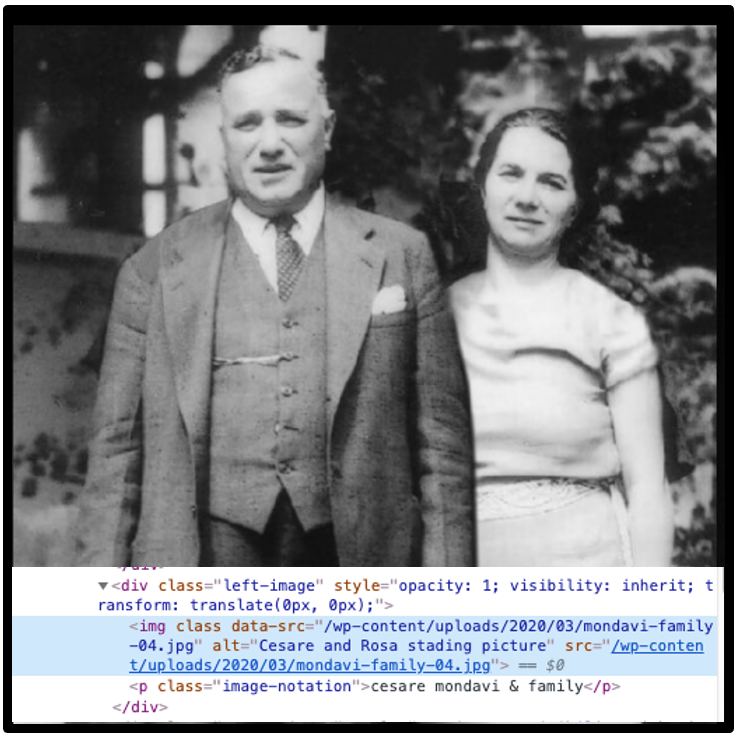
  Image Alternative Text: Every image you add to your website should have good alternative text. Alternative, or “alt” text, is a description of the image in the code that Google and screen readers for the blind can read. This code should describe what your image portrays, such as “Customers enjoying a tasting in the tasting room.” The only exception is if an image is entirely decorative (such as a twirly graphic forming a text break or a background style). With each new image you add, you will want to add alternative text to remain ADA Compliant. This addition also benefits you from an SEO lens.

Cesare and Rosa stading picture

  In this example, even though the picture is called “mondavi-family-04.jpg”, the website developer has given the picture an alt name of “Cesare and Rosa stading picture” to go along with the text. Helpful, but check your spelling in tags, too!

  Text Contrast: Anytime your copy or text has been adjusted, it’s essential to make sure that the characters are easy to read and not impeded by background images that may become unclear or hard to see.

  Links: Any new links that you create or add also need to contain clear relevant text. A URL with a mess of unfriendly letters and code can make you non-compliant—for example, https://www.wineglassmarketing.com/Services/Social-Media-Marketing  as opposed to: https://www.wineglassmarketing.com/Services/345j345jk345b34fsd0v.

Always try your best to have a friendly marketing URL that denotes what page they are on.

  SEO Improvements: You might think that most website building systems handle this for you automatically, but the sad truth is they don’t. You should already have a Google Analytics tracking code on your site, and ideally, you should also have a Facebook Pixel set up to track activity. If you don’t, you’re just paddling around without a plan. From a monthly maintenance perspective, the critical things for this category are:

  Meta Titles and Meta Descriptions:  While most systems do give you Meta Titles by default, these are often very basic and don’t abide by best practices according to the leading SEO platforms out there, namely Google. The real problem on the other side of the coin is Meta Descriptions are usually empty by default or don’t follow the best course.

  A big part of this is knowing how to write proper Meta Descriptions so that your website traffic improves – these aren’t just keywords of standard search terms. There’s an actual strategy to doing this correctly. For example, you shouldn’t stuff keywords into your Meta Descriptions. One case study by SterlingSky shows that when they saw brands keyword stuffing their posts, 40% of the time, the listing was suspended or removed by Google and had to be added again. With any new page created or even any new product added to your website store, it’s surprisingly vital to make sure that you’ve added the appropriate Meta Descriptions.

Google's example of keyword stuffing

  Keep your “Google My Business” page up to date:  Since Google is the most widely used search engine, this gives you a significant advantage in using the free Google My Business tools. However, having accurate operating hours is critical, especially since we’re in a current teeter-totter between open and closed. Considering this fact, you may wish to check on your business hours more frequently than once a month. You wouldn’t want someone making the trip to your tasting room when you’re mandated to have your doors shut.

  If you don’t have a Google My Business page, it could increase traffic. According to Forbes, a study done in 2019 stated, “Google My Business is a critical channel, with 96% of local businesses being viewed at least 25 times per month in Search results, and 86% receiving more than 25 [views per month] in Maps. And there’s plenty of space for high numbers, with 49% of businesses receiving more than 1,000 average Search views per month, and 33% receiving 1,000+ on Maps.” As of August of 2020, Forbes explains, “Google My Business has yet to catch on with large companies and those focused on B2B it seems, but manufacturers that sell through local independent retailers should refocus on GMB and how it can help their retailers succeed.”

  Broken Links:  As offers change and products go out of stock, it’s essential to make sure that your links don’t break. So, this upcoming month, if a product went out of stock, was it a featured link in an email? If a customer opens that email a few months later as they’re cleaning out their inbox and clicks on a link, will that connection break?

  Privacy Policy Compliant: In 2020 we saw the introduction of two privacy policies that impact each of us: CCPA (California Consumer Privacy Act), obviously for California residents, and LGPD (General Data Protection Law) for Brazil. (In 2018, the GDPR for the EU was put into effect for anyone who displays their website to anyone in the EU.) These laws are worth reviewing to ensure any new forms you’ve created on your site and your cookie policies follow them. There are plugins for WordPress that can handle the necessary popups and wording.

  Social Media Ads and Posts:   You should monitor and “prune” your social media posts as well. Technically these aren’t part of your website but play a vital role in bringing people to your website. When sensitive issues are coming up in the world scene (as we saw many examples of last year), many leave their ads in place without adapting them to show empathy for those suffering or to bring awareness appropriately. Meanwhile, some go entirely the other way and turn off their ads or halt their social media presence altogether, effectively shutting the door on potential sales by showing the outreach of an emotional connection with the consumer rather than plugging a promotion.

  For instance, leaving your ads as they stand – which usually contain a call-to-action, can seem tone-deaf. You’ve heard the term “read the room”; we need to “read the news” in this case. For example, adapt your posts showing an empathetic thought regarding the displacement of families who have lost homes in wildfires. Being relevant helps prospects and consumers appreciate the heart behind your brand, build a connection with your team members, and feel motivated to keep connected with your company.

By way of review:

•   Image Alternative Text

•   Text easily legible

•   Links are friendly and easy to read.

•   Meta Titles and Meta Descriptions follow best practices.

•   Google My Business Up to Date

•   Check for Broken Links

•   Check your forms that they are compliant with privacy policies.

•   Check your Social Media Ads and posts to make sure they are relevant.

  Now you have a spring maintenance list to ensure more significant traffic to your site, correct hours, better ADA compliance, and SEO practices. We hope that with these tips, your 2021 season will bloom with well-functioning websites attracting flocks of customers that enjoy your online garden.

Fullerton Wines: Raising the Bar on Oregon Chardonnay

vineyard on a barn

By:Nan McCreary 

  Willamette Valley, located between Oregon’s Cascade Mountains and the Coast Range, shares a defining characteristic with Burgundy, France. Both are cool-climate growing regions situated at the 45th parallel north, and both are meccas for the holy grail of grapes, Pinot Noir. Yet, while Burgundy has long excelled at another grape, Chardonnay, Oregon has been late to the party. Fortunately, this is rapidly changing.

  “This is a good time to be in the Chardonnay business in Oregon,” winemaker Alex Fullerton said, “and it’s a good time to be a Chardonnay drinker in the valley.” Fullerton, who, with his parents, Eric and Susanne, founded Fullerton Wines in 2012, is one of many winemakers championing Chardonnay as the new rising star of the Willamette Valley.

  Chardonnay vines were first planted in the Willamette Valley along with Pinot Noir in the mid-1960s. Much of what was propagated was a single clone grown in California, called 108, which didn’t ripen sufficiently in the cool Willamette Valley.

  “The first 20 vines we planted in our small vineyard near Beaverton were Davis 108 clones,” Fullerton told The Grapevine Magazine. “They were monsters. They were super vigorous and kept growing vegetatively but wouldn’t ripen. They were used to a dryer climate.”

  In 1974, David Adelsheim, co-founder of Adelsheim Vineyard in the Chehalem Mountains AVA, spent a vintage working in Burgundy. There he noticed that Chardonnay ripened earlier or at the same time as Pinot Noir, whereas Oregon growers were picking Chardonnay two weeks after Pinot Noir.

  “He figured it must be a clonal thing,” Fullerton said.

  In 1984, Adelsheim helped import some of the earlier ripening Dijon clones he saw in France, which turned out to be perfectly suited to Oregon’s climate. That was a turning point in the evolution of Chardonnay in the Willamette Valley.

  Throughout the 1980s and 1990s, the movement to bring over better clones spurred the revolution. Growers began experimenting with other clones in addition to classic Dijon clones, including California heritage clones which tend to be less vigorous. 

  “Our climate is changing,” Fullerton said. “It’s warmer, so it’s a good idea to get a diversity of clones up here.”

  According to Fullerton, clone selection is only part of the Chardonnay story in Oregon.  The refinement of site selecting, winegrowing practices, pick times and winemaking decisions also contribute to Chardonnay’s continuing success. Fullerton, which makes an 80% to 20% ratio of Pinot Noir vs. Chardonnay, sources grapes from all over the Willamette Valley.

  “We have a great narrative for Oregon Pinot Noir and what you get from different soils and AVAs, and we are starting to map that out for Chardonnay,” he told The Grapevine Magazine.

  “We have both volcanic and sedimentary soils here, and we’re continually experimenting with which clones do better in which regions.”

  Fullerton strives for diversity in the vineyard, planting some one-acre blocks with as many as 10 different clones in each block. “This broadens the expression of each individual site. If you plant only one clone on one site and vinify that separately, you will get an expression of terroir through the lens of only one clone. If you’re interested in seeing what a site does, you’re really better off seeing multiple clones planted together because you can find which sites are best and express the ultimate complexity of that site.”

  When it comes to harvesting, a growing trend in the Willamette Valley is to pick early. Early harvest helps retain acid and keep alcohol and sugar levels low. Fullerton, for example, picks Chardonnay a full one-to-two weeks ahead of full flavor development on the vine. “With Pinot Noir, you don’t pick until the flavor is in the fruit, but with Chardonnay, if the grapes are tasty and flavorful, you should have picked a few days ago to get the style we’re looking for. We have to keep a close eye on the grapes. They ripen very quickly.”

  In the winery, Oregon winemakers are generally striving for a leaner, crisper style of Chardonnay. Like many others in the valley, Fullerton is moving toward fermentation in larger barrels and away from oak. These include barrels as large as 350-, 500- and 600-liters, which allow for ingestion of less oxygen than smaller barrels as the wine ages. Wineries also use malolactic fermentation for white wines and aging sur lees by letting the gross lees settle, then reincorporating the desired solids back into the juice for fermentation and aging. Malolactic fermentation reduces harsh acids in the juice, and aging sur lees helps extract aromatics and adds texture to the wine.

  While Pinot Noir remains the signature grape of the Willamette Valley – as of 2018, there were 20,000 acres of Pinot Noir compared to 2,400 acres of Chardonnay – more and more winemakers throughout the valley see the potential of Oregon Chardonnay as an exciting alternative to the oaky, buttery styles that earned popularity in California. Still, it is a work in progress. For one thing, Chardonnay is very site-specific.

  “Today, we can identify which Pinots come from which appellation,” Fullerton said, “but we are not there yet with Chardonnay. With more experience and knowledge of soils and microclimates, eventually, we’ll be able to blindly pick out the appellation.” 

  Specifying an “Oregon style” of Chardonnay is even more difficult because the wine also reflects the winemaker’s choices. Chardonnay has long been known as “the winemaker’s canvas” because it is a grape easily manipulated in terms of flavor and aromas. “Oregon is developing its own style,” Fullerton said. “I don’t like to compare Oregon Chardonnays with White Burgundy, but generally, we’re trending toward the leaner, acid-driven styles of French Chardonnay. As our style evolves, I see more similarities than differences.”

  A testament to Oregon’s enthusiasm for Chardonnay is the increasing popularity of the annual Oregon Chardonnay Festival. Founded in 2012 as the Oregon Chardonnay Symposium, the celebration has evolved from an industry-focused technical panel and tasting to an education seminar for consumers and professionals and one of the region’s largest varietal-specific tastings. “If you’re interested in Oregon Chardonnay, you want to go to this event,” Fullerton said.  “It’s very educational and impressive to see how many good Chardonnays Oregon is producing.”

  For Fullerton, delving into the nuances of Burgundian wines is a labor of love, so it’s no wonder that he and his winery are adapting and promoting the latest trends in Chardonnay. His father, Eric, owner and proprietor of Fullerton Wines, gifted him with a trip to Champagne, the Loire and Burgundy for his 18th birthday, and this is where he got the wine bug.  “I was totally fascinated by wine all throughout college until I began working at wineries – Penner-Ash Cellars and Bergström Wines. These are the wines that speak to me.”

  As a winemaker, Fullerton oversees an 8,000-case production of Pinot Noirs, Chardonnay and some Pinot Gris. Their signature Pinot Noirs and Chardonnays include Three Otters (named after the Fullerton Family Crest, which features three little otter heads) and Five Faces (an acronym for the five members of the Fullerton family), as well as an extensive portfolio of single-vineyard wines. Many have received 90-plus ratings from Wine Enthusiast, Wine Spectator and Robert Parker. Viticultural practices include organic, biodynamic and sustainable farming.  Fullerton Winery offers three opportunities for tasting: Live virtual tastings, on-site tastings at the Portland Wine Bar and their tasting room at Fullerton Winery in Corvallis.

  Winemakers throughout the Willamette Valley agree that this is an exciting time for Chardonnay. With nearly 700 wineries and over 25,000 vineyards planted, there are many options for experimentation and ushering this relative newcomer into the future. Asked if Chardonnay can compete with Pinot Noir, Fullerton said, “Oh yeah. We can’t leave Chardonnay out of the story anymore and just consider Pinot Noir in the Willamette Valley.” 

  Clearly, the time is ripe for Oregon Chardonnay, for more information, visit…http://www.fullertonwines.com/

Keeping Your Vineyard Free of Wildlife Pests

lone deer in a vineyard

By: Cheryl Gray

  While admirably beautiful in their natural habitat, wildlife can wreak havoc in vineyards, unwittingly destroying a harvest not intended for them. Imagine a roost of more than a million pesky birds, and you have an immediate visual of an economically damaging enemy.   

Experts say that birds, rabbits and deer are among the most troublesome culprits. In response, vineyards worldwide have deployed a range of deterrents to protect their grapes, turning to manufacturers with innovative products designed to solve a potential challenge.

Oh Deer   

  One of the leading providers of wildlife deterrence is Pennsylvania-based Trident Corporation, in business since 1984. Its fencing and accessories are used not only in vineyards but also in national parks, public gardens and animal rescue projects. Trident services winery and vineyard clients across the United States, including Texas, California, South Dakota and South Carolina. Among its primary fencing products is one to deter deer. Cody Parks, Trident’s Marketing Specialist, touts the company as the largest distributor of deer fence systems in the U.S.  He tells The Grapevine Magazine why deer are so troublesome to vineyards. 

  “Deer seem to be one of the largest pests for any sort of outdoor growing operation, primarily because deer can wreak havoc on young plants. They love to eat young trees and plants as soon as they start to bud. This could stop the plant from growing and prevent it from producing a yield. It could potentially kill the plant entirely depending [on] how much of it was eaten. Even full-grown plants aren’t safe. Deer will rub their antlers on trees to remove the velvet which will remove the bark and expose the sensitive area of a tree,” says Parks.

  “We offer a range of fences in various sizes, strengths and materials. The fences are polypropylene plastic or varying degrees of metal from steel hex to welded wire to fixed knot. We also offer a few different post and gate options. Our most popular fencing for wineries/vineyards is the extra-strength poly fence. It is an effective deterrent and is cheap to cover large expanses of land. As far as other wildlife, we do offer certain fencing that helps protect against rodents.” 

  Parks says that Trident has earned its top spot in the industry by introducing innovative products. “One product we introduced into the market is the poly fence with reinforced bottom edge. The reinforced bottom edge makes it more secure when staking the fencing to the ground,” he says. “We are in a very niche market for our products, and the majority of places that sell this type of [deer] fencing source it from us. However, we do offer a tiered price list for some businesses, and all of our inventory is at an on-site warehouse.”  

The bird is the word

  Birds present a different type of worry for grape growers. Bouchaine Vineyards, located in the Carneros region of Napa Valley, California, is noted for its environmentally friendly approach to pest control. Bouchaine was the first Fish Friendly Certified vineyard in Napa Valley. It also holds Napa Green Land and Winery Certifications. 

  Bouchaine Vineyards features an integrated pest management program that includes bird boxes and raptor perches stationed throughout the vineyards. The bird boxes attract bluebirds that feed on pest populations, along with owls and hawks that control gopher damage. Chris Kajani, winemaker and general manager for Bouchaine Vineyards, explains how her company uses another grape defense method to protect crops from pesky birds.   

  “Our vineyard is surrounded by telephone wires which pesky birds sit on and then swoop down to snack on grapes all day. To mitigate this bird damage, we have daily site visits from our falconer from véraison through harvest. Blackbirds and starlings are terrified of falcons and will fly off when one is released. Our falconer will fly her birds multiple times a day if the bird pressure is high. We also provide demonstrations to guests who are interested in falconry throughout the year.” 

  While some vineyards rely on Mother Nature to handle their wildlife challenges, others turn to technology options. Sutton Agricultural Enterprises provides answers. Headquartered in Salinas, California, the company counts among its clients vineyards in Salinas Valley and throughout the country.  

  Sutton Agricultural began under another company name in 1956. It became a pioneer in bird deterrence, initially through sales of pyrotechnic devices. John Sutton bought the company in 1973 and continues as operations manager to this day. He says the most common bird pests include European starlings, horned larks, house finches, crows and Old World sparrows. According to Sutton, vineyards are an irresistible dining spot. 

  “One of the disadvantages of vineyards is their proximity to rural areas, rolling hills, open habitat. Put yourself in their shoes (or little tiny feet). You live near a vineyard, maybe in a grassy field or wooded area. Late in the year, when there’s very little natural vegetation to eat, a human comes out to the vineyard with a little thing that looks like a flashlight, holds it up, and smiles. This is the signal well known to birds. The time has come to feast,” Sutton says. 

  Those in the industry, he says, will recognize that “flashlight” as a refractometer and his description of how birds spot an inviting vineyard as a bit of well-known industry humor. However, there is nothing funny about birds swooping down and damaging grape crops. That’s where Sutton’s company comes in, armed with an arsenal of equipment for vineyards to scare off unwanted, winged dinner guests safely. Those tools include visual, sonic and physical deterrents. Its most popular products include exclusion netting, propane cannons, pyrotechnics and a variety of visual items.  

  “We have been the exclusive U.S. importer and distributor of Zon propane cannons and Zink bird-scaring pyrotechnics for more than 50 years. These two brands are leaders in their fields and have consistently provided the best propane cannons and pyrotechnics available on the market,” says Sutton.

  Pyrotechnics and cannons are designed to frighten and disorient birds and other wildlife. A sonic blast, for example, can be as loud as an ambulance siren or a jackhammer.  

  In addition to natural defenses, netting, fences and technology, there are even more options. Michigan-based Avian Enterprises, LLC, offers vineyard pest control solutions through a variety of bird repellants. The company’s trio of products – Avian Control Bird Repellent, Avian Migrate Goose and Bird Repellent and Avian Fog Force TR Bird Repellent – are manufactured in Michigan. 

  Avian Control Bird Repellent spray works by triggering an adverse but non-toxic reaction whenever birds get too close to vineyards. It stimulates the bird’s trigeminal nerve to create an unpleasant sensation, making vineyard grapes far less appealing. Growers use either a hand-held sprayer or an air blast sprayer to distribute the product on their grapes. It is usually applied once a week during bird season and through veraison.  

  “Avian Control Bird Repellent is one of the only liquid bio-pesticides on the market that is EPA registered for fruits and vegetables, including wine grapes,” says Avian Enterprises’ president, Jon Stone. “What distinguishes it from any competition is the enhanced efficacy provided by the combination of the active ingredient, Methyl Anthranilate, and the proprietary inert ingredients. When formulated together, [they] allow for greater effectiveness by having a more potent initial repellency and by exhibiting a much slower biodegradation rate. The end result is a much more effective and longer-lasting repellency on crops, including wine grapes. Methyl anthranilate occurs naturally and is found in bergamot, black locust, gardenia, jasmine, lemon, mandarin oranges and strawberries. MA is completely biodegradable, as are all of the ingredients in the Avian Control formula.   

  “Our winery/vineyard customers are located in every state that grows wine grapes,” Stone says, “predominantly California, Oregon, New York, New Jersey, Texas, Washington, North Carolina, Virginia, Minnesota, Michigan and Ohio. Most of our wine grape customers initially contact us after speaking to one or more of their friends or colleagues in the wine grape or vineyard industry who currently spray Avian Control Bird Repellent on their grapes during the growing season and have excellent results. Avian Control Bird Repellent has become the best alternative to netting.”

  Wildlife pest deterrents are as numerous as the pests themselves, four-legged or fowl. No matter the vineyard location, whether overlooking the San Francisco Bay or on a more rural terrain, pest control is an essential element to protecting grape crops year-round and critical to gaining maximum grape yields during harvest. Companies specializing in these services keep a lookout for cutting-edge methods to keep pace with the ever-growing demand.