Wine Tank Purchasing Thoughts

set of wine tanks

By: Tom Payette – Wimemaking Consultant  

  One of the biggest tasks in setting up a winery or expanding one is the decisions on the wine tanks.  Much time, thought and effort should go into planning what the winery wants to accomplish with the tanks.  If these decisions are made properly and well in advance dollar savings and better functionality can be achieved.

  What will these tanks be used for?  If the tanks will be used for fermenting juice one set of criteria may be used.  If used additionally for cold settling of juice, red fermentations or cold stabilization the list of criteria will expand.  Deciding what the tanks are needed for in the winery will lead toward the right choice.

  White wine fermentors often have a small valve port at the bottom of the tank at a diameter, for most smaller winery sizes, of 1.5 to 2.0 inches.  This is used to fill and empty the tank.  A racking valve, usually of the same diameter, will exist on the tank to allow the winemaker to remove clear wine or juice from the tank to a level a small manway door, normally and 18” oval, may be opened to continue to pump the remaining clear juice or wine out of the tank.  These tanks are very versatile for red or white wines after pressing.

  Red wine tanks often have similar characteristics as the above but with a lower manway door level with the floor or bottom of the tank.  This allows the winemaking team to remove the pomace, after skin fermentation, from the vessel to separate the red wine from the red grapes, seeds and skins.  Some red wine tanks do not have the side oval door mentioned in the white wine paragraph above but the purchaser is encouraged to get these doors on their reds tanks so the tanks may be used more in the cellar as red and white wine tanks.

  Cooling jackets – location and how much?  Give serious consideration to this aspect due to many physical characteristics and laws of heat transfer.  Consider the amount of surface area that may be needed to cool the juice/wine needed.  If one needs to use the tanks for fermentation only a smaller surface area may be used.  If chilling the wine to cold stabilize the wine, make sure there will be enough surface area to combat predicted ambient cellar temperatures and let your cooling system representative know the capacity of the wine tank and desired cold stability temperature of the wine.  When discussing the cooling jackets be sure to understand where the jackets will be placed on the tanks to best be able to predict how much volume will be needed in the tank for the heat transfer to start taking place.  My position is the lower the jacket placement on the sidewall of the tank the better.  Larger sized tanks may require two, or more, separate cooling jackets.

  Will solenoids be used to help control the temperature of the tank?  Will these be electronically controlled? Do you want them to be web based controlled for off-site monitoring and manipulation?  Do you want wireless applications to control the solenoids?   How many thermocouples ports will be needed for proper temperature control and for the readings desired?

  Heating capacity:  Becoming more of the norm in the cellar and more affordable for the winemaking team.  Zero in on the needs of the heating and give serious thought to insulating your tanks for the process.  Do you care for heating elements in the bottom of the tank or do you prefer a mobile glycol heater unit that will plug into your isolated glycol jackets on individual tanks?  If choosing the heating element positioned in the bottom of the tank make sure to address the potential freezing of this liquid, if used, during cold stabilization.  If using a glycol heater for the jackets make sure to plumb the tanks for this feature.

  Valves – where and how big?  Racking valves – determine what size fitting and hoses may used for the transfers of the juice, wine or must into and out of the tank.  Smaller wineries will be able to size the valves at 1.5 to 2.0 inches as mentioned for juice or wine.  If must will be pumped into and out of the tank one will want to review how this will be done and consider larger sized fittings at the bottom port.  I rarely choose the larger valves but there may be instances this is the best choice.

  Man ways and doors? Many configurations of man ways and doors exist.  Think through all wine and juice production needs to best select these locations, functions and sizes.

  Will the tanks be placed on adjustable legs or stands?  This issue can be a large issue in terms of physically handling the red wine must.  If one prefers not to pump red wine must after crushing for quality purposed, one must place the tanks at a height with the lower manway door opening on the red wine tank to have a bin or container placed underneath the lower man way opening to the tank.  Although this is the largest reason to place a tank higher in the air than “normal” be sure to pay attention to this height even if using a must pump.  Dejuicing tanks can also be elevated above a press opening level for certain production benefits and efficiencies linked to productions styles and quality issues.  White wine tanks may have more flexibility regarding the tank leg height but be sure to understand where the racking door will be placed and how the tank will be serviced, cleaned etc.

  Will the tanks be placed indoors or outdoors?  Review this question not only for your first needs but address the question for the anticipated growth of your winery.

  What material should the tanks be made out of?  While many tanks are stainless steel and this article addresses stainless steel tanks, tanks can be made of other materials including but not limited to:  Concrete, cement, fiberglass, wood, plastic etc.

  Will fixed or variable capacity tanks be used?  Speak with the winemaking team a long time on this issue.  What style of wine will be produced and how long will it stay in the stainless tanks?  There are certain positive applications for both styles so choosing the correct one will be significant.  I highly recommend fixed capacity tanks for almost all situations and applications.

  What size tank will we need and where will it be placed?  Don’t laugh but some tanks that may be one height may not fit in your winery with a fixed ceiling height.  Keep in mind the tank is a cylinder, in most cases, and that tipping that on end and upward may require more ceiling height than expected.  Run some math to make sure the tanks will fit in the building.  Is the door large enough to get the tank in the building? Also determine if one can open and service the top of the tank after it is in place.  Will a catwalk be built and if so – what impact will this have regarding setbacks from the wall or certain areas.  Will a public catwalk also be close by?  Will the public have access to the tank?   How much space will you care to have between the tanks?

  When do I need to order the tanks?  The earlier negotiations with suppliers can start the better chance of getting exactly what you want at a reasonable price.  Custom made tanks are not necessarily more expensive than stock tanks.  Orders with ample lead time may allow for the tanks to be made where quality craftsmanship is high and labor cost are low.  Order at least 7 months in advance to get what you want and to have time negotiating price with different suppliers.

  Equally important to all of the above one must also give serious thought, specific to their winery, addressing: What will the side wall height to diameter ratio be?  Can certain savings be made if tanks are made in stock sheet metal width sizes?  Will lift eyelets be needed?  Will ladder hooks be needed and where?  Will the top of the tanks truncate forward, back or have centered manway tops?  Will sight gauges be needed?  Will sample valves be installed and where?  Will thermocouple ports be needed, how many and where?  Will name plates and ice shields be needed? Do you want a separate mixing valve port?  Will delestage be a winemaking tool that is used in the operation?

  Make sure the supplier of the tank is reputable and to establish what type of welds will be used, their finish and the gauge/thickness of the steel, if choosing stainless. The quality of the stainless steel can vary too.

  Can I get technical drawings from the manufacture?  In most cases with a reputable tank manufacture you will be able to request tank drawings to make sure the dimensions and locations are as you expect them to be.  See attached a drawing of a tank made overseas and where most figures are in metric and US.

  In review – a wine tank is not just a wine tank!  Many factors go into each winery specific needs for these tanks.  The above are just some of the starter issues one will want to review.  In no way have all issues been covered.  The more the winemaking team thinks through their operational and winemaking needs related to the wine tanks, both immediate and for the future, the more cost effective this purchase will become.

Frequently Asked Questions for Pruning Grapevines 

hand clipping a vine

By: Annie Klodd, University of Minnesota Extension

  Pruning season is almost upon us, this article references common grapevine terminology and requires the reader to have basic knowledge of grapevine pruning. If you are new to pruning, take some time to familiarize yourself with grapevine structure and the basics of pruning.

Does it matter when I prune during the dormant season?

  If you would like to do some light pruning before the first big snowfall, feel free. If you prefer to wait for sub-zero temperatures to prove something to yourself, that is fine too! Just wait until the vines are fully dormant and the leaves have fallen before you start pruning.

  Pruning in the coldest months has an upside. It minimizes the risk of diseases infecting the pruning cuts. When temperatures dip below about 35 degrees F, fungal diseases of grapes are not actively spreading. If you prune early, it is best to do a “long prune.” Leave extra length on each cane in case a severe cold event causes bud damage later on. Additionally, leave a couple of centimeters of wood past the last bud – cold, dry wind can desiccate the wood at the pruning wound.

  Late pruning in March and April is certainly more comfortable than deep winter pruning. However it also means you are pruning when fungal pathogens are more active. Be aware that fungal trunk disease pathogens are more active during the spring and will readily enter the wood via those pruning wounds.

How do you decide how many buds per spur to leave during pruning?

  The general rule of thumb is to cut each cane down to a 2-3 bud spur. This assumes that all buds are healthy and that the cordon contains one spur every 3-5 inches. If this ideal scenario does not exist on a vine, you can either alter the number of buds per spur or the number of spurs per cordon to account for imperfections.

  In cold climates, winter damage usually kills some percentage of the buds on a vine. It is helpful to estimate the percentage of dead buds and adjust your pruning to make up for bud loss.

  To measure bud mortality, take a representative sample of canes throughout the vineyard and dissect their buds with a razor blade. The color of the bud’s interior indicates whether they are alive or dead. Buds that are green inside are healthy and will grow into shoots. Buds with brown interiors have died.

  Remove between 20-50 normal canes from throughout the vineyard. Bring them inside to room temperature for 24 hours. With a sharp, slim, and clean razor blade, carefully slice off the tip of each bud in the first and second positions along each cane. The bud contains 3 parts – the primary, secondary, and tertiary sections. The primary is the middle and largest section, and it produces the most fruitful shoots. Record whether the primary section of each bud is green or brown (alive or dead), and repeat this with 100 buds. If 10-15% of primary buds are dead, do not adjust your pruning. If 20-40% are dead, leave about 25% more buds than you typically would. If 40-60% dead, double the number of buds you keep. If more than 60% are dead, do minimal pruning, leaving 5 buds on each spur.

  Very long spurs are cumbersome – the longer the spur you leave, the higher the chance that only the buds at the very top will break. This is due to a concept called apical dominance. Excessively long spurs also creep up out of the regular fruiting zone, interfering with the structure of the vine. To avoid spur creep while still leaving extra buds, you may instead leave a higher number of 2-3 bud spurs.

Should basal nodes or “non count buds” be accounted for during pruning?

  In cold climate hybrid grape growing, yes. In Vinifera vineyards, no.

  A basal bud is the bud at the base of the new spur wood. In other words, it is located at the point where the 1-year old part of the spur meets the 2-year old wood.

  When it comes to cold hardy hybrid grapes like Marquette and Frontenac, the basal buds are usually fruitful. In fact, they can sometimes be the most fruitful bud on the whole spur. Most of them will carry two cluster per shoot. But this is not the case on vinifera and French-American hybrids, where the basal buds are just vegetative. While the traditional recommendation, which arose from Vinifera vineyards, is to not count the basal bud during pruning, this recommendation is revised for cold climate hybrids where they should be counted. If you leave a basal bud plus two more buds, you will have up to 3 shoots per spur.

Some of my vines are getting old, and I notice that parts of their cordons are missing spurs and canes. What should I do?

  We call these empty spots along the cordon “blind wood.” Blind wood happens when old spurs die, and no new buds form from the cordon to replace them. One thing that causes blind wood is winter injury, so it is common in cold regions. Winter injury accumulates over time, so older cordons tend to have more blind wood than newer cordons. In cold climate grape growing, we recommend replacing cordons once they start showing blind wood.

  To replace a cordon, first find a healthy new cane that is growing from the base of the cordon or the middle of the vine along the wire. Lay the new cane down alongside the existing cordon, and tie it to the wire. Clip off the end of the cane where the wood is very skinny so that only the healthiest wood remains. If the old cane is totally unproductive, remove it at this time. If it is still producing some fruit, you have the option of leaving it in place and growing the new cordon alongside it, as long as the vine is vigorous enough to support both.

What if the whole vine has died back to the ground level?

  Extreme dips in winter temperatures sometimes kill the entire aboveground part of the grapevine, including the cordons and trunk. This is even more likely if the vines are stressed going into the winter, either from drought or wet feet. Rest assured that even if the trunk and cordons are dead, the roots are usually still alive and can re-grow a new vine.

  If you grow “own-rooted” (non-grafted) vines like University of Minnesota cold hardy hybrids, you can re-grow the vines from suckers rather than planting new vines. Start by cutting the dead or dying trunk back to the ground level. If suckers are present, choose 1-2 of them to become the new trunks.

If the vine was particularly vigorous before it died, you may want to keep extra suckers so that the excess energy from the roots has somewhere to go. The extras can be removed during or at the end of the growing season.

  After selecting the suckers that will become your new trunks, prune them back to the point where the wood becomes thicker than pencil diameter. The reason we do this is because the thinnest wood is the least productive and has a high chance of dead buds. Keeping only the healthiest wood helps those vines produce vigorous new trunks and cordons. There is no need to cut the cane back to a 2-bud spur. For example, if the first 4 feet of the cane are healthy and thicker than a pencil, then make your cut 4 feet off the ground.

Should I prune out small pieces of dead wood like old spurs?

  If time permits, pruning out dead spurs is a good idea. They can harbor spores of diseases like powdery mildew and phomopsis that re-infect the vines in the coming season. Pruning out dead wood is one good non-chemical disease management tool.

What is the liquid coming out of the pruning cuts when I prune in the spring?

  That liquid is sap! This is a sign that the vines are exiting dormancy. Sap runs through the vines as the soil warms, so that the buds can start actively growing. It is time to wrap up the pruning as the vines “wake up.”

What is a bull cane?

  A bull cane is an exceptionally thick, long cane with very wide spaces between buds. They grow more aggressively than regular canes, often growing into the next vine and beyond. Rather than being round, these canes take on a subtle oval shape. They tend to be less winter hardy and less fruitful than normal canes, so they should be removed. If possible, do not use bull canes to establish new trunks. Bull canes tend to grow if the grapevine is too vigorous, such as when a vigorous variety is grown on rich, moist soil.

How do you remove tendrils from the wires?

  My best advice for this is: Only have as many wires as you need to trellis the vines. More wire means more tendril magnets. For example, on a Single High Cordon trellis system only one wire is necessary. Do not string any other wires lower down.

  For a deeper dive into these Frequently Asked Questions, watch our recorded webinar from the Cold Climate Fruit Webinar Series:

Does Crop Insurance Cover Losses to My Vines?

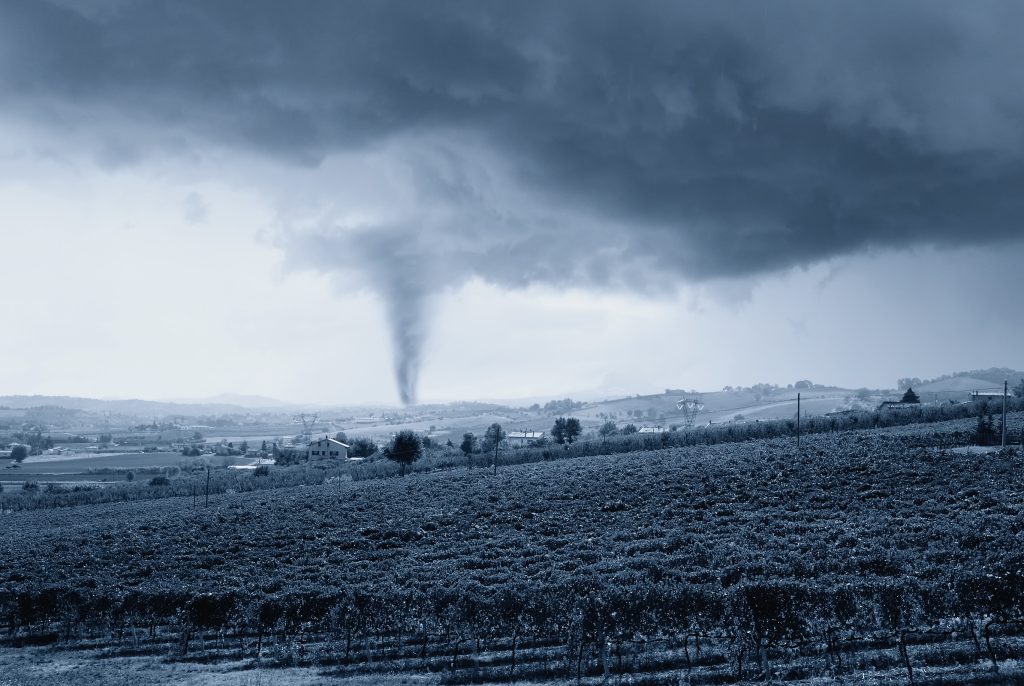
a nearby tornado from a vineyard

By: Trevor Troyer, 
Vice President 
Agricultural Risk Management, LLC

  Does crop insurance cover losses to my vines? What can I do about my vine loss? Half of my vineyard got burned down due to wildfires. I have major freeze damage on my Vitis vinifera my natives are fine though. What can you do? Crop insurance only covers losses to your grape crop not your vines. Is there any vine coverage or assistance for that?

  Yes there is! I get a lot of questions on this so thought to address it in this article.

  The Agricultural Act of 2014 (the 2014 Farm Bill) authorized the Tree Assistance Program (TAP) to provide financial assistance to qualifying orchardists and nursery tree growers to replant or rehabilitate eligible trees, bushes and vines damaged by natural disasters. – fsa.usda.gov. This is not administered through a crop insurance agent or agency. This is not an insurance product. It is disaster assistance administered through the USDA.

  There are limitations to this program on who can receive money. A lot of large vineyards will not be eligible. There is size limit of 1,000 acres. There is an income limit as well. In applying the limitation on average adjusted gross income (AGI), a person or legal entity is ineligible for payment under TAP if the AGI of the person or legal entity for the relevant tax years exceeds $900,000. – FSA Disaster Assistance Tree Assistance Program

Ok what is considered an eligible loss?

•    A requisite death loss must first be sustained; a stand of eligible trees, bushes, or vines must have suffered more than a 15 percent mortality loss (after normal mortality) due to a natural disaster;

•    Mortality loss on a stand of eligible trees, bushes, or vines is based on:

•    Each eligible disaster event, except for losses due to plant disease; and

•    For plant disease, the time period as determined by the FSA for which the stand is 
infected.

•    The loss must not have been preventable through reasonable and available measures;

•    The loss must be visible and obvious to the FSA representative; if the loss is no longer 
visible, FSA may accept other loss evidence and determine whether that other evidence 
substantiates that an eligible loss due to natural disaster occurred; and

•    FSA may require information from a qualified expert to determine extent of loss in the 
case of plant disease or insect infestation. – fsa.usda.gov 
Payments are calculated as follows: 
For tree, bush, or vine replacement, replanting and/or rehabilitation, the payment calculation is the lesser of the following:

•    65 percent of the actual cost of replanting, in
excess of 15 percent mortality (adjusted for normal mortality), and, where applicable, 50 percent of the actual cost of rehabilitation, in excess of 15 percent damage or mortality (adjusted for normal tree damage and normal mortality); or

•    The maximum eligible amount established for the practice by FSA. -fsa.usda.gov

  What you do as a farmer is important. Whether your grapes are going to make wine or juice it is something that feeds and nourishes us, both physically and spiritually. I sometimes hear from growers that they don’t want assistance whether it is crop insurance or disaster relief. I understand. Our farmers and ranchers are independent people that, most often, can handle what mother nature throws at them. Our tax dollars go into these USDA programs, to me, it’s alright to get help when needed. Why shouldn’t you get some of your tax dollars back to keep you growing. It might seem like a pain to fill in the applications etc. The FSA employees are dedicated to helping you. Take advantage of what is available, you paid for it.

  The Tree Assistance Program is administered through the USDA Farm Service Agency. To find your local FSA office, go to farmers.gov. You can also find more information at disaster.fsa.usda.gov.

Chateau Chantal: A Unique Experience in Northern Hospitality

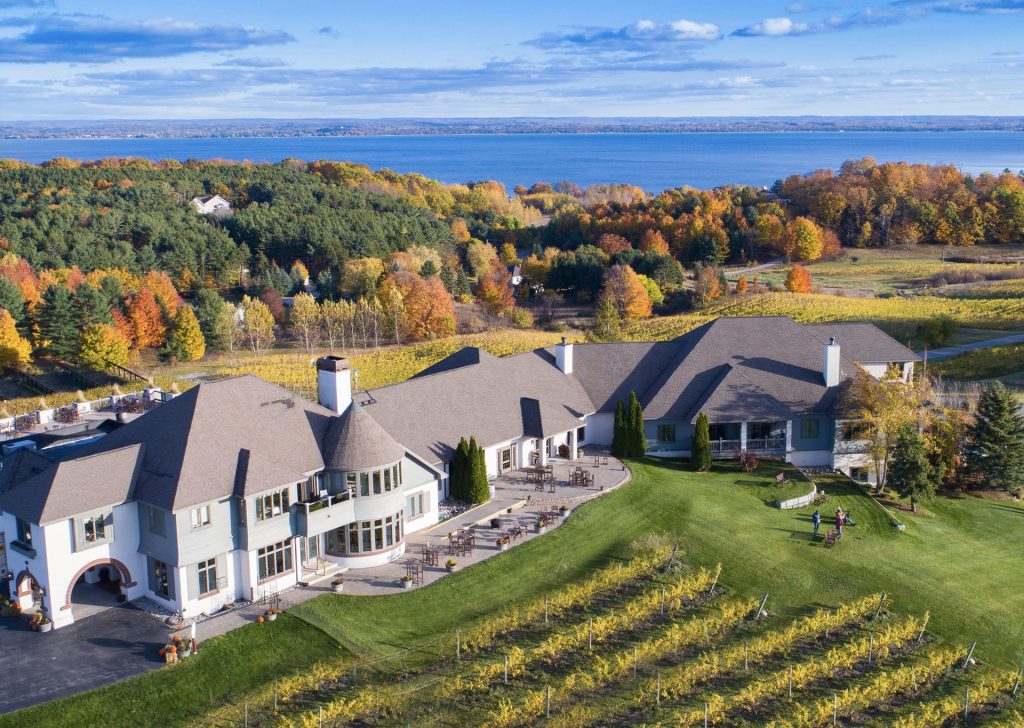
chateau chantal facade

 By: Nan McCreary

  Chateau Chantal, one of Northern Michigan’s earliest wineries, is raising the bar for wine lovers looking for more than just a wine tasting, but rather an immersive wine experience. Not only is the winery rated as one of Michigan’s best, but it combines a vineyard and a winery with spectacular views over Lake Michigan’s Grand Traverse Bay. There are also five-to-seven-course wine dinners, cooking classes, a luxury B&B, a Founder’s Trail and a tasting room with events that range from individual and group tastings to the weekly summer Jazz at Sunset experience.

  “There’s something for everybody here,” winemaker Brian Hosmer told The Grapevine Magazine. ‘Public expectations have changed; people are not visiting and buying cases like they used to. Rather, they’re coming for an experience. We’re responding to what’s happening in the industry today.”

  This commitment to inviting guests to enjoy a shared experience inspired French Canadian-American founder Robert Begin and his wife, Nadine, to purchase 60 acres of cherry orchards on the Old Mission Peninsula and build a European-style winery chateau. Robert, a businessman in the construction industry, and Nadine, a teacher, were a former priest and nun, respectively. Their years spent serving others provided a natural foundation for entering the hospitality industry. Between 1984 and 1991, they transitioned the property from cherries to grapes, planting their first grapes — chardonnay, riesling and pinot noir — in 1986. During this time, they completed plans for a French-style chateau, and in 1993, they opened their doors as a B&B and vineyard estate. In the following years, they added more rooms to the B&B and expanded the cellar and tasting room, paving the way for today’s agri-tourism industry. Chateau Chantal is the second-oldest winery on the Old Mission Peninsula (one of Michigan’s five AVAs). With its scenic vistas and friendly hospitality, it is one of the most popular wineries in the area.

  With the goal of providing an ultimate wine experience, it’s only natural that a primary focus of Chateau Chantal would be to offer quality wines to its visitors. And, despite the northern climates, excellent wines by anyone’s standards are available in Michigan. “The lakes make it possible,” Hosmer said. “We’re located between the East and West Grand Traverse Bays — two large bays on Lake Michigan — and the water acts as a buffer to the cold temperatures. In the summer, the water warms up, which extends the growing season. Even in the winter, the water stays warm and radiates the heat inland. Also, we get a lot of snow, which acts as insulation.” With this terroir, Chateau Chantal can grow Vitis Vinifera grapes, including riesling, chardonnay, pinot noir, pinot grigio, pinot noir, pinot blanc, cabernet Franc, Gewürztraminer and Blaufränkisch. Other wineries in the area are growing similar grapes.

  One of the favorite wines at Chateau Chantel is pinot gris. “These grapes do really well here,” Hosmer told The Grapevine Magazine. “The sandy soils and the cool climate push really bright aromatics out of the glass, with more floral flavors than you’re used to seeing.” Also popular are two red blends: Naughty, a blend so versatile that it will pair with simple fare like burgers and pizza, as well as seafood; and Nice, a semi-sweet that, when chilled, makes a great warm weather sipper. 

  Besides still wines, Chateau Chantal makes four sparkling wines, including a semi-dry they’ve made since the 90s. Recently, they began producing the sparklers in-house rather than at another winery. To offer still more variety to its visitors, the winery collaborates with a 55-acre vineyard in Mendoza to produce a rich, red malbec.

  For some, the star of Chateau Chantal’s line-up is its ice wine. Ice wine is made from grapes picked — by hand — while frozen on the vine and then pressed when they’re still frozen. The result is an incredibly sweet and fruity wine that’s highly valued among some wine connoisseurs. Michigan is one of the few regions in the world able to produce ice wine. Making ice wine is, in fact, a risky proposition. The grapes need a long growing season to ripen and a cold spell to freeze. If temperatures are too warm, the grapes won’t freeze. If the freeze is too severe, then no juice can be extracted. Chateau Chantal is among Michigan’s oldest ice wine producers and has been making the “liquid gold” since the early 1990s. Typically, the Chateau makes ice wine from riesling grapes, and in some years, it can make juice from cabernet Franc. The wines are always in demand. “Making ice wine is tricky,” Hosmer said. “Sometimes we have to wait until January so that it’s cold enough to pick the grapes, and then we may be walking in one to two feet of snow.” “We’ve had years where the temperature didn’t cooperate, but in my 15 years, we’ve only had to skip two.”  This year, Chateau Chantal celebrated its fourth annual Ice Wine Festival, a day-long event where families enjoy snowman building, snowshoeing through the winery’s walking trails, roasting treats by an open fire pit and, for adults, samples and flights of the different varieties of ice wine. The event is billed as a celebration of the winery’s “unique ability to grow, harvest and produce one of the rarest products in the wine industry.” 

  For Chateau Chantal — and their neighbors on the Peninsula — the challenge to quality winemaking is to produce consistency in the wines when there is so much variation in vintage. In general, warmer climates tend to yield more consistent harvests. Napa, for example, may experience a five percent variation in heat accumulation, whereas the vineyards at Chateau Chantal can have plus or minus 30 percent swing from average in any given year. “Our viniculture depends on the vintage and what comes through the door,” Hosmer explained. “We have beautiful years for every grape because we grow so many varieties; we may have a ripe cabernet Franc and pinot noir in one year, aromatic whites in cool years, and everything in between. We just need to figure out the best way to get the best version of what the grapes give us.” Intervention in the cellar may include adding tartaric acid to adjust the pH, playing with different yeasts or treating the must with malolactic fermentation. “It’s really important to understand both warm- and cool-climate winemaking,” Hosmer stated. “Every year is different.”

  As Chateau Chantal looks to the future, the winery — like many others around the world — is exploring options for new varieties that may be more adaptable to climate and resistant to disease. Currently, Chantal is working with a group of investors that brought four new grapes from Germany’s Geisenheim and Freiburg breeding programs to custom grafting specialists, Amberg Grapevines.

  In Clifton Springs, New York, the varieties are monarch, a frost-hardy grape that is resistant to powdery mildew and downy mildew; muscaris, a disease-resistant grape that’s a good choice for sparkling wine; helios, resistant to both powdery mildew and botrytis and similar in flavor to Müller-Thurgau; and johanniter, a white grape that’s resistant to frost and mildew. All four grapes are children of the riesling grape and have been crossed and recrossed with vitis vinifera rootstock to create varieties that are 99 percent vitis vinifera and one percent hybrid. 

  Two years ago, Chateau Chantal planted the first commercial plantings of all four grapes after quarantine and will be ready to make trial wines with the grapes next year. “We’re looking for wines that may be of interest to wine lovers, and easier to grow in a more sustainable fashion,” Hosmer told The Grapevine Magazine. “Breeding grapes for genetics is becoming more sophisticated all the time, and I think we’re going to see more and more varieties coming out.”

  In addition to experimenting with new grape varieties, Chateau Chantal is applying advanced principles of soil management into its vineyard practices, a farming system they introduced 20 years ago. As Hosmer explains, this practice involves adding compost to the soil, which provides a direct input of organic matter that improves soil health. “With the compost, we build a biological population where fungi and bacteria continually cycle nutrients so they are available throughout the year rather than just when we add them,” Hosmer said. “We continually monitor this population and change the compost mixture as needed.” Not only does this limit the need for fertilizer, but soil management also plays a key role in fruit development and can impact the quality properties of grapes and wine.

  The vineyard team also plants cover crops that add nitrogen to vines, as well as organic compounds that provide nutrients or aeration to the soil. According to Hosmer, soil management can also play a role in water retention. For example, in areas where there is a low water table, the cover crops will create a canopy in the soil to maintain moisture. “Our sites are very diverse, so we adapt depending on the availability of water at the time,” he said. “This buffers the extremes, so plants do well in dry periods, as well as in wet periods.”

  Driven by technology as well as hospitality, Chateau Chantal is well-poised to accommodate the growth of tourism in Michigan. In the winery, the Chateau is expanding its capacity to meet the growing demand for its wines. Currently, they produce 20,000 to 25,000 cases per year, with distribution in Michigan, Indiana, Ohio, Wisconsin and Illinois. In the hospitality sector, the founder’s daughter, Marie-Chantal Dalese, has taken the reins of the company to continue her parents’ legacy of offering a premiere wine experience to guests. In 2021 and 2022, the Chateau Chantal B&B was named one of the “10 Best Wine Country Hotels” by USA Today. Joe David, author of “Gourmet Getaways – 50 Top Spots to Cook and Learn,” wrote, “An American version of a modern Loire Valley chateau, Chateau Chantal is more than just another stunning bed-and-breakfast – it is a retreat for gourmets who seek a food and wine holiday.” 

  Indeed, at Chateau Chantal, there is something for everybody. Whether you prefer dry wine, sweet wine or sparkling wine, a spectacular setting overlooking vineyards and the vast expanse of Grand Traverse Bay, a six-course wine dinner with wine pairings, a hands-on themed cooking class or a night or two of luxury in a French-style chateau, any or all of the options are available to the adventurous wine lover interested in totally unique wine experience.

For more information, visit Chateau Chantal at www.chateauchantal.com

Applying Fertilizer to Vineyards After Harvest 

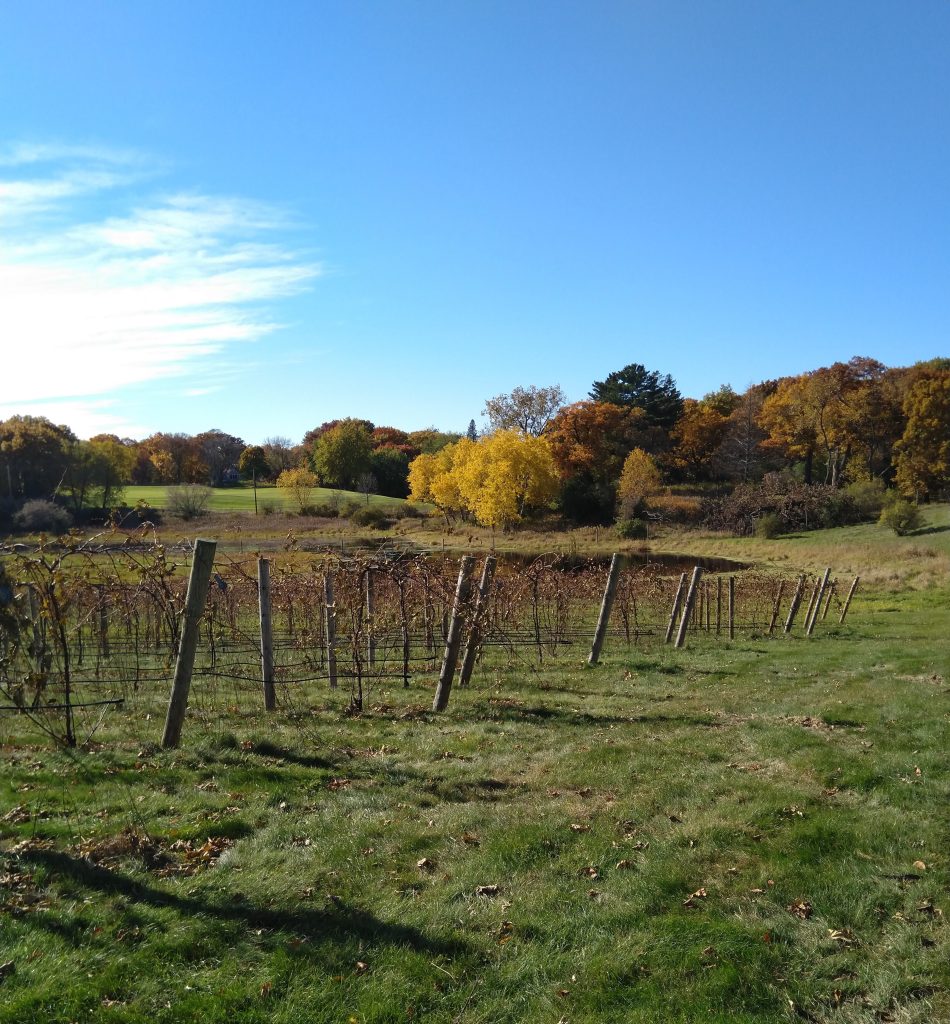
vineyard on fence

By: Annie Klodd, University of Minnesota Extension

Throughout the growing season, we see our grapevines grow and change immensely. Berries turn from green to red, and shoots grow from inches to feet in a matter of weeks.

  What we do not see is all the behind-the-scenes work – the vines are transporting numerous nutrients from the soil to the canopy, and then moving them from the leaves to the fruit during ripening. Then we harvest that fruit, removing a portion of the vines’ nutrients. Grapevines are in their most depleted state in the fall and early spring.

  To keep the vines productive over their lifespan, we do tests to see if the soil needs more nutrients to replace those lost. Based on those tests, we may add critical amendments to the soil. On the flipside, if the soil is already rich in key nutrients, soil tests save money and the environment by telling us when fertilizer is not needed.

  Some growers wish to use the fall as a time for applying nutrients. Harvest is over, but it is too early to prune. It seems like a good opportunity to check something off the to-do list. Before you place your fertilizer order, you show know: What nutrients your vineyard needs, how much is needed, and whether those nutrients are best applied in the fall or the spring.

Reasons to Consider Fertilizing After Harvest

  First, convenience. Other vineyard tasks are done for the year. It is too early to begin dormant pruning. Growers usually have more spare time now than they do in the spring. That is, if they are not tired of being in the vineyard.

  Secondly, grapevine biology. From the grapevine’s point of view, it is in one of its most nutrient-depleted states immediately following harvest, and in the early spring. This is because much of the nutrients it has accumulated have been used up to produce fruit, and that fruit has just been removed from the system.

  Third, logistics. In temperate climates like my area in Minnesota, the soil is wet and spongy in the spring and dry and firm in the fall. It is logistically easier to apply fertilizer in the fall when the ground is dry but not yet frozen, compared to the early spring when melting snow may make the vineyard impassable.

  Applying certain fertilizers in the fall can give the vines a healthy start in the spring. However, one nutrient in particular is best applied in the spring – nitrogen, due to its tendency to leach out of the system. Read on for suggestions on when to apply nitrogen.

How to Apply Fall Fertilizers

  First, do a fall soil test, especially if it has been over 5 years since your last one. Calculate your fertilizer rates and the type of fertilizer based on soil test and foliar test reports. Foliar tests need to be taken at bloom or veraison, but soil tests can be taken in the fall. 

  I cannot understate the importance of soil and foliar nutrient testing. These tests are the best way to understand what the soil is lacking, what it has plenty of, and how well the vine is taking up each nutrient. If nutrient testing seems intimidating, just contact you state university soil testing lab or a private lab – they will tell you how to proceed. It’s easy!

  Test your soil during or shortly after the harvest season. Give yourself 2-3 weeks between when the sample is submitted and the likely first hard frost, in order to receive the results and make an appropriate fertilizer application before the ground is covered in snow.

  After receiving your test report, enlist the help of an Extension Educator or trusted consultant to decide what nutrients are needed and at what rates. Key nutrients include phosphorus, potassium, calcium, magnesium, boron, and iron, amoung others. Nitrogen is also very important, but is usually not included in soil tests. Your test report will also include soil pH, organic matter percentage, and possibly your soil’s cation exchange capacity.

  Once you know what to apply and how much, you are ready to go. The most common method of granular fertilizer application is broadcast application using a targeted vineyard spreader. This type of spreader applies it under the rows, avoiding the grass aisles, maximizing efficiency and minimizing cost. There is generally no need to fertilize the grass, as most vine roots are located in the rows.

  Some growers prefer to incorporate their fertilizer through cultivation or banding it about three inches deep using tillage equipment. The advantage is better incorporating nutrients that are not very mobile in the soil, like potassium and phosphorus. The challenge is that it can cut some of the grapevine roots and requires more niche equipment.

Acquiring a Vineyard Fertilizer Spreader

  Most common fertilizer spreaders used in agriculture will broadcast the fertilizer in a certain radius behind the machine, which will of course apply the product to both the grass and vine rows. Applying fertilizer only to the rows will dramatically decrease the amount of product needed.

  Specialized vineyard or orchard fertilizer spreaders are available commercially but may be cost-prohibited for smaller vineyards. One work-around for this would be to hire a custom fertilizer applicator.

  A second solution would be to make your own. A general-use broadcast fertilizer spreader can also be retrofitted to target vine rows. This can be done by attaching a V-shaped bar on the back of the spreader where the fertilizer is ejected, or otherwise engineering a way to redirect the fertilizer at an angle so that it only hits the ground beneath the vines. In Minnesota, some growers build and attach a wooden “V” onto the back of a plastic spreader. Wood and metal can both be used for this purpose. Of course, the methods of retrofitting a spreader will depend on the spreader you have and what tools are available to you.

Why not Apply Fall Nitrogen?

  When it comes to nitrogen applications, it is best to wait until spring. For cold climate grapes, which are my specialty, it is very important to eliminate or minimize nitrogen applications in the fall. Avoiding late-summer or fall nitrogen application is especially critical while the vines are still actively growing.

The first reason is that nitrogen application in the fall can significantly increase the vine’s chances of severe winter injury.

  After harvest, grapevines need to begin senescing in preparation for the winter. They stop growing, harden off green tissue, and move their energy and nutrients from the canopy down to the roots for winter storage. If nitrogen is applied in the fall, it encourages the vines to form new shoot growth late in the season, which is not a good thing. This interrupts the senescence process and makes the vines less prepared for winter and therefore more vulnerable to winter injury.

  Secondly, nitrogen applied in the fall may vanish before the spring.

  Nitrogen is highly mobile in the soil, meaning that it can be easily lost to the environment with water movement through the soil. Nitrogen can also be lost through volatilization – gaseous loss to the atmosphere. When water carries nitrogen down below the root growing zone, the plant can no longer reach it and the nitrogen is lost to groundwater. This process is called “leaching.”

  If nitrogen is applied in the fall, it is more likely to be lost to the environment than to be taken up by the plant. This is because the roots are not actively absorbing nutrients. However, during the active growth season in the spring, the roots are actively growing and nutrients are in high demand by the plants. Fall-applied nitrogen is likely to be gone before the next growing season starts.

What about other nutrients, like phosphorus and potassium?

  Phosphorus and potassium, two key nutrients for grapevines, are less mobile in the soil and are less likely to be lost by the spring if applied in the fall. Applying these key nutrients in the fall will give vines a ready source of nutrients in the spring.

  Many common “all-purpose” fertilizers (like “N-P-K”) and micronutrient sources contain some level of nitrogen. Therefore, it may be challenging to completely avoid fall nitrogen application if other nutrients are also being applied, particularly if using organic fertilizers. If this is the case, select a fertilizer with very low N concentrations relative  to the P and K concentrations, such as a 10-20-20 or 5-10-10 and wait until the leaves have fallen off the vines before applying it. Some P and K fertilizers are available that do not contain nitrogen. Consult with your fertilizer supplier about specific product options based on your soil test results.

  Most of the vineyards I work with have high levels of phosphorus and potassium and do not need to add more. A recent review of Minnesota soil test reports from University of Minnesota Extension showed that many of our cultivated soils have excessive levels of potassium. Excess potassium threatens local waterways, as it can run off from agricultural fields and residential properties. Always consult your soil test results before adding nutrients that your soil may not need.

  Here are some key tips for fertilizing in the fall:

1.   Minimize the amount of nitrogen applied in the fall; save it for the spring.

2.   Granular fertilizer is best applied as a broadcast directed to the vine rows.

3.   If possible, avoid fertilizer application to the grassy aisles.

4.   Calculate fertilizer needs based on soil and foliar tests. Only apply nutrients if needed.

Sources:

  Nitrogen Fertilization in the Vineyard. Dr. Joe Fiola. University of Maryland Extension, 2021.

  Nutrient Management for Fruit and Vegetable Crop Production. Dr. Carl Rosen. University of Minnesota Extension, 2005.

What Records Do You Need at the Time of a Claim?

By: Trevor Troyer, Vice President Agricultural Risk Management, LLC

So, you have opened up a claim in your vineyard due to freeze/frost damage. What’s next? When do you get paid? How much do you get? When is the adjuster going to come out? How does the claims process work? What do you need to provide to the adjuster that shows your loss?

  I wrote a month ago about when you should open up a claim. To summarize, you should open up a claim any time that you might have a loss. You should not wait to see if you have a loss but open the claim up right away. The loss has to be caused by an insurable trigger.

  The Causes of Loss per Grape crop provisions are:

1)   Adverse weather conditions;

2)   Fire, unless weeds and other forms of undergrowth have not been controlled or pruning debris has not been removed from the vineyard;

3)   Insects, except as excluded in 10(b)(1), but not damage due to insufficient or improper application of pest control measures;

4)   Plant disease, but not damage due to insufficient or improper application of disease control measures;

5)   Wildlife;

6)   Earthquake;

7)   Volcanic eruption; or

8)   Failure of irrigation water supply, if caused by an insured peril that occurs during the insurance period.

  Adverse weather conditions could be anything that could cause damage to your grapes. For example; drought, frost, freeze, excess moisture etc. Wildlife could be bird damage, deer etc. Fire would also include smoke taint as that is a result of a fire. Crop insurance does not cover, inability to sell your grapes because of a buyer’s refusal or contract breakage. It also doesn’t cover losses from boycotts or pandemics. Overspray or chemical damage from a neighboring farm is not covered either.

  An average of your historic production is being covered per acre per variety. You can cover 50% to 85% of your production average. Obviously, the premium for 50% is cheaper than the premium for 85%. If you chose 75% coverage then you have a 25% production deductible. If you have a 4 ton per acre average then you would be covered for 3 tons per acre. Your deductible would be 1 ton an acre. You would have to have a loss over 1 ton per acre to have a payable claim.

  At the time you sign up for crop insurance you report your past production per variety and vineyard location. We do not need any weigh tickets, pick records, or sales receipts from wineries at this time to verify your production. You will be asked to show this year crop year’s production records during a claim. The adjuster may want to verify past production records as well. It is important that when we set up your production database with your history that you have records to prove the data.

  Per the Common Crop Insurance Policy – Basic Provisions; Production record – A written record that documents your actual production reported on the production report. The record must be an acceptable verifiable record or an acceptable farm management record as authorized by FCIC procedures. FCIC is the Federal Crop Insurance Corporation.

  Here are some of the items that may be needed for a claim. A. Supporting Records Settlement sheets, sales receipts, machine harvest records, certified scale records, pick records and final or year-end statements from a winery, cannery or processor must indicate net paid tons of Grapes delivered by variety. Converting gallons of wine to tons of grapes does not qualify as acceptable records. – Crop Insurance Handbook (CIH) 2023. These records would also be needed to support your historical average.

  It is important to keep these items for the future as well. It is not enough that you have your tonnage written down. You need weigh tickets, receipts etc. These documents need to be verifiable, not in a spreadsheet on your desktop computer.

  It can get tricky if you are “vertically integrated” and grow grapes and make wine yourself. You might not have third party weigh tickets or sales receipts. Some wineries sell some of their grapes and make wine with the rest. Some of the records for the adjuster could be sales receipts and the rest would need to be certified scale weight records.

  The scale has to be certified though.

B. Certified Scale Weight Records  Certified scale weight records alone are considered to be acceptable production records, unless the CP requires a pre-harvest appraisal and/or records of sold production. Certified scale weight records must be legible and include all of the following to be acceptable.

1)   The insured’s name.

2)   The name of the crop.

3)   The date of harvest or the date weighed.

4)   The unit number or the location of the

      production.

5)   The practice, type, and crop year.

6)   The quantity/weighed production. For wineries that process their own grapes, the weight can be recorded on the form used for reporting to the Alcohol and Tobacco Tax and Trade Bureau. – Crop Insurance Handbook (CIH) 2023.

  There is a lot of information on what is an “acceptable verifiable record”, much more than I can put in one article. For the full information on what is acceptable you can look at the Crop Insurance Handbook, the Loss Adjustment Manual and the Grape Loss Adjustment Standards Handbook. You can find all of these at the USDA Risk Management Agency’s website at www.rma.usda.gov

  To run through the questions at the beginning. You have called your agent and opened up a claim. The adjuster will contact you in few days. They may want to see the damage right away or wait to see how much you harvested. I always recommend to vineyard owners to take pictures of the vineyard if the damage is visible. Once you harvest and production is verified by the adjuster, they will send the information in to be reviewed. Once approved you will be paid the difference of your guarantee (average of your historical production multiplied by your coverage level.)

  I cannot stress enough the importance of keeping good records.

Rules of the Road for Social Media Advertising, Influencers and Wine Brand Owners

By: Louis J. Terminello, Esq. and Brad Berkman, Esq.

The COVID-19 pandemic has had a profound impact on the world of beverage alcohol. As the reader knows, e-commerce sales of all alcoholic beverages, and especially wine, have grown exponentially. The reliance by the consumer on their computer is resulting in a war of attrition against the three-tier system, the legal doctrine of Tied-House and trade practice concerns.

  One significant and deeply affected business sphere is how marketers are using technology to create brand awareness. Clearly, the beverage alcohol advertising landscape is in a state of flux and change. The internet and social media, in particular, have had a profound impact on virtually all consumer goods but it seems that the boundaries of acceptable alcohol advertising are being expanded outward. More significantly, the impact of the ‘influencer’ in the alcohol sphere has become an important marketing tool for raising brand awareness and driving case sales. A simple search on YouTube will quickly reveal innumerable posts and videos on the effective use of social media and the influencer to promote wine brand awareness.

  In the world of wine, there is room for influencers at all levels. Although in different forms, past practice supports this contention. There is little difference to the wine marketer between wine writers of the past and the videographer of the present. Whether it be number of points given by Parker, or the number of followers of an influencer, the goal is to raise brand awareness and ultimately move boxes. Obviously, certain categories of influencers will be used to advertise and market high-priced single varietals or a unique Meritage. Lower priced, broad market and perhaps younger focused labels require a different type of influencer.  However, the use of an influencer and the commensurate social media campaign, if not properly designed and executed, could be perilous for the brand owner.

  The purpose of this article is to provide the wine marketer who may be considering the use of influencers with the basic guidance for the effective use of the “influencer” and social media in order to withstand the scrutiny of alcohol regulatory authorities.

TTB and the FTC

  The Alcohol and Tobacco Tax and Trade Bureau (“TTB”) promulgates rules for compliant labeling, advertising, and related trade practice matters. State(s) alcohol control boards possess the authority to promulgate and enforce their own similar rules within their borders.  The regulatory agencies are certainly known to the reader. There is another federal agency, less known to those in the industry, called the Federal Trade Commission (“FTC”), which the wine marketer should be aware of.

  The FTC is an independent agency within the federal government that is tasked with, in its own words, “…protecting consumers and competition by preventing anticompetitive, deceptive, and unfair business practices through law enforcement, advocacy, and education without unduly burdening legitimate business activity.” The FTC has stated publicly that it has the authority and ability to enforce alcohol advertising rules on various media including the social media and the use of influencers.

Trade Associations

  Historically, alcohol beverage producers self-regulated their advertising initiatives by adhering to the guidelines of three (3) influential producer associations. Those associations are: 1) The Beer Institute; 2) The Wine Institute and: 3) Distilled Spirts Council of the United States or DISCUS.

All three associations have published guidelines for brand owners of each commodity to follow as minimal industry standards.

  The FTC has adopted these rules and advises that alcohol advertisers should comply with these standards. The FTC has openly stated it can file enforcement actions against brand owners that disregard the adopted standards. It is important to note that to date, the FTC has not often enforced these rules through administrative action. Given the changing nature of advertising and the “pushing of the envelope” by young influencers of acceptable standards it is wise to be familiar with them and work to be sure they are complied with.

  The main concern of the FTC is advertising that is intentionally or inadvertently directed to underage consumers and where the content of the advertisement may be of particular appeal to the underage drinker. Since this is a wine focused publication, we direct the reader to the short list below taken from the Wine Institute, which outlines best and responsible practices. Note that this is not a complete list, but highlights the most significant factors to bear in mind when constructing advertising content and in particular, overseeing the content of influencers broadcast on social media platforms.

Responsible Content

  Wine advertising shall not depict or describe in its advertising:

•    The consumption of wine for the effects the alcohol may produce.

•    Direct or indirect reference to alcohol content or extra strength.

•    Excessive drinking or persons who appear to be intoxicated or to be inappropriately uninhibited.

•    Any suggestion that excessive drinking or loss of control is amusing or a proper subject for amusement.

•    Any persons engaged in activities not normally associated with the moderate and responsible use of wine and a responsible lifestyle. Association of wine use in conjunction with feats of daring or activities requiring high degree of skill is specifically prohibited.

•    Wine in quantities inappropriate to the situation or inappropriate for moderate and responsible use.

•    Wine advertising should not depict or encourage illegal activity of any kind.

•    Wine shall not be presented as being essential to personal performance, social attainment, achievement, success, or wealth.

•    The use of wine shall not be directly associated with social, physical, or personal problem solving.

•    Wine shall not be presented as vital to social acceptability and popularity.

•    It shall not be suggested that wine is crucial for successful entertaining.

•    Wine advertisers should not Show models and personalities as wine consumers in advertisements who are or appear to be under the legal drinking age. Such models shall be 25 years of age or older.

•    Use music, language, gestures, cartoon characters, or depictions, images, figures, or objects that are popular predominantly with children or otherwise specifically associated with or directed toward those below the legal drinking age, including the use of Santa Claus or the Easter Bunny.

•    Be presented as being related to the attainment of adulthood or associated with “rites of passage” to adulthood.

•    Wine advertising shall in no way suggest that wine be used in connection with operating motorized vehicles such as automobiles, motorcycles, boats, snowmobiles, or airplanes or any activities that require a high degree of alertness or physical coordination.

•    Comparative advertising claims shall be truthful and appropriately substantiated and shall not be disparaging of a competitor’s product.

•    Wine advertising shall not degrade, demean, or objectify the human form, image or status of women, men, or of any ethnic, minority, religious or other group or sexual orientation. Advertising shall not exploit the human form, or feature sexually provocative images.

  It is important to point out that the three essential elements of brand advertising incorporated into the Wine Institute, Beer Institute and DISCUS rules, which are designed to ensure that a particular brand does not appeal to underage consumers, are:

•    No more than 28.4% of an audience for an advertisement is to consist of people under 21 years of age.

•    Content of the advertisement should appeal to individuals over 21 years of age-conversely; content should not appeal to individuals under 21 years of age.

•    Models and Actors employed should be older than 25 years of age and reasonably appear to be over 21 years of age.

  When deciding on whether to partner with an influencer, wine marketers should scrutinize the past content of the influencer as well as thoroughly analyzing the demographics of the influencers target audience.

  Although the Wine Institute is silent on this issue, the DISCUS rules state that the 25 year old threshold for models and actors does not apply to athletes, celebrities, spokespersons and influencers of legal drinking purchase age that are generally recognizable to their intended audience (see Code of Responsible Practices Distilled Spirits Council of the United Sates). The influencer does not necessarily have to be older than 25 years of age.

  Beverage alcohol manufacturing, production, taxation, Tied-House, and related regulatory matters are complex. Trade practice and advertising rules, standing alone are also detailed and complex. As this article suggests, the internet, social media, and the influencer are acting as disrupters of an orthodox system of doing business. Of course, the new media and the new media stars offer tremendous opportunities to raise brand awareness that translates to more sales. The best advice here is be aware of acceptable and self-imposed industry standards and make them part of an effective social and influencer media driven campaign. The FTC is poised to enforce these regulations and likely will do so the more and more influencers test the acceptable limits of alcohol beverage advertising. As wine brand marketers, strive for compliance to stay off the radar of the regulatory authorities. To do otherwise, could be costly.

Grapevine Red Blotch Virus: Update on Disease Epidemiology

close up of a grape tree

By: Judit Monis, Ph.D.

Vineyards in the fall, often display a palette of colors that differ from those expected during senescence (yellow leaves that turn tan).  In many cases, the whole vine may turn completely red or perhaps patchy red spots are interspersed with green color that have a blotchy or patchy appearance is present.  Sometimes all vines in a vineyard display bright colors but in other cases, a few vines may display color or have different ranges of red (or yellow) that are interspersed with healthy senescent vines.   Generally, the abnormal colors observed in the fall season are caused by some sort of stress.  One important stress factor is the presence of disease-causing agents or pathogens. The most likely cause of foliar discoloration is the presence of detrimental plant viruses.  Although many different viruses cause vine symptoms in the vineyard, this article will focus on an update on grapevine red blotch disease caused by Grapevine red blotch virus (GRBV).

The Virus that Causes Red Blotch Disease

  Based in molecular and structural characterization, GRBV has been placed in the Grablovirus genus, within the Geminiviridae family.  With the exception of Grapevine fanleaf and red blotch, Koch’s postulates have not been completed with most of the disease-causing grapevine viruses.   To complete the Koch’s postulates, a pathogen must be isolated in pure form from a diseased organism, later the pathogen (virus in GRBV’s case) must be introduced to a healthy organism (grapevine plant), and the newly infected plant must show the same symptoms as the originally infected one.  Clearly Koch’s postulates are important because they prove the cause and effect of a pathogen causing a specific disease.  Dr. Marc Fuchs team at Cornell University tweaked the definition of Koch’s postulates to prove that GRBV causes grapevine red blotch disease.

  The work was done using sophisticated recombinant DNA technology to introduce the virus genetic material into tissue cultured grapevine plants.   Time will tell, after the plants grow, if the infected vines also display the detrimental effect of the virus in organoleptic qualities of the fruit (i.e., reduction of sugar, mouthfeel, etc.).

Red Blotch Symptoms

  Grapevine red blotch virus infection displays leaf discoloration which usually appear spotty or blotchy in vines. The symptoms of GRBV infection become more pronounced in the vineyards in the fall season.   However, these symptoms can be indistinguishable from those caused by leafroll viruses, especially in red-fruited varieties when rolling of leaves are not present.  In red fruited varieties, GRBV infected vines can display red veins, but red veins have also been observed in non-infected vines, and many red-blotch infected vines do not display red veins.   Therefore, red vein symptoms cannot be used as a diagnostic tool.   In white-fruited varieties red blotch diseased vines displays yellow blotchy discoloration in leaves. While the symptoms of leafroll and red blotch can be confused, these diseases are caused by different types of viruses that can often be found in mixed infections, complicating diagnosis and control.  Although, the change in colors of the leaves in the fall is a tale-tell of virus infection, the most important negative effect of both leafroll and red blotch virus-infection is the reduction of sugar in fruit resulting in reduced Brix values and delayed fruit maturity.

  Two different strains (scientifically known as clades) of GRBV have been reported.  However, no differences in their biology or effect on symptoms of these different strains in the vineyards have been observed so far.  The symptom expression of GRBV infected vines is affected by climatic conditions and the author has noted differences in the effect on sugar reduction in sunnier and warmer areas.  For example, California coastal areas with more fog and low sunshine levels yield fruit with sugar concentration than the same grape clones grown inland with more sun exposure.

Transmission and Spread of GRBV

  In June, I attended a seminar series organized by the Napa Valley Technical Group. The presentations by Marc Fuchs and two of his students focused on the ecology, transmission, and epidemiology of Grapevine red blotch virus.

  Researchers at Cornell University and the University of California have reported that the three-cornered alfalfa hopper (Spissistilus festinus) can transmit GRBV in greenhouse and laboratory conditions.  Although, the three-cornered alfalfa hopper has been found in vineyard blocks where red blotch disease has spread, grapevine is not the preferred host for Spissistilus festinus. This insect prefers to feed on legumes, grasses, and shrubs.  Furthermore, the insect is not able to complete its reproductive cycle in commercial grapevines.  Based on the different strains of GRBV found in wild grapes and nearby commercial vineyards, research has shown that infection of wild grapes is probably due to the movement (transmission) of virus from commercial vineyards. Because the three-cornered alfalfa hopper can complete its reproductive cycle in wild grapes, wild grapes grown in the riparian areas become a potential source of infection into commercial vineyards.  While research continues to determine if other vectors are capable of transmitting GRBV it is clear that the rapid expansion of this virus in vineyards was due to propagation and grafting of cuttings from infected vines.  This also explains the arrival of GRBV to many countries in Asia, Europe, and South America where GRBV had not previously been reported.  

Transmission of GRBV to Healthy Vines in the Vineyard

 To determine the efficiency of natural transmission of GRBV in a vineyard, the Cornell team conducted an experiment with sentinel vines (GRBV-free tested).   In 2015, 36 sentinel vines were planted in a vineyard with a high density of GRBV-infected vines.   Annually, the team performed testing using the polymerase chain reaction (PCR) as well as visual inspection recording the symptoms of each vine.  The results showed that the virus was first detected by PCR in sentinel vines in 2018 (three years after the GRBV-free vines were planted).  However, these vines displayed symptoms one year after the virus was detected.  By 2021, 16 out of the 36 sentinel vines tested positive but only 13 of these infected vines were symptomatic.  The data presented suggests a lag period between GRBV infection and its molecular detection and further symptoms expression.  In contrast, the researchers report a much shorter time period for detection and symptoms expression when GRBV-infected material is planted in a vineyard. The team theorizes that a lag on symptom development in a vineyard may also be due to the planting of vines that were grafted onto infected rootstocks.  Field experiments with infected rootstock grafted onto healthy scion would need to be performed to validate this theory.  In the many years I have been performing testing on both rootstock and scion grapevine material for my clients, I have yet to receive a positive result. Furthermore, past work in my laboratory showed the quick transmission (less than one month!) of GRBV from infected scion to healthy rootstock.  I am curious and would welcome readers to contact me with information on positive GRBV infected rootstock findings. 

Conclusions

  The best way to avoid disease in the vineyard is to plant disease tested plant material.  Nursery propagated material must be tested prior to grafting, making sure that both the rootstock and scion material are sampled.  It is important to note that the lack of symptoms in a vine does not always correlate with a healthy diagnostic result (rootstock varieties as well as non-grafted vines are usually asymptomatic), so it is best to test a statistical sample of the nursery propagated material to be sure of its health status.

  My experience with both field and laboratory sampling techniques can provide help during your vineyard development projects.

  Judit Monis, Ph.D. provides specialized services to help growers, vineyard managers, and nursery personnel avoid the propagation and transmission of disease caused by bacteria, fungi, and viruses in their vineyard blocks.   Judit (based in California) is fluent in Spanish and is available to consult in all wine grape growing regions of the word.  Please visit juditmonis.com for information or contact juditmonis@yahoo.com to request a consulting session at your vineyard.

Bernhardt Winery: New World Winery, Old World Wines

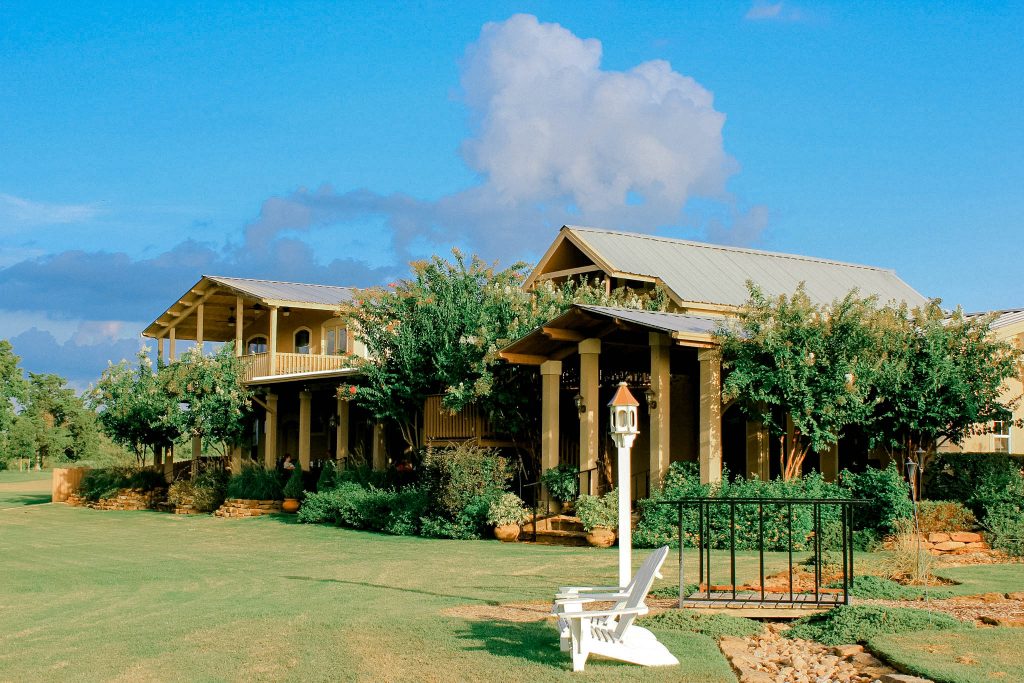
facade of a winery

 By: Nan McCreary

Deep in the heart of Texas, located in the piney woods and rolling hills surrounding Plantersville, is a small boutique winery that offers visitors not just an opportunity to taste quality Texas wines in a picturesque setting but also to experience the wines of the ancients, be it Mavrud from Bulgaria or Limiona from Greece.

  “It’s fascinating to me that these are the grapes enjoyed thousands and thousands of years ago by ancient ancestors like Spartacus, Aristotle, Homer and Alexander the Great,” winery founder Jerry Bernhardt told The Grapevine Magazine.  “I’m always sniffing out indigenous wines that are experiencing a revival today and adding them to our selection.”

  Bernhardt’s “selection” includes 33 varieties of traditional wines sourced primarily from grapes and juice throughout Texas, as well as the seven ancient grapes in its Antiquity Wine Curation.  The Texas wines fulfill Bernhardt Winery’s mission “to provide our customers with quality wines and a fun tasting experience in a warm environment,” while the Antiquity series takes the love of wine to an entirely new level.  That mission is “to find indigenous varieties as close to the genetic original and grown in the same terroir as in ancient times.  We hope to recreate a shared communal experience of our ancestors such as love, passion, family and celebration through the tasting of these age-old wine.” Based on the number of visitors to the winery and wine sales and awards, Jerry Bernhardt and his team have surpassed expectations in both missions.

  Bernhardt opened his namesake winery in 2005 as, he laughed, “a retirement project gone wrong.”  He had always wanted to know more about wine, he said, so as a former engineer and builder, he understood that the best way to learn was to “just go do it or build it.”  And so he did. He and his wife began making home-made wine, and he spent two years interning with the pioneering winemakers in nearby Fredericksburg, the Texas Hill Country home to over 50 vineyards and wineries today. One of his mentors was the French-born Bénédicte Rhyne, winemaker at Kuhlman Cellars in Stonewall and international wine consultant. He and Rhyne still maintain a partnership today.

  When Bernhardt opened his doors, he offered four wines, all with grapes or juice sourced from Texas vineyards:  A red wine (Cabernet Sauvignon), a white wine (Blanc du Bois), a Rosé (made from red and white grapes) and a Port, a barrel-aged Cabernet Sauvignon fortified with brandy and aged for a year in a proprietary barrel. The first year’s production was 900 gallons, or around 370 cases. Today, Bernhardt produces 15,000 gallons annually, or over 6,100 cases.

  As he’s grown, Bernhardt has not strayed from his commitment to produce quality wines. In his quest for excellence and diversity, he diligently oversees and harvests Blanc Du Bois and a few rows of Black Spanish from 1.5 acres on his 20-acre property, and sources the rest from reliable, tried-and-true vineyards. He and his winemaker, his nephew Jonathan Schrock, select grapes and juice carefully, always based on quality.  “What we produce depends on the year,” Schrock explained.  “In Texas, we have good years and bad years.  If the quality is there, we may source 100 percent from an area.  But if it isn’t, we will go elsewhere. It all depends on the quality, and whether we can get it here safely without oxidation or other flaws.”

  While the wines Bernhardt produces in Texas require careful oversight, the bottles shipped from Bulgaria and Greece come from trusted winemakers who have benefited from financial support, training and promotional opportunities provided by their local government. Since visiting the Plantersville winery in 2017, the Bulgarians have developed a solid relationship with Bernhardt, and are eager for Americans to experience the quality of wines coming from these ancient regions. As importers, Bernhardt Winery simply promotes and sells the wine. “They are so good,” he said, “they fly off the shelves. We sell out of everything we import.”

  Currently, Bernhardt imports 30,000 bottles of wine annually in his Antiquity collection.  The Bulgarian wines include: Mavrud, regarded as the one of the most highly esteemed wines in Bulgaria, with evidence of production 7,000 years ago, and possibly an ancient clone of clone of Mourvedre; Sauvignon Blanc, with origins believed to go back 1,000 years; Chardonnay, originally propagated on the Danube River plains by the Romans on their march to France; Rosé Inanna, regarded as the Queen of Heaven and the most popular goddess in all of Mesopotamia, and planted on the same Mesopotamian soil dating back to this ancient time; Cabernet Franc, native to the Loire Valley in France, and an up-and-coming grape that thrives in Bulgaria’s moderate climate; Sangiovese, more ancient than early Rome; and Syrah, an ancient grape with historical records dating back to 20 AD. The one grape from Greece in the Antiquity collection is Limniona, written about by Homer and Aristotle, and currently enjoying a revival in its home region of Thessaly, and increasing popular in Greece and abroad. Each bottle shares the story of the wine on the label.

  While Jerry Bernhardt is a big fan of the wines of Bulgaria — known for its diverse microclimates and soils favorable for quality wine production — importing these wines (and the Limniona) fulfills his passion for educating people about wine, plus he sees it as a wise business decision.  “I learned very

quickly that diversification is important,” he told The Grapevine Magazine. “With fires and freezes, and other variables, if you only have one source, you’re in trouble. Also, importing these wines gives us another level of top quality products to represent without having to invest millions to increase our capacity. We’re very comfortable where we are.”

  Comfortable, yes, but Bernhardt’s not ready to rest on his laurels.  He and winemaker Schrock are both self-described “creative” people and continue to push the envelope in search of new products, be they ancient grape varieties or different expressions of Texas fruit. “When we make blends, we may sit down and pull samples from 20 barrels,” Bernhardt said.  “We sniff and taste until we find the flavor profile we want.  We don’t blend based on what the wine’s going to taste like three or five years from now; My philosophy is to make wines that are designed to drink now.” So far, results of these “experiments” have proved to be very successful.  Schrock invented a wine called Black Zinnish, a blend of Black Spanish mixed with Texas Zinfandel, which has been extremely popular.  He also came up with Bayou Blend, a unique mix of Texas grapes, bottled in April this year and nearly sold out by July. Yet another best-seller is Cabernet Sauvignon Nouveau, a unique expression of the grape Cabernet Sauvignon that features new fruit without any aging.  “We want people to simply taste the fruit itself,” Schrock said.

  As Bernhardt moves into the future, customers can expect to taste new blends, particularly those that express differences in oak aging. “We’re using next-generation barrels (made with an oxygen permeable polymer shell) that can be used and reused, with oak coming from very high quality staves,” Schrock explained. “The staves are a ‘recipe,’ depending on the type of oak and the amount of toast we want. We get exposure from all four sides — not just one — and the staves are cut thinner to provide greater surface area for faster extraction.” As Texas grapes become more popular and availability increases, Schrock will have more and more opportunities to express his creativity. “My favorite part of winemaking is the oak aging,” he said. “Playing with the staves gives me such freedom.  I can choose staves to open up tannins or structure or I can use blends of new and old oak, for example. I can really experiment and take the wines to the next level. It’s a lot of work, but less work than moving wine from barrel to barrel.”

  Whether customers want to sample the best of Texas wines or imagine they’re sharing an ancient wine with Aristotle, Jerry Bernhardt promises guests a fun experience. The Tuscan-Style winery is a blend of old-world charm and modern luxury surrounded by 20 acres of rolling hills and 200-year-old pecan trees. It’s a perfect setting for enjoying a picnic, or any of the musical events the winery hosts on the weekends. “To sum it up, what’s important to us is to give people quality wine and a fun experience in a warm environment.  You can find it all here, from local Texas wines to wines from across the world that are tied to our ancestors.  For us, it’s all about a human connection.  The quality of our shared experiences nudges us emotionally, and that’s what we want to provide. We want to share a story…and share a relationship.”

For more information on Bernhardt Winery, visit www.bernhardtwinery.com

Best Practices for Soil Protection in the Vineyard

vineyard rows

By: Alyssa L. Ochs  

Soil protection practices help prevent erosion, improve grape quality, improve crop yield and aid environmental conservation. To practice sustainability and maintain a profitable business, it is necessary to find a balance between soil conservation and water consumption. Also relevant to the soil, fertilizer can make a big difference when growing grapes. Yet fertilizers, pesticides and herbicides have a way of attaching themselves to soil particles and moving from vineyard lands to nearby waterways. Therefore, it’s essential to choose your fertilizer products wisely and always use them as directed to maintain soil health and do your part to protect the environment.

Soil in the Vineyard

  Many issues affect the soil in vineyards across the country, including low nutrients, water flow and surface runoff. Gully, sheet and rill erosion are common in vineyards, as well as issues with slope length and steepness for drainage. From one vineyard to the next, variables to consider are crop rotation practices, the amount of rainfall and the type of soil in the region. Increasingly, vineyard operators feel the effects of climate change as they take care of the soil on their land and the grapes growing on it. This often comes in the form of more extended drought periods, consistently higher temperatures, longer hot seasons and increased wildfire risks.

  “Compaction from equipment driving through vineyards along the same tracks year after year can severely stunt vine root growth, which will, in turn, stunt vine growth, regardless of how much fertilizer gets thrown on the vines,” said Dr. Jodi Creasap

 Gee, Ph.D., BioSafe Systems’ assistant plant pathologist, viticulturist and technical sales representative for the Northeast. Since 1998, BioSafe Systems has been an innovator in environmentally sustainable practices and products to protect crops, water and operations in diverse industries. “In vineyards

where soil is already compacted or likely to be compacted, some growers may use a cover crop that develops deep taproots, such as a radish, which can break up the top six-to-eight-inch layers of soil.”

   Dr. Creasap Gee also told The Grapevine Magazine that soil pH could change dramatically in vineyards where workers apply fertilizer without regard for actual soil content.

  “Most grapevines require a soil pH between 5-7 for optimal uptake of nutrients from the soil, so in many vineyard sites, managing the soil pH is the most critical part of managing vineyard nutrients,” Dr. Creasap Gee said. “Therefore, consistent soil and petiole testing are so important. You need to know what’s going on in the soil, as well as what’s being taken up by the vines to monitor their health, like the blood tests we humans get during our annual physicals. In established vineyards, applications of nitrogen can reduce soil pH, leading to acidic soils and reducing nutrient uptake in the vines. Consequently, applications of lime may be necessary to improve the soil pH, and, as that will take time to affect soil pH, foliar feeds or foliar applications of fertilizers may be necessary. One of our products, CalOx FT, moves calcium through the vines with your chosen foliar feed product. CalOx FT uses ion channels to move calcium ions through the symplastic pathway, which is much faster than the typical apoplastic pathway. Applied as a foliar application, TerraGrow Liquid can improve vine health and bolster vine stress responses.”

Using Fertilizer in the Vineyard

  Everyone who runs a vineyard has a favorite type of fertilizer to use on the soil, such as the manure of cows, poultry or rabbits. Vineyards use urea, zinc, potassium and ammonium nitrate depending on the soil needs. It is a widespread practice to apply granular fertilizer as a broadcast over the vine rows.

  As a family-owned manufacturer of biodegradable crop protection, water treatment and sanitation products, BioSafe Systems offers a soil health program called “Sustainable Soils,” which workers can incorporate into any vineyard with irrigation and vineyards before planting.

  “Typically, vineyards in the eastern part of the United States do not have any irrigation, save, perhaps, for newly planted vineyards,” said Dr. Creasap Gee. “On the west coast, however, irrigation may be more commonplace, which is where our TerraGrow Liquid plant growth promoter would shine. This product boasts several beneficial microorganisms and can improve plant health. It has been used as a root dip in vineyards to give vines the best possible start as they get established in the vineyard.”

  Dr. Creasap Gee said that what sets BioSafe apart from the alternatives on the market is that its products are American-made and produced under strict quality control guidelines to ensure consistency and quality for growers. She also said that BioSafe’s sales representatives work closely with end users and distributors to ensure the optimal use of BioSafe Systems’ products and to answer queries as they arise.

Ideas for Vineyard Soil Conservation

  Vineyards can improve their soil conservation practices in various ways, such as using buffer strips, drainage tiles and diversion ditches. It is also possible to protect your grapevines’ precious soil with a specific vineyard layout, permanent sod, and water and sediment control strategies. Mulch, seeded cover crops, soil biodiversity and weed management are other ways to ensure healthy soil for the current crop and for many years to come.

Dr. Creasap Gee told The Grapevine Magazine that the most critical step in this process is to work with a soil and water conservation specialist to identify and correct issues within the site.

  “There are many soil conservation practices available to growers, and eXtension lays out a fantastic guideline for soil management,” she said. “Remember, if you don’t have good soil, the vines will struggle to establish good root systems, and without a good root system, vines may be puny and fail to ripen fruit consistently year after year.”

  Overall, Dr. Creasap Gee said that the options for soil protection and conservation are numerous, depending on the site and that the options start with soil testing and a site evaluation for water drainage.

  “For established vineyards, cover crops, like rye, can be an effective strategy to manage soil erosion and to increase soil organic matter,” she said. “The cover crops are burned down with a contact herbicide, like AXXE Broad Spectrum Herbicide, which can also be used in a vineyard to manage insect pests on cover crops and allowed to remain in the row middles to suppress additional weed growth.”

Fertilizer Tips for Vineyards

  As a general rule and for optimal growth, it is best to aim for a soil Ph of about 5.5 to 7.0. Start by conducting a soil test to determine the best fertilizer strategy. Use fertilizer before planting, apply as little of the product as possible to start and introduce it lightly during the second year of growth.

  Many vineyards apply a quarter-pound or less of 10-10-10 fertilizer in a circle around the plants and about four feet from the vines. In the years that follow, vineyards often increase the application to one pound but extend the circle to approximately eight feet from the plants’ bases for vines that appear to need an extra boost. Overall, saving more fertilizing activities for spring is best while minimizing usage in the fall season. However, a vineyard may choose to apply fertilizer in the fall because it is easier with the ground being dry but not yet frozen. In the spring, vineyards in some parts of the country may still present challenges due to melting snow and the frozen ground. Grapes are most depleted of nutrients right after harvest and in the early spring, so a combination of fertilizer sessions may be optimal for balance and longevity in the vineyard.

  Dr. Creasap Gee emphasized how important timing is when using fertilizer in a vineyard and always to be sure to apply fertilizers when the vines can take them up.

  “For example, we know that soil nitrogen can be taken up by roots during a two-week window around bloom,” she said. “The recommendation from extension programs is to apply nitrogen in split applications: once two weeks prior to bloom – and only what you need, hence the soil and petiole tests mentioned above – and again after bloom but before veraison.”

  She also emphasized how necessary testing is because testing your vine tissues and soils on a regular basis will ensure that you don’t harvest your vineyard nutrients with your grapes and without annual, consistent inputs.

  “Remember that the micro- and macro-nutrients in the soils are only part of the equation,” Dr. Creasap Gee said. “The microbial activity in the soil is what makes these nutrients available to root systems, so ensuring a soil with high organic matter and a diversity of microbes can only improve overall vine health.”

  A final piece of advice that Dr. Creasap Gee offered is not to be afraid to ask for help because plenty of specialists around the country can assist you with vineyard soil management.

  “You don’t have to rely on the internet. You can reach out to any of the hundreds of viticulture specialists around the world who would be more than happy to help you strategize and problem-solve.”