Blanc Du Bois in Texas

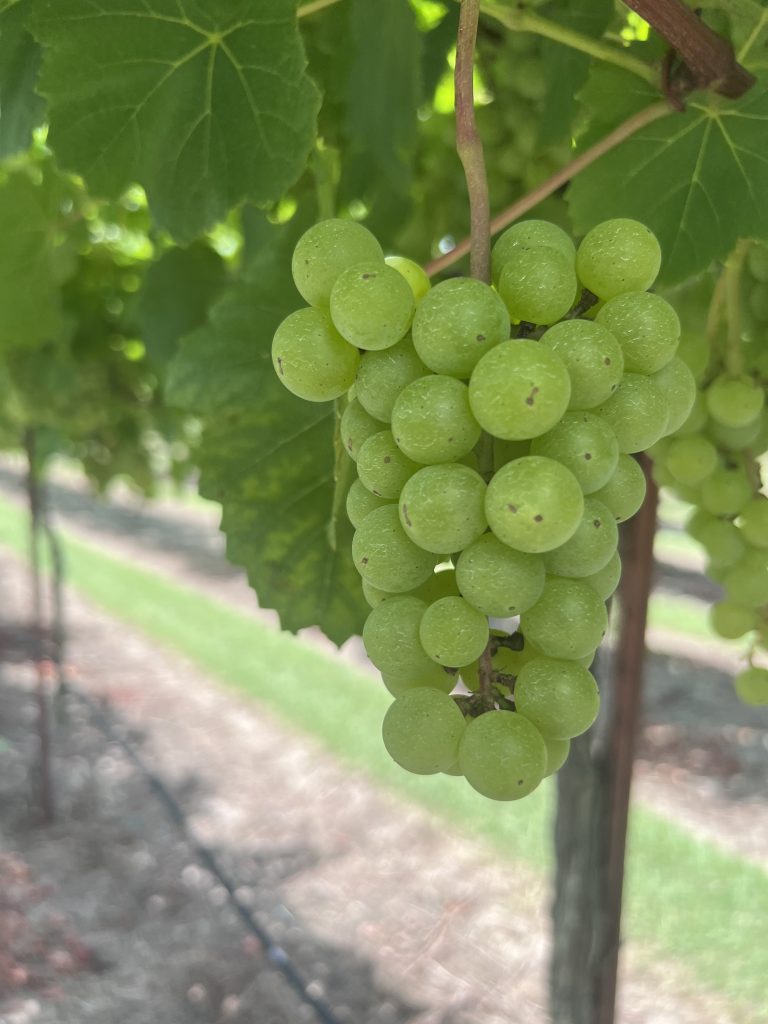
close up of blanc du bois grapes in a vineyard

By Danny Hillin, Justin Scheiner, Ph.D., and Michael Cook

Texas A&M AgriLife Extension Service

It’s not often that a new grape variety is developed, and it’s even rarer that a new grape becomes widely adopted in the wine industry. In order for a new grape variety to succeed, it must first prove to be durable and productive in the vineyard, qualities that are absolutely essential for growers. Equally important, the grape must produce wine of acceptable, and ideally exceptional, quality. Yet, even if a grape excels in both these areas, the largest hurdle is consumer acceptance and market demand. In Texas, however, Blanc Du Bois has managed to overcome these obstacles, establishing itself as a stand-out example of a success story of a relatively new hybrid grape.

  For those unfamiliar, Blanc Du Bois is an interspecific hybrid white wine grape whose most important characteristic is its tolerance to Pierce’s Disease. Blanc Du Bois was developed by the University of Florida grape breeder, Dr. John Mortenson, specifically as a Pierce’s Disease-tolerant wine grape capable of thriving in Florida’s humid and disease-prone climate. Interestingly, Blanc Du Bois has proven to be even better suited to the Texas Gulf Coast, where the humidity and rainfall are typically more moderate than in Florida, creating an ideal environment for this resilient grape.

  Where Blanc Du Bois truly shines among Pierce’s Disease-tolerant grapes is in wine quality, a key reason it has been enthusiastically embraced by a growing number of Texas wineries. Blanc Du Bois wines have aromatic flavors characterized by citrus, grapefruit, floral, and spicy notes. The ripe grapes also offer a pleasantly flavorful snack for harvest crews. While most wineries use Blanc Du Bois to produce table wines, sparkling wines made from Blanc Du Bois have surged in recent years. The grape’s relatively low soluble solids at ripeness (usually 16–21%) make it particularly well-suited for sparkling wines as well as lower-alcohol still wines. One of the most celebrated Blanc Du Bois wines is Haak Winery’s Blanc Du Bois Madeira, which has garnered just about every award out there.

  Blanc Du Bois is impressively versatile in the winery, and recent research at Texas A&M University suggests that Blanc Du Bois wines can have a very high antioxidant capacity. This may help explain why its aromatics can remain vibrant in the bottle for several years. Another clear marker of Blanc Du Bois’s rise in reputation is the increasing number of wineries now producing and labeling varietal Blanc Du Bois wines, reflecting industry-wide recognition of its quality.

  In the vineyard, Blanc Du Bois is certainly not without challenges, but ongoing research and grower experience in Texas have paved the way for continued improvements in production. The most persistent issues faced by Texas producers are downy mildew (Plasmopara viticola) and bunch rots. Although Blanc Du Bois is also susceptible to several other fungal diseases, these two are especially troublesome in wetter regions or during particularly rainy years. Along the Texas Gulf Coast, this typically translates into eight to twelve protectant spray applications per season, with higher numbers required in areas with more rainfall and longer frost-free periods.

  Blanc Du Bois ripens as early as late May in the southernmost reaches of Texas, up to July in the northern Gulf Coast and North Texas, approximately 115–125 days from bud break to harvest. This gives vineyards in far south Texas a longer post-harvest season than the pre-harvest growth period. At Texas A&M, researchers have successfully double-cropped Blanc Du Bois on an experimental basis in this region suggesting a potential to produce two crops each year there. Although Blanc Du Bois tends to break bud early, making it vulnerable to late spring frosts, it fortunately produces relatively fruitful secondary buds.

close up showing one large bunch of blanc du bois grapes hanging on the vine

  Managing the high vigor of Blanc Du Bois has led to innovative solutions in Texas. The Watson Training System, developed by Jerry Watson, the state’s longest-standing Blanc Du Bois grower, is a high-wire, horizontally divided canopy system featuring 48-inch cross arms and two pairs of rake wires to keep shoots in position. Although this system demands extensive canopy management, the payoff can be worthwhile for small vineyards: higher yields and better air circulation within the fruiting zone compared to single-canopy systems. Several publications from Texas A&M University and the University of Georgia describe this system and provide comparative data for its performance.

  Blanc Du Bois is most often grown as own-rooted or ungrafted vines, but when soil pH is above 7.0, alkaline tolerant rootstocks are generally recommended to mitigate nutrient deficiencies. This represents many areas of Texas and fortunately grafted vines are available from several nurseries.

  With good vineyard management Blanc Du Bois routinely yields around two to five tons per acre. However, growers in Texas commonly report poor fruit set, although the cause remains unclear. The Texas A&M AgriLife Extension Service has tested various canopy management strategies and prebloom zinc applications to improve fruit set, though results have been mixed. It is possible that observed fruit set issues are related to virus infections and excessive vine vigor, both of which commonly occur. Fortunately, Foundation Plant Services at UC Davis maintains clean Blanc Du Bois plant material to supply nurseries.

  Over the past four decades since Blanc Du Bois was released, Texas grape growers and winemakers have built up a wealth of knowledge and practical experience with this variety. Fortunately, that expertise has been captured in a comprehensive new book scheduled for publication later this year: A Compendium of the Blanc Du Bois Grape, from Texas A&M University Press. The authors, Fran Pontasch, Justin Scheiner, and Russ Kane have chronicled the extensive experiences of Texas Blanc Du Bois growers and winemakers, along with numerous applied research studies focused on improving Blanc Du Bois production. Fran Pontasch, the principal author, and co-author Dr. Justin Scheiner are viticulturists with a combined 27 years of hands-on experience in Texas vineyards. Dr. Russ Kane is a technical researcher and writer, author of The Wineslinger Chronicles: Texas on the Vine and Texas Hill Country Wineries. He also pens the long-running wine blog VintageTexas.com and recently launched BlancDuBois.com, further connecting Blanc Du Bois enthusiasts.

  The success of Blanc Du Bois in Texas represents the combined work and dedication of grape and wine producers and as the industry continues to expand and diversify, it will remain as an important testament of success for the Gulf Coast.

What is Subsidized Crop Insurance?

six people around a table with a laptop and a booth called Vineyard Crop Insurance in a vineyard

By Trevor Troyer, Agricultural Risk Management

The Federal Crop Insurance Corporation (FCIC) was created in 1938. When coverage began, it was limited to major crops. It was essentially an experiment at that time, until the passage of the Federal Crop Insurance Act in 1980. The 1980 Act expanded the number of crops insured and the locations in the United States. In 1996 the USDA Risk Management Agency (RMA) was created.  The USDA RMA’s purpose was to administer the Federal Crop Insurance programs and other risk management related programs.

  Perennials are quite different from traditional row crops or other vegetable crops.  But a lot of the risks are very much the same.  Drought, freeze, wildlife damage, fire/smoke, and the list of perils goes on. From what we see the risks are more with perennials.  It doesn’t matter if it’s an apple orchard, avocado grove or vineyard, your investment is subject to the elements all year round. You don’t have time to wait till the weather gets better to plant your crop. Things may happen after you harvest that might affect the following year’s crop production. 

  Grape Crop Insurance goes back to 1998; the current policy was written in 2010. Crop insurance is a partnership with authorized Insurance companies and the FCIC. Crop insurance is partially subsidized through the USDA. Currently there are 13 Approved Insurance Providers (AIPs) authorized to administer crop insurance policies reporting to the USDA RMA. Prices and premiums are set by the USDA Risk Management Agency per crop, state, and county. There is no price/premium competition from one company to the next because of this. Independent insurance agencies sell for these 13 different insurance providers.

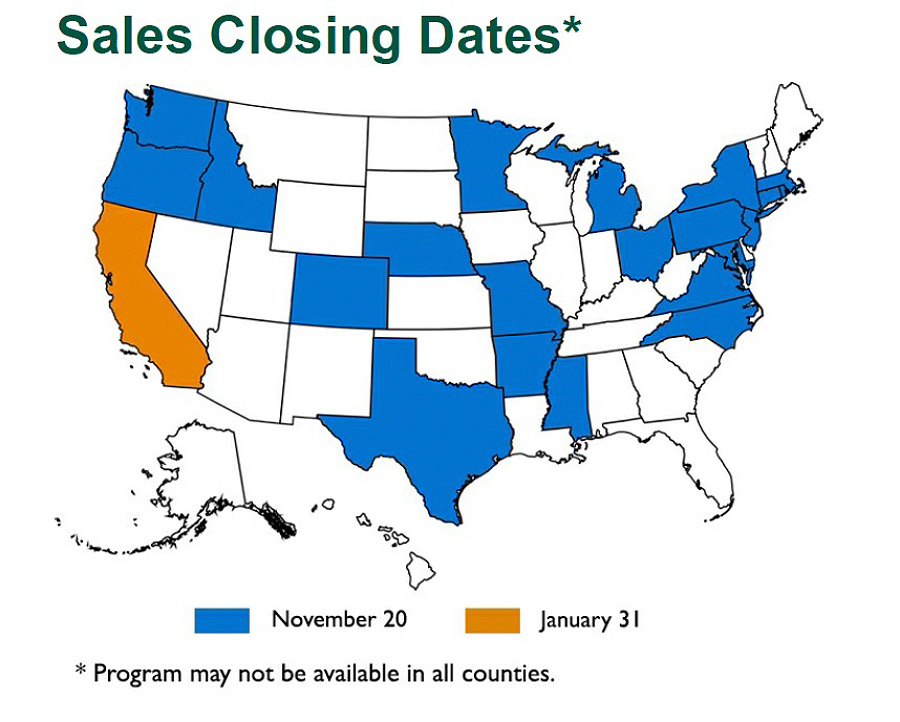
  Grape crop insurance is available in the following states: Arkansas, California, Colorado, Connecticut, Idaho, Maryland, Massachusetts, Michigan, Minnesota, Mississippi, Missouri, Nebraska, New Jersey, New York, North Carolina, Ohio, Oregon, Pennsylvania, Rhode Island, Texas, Virginia, and Washington. Starting in 2026 grape crop insurance is now available in Dona Ana County in New Mexico. 

Crop insurance is not available for grapes in all counties though. Insurable varieties are also different between states and counties. As mentioned before prices are different between states and counties as well. The USDA price for a ton of Cabernet Franc in Napa County California is different than a ton of Cabernet Franc in Seneca County New York.

map of states that have grape crop insurance and the sigh-up deadlines
Map of states that have grape crop insurance and the sigh-up deadlines

  Grapes are insured under an Actual Production History (APH) plan of insurance. An average of the vineyard’s production per variety is used. Grapes need to be in their 4th growing season to be insurable. A minimum of 4 years is needed to do the average, if the grapes have just become insurable then a Transitional Yield (based on the county and variety) is used in place of any missing years. A maximum of 10 years can be used to determine the average if the vineyard has been in production for that amount of time. Basically, you are insuring an average of your tons per acre per variety.

  With crop insurance you cannot cover 100% of your average production. You can choose coverage levels from 50% to 85%. There is a built-in production deductible. Coverage levels are in 5% increments. Coverage levels are relative to premium, the lower the coverage the lower the premium, the more coverage you buy the higher the premium. It comes back to how much risk you feel safe with. For example, if you have Cabernet Sauvignon and your average is 5 tons per acre. At the 75% coverage level you would be covered for 3.75 tons per acre. You would have a 25% deductible (1.25 tons per acre). To have a payable loss you would have to lose more than 25% of your average production in a year.

  Crop insurance is designed to help a grower have enough money to be able to produce a crop the following year.  I have had winery owners complain to me that it doesn’t cover the cost of how much their wine is worth.  While I can totally understand this, it is the growing costs that are being insured against loss. Crop insurance does not cover the production costs of making wine or juice etc.  What is being covered with grape crop insurance is the price per ton of a specific variety as if you were to sell it.   Only the Causes of Loss that are listed in the policy are being insured against.  You can have an insurable cause reduce the value of your grapes (reduced brix, smoke taint etc.)  and be paid a claim based on the set county price and the difference in the dollar amount received.

  Here are the Causes of Loss for Grapes from the National Fact Sheet from the USDA:

Causes of Loss

  You are protected against the following:

•    Adverse weather conditions, including natural perils such as hail, frost, freeze, wind, drought, and excess precipitation;

•    Earthquake;

•    Failure of the irrigation water supply, if caused by an insured peril during the insurance period;

•    Fire;

•    Insects and plant disease, except for insufficient or improper application of pest or disease control measures;

•    Wildlife; or

•    Volcanic eruption.

  Additionally, we will not insure against:

•     Phylloxera, regardless of cause; or

•     Inability to market the grapes for any reason other than actual physical damage for an insurable cause of loss.

  Crop insurance is partially subsidized through the USDA. Premiums are subsidized from 100% at Catastrophic Coverage (there is an administrative fee though) to 41% depending on coverage level chosen.  A lot of growers “buy-up” coverage from 65% to 80% and their premium subsidy is around 50% to 60%. The subsidy makes crop insurance an affordable risk mitigation tool. 

  Hopefully, you don’t have a lot of situations where you would have a loss.  But as a grower you need to assess your risks.  These must be taken into consideration for the growing region your vineyard is located in. Here are some other questions to ask yourself.  What are your break-even costs?  Do you know your cost of production with projected inflation? Have you evaluated the risk of a severe crop loss? What varieties are planted in your vineyard?  Some types of Vitis vinifera are more susceptible to weather issues than others. Are you able to repay current operating loans without crop insurance in the event of a loss?

  Our job as a crop insurance agent or crop insurance agency is not to convince you that you need crop insurance.  It is to help you make an educated decision, based on your risks, on whether you need crop insurance.  And then, if it is a good fit to mitigate your risks, to determine how much coverage is needed.  No one wants to have a loss, but they do unfortunately happen.

Vineyard Health

Typical foiliar symptom of Grapevine fanleaf virus in a California Vineyard
Typical foliar symptom of Grapevine fanleaf virus in a California Vineyard

By Judit Monis, Ph.D., Vineyard and Plant Health Consultant

One of the most important factors to take into consideration when establishing a new vineyard is the health status of the planting material.  The most common way to transmit and perpetrate grapevine diseases caused by viruses is by making multiple cuttings of one infected vine. 

  The detection and diagnostics of important pathogens affecting grapevines is seasonal and their concentration varies throughout the year. This article will describe important grapevine diseases caused by viruses that are more effectively detected in the laboratory in the spring.  In addition, the viruses described in this article are transmitted by nematodes.  Therefore, overall sanitation and good cultural practices are needed to maintain a healthy and productive vineyard. 

Grapevine Viral Decline & Degeneration

  Viral diseases are normally have named based on the crop they infect, and the symptoms observed in diseased plants.  However, with a deeper characterization of the different pathogens (disease causal agents) that infect grapevines it has been possible to determine that many different viruses (bacteria or fungi) can cause similar symptoms. 

  In this article I will  only focus on the description of viruses associated with grapevine decline and degeneration diseases.  The viruses causing decline are closely related and grouped in the genus “Nepovirus “ because  they are transmitted by nematodes (ne) and have a polyhedral (po) shape.  The most important viruses reported in the United States are Grapevine fanleaf, Arabis mosaic, Tobacco ringspot and Tomato ring spot. 

  Other viruses that are less prevalent in the USA include the European Nepoviruses: Raspberry ringspot, Peach rosette, and Tomato black ring viruses.  All these viruses, regardless of their names, can cause significant economic loss in the vineyard and must be kept out of propagation and planting material.

Fanleaf Disease

Typical foliar symptom of Grapevine Fanleaf virus in a California vineyard

  Fanleaf disease, caused by Grapevine fanleaf virus (GFLV), is one the most serious and devastating grapevine viral diseases. Most grape varieties are susceptible and display rapid decline, sparce, and low quality of fruit.  Affected vines are smaller than healthy vines. Up to 80% of yield loss can be expected in severe infections.  Furthermore, the life span of the vineyard is decreased considerably in infected vines.  Foliar symptoms included misshapen leaves with the appearance of an open fan (thus the name fanleaf). Other visible vine symptoms include yellowing (chlorosis, mosaic), bright yellow bands near veins (vein banding), abnormal branching, and short internodes.   Vines affected by fanleaf disease have poor fruit set and the fruit ripens irregularly.  Grapevine fanleaf virus is transmitted by the dagger nematode Xiphinema index. The disease is found in all areas where Vitis vinifera and American hybrid rootstocks are grown.

Arabis Mosaic Decline

  Symptoms associated with Arabis mosaic virus (ArMV) are similar to fanleaf decline and include leaf chlorosis, necrosis, and distortion, shortened internodes, reduced growth, and overall decline.  The virus infects many hosts and has worldwide distribution.  Although this virus has been reported in different areas in North America there is no evidence of spread.  In USA, ArMV has been found in Missouri Vineyards.  The virus is transmitted by several nematode vectors, but the principal natural vector is Xiphinema diversicaudatum.  In French vineyards it is common to find mixed infections of ArMV and GFLV, causing a disease known as court-noué.  Due to the soil movement of the viruses by their nematode vectors, the infected areas are seen as yellow patches that increase in size as the nematodes continue to spread the disease from vine to vine.

Yellow Vein Disease

  Yellow vein disease, caused by Tomato ring spot virus (ToRSV) -also known as Tomato ring spot decline and Tomato ring spot disease.  Symptoms vary but are most drastic in cold climates. Foliar symptoms include leaf distortion, mottling, and reduced leaf size.  Affected vines are stunted, have increased susceptibility to cold damage, and display small grape clusters.  Typical yellow vein symptoms are rarely found in in California. However, this disease is endemic in the northeastern U.S. and Canada. Tomato ring spot virus is transmitted by several nematode species, but Xiphinema americanum is the main natural vector.

Tobacco Ring Spot Decline

  Tobacco Ring Spot Decline, caused by Tobacco ring spot virus (TRSV), induces decline in grapevines.  Symptoms are indistinguishable from those caused by ToRSV.  The disease has been reported in New York and Pennsylvania.  Tobacco ring spot virus is also transmitted by Xiphinema americanum.

Diagnostic Methods

  The viruses that cause grapevine decline and degeneration diseases have been well characterized. The nucleic acid sequence is available for these viruses and reliable disease diagnostic methods have been available for a long time.  The most commonly used methods commonly used in the laboratory for the detection of these viruses in infected grapevines are ELISA (Enzyme-linked immune-assay) and RT-PCR.  ELISA is available for the detection of ArMV, GFLV, TRSV, and  ToRSV.  In spite of potential mutation of the viruses, sensitive primers for  reverse transcription PCR (RT-PCR) have been developed for the detection of ArMV, GFLV, TRSV, ToRSV.  RT-PCR is currently considered  the “gold standard” for virus detection as viral sequences allow the development of detection primers much faster and less laborious than the elaboration of antibodies that could be used in ELISA.  Sampling methodology remains one of most important factors for the sensitive detection of grapevine viruses.   Work in my laboratory has shown that young tips and leaves collected in the spring season provide the most reliable material for the detection of any of the Nepoviruses that infect grapevines.  However, it is possible to detect Nepoviruses in dormant cuttings, albeit in lower concentrations, allowing to test for a larger number of viruses in the fall.

Infection Prevention and Control

  As mentioned earlier, the main method of transmission of grapevine viruses is by the movement or propagation of infected vines.   Virus transmission may occur by grafting infected scion buds onto healthy rootstock  cuttings or vice-versa.  As mentioned above, nematodes are known to transmit specifically certain grapevine-infecting viruses, particularly those that cause grapevine decline and fanleaf diseases.  Infected nematodes can spread on the roots of plants, through soil, water, and by routine vineyard cultural practices. Furthermore, many of the viruses that cause grapevine decline diseases are known to infect weeds present in the vineyard.  Therefore, routine nematode and weed control is a recommended practice to keep the viruses and vectors out of the vineyard.

Conclusions

  Prevention of virus spread in the vineyard is the most important disease strategy. 

Once a viral disease is established in the vineyard or nursery block there is no treatment or cure.  The only and most drastic solution will be the removal of infected and/or declined vines.  Obviously, infected vines are a source of infection and will allow the spread the viruses to nearby healthy vines/vineyards. To avoid devastating health issues in the vineyard only virus-tested vines should be planted.   When grafting over o “top working” vines in an established vineyard, the existent vines as well as the incoming cuttings must be tested.  Laboratory tests conducted in the right season using appropriate sampling methods will help rule-out infection, detect the disease causal agent(s), and avoid the spread of harmful disease-causing viruses.

  Judit Monis, Ph.D. is a California-based international plant health consultant, that provides specialized services to help growers, vineyard managers, and nursery personnel avoid the propagation and transmission of diseases caused by bacteria, fungi, and viruses.   Judit is fluent in English, Italian, and Spanish and is available to consult in other important grape growing regions of the word.   Please visit juditmonis.com for information or contact juditmonis@yahoo.com to request a consulting session.

Small Intruders, Big Damage

an ai picture generated to show different birds and rodents in a vineyard

By Alyssa L. Ochs

From rodents to birds and larger wildlife, vineyards must address a wide range of pest challenges that can impact fruit quality and yield.

  As climate patterns shift worldwide, vineyards are refining their pest-control strategies and adopting a more integrated, initiative-taking approach. To better understand this trend and effective solutions, The Grapevine connected with two pest management companies that specialize in vineyard protection.

Early-Year Vineyard Pest Strategies

  Pest threats in vineyards vary significantly by region and season. However, the most common pests in vineyards include rodents, such as gophers, mice, and voles. Birds target ripening fruit, causing damage to grape skins, and reducing yields. Meanwhile, larger animals, such as raccoons, deer and wild pigs, can devastate entire vineyard blocks in just a brief time.

  George Horetsky, senior sales representative at Trident Enterprises, told The Grapevine that many vineyard pest problems begin quietly at the start of the year, in February and early March, even before there is green tissue on the vines. While your crews are working elsewhere early in the year, wildlife feeding and rodent damage often begin, resulting in crop losses and labor disruptions later.

  Trident is a well-established wildlife exclusion expert and has been providing high-quality fencing for over 40 years.

  “Walk your perimeter and take note of any weak points, including corners, gates, dips and drainage crossings,” Horetsky advised. “Be sure to look for rodent or rabbit activity near trunk level, especially along edges and under cover. Now you can confirm your early-season scouting plan for bud swell and budbreak. If netting or deer exclusion is part of the plan, lock in specs and delivery windows before the rush.”

Common Pest Control Questions

  We also asked Horetsky about the most frequent questions his company receives from vineyards about pest control. Vineyard’s first practical question is typically where to even start with pest control, and Trident always encourages customers to begin with timing and pressure mapping.

  “Here you can identify which pests are causing the costliest damage during the most sensitive window, and where pressure begins,” Horetsky said. “Once when and where are clear, the plan becomes more targeted, including where physical exclusion makes the most sense.”

  Trident customers also ask if they truly need an eight-foot deer exclusion. Horetsky said that if deer pressure is consistent, they recommend eight feet as a reliable baseline, especially on edge blocks and high-valve areas.

  “Deer find weak points first, so height matters, but corners, gates, low spots, and terrain transitions matter just as much,” he said.

  To reduce insect pressure without constantly reacting, Horetsky and his colleagues advise pairing consistent monitoring with prevention and targeted interventions.

  “As buds begin to swell, it is important to scout early for bud-feeding insects and have a response plan ready, because that damage cannot be undone later in the season,” Horetsky said. “Talk with your pest management partner for your best solutions. Insect netting is not a universal solution, but it can be a strong fit in specific applications where recurring pressure or high-value blocks justify physical exclusion as a complement to broader IPM practices.”

  Horetsky mentioned how to about practical bird control approach.  “Bird pressure tends to spike right when quality matters most,” he said. “Many vineyards choose netting in targeted blocks, especially high-value rows, early varieties, and perimeter areas where birds stage and return daily. The best choice is the one crews can deploy quickly under real harvest pressure and store, so it remains usable year after year.”

  Regarding birds, we also asked the bird control experts at Avian Enterprises for their insights into common vineyard questions. Avian Enterprises is a trusted industry leader in providing safe, effective, and environmentally responsible bird control solutions.

  Dan Kramer, the company’s technical director, shared that the most common question they receive is whether Avian Control is harmful and if it alters the taste of wine.

  “Avian Control is a completely non-toxic product that is formulated with only food grade ingredients,” Kramer said. “The ingredients in Avian Control are widely used in food and flavoring designed for human consumption.”

  “While Avian Control is highly irritating to birds, it has no effect on humans,” he also explained. “Avian Control is highly biodegradable and breaks down completely in the field or during the fermentation process eliminating any possible unwanted wine flavors.”

The Evolution of Vineyard Pest Control

  Although specific pest threats have remained constant in many vineyard regions, pest control strategies have evolved from reactive chemical treatments to integrated pest management solutions. In the past, vineyard pest control relied heavily on chemical applications to quickly eliminate threats. But today, pest control companies and vineyards are more interested in combining biological controls, mechanical deterrents, and habitat management, with targeted chemical use only applied when necessary.

  George Horetsky from Trident shared that over time, his company’s role has shifted from simply helping source materials to partnering with dealers and installers to help them build systems that last.

  “Today we spend a lot of time ensuring our customers receive the right materials for their project and getting them shipped out as soon as possible,” Horetsky said. “We focus heavily on the places where failures start, including corners, terminations, gates, and grade changes, and we help troubleshoot field questions, so projects do not stall.

  “In short, we have become more outcome-focused,” Horetsky concluded. “The goal is fewer breaches, less rework and longer service life.”

  Kramer from Avian Enterprises also told The Grapevine how his company’s pest control approach has evolved over the years.

  “Avian Control was first marketed as a bird repellent designed for commercial pest control applications,” Kramer explained.

“At the behest of the U.S. Fish and Wildlife Services, we began to offer Avian Control to the agricultural industry, where it was met with great enthusiasm. Sales of Avian Control continue to grow in the agricultural industry due to its effectiveness and non-toxic nature.”

How to Save Money and Improve Efficiency with Pest Control

  Effective pest control involves more than just protecting vulnerable grapes because it is also a significant operational expense. However, vineyard pest management companies emphasize that proactive planning can help vineyards substantially reduce their long-term costs.

  Horetsky from Trident told us that the biggest savings rarely come from finding the cheapest option. Instead, the real savings come from reducing repeat labor and avoidable loss. He explained that many vineyards improve efficiency by prioritizing protection in the highest-return areas first, such as edge blocks near cover, early ripening varieties, and premium rows where quality drives value.

  “Another major advantage is eliminating weak points instead of just patching symptoms,” Horetsky said. “Underbuilt corners and ends, gate areas treated as an afterthought, gaps at low spots and inconsistent tensioning create ongoing repair cycles. Fixing those details reduces rework.”

  He also said that pest control choices should align with a vineyard’s labor realities.

  “If your tactic requires daily attention during ripening, it will eventually fail,” he said. “Vineyards save money when they choose approaches that reduce emergency trips and last-minute installs. A simple comparison that includes material cost, install time, expected repair hours, and avoided loss often clarifies what is truly cost-effective.”

  Kramer at Avian Enterprises told The Grapevine that his company’s product, Avian Control, eliminates the need for netting vineyards, saving vast amounts of labor and time that can be better used for other crop management activities.

  “The increased yield that can be achieved through the use of Avian Control along with the reduced costs combine to increase profitability and ensure the quality of the harvest,” Kramer said.

The Future of Pest Control in Vineyards

  Looking ahead, innovation, sustainability and education are at the heart of modern vineyard pest control strategies. Pest management providers like Trident Enterprises and Avian Enterprises regularly collaborate with vineyards to develop effective, sustainable solutions to protect grapes and the broader environment.

  Horetsky from Trident shared that today’s vineyards want reliability, not just products. Therefore, Trident’s focus is to make vineyard planning easier with upfront support for layouts, netting selection, corner and gate planning and terrain considerations.

  “We are also committed to reducing project delays with dependable supply,” Horetsky said. “Install quality often depends on timing, and rushed installs create weak points. We continue to invest in inventory depth so contractors can stick to schedules and avoid substitutions that weaken the plan. To support tighter project timelines, Trident Fence has expanded distribution capacity to include our new warehouse in Reno, Nevada, providing our West Coast customers with faster delivery windows.”   As vineyard operations become more complex and environmental conditions continue to shift, grape growers who invest in initiative-taking, integrated strategies will be best positioned to protect crops, reduce costs, and

Producing Pacific Northwest Chillable Reds

By Becky Garrison

So, what exactly are chillable reds? And for wineries, is this simply a flashy trend whose popularity will fade over time or a new way of producing and marketing wine that speaks to the changing consumer wine preferences in the US?

To help answer these questions, I surveyed a curated selection of Pacific Northwest winemakers, who hail from a region known for producing world-class award-winning wines. Evan Rose, reserve winemaker for Stoller Family Estate (Dayton, OR), describes chillable reds as “a style of red wine defined by balance, bright acidity, low tannins, and freshness. These qualities allow the wines to feel lifted and expressive when served slightly chilled, without losing depth or structure.” Piper Underbrink of Sealionne (Newberg, OR) adds that their chillable red called Phoque Red is “fruit forward with a large fruity bouquet that isn’t tamped down by the chilling of the wine. This wine is a Pinot Noir designed to be more vibrant and electric – a wine that is enjoyable and easy to drink.” 

In the estimation of Dusty Jenkins, head winemaker for Gilbert Cellars (Yakima, WA), chilled reds offer a “Goldilocks” solution for modern wine drinking: light yet complex, refreshing yet expressive. “They’re easy to sip, incredibly food-friendly, and versatile across seasons and settings. They are approachable for casual drinkers, but interesting enough to spark conversation for those who want to dig deeper,” he notes. Along those lines, Robert Gomez, co-founder of Hoqueteus Wines (Walla Walla, WA), equates a chillable wine to a “gluggable wine” that is “fresh and quenching that benefit from a good chill slightly lower in temperature than cellar temperature.” 

Producing Chillable Reds

When crafting a chillable red wine, John Grochau, founder and head winemaker for Grochau Cellars (Amity, OR) points to the need to choose grapes known for fresh acidity that are harvested on the earlier side of ripeness to showcase more of what he describes as a “crunchy” expression of the fruit. He adds that fermentations should be overseen lightly to limit the extraction of tannins and the wine should not be aged too long, to preserve the zesty freshness of a youthful wine.

Kelsey Albro Itämeri, owner and winemaker, Itä Wines (Walla Walla, WA) describes how she makes her carbonic Zinfandel using a method called carbonic maceration, a technique popularized throughout Beaujolais in producing light bodied red wines such as Beaujolais Nouveau. She starts with 100% whole clustered grapes that are not destemmed. Then she adds carbon dioxide to top, which serves to create an environment where intracellular fermentation will start to happen within the unbroken berries. As the enzymes from each grape begin to ferment a little bit, they will convert some sugar into alcohol while also absorbing tannins from the skins.

For Gilbert Cellars, Jenkins’ produces a Nouveau made using Pinot Noir grapes that begins with whole-cluster carbonic maceration, followed by pressing and completion of fermentation off the lees. It then undergoes malolactic fermentation in neutral oak. They also offer a TV Wine made using a relatively traditional approach, but its uniqueness lies in the co-fermentation of red and white grapes, finished in stainless steel like white wine. Both wines are bottled unfined and unfiltered. 

Gomez’a Nouveau of Syrah, a 100% carbonic red released every November of the same year of the harvest, is the most “chillable” of his reds. When selecting grapes for us in his chillable reds, Gomez looks for younger vines with a higher juice to skin ratio and earlier picks. Carbonic maceration allows him to get his wine to a lighter, less tannic style while amplifying the wine’s fruity character, thus resulting in a wine that is low in alcohol and high in freshness.

Stoller Family Estate’s Whole Cluster Pinot Noir is also made via carbonic maceration. Rose opines how this method heightens aromatics, softens tannins, and preserves fresh fruit, making it especially refreshing when served slightly chilled.

Some winemakers like Thomas Monroe, co-founder of Division Wine Co. (Portland, OR), ferment their chilled reds in closed-top stainless steel or concrete tanks. For carbonic maceration fermentations, they will begin by adding carbon dioxide, which they push through using a CO₂ gas or dry ice. Once the primary fermentation creates enough CO₂ there is no need to add more. Over 10 to 20 days, the skins will release the juice. which needs to be tasted daily to ensure the ferment is strong and that too much tannin is not being picked up. He has observed a rise in people experimenting with blending red and white grapes together using different CO₂ ferments or post ferment blends.

Itämeri finds the ensuring result from this low-intervention winemaking is a dry red wine with no residuals, which they then age in neutral French oak barrels. Most winemakers age their chillable reds in neutral oak barrels which gives the wine a smooth taste on the palate. Some winemakers like Underbrink choose to age their wine in 100 percent stainless steel for eight months. “This preserves the fruit forward characteristics and creates a super easy smooth red wine,” she reflects. 

When Kiona Vineyards and Winery (Benton City, WA) planted the first Lemberger in the United States, they did not set out to produce a chillable red. Rather as General Manager JJ Williams recalls, “This hearty cultivar produced a pretty affable, easy to drink crowd pleasing wine without a lot of expensive élevage or cooperage expenditure. Their Lemberger style is very fruit-forward, but not light like a Gamay or Pinot Noir; rather, it is bold, like the Cabernets grown in the Red Mountain AVA. Unlike Cabernet, which necessitates a lengthier oak program, Williams notes they can put this wine in neutral oak barrels for eight months to achieve a smooth taste.

Canned Chillable Reds

       Tiquette Bramlett, founder of Portland-based Henderson Ave Wines, chose to produce a chilled canned red blend wine as she saw a gap in the market for a red wine that is not tied to formality or seasonality. “This wine fills the gap between ‘I want something serious’ and ‘I want something fun,’ she opined.

Bramlett and her team approach their canned wines with the same intention as their bottled wine by starting with quality fruit and letting it speak. For the chillable red, that means harvesting at a point that preserves brightness and managing extraction gently, so the wine stays expressive and fresh rather than dense. In this process, they are not trying to force red wine to behave differently. Rather as Bramlett notes, “we’re choosing to make a red wine that’s meant to be chilled. Minimal manipulation, thoughtful fermentation, and restraint in the cellar allow the wine to hold its shape and energy even at cooler temperatures.” 

These chillable reds are designed to move easily across cuisines and conversations, made for tables where stories overlap and nothing feels precious.”They are built with freshness in mind. Lighter on their feet, driven by fruit and acidity rather than heaviness or oak. Chilling them does not mute their character; it sharpens it,” Bramlett adds.

How to Serve Chillable Reds

       At the Kiona Vineyards’ tasting room, Williams found they had the prefect setup to evaluate the perfect temperature for their chilled wine by experimenting with chilling reds with their red wine fridge (58 degrees) and their white wine fridge (50 degrees). Through experimentation, they discern that the perfect balance for the chilled reds was to move them from the red fridge to the white wine fridge until the bottle reaches 48 to 50 degrees. Most winemakers concur with serving chilled reds in the 45-to-50-degree range though Gomez serves his chilled reds in the tasting room at the cellar temperature of 55 degrees. 

For those who do not have a wine refrigerator, Itämeri recommends placing the wine in a regular refrigerator for 15 to 20 minutes. Given most refrigerators are at 38 degrees, be mindful not to leave the chilled wine for much longer as the aim is for a light chill not icy cold as in the case of cider or beer. 

Chilled reds connect with Monroe the most when he is looking for a chilled wine for summer sipping that has a little bit more body and structure than most white wines would, and less than most reds. He pairs these wines with foods that have little bit more delicateness to them and nuance. Along those lines, Rose thinks their Stoller Family Estate 2024 Whole Cluster Pinot Noir would work well with an herb-crusted chicken. “The herbs mirror the wine’s baking spice and dried floral notes, while the crispy skin plays nicely with its bright acidity,” he notes. Underbrink also takes a lighter approach by pairing her chilled wine with oysters.

Grochau finds his chilled wines pair great with a charcuterie plate with spicy meats and younger cheeses, as well as chips and hummus. In addition, he discovered that his Convivial, a blend of Gamay Noir and Pinot Noir, is the perfect Thanksgiving wine because the sour edged fresh fruits bring a nice amount of lift to lighten up an extraordinarily rich meal. Gomez also likes to pair his wine with similar hearty spicy and savory dishes like Merguez sausage. In a similar vein, Itämeri pairs with their chilled red with meats have a little bit of char on them like a hot dog. As she proclaims, “Our carbonic Zinfandel is not so expensive that you feel like you have to plan a fancy menu to feel like you have an impressive wine.” 

Future of Chillable Reds 

Overall, these winemakers find these wines are successful with a younger audience, people in their mid-40s and younger. Grochau notices how the younger wine drinking audience is not tied to ‘traditional’ styles of wines that their parents liked. “They want something that shows a different point of view even from the same grape.” Also, as chillable reds tend to have lower alcohol content and are made more in the low intervention or natural wine camp, they appeal to those consumers concerned about their health.

Since chillable wines tend to cost less to produce than a lot of other reds the overall price point for these wines tends to be a bit lower than other red wines. This makes chillable reds a nice entry wine for budget conscious consumers looking to expand their wine palate. Also, as people are just now tuning into chillable reds, they taste this wine without any preconceived notions of what chillable reds should taste like unlike wines such as Chardonnay that already have well proven flavor profiles. 

Finally, Rose points out how climate change may be affecting a growing interest in chilled reds from red wine drinkers of all demographics. “As summers grow warmer, red wine drinkers aren’t moving away from reds, but they are seeking styles that hold their character when served slightly chilled. Pinot Noir’s natural versatility makes it especially well-suited to this shift, and these two wines, by style and intention, deliver freshness, balance, and complexity at cooler serving temperatures.”

Easy Reduction Testing for Wines

a man and 2 women in lab coats working in a lab

By Thomas J. Payette, Winemaking Consultant

Just because your wine smells good doesn’t mean it can’t smell better.  Always keep this in mind as a winemaker or winery owner.  The largest violation of “house palate”, a process where winemakers overlook their wine flaws because they taste their own wines too often, is the oversight that their wines may be reduced.  Reduced or reductive is a broad term that covers many sulfide compounds ranging from hydrogen sulfide, rotten egg, to other more complex aromatics that may smell like cabbage, dill weed, onions or garlic.

  Early detection of these flaws is imperative to clean up the wines and to make sure these compounds do not evolve toward other more difficult to remove compounds, mercaptans, often needing ascorbic acid additions to make the wine reactive to the most commonly used remedy copper sulfate.

  Copper sulfate trials are extremely easy and there is no excuse for each wine created not to go through at least three quick trials with copper sulfate to see if the wine aroma will indeed become improved.

When?  I recommend each wine be reviewed:

1.    Anytime one suspects a wine to be reduced or smells hydrogen sulfide in the fermenter.

2.   Review all wines just after the fermentation process as a blanket rule process to discover any wines that may improve from the copper sulfate addition.

3.   Three months prior to bottling and preferably before any stability processing actions have been taken.  Bentonite removes copper ions.

4.   Roughly three days before bottling.

Why?  As suggested, in the first sentence of this article, winemakers should review each wine’s aroma to see if faults exist.  Some of the faults do not express themselves directly as Hydrogen Sulfide or Mercaptans.  Some wines may have just enough of one of these compounds, or both, to lightly mask the underlying fruit expression.  Winemakers may not know a nice smelling wine can actually smell nicer.  It is an easy test – so why not run these trails!

Where?  Most winemakers will perform this test in the winery laboratory, away from the chill of the cellar floor, where a wine will have the ability to open up and allow for undisrupted critical analysis of the wine’s aroma.  If winemakers cannot find this tranquility in their winery, it is recommended to take a sample home and do the trials in a home environment.  One must be able to focus and have conditions for the wine to open up.  This is critical.

Tools Needed:

•     Clean wineglasses with a narrow focused opening to the bowl (I.N.A.O. style). All the exact same size and style.

•     Glass watch covers for each glass (optional but highly recommended)

•     Representative samples of each wine to be sampled. Between 65-70 degrees F.

•     1.0% Copper Sulfate solution  (One percent)

•     Spit cup – but not suggested to taste these trials.

•     Clear and “in tune” nasal passages

How?  This test is very easy to perform as long as the environment is proper for the aroma analysis.  If possible, work closely with someone else to mix up the wineglasses after treatment so you will be blind on this analysis.  If this can’t be done – do proceed since experience will help take any bias out of the results.

1.    Place three (“aroma free”) dry clean wine glasses on a table and label them x, 4 and > or any other random characters that may not lead a person to select one wine glass over another but allow them to identify what glass or glasses may be different. 

2    .Fill each glass with the same quantity of wine.  This is often between 80-100 milliliters per wine glass depending on the wine glass size.

3.   Have another person place 1 drop of the 1% Copper Sulfate into one of the glasses and to swirl all three glasses equally to mix the addition into the wine and to treat each glass equally with a swirl.

4.  Place watch glasses over each of the glass openings and leave the glasses to sit for about 5 to 10 minutes.

5.   Approach the wine glasses and remove the watch glasses one at a time to smell the aromas in the headspace of the glass.  Go through the wines at least three times and perhaps more to select the wine that smells the best.  Record your results.

6.   Leave the wine glasses for another 15 minutes or longer and re-approach in the same fashion by smelling each wine individually and select the glass or glasses that smell the best. 

7.   After determining that the wine is actually changed and changed for the better, have the person that added the copper sulfate to the glass reveal the glass that was treated.

8.   Mentally extrapolate after collecting all the data whether the addition of copper sulfate had a positive impact on the wine or not.  Be aware not to select the copper sulfate addition wine – just because it is different.  The wine should smell better – not just different.

9.   Once an addition is deemed helpful, proceed to making the adjustment in the cellar as referenced below under calculation.  This test is not quantitative.

This test is sometimes known as a triangle test.

Spicing it Up!

  Once you and your assistant get comfortable with the test, he or she can be instructed to switch around the treatment regime to perhaps treat two of the three wineglasses.  This will keep the person smelling the wines “on their toes” to actually identify what wine smells better and to truly focus on the improved wine.

  Referencing the fact that a spit cup was listed under the “Tools needed” list above, one should have their spit cup ready.  This should be used if by habit one should accidentally taste the wines.  Remember, technically, Copper Sulfate is a poison so winemakers should resist tasting our trails and only focus on the aromas.

  One can build on this test to correct Mercaptans, also.  Mercaptans are Hydrogen Sulfide based compounds that have transformed to a more complicated chemical compound.  Ascorbic acid trials may need to be tested for effectiveness in these cases.  Reference other sources to review this process as it will not be covered at this time.

Calculation:

  In my opinion there is no truly reliable calculation for this test to determine quantitatively how much copper sulfate to add.  In most cases it is best to add small quantities of copper sulfate to a wine nearing the range of 1.0 gram per 1000 gallons to as low as one-half a gram per 1000 gallons to clean up small defects.  This is a good starting point.  From experience, you may start to recognize a wine that may need more Copper Sulfate to combat more pungent aromas.  This chemical is a strong oxidizer so use limited amounts.  Overuse could have serious downsides to your wine.

Removal of Copper After Use

  In most cases, only small amounts of copper sulfate are used to clean up a wine so we rarely need to address lowering the copper content in the wine.  Please recognize when larger quantities have been used.  Use an outside laboratory to actually measure the amount of residual copper in your wine.  In many cases, for white wines treated prior to protein fining with bentonite, they may clean up on their own.  I have seen copper levels drop significantly after protein fining and filtering of white wines.  Many years ago, wines may have needed a “Blue-Fining” but one rarely has those issues in today’s winemaking plus they are not permitted in the United States.

The Future

  According to some scientist we need to more closely look at nutrients and their role with the yeast.  In some cases too much or too little nutrients may cause Hydrogen Sulfide production and it is thought to link into the micronutrients.  Nitrogen issues may not be the driving factor here.  This will help us stay away from using copper sulfate, which does have adverse affects to the wine in addition to cleaning the wine up sensorialy.  Until that time we need to address the problem in a fashion we can, such as copper sulfate.  Stay tuned.

Other Helpful Tips

  Caution is expressed not to confuse a change in aroma in the wine with this being considered better.  This is called “Stripping”.

  Caution is also expressed not to consume / taste wines that have added copper sulfate added during these trials.

  Do these trials next to any wine that may be a follow-up bottling for that wine to see if consistency is achieved and to focus on other nuances that may easily be changed.The Tax and Trade Bureau does regulate the amount of copper sulfate a winemaker may use or have in its finished wine product.  Please research this amount and have a clear understanding of the use of copper sulfate.  It is a strong oxidizer and considered poisonous.

  A reduced character may become hard to notice if the wine has just been racked, transferred, filtered or in any way brought into a less anaerobic state.  These reductive compounds may be just under the threshold of the human nose sensitivity and difficult to smell.  If this same wine is bottled, the reductive character may become very pronounced.

Screw cap wines may need more serious aroma reviews and evaluations since these seals are more anaerobic than previous seals.

  Caution is urged when making wine to be bottled under screw cap to make sure no underlying reductiveness is present.  Outside labs also offer “headspace sniffing” if one feels they need additional help.  With canning this are even more of an issue as well as residual copper ions.

  Wines exposed to light may become “lightstruck”.  Light struck is a term used to describe that light has attacked an amino acid and caused a mercaptan-type aroma.  This phenomenon is somewhat more common with flint bottles and sparkling wines.

  Do these trials.  They are easy and you may really appreciate the end result.

References: 

  Amerine, M.A., Berg, H.W., Cruess,W.V. 1972. The Technology of Wine Making

  Dharmadhikari, M.R., Wilker, K.L. 2001. Micro Vinification.

  Zoecklein, B.W., Fugelsang, K.C., Gump, B.H., and Nury, F.S. 1999. Wine Analysis and Production

  Verbal discussion with Mr. Jacques Boissenot, Mr. Jacques Recht, Mr. Joachim Hollerith and Mr. Chris Johnson.

Short Course:

•    This is qualitative and not quantitative

•    Make sure the change in aroma is not just “stripping”

•    Copper Sulfate is a poison – be careful to check residual copper present after larger uses.

•    Know when to use outside lab “electronic sniffers”

Winegrapes on High Calcium Soils

a photo showing a row down a long vineyard

By Neal Kinsey, Kinsey Agricultural Services

One quandary that continually presents itself for vineyards as well as other crops is why some high calcium soils produced excellent grapes while others in the same vicinity (and sometimes the same variety in the same vineyard) looked and tested exactly the same, but were of less quality and at times even a definite problem in terms of the wines produced.

  When that happens, could it be the soil test being taken incorrectly?  It could be, especially if there are wide variations in the soil test numbers, and particularly the expression of cation exchange capacity, from year to year.  But what if the soil tests are basically consistent from year to year and look the same in the good and bad areas?

  First, consider that when results seem inconsistent from the use of the same methods that can ordinarily identify why soils have good or average or poor fertility, something more must be considered.  There is usually a good, common-sense answer, we just must search to find what it is and use it to solve the problem.

  We have worked with soils producing from excellent to extremely poor wines that measured exceedingly high in calcium since the 1970’s.  From that experience it has become evident that the problem is more than just too much calcium, as some soils with higher calcium levels produce better wines than others that have lower concentrations in the soil where poorer results have been experienced.

  Considering all the soils that were analyzed from year to year, the problem seemed relatively rare, but still the problem was always present in enough soils to be of concern and continue looking for a sensible solution.  These different areas are not normally submitted for a comparison. Most of the time such soils were either doing well or doing poorly, not enough of both in the same vineyard for growers to be sufficiently concerned to pay the cost and have both analyzed separately.  And the few times it was done, the good and bad soil all looked to be bad.

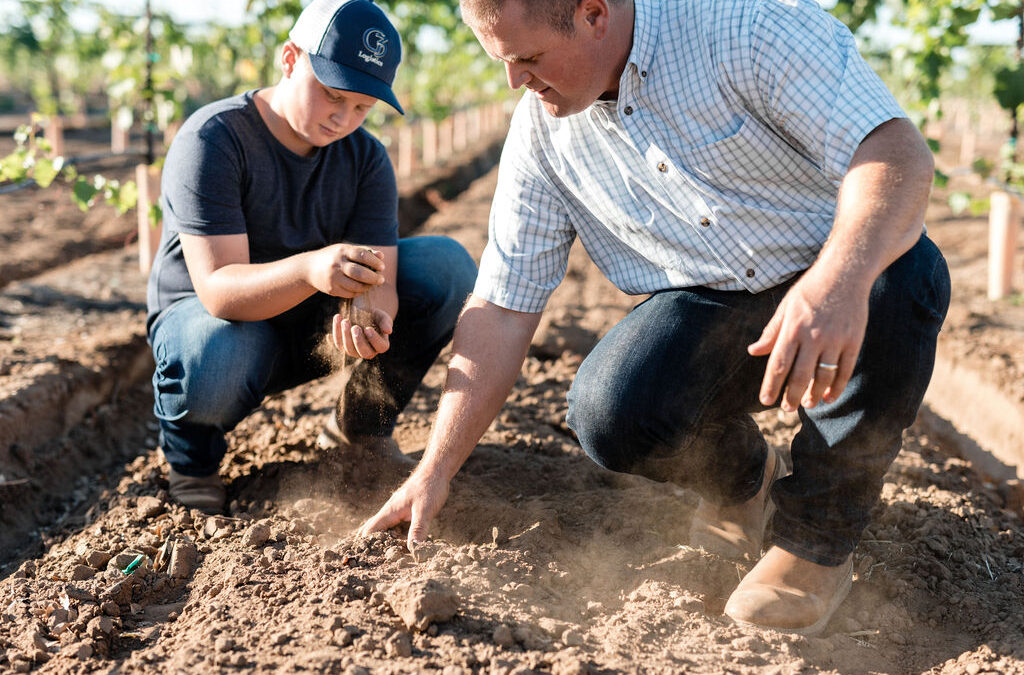
a man and a teenage boy kneeling in a grape vineyard holding the soil

  Around 2005, while reviewing some of the original work of Dr. William Albrecht there was a clue that just “jumped out” from a page on his explanation of measuring cation exchange.  He explained that the sum of the cations was generally the best approach to determine the soils cation exchange capacity due to the costs involved, but there was a more accurate way it could be used to establish that number.  But he did not say what it was.  Still his comment was sufficient enough to point out that, though generally too costly to use for the general soil test, there is a more effective way to determine how many positively charged cations can be attracted and held on the surface of soil particles until enough acidity from plant roots or soil microbes could release them for use by the plants growing there.

  For years some concerned educators and consultants had asked the question, “But when you measure calcium, what about the influence of free calcium?”  This was referring to the amount of calcium in an available form in the soil which was so plentiful there could not be enough negatively charged clay particle for all of them to be attracted and held – adsorbed – by a more limited number of clay colloids present? 

  Here was a possible way to differentiate between how much calcium was present in a soil, but also how much was able to be attracted and held and how much more was present that had no negatively charged clay particles to attract and hold them – thus the “free calcium” still there that influenced the sum of the cations, but the assumed negatively charged clay particles were not actually abundant enough to be holding them along with the other normally needed cations, namely magnesium, potassium and sodium.

a woman holding a bottle with a label that says soil calcium test

  Since the “sum of the cations” was used to calculate the amount of negative charge provided by a matching amount from the clay colloids in a soil, the Cation Exchange Capacity was thus overstated.  This also eventually showed that the amounts needed of the other cations (especially Mg, K and Na.) when extremely excessive in a vineyard soil can also be overstated, making it appear such soils needed more than they could tolerate.

  This was the beginning of the process that ultimately helped determine and define not only soils that had too much calcium, but also magnesium, potassium, or sodium, or some combination of those.  This was then causing the “sum of the cations” to over-inflate the amount of negative charge (expressed as the cation exchange capacity)?

  This took time to work out and discover, it did not all come to be understood at once, because there was no protocol developed to determine all of this at the time.  The initial efforts began with the crop of 2006, but it took years of actual field work to solve the myriads of problems this has created.  And that field work was based on results that when achieved more than paid for what needed to be done and increased profits by increasing either yield or quality and oftentimes both at once.

  Initially it was thought that only a few dozen such tests would be needed based on the volume of soil we saw before beginning this project.  But as the results became evident and the word spread to others with similar problems in their grapes, that numbers has grown to be hundreds per month, especially from the extremely high calcium soils of the Western United States, Austria, France, and Germany.

  In fact, reputable long-established wineries from Europe have sent samples for analysis with no mention of such a problem, but by doing the tests properly, it was possible to point out what was happening.  One example was a winery that had a history of many prize-winning wines, but the soils they submitted did not reflect that.  And when we pointed out that these were problematic vineyard soils, the owners admitted that on these vineyards the quality of the grapes had been slowly declining over the last 20 years, but the soil tests still appeared to be the same as when the vines were doing their best.

  The normal soil test does not detect such problems, even if you can identify and test the areas good and bad.  An extra test that adds another 50% to the cost of each test must be performed and there is no protocol that has been written up and described to do so.  The reason it can be done is due to actual  hands on “field” or vineyard soil work. 

  The key is in soil chemistry that applies to the verified saturation of all the nutrients most involved in affecting the soil pH.  This type of experience is not written up and published to this point, because the results are from on-site experience, not officially randomized, replicated experiments.  The only way to learn it works is by doing this type of testing and following through with what is necessary on each specific vineyard soil.  Because the circumstances can vary greatly from one soil to another, perhaps the best way to learn if there is merit to the process is to send two soils – one from the good and one from the bad, or to increase the odds of a lucky guess, several bad areas to see if they can be correctly identified and why.

  Until Cation exchange capacity and base saturation of nutrients are accepted as a valid way to conduct that research it is not likely to be considered for research, because it is the only testing method at present to identify the differences that exist and need to be corrected to achieve the proper results.

  True science begins with observation.  Using the proper tests both the good and the bad and the reasons why can be determined.

“We can always prove a definite theory wrong. Notice, however, that we never prove it right.”

Richard Feynman (1918-1988), American theoretical physicist & Novel Laureate

A Short Primer on Exporting

a wine bottle sitting on one of many boxes surrounded by shelves containing wine bottles

By Brad Berkman & Louis J. Terminello of Greenspoon Marder LLP

Given the rates of consumption of alcoholic beverages in the U.S., specifically, the volume declines across all commodities, it may be wise for suppliers to consider markets abroad to sell their wares. Wine exports from the U.S. make up only a small percentage of wine sales, but markets such as Canada, Europe, Japan and the UK are active importers of U.S. produced wine. As a note, the U.S. Department of Agriculture reports that there was $1.27 billion in export value shipped from the U.S., with the top three markets being Canada with $459 million in exports, followed by the European Union with $167 million and the UK with $165 million in export value.

  For those in the wine business who desire to enter the export market, this article examines some key topics regarding the export of alcoholic beverages, and in particular, wine, and essential elements required to remain in compliance with federal and state regulations.

  The reader should bear in mind that the general concern of both the federal and state governments is the protection of excise tax revenue generated from the production and domestic sale of alcohol. When beverage alcohol is exported outside the U.S. or outside the borders of any state, no excise tax is imposed by either level of government. Simply stated, no excise tax liability exists for the export of beverage alcohol. However, strict rules apply and sufficient documentary evidence is required to support exportation; the absence of which will require the exporter to pay the tax that lawfully is not due. The examining auditor needs to be satisfied that a sufficient showing of export has been substantiated; a demand for payment of tax will be imposed.

Export from the Bonded Premises

  For wine producers, federal regulations allow for the exportation of wine from a bonded wine premises for exportation under a variety of circumstances, including to a foreign country, for use as supplies on vessels (such as cruise ships) and aircrafts,  and  transfer and deposit into foreign trade zones and customs bonded warehouses for storage pending exportation. Wine may also be removed from the bonded premises for export to U.S. armed forces for use overseas.

Proof of Exportation

  As noted above, sufficient and acceptable documentation as proof of export is mandated. The Alcohol Tax and Trade Bureau (TTB), in an industry circular, indicates that acceptable proof of exportation includes all documents that substantiate the transaction as a removal for export. Generally speaking, acceptable proof includes:

•    Purchase orders

•    Inland bills of lading

•    Ocean bills of lading

•    Letters of Credit and proof of payment

  The reader should keep in mind that in almost every instance, wine exported beyond state(s) borders is not subject to state excise tax either. The above documentation will likely be sufficient proof of export for state auditors; however, regulations and requirements should be researched by each state.

  Staying with state issues, there may be additional permitting or registration requirements imposed on the party desiring to export wine. In Florida, where this writer resides, a mere export registration is required prior to engaging in export activities. As an additional note, Florida applies Tied-House principles to exporters in that exporters are precluded from holding a vendor’s license (see Florida Statute §561.22(1)). Again, thorough research is required at the state(s) level to ensure compliance prior to commencing export operations.

  Bonded wineries are not the only types of federally licensed manufacturers permitted to export. The same rights are granted to breweries and distilleries. In fact, U.S. importers and wholesalers/distributors are permitted to export as well.

2 ships shown floating in the sea

Wholesaler Export Withdrawal without Payment of Tax

  Wholesalers are permitted to export wine to foreign countries, for use on vessels, such as cruise ships, free trade zones and customs bonded warehouses, transfer to a manufacturing bonded warehouse and to U.S. armed forces overseas.

  Federal law requires that any party purchasing alcoholic beverages for resale domestically or in foreign commerce must hold a Wholesaler’s Basic Permit before beginning operations. Untax paid wine may be removed from the wholesalers’ licensed premises for the purposes stated above; however, an application must be made to TTB on a proscribed form entitled “Withdrawal of Spirits Specially Denatured Spirits or Wines for Exportation”. A TTB officer will review the form and circumstances surrounding the shipment for export and will issue an approval (or denial) prior to the untax paid wine being removed for export. TTB requires that every shipment prepared for export must complete the above process. Additionally, each container or case of wine must be marked with the word “Export,” though certain exceptions exist.

  In addition to the above, a bond must be secured before untax-paid wine may be removed for exportation. The export bond can either be a one-time or continuous bond in an amount sufficient to cover the excise tax which would normally be due.

Wholesalers Removing Tax-Paid Wine

  Tax-paid wines can be exported to all destinations stated above, but a Wholesaler’s Basic Permit issued by TTB is required (and as a reminder-check your states requirements). With tax paid wine, the exporter is permitted to obtain a refund on the tax paid product through a process called drawback. The wholesaler must file the appropriate forms with TTB, including one entitled “Drawback on Wines Exported” to be eligible for the refund. It should be noted that exports to foreign trade zones and vessels or aircraft require that different forms be submitted to TTB to be eligible for a refund. Also, drawback is permitted on exports of beer and distilled spirits.

Other Considerations

  Finally, exporters must consider the requirements of the country to which wines (or other alcoholic beverages) are being shipped to. A certificate of origin certifying the country of origin of the wine will likely be required, as well as other documents. The exporter should be aware of the duties and taxing structure of the receiving country, as well as becoming familiar with the general industry practices of the receiving county to ensure proper product pricing, sufficient exporter margins and general terms of payment. Finally, legal issues should be considered, including the issue of contracts and dispute resolution with the exporters in the country partner. If a long-term business relationship is considered, a sufficient contract memorializing key terms should be put in place between the parties.

  Export markets are a unique and promising opportunity for U.S. wine producers (and beer and spirits producers as well) and wholesalers. Understanding the rules of the road and ensuring both U.S. and foreign compliance issues and business practices are essential to creating a profitable and trouble-free trade environment.

Where The Vines Grow, Nature Speaks

buildings surrounded by a grape vineyard

By Hanifa Sekandi

As sentiment that many Millennial and Gen Z consumers hold dear in a modern world where consumerist practices often lead to cutting corners to yield profits. It’s true, these wine enthusiasts value sustainable cultivation practices as much as they value the quality of the wine. They are also willing to pay premium prices for brands that go the extra mile. Just like fast fashion has seen its demise, drinking for sport is also at its tipping point. It’s not just a matter of what looks good or about feeling that buzz. One could call it a renaissance that is calling consumers back to the formalities of the past, where wine is sipped slowly over a slow-cooked meal. Each bottle is selected with care. The quality of the wine is just as important as the quality of the food served.

  Every bottle of wine has a story that is more than meets the eye. As you stroll through the vineyards you will feel the rich soils that feed the vines that intertwine and gently kiss one another; a story of how a wine is brought to life with love. At Bonterra Organic Estates, each bottle tells a story that calls to a future where planet, society, and industry harmoniously co-exist. Where nature and wine are not in opposition.

  We had the pleasure of gaining insights from Joseph Brinkley, Bonterra’s Senior Director of Regenerative Organic Development. Bonterra is heralded as America’s #1 Organic Winery due to its commitment to regenerative organic agriculture.

  Bonterra is the largest producer of Regenerative Organic Certified® wines in the U.S. Are there specific biological products that have delivered the biggest measurable improvements in soil health and vine resilience?

  As a part of our ongoing commitment to holistic farming and operational excellence, we trial and use a variety of organic-approved products and methods.  To date, the most effective biological tool has been the use of predatory mites in some years when we have had mite flare-ups.  We have also used soil-applied biologicals to maximize root growth and increase nutrient availability.  As far as the aerial plant parts go, we have used an organic-approved biofungicide tank mixed with our more commonly used organic fungicides to activate the vines’ physical and biochemical defenses, thus reducing the amount of sulfur or oils needed to keep the fruit free of powdery mildew.

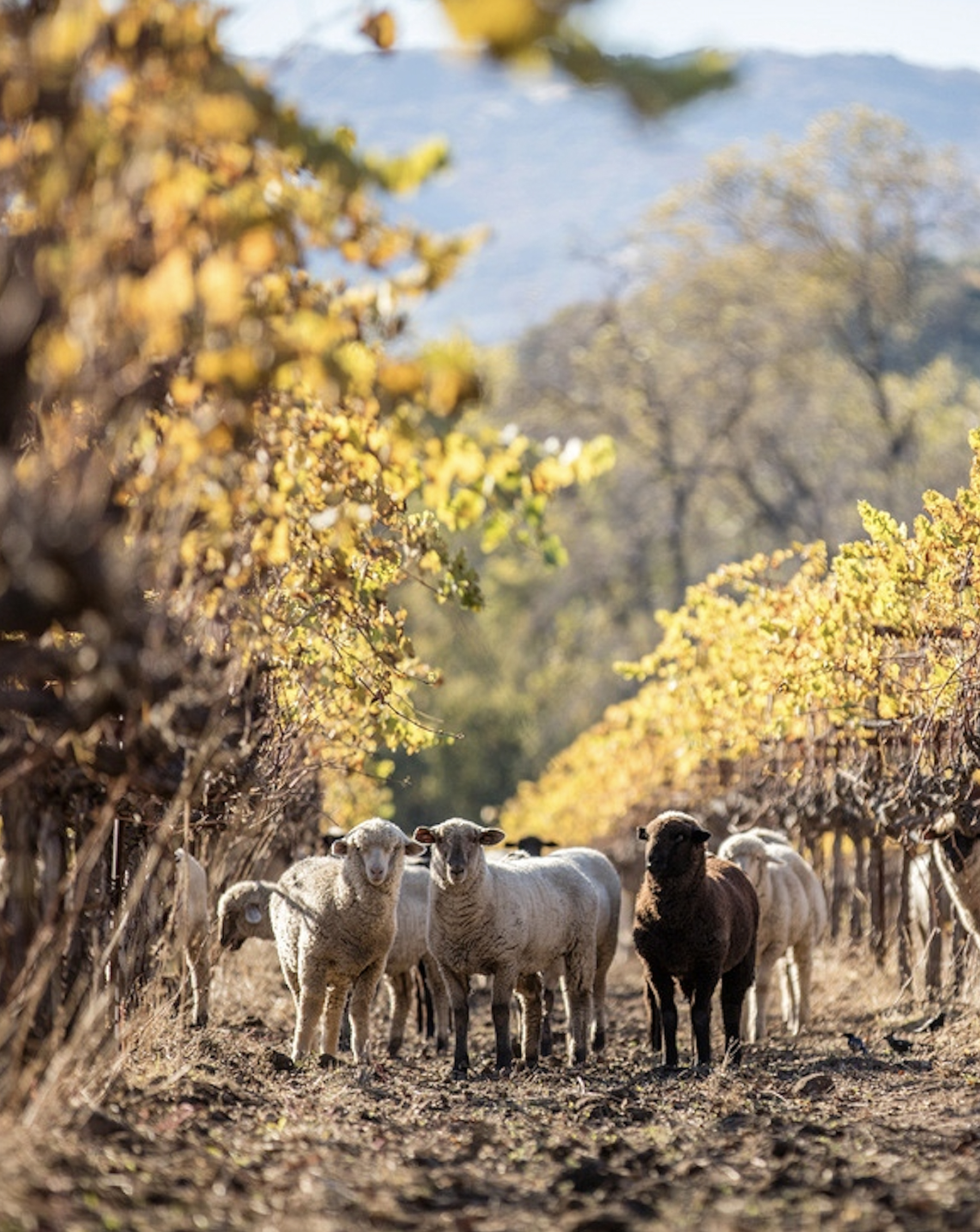
sheep in a vineyard

  You use sheep, chickens, and insectaries extensively. Can you describe one “closed-loop” biological system you’re proud of?

  We have used sheep in our vineyards for about 15 years. The benefits they bring to our soil health, including weed management and soil fertility, are noteworthy and something we are proud of.  The integration of ruminants in a perennial cropping system using cover crops is a great example of a “closed-loop” system.  We sow a cover crop in the fall. We bring the sheep in late winter once we have a good stand of forage for them. They eat the cover crop down as well as any other plants growing in the middles and under vine.  We typically get about 2 to 3 rotations, allowing for re-growth and multiple grazing passes.

  Each one of these growth cycles adds organic matter, root exudates, and other necessary soil health components. The sheep not only save us multiple tractor passes, saving both diesel usage and the associated emissions, but additionally, the sheep provide living fertility to the vineyards – something that tractors can’t provide. In this way, we are utilizing the wisdom of the natural world and life processes to create healthy and resilient farm systems with great yields, high-quality fruit, and minimizing the potential negative impacts of what could otherwise be an extractive, high-input farming approach.

  How do you track and measure carbon sequestration or biodiversity gains from your biological practices?

  In addition to biennial soil sampling with more traditional organic matter testing, in 2024, we installed several Agrology meters in our vineyards. These are devices that measure soil and environmental parameters to assess soil health, moisture levels, and other factors critical for regenerative agricultural practices.  More specifically, the meters measure soil respiration, transpiration, and CO2 flux in the canopy, all of which can be used as indicators of healthy soil functioning.

  Climate change is generating hotter summers. How are biological inputs helping you manage water stress and canopy health?

  Biological inputs are just one tool, but it’s really our holistic, regenerative farming system that makes the biggest impact. By creating healthier soils through cover crops, compost, integrating sheep, reduced tillage, and well-timed farming practices, we improve water retention and root strength, which helps vines stay resilient during extreme heat events. That translates to more balanced canopies, better protection for the fruit, and less stress during hotter, drier summers, all yielding higher quality fruit.

  What’s the biggest myth conventional growers still believe about scaling biological and organic farming?

  I’d like to start by saying that growers, like in any other business, respond to market signals and consumer demand. The best way to increase the uptake of regenerative farming in any sector is for our customers to support, via their dollar, those growers and businesses committed to these practices.  As more distributors, retailers, restaurants, and individual consumers demand products grown and produced regeneratively, the more uptake we will see on the grower side of regenerative farming.

  There is also the myth that organic and regenerative farming cannot scale because it is inherently too expensive or too complex. What is often labelled as “higher cost” is a short-term view that ignores the true cost of conventional farming, including impacts to clean air, water, soil health, and community well-being. When those externalities are accounted for, organic systems are far more economically rational in the long run.

  Consumer buying decisions indeed fuel the market. Concerning the organic wine category, it is an integral element to building a community where regenerative farming is not shied away from due to cost or the myth that scaling is impossible. What makes this possible is a growing community of vineyards practicing regenerative farming, highlighting the benefit of sustainable wine cultivation beyond a singular point of view. Bottomline, what happens on farms is not isolated. It is important to see where and how your food grows and understand that it is part of an ecosystem that must coexist.

  Is organic wine a niche? Older demographics may believe so and lean towards non-organic wines due to cost. A buying decision that may also be rooted in the idea that all wines are the same. Or that don’t be fooled by the sticker adage, a common viewpoint held by older wine consumers. Many people do not think about agriculture’s reliance on pesticides and synthetic fertilizers when purchasing a bottle of wine. What is needed to change this? More education and entry to the industry. The more the merrier will help this niche category become an industry standard, encouraging those who may be price-conscious to see the personal benefits of consuming organic wines. The benefits will outweigh the cost when they are pushed to the forefront of marketing initiatives.

  Grgich Hills Estate began farming organically without synthetic inputs in 2000. Their holistic approach to organic farming and winemaking, while building a community by fostering education, is promising for the future of organic winemaking. Ivo Jeramaz, Head Winemaker and VP of Vineyards and Production at Grgich Hills Estate, believes it is possible to farm without pesticides and fertilizers, a belief rooted in his formative years in Croatia. He provides great insights into the benefits of regenerative agriculture.

  Grgich Hills earned Regenerative Organic Certification in December 2022. Which biological amendments do you rely on most for your famous Rutherford Dust Cabernet?

  Vermicompost tea, fish emulsion/hydrolysate, and liquid kelp are the amendments we find are most useful across all our vineyards, including in Rutherford.

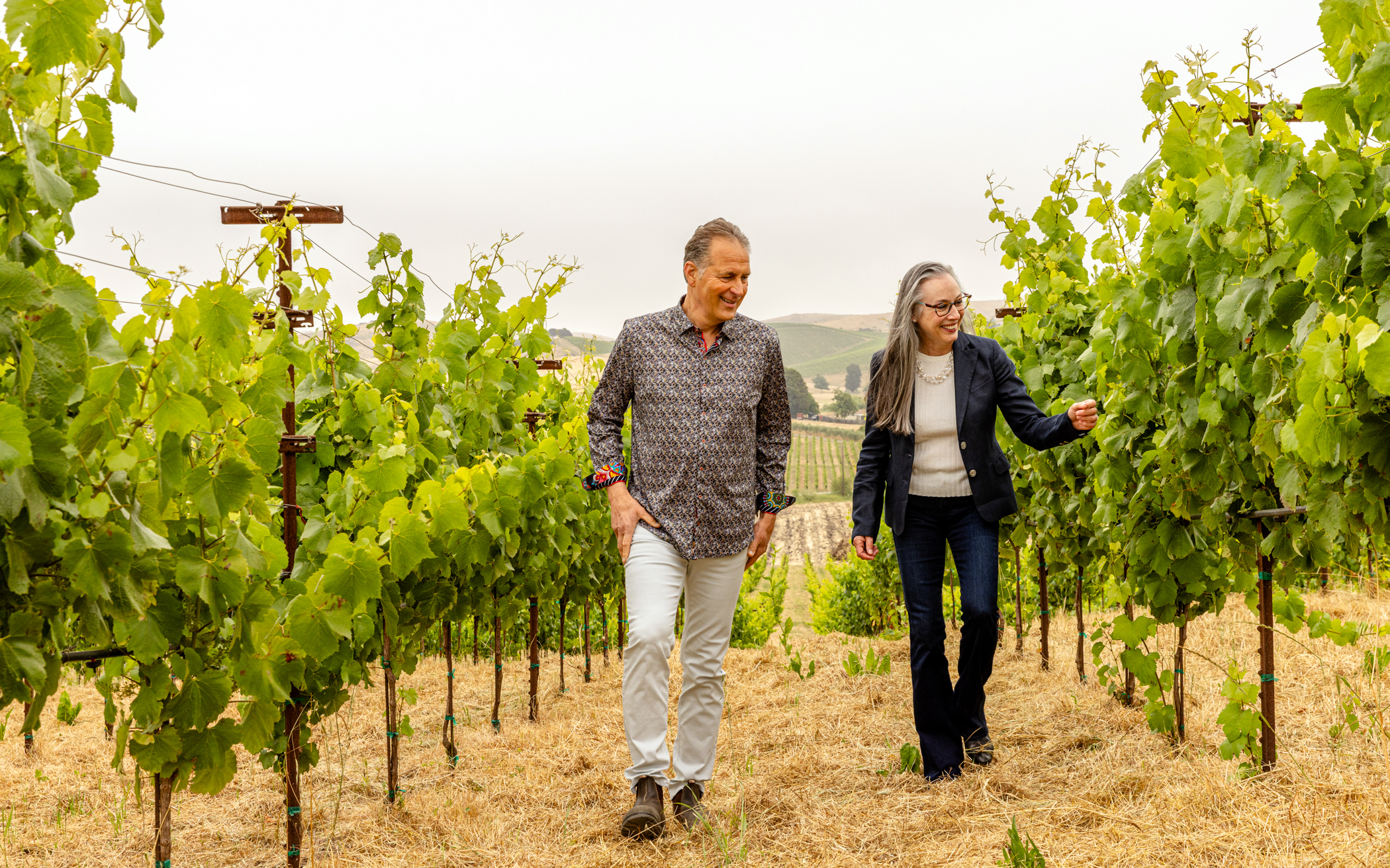
Mike Grgich walking with a woman in the grape vineyard

  How does reducing soil compaction tie into your overall biological soil-health strategy?

  Reducing soil compaction is vital to our soil health strategy. Because compacted soil is lacking in porosity, oxygen and water are unable to be easily stored – a substantial hindrance to the development of microbial life. Maintenance of our soil microbiome is a pillar of our soil health strategy, so compaction is something we prevent and attempt to undo wherever possible. The most effective strategy to limit soil compaction is through the root growth of plants.

  Can you describe your cover-crop and compost program and how soil organic matter has increased over the decades?

  The primary purpose of our composting regimen is to enhance the growth of our cover crop. The composition of seeds we sow varies from year to year, as we take note of which plants do best in each of our different vineyards. The combination of compost and cover crops enriches microbial life, which directly contributes to increases in SOM, as their remains become a part of that metric.

  It was my goal when I began managing our vineyards to increase SOM across our vineyards, but I found that organic and even biodynamic methods were unable to affect growth meaningfully, and we remained at around 2.5% SOM across our vineyards. After the implementation of regenerative farming, we saw a 2% increase in SOM as of 2025 across our 360 acres of vineyard.

  With Napa getting hotter and drier, which biological practices are now essential to achieve physiological ripeness without excess sugar?

  Companion planting is the most salient way to see the benefits of regenerative agriculture when it comes to the changes in climate that have been on the rise in recent years. Not only do the root systems of these plants structure soil, improving water holding capacity, but they also act as soil armor. We allow the dead plant matter to remain in our rows throughout the summer, as it creates a barrier against the sun that keeps our soil cool. This is crucial during late summer heat waves, as bare soil cooked in the sun allows heat to rise and cook the ripening grapes on the vine. This protection means we don’t have to worry about overripening even in the most excessively hot years. 

  Mike Grgich proved California could beat France in 1976. What would he say today about farming regeneratively and biologically on the same Rutherford Bench?

  When Mike Grgich was growing up in former Yugoslavia prior to the Second World War, all farming was performed naturally, without chemical additions. I was brought up much the same way in the Croatian town where I grew up, so we had that advantage when coming to the United States; we knew that farming without artificial pesticides and fertilizers was feasible. Mike was a big supporter of our natural farming initiatives, and I know he would be proud to see how far we’ve come.

  Both wineries exemplify hope in a bottle. A return to the past and a leap forward into a future. Regenerative farming is a great possibility. Those who question this surely have never experienced the delight of opening a Grgich Hills Estate 2014 Miljenko’s Selection Cabernet Sauvignon or felt the wonders of a Biodynamic®, Single Vineyard 2020 ‘The McNab’ Cabernet Sauvignon by Bonterra Organic Estates dance on their palate. But when they do, there is no denying that the hands that nurture the soil and harvest each grape with the utmost respect in Mother’s garden, free from pesticides and fertilizers, made this. No, not all wines are the same; some are simply unique and of value, wines worth more than their weight in gold. Wines that give more than they take.

How does the “One Big Beautiful Bill Act” affect your grape crop insurance?

acres of wine grape vineyards under a stormy sky

By Trevor Troyer, Agricultural Risk Management

I have been getting asked, “How does the One Big Beautiful Bill Act affect my crop insurance?”  Does it make any changes to grape crop insurance?  Will it lower my premium or increase my premium?

  Lawmakers passed the One Big Beautiful Bill Act (OBBBA) on July 4, 2025.  There were several changes made to the Federal Crop Insurance Act that affect growers, and the OBBBA made several improvements to crop insurance programs.  Crop Insurance is a valuable tool that is used to mitigate risk and is an essential safety net for many producers.  It also included updates and increased coverage options and, in some cases, higher premium support.  Below I have summarized some of these to help you understand how you may be impacted in the next year.

  One of the most significant changes that was made was expanding the benefits for Beginning Farmer or Rancher (BFR).  In the past if you qualified as a Beginning Farmer or Rancher you would receive an additional premium subsidy of 10 percentage points greater for the coverage level you had chosen.  In addition to the extra premium subsidy all administrative fees would be waived.  You would also receive an increased percentage of any transitional yields from 60% to 80%.  This means when you have a low yield that triggered the Yield Adjustment (YA) endorsement in your production database, you would be able to substitute a higher percentage.   BFR benefits in the past lasted for 5 years.  With the passing of the OBBBA these benefits are now expanded to 10 years.  In addition to the 10% premium subsidy rate a BFR will receive an additional 5% premium subsidy for the first two crop years. Then a 3% premium subsidy rate increase for the third year and an additional 1% for the fourth year.  These BFR changes will increase premium support and allow more growers to qualify for this benefit, and for a longer period.

  The One Big Beautiful Bill Act also amended Area Based Crop Insurance Coverage and Supplemental Coverage Option.  I won’t get into all of these because some are not applicable to grape crop insurance.  One that does interest a lot of vineyard owners is Fire Insurance Protection Smoke Index or the FIP-SI endorsement.  The premium subsidy for this has gone from 65% to 80%.  This may make it an interesting option for those in areas where fires can cause significant smoke taint damage.

  Here is what it says in the USDA Risk Management Agency’s Fire Insurance Protection – Smoke Index Fact Sheet – “The Fired Insurance Protection-Smoke Index (FIP-SI) Endorsement covers a portion of the deductible of the Grape Crop Provisions when the insured county experiences a minimum number of Smoke Events as determined by the Federal Crop Insurance Corporation (FCIC) in accordance with the Smoke Index Data Provisions (SIDP) and identified in the actuarial documents.” 

  This endorsement is based on your underlying policy’s guarantee. In other words, the prices per ton and the average tons used for the underlying policy and your coverage level.  You can never cover 100% of your average production with crop insurance.  You can only cover up to 95%, even though a policy may not have that high coverage. Grape crop insurance only goes to 85%, and this is done with optional endorsements etc.  FIP-SI covers the deductible portion up to 95%.  If you had 50% coverage on your grapes it would cover 45% of your deductible.  If you had 75% coverage the FIP-SI endorsement would cover 20%, etc.

  You sign up for Fire Insurance Protection – Smoke Index by January 31st.  This is the Sales Closing Date for Grape Crop Insurance in California.  The insurance period for FIP-SI begins on June 1st and ends on November 10th. You do not need to report your acres separately as it uses the underlying policies acres.

  Here is the Cause of Loss from the 26-FIP-SI Endorsement: 

Causes of Loss

(a) This Endorsement provides protection for Smoke Events that meet the County Loss Trigger when the minimum number of Smoke Events occur in the county as identified in the actuarial documents. Triggered counties will be determined after the end of the Insurance Period.

(b) Individual vineyard yields are not considered under this Endorsement. It is possible that your individual vineyard may experience reduced yield(s) and you do not receive an indemnity under this Endorsement.

(c) The notice provisions in section 14(b) of the Basic Provisions do not apply to this Endorsement.

(d) Once published, FCIC’s determination in section 8(a) is final and is a matter of general applicability, presumed to be accurate, and will not be changed.

chart showing 2025 subsidy and factors for coverage and 2026

  So, you may not have any Fire or Smoke damage to your vineyard or grapes but still receive a payment.  This is based on your County.  No adjuster is required for this. You are not required to file a Notice of Loss with your crop insurance agent.  Or you may have a loss and get a claim payment for your grape crop insurance and for FIP-SI as well.

  Another major change that comes out from the OBBBA, that will make difference to a grower’s premium, is an increased subsidy rate. 

  An increase in the subsidy portion of the premium will decrease the Producer Premium for that same level. It also opens the door for some to increase coverage as they will be receiving more support. A higher coverage level means that you have more of a chance of having a claim paid.

  With grape crop insurance you are covering an average of your historical production per variety.  Coverage levels go from 50% to 85%.  You have a built-in production deductible with your coverage.  If you choose 70% coverage you have a 30% deductible.  You would have to have a loss of over 30% to have a payable claim. So, if you had a loss of 40% of your average production you would get paid on the 10% past your deductible.   

  With an increased subsidy it might make sense for some to move up another 5% or more in coverage. 

  As an example, I ran a quote for 10 acres of Chardonnay in Sonoma County in California.  The set price per ton is $2401.  I used an average of 4 tons per acre for the quote.  So, at 70% your guarantee would be 2.8 tons per acre.  If you harvest under that you would have a payable claim.  The 2025 premium per acre was $119, for the 10 acres $1190.  For 2026 the premium per acre is $99.70 and then for 10 acres $997.   As you can see this does make a difference.  Whether or not you decide to move up in coverage, saving money while mitigating risk is always important.

  USDA Risk Management Agency Administrator Pat Swanson said. “We’ve moved quickly to put American farmers first, ensuring they have the protection they need when unavoidable natural disasters occur.  We encourage all producers to work with their crop insurance agent to understand how these historic changes will benefit their operations.”