The Growth of Walla Walla Valley’s Rocks District 

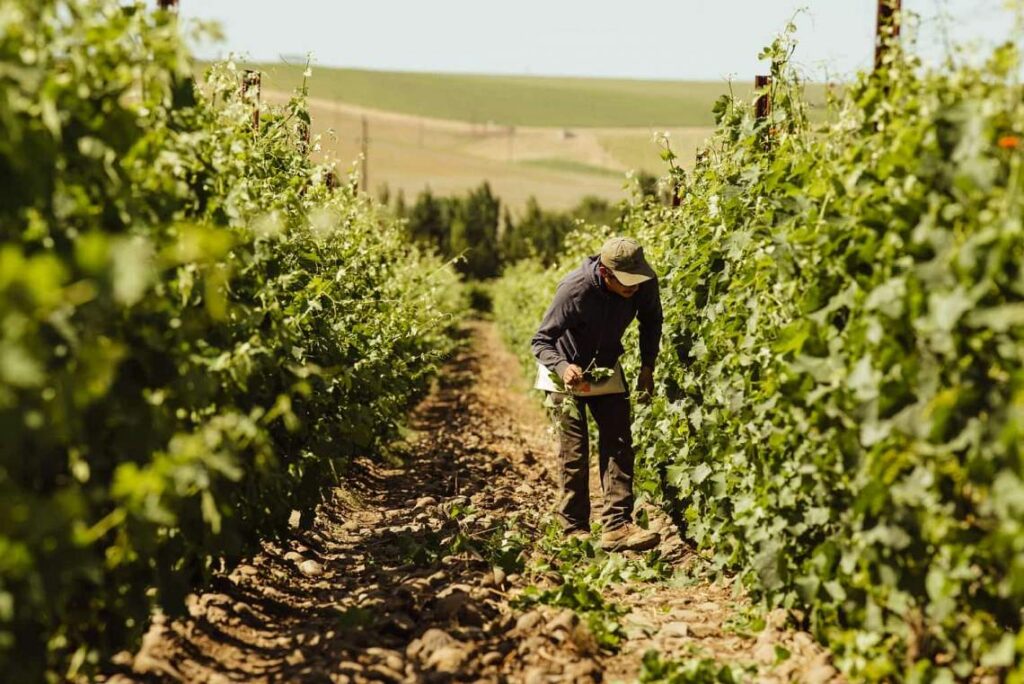
man working in vineyard

By Becky Garrison

                As reported earlier in The Grapevine Magazine, 2024 marked the 40th anniversary of the Walla Walla AVA, a wine appellation in Eastern Washington State that includes one nested AVA, the Rocks District of Milton Freewater AVA.

                In 1997, Christophe Baron of Cayuse Vineyards planted the first modern day vineyard on the Oregon side of the Walla Walla Valley in a region that was referred to as The Rocks, and later become known as The Rocks District. As per Cayuse Vineyard’s website, “The terroir reminded him of the cobblestones of the southern Rhone valley and Châteauneuf-du-Pape in his native France.” 

                When Steve Robertson, owner of Delmas/SJR Vineyards and the founder of the Rocks District Winegrowers, first visited this region in 2004 there were only 25 to 30 acres of wine grapes and only a handful of wine producers. “There was not much local support for growing wine grapes in that abundantly rocky soil, and I was not encouraged to purchase land there for that purpose,” he recalls. 

                But like Baron, Robertson recognized he could produce world-class wines from these basalt cobbles and gravels, the deposition of which reach many feet below the surface. This depth makes for extremely well-drained soils that encourage deep-root penetration in pursuit of water and nutrition. 

                Typically, wines from this soil series possess an umami character, savory complexities, and a singular minerality. “These wines have very round flavor notes and no hard edges if picked and vinified with respect for those conditions. They’re not necessarily fruit forward, and there exists a saline quality that’s undeniable,” Robertson exclaims.

                Robertson and Baron’s vision for The Rocks District attracted others like David Wanek. “With some unique places like the Rocks, you’re transported to these places instantly when you smell and taste the wine produced from this region. The Rocks terroir is new and different and doesn’t exist anywhere else in the world,” Wanek observes. 

                On a practical level, despite the region’s dry climate, most vineyards have adequate water, as there’s not as much pressure for water due to drought and fire as is the case with some other wine regions in the Pacific Northwest. Also, the price for vineyard land at this time made it easier for Wanek to establish himself as a vintner here as opposed to more established Pacific Northwest regions like Oregon’s Willamette Valley.  

                Wanek began buying and developing vineyards under his company Walla Walla Land Company with the goal to become a premium grower that will attract those vintners who want Rocks District fruit but don’t want to build out their own vineyard. With Robertson guiding him towards those people he would need to build and maintain his vineyards, Wanek expanded to 220 acres of land spread amongst three vineyards. Even though all his vineyards are within two miles of each other, the same clone of a particular varietal will taste very differently at each vineyard. 

                In 2021 Wanek partnered with Jeff Bond to make their own estate wine brand using only grapes farmed from their own vineyards. They named their winery Cimento, which is an Italian word for experiment derived from the 17th century Academia del Cimento, which was the first scientific society created by Galileo’s followers who developed the scientific method. “This word kind of fits what we’re doing. We’re trying to grow plants in 300 feet deep of rocks, and we’re experimenting with different training methods, clones, and rootstocks. So, I thought Cimento was kind of an apt name for what we were trying to accomplish.”

The Establishment of the Rocks District of Milton Freewater AVA

                Robertson and his wife Mary founded SJR Vineyards in 2007 and established Delmas three years later with the 2010 vintage, where his daughter Brooke Robertson currently serves as the Director of Winegrowing and Winemaker. Also, he joined forces with Dr. Kevin Pogue, a professor of geology at Whitman College in Walla Walla to gain formal recognition for this region by establishing the Rocks District of Milton Freewater AVA. This AVA is only 5.9 square miles (3,767 acres) and has the distinction of being the only AVA in the U.S. whose boundaries (96 percent) have been fixed by a single soil series (Freewater Series) and a single landform (alluvial fan). 

                In establishing this AVA, Robertson sought to create an appellation that would be respected for its global distinctiveness and appreciated by fine-wine consumers alongside other world-class wine destinations like Hermitage and Côte-Rôtie in France. In addition to Robertson, six other producers helped fund this project, with the TTB approving the Rocks District of Milton Freewater AVA on February 9, 2015. Following this approval, Robertson formed the Rocks District Winegrowers. (Side note: Pogue has since worked on approving nine additional AVAs in the Pacific Northwest.) 

The Growth of the Rocks District   

                Since 2015, the Milton Freewater AVA has grown from 250 to 707 planted acres. While this AVA has more planted acres than either Hermitage or Côte-Rôtie, Ben Kaehler, General Manager of The Walls Vineyards, observes, “Working in The Rocks District still feels like exploring uncharted waters.” Kaehler notes how the grape varieties of the Rhône have become established, particularly Syrah and Grenache, while the Rhône whites are beginning to attract a lot of attention.” In Robertson’s estimation, the appellation is in a particular sweet spot with much more promise ahead. “The Rhône varieties, especially Syrah, reach physical maturity easily in these cobbled soils and dry conditions. In comparison, the Bordeaux varieties are more challenging because they want to be harvested later than our seasonal weather conditions (heat units) can typically deliver on a consistent basis.”

                In addition, Cabernet and Bordeaux varieties have a totally different feel when grown in the Rocks District Kaehler opines, “You get soft, fine, tannins comparable to the same varieties grown just outside this AVA, which are more typical of the larger Columbia Valley AVA. Both are of excellent quality, but that’s the opportunity.”  Also, while the Tempranillo presents challenges in the cellar, he finds it is an exciting varietal to explore.

                Currently their PÁŠXA brand features five wines all sourced from the Rocks District with four Walls wines using fruit from the Rocks District, including a Single Vineyard Series Rockgarden Cabernet Sauvignon. Their grapes are sourced from two estate vineyards: Rockgarden Vineyard (8 acres) planted in 2007 November and Petros Vineyard (12 acres) planted in 2020, along with fruit from River Rock and Stoney Vine Vineyards. 

                Many of these wineries in The Rocks District like Los Rocosos Vineyards operate like truly a boutique winery with the owners often serving in their tasting room. Headed by Roger Lesmstrom, Los Rocosos Vineyards began in 2016 with a focus on growing for other wineries before producing their own wines. On their eight-acre vineyard that’s drip irrigated and hand harvested they grow Grenache, Mourvèdre, Syrah, Grenache Blanc, Sangiovese, and a little bit of Viognier that Lemstrom uses for blending. Currently, they produce between 400 to 600 cases of wine per year for sale in the tasting room, as well as selling grapes to nine different winemakers. In addition, Lesmstrom buys fruit from growers he trusts. 

                A number of Walla Walla based wineries such as Echolands Winery feature these wines in their portfolio. Winemaker and General Manager Brian Rudin are drawn to these grapes due to their distinctive aromatic profile. “Wines from The Rocks District just smell different than anything else on this planet with such a cool flavor range. Also, it’s one of the most fun terroir experiments that there is out there to try and harness the right amount of mineral and savory tones to achieve the perfect balance.” 

                Further, a small but growing number of winemakers in the Willamette Valley have begun to explore making wine using Rocks District fruit with Brian and April Zawada, owners of Violet Vines (Carlton, OR) having the distinction of being the first Willamette Valley winery to own a vineyard within this AVA. In 2019, they purchased five acres in The Rocks District with a focus on growing Syrah, Grenache, and Mourvèdre varieties to produce both single varietal bottlings along with a GSM blend. “I’ve been taking what I’ve learned over the years in terms of making high quality Pinot noir in the Willamette Valley and applying some of those same practices to these wines,” Brian states. 

                The success of these wines led them to offer both a Willamette Valley and a Rocks District tasting flight in their Carlton tasting room, which they find gives them an opportunity to educate the consumer about the differences between these two wine regions. As a result of the enthusiastic reception to these wines, the Zawadas hope to host events with other Willamette Valley winemakers who are also experimenting with fruit from The Rocks District.

Challenges Growing Grapes in The Rocks

                Lemstrom describes operating a vineyard in The Rocks District as akin to “growing grapes on chunks of styrofoam in the heat,” adding that attention to nutrients, available moisture, temperature variations, and wind, are critical for vine growth. In his experience, the greatest threat is weather-related damage. “Imagine having 20% of your crop damaged by hail the size of golf balls or a solid week of 118-degree temperatures turning the top clusters into raisins.” 

                As Wanek declares, “It’s hard enough to walk on those stones, let alone, you know, farm them. You must hand harvest and hand farm basically everything in The Rocks District.” In a similar vein, not using herbicide translates into manual weed control.

                Also, chilly air can be a challenge. The Rocks District receives air drainage from both the Blue Mountains and the VanSycle Ridge where cold air can move like a river from those higher elevations to the flat valley floor below. To address these concerns, Kaehler notes how most vineyards utilize wind machines for frost protection in the fall and spring. Additionally, during the extreme cold, many winegrowers will select, lay down and bury canes with soil, or will bury the entire trunk, head and up to three buds on head-trained (MHT) vines (a specialized training form found exclusively within The Rocks District developed by Brooke for vine protection, health and longevity) in the fall, in the event of an extreme hard freeze.

                Finally, Robertson believes another key challenge that remains is finding needed talent and expertise on both farming and viticulture fronts as more plantings arrive in the AVA. “It’s difficult to be world-class if you don’t have world-class experienced people to meet the promise of this very distinctive AVA,” he stresses.

Basalt Bash Celebrates the Rocks’ 10th Anniversary 

                On July 25-26, 2025, The Basalt Bash & Barrel Auction celebrated the 10th anniversary of the founding of The Rocks District of Milton-Freewater AVA. This new event was created and hosted by the Rocks District Winegrowers and connected the winegrowers with the local community: with proceeds going to the Milton Freewater School District in support of mental health services, which local officials identified as the greatest community need. The weekend kicked off at Watermill’s winery with a Rocks District Winegrowers wine and tamale tasting, followed by a downtown Milton-Freewater Fiesta. A golf event as well as a silent barrel tasting and auction at Davis Orchards closed out the first annual Basalt Bash festivities. Event organizers were able to write a $75,000 check to the school district from proceeds. This will be an annual event with the next Basalt Bash slated for July 24-25, 2026.

                When reflecting on the future of this burgeoning wine region, Ben Kaehler, General Manager of The Walls Vineyards contemplates, “People may think they know what Rocks District wines are stylistically, but the story is still being written.” With only eighteen percent of this AVA’s land currently being utilized for wine-grape production, there exists tremendous potential for growth. Currently, a hundred additional acres are in development, and the Rocks District Winegrower membership continues to rise each year there for that purpose,” he recalls. 

3M™ Liqui-Cel™ Membrane Contactors improve alcohol removal in wine

Find out how Solventum improved the alcohol removal process with osmotic distillation and see suggestions for operating a system using Liqui-Cel membrane contactors for alcohol removal. There is an increased interest across the globe in alcohol reduction from wine. One reason is that higher grape sugar (Brix) levels lead to a higher alcohol content in the fermented wine. This application brief provides helpful hints for operating a system using Liqui-Cel membrane contactors for alcohol reduction and effect of operating conditions. Read More

Wine Tank Purchasing

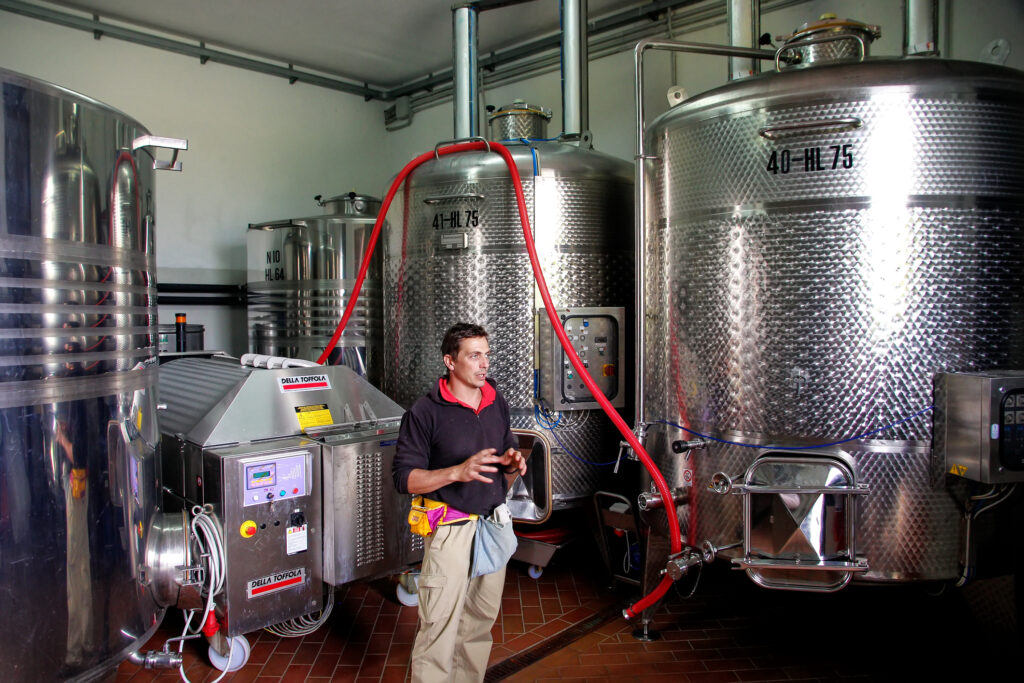
man standing in front of 4 very large stainless steel wine tanks

By Thomas J. Payne – Winemaking Consultant

Much time, thought and effort should go into planning what the winery wants to accomplish with the tanks.  If these decisions are made properly and well in advance dollar savings and better functionality can be achieved.

  What will these tanks be used for?  If the tanks will be used for fermenting juice one set of criteria may be used.  If used additionally for cold settling of juice, red fermentations, or cold stabilization the list of criteria will expand.  Deciding what the tanks are needed for in the winery will lead toward the right choice.

  White wine fermentors often have a small valve port at the bottom of the tank at a diameter, for most smaller winery sizes, of 1.5 to 2.0 inches.  This is used to fill and empty the tank.  A racking valve, usually of the same diameter, will exist on the tank to allow the winemaker to remove clear wine or juice from the tank to a level a small manway door, normally and 18” oval, may be opened to continue to pump the remaining clear juice or wine out of the tank.  These tanks are very versatile for white or even red wines after pressing.

  Red wine tanks often have similar characteristics to the above but with a lower manway door at the floor or bottom of the tank.  This allows the winemaking team to remove the pomace, after skin fermentation, from the vessel.  Some red wine tanks do not have the side oval door mentioned in the white wine paragraph above but the purchaser is encouraged to get these doors on their reds tanks so the tanks may be used more in the cellar as red and white wine tanks.

  Cooling Jackets:  Location & How Much?  Give thoughtful consideration to this aspect due to the many physical characteristics and laws of heat transfer.  Consider the amount of surface area that may be needed to cool the juice/wine needed.  If one needs to use the tanks for fermentation only a smaller surface area may be used.  If chilling the wine to cold stabilize the wine, make sure there will be enough surface area to overcome predicted ambient cellar temperatures and let your cooling system representative know the capacity of the wine tank and desired cold stability temperature of the wine.  When discussing the cooling jackets, be sure to understand where the jackets will be placed on the tanks to best be able to predict how much volume will be needed in the tank for the heat transfer to start taking place.  My suggestion is the lower the jacket placement on the sidewall of the tank the better.  Larger sized tanks may require two, or more, usually separate cooling jackets.

  Will solenoids be  used to help control the temperature of the tank? 

Will these be electronically controlled? Do you want them to be web based controlled for off-site monitoring and manipulation?  Do you want wireless applications to control the solenoids?   How many thermocouples ports will be needed for proper temperature control and for the readings desired?

  Heating Capacity:  Becoming more of the norm in the cellar and more affordable for the winemaking team.  Decide on the needs of the heating and give serious thought to insulating your tanks for the process.  Do you care for heating elements in the bottom of the tank, or do you prefer a mobile glycol heater unit that will plug into your isolated glycol jackets on individual tanks.  If choosing the heating element positioned in the bottom of the tank make sure to address the potential freezing of this liquid, if used, during cold stabilization.  If using a glycol heater for the jackets, make sure to plumb the tanks for this feature.

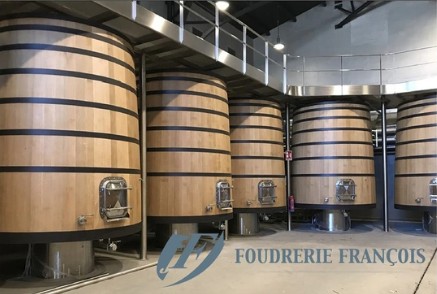
it shows 4 very large wine tanks with wooden exteriors

  Valves – Where & How Big?  Racking valves – determine what size fitting and hoses you may use for the transfers of the juice, wine or must into and out of the tank.  Smaller wineries will be able to size the valves at 1.5 to 2.0 inches as mentioned for juice or wine.  If must will be pumped into and out of the tank one will want to review how this will be done and consider larger sized fittings at the bottom port.  I rarely choose the larger valves but there may be instances where this is the best choice.

  Manways and Doors:  Multiple configurations of manways and doors exist.  Think through all wine and juice production needs to best select these locations, functions, and sizes.

  Will the tanks be placed on adjustable legs or stands?  This can be a large issue in terms of physically managing the red wine must.  If one prefers not to pump red wine must after crushing for quality purposes, one must place the tanks at a height with the lower manway door opening on the red wine tank to have a bin or container placed underneath the lower manway opening to the tank. 

  Although this is the largest reason to place a tank higher in the air than “normal” be sure to pay attention to this height even if using a must pump.  Dejuicing tanks can also be elevated above a press opening level for certain production benefits and efficiencies linked to productions styles and quality issues.  White wine tanks may have more flexibility regarding the tank leg height but be sure to understand where the racking door will be placed and how the tank will be serviced, cleaned among other factors.

  Will the tanks be placed indoors or outdoors?  

Review this question not only for your first needs but address the question about the anticipated growth of your winery.

  What material should the tanks be made from? 

Although this article focuses on stainless steel tanks, tanks can also be made from materials such as concrete, fiberglass, wood, or plastic.

  Will fixed or variable capacity tanks be used? 

Speak with the winemaking team for a long time on this issue.  What style of wine will be produced and how long will it stay in the stainless tanks?  There are certain positive applications for both styles so choosing the correct one will be significant.  I highly recommend fixed capacity tanks for almost all situations and applications.

  What size tank will we need and where will it be placed?  Don’t laugh but some tanks may be a height that may not fit in your winery with a fixed ceiling height.  Keep in mind the tank is a cylinder, in most cases, and that tipping that on end and upward may require more ceiling height than expected.  Run some math to make sure the tanks will fit in the building.  Is the building door large enough to get the tank in the building? Also determine if one can open and service the top of the tank after it is in place.  Will a catwalk be built and if so – what impact will this have regarding setbacks from the wall or certain areas.  Will a public catwalk also be close by?  Will the public have access to the tank?   How much space will you care to have between the tanks?

  When do I need to order the tanks?   The earlier the start of negotiations with suppliers can have a better chance of getting exactly what you want at a reasonable price.  Custom-made tanks are not necessarily more expensive than stock tanks.  Orders with ample lead time may allow for the tanks to be made where quality craftsmanship is high and labor cost are low.  Order at least 7 months in advance to get what you want and to have time to negotiate prices with different suppliers.

  Equally important to all the above, one must also give serious thoughts specific to their winery, addressing: What will the side wall height to diameter ratio be?  Can certain savings be made if tanks are made in stock sheet metal width sizes?  Will lift eyelets be needed?  Will ladder hooks be needed and where?  Will the top of the tanks truncate forward, back or have centered manway tops?  Will sight gauges be needed?  Will sample valves be installed and where?  Will thermocouple ports be needed and, if so, how many and where?  Will name plates and ice shields be needed? Do you want a separate mixing valve port?  Will delestage be a winemaking tool that is used in the operation?

  Make sure the supplier of the tank is reputable and establish what type of welds will be used, their finish and the gauge/thickness of the steel, if choosing stainless. The quality of the stainless steel can vary too.

  In review – a wine tank is not just a wine tank!  Multiple factors go into each winery specific needs for these tanks.  The above are just some of the starter issues one will want to review to make a decent set of decisions.  In no way have all issues been covered.  The more the winemaking team thinks through their operational and winemaking needs related to the wine tanks, both immediately and for the future, the more cost effective this purchase will become.

Precision Pruning

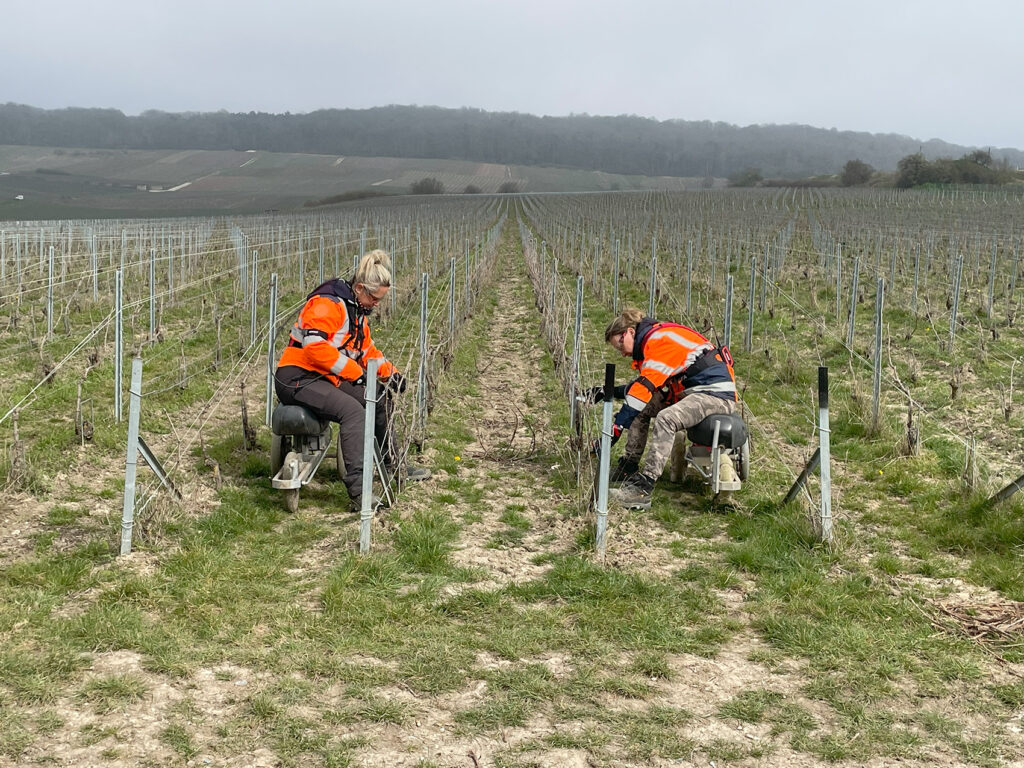
two people pruning in the vineyard
Photo courtesy of INFACO-USA, Inc.

By Alyssa L. Ochs

In today’s modern vineyard, pruning means much more than just cutting off old canes and spurs so grapes can grow to produce wine. In fact, pruning goes far beyond routine maintenance because this vineyard task directly shapes the health, yield, and longevity of grapevines for the future.

  Pruning is both an art and a science that requires the right timing, techniques, and tools to set the stage for a successful growing season. When you tailor your vineyard’s pruning strategies to your unique varietal, climate, and business goals, you can make informed cuts today that ensure vineyard success for many years to come.

  To learn more about this topic, we connected with Francisco Pardo, director of INFACO USA. Pardo shared details with us about the tools needed for all phases of pruning, how to improve vine health through pruning and how to manage weather and safety risks for a successful harvest.

The Phases of Pruning and Why Tools Matter

  INFACO is a pioneer in developing electric tools for vineyard maintenance, with 40 years of expertise and a range of viticulture solutions for all pruning stages.

  Pardo walked us through the phases of pruning throughout the year to emphasize the importance of using the right tools and techniques and the benefits of doing so.

Phase 1: Pre-Pruning (Optional Mechanized Pass)

In late fall or early winter, after harvest and leaf drop, the pre-pruning phase begins. The goal of this first phase is to reduce canopy bulk and cut long shoots, making manual pruning easier.

  You can use mechanical pre-pruners or rough-cut tools to reduce the volume. However, electric pruning shears, such as INFACO F3020, bypass mechanized pre-pruning and let vineyard workers cut through thick canes quickly with minimal effort. INFACO F3020 electric pruning shears weigh only 1.5 pounds and have an extended battery life to support up to eight hours of continuous work.

Using the right tools at this stage reduces worker fatigue during the initial heavy cuts and improves productivity early in the pruning cycle.

Phase 2: Spur or Cane Pruning (Primary Pruning)  The second and primary pruning phase occurs during winter dormancy, typically between December and February, depending on your region. The goal during this phase is to choose and retain essential canes and spurs that will produce next year’s crop while removing all others.

Electric pruners like the INFACO F3020 help workers make consistent cuts close to the cordon and cane base.

  INFACO’s safety systems protect workers from cut injuries, while its multiple blade sizes and heads help workers adapt to various applications without needing to switch tools.

The results are faster, cleaner cuts with lower risk of vine disease, plus uniformity across blocks and reduced employee hand strain during long workdays.

Phase 3: Sucker Removal / Green Pruning (Spring/Early Summer)  After bud break and through early summer, the pruning goal is to remove non-productive shoots and suckers from trunks and crowns. Lightweight shears and smaller INFACO heads are ideal for efficiently removing green shoots. Some vineyards use a combination of manual tools and electric models to increase pruning speed. With the right tools, you’ll maintain optimal airflow and light penetration while protecting the vine structure.

  “At each stage, the right tools are essential,” Pardo said. “For example, the INFACO F3020 electric pruner offers precision and power for clean, uniform cuts that reduce disease risk and protect vine health. Also, by eliminating hand fatigue and inconsistencies between workers, the right equipment helps vineyard crews maintain high-quality results, block after block.”

How Pruning Impacts Vine Health and Pitfalls to Avoid

  Proper pruning addresses more than yield management; it extends to long-term vine health, with balanced wood, good airflow, and a canopy structure that’s disease-resistant and promotes even ripening.

  Pardo shared with The Grapevine Magazine that one mistake he commonly sees in vineyards is over-pruning and removing too much old wood, which weakens the vines. He also said that leaving stubs and ragged cuts can create infection sites. Meanwhile, inconsistent pruning across crews leads to uneven growth and can disrupt harvest timing.

“With electric tools, growers can achieve consistent, clean cuts, helping reduce cane dieback and improving overall vine longevity,” Pardo said.

Timing It Right by Understanding Bud Development

  Another important aspect of pruning is timing everything right. Pruning too early in the season can expose your grapevines to frost damage. But if you prune too late, you could face uneven bud break and reduced vine vigor.

  INFACO encourages grape growers to monitor bud swell and delay pruning in frost-prone areas until the buds have visibly developed. INFACO also recommends starting with less sensitive blocks of vines and with the less frost-prone vines first. Additionally, paying attention to key indicators like sap flow or weeping can let you know when the vines are metabolically active and ready to heal.

  “Using these cues, along with weather forecasting, helps growers align timing with optimal vine response,” Pardo said.

Managing Weather Risks During Pruning Season

  There’s no denying that global weather patterns are becoming increasingly unpredictable and that climate plays a critical role in how vineyards must approach pruning.

  For example, Pardo noted that cold snaps after early pruning sessions can cause tissue damage, especially in early-budding varieties. Another weather-related risk is excess moisture, which increases the risk of the fungi Eutypa and other trunk diseases, which can cause delayed shoot emergence and dwarfed leaves if you make pruning cuts during rain. Also, if your area experiences a warm early spring, bud break can occur earlier than expected, limiting your optimal pruning windows.

  To adapt to these weather risks, Pardo at INFACO recommends delaying pruning in high-frost areas and pruning only the tops of the vines early, while finalizing cuts later. He also suggests avoiding pruning within 48 hours of forecasted rain whenever possible. Another tip is to segment your vineyard by block sensitivity and prune in phases rather than all at once or randomly.

  “Flexibility, combined with fast, efficient tools, helps you stay ahead of the curve,” Pardo said.

Improving Pruning Safety with the Right Equipment

  However, worker safety is paramount during pruning activities and must be made a top priority in every vineyard setting. Pruning is one of the most labor-intensive and injury-prone tasks in all of vineyard management. Especially during long shifts, many workers experience repetitive strain injuries, hand and arm fatigue and accidental cuts while doing pruning work.

  “At INFACO, safety is a priority,” Pardo said. “The F3020 is compatible with a new and unique touchless safety system, which creates an invisible safety zone that instantly opens the blade if the operator’s other hand comes too close. This is especially valuable in tight canopies or team environments.”

  Pardo also recommended that vineyard workers use ergonomic tools to reduce the risk of repetitive strain injury while pruning. Vineyard managers must provide regular training and reminders on cut techniques and proper tool maintenance to ensure safety and equipment longevity. Employers can also help keep their workers safe by encouraging them to take breaks during high intensity pruning days to prevent dangerous mistakes, fatigue, and pain.

  “Safer workers are more productive—and more likely to return next season,” Pardo added.

Final Thoughts about Pruning Tools and Timing

  Precision pruning isn’t just about shaping vines; it’s about shaping outcomes in a vineyard. From pre-pruning tasks to winter dormancy and early summer green pruning, every phase plays a distinct role in supporting consistent yields and preventing disease.

  When planned and executed mindfully, pruning in the vineyard can improve airflow to your grapes, increase sunlight penetration, and promote balanced growth. The result will be stronger, healthier vines that are able to deliver high-quality fruit year after year.

  In addition to using the proper tools and techniques, pruning is also about ensuring the right preparations and protections are in place. From early frosts to heat waves and heavy rains, extreme weather events require flexible pruning strategies that adapt to changing conditions. Meanwhile, consistent safety-conscious practices will keep your workers injury-free and efficient, fostering a positive workplace environment and an initiative-taking approach to vineyard management.

  Fortunately, there are viticulture-focused companies like INFACO that can help guide you toward the best tools and advice for your unique vineyard operations and pruning needs.

  “At INFACO, we’re proud to support growers with innovative, professional-grade tools that combine power, safety and reliability to meet the demands of modern viticulture,” Pardo from INFACO said.

Rolling Out Revenue

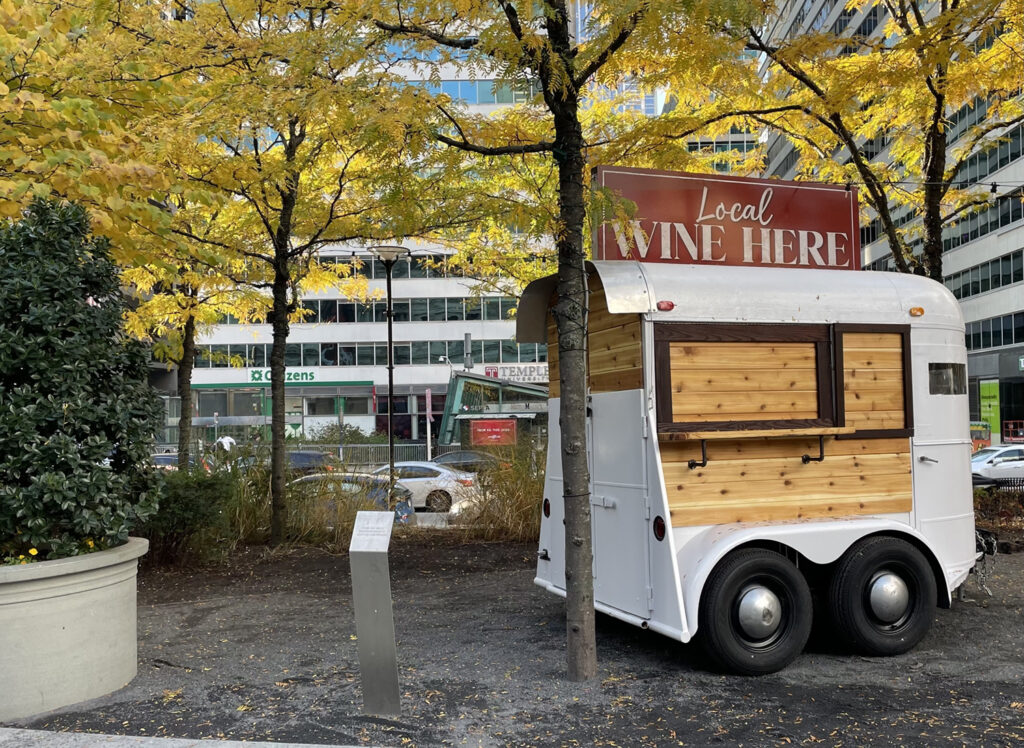
mobile trailer with sign saying local wine here

By Corey Krejcik, Founder of Thirsty Bandit

In today’s marketplace, wineries are discovering that fixed tasting rooms, while foundational, are no longer enough to fully capture consumer attention or revenue potential. The modern wine audience is constantly in motion, more often exploring experiences that fit into their lives rather than planning entire weekends around a single visit. As a result, mobile retail (think branded trailers, trucks, or small pop-up tasting experiences) and seasonal activations have become essential tools for growth, storytelling, and brand connection.

  According to Wine Market Council research, nearly 60% of millennial wine buyers say they’re more likely to try a brand if they encounter it at a festival, pop-up, or event. These mobile formats are rewriting the rules of engagement: reaching new customers, building awareness, and generating direct sales—all with lower overhead and faster returns than permanent infrastructure ever could.

  Below are five interconnected reasons why this model works and why wineries that embrace it early are likely to lead the next era of growth.

1. Brand Visibility as a Moving Billboard – Every mile a mobile wine unit travels is a marketing impression. A well-designed trailer or branded truck isn’t just a point of sale; it’s a rolling expression of your brand identity. Wrapped in bold visuals, anchored by consistent design language, and styled with the same intentionality as a tasting room, it becomes a moving billboard that tells your story everywhere it goes.

  Imagine a well-designed wine trailer parked along Main Street for a downtown First Friday program. Staff chatting up customers and pouring glasses to be enjoyed while shopping after-hours. Passersby stop, take photos, and post them online. The moment isn’t just aesthetic; it’s strategic. Every shared image, every tagged post, extends your reach far beyond the event itself.

  Smart design makes this amplification effortless. “Instagrammable” touches like a striking bar façade, a photo wall, or a vintage-inspired logo, encourage organic sharing. QR codes linked to wine clubs or digital tasting notes turn social impressions into measurable leads. The exposure doesn’t end when the event closes, it multiplies across feeds, hashtags, and memories.

  In a category that often leans on tradition, mobility signals modernity. It tells consumers your brand isn’t confined to the vineyard—it’s part of their lifestyle, wherever they go.

2. Lower Fixed Costs & Faster ROI – Every winery leader understands the cost of brick and mortar: design, construction, utilities, maintenance, and staffing. A mobile unit rewrites that equation.

  Compared to building or leasing a permanent tasting room, mobile activations dramatically reduce fixed costs. There’s no need for heavy infrastructure, zoning approvals, or long-term leases. Most mobile setups are built as plug-and-play systems. Units are meant to be self-contained, code-compliant, and designed to be operational in minutes.

  But the most compelling case isn’t just lower cost, it’s speed of return. For many wineries, mobile units pay themselves back within a single season of festivals, markets, or regional events. A well-run activation can pour thousands of glasses over a few weekends, with direct sales, signups, and wholesale leads all feeding the revenue stream.

  From a strategic perspective, mobile retail functions as both a sales tool and a marketing engine. The investment is easy to justify when the same asset generates immediate income, long-term exposure, and scalable brand equity.

Even accounting for staff, licensing, and fuel, a mobile unit often costs a fraction of a single tasting room buildout. The result: more financial flexibility and faster pathways to profit.

3. Flexibility & Seasonal Alignment – Wine is seasonal with production schedules, harvest, events, and consumer habits ebbing and flowing throughout the year. A mobile retail program lets wineries move with the rhythm of demand rather than being anchored to it.

  Picture this:  a winery launches its spring rosé release at a downtown flower festival, pours summer whites at a waterfront concert series, and then rolls out to a harvest celebration in autumn. Each stop hits a different audience, season, and mindset, but the brand remains consistent.

  This flexibility doesn’t just boost revenue; it optimizes operations. Inventory can be shifted in real time to high-traffic events. Staff scheduling becomes dynamic rather than static. Marketing follows cultural energy rather than waiting for it.

  In practical terms, this means your brand stays top-of-mind year-round, not just during wine country’s peak tourism months. And for smaller wineries, mobility provides the agility to compete in larger markets without the overhead of permanent expansion.

4. Experiential Appeal & Consumer Expectations

Modern consumers want more than a transaction. They crave connection, storytelling, and experiences that feel personal. The tasting room will always be sacred, but it represents just one chapter in the customer journey.

  Mobile activations give wineries a way to bring the vineyard to the people. When executed thoughtfully, each encounter becomes a chance to tell your story: how your grapes are grown, what inspires your blends, why your brand exists at all. Guests aren’t just sampling—they’re connecting.

  In many cases, a single memorable experience can shift perception more effectively than any ad campaign. Someone who discovers your brand at a festival might later seek out your bottles at retail, join your wine club, or even plan a trip to the vineyard itself.

  Experiential retail isn’t a trend; it’s a reflection of how modern consumers form loyalty. They don’t just buy what you make, they buy how you make them feel.

5. Testing New Markets & Expanding Reach

Perhaps the greatest strategic advantage of mobile retail is market testing without permanent risk.

  For rural or destination-based wineries, reaching new audiences can be costly and uncertain. A mobile unit allows them to meet urban consumers where they already gather—farmers markets, concerts, street fairs, or high-end shopping districts—without committing to a long-term lease or a new facility.

  These interactions go beyond direct sales. Every event provides insight into customer behavior, pricing sensitivity, and brand perception. Tracking purchases, email captures, and on-site engagement builds a feedback loop that informs broader strategy.

  Imagine a mid-sized winery that takes its mobile tasting bar on a six-city summer circuit. Over three months, it collects thousands of emails, identifies which markets drive the most engagement, and discovers that its rosé outsells reds by 2:1 in coastal regions. Those insights shape next year’s production and marketing plans.

  Each glass poured becomes a data point, each conversation a potential customer, and each market test a map for future expansion.

Operational Considerations

  Success in mobile retail depends as much on execution as vision. The logistics may be lighter than a full-scale facility, but they’re no less important.

  Staff must be brand ambassadors first, servers second. They work in confined spaces, under variable weather, and in dynamic crowd conditions. This requires adaptability, strong product knowledge, and high service and hospitality acumen. Their demeanor shapes not just the immediate experience but the long-term impression of the winery.

  Compliance is equally critical. Permits, health codes, and insurance requirements vary by jurisdiction, and alcohol laws can differ dramatically from county to county. A mobile unit can’t hit the road and start serving anywhere. For many wineries, partnering with local event coordinators or compliance consultants streamlines the process and ensures consistency.

Financial Clarity

  For wineries weighing the investment, the economics are compelling. Mobile units typically cost a small fraction of constructing a new tasting room, and the speed of return is striking. Many recoup their investment within a single season of strategic activations.

  The key is to view the build not as an expense, but as an asset with multiple revenue functions. It sells wine directly, generates brand visibility daily, and produces marketing content that drives ongoing engagement. Each event feeds both the bottom line and the brand story.

  When CFOs see that a single mobile trailer can simultaneously boost DTC sales, social exposure, and wholesale leads, the case for mobility becomes more than creative, it becomes financial strategy.

Turning Tastings Into Memberships

  A glass poured at a farmers’ market shouldn’t be the end of the story. It should be the beginning.

  Mobile activations are prime opportunities to capture data—emails, social follows, QR sign-ups—and funnel them into your membership and subscription programs. Staff can invite guests to join wine clubs, pre-order seasonal releases, or receive exclusive offers tied to the event they attended.

  This transforms a casual encounter into a relationship continuum, one that extends far beyond the moment of pour. The person who first discovered your Sauvignon Blanc at a summer concert might be receiving shipments from your reserve collection a year later.

Looking Ahead

  Mobile activations aren’t a passing experiment. They’re the next evolution in how wineries engage audiences. The craft beer and ready-to-drink sectors have already proven the model, showing that consumers love brands that move with them, both literally and emotionally.

  For wineries, the opportunity is to lead this transformation rather than follow it. Mobility doesn’t replace the tasting room; it extends its reach. It transforms a static space into a fluid experience that meets consumers wherever they gather.

  In an industry defined by tradition, mobile retail offers something radical: the ability to be both timeless and timely. The wineries that embrace it now will not only expand their markets, but also redefine what it means to be a wine brand in motion.

  Corey Krejcik is the founder of Thirsty Bandit, providing strategic marketing, brand development, and revenue optimization for hospitality and wine brands. With over 20 years of executive leadership experience, he believes the best outcomes are found at the intersection of strategy, adaptability, and identity. Outside of work, he enjoys cooking, running, home renovation projects, and spending time with his wife and two teenage children in Malvern, PA.

From Pour to Purpose

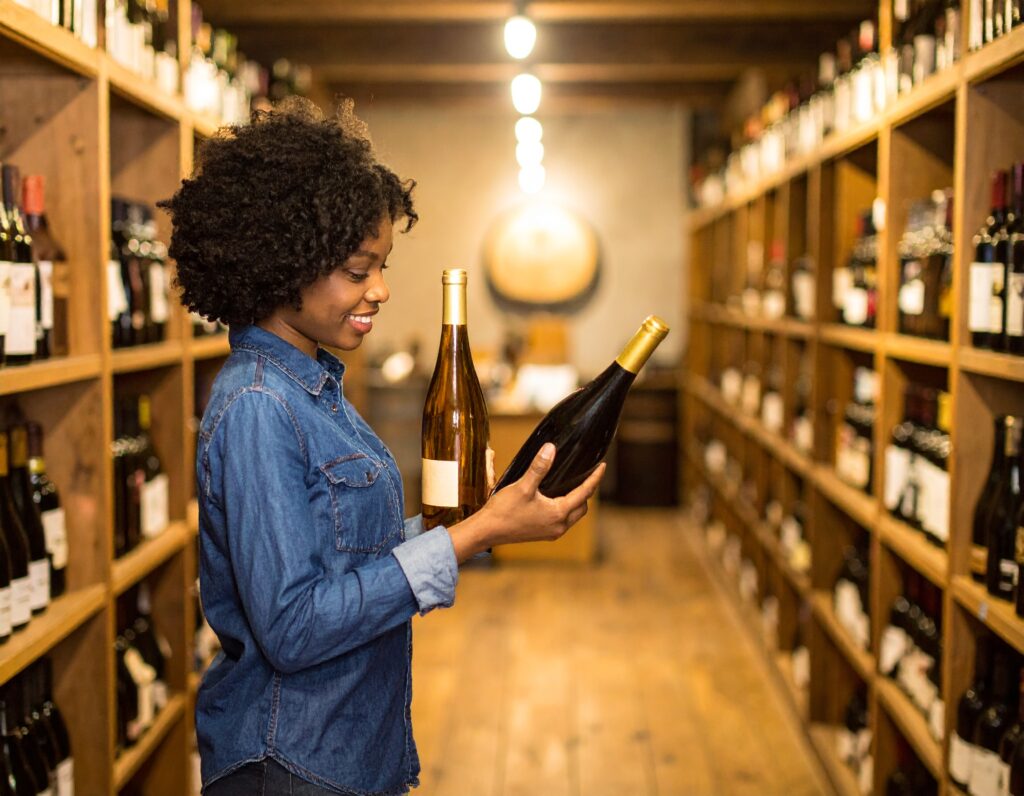
woman standing in an aisle full of wine bottles and holding 2 in her hand and looking at the wine label

By Susan DeMatei, Founder of WineGlass Marketing

If I told you a winery just opened with no vineyard, no winemaker on staff, and no interest in talking about terroir… would you visit? What if I told you it had a silent disco in the barrel room, a drag brunch series, and a 3-month waitlist for a zero-proof pairing menu?

  Those wineries exist. And they’re thriving. Because for a new generation of visitors, the wine isn’t the reason—it’s the reward. It’s not about what you pour anymore. It’s about how you make people feel.

  And we used to excel at this. But then we woke up one day… and it wasn’t working like it used to. The same offers stopped converting. The same messages started falling flat. The same visitors didn’t come back. And it’s not because we got worse at what we do. It’s because the customer changed. What they want. How they behave. Where they show up. Why they buy. So, the question now isn’t “What went wrong?” It’s “Who are we selling to today?”

  Let’s review what they’re looking for. Each of the ten shifts is followed by a prompt or question you can take back to your team. Something to spark discussion at your next staff meeting, leadership retreat, or even just your next walk through the tasting room. Because these ideas aren’t just concepts—they’re invitations to rethink, reframe, and reimagine what your guest experience could look like.

1) Options:  Yesterday’s consumer appreciated simplicity. At retail, they picked from what was on the shelf. At the winery, they chose between red or white. In the club, they got the winemaker’s selection—and were happy to receive it. A choice between two or three options? That felt like luxury. But today’s consumer—especially Millennials and Gen Z—lives in a different world entirely. They’ve grown up in an economy of limitless choice.

  Take Shein, for example—often cited as a Gen Z favorite. At any given time, that website features over 600,000 products. And they add up to 10,000 new styles per day.

  That’s not a product catalog. That’s an infinite scroll buffet. And that behavior—scroll, sort, save, swap, filter, build your own—isn’t just how they shop for clothes. It’s how they expect to interact with everything. They want control. They want flexibility. And they want to feel like they’re curating an experience that fits them—not adapting themselves to yours.

  So what does that mean for wine? It means the pre-set flight might not cut it. It means the fixed club shipment may feel impersonal. And it means our biggest opportunity isn’t just what we offer—but how we let them choose it. Flexibility is no longer a perk. It’s the expectation. And the brands that bake in choice—from tastings to tiers to tech—are the ones that will feel modern, relevant, and worth coming back to.

Discussion Question

•     What alternative formats or alcohol levels can we offer?

•     Are we inclusive of no/low options, or do we still assume everyone wants a full pour of14% Cab?

2) Discovery and Trial:

Yesterday’s consumer wanted to find a favorite. Today’s consumer wants to keep discovering. The internet never ends—so neither does their scroll. Algorithms, ads, and endless options mean there’s always something new to try. Loyalty? Why? Why would you buy the same thing twice when there is so much to try?

  But that has also emboldened us. Trying a new wine doesn’t feel risky anymore—it feels exciting. Discovery is the experience. It’s not the step before loyalty—it replaces it. So if we want to stay relevant, we have to make exploration part of our offer: Rotating flights. Limited drops. Unexpected pairings. Something worth coming back for—not just rebuying. Because when novelty is everywhere, same-old won’t stand out.

Discussion Questions

•     How easy is it for someone to explore our wines without committing to a full bottle or joining the club?

•     Could we offer mini bottles, samplers, or “try before you buy” packs?

3) Convenience:  In the past, access was the ultimate goal. When you had to order things through catalogs or go to your local store to see if “that thing” you saw in a magazine was available in your area, having an inside track to products was important. Now, it’s pretty much useless. You don’t need special access. If money’s no object, you could have a bottle of Mouton Rothschild delivered to your door by dinner.

  Access isn’t hard anymore. What’s hard is making it easy. Today’s luxury is convenience. It’s speed, simplicity, and control. DoorDash, Prime, one-click checkout—that’s what consumers expect. Not a complex tasting room booking form or a club order via phone call. If the experience is clunky, it doesn’t feel premium—it feels outdated – and, honestly, rude. Convenience isn’t about cutting corners. It’s about respecting time.

  And the brands that make it easy? They’re the ones who feel worth staying with.

Discussion Questions

•     Can guests book, buy, and learn from us with ease?

•     Are we mobile-friendly, quick to respond, and available when people are actually looking?

4) Value Alignment:

Today’s consumer isn’t just buying what you sell. They’re buying why you sell it. They want to know your values—up front. What do you believe in? How do you treat people? What’s your environmental footprint?

  Because for them, product quality and brand values are intertwined. An amazing wine that feels ethically tone-deaf? Hard pass. A halfway decent wine from a brand that shares their values? Instant heart emoji. Especially with younger consumers, purpose drives purchase. They want brands that reflect their worldview—not just their palate. So if you’re not telling people what you stand for, don’t assume they’ll stick around to figure it out. Because today, clarity is currency. And silence is a story, too.

Discussion Questions

•    Do our brand values show up in our experience-not just in copy, but in behavior?

•      Would someone browsing our site or walking into our tasting room know what we stand for?

5) Self-Expression: It’s easy to dismiss posting online as vain or superficial. But for younger generations, it’s how they connect. How they communicate. How they belong.  A post isn’t just a picture. It’s a statement. “This is who I am. This is what I value. This is where I’ve been.”

  When they choose to share your winery, your experience, your wine—it’s not random. It means your brand aligns with their identity. That’s powerful. So, if the space you create doesn’t offer moments worth capturing…you’re missing a major opportunity to be part of their story. Because for today’s consumers, if it’s not shareable, it’s forgettable. And being seen on their feed might matter more than being remembered in your CRM.

Discussion Questions

•     Does our winery give people something to connect with and share?

•     Are we offering moments and messaging that reflect their identity-not just ours?

6) Education Without Ego:  Education used to be the core of the winery experience. We told visitors how wine is made. Why our soil matters. What flavors to find in the glass. And while that worked for generations who came to learn, today’s guests come to explore. Education implies hierarchy: “I know something you don’t.” Rules. Correct answers. A right way to taste.

  Exploration is different. It’s open. Personal. It says, “Let’s see what you discover.” Modern consumers don’t want to be corrected. They want to be included. So if we trade the lecture for a conversation, we don’t lose authority. We gain engagement. Because the best experiences today don’t feel like school. They feel like discovery.

Discussion Questions

•     Are we making wine more approachable or more intimidating?

•     How can we reframe our story so it invites rather than lectures?

7) Community &

Belonging:  For previous generations, discovering something special was a private thrill. A tucked-away winery. A hard-to-find bottle. A quiet restaurant. The instinct was to protect it. To keep it close. Because having access meant having an edge.

  But today’s consumer is wired differently. The first instinct isn’t to hide the experience—it’s to share it. To tag a friend. Post a photo. Spread the word. Why? Because for this generation, joy is amplified through connection. Sharing isn’t about showing off—it’s about pulling others in. Community is the new currency. And that means creating spaces, products, and moments that feel worth passing on. If your brand gives people something to share, it gives them a way to belong. And belonging is a much stronger bond than exclusivity ever was

Discussion Questions

•     What are we doing to create a sense of welcome and shared experience beyond a transaction?

•     Are we building a community-or just a customer list?

8) Transparency:  Today’s consumers are savvy—and skeptical. Especially online, where everything can be filtered, staged, or Photoshopped. And if every image is too perfect, every bottle too polished, every person too posed…it starts to feel like a façade. The result? Disconnection. Distrust. A scroll-past, not a double-tap.

  Transparency isn’t just a virtue—it’s a strategy. It builds trust. It signals confidence. And it’s one of the fastest ways to stand out in a crowded, curated world. Show your team. Show your process. Show the messy harvest days, not just the golden-hour tastings. Because consumers don’t expect perfection anymore. They expect honesty. And when they see themselves reflected in your story, they’re far more likely to want to be a part of it.

Discussion Questions

•     Are we clear and open about how we make our wine, how we price it, and what’s inside? Or are we still hiding behind wine-speak and vague terms?

9) Emotional ROI:  Picture your customer. She’s working full-time. Maybe raising kids, managing a household, checking in on aging parents. Her phone never stops buzzing. Her weekends are booked out. Her to-do list is a mile long. And still—she carves out time, gets in the car, and drives an hour out of the city to come to your event. That’s not casual. That’s a commitment.

  She could’ve gone to brunch, taken a nap, or stayed home and done nothing—which sounds pretty great, honestly. Instead, she picked you.

So when she leaves your tasting room and heads back down the highway, she’s asking herself one question: ”Was it worth it?”  Was it meaningful? Memorable? Did she feel welcome—not just as a buyer, but as a person? Because that’s Emotional ROI. It’s not about the wine—it’s about how the whole experience made her feel.

  If the answer is yes, she’ll come back. She’ll tell her friends. She’ll bring them next time. If not? She won’t complain. She just won’t return. And you won’t even know you lost her.

Discussion Questions

•    What emotional payoff does someone get from visiting us? Do they feel joy, wonder, connection, or just… meh?

10: Frictionless Access:  Yes—we’ve said access isn’t the crucial selling point it used to be. And it’s true: rare wine, limited clubs, remote location. They don’t carry the same cachet anymore. But let’s be clear access still matters. It’s just expected.

  Today’s consumer assumes they can get what they want, when and how they want it. Not because they’re entitled—but because that’s the world they live in. They can book a cabin, schedule a haircut, and buy a car—all from their phone, in minutes. So if buying your wine, visiting your tasting room, or joining your club feels complicated? You’re not exclusive—you’re inconvenient. Frictionless access isn’t about removing effort. It’s about removing unnecessary effort. Make it simple. Clear. Mobile-friendly. Immediate. That’s the new luxury.

  Because the minute someone must call, wait, or wonder? You’ve lost them to someone who made it easier.

Discussion Questions

•     Where are the hidden barriers in our experience?

•     What small points of friction, online or in person, could be costing us future fans?

  Don’t just file these ideas in a folder. Use them. Add to them. Argue with them. That’s how real change starts.

  We are not in a wine recession. We are in a wine realignment. The future isn’t less wine. It’s wine in a new context. Let’s stop selling bottles—and start creating reasons for customers to show up, stay longer, and come back.

  Susan DeMatei founded WineGlass Marketing; the largest full-service, award-winning marketing firm focused on the wine industry. She is a certified Sommelier and Specialist in Wine, with degrees in Viticulture and Communications, an instructor at Napa Valley Community College, and is currently collaborating on two textbooks. Now in its 13thyear, her agency offers domestic and international wineries assistance with all areas of strategy and execution. WineGlass Marketing is located in Napa, California, and can be reached at

707-927-3334 or

wineglassmarketing.com

Soil Nutrient Relationships for Vineyard Soils

a vineyard with very short vines in dry dirt

By Neal Kinsey, Kinsey Agricultural Services

There is ongoing debate about whether a consistent and realistic method can be used when consulting with growers for grape vineyards to measure and systematically build soil fertility for improved wine grape production. While some argue that the concept is too broad to establish an effective program, practical evidence using detailed soil nutrient analyses suggests more in-depth consideration could provide further essential information.

  Across various wine regions in North America, Europe, Australia, New Zealand, and South Africa, vineyard owners and managers have utilized information from such a program with notable success from as far back as the 1980’s and 90’s.

  Furthermore, do wine grapes growing on more fertile soil produce better wines?  Some think not, but is that a correct assumption?  The plan for writing this column is to provide sensible answers to soil nutrient needs and related problems based on over 50 years of actual measurable vineyard experience that has helped successfully deal with such questions.  The intent is to help growers in building up vineyard productivity and grape quality by making use of actual experience at solving such problems from widely varied circumstances that relate to all types of vineyard soil.

  Most grape growers would likely agree that they have certain soils that grow better grapes than others.  But under equal circumstances, by considering what can be shown as the foundational nutrient needs in some of the top vineyard soils in various parts of the world, could those soils that are not already as good do just as well by providing them with those same nutrient levels? 

  And even so, when a certain soil does or does not seem to be the best soil on the property for growing grapes, is it possible that the measured fertility needs can be employed to prescribe and achieve even higher desirable qualities?  And in turn, can such measured fertility be proven useful for measuring and providing a basic foundational key to natural soil health and the resulting soil quality required for growing better wine grapes?

  When a grower knows what is desired, but is still not sure how to achieve it, first consider working out and establishing a proper baseline. Devise a plan to see what the fertility levels show to be in the soils that are already producing the best grapes.  If there are vineyard soils that have already proven themselves in terms of better quality and production, use those as a starting point.

  Once the baseline for good and bad soils have established that the testing you plan to use is a reliable program that can be counted on for measuring the needed fertility in the vineyard, what considerations should receive the greatest attention for building a sensible fertility program for a specific approach to the many variations in typical vineyard soils?

  Great emphasis in recent times is being placed on soil quality for growing grapes and rightly so.  But what matters most in terms of soil quality in vineyards?  Some may say it is water movement, to others it is better aeration, or perhaps friability, or soil microbiology.  But ultimately, all of these are positively affected by what nutrients the soil already contains and those applied as fertilizers and soil amendments.

  There are three basic aspects of science that should be used as keys to determine whether each soil performs poorly, above average or at its best.  The real key to top quality for any soil is its biological activity.  The soil is the plant’s stomach.  Therefore, accurately feeding the soil provides needed nourishment for the vines!  The best soil is living soil.  To put “life” in your wines requires “life” in your grapes which comes from abundant life in the soil.  In just an average soil that life is enormous (more on that in an upcoming column) and includes everything from the growing plant roots, to earthworms, to soil microbes. 

  For soil biology to be at its best in each soil requires good physical structure, which assures adequate pore space for a balance of air and water in the soil. But if soils are lacking the proper physical structure, this in turn has a negative effect on plant roots and soil organisms that are needed for the most productive, healthy soils and plants.  The question then should be what can be done to obtain the aeration and moisture needed for vineyard soils that do not already have them?  And is there a way to measure and determine such needs?

  In general, programs based on soil testing used for establishing a vineyard fertilization program to improve soil fertility do not focus on actual soil nutrient needs.  The excuse normally used is that correcting and feeding the soil is too expensive.  General soil testing is designed to encourage feeding the plants, not the soil.  To achieve optimum results where quality matters even more than production the nutrient content of each vineyard soil must not be neglected.

  Here is another key for determining vineyard soil health and quality.  The mineral make-up of each soil determines its physical structure.  And this mineral make-up must be measured using the basic principles of soil chemistry.  So, soil biology (life in the soil) depends on soil physics (proper physical structure to provide a balance of aeration and moisture content) which is determined by soil chemistry (the proper mineral make-up) to grow the best vines and grapes. 

  When a given soil has sufficient nutrient make-up to grow grapes well, there are four elements that will provide the principal influence on the structure of that soil.  They are the same four elements that most influence the soil pH in a range that will grow the best grapes.  When a vineyard soil contains the proper amount of these four mineral nutrients, that soil will be the most friable, it will take in water properly, and it will have the proper air and water to encourage and maximize life in the soil.  Those four elements are calcium, magnesium, potassium and sodium.  

  In other words, the soil chemistry determines the proper physical structure of every soil which is needed to build the “house” or a “proper environment” for the biology.  In over 50 years of examining soil samples from thousands of soils for grape growers this is what can be determined time after time.  When soils already possess the proper nutrients levels, those are the soils that perform the best.  These soils grow the healthiest vines and provide the best quality of grapes for making wine. For soils that do not have this ability, to the extent that the required nutrients can be measured and supplied to match up with the fertility of the top producing soils, those soils too can be built up to produce top quality grapes.

  Dr. William Albrecht taught the meaning of true nutrient balance for winegrape soils.  One of his major principles was always to feed the soil and let the soil feed the plant.  But to accomplish that purpose, the soil first had to have the proper nutrient relationships.  This is what is meant when referring to balanced soil.  And that balance was ascertained by first taking soil tests to see what each type of soil required. 

  Observable differences in the growth of plants on any soil, including differences in native vegetation, in the color of the soil or in slope – any obvious differences – when large enough to fertilize separately should be sampled separately.  In areas that are different but too small to treat separately, stay out of those areas and do not mix that soil with other soil being sent for testing.  Such differences can indicate nutrient differences in many cases.  Soil taken from such areas and mixed with other areas would not correctly reflect what should be done to either one in terms of proper fertility needs.

  Specific nutrient requirements to correct each individual soil needs to be identified.  In every soil, if there is too little of one nutrient, there will be too much of something else.  And this is the real key to soil balancing.  When you supply any nutrient, the soil has too little of, as that nutrient increases some other nutrient will decrease accordingly.  As a rule, that decrease will most affect and reduce whatever other element that soil has in excess. In other words, the first key to soil balance is to supply any nutrient shortage which begins reducing whatever that soil contains that is too excessive. 

  Every soil is different and depending on the circumstances will require its own set of requirements.  This is where a detailed soil analysis is a necessity for solving the specific problems of each soil.  And finding those solutions should be the first order of business for anyone working with the fertility for vineyard soils.

  Working with wine grape soils and using the same exact testing methods for analyzing them from the middle 1970’s right up to the present has provided decades of useful information that continues to reveal positive answers to the questions posed above.  And in case after case, from the best to the worst, analyzing soils using the same exact methods year after year has verified how fertility levels have been shown to establish an extremely important part in providing winegrape quality as well as production.

  A soil test should define the necessary parameters to enable a consultant or fertilizer dealer to determine the good from the bad.  Then from the test results tell why that is the case, even when not seen with the eye.  If that is not possible, then how reliable can any advice based on those tests be for helping the soil in question?

  An important point here is that when a vineyard soil is sampled correctly, an accurate detailed soil analysis should enable the identification of the best soils, the average soils and the worst soils for winegrape production.  This is what makes it possible to evaluate vineyard soils and to rebuild the poor areas.  But even more, if those areas that are producing the best grapes on the property are grown in soils that are lacking what the best vineyards have been shown to possess in terms of fertility, no matter how well they are doing, they can still do better.

  Time after time, the vineyards that produce the highest quality grapes and wines have been shown to possess a specific set of nutrient relationships, arranged in a definite pattern, and no matter how well the reputation may already be, when the critical nutrients are still not shown to be present in the correct proportions, conditions can still be improved with the correction of each soil’s required nutrient levels.

  What makes the most difference and why in terms of soil fertility and how is it best achieved? This type of information is what will be considered in various ways in this column in the months ahead.  Comments and questions regarding content are encouraged.

For more information

contact…

Neal Kinsey

Kinsey Agricultural Services

573 683-3880

neal@kinseyag.com

www.kinseyag.com

Vineyard Insurance

PHOTO SHOWING A VINEYARD GROWING ON TRELLIS

By Trevor Troyer, Agricultural Risk Management

That’s a question I get a lot.  Some growers think that they should wait until they know for certain that they have a loss when they finish harvest.  You should turn in a claim as soon as there is a weather event or other cause of loss situation.  This helps to document what is happening during your growing season as it unfolds.  It also gives the adjuster time to come out if needed to inspect before the harvest.

  You might have a situation where you have a late frost/freeze event for multiple nights.  Primary buds may be damaged in your vineyard.  Other nearby vineyards may have mild to moderate damage.  It’s good to document these weather events when they happen and open up a claim.  You may have other weather events that occur over the growing season that contribute to your tonnage being low.

  Even if you are not sure about the extent of the damage, you should contact your agent and have them open up a claim for you.   Depending on your coverage level you may think that you won’t have a loss.  At this point don’t worry about the deductible percentage of your crop insurance policy.  Call your crop insurance agent and open up a claim.  It is not hard for the adjuster to withdraw the claim after you harvest, if it turns out your production was ok.

  It is always better to have a claim open than not in this type of situation.  There’s no way early in the season to figure out how much your yield will be down but if the claim is open and documented its better for all.  This gives time to have an adjuster assigned, time to do an inspection and to document any visible damage and then to document any added damage several months later as well.  Damage can very well be cumulative during the year should you experience several weather events and other things that could reduce your yield.

  Here’s what it says in the 2025 Basic Provisions of the Common Crop Insurance Policy:

14. Duties in the Event of Damage, Loss, Abandonment, Destruction, or Alternative Use of Crop or Acreage

Your Duties –

     (a) In the case of damage or loss of production or revenue to any insured crop, you must protect the crop from further damage by providing sufficient care.

     (b) You must provide a notice of loss in accordance with this section. Notice provisions:

(1) For a planted crop, when there is damage or loss of production, you must give us notice, by unit, within 72 hours of your initial discovery of damage or loss of production (but not later than 15 days after the end of the insurance period, even if you have not harvested the crop).

  Per the USDA Risk Management Agency, you have from 72 hours of the original cause of loss or until you discover it and up to 15 days after the end of insurance.  I do not recommend waiting till 15 days after the insurance period, however, it does happen, and I am sure some growers will do it.  I have had vineyard owners call me and say that their tons are down for a certain variety.  That’s fine but I recommend that you open up a claim across all the varieties you have planted.  Then we have to piece together what happened.  What was the cause of loss?  When was it?  Was this the only thing or were there other weather events?  It is always much easier for everyone if the claim is turned in close to the date of damage.

  Losses do get paid but it is much easier on everyone, including the grower, if you report causes of loss right after they occur.  That doesn’t mean you have to know for sure that you will have a loss, just that an event happened that may cause your crop to be reduced by harvest.

  Here are the Causes of Loss out of the Grape Crop Provisions from the USDA RMA:

10. Causes of Loss.

(a) In accordance with the provisions of section 12 of the Basic Provisions, insurance is provided only against the following causes of loss that occur during the insurance period:

     (1) Adverse weather conditions;

     (2) Fire, unless weeds and other forms of undergrowth have not been controlled or

     pruning debris has not been removed from the vineyard;

     (3) Insects, except as excluded in 10(b)(1), but not damage due to insufficient or improper application of pest control measures;

     (4) Plant disease, but not damage due to insufficient or improper application of disease

     control measures;

     (5) Wildlife;

     (6) Earthquake;

     (7) Volcanic eruption; or

     (8) Failure of irrigation water supply, if caused by an insured peril that occurs during the insurance period.

(b) In addition to the causes of loss excluded in section 12 (Causes of Loss) of the Basic Provisions, we will not insure against damage or loss of production due to:

      (1) Phylloxera, regardless of cause; or

      (2) Inability to market the grapes for any reason other than actual physical damage from an insurable cause specified in this section. For example, we will not pay you an indemnity if you are unable to market due to quarantine, boycott, or refusal of any person to accept production.

  Number 1 on the list is Adverse weather conditions.  This could be just about anything, frost, freeze, drought, excess moisture, and hail.   Fire is listed as well and because of this there can be damage several miles away from any given fire due to smoke.  If you do have smoke taint you will need to get an independent lab to check for smoke taint markers.  You can also have rejection letters from wineries stating that they don’t want the grapes due to smoke taint. Insect and disease damage are covered but you must show that you have application records, for example, spraying.  Wildlife is another one that can cause problems – deer, raccoons, birds and others.  Earthquake and Volcanic Eruption I have never seen a claim turned in for.  .  Number 8, Failure of irrigation water supply, is something that can be a big problem for growers.  Certain areas rely heavily on irrigation.  If there is a drought and your well or reservoir dries up, then that is a payable cause of loss.

  Don’t wait to contact your agent about a potential situation or adverse weather that may reduce your crop.  Even if you are not sure if something is a covered loss it is best to reach out to your agent.  That is what your they are there for.