The rise of Oregon’s traditional method sparkling wines
By: Becky Garrison
In the May/June 2025 issue of The Grapevine Magazine, Michelle Kaufmann, vice president of communications at the Stoller Wine Group, reflects on the current status of Willamette Valley wines. “Pinot Noir is our king. Chardonnay is becoming Oregon’s queen. And right behind them as prince or princess is a sparkling wine with these two grapes coming together to make a beautiful marriage.” Other popular grapes used in sparkling wine production include Pinot Meunier and Pinot Blanc.
According to Terry Culton, director of winemaking and vineyards for Willamette Valley Vineyards, because the Willamette Valley is very mild, they can focus on the perfect picks for making their sparkling wines. He reflects, “The cooler climate and coastal influence give us more picking options than many AVAs to get the pH and titratable acidity for sparkling and the brix (sugar) at just the level we want.”
These premium sparkling wines are made in what’s designated as “the traditional method” (méthode traditionnelle or méthode champenoise). SOMM-TV summarizes the process used to make these sparkling wines.
From start to finish, this method takes the longest because of aging requirements and time-consuming steps like hand-riddling. These reasons can also translate to a higher price at the till. This method includes lees aging (where dead yeast cells sit in contact with the wine for an extended period), producing a wine with a prevalent autolytic character. Wine made in the traditional method often exudes aromas and flavors of brioche and butter along with a creamy textural mouthfeel.
This labor-intensive process is famously used to make sparkling wine in the Champagne region of France, though wines made using the traditional method produced outside this region cannot be called champagne but must be referred to as “sparkling wines.” Other popular sparkling wines include Pét-nat (Pétillant Naturel, see The Grapevine Magazine, July/August 2025), bubbles (forced carbonation), Prosecco (charmat), and the ancestral method made by bottling and sealing the wine before it completes its first fermentation.
The Origins of Oregon’s Traditional Method Sparkling Wines
Oregon’s early wineries took their inspiration from Burgundy with a focus on the region’s still wines — most notably Chardonnay and Pinot Noir. While there were a few limited sparkling wines in production, Argyle Winery (Dundee, Oregon) established in 1987 by Rollin Soles as the Dundee Wine Company has the distinction of being the first Willamette Valley winery to establish a dedicated sparkling program with every stage of the wines made in-house. (Currently, Soles is the founder and winemaker at Roco Winery in Newberg.)
In 2025, Argyle Winery and the Pacific Northwest College of Art at Willamette University (PNCA) celebrated the 10th anniversary of Argyle’s acclaimed Art of Sparkling program with the release of the 2025 Art of Sparkling Collection. This internship program created by Argyle in collaboration with PNCA highlights the value of creativity and storytelling within the winemaking process. As per their press release, each year, three PNCA student artists are selected to participate in an immersive internship at Argyle, where they explore the connections between viticulture, winemaking, and artistic expression. Their work culminates in the creation of original label artwork featured on Argyle’s annual Art of Sparkling Collection.
Powering Oregon’s Grower Sparkling Wine Movement
When Andrew Davis was serving as a winemaker at Argyle Winery, his fellow winemakers often asked for assistance in making sparkling wine. Because this region is aligned with Burgundy with a similar paradigm focusing on small producers and small production, these winemakers often lacked the expensive resources needed to produce sparkling wines. He had to always say “no” because they lacked the capacity to take on any custom clients.
So Davis founded The Radiant Sparkling Wine Company (McMinnville, OR) in 2013 with the mission to provide Willamette Valley small-production sparkling wine producers with both the technical knowledge and specialized equipment required for the efficient production of award-winning world-class sparkling wines. According to his initial business plan, Davis would need between five to ten clients within the first three years for his business to remain feasible. The interest from winemakers far exceeded his expectations as he secured twice as many wineries within this period. To date, he has worked with over 40 wineries. While a few winemakers have gone on to form their own in-house sparkling wine program, most of them utilize the Radiant Wine Company to produce their traditional method sparkling wines.
When Davis partners with a given winery, he begins with discussions regarding what kind of style of sparkling wine they want to create. Some questions that arise include: Do they want to be barrel or tank fermented? Do they want to be picking on the earlier side or the later side of the sparkling spectrum? Do they want to run all their wines through malolactic fermentation, or do they want to keep that raciness of having that malolactic acid intact?
After these questions have been answered, the winery makes the base wine they want to use for their sparkling wine. Davis then takes this base wine and works with them to develop a unique yeast culture for use in their secondary fermentation. Next, the wine gets bottled and fermented in the bottle at the client’s winery. The winery then determines how long they want to sit on this wine and let it age on lees. Once the wine has aged to the winery’s specifications, Davis goes through the process of riddling, disgorging, labeling, and other aspects of preparing the sparkling wine for this winery.
Here Davis strives to work behind the scenes with wineries so they can express themselves. As he notes, “If they start to go off the rails and do something ill-advised, I will tell them that. But I want everybody to be making their own style and creating their own wines and not just issue a Radiant thumb-stamped wine with a new label on it.”
Among his more interesting partnerships is a sparkling 2021 Lust Vintage Blanc de Blanc he did recently for Lucid Wild. This venture marked the first time he collaborated with his wife Isabelle Meunier on creating a sparkling wine. Also, Davis is the current winemaker at Carlton-based Lyle-Barnett, one of a handful of méthode champenoise-only wineries in Oregon.
In April 2025, Vinovate Custom Wine Services acquired The Radiant Wine Company. A press release announcing this development describes this transaction as “bringing together two pioneering forces to create the most robust set of resources available to Oregon producers pursuing traditional method sparkling wine.” When Davis started The Radiant Sparkling Wine Company, his business model was to collaborate with existing producers to help them make a sparkling product. What Vinovate brings to the table is the ability as a custom crush facility to take harvested grapes and produce the still wine that will then be turned into sparkling wine. This service will enable those aspiring vintners who do not have their own winery to bring a sparkling wine to market. As part of the acquisition, Davis will stay on as a full-time consultant for at least one year to support the transition and future growth.
Other Willamette Valley Sparkling Producers to Watch
Arabilis Wines (Amity)
As PhD scientists turned winemakers, Kenny and Allison McMahon bring a thoughtful, hands-on approach to crafting small-batch still and sparkling wines made using sustainable means. They chose the Eola Amity Hills and Van Duzer Corridor AVAs due to the freshness and intensity of the base wines coming out of this region. They have the distinction of being the only winemaker in the Willamette Valley to make traditional method sparkling wines by doing tirage (aging on the lees after second fermentation) under cork where they disgorge by hand. All their styles are based on four pillars: precision, complexity, freshness, and high quality. Together these pillars add up to what they call “amplitude,” which they define as the “totality of the experience.” Also, through their other company called The Oregon Sparkling Wine Co., they service other winemakers who want to make a traditional method of sparkling wine.
Corollary Wines (Amity)
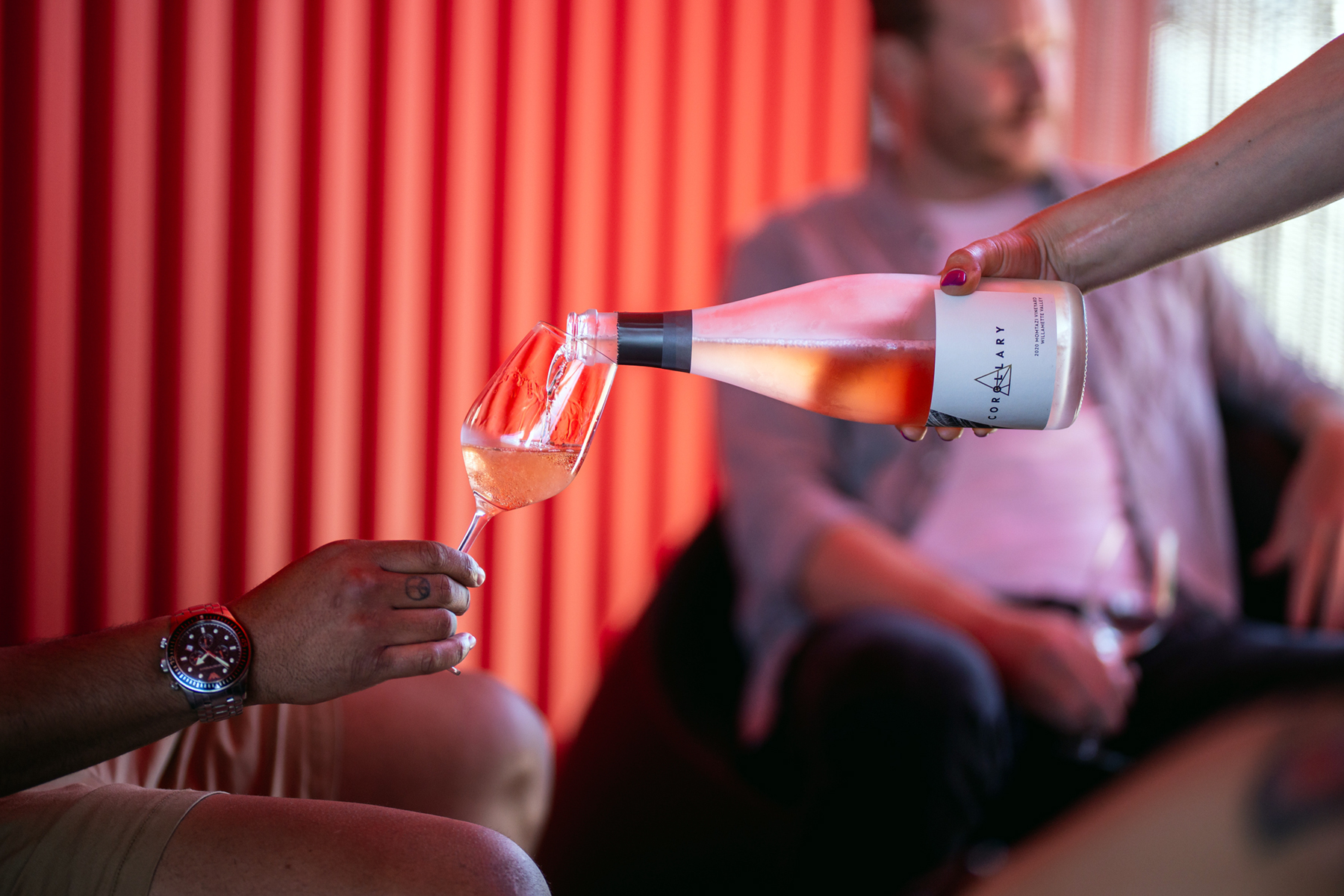
Since its opening in 2017, sparkling-only producer remains completely dedicated to exploring the terroir of Oregon’s Willamette Valley and its expression in traditional method sparkling wine. In 2022 owners Jeanne Feldkamp and Dan Diephouse acquired 57 acres of land in the Eola-Amity Hills AVA, where they planted estate Chardonnay, Pinot Noir, Pinot Meunier, and Pinot Blanc grapes. Their distinctive, design-forward tasting room, which opened on May 2024, was created as a spot to show people the life cycle of their sparkling wines beginning with the soil that produces the fruit leading into an immersive experience exploring how they designed their entire property around permaculture principles.
Domaine Willamette (Dayton)
Jim and Jan Bernau founded Domaine Willamette to produce world-class, méthode traditionnelle sparkling wines. Bernau Estate Vineyard — home to Domaine Willamette — features 20 acres of biodynamically farmed, Demeter certified Biodynamic Pinot Noir, Pinot Meunier, and Chardonnay grapes. Visitors are welcomed with Oregon-inspired hospitality, including elevated wine and food pairings, immersive educational tours, stunning views, and beautiful landscaped gardens overlooking the valley.
Durant Vineyards (Dayton)
Under the direction of winemaker Spencer Spetnagel, Durant launched its sparkling wine program with the 2018 Brut and 2018 Blanc de Blancs. Guests can enjoy these wines at Durant’s outdoor tasting pavilion, which is thoughtfully designed to welcome visitors even during the Willamette Valley’s cooler winter months.
Soter Vineyards (Carlton)
In 1997 Tony and Michelle Soter founded this Demeter-certified Biodynamic vineyard with the mission to produce wines that embody a keen sense of place and purpose. Their sparkling offerings include their Planet Oregon Sparkling Rosé (aka Pop Fizz), One percent of total sales goes to 1% for the Planet with more $130,000 in sales donated to date.
Stoller Family Estate (Dayton) This proud family-owned Certified B Corporation began its sparkling journey in 2013 with their Brut Rosé made with select Pinot Noir and Chardonnay from blocks planted in the late 1990s, complemented by Pinot Meunier planted in 2015. Also in 2015, they crafted their first Blanc de Blancs made from the late founder Bill Stoller’s original plantings of Chardonnay in celebration of the 20th anniversary of planting the vineyard. These two wines remain their flagship sparkling cuvées, crafted in limited quantities each year along with a multi-vintage program they began in 2019.
Method Oregon Elevates Oregon’s Traditional Sparkling Wine
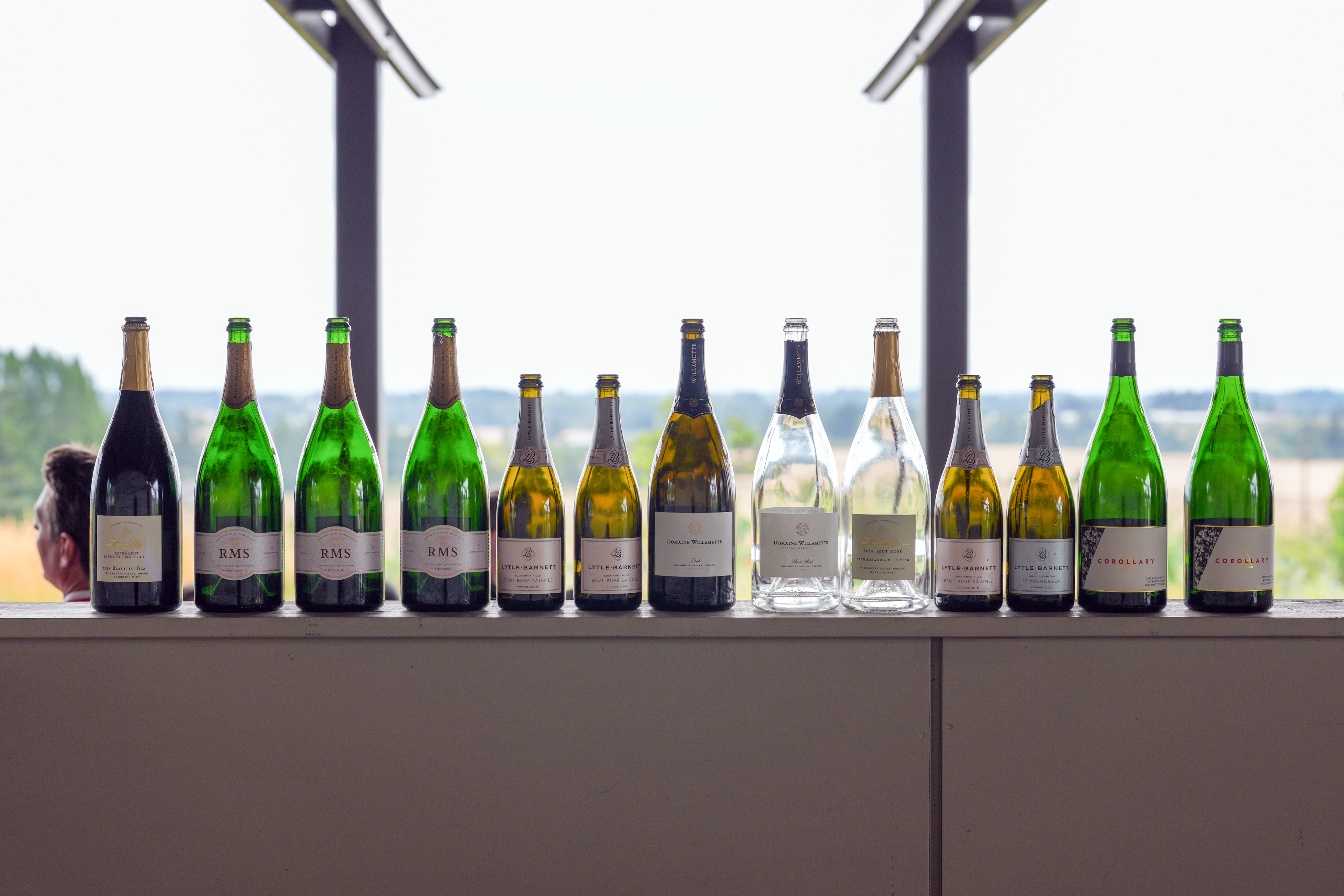
Currently, more than one hundred Oregon wineries have a traditional method sparkling wine in their portfolio with most of these wineries based in the Willamette Valley. As a means of educating the consumer about traditional method sparkling wines and how they differentiate from other bubbles on the market, twenty-two Willamette Valley producers came together on July 26, 2025, for the Method Oregon Grand Tasting. Each bottle featured underwent at least 15 months of tirage to ensure quality and complexity in the glass and was then paired with local foods and educational programming. This event is slated to take place again on July 25, 2026.


