Cross-Contamination and the Winery Cellar

winery tanks in a facility

By: Thomas J. Payette, Winemaking Consultant

Cross-contamination is something we have all been made aware because of the food industry.  We have learned that using the same plate to take food to the grill as well as to serve food from the grill, prior to proper cleaning, may result in a salmonella outbreak causing discomfort to many.  Using a cutting board to prepare a meat or fish and then to cut a vegetable for a salad may result in similar reactions due to a bacterial contamination from an uncooked meat source to a product eaten raw.  Once one focuses on these same principals and perhaps has training in microbiology one keenly becomes aware of the principals of cross-contamination.

  An everyday less seen example outside the food industry is easy to illustrate.  After using the rest room we wash our hands diligently only to turn around and place our hand on the door handle to exit the rest room.  At that instant we have contaminated our hand with microorganisms from other individuals that have placed their hands on the same door handle prior to us.  Perhaps we have all seen the individual that continues to use the paper towel to maneuver the door handle and then throwing away the paper towel.  This is a microorganism conscientious individual that understands the above principal.  COVID 19 also has us all more aware these days to microbes in general.

  Looking at our own cellars, we may find many areas that need work to prevent microbiological cross-contamination.  This article will explore some areas that are culprits in the spread of microorganisms.  Every winemaker needs to have great hygiene and sanitation in the cellar to have the control a winemaker needs to make sound wines.  After reading this article, the cellar will become a different place as other sources of contamination become evident to the cellar team.

  SAMPLING: Most wineries, with sound wines, may taste from vessel to vessel while returning the leftover portion back to the vessel sampled with no worries.  This is one of the major areas that may need tightening up if the winery is experiencing problems.  Winemakers sample from one vessel to another perhaps expressing discontent in one form or another.  Often the discontent is directly linked to a spoilage bacteria or yeast that is growing “unchecked”.  The novice winemaker may rapidly move through the cellar’s containers in hopes of quickly reaching a vessel that has not progressed negatively.  What some winemakers don’t catch on to is that they are indeed the culprits to the spread of the very element with which they are not happy.  When sampling a container, look inside the vessel for a potential surface film. This may indicate a spoilage position for that wine.  Know the sulfur dioxide and ph of the wine.  When experiencing spoilage yeast or bacteria, be sure to sanitize/sterilize the sampling instrument and wine glass between samples.  Do not return the leftover portion to the vessel and be careful to discard the leftover in an area to be cleaned.  Do not dump it in the drain or on the floor for reasons to be explained later. (In clean cellars where sound wines are made it is not usually a problem to sample and pour back wines – only in unsound conditions should one avoid this habit.)

  TRANSFERS: If working with wines that are known to have some risk of infection – always move them last in the day of the transfers. Clean the hoses, pumps and other areas of wine contact between movements.  An example: If 40 barrels need to be racked and one barrel may be suspect to have some spoilage, rack the 39 barrels first then rack the last barrel separate to another tank – do not mix it into the blend.  If the wine is to be returned to barrel give serious consideration to returning the suspect wine to the same barrel from which it was removed to “contain” the spoilage and create a quarantine type situation.  Once the movements of any suspect wines have been made, thoroughly clean the pumps and hoses before resuming to the next transfer.  Be sure to clean the racking wand or any other devices that have had contact with the suspect wine.  Mark the exterior of these suspect vessels so others will be aware of the problem and cross-contamination will be minimized during sampling.

  TOPPING: Another area of great concern for cross contamination is topping.  Make sure to top wines with only clean sound wines of the same type or variety.  Often the topping wine of choice may be a recently sterile filtered dry wine that the winemaker has prepared for bottling.  This wine should have a greatly reduced yeast and bacterial load.  Always use clean wines for topping because the risk of spreading organisms is great here.

  BLENDING: If potential spoilage wines have been caught early, quarantined, and arrested they may still be used in a final blend in small quantities.  If the wines have been cared for and kept “in check” they may add to the complexity of the wine.  This should always be determined by a lab blending trial first.  The trick with blending is to wait to the last possible moment to make the blend to achieve protein, color and tartrate stability of the wine prior to bottling.  This should be done in stainless steel because it is easier to clean and sanitize after removing the wine from the vessel.  After blending, the wine should be filtered as soon as possible to eliminate the bacterial load.

  HANDS & CLOTHING: As with many processing and preparation cellars, always wash your hands frequently especially after handling wines that are suspect.  Be certain not to wipe your hands on your clothing, prior to washing them, after handling suspect wines.  This is the main reason that early in this article it is recommended to move suspect wines last in the day.  Always wear clean clothing from day to day.  Think in terms of what to do when.  If starting a yeast culture for sparkling wine production and bottling a sweet wine all in the same day, use common sense to work with the bottling first and then to work with the yeast starter culture.  Otherwise a major cross-contamination could occur resulting in a re-fermentation of the bottled wines.

  INSECTS & CREATURES: Insects and other mobile creatures are a large source of contamination that is more difficult to control.  For this reason a strong sanitation program is always recommended.  Fruit flies and other flying insects are always a difficult battle during crush and throughout the year.  Incorporate the elimination of these creatures, as best as possible, as a major part the sanitation program.  These insects fly from the drains to open vessels and handling tools such as: hoses, fittings, buckets, racking wands, pumps, filler spouts and many other areas.  Every surface they land on will have a cross-contamination residue left on it from their previous landings!  This was the reason under “sampling” it is recommended best not to pour samples known to contain spoilage yeast or bacteria on the floor.  These areas may become a food source for the insect or simply may be an area of contact for an insect or other creature.

  CHEMICALS & DRY GOODS: Chemicals and other dry goods are often an overlooked source of potential problems.  Using scoops for one material and then using them for another before cleansing will result in a cross contamination.  Soiled scoops will always transfer one material to the other as they are used.  Open containers of chemicals such as acids, bentonite and sugar bags must be avoided.  Cross-contamination is not always microbiological!  A classic example of this is one who uses a soiled scoop from citric acid and then places that same scoop into a container of metabi-sulfite.  This will result in a huge and persistent sulfur dioxide aroma cloud near the incident.  Seal all bags / containers after using them because contamination from insects and other potential rodents may result in problems.  If not already a standard procedure, reseal all open cork bags and other dry goods materials immediately after opening and partial use. 

  AIRLOCKS & BUNGS: Airlocks and bungs need to be thoroughly cleaned after each use.  Airlocks are exposed to moisture and liquids.  This moisture will support bacterial and yeast growth, which must be eliminated before placing them on another vessel.  Since containers may pull a vacuum during a cool down in the cellar after fermentation and draw some of the water into the container.  Clean them thoroughly before storage and before use.  When storing airlocks be sure to blow out any water and allow them to air dry.  Bungs are similar.  When working with barrels remove the bungs and clean them with a cleaning solution.  Rinse them in a low ph water solution to rinse and neutralize the cleaning solution and then replace them on the vessel.  If possible it is best to have a large number of extra clean bungs available to use with the current day’s barrel work.  If so – one can collect the bungs off the barrels for that day’s work and soak them in the cleaning solution.  Clean and rinse them at your leisure after the day’s work.  Allow them to dry and they will be ready for the next day of barrel work.

  POMACE: Remove all pomace from the winery as soon as possible.  It is a food source for yeast and spoilage bacteria.  Try to take the pomace as far from the winery as possible and consider treating it with copious amounts of hydrated lime to elevate the ph and to keep odors in check.  This elevation in ph will prevent lower ph bacteria from growing and result in safer pomace as far as cross-contamination is concerned.  Birds, insects and animals may visit this pomace pile before traveling to other areas, perhaps near or in your winery, carrying spoilage microbes with them. 

  FILTER PADS & DE: Removing filter pads from a filter and placing them in an indoor trash receptacle that is emptied only once a week has never made microbiological sense.  Instead remove them as rapidly as possible from the cellar and get them to a trash receptacle outside and off the property to avoid spoilage yeast from growing and being transferred to other areas in or near your winery.  Not only are they growing unwanted microbes – but also left long enough they will become very pungent!  Diatomaceous earth should be treated the same way or disposed of properly for bacteria growth reasons.

  TANKS: Clean the wine tanks just after emptying.  Once emptied the vessel will be open for insects to fly and move about freely inside the vessel so it should be cleaned.  If residuals of wine are left in the tank they will spoil and become cross-contamination sources.

  SUMMARY: The above examples are just some areas to consider.  Each winery cellar is different and each cellar has unique areas that need attention with regards to the above practices.  Take some time to walk around the cellar and out on the crush pad to explore possible areas to tighten up the sanitation regime to minimize and eliminate cross-contamination sources from the cellar.

  It should be the desire of every winemaker to have and keep a spoilage bacteria-free cellar.  Wines are easy to make and to keep in a healthy condition.  If the wines are kept free of spoilage conditions the workload is less.  Once spoilage conditions exist, the winemaker’s efforts are complicated and more time and effort is needed to focus on extreme sanitation measures.  Every winemaker should employ good winemaking practices to avoid such situations, which are easily avoided with proper cellar management.

  Cross contamination is the number one reason for wine spoilage, as the microbe has to come into your winery from one source or another to begin to grow.

  You will find your winery a different place after you review your cellar and identify sources of cross-contamination.  The wines will improve as a result of your diligence to remove cross-contamination sources, once identified.

Bon Chance!

Simplified Risk Management for Your Winery

risk management on paper

By: Michael Harding, Senior Risk Solution Specialist, Markel Specialty

Take a look around. You must be so proud of where your winery is today! You’ve worked very hard to develop, finesse, and grow your winery to what you see in front of you. Countless hours and limited staffing have created a place of pride!

  You took a lot of risks to get your winery to where you are today. In fact, your winery probably wouldn’t exist if you hadn’t taken some of those risks. But now that it is more established, the risks are more significant – there is just so much more to lose! A serious calamity could be detrimental to all that you’ve built. And, unfortunately in today’s “mid-COVID” economic environment, limited staffing may present many challenges to your winery and it may be difficult to allot sufficient time to think about the many ways your winery might be impacted by previously unthought-of risks. Risks can be managed, however. Whether your winery is small or large, you have the responsibility to your employees, your clients, and yourself to invest in risk management planning.

  A lot of winery businesses only think about buying insurance when they think about risk management. However, many wineries don’t give much thought to other ways that they can protect their winery from the numerous risks that they face. Some risks are random and unpredictable (like weather and acts of nature). Others are more predictable and can be planned for – such as costs of supplies, overhead, new hires, and equipment replacement. There are also the other kinds of events that can – and do – happen almost anytime; they can disrupt your operations, take a chunk out of your reserves, kill your bank account, and cripple or destroy your winery.

  Trying to get your arms around all potential risks and attempting to completely eliminate them is unrealistic. On the other hand, not paying enough attention to relevant risk management issue can leave you unprotected. To that end, it makes sense to be cautious. The biggest challenge in risk management is to find the proper balance between peace of mind and running your winery.       

  Simply stated, risk management is a discipline for dealing with uncertainty. It provides you with an approach to recognize and confront the threats you face. Risk can be very complicated, but it doesn’t have to be. Every winery can start with a simple, easy-to-follow plan that can manage and lessen risk. If needed, you can expand from there.

Getting Started

  Risk management goes beyond just identifying risk; it is about learning to weigh your risks and making decisions about which risks deserve immediate attention.

  There are many ways to undertake risk identification; the key is using a system that allows you to identify major risks facing your winery. It is important to make a list and examine every risk, no matter how small; they could develop into something more serious over time. To begin, a risk assessment might  start by examining some of the different aspects of running your winery. You could look at your:

1.  Management practices

2.  Hiring and volunteer policies

3.  Training

4.  Staff, guest, and visitor safety

5.  Growing, harvesting, and production methods

6.  Insurance coverage

7.  Property and facilities

8.  Warehousing

9.  Workers compensation

10. Crisis and emergency planning

11. Auto and mobile equipment exposures

12. Social media

  Although this might, at first glance, appear to be complicated and involved, a simple way to start your own self-assessment that may be useful is to gather a few members of your staff representing various functions of your winery, and conduct a brainstorming session by asking a few questions:

1. What can go wrong?

2. What are you concerned about?

3. What will we do to prevent harm from occurring?

4. What will you do to lessen the worry?

5. How will you finance?

  Your answers to each will provide you with a direction for necessary action.

  From this session, you’ll undoubtedly have a sizable list with many concerns. And, just making a list of all possible risks is not enough. It is easy to quickly become overwhelmed, so you’ll need a way to take the risks you’re facing and put them into perspective. Not all risks are created equal. Risk management is not just about identifying risk; it is about learning to weigh various risks and making decisions about which risks deserve immediate attention. In doing this you will often find that your winery’s vulnerability to a risk is often a function of financial impact. What are the odds that a particular risk will materialize, and  how much is it likely to cost? How much does your winery stand to lose as a result? This helps quantify which risks are worth worrying about and which are not.

Using a Risk Matrix in Your Risk Assessment

  A risk matrix is a valuable tool you can use to help determine both the likelihood and the consequences of any particular risk. It helps you focus your attention on those issues that have higher consequences. In such a matrix, the likelihood is rated from probable to improbable and the consequences are rated from acceptable to intolerable. A risk that is almost certain to occur but has few serious consequences needs little attention. This enables you to identify and mitigate risks that may be less certain but have greater consequences.

Prioritize Your List

  Once you’ve assessed your risks, you can begin to take steps to control them – giving priority to those with the greatest likelihood of occurrence and/or biggest potential impact.

  Select appropriate risk management strategies and implement your plan. Here are four basic risk management techniques that can be used individually or in combination to address virtually most every risk you face:

1.    Avoid it: Whenever you can’t do something with a high degree of safety, you should choose avoidance as a risk management technique. Don’t engage in an activity or provide a service that pose too great a risk. In some cases, avoidance is the best technique because many wineries don’t have the financial resources required to fund the training, supervision, or other safety measures. Always ask, “Is there something we could do to provide this safely?” If the answer is “yes”, risk modification (#2 – next) may be more practical.

2.    Change it or modification: Modification is simply changing an activity or service to make it safer. Policies and procedures are examples of risk modification. For example, if a winery is concerned about the risk of using unsafe drivers make deliveries, they might add Department of Motor Vehicle (DMV) record checks to its screening process.

3.    Take it on yourself/retention: A winery may decide that other available techniques above aren’t suitable and it will retain the risk of harm or loss. For example, when a winery purchases liability insurance and elects a $1,000 deductible, it’s retaining risk. Where organizations get into trouble is when risk is retained unintentionally, such as within the exclusions of their insurance policy.

4.    Share it: Risk sharing involves sharing risk with another through a contract. (Insurance is an example that shares the financial impact of risks.)

  Monitor and update the risk management program. Your winery is a dynamic one that constantly faces new challenges and opportunities. Risk management techniques and plans should be reviewed periodically to make certain that they remain the most appropriate strategy for your needs and circumstances.

Conclusion

  The ultimate goal for your winery regarding risk is to create a culture where risk is routinely examined and managed, simply as part of your organization’s overall business process. Risk management starts with the management of a winery. By operating in a transparent and ethical manner, a lot of risks are mitigated by promoting a sense of accountability.

We can’t know what lies ahead, but we do want to be prepared to respond to future events effectively and gracefully. Make a conscious effort to identify and manage your exposures. Ask:

•    Can you avoid or eliminate the risk?

•    If not, can you control or mitigate the risk?

•    Can you transfer the responsibility of finance?

  Reckless leaders take reckless risks; prudent leaders take calculated risks. Risk management is the “calculator”.  Kayode Omosebi

YOUR RISK MANAGEMENT PROGRAM

  The next step is to involve others in your efforts. Remember that an effective risk management program can never be the responsibility of one individual. If you’ve already engaged a group, task force, or committee in identifying risks and strategies, you’re well on your way to implementing a risk management program.

  Keep in mind that many effective strategies for managing risk in a winery may not require any additional expenses. Time, attention, and resolve may be all that’s needed to increase the safety of vital assets. Give your team a deadline—a  date by which you plan to have made significant progress in achieving your risk management goals. Review your progress frequently and set new goals as you achieve the existing ones.

  As we have discussed, risk management need not be a complex and bewildering array of technical terms, actuarial tables, or probability statistics. On the contrary, risk management is, in large part, the application of healthy doses of common sense and sound planning.

  Remember that the simpler the risk management strategy is, the more likely it is that it will be applied. Yes, there may be items that are not considered in the first iteration of the plan, but at the outset, it is more important that your program be comprehensible rather than comprehensive. As you continue to develop and refine your plan, what now seems new and strange will become second nature.

  As time passes, your plan should become more inclusive as you address more risks in order of their priority. As stated at the beginning of this article, risk management is a process not a task, therefore it is important to constantly review what you are doing, celebrate your triumphs, and analyze the reasons behind any setbacks.

Demystifying Wholesale Wine Distribution

stock of wine

By: Becky Garrison

  At the virtual Oregon Wine Symposium held February 16-19, 2020, Jeff Lewis, Director of Education & National Sales, Revana Portfolio, and Colin Eddy, National Sales Manager, NW Wine Company, presented a seminar titled “Demystifying Wine Distribution: A Winery Toolkit to Help Build and Navigate Wholesale Distribution Across the United States.” They designed the seminar for winemakers looking to enter the wholesale channel for the first time, and those with existing distribution looking to expand their markets.

  Lewis and Eddy opened their conversation with a brief history of the 21st Amendment ratified on December 5, 1933, which repealed the 18th Amendment that launched prohibition. The 21st Amendment left it up to the states to govern the production and sale of alcohol. While every state has its own specific regulations, most stuck to the 3-Tier System separating producer, distributor and retailer.

  According to Lewis and Eddy, this 3-Tier System has multiple benefits. From a regulatory and educational point of view, this system ensures the safe handling of alcohol so that the final prod-ucts are safe for consumers. From an economic angle, this creates billions of dollars of local, state and federal tax revenue. The commercial benefits prevent a given winery from dominating the marketplace.

  Eddy said a key advantage of expanding into wholesale distribution is a daily representation of your brand. “You’ve got salespeople out there telling the story of your brand and letting custom-ers sample your wares. No one can be everywhere.”

  Distribution also ensures the ability to deliver products to licensed accounts in designated territo-ries and collect payment in accordance with state and federal laws so that both the manufacturer and producer get paid on agreed-upon terms.

  Another development that began in 2020 was a rise of online wine sales, with consumers pur-chasing bottles directly from a winery, a website like wine.com or an online service such as Drizly. Large wholesalers rolled out online purchasing websites that allowed retail shops, bars and restaurants to purchase wines online without the presence of sales representatives. “The les-son here is that people are comfortable having wine delivered to their home, and online platforms are getting future customers easier and safer access. That is something that’s going to continue,” Eddy said.

Achieving Success in the Wholesale Distribution Market

  Winemakers interested in expanding their sales should first ask themselves why they are inter-ested in wholesale distribution. “It’s important to remember you’re creating a whole new sales channel, and with that comes a whole set of variables,” said Lewis.

  Among those variables include how existing sales channels will interact with this new wholesale channel and how a wholesale distribution channel will impact the sales of wine clubs or winery-only wines. Is there enough wine in production to execute this plan?

  Lewis and Eddy broke down their approach into a toolkit designed to help winemakers achieve success in the wholesale distribution market. Their first recommendation is to review the current distribution landscape. Currently, there are 1,126 unique wine distributors across the U.S. In breaking down these numbers, 37% of these distributors reside in four states, with 141 distribu-tors in California alone. Also, the list of distributors continues to shrink and consolidate market share. Presently, the top ten distributors as follows: 

Southern Glazers Wine & Spirits

https://www.southernglazers.com

• 45 States

• 119 offices

• 1100+ wineries represented

•225 Oregon Wineries Represented (total U.S. market share 32%)

Republic National Distributing (RNDC)

https://www.rndc-usa.com

• 23 States

• 94 offices

• 1000+ wineries represented

• Major recent acquisitions in Young’s Market (2020) and Opici FL (2021) (total U.S. market share 19%)

Johnson Brothers

https://www.johnsonbrothers.com/suppliers

• 23 States

• 36 offices

• 430+ wineries represented California only

• 70+ Wineries represented (total U.S. market share 10%)

Breakthru Beverage Group

https://www.breakthrubev.com

• 16 States

• 40 offices

• 660+ wineries represented

Empire Distributors, Inc.

https://empiredist.com

• 4 States

• GA, NC, TN, CO 580+

• wineries represented

WineBow

https://www.winebow.com

• 22 States

•. 600+ wineries represented

• National Wholesaler R. Importer

Heidelberg Distributing Company

https://heidelbergdistributing.com

• 2 states OH/KY, 90+ wineries represented

• Services 26,000 retailers

Wine Warehouse

http://winewarehouse.com

• California ONLY

• 70+ wineries represented

Horizon Beverage

https://www.horizonbeverage.com

• 5 States

• Northeast Based

• 260+ wineries represented

Empire Merchants

https://www.empiremerchants.com

• New York only

  At present, there are 11,000 wineries, with 80% producing less than 5,000 cases a year. Another 16% of wineries are classified as small, producing 5,000 to 49,999 cases, 2% are medium pro-ducing 50,000 to 4,999,999 cases, and 1% are large wineries that generate 500,000 cases or more.

  Next, they said to explore what markets to target. An analysis of the desired markets will help determine which distributors would work best for those particular products you’re looking to sell. Where are people consuming wines, and which wines are they drinking?

  Along those lines, look at regulations in these particular states to assess if this is a market where it makes sense to enter at this junction.

  Presently, 13 states are one-price states. In these states, there’s no different pricing for restaurants or retail outlets and no quantity discounts.

•    Kansas,

•    Missouri

•    Oklahoma

•    Oregon

•    Virginia

•    New Hampshire

•    Utah

•    Idaho

•    Montana

•    New Jersey

•    Mississippi

•    Pennsylvania

•    Ohio. Also,

  Channel pricing is prohibited in 16 states. In these states, you cannot separate on- and off-premise pricing.

•    Kansas

•    Oklahoma

•    Virginia

•    New Hampshire

•    Utah

•    New York

•    Arizona

•    Washington

•    Idaho

•    Oregon

•    Montana

•    New Jersey

•    Mississippi

•    North Carolina

•    Ohio

•    Pennsylvania

  In addition, quantity discounts are restricted in Connecticut, Idaho, Kansas, Louisiana, Maine, Missouri, Minnesota, North Carolina, Ohio and Oklahoma.

  Next, Lewis and Eddy addressed state-controlled and franchise markets. Unless one has particu-larly strong relationships in an individual state, these markets do not represent an ideal place to start, and it can become difficult to change distributors should the need arise.

  The state-controlled markets are in Pennsylvania, Mississippi, Utah, Wyoming, New Hampshire and Maryland (Montgomery County), where the wholesaler acts as a broker to the state, or you sell directly to the state as the manufacturer, creating another “tier” to sell through.

  The franchise market is loosely defined as a market or defined territory in which one has a con-tractually binding agreement of representation with a wholesaler. Generally speaking, franchise markets protect the wholesaler or distributor from losing revenue and brands they’ve worked to build over time. Before entering into one of these markets, research the franchise law agreements for that particular state and define the parameters around potential future releases. If possible, sign a contract with these parameters. Thirteen states are currently under a franchise market.

•   Connecticut

•   Georgia

•   Idaho

•   Maine

•   Massachusetts

•   Michigan

•   Montana

•   New Mexico

•   North Carolina

•   Ohio

•   Tennessee

•   Vermont

•   Virginia

  The final market type they addressed was price posting. In certain markets, the winery and dis-tributor must post their wholesale pricing in advance with the state. The five states that require monthly price postings are Connecticut, Delaware, Missouri, New Jersey and New York. Also, they touched briefly on special situations like SS packs, Cuvée cases, and other “work-around methods” in pricing wines for different premise-types.

Choosing a Wholesale Distributor

  Lewis and Eddy advocate asking your pre-existing relationships which distributors they would recommend. Also, define the distribution partner’s territory and assess if their market focus is in sync with those markets you’re looking to target. Then look at those distributors and determine where your positioning might be within their portfolio.

  Examine the number of their active accounts with a particular focus on those deemed their key accounts. Will a new brand get buried because they represent other similar varietals that will re-ceive greater attention from this distributor, or can they market a new brand effectively? Does the pricing for your wine fit in with this distributor’s portfolio? Where are their most active sales channels? For example, if a distributor primarily targets bars and restaurants for sales, they will not be the best fit for a winery looking to enter the retail market.

  Lewis added that another huge part of this equation is the sales team and territory. “You might end up splitting a state up because these mid-level and smaller distributors aren’t big enough to cover an entire state.”

  Be sure to explore the distributor’s overall operation. What is the size of their staff, and is this staff commissioned? Who are the key decision-makers, and what is their overall reputation with-in the wine industry? Is there an ownership change or other management issues? Are they look-ing to consolidate or expand? What is their timeline for paying their wineries, and do they pay them on time? Does their warehouse and inventory practices work for your particular needs?

  They recommend the SevenFifty website https://go.sevenfifty.com/ as a valuable source in identifying brand competitors and researching distributors, as well as price positioning and mar-ket positioning. The website also allows you to look at which producers wholesale distributors have in their book.

Launching a Wholesale Distribution Program

  Before releasing a particular wine, be sure your sales reps and brand managers have adequate resources so they can tell the story behind this vintage. Be clear where you want your wine sold, as well as the pricing for placements. Along those lines, register your labels when applicable, and allow for ample time for this registration process to be completed. Determine if you need addi-tional staff to manage both this new sales channel and inventory.

  When planning a market visit to a distributor, timing is everything. Many distributors hold their general sales meetings on Mondays and Fridays, with most of their sales staff in attendance. Hence, these meetings represent an opportunity to tell the brand’s story and have the staff taste these wines.

  When going on a distributor ride-along, be mindful that most ride-alongs occur Tuesday through Thursday from 10:00 a.m. to 5:00 p.m. The typical visit is six accounts, though it could be any-where from five to nine with a break for lunch. (You will be expected to pay for lunch). Ask to see a list of accounts you will be visiting in advance. In particular, you need to know if you are visiting on- or off-premise accounts, as that will impact your attire and the sales materials you need to bring. Know your pricing and be prepared with collateral. During these visits, be flexi-ble. The distributor arranged an entire day of appointments around your wines, so be mindful when they need to do tasks such as putting in an order. Also, expect the occasional cancellation.

  A few things Eddy suggested to keep in mind once you have a distributor in place include monthly tracking to check your inventory and update your distributor on progress versus goals. He said wineries should know when it’s time to change pricing and be aware of chain presenta-tion schedules. “You need to be clear with your distributor regarding where you want your wines sold.”

  Finally, nothing is more important than having a plan. “Have a plan going in. Check up on it, and follow up,” said Eddy.

Websites Are a Virtual “Garden”

By: Susan DeMatei

  I was reading an article about spring gardening tasks, and they were suggesting that spring was a great time for maintenance. The types of things recommended, such as cleaning and sharpening tools, checking bulbs and seeds for moisture or mold, mulching existing flower beds, and planning for new ones, all made sense and almost inspired me enough to get off the warm couch and go out to my shed to investigate. But, because I’m a nerd, my mind immediately followed the theme to a digital correlation.

  Websites are a virtual “garden.” Their goal is to appeal to customers, draw them in and create an inviting setting so they may stay awhile. We design new sections within them, like adding blogs or recipes, we plant new products and SKUs and prune old ones no longer available. Sometimes we get tired of the entire thing and change the color scheme and layout with new pictures or templates. Like a garden, we should tend to our websites because if we let them sit over time, their ability to function and attract customers dissipate. However, regular website maintenance is something that many don’t realize is necessary. So, for this week’s blog, here is a list of periodic maintenance tasks to help you keep your website in full bloom.

  ADA Compliance:  We didn’t just start with this because it fits alphabetically – but you can remember it that way. It’s crucial to ensure that your website abides by ADA Compliance guidelines because of possible hefty fines, potential lawsuits, and these accessibility enhancements open your website to more potential consumers.

  Things to ensure to check each month to remain ADA Compliant are:

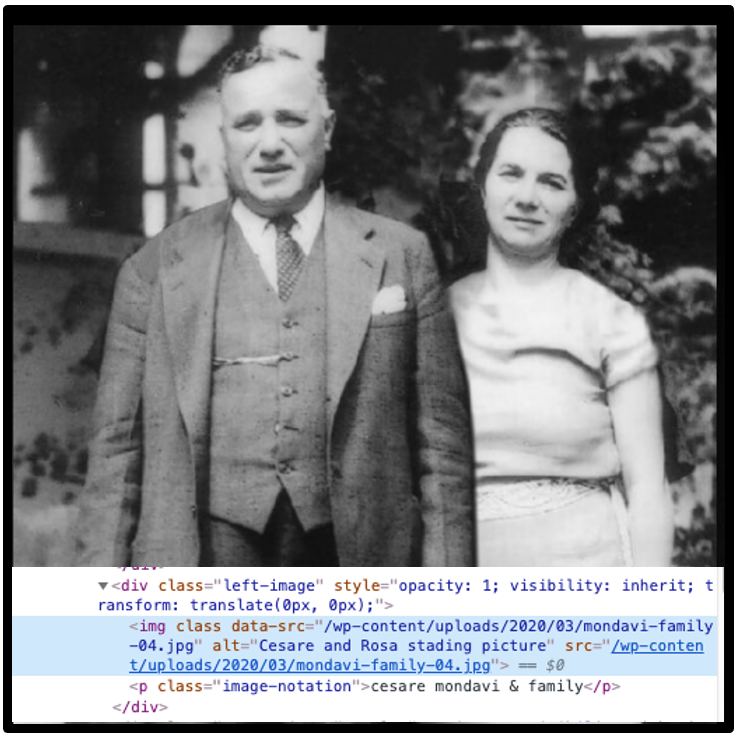
  Image Alternative Text: Every image you add to your website should have good alternative text. Alternative, or “alt” text, is a description of the image in the code that Google and screen readers for the blind can read. This code should describe what your image portrays, such as “Customers enjoying a tasting in the tasting room.” The only exception is if an image is entirely decorative (such as a twirly graphic forming a text break or a background style). With each new image you add, you will want to add alternative text to remain ADA Compliant. This addition also benefits you from an SEO lens.

Cesare and Rosa stading picture

  In this example, even though the picture is called “mondavi-family-04.jpg”, the website developer has given the picture an alt name of “Cesare and Rosa stading picture” to go along with the text. Helpful, but check your spelling in tags, too!

  Text Contrast: Anytime your copy or text has been adjusted, it’s essential to make sure that the characters are easy to read and not impeded by background images that may become unclear or hard to see.

  Links: Any new links that you create or add also need to contain clear relevant text. A URL with a mess of unfriendly letters and code can make you non-compliant—for example, https://www.wineglassmarketing.com/Services/Social-Media-Marketing  as opposed to: https://www.wineglassmarketing.com/Services/345j345jk345b34fsd0v.

Always try your best to have a friendly marketing URL that denotes what page they are on.

  SEO Improvements: You might think that most website building systems handle this for you automatically, but the sad truth is they don’t. You should already have a Google Analytics tracking code on your site, and ideally, you should also have a Facebook Pixel set up to track activity. If you don’t, you’re just paddling around without a plan. From a monthly maintenance perspective, the critical things for this category are:

  Meta Titles and Meta Descriptions:  While most systems do give you Meta Titles by default, these are often very basic and don’t abide by best practices according to the leading SEO platforms out there, namely Google. The real problem on the other side of the coin is Meta Descriptions are usually empty by default or don’t follow the best course.

  A big part of this is knowing how to write proper Meta Descriptions so that your website traffic improves – these aren’t just keywords of standard search terms. There’s an actual strategy to doing this correctly. For example, you shouldn’t stuff keywords into your Meta Descriptions. One case study by SterlingSky shows that when they saw brands keyword stuffing their posts, 40% of the time, the listing was suspended or removed by Google and had to be added again. With any new page created or even any new product added to your website store, it’s surprisingly vital to make sure that you’ve added the appropriate Meta Descriptions.

Google's example of keyword stuffing

  Keep your “Google My Business” page up to date:  Since Google is the most widely used search engine, this gives you a significant advantage in using the free Google My Business tools. However, having accurate operating hours is critical, especially since we’re in a current teeter-totter between open and closed. Considering this fact, you may wish to check on your business hours more frequently than once a month. You wouldn’t want someone making the trip to your tasting room when you’re mandated to have your doors shut.

  If you don’t have a Google My Business page, it could increase traffic. According to Forbes, a study done in 2019 stated, “Google My Business is a critical channel, with 96% of local businesses being viewed at least 25 times per month in Search results, and 86% receiving more than 25 [views per month] in Maps. And there’s plenty of space for high numbers, with 49% of businesses receiving more than 1,000 average Search views per month, and 33% receiving 1,000+ on Maps.” As of August of 2020, Forbes explains, “Google My Business has yet to catch on with large companies and those focused on B2B it seems, but manufacturers that sell through local independent retailers should refocus on GMB and how it can help their retailers succeed.”

  Broken Links:  As offers change and products go out of stock, it’s essential to make sure that your links don’t break. So, this upcoming month, if a product went out of stock, was it a featured link in an email? If a customer opens that email a few months later as they’re cleaning out their inbox and clicks on a link, will that connection break?

  Privacy Policy Compliant: In 2020 we saw the introduction of two privacy policies that impact each of us: CCPA (California Consumer Privacy Act), obviously for California residents, and LGPD (General Data Protection Law) for Brazil. (In 2018, the GDPR for the EU was put into effect for anyone who displays their website to anyone in the EU.) These laws are worth reviewing to ensure any new forms you’ve created on your site and your cookie policies follow them. There are plugins for WordPress that can handle the necessary popups and wording.

  Social Media Ads and Posts:   You should monitor and “prune” your social media posts as well. Technically these aren’t part of your website but play a vital role in bringing people to your website. When sensitive issues are coming up in the world scene (as we saw many examples of last year), many leave their ads in place without adapting them to show empathy for those suffering or to bring awareness appropriately. Meanwhile, some go entirely the other way and turn off their ads or halt their social media presence altogether, effectively shutting the door on potential sales by showing the outreach of an emotional connection with the consumer rather than plugging a promotion.

  For instance, leaving your ads as they stand – which usually contain a call-to-action, can seem tone-deaf. You’ve heard the term “read the room”; we need to “read the news” in this case. For example, adapt your posts showing an empathetic thought regarding the displacement of families who have lost homes in wildfires. Being relevant helps prospects and consumers appreciate the heart behind your brand, build a connection with your team members, and feel motivated to keep connected with your company.

By way of review:

•   Image Alternative Text

•   Text easily legible

•   Links are friendly and easy to read.

•   Meta Titles and Meta Descriptions follow best practices.

•   Google My Business Up to Date

•   Check for Broken Links

•   Check your forms that they are compliant with privacy policies.

•   Check your Social Media Ads and posts to make sure they are relevant.

  Now you have a spring maintenance list to ensure more significant traffic to your site, correct hours, better ADA compliance, and SEO practices. We hope that with these tips, your 2021 season will bloom with well-functioning websites attracting flocks of customers that enjoy your online garden.

Fullerton Wines: Raising the Bar on Oregon Chardonnay

vineyard on a barn

By:Nan McCreary 

  Willamette Valley, located between Oregon’s Cascade Mountains and the Coast Range, shares a defining characteristic with Burgundy, France. Both are cool-climate growing regions situated at the 45th parallel north, and both are meccas for the holy grail of grapes, Pinot Noir. Yet, while Burgundy has long excelled at another grape, Chardonnay, Oregon has been late to the party. Fortunately, this is rapidly changing.

  “This is a good time to be in the Chardonnay business in Oregon,” winemaker Alex Fullerton said, “and it’s a good time to be a Chardonnay drinker in the valley.” Fullerton, who, with his parents, Eric and Susanne, founded Fullerton Wines in 2012, is one of many winemakers championing Chardonnay as the new rising star of the Willamette Valley.

  Chardonnay vines were first planted in the Willamette Valley along with Pinot Noir in the mid-1960s. Much of what was propagated was a single clone grown in California, called 108, which didn’t ripen sufficiently in the cool Willamette Valley.

  “The first 20 vines we planted in our small vineyard near Beaverton were Davis 108 clones,” Fullerton told The Grapevine Magazine. “They were monsters. They were super vigorous and kept growing vegetatively but wouldn’t ripen. They were used to a dryer climate.”

  In 1974, David Adelsheim, co-founder of Adelsheim Vineyard in the Chehalem Mountains AVA, spent a vintage working in Burgundy. There he noticed that Chardonnay ripened earlier or at the same time as Pinot Noir, whereas Oregon growers were picking Chardonnay two weeks after Pinot Noir.

  “He figured it must be a clonal thing,” Fullerton said.

  In 1984, Adelsheim helped import some of the earlier ripening Dijon clones he saw in France, which turned out to be perfectly suited to Oregon’s climate. That was a turning point in the evolution of Chardonnay in the Willamette Valley.

  Throughout the 1980s and 1990s, the movement to bring over better clones spurred the revolution. Growers began experimenting with other clones in addition to classic Dijon clones, including California heritage clones which tend to be less vigorous. 

  “Our climate is changing,” Fullerton said. “It’s warmer, so it’s a good idea to get a diversity of clones up here.”

  According to Fullerton, clone selection is only part of the Chardonnay story in Oregon.  The refinement of site selecting, winegrowing practices, pick times and winemaking decisions also contribute to Chardonnay’s continuing success. Fullerton, which makes an 80% to 20% ratio of Pinot Noir vs. Chardonnay, sources grapes from all over the Willamette Valley.

  “We have a great narrative for Oregon Pinot Noir and what you get from different soils and AVAs, and we are starting to map that out for Chardonnay,” he told The Grapevine Magazine.

  “We have both volcanic and sedimentary soils here, and we’re continually experimenting with which clones do better in which regions.”

  Fullerton strives for diversity in the vineyard, planting some one-acre blocks with as many as 10 different clones in each block. “This broadens the expression of each individual site. If you plant only one clone on one site and vinify that separately, you will get an expression of terroir through the lens of only one clone. If you’re interested in seeing what a site does, you’re really better off seeing multiple clones planted together because you can find which sites are best and express the ultimate complexity of that site.”

  When it comes to harvesting, a growing trend in the Willamette Valley is to pick early. Early harvest helps retain acid and keep alcohol and sugar levels low. Fullerton, for example, picks Chardonnay a full one-to-two weeks ahead of full flavor development on the vine. “With Pinot Noir, you don’t pick until the flavor is in the fruit, but with Chardonnay, if the grapes are tasty and flavorful, you should have picked a few days ago to get the style we’re looking for. We have to keep a close eye on the grapes. They ripen very quickly.”

  In the winery, Oregon winemakers are generally striving for a leaner, crisper style of Chardonnay. Like many others in the valley, Fullerton is moving toward fermentation in larger barrels and away from oak. These include barrels as large as 350-, 500- and 600-liters, which allow for ingestion of less oxygen than smaller barrels as the wine ages. Wineries also use malolactic fermentation for white wines and aging sur lees by letting the gross lees settle, then reincorporating the desired solids back into the juice for fermentation and aging. Malolactic fermentation reduces harsh acids in the juice, and aging sur lees helps extract aromatics and adds texture to the wine.

  While Pinot Noir remains the signature grape of the Willamette Valley – as of 2018, there were 20,000 acres of Pinot Noir compared to 2,400 acres of Chardonnay – more and more winemakers throughout the valley see the potential of Oregon Chardonnay as an exciting alternative to the oaky, buttery styles that earned popularity in California. Still, it is a work in progress. For one thing, Chardonnay is very site-specific.

  “Today, we can identify which Pinots come from which appellation,” Fullerton said, “but we are not there yet with Chardonnay. With more experience and knowledge of soils and microclimates, eventually, we’ll be able to blindly pick out the appellation.” 

  Specifying an “Oregon style” of Chardonnay is even more difficult because the wine also reflects the winemaker’s choices. Chardonnay has long been known as “the winemaker’s canvas” because it is a grape easily manipulated in terms of flavor and aromas. “Oregon is developing its own style,” Fullerton said. “I don’t like to compare Oregon Chardonnays with White Burgundy, but generally, we’re trending toward the leaner, acid-driven styles of French Chardonnay. As our style evolves, I see more similarities than differences.”

  A testament to Oregon’s enthusiasm for Chardonnay is the increasing popularity of the annual Oregon Chardonnay Festival. Founded in 2012 as the Oregon Chardonnay Symposium, the celebration has evolved from an industry-focused technical panel and tasting to an education seminar for consumers and professionals and one of the region’s largest varietal-specific tastings. “If you’re interested in Oregon Chardonnay, you want to go to this event,” Fullerton said.  “It’s very educational and impressive to see how many good Chardonnays Oregon is producing.”

  For Fullerton, delving into the nuances of Burgundian wines is a labor of love, so it’s no wonder that he and his winery are adapting and promoting the latest trends in Chardonnay. His father, Eric, owner and proprietor of Fullerton Wines, gifted him with a trip to Champagne, the Loire and Burgundy for his 18th birthday, and this is where he got the wine bug.  “I was totally fascinated by wine all throughout college until I began working at wineries – Penner-Ash Cellars and Bergström Wines. These are the wines that speak to me.”

  As a winemaker, Fullerton oversees an 8,000-case production of Pinot Noirs, Chardonnay and some Pinot Gris. Their signature Pinot Noirs and Chardonnays include Three Otters (named after the Fullerton Family Crest, which features three little otter heads) and Five Faces (an acronym for the five members of the Fullerton family), as well as an extensive portfolio of single-vineyard wines. Many have received 90-plus ratings from Wine Enthusiast, Wine Spectator and Robert Parker. Viticultural practices include organic, biodynamic and sustainable farming.  Fullerton Winery offers three opportunities for tasting: Live virtual tastings, on-site tastings at the Portland Wine Bar and their tasting room at Fullerton Winery in Corvallis.

  Winemakers throughout the Willamette Valley agree that this is an exciting time for Chardonnay. With nearly 700 wineries and over 25,000 vineyards planted, there are many options for experimentation and ushering this relative newcomer into the future. Asked if Chardonnay can compete with Pinot Noir, Fullerton said, “Oh yeah. We can’t leave Chardonnay out of the story anymore and just consider Pinot Noir in the Willamette Valley.” 

  Clearly, the time is ripe for Oregon Chardonnay, for more information, visit…http://www.fullertonwines.com/

Yeast & Yeast Derivatives Become Easier to Use With More Flavorful Results

person pouring yeast derivative

By: Gerald Dlubala

  Winemakers choose a yeast strain based on several enological characteristics, including its tolerance to temperature, ethanol and sulfur dioxide, ability to provide quality fermentation, and ability to produce the desired aromas with minimal potential for foaming or clumping. Each fraction of the yeast contains specific, targeting properties that allow them to aid in the fermentation process and improve the overall quality of the wine. Yeast is the catalyst for creating up to 80% of all of the aroma-active compounds found in wines, including two of the most important ones, higher alcohols and esters. Yeast derivatives, used to improve wine quality, color, oxidation and mouthfeel, can also mimic the effects of a wine aged on lees when using targeted products selected and identified by experts. The better a winemaker understands them, the better wine they will produce.

  Using active dry yeast has become the preferred method for winemakers to get consistent fermentation and flavor complexity in their wines from batch-to-batch, negating much of the inherent risk of going with natural or spontaneous fermentation. Natural fermentation brings a high degree of unpredictability regarding starting times and stuck or sluggish fermentation cycles that can affect and diminish the quality, flavor and aroma of the wine. Conversely, active dry yeast is the freshest format available and ready to ferment upon contact.

  Traditionally, the active dry yeast is poured onto the surface of at least 10 times its weight in room temperature tap water and gently stirred to avoid or break up any clumps. If needed, there is a 20 minute waiting period to acclimate and have less than a 10-degree Celsius (50 degrees Fahrenheit) difference with the tank temperature. Once it reaches the ideal temperature, the mixture is transferred into the tank with aeration. Additionally, most suppliers recommend the use of rehydrating agents, or yeast derivatives, in the rehydration water.

Expediting Fermentation While Reducing Costs: Fermentis E2U™ Yeast

  Fermentis by Lesaffre, experts in the fermented beverage industry, offers an easier way for winemakers to start the fermentation process by streamlining the rehydration process or completely bypassing it with their line of certified E2U™ active dry yeasts.

  “As a winemaker, it’s always great to have options,” said Fermentis Regional Sales Manager Anne Flesch. “With our E2U™ line of yeasts, you can direct pitch or rehydrate. It is the winemaker’s choice as to which method is the best for them at any given time.”

  Flesch told The Grapevine Magazine that for practical purposes, the best way to direct pitch E2U™ is to pour the yeast directly on top of the tank, or, for whites and rosés, during tank filling after settling. When choosing to rehydrate E2U™, it can be accomplished under a wide range of temperature options, in water from 15-37 degrees celsius (59-98.6 degrees Fahrenheit).

  “Whatever option a winemaker chooses, the wine’s organoleptic characteristics (flavor, wine and color) or composition (levels of alcohol acidity) are not compromised,” said Flesch. “Both standard and E2U™ protocols result in the same performance in fermentation kinetics, so it is ideal for the winemakers who are looking to expedite their process without sacrificing anything related to quality. When time is the most crucial, as time in the cellar during harvest, this helps save that time.”

  Expediting the winemaking process and gaining more time always seems to be on the agenda for winemakers, and by direct pitching yeast, there are benefits throughout the entire process.

  “By choosing to direct pitch E2U™ yeast, the amount of water and heat needed for yeast rehydration is decreased along with the amount of water, energy and additional products used to clean the rehydration materials,” said Flesch. “The winemaker is bypassing traditional rehydration and the time, labor and personal miscues that come along with that process. There is a reduction of chemicals, needed water and heat sources, and labor hours needed, reducing labor costs. A streamlined fermentation task is completed faster and results in saved time and higher quality of work with no investment in rehydration agents, materials or cleaning chemicals. In some cases, a winemaker may potentially be able to replace their propagating/mother tank.”

  “Safety in the winery is also an important issue,” said Flesch. “Comfort and safety levels of production workers can rise by negating the need for extra water hauling or unnecessary ladder use. The possibility of dust inhalation from a yeast-derived product is a real health hazard for cellar workers during harvest. Our Certified E2U™ fermentation aids and functional products work to target and improve those conditions by offering a range of products that are under a physical form, like micro-granulated powder, or a liquified form that offers fewer inhalation probabilities and high dispersibility rates.”

  Fermentis created the first yeast liquid autolysate, ViniLiquid, in its fermentation aid portfolio. It has many advantages, including increased safety, superior pump-ability, quick availability to the yeast and shorter fermentation versus using a dry autolysate.

  “Conditions can dictate whether it is advantageous to rehydrate E2U™ before use, but if you choose to rehydrate, you can successfully do so using cold tap water, reducing heat consumption,” said Flesch. “For example, if conditions are toxic or challenging for yeast or your fermentation is stuck or sluggish, rehydrating E2U™ for use is recommended. Sometimes to completely restart a stuck fermentation, our protocol recommends the building of a starter culture. We do recommend rehydration in the case of secondary fermentation for sparkling applications.”

  Flesch told The Grapevine Magazine that the ability of their E2U™ yeast to be directly pitched is due to the high quality and expertise behind the production of the active dry yeast. The strength of the membrane developed during the multiplication process and the drying technology is the key to producing active dry yeast that is highly resistant to rehydration conditions. E2U™ has a four-year shelf life from production date with a recommended unopened storage temperature of less than 20 degrees celsius (68 degrees Fahrenheit).

  “In short, use of yeast and yeast derivatives certified E2U™ can benefit the winemaking community in critically important ways,” said Flesch. “Fermentation is easier, less time-consuming, and more worry-free. Seventy-five percent of winemakers use active dry yeast with their fermentations,” said Lesch. “If all winemakers decided not to rehydrate, we could save up to 600,00 hectoliters (~ 16 million gallons) of water and significant energy each year.”

  “Yeast hydration is now a matter of preference, not efficacity, and yeast derivatives are easy and quick to use,” said Flesch.

Enhancing Natural Processes Through Biotechnology Research and Innovation: AEB Group

  The AEB Group enables winemakers and brewers to improve their natural fermentation processes by offering custom-based solutions using biotechnology and treatment processes. They are the first North American company to develop reactivators to automatically and reliably rehydrate active dry yeast.

  Marco Bertaccini, Regional Sales Manager, told The Grapevine Magazine that AEB Group researches and looks towards providing winemakers the tools and products to take on the latest consumer taste trends, including different strains of yeast and the use of derivatives to match current consumer demand.

  “You know,” said Bertaccini, “in the past, the trend in wines has been the traditional big and bold flavors. For us, that meant using our FERMOL Meditterranée for the big, bold reds and FERMOL Chardonnay for the traditional whites. That demand for the traditional style of wine is still there, but not to the degree that it was. Consumers today are really into fresh, light and easy-to-drink wines with enhanced flavors.”

  For Bertaccini and the AEB Group, that translates into focusing on ester development and the transformation of amino acids into acetate ester. Their current focus is on the increased demand for easy-to-drink wines that feature a fresher variety of aromatics, especially those including citrus. Through research at the University of Modena and Reggio Emilia in Italy, AEB Group has ascertained and developed yeasts that express more of the natural flavor and aroma profiles of wine styles currently in demand.

  “We develop yeast extracts that boost amino acids for certain specific profiles,” said Bertaccini. “The nutrients and amino acids in juices naturally express varietal-specific profiles that we all would recognize. Since we know that aminos are precursors for esters, we can replicate and target specific aminos to produce more of what we want in any specific varietal.

  “For example, we offer our FERMOL tropical strain for white wines, which enhances and delivers more of that fresh, citrus-based flavor and aroma in a Sauvignon Blanc. Chardonnay wines benefit from our FERMOL fleur yeast. For red varietals that already contain great, natural, fresh fruit and berry flavors and aromas, we’ve developed our FERMOL red fruit strain to enhance all of those desirable qualities. These strains use and enhance the unique oenological features of the wine to produce a wine that is easy to drink with fresher aromatics.”

  Bertaccini told The Grapevine Magazine that AEB Group’s latest New Zealand trials featured their Levulia Torula strain and resulted in a huge success. Levulia Torula is an organic, non-saccharomyces yeast developed for varietal aroma enhancement. It is a strain for alcoholic pre-fermentation,  present naturally in the native flora of the must, contributing positively to the organoleptic complexity of the wine while limiting the production of volatile acidity. Levulia Torula is used in sequential inoculations, 24 to 48 hours before a classical strain of Saccharomyces cerevisiae. Its rapid establishment in the must makes it ideal for limiting the spontaneous development of separate strains of unwanted native yeasts. After the growth of the Saccharomyces cerevisiae, the population of Torulaspora delbrueckii dies down and rapidly begins its autolysis during alcoholic fermentation, where it supplies nutrients and contributes to the detoxification of the medium. It also helps reduce the sensations of astringency in the mouth through the release of polysaccharides.

  “We initially only made a small quantity for the trials, but it became wildly popular and quickly sold out,” said Bertaccini. “Levulia Torula provides excellent dominance in fermentation and great control over microorganisms. It is organic and usually paired with another inoculation for a strong fermentation finish. We are seeing the demand grow and now have much more available because of the success of our New Zealand trials.”

  Because it is organic, Levulia Torula has a shorter recommended shelf life of two years and is suitable for all grape varietals, including Sauvignon Blanc, Chardonnay, Gewurztraminer, Colombard, Riesling, Muscat, Sémillon and more.

When to Upgrade a Bottle-Filling Machine & the Options Available

machine filling up wine bottles

By: Alyssa L. Ochs 

  Bottle-filling machines are crucial pieces of equipment in the winery for getting products onto store shelves and into consumers’ hands. If your winery has been using the same filling machine for a long time, it might be time to consider an upgrade to match your current level of production and evolving needs.

  Here is an overview of different bottle-filling machines to consider for an upgrade, how to compare this equipment, and tips for choosing the right product for your winery.

Bottle-Filling Machine Options

  Although bottle-filling machines serve the same basic purpose and have similar functions, there are many options available. Overall, there are three different categories of bottle-filling systems: manual, semi-automatic and automatic. A logical place to start with choosing this type of equipment is to first consider the winery’s size.

  Rod Silver handles marketing and sales for XpressFill Systems, LLC in San Luis Obispo, California. He told The Grapevine Magazine that manual fillers are more suited to very small wineries and home vintners because these devices fill just one bottle at a time. However, this is not practical for many wineries in operation today. XpressFill manufactures bottle- and can-filling machines handcrafted and custom-made for the wine, beer, spirits, olive oil and juice industries. The company also offers a volumetric filler, level filler, carbonated beverage counter-pressure bottle filler and hot fill bottling filler. 

  “It is more labor-intensive and less costly, and the production rate ranges from 100 to 200 bottles per hour,” Silver said about manual fillers.

  The next step up is the semi-automatic filler, which requires some manual manipulation of the bottles but automates the fill start-and-stop sequence. These machines can typically fill between 200 and 500 bottles per hour.

  “Small to medium wineries can benefit from semi-automatic fillers in achieving an economic and efficient bottling process,” Silver said. “Even larger wineries will often utilize a semi-automatic filler for smaller bottling runs where it is not cost-efficient to start up a production line.”

  For large wineries, fully automated production lines are the way to go for maximum capacity and efficiency. However, Silver said that wineries should be aware that this setup requires a substantial capital investment and routine maintenance.

Jay Langejans, sales and spirits industry expert for Fogg Filler Company, told The Grapevine Magazine that Fogg’s gravity fillers are best for flat wines. He said its carbonated fillers are best for carbonated wines and still and sparkling wines on the same filler. Fogg filling machines have many applications, including wine, juice, antifreeze, bottled water and pharmaceutical products. Based in Holland, Michigan, the company also offers capping machines, bottle sanitizers, cap sanitizers and sorters.

  “The F2 Series gravity filling machine is recommended for small wineries and fills 30 to 100 standard wine bottles per minute,” Langejans said. “For medium-sized wineries, the F6 Series gravity filling machine fills 90 to 150 standard wine bottles per minute, and for large wineries, the F9 Series gravity filling machine fills 150 to 200 standard wine bottles per minute.”

Comparing Different Bottle-Filling Machines

  Depending on a winery’s needs, bottle-filling machines can be straightforward, operated by hand with manual controls. Filling machines can also be semi-automatic, increasing efficiency on the bottling line while staying within an equipment budget. Fully automated machines reduce labor in the bottling process but require significant commitments of space and money.

  Langejans from Fogg Filler said, “Your production capacities for the whole line or the winery, in general, should be considered when picking the right-sized machine.”

  In addition to the size and the degree of automation, some bottle-filling machines have special features, such as the ability to apply screw caps, which may be enticing for a winery with specific bottling goals. Other differences to consider when choosing a filling machine are speed, portability and ease of maintenance and cleaning.

  The number of spouts on the machine determines filler speed, but the amount of wine in the holding tank is also a factor for how fast the bottles fill up. It can be beneficial to have an adjustable machine to fill different-sized bottles and other types of wine packaging. Semi-automatic machines that apply screw caps eliminate the need for spinners and corkers, which can ultimately increase bottling speed. Although screw capping is a more expensive feature, it uses less labor and creates better consistency.

  Cost also varies depending on the filling machine. There is an industry-standard of between $2.00 and $4.00 per case for mobile bottling. Multiplying annual case production by that amount will give vintners a sense of how that compares to buying or upgrading a filling machine.

  Many wineries start looking into semi-automation when they get to approximately 4,000 cases per year, and then at full automation when producing between 5,000 and 10,000 per year. An entirely manual bottling process for a small winery might require an investment of around $10,000. Once the winery reaches 2,000 cases per year, that investment looks more like $20,000, and then up to $40,000 as they exceed 4,000 annual cases produced.

When Is It Time for an Upgrade?

  For many wineries, there comes a time when it is necessary to reconsider a current bottle-filling machine either because of functionality or capacity. When that time comes, wineries must assess their current and projected production levels. Of course, if the current system keeps breaking down or requires constant repairs, this is a clear sign that a replacement should likely happen sooner than later, so production speed and product quality don’t suffer.

  Silver from XpressFill told The Grapevine Magazine that there are five primary factors for evaluating the benefits of an upgrade: cost of equipment, rate of production, cost of maintenance, cost of labor and equipment lifetime.

Choosing the Best Bottle Filling Machine for a Winery

  While the mechanics of a bottle-filling machine are important in getting the most out of this time-saving equipment, it’s also beneficial to work with a trustworthy and reliable equipment provider. Consider the usefulness of the technology and how relevant that technology would be to winery operations. Also, consider the amount of staff training required to operate the machine and ensure workers’ safety and productivity.

  Silver from XpressFill said new wineries should not over-purchase a system that could take two or more years to reach the equipment’s full capacity.

  “It can be a major financial expenditure that takes too long to recover the investment, if ever,” he said.

  For wineries trying to decide when to upgrade a bottle-filling machine, Silver said to perform a cost-benefit analysis based on the downtime, maintenance and hourly operating cost of the current system versus the replacement.

  “Although a new system may have much greater production, the time for setup, configuring for filling and cleaning after filling may be much more labor-intensive and result in a net reduction in cost-effectiveness,” he said.

  Calculating the pros and cons of investing in a new machine can be challenging and time-consuming, but it can also be worth the effort if it saves the winery money and helps get more wine out in the world for people to enjoy. Regarding cost, special feature options and customer service level, it pays to shop around before settling on a new machine or investing in the winery’s first filling system.

All About Winery Pumps:Choosing the Right One

By: Alyssa L. Ochs  

  Moving wine from one location to another is an integral part of a winemaker’s responsibilities, and for this job, you’re going to need an effective pump. There are several types of pumps commonly used in winery settings, and each one has a unique purpose and specialty. It’s a good idea to have a clear understanding of winery pump options available because choosing the right pump can either help or hinder your operations, ultimately making your winery more or less efficient over time.

Types of Pumps Used in Wineries

  Depending on what you need a pump to do in the winery, you might choose a piston pump, diaphragm pump, centrifugal pump or peristaltic pump. Other products commonly used in winery settings include volumetric pumps, Moineau pumps, flexible impellers and gear pumps. Meanwhile, you can find customizable pumps in various sizes and configurations.

  Jeff Hannan, product manager for centrifugal pumps at Gorman-Rupp Pumps, said the company’s Super T and Ultra V Series pumps equipped with the Eradicator solids management system are the best for handling waste such as seeds, stems, skins and all other types of stringy solids.

  Headquartered in Mansfield, Ohio, GR Pumps designs and manufactures pumps and pump systems for the food and beverage industry and at least a dozen other applications. The company also manufactures submersible, rotary gear and standard centrifugal pumps to handle waste applications, sump applications and other fluid-handling needs.

  “With the ability to pass up to three-inch spherical solids, Super T and Ultra V Series pumps are designed to eliminate clogging and increase up-time,” Hannan said. “With thousands of installations in the toughest applications you can find, these pumps have a proven track record for performance and dependability.”

  The Eradicator’s three-part solids management system consists of a lightweight inspection cover, an innovative backplate that incorporates an obstruction-free flow path, and an aggressive self-cleaning wear plate with integral laser cut notches and grooves. This is combined with a revolutionary “tooth” design to constantly and effectively clear the eye of the impeller. 

  “Upgrade kits are available for existing Super T or Ultra V pumps in the field,” Hannon said. “The upgrade kits provide everything you need to put the best self-cleaning pump technology in the industry to work for you.”

  Ross Battersby, who handles sales and design for equipment and machinery at Carlsen & Associates, said his company sells three main pumps for winery applications. Carlsen & Associates is a Healdsburg, California-based premier wine equipment supplier that has engaged in researching and refining the winemaking process for over 20 years.

  Carlsen’s Waukesha 130 positive displacement pump is a versatile pump with many applications, including filtering, barrel-filling, emptying and bottling.

  “These pumps must in three-inch lines from the de-stemmer to the tank at 15 tons per hour, transfer wine in two-inch lines at up to 130 gallons per minute, and also go in reverse,” Battersby said. “You can use pressure transducers, switches, float switches, batch controllers and timers with this pump.”

  Another popular Carlsen pump is the Yamada NDP 25 double diaphragm air pump. It runs on a max of 22 cubic feet per minute of compressed air and is commonly used by boutique wineries for transfers, press pan duty, small tank pump-overs and barrel filling.

  “Air pumps are the gentlest of pumps when set up correctly and can be used in nearly all situations,” Battersby said. “There are two principle controls on the pump, a ball valve to control airflow and thus pump flow, gallons per minute and a pressure regulator that will control line pressure, commonly not above 30 psi, depending on the application. With our Electric Air solenoid, you can use float switches and timers to automate the pump. A key feature is the ability to shut off against the pump without damaging anything.”

  Battersby also mentioned the 2085/10 or 15 hp centrifugal pump. These large-scale transfer pumps move wine in three-inch lines at speeds between 250 and 350 gallons a minute. They are often used in tanker truck loading and unloading, large-scale wine blending, racking off huge tanks, press pan duty on large presses and pump-overs for massive red fermenters.

  “The scrolled impeller, combined with a variable frequency drive, means there is little-to-no sheer in the pump head, so provided the correct line size and speed is selected, there is no cavitation,” said Battersby. “They are extremely efficient and easy to use.”

  Battersby said his company previously sold a line of flexible impeller pumps, less-expensive pumps that perform various tasks. These are entry-level pumps commonly used by small startup wineries. However, Carlsen & Associates stopped selling these products because the maintenance and service requirements failed to meet the company’s standards for quality.

  “The rubber impellers break up over time, they fracture if they go in reverse, they leak and you can never run them dry,” Battersby said.

  Another pump-like product from Carlsen is the Bulldog Pup, an inert gas-powered barrel racking wand that works by sealing the racking wand in a barrel or keg. The Bulldog Pup displaces the wine using compressed inert gas to push it out of the barrel, into the wand and out of the hose to a tank or barrel.

  “At about $700, it is the least expensive ‘pump’ you can buy and also the gentlest, with the fewest moving parts,” he said. “These units also stand the test of time with readily available spare parts, a design that hasn’t changed and reliability that’s second to none. You can find these in the Carlsen & Associates Annex section.”

Maintenance for Winery Pumps

  A big part of having pumps in the winery is keeping them clean, sanitary and working well for many years.

  Hannan said that consideration must be given to reliability, the low total cost of ownership and overall uptime when selecting a pump for any waste application. He also said that it’s best to choose pumps that are easy to maintain and designed to prevent clogging. 

  “Gorman-Rupp Super T and Ultra V Series pumps equipped with the Eradicator solids management system are the best choices for self-priming, solids-handling pumps for any maintenance department,” Hannan said. “Externally adjustable clearances between the impeller and wear plate in combination with the new lightweight inspection covers are just a couple of the features that make routine maintenance on these pumps easier than ever.”

  Battersby from Carlsen said that just like a car, a pump will stop working when you need it most without preventative maintenance.

  “Change O rings and seals on a regular basis,” he said. “Change gearbox oils on schedule. Grease the fittings regularly. Treat your pump with respect. Without it, you won’t be pumping wine, and you may not have a job! Keep basic spare parts on your workshop shelf, such as O rings, diaphragms and maybe a speed control. That way, if it breaks, you can replace it with minimal downtime and then replace your spare parts. It is not a huge investment, considering the loss if the pump breaks down and lays idle waiting for repair. During bottling or harvest, this can be critical.”

Qualities of a Good Winery Pump

  A good winery pump should be tolerant of solids and sediment while also keeping oxygen out of the wine. Pumps shouldn’t agitate the wine during their operation and should be relatively easy to clean, sanitize and maintain. Many wineries look for pumps that have compact designs so they don’t take up too much space. Portability is also desirable for pumps if there’s a need to move them around the winery space. Staff training and safety are also important considerations; choose pumps that are easy to operate with a low learning curve so that multiple staff members can use them regularly.

  Battersby offered a few “dos” and don’ts” about using different types of pumps in a winery:

•   Lenticular filters and air pumps are not good together.

•   Small hoses use a small pump. If you don’t have one, slow the big pump way down.

•   Every bend and valve and rise in elevation will cause line loss. Don’t make your pump work hard by pumping too far or through too many obstacles.

•   Pumps are the core of a winery and winemaking. Gravity works to a degree, but to be efficient, you have to use a pump.

•   Rarely does a pump affect a wine. Poor pump operation or maintenance will definitely contribute to poor performance and affect your wine.

•   Barreling down, an air pump is usually best. You can shut off against it. It doesn’t have to be super large as you fill 60-gallon vessels, so running 20 gallons per minute is a fine speed.

•   When transferring huge volumes of wine, use a centrifugal pump and large lines. Put the horsepower to use and get the job done.

•   For must pumping, use a positive displacement pump, progressive cavity pump or peristaltic pump. These pumps will handle the solids of must with little-to-no damage (exemption for whole berries with progressive cavity pumps) and be able to move the must long distances on overhead lines. The Waukesha positive displacement pumps can also be used for wine movements for the rest of the year. Commonly, peristaltic and progressive cavity pumps are put away after harvest.

Choosing the Right Pumps for Your Winery

  For safety and sanitation, winery pumps should be made using food-grade stainless steel with food-safe seals and lubricants. You can also find pumps with special options to suit the winemaker’s needs and preferences, such as non-marking wheels, remote control for off-site operation, pressure and flow sensors, automatic valves, flow meters and different types of connectors. Even with the highest quality pumps on the market, you might need to repair them after heavy use. Therefore, it’s a good idea to work with companies with readily available replacement parts just in case the original parts wear down over time.

  Battersby said that the criteria for choosing a pump are what you are pumping, what size hoses you are using, how far you are pumping, the type of pump you like and how much you’re able to spend. In small wineries, pumps must be able to do many tasks, but it’s advisable to always have at least two pumps so there’s a backup.

  “Some small wineries that pump must have two identical pumps in case one fails, Battersby said. “Not a bad idea if you are handling machine-harvested fruit, which will have metal from the vineyard in it. In larger wineries, you want a pump that satisfies the attributes for just one task, such as must pumping, transfers or bottling.”

  Battersby also said that all pumps are not equal and that while quality pumps cost more money, they are more likely to run for decades with basic and ongoing maintenance. So, while cheap pumps are more affordable to buy, they usually do not have the same levels of service, parts or performance, which will end up costing you more than the high-quality pump in the long run.

  “In cellar operations, you want robust, reliable, dependable pumps with a service crew that can supply advice, technical support, spare parts and training,” Battersby said. “This is what we specialize in at Carlsen and Associates.”

Membrane Filter Integrity Testing

Typically an Absolute Membrane Filter

By: Thomas J. Payette, Winemaking Consultant

The previous article in The Grapevine Magazine addressed steaming the bottling line.  Following steaming, the winemaker will want to perform a check to determine whether or not the process has been successful and that the filter has not been damaged by the steaming process or other handling. 

  The following process is a way to check the membrane filter’s integrity prior to wine bottling use.  During proper steaming, sterility should have been achieved from the cartridge filter downstream to the filling spouts.  Please keep this in mind as we follow this procedure to insure the sterile conditions will not be compromised during the testing process.

Objective/Principal

  The objective of this procedure will be to test a pre-wetted membrane filter with air or nitrogen to determine if the filter will hold a certain level of pressure.  The surface tension of clean water on this filter matrix will determine the amount of pressure the filter will hold.  After steaming and cooled the filter cartridge is considered pre-wetted.  Do not remove to wet the cartridge after steaming.  That would violate the “sterile conditions”.

Procedure

1.     Review the information that came with your filter and contact your supplier representative to see if they have any tips on the procedure or process about to be performed.  They may have helpful recommendations and data for you about that specific filter.

2.     After the steaming operation, described in the previous article, allow the assembly to cool to room temperature.  {If this is not done properly the results will not be accurate because the temperature change inside the closed system will show a pressure drop due to cooling and contraction.} The cooling process may take some time.

3.     Attach a source of compressed air or nitrogen (not Carbon dioxide) with a regulator to the top valve or to any sealed up stream orifice of the filter assembly.  Close all of the upstream valves with the exception of the one you would like to use to pressurize the filter system.  Be aware that any downstream orifice could be a contamination point. 

4.     Make sure all the valves are in perfect shape, will not leak and will have the ability to withstand the pressure that will be applied to the filter.

5.     Slowly turn the pressurized air source on and allow it to flow into the upstream side of the membrane housing. [Note: use a clean source of air that does not have any wine residue on the tip of the hose or any possible chance of introducing yeast or microorganisms.  Being the upstream side of the filter this should not be a problem but remember we are about to bottle a wine in a sterile environment.  Try not to introduce any micro-organism: Think Cross Contamination!]

6.     Using the regulator adjustment, allow the pressure to slowly increase up to the designated pressure for the micron rating of the filter.  (Typically 18 PSI is sufficient for a 0.45 micron rated membrane that would hold 20 PSI wetted.  Do double check this number with your supplier in the event this rating changes since publishing of this article. )  The test pressure will be in the literature of the filter package or it can be obtained from your supplier’s technical department.  Be aware, some filters have the same hold pressure even though their micron rating may be different.  Be certain not to “slam” the filter with immediate pressure.  That action may rupture the filter media and that filter may not pass the test or perform the filtering function as designed and desired.

7.     Allow the pressure to rise slowly while monitoring both the pressure gauge on the filter housing and the gauge on the regulator supplying the compressed air or nitrogen.  There should be little or no discrepancies between them.  This also indicates the gas is flowing into the filter housing.  One may see a slight amount of water come through the down stream side of the unit though a bleed valve.   This is normal since some water may “push” off the outside of the pre-wetted filter. Do not disassemble the down stream side of the set up because it will compromise the sterility of the bottling.  [Do make sure an outlet for air is open on the downstream side of the filter so the indication of a pressure, on the up-steam pressure gauge, is not a false one caused by back pressure from a closed valve]

8.     Once the proper pressure has been achieved and both pressure gauges agree – turn the valve supply of the gas into the housing to the off position.  Record the pressure gauge and the time of day.  One may disconnect the gas supply at this time since it should not be needed anymore for this test.  Allow the filter, without any downstream back pressure, to hold the upstream pressure with only the dampened filter holding back the gas.  If the filter holds this pressure for the length of time obtained from the literature in the filter box for that cartridge or from the technical department for that filter, the filter passes the test!  [For clarification : It is the surface tension of the water in the matrix of the filter that is holding back the gas].

9.     Time the holding pressure for the designated time for that filter.

10.   At this time, double check to see that the pressure does show the proper pressure; then slowly open a back stream valve.  Make sure to listen to hear that indeed pressure is coming off the filter housing set up and that the gauge was not stuck at the desired pressure.  Do this slowly so the filter does not go through an abrupt change in pressure that may damage the filter media just proven to be appropriate for the function of sterile filtration.[ If it passed ]

11.   Record any data that may be required by the bottling department or winemaker showing the filter was tested and checked out ready for use.

12.   Double check that all the downstream areas are still attached and that their sterility has not been compromised.

13.   Start the flow of wine for the day’s bottling run

14.   Pull samples at different times of the day and test them under the microscope ( if equipped and your winery has the expertise ) to insure the designated function did its job and continues to the job.  Numbering pallets as you bottle is a smart operation in the vent you find a filter failure during a days bottling run.  { Not a norm typically by the way }.

15.   Some wineries, after the day’s bottling, will re-wet the membrane with water and follow the testing procedure again to confirm the integrity was not lost on the filter during the day’s run.   This give “back end assurance” as performed as expected and desired.

  The above test should be performed each time a new or stored filter is installed into the filter housing and each time you bottle.  In many instances winemakers are able to get 10,000 cases or more through their cartridge filters before compromising the sterile bottling conditions.  Your supplier will be able to guide you with knowledge on how many cases or steamings your cartridge filter will be able to withstand. Typically I become most concerned of the steaming so I will discard a filter after a certain number of steaming or after a certain amount of time under steam.

Supplemental Notes:

•     Perform this procedure, for the first time, on a day you do not plan to bottle or on a day you have plenty of time to think the process through – not being rushed.

•     Check with the cartridge supplier to determine if the filter purchased has a “steamable life span”.  If so be sure to record the amount of time each cartridge has been steamed and discard the filter when appropriate.

•     Make sure that only water is on the filter during the testing of the filter as other “contaminants” may give a false reading of passing the test.

•     Setting the filter housing up with a male quick disconnect at the top port will greatly improve the ease of attaching the source of the desired gas.

•     The author prefers nitrogen since some compressed air has oils or odors that may interfere with the wine or the testing process.

•     Many cartridge filters were designed for the pharmaceutical industry and they are made to very strict standards.  Handle them with care!

•     Wineries now have the luxury of purchasing a machine to perform this function; however they are not inexpensive and this process, when mastered, does not take long.  The results are inexpensive and easy to obtain.  What is the machine fails ?  Will you have the expertise / knowledge know?

Review:

•   Contact your supplier to review the Hold Test operation with them.

•   Make sure the filter assembly is cooled to room temperature before testing

•   Use Nitrogen to pressurize the unit.

•   Make sure the pressure reading is not caused or influenced by a downstream obstruction.

•   Be cautious of downstream Cross-Contamination.

A Word About the Hold Test:

  The hold test should be performed in the clean environment of the bottling room under strict standards and precise conditions.  Keeping a keen eye on the process for cross-contamination possibilities, potential sources of error and other out of the norm conditions will lead to the winemaker’s ultimate success each and every time this is done.  A sterile bottling will be achieved providing the consumer with fresh and consistent wine each and every time they relax with one of your products.  One can not express the importance of doing this procedure correctly.  The winery’s success depends on the proper execution of sterile bottling and that process rest heavily on testing the membrane before bottling and overall proper steaming of the complete bottling line.

Don’t Get Caught Off Guard During Wildfire Season

By: Michael Harding, Senior Risk Solution Specialist, Markel Specialty

Weather conditions and natural disasters occasionally take a toll on vineyards and other agricultural production systems. Due to climate change and recurring droughts, some of which are severe, the frequency and severity of wildfires is expected to increase. These risks highlight the need for winegrowers and winery owners to be as prepared as possible to reduce risk.

Putting Your Plan Together

  Many wineries may have already revisited their evacuation plans and filed them with their respective state agencies. Staying current of wildfire season developments can help enhance your ongoing planning and preparedness. Technology can also support your wildland fire planning and response. Additional planning resources by the American Red Cross are available at: www.redcross.org/get-help/how-to-prepare-for-emergencies/types-of-emergencies/wildfire.html

Steps to Take Before a Wildland Fire Event

•    Take a close look at your winery’s communication protocol for evacuations. Everyone should have a clear understanding of any community alarms that signal when you need to evacuate. Assign specific accountabilities to staff so everyone works collectively to achieve a positive outcome of protecting lives and property.

•    Work with your regional Forest Service to better understand emergency evacuation procedures in your area.

•    Coordinate with the American Red Cross, FEMA, and other emergency agencies to give them the locations of your evacuation sites. Invite your local fire department out as part of a fire pre-incident plan. They should be provided a map of your property, highlighting planned evacuation routes. They can also offer technical assistance to support your plan.

•    Prepare and post route maps for each site, including alternate routes. With a large fire, you may need to use “Plan B.”

•    Consider forming a cooperative agreement with another site to share resources and serve as an evacuation site.

•    Identify key equipment to be evacuated, including computers and other vital records. As part of your business continuity planning, programs should already have information backed up and stored remotely. But, in case you don’t, practice removing this equipment as part of your practice response.

•    Stock an ample supply of water and easily-prepared foods until rescue arrives.

Controlling Wildland Fire Exposures

  Wildland fires are one of the most catastrophic threats to wineries.  Protecting your structures from ignition and fire damage is an important program objective second only to an evacuation plan. Taking precautions ahead of time can help reduce the exposure of a wildfire intrusion. There are a number of proactive measures a winery can take to mitigate the property damage a wildland fire can cause.

  To support a fire adaptive community philosophy, the local fire department or authority having jurisdiction for your winery should require you to develop a landscape plan for your property. It is wise to seek their advice and incorporate their recommendations as you develop a plan specific to your location. You can learn more about fire adaptive community planning at the Fire Adaptive Communities, www.fireadapted.org

  According to the NFPA 1144 – Reducing Structure Ignition Hazards from Wildland Fires, fire protection plans should address four zones around a property.

What are the primary threats to property during a wildfire?

Research around property destruction vs. property survival in wildfires point to embers and small flames as the main way that the majority of properties ignite in wildfires. Embers are burning pieces of airborne wood and/or vegetation that can be carried more than a mile through the wind, they can cause spot fires and ignite structures, debris and other objects.

  There are methods for property owners to prepare their structures to withstand ember attacks and minimize the likelihood of flames or surface fire touching the structure or any attachments. Experiments, models and post-fire studies have shown structures ignite due to the condition of the structure and everything around it, up to 200’ from the foundation.  This is called the Structure Ignition Zone.

What is the Structure Ignition Zone?

  The concept of the structure ignition zone was developed by retired USDA Forest Service fire scientist Jack Cohen in the late 1990’s, following some breakthrough experimental research into how structures ignite due to the effects of radiant heat. 

The structure ignition zone is divided into three zones; immediate, intermediate and extended.

Immediate Zone

  The structure and the area 0-5’ from the furthest attached exterior point of the structure; defined as a non-combustible area. Science tells us this is the most important zone to take immediate action on as it is the most vulnerable to embers.

  START WITH THE STRUCTURES then move into the landscaping section of the Immediate Zone.

•    Clean roofs and gutters of dead leaves, debris and pine needles that could catch embers.

•    Replace or repair any loose or missing shingles or roof tiles to prevent ember penetration.

•    Reduce embers that could pass through vents in the eaves by installing 1/8” metal mesh screening.

•    Clean debris from exterior attic vents and install 1/8” metal mesh screening to reduce embers.

•    Repair or replace damaged or loose window screens and any broken windows. Screen or box-in areas below patios and decks with wire mesh to prevent debris and combustible materials from accumulating.

•    Move any flammable material away from wall exteriors – wooden pallets, mulch, flammable plants, leaves and needles, firewood piles – anything that can burn. Remove anything stored underneath decks or porches.

Intermediate Zone

  5-30’ from the furthest exterior point of the structure.  Landscaping/hardscaping – employing careful landscaping or creating breaks that can help influence and decrease fire behavior.

•    Clear vegetation from under large stationary propane tanks.

•    Create fuel breaks with driveways, walkways/paths, patios, and decks.

•    Keep lawns and native grasses mowed to a height of 4”.

•    Remove ladder fuels (vegetation under trees) so a surface fire cannot reach the crowns. Prune trees up to 6-10’ from the ground; for shorter trees do not exceed 1/3 of the overall tree height.

•    Space trees to have a minimum of 18’ between crowns with the distance increasing with the percentage of slope.

•    Tree placement should be planned to ensure the mature canopy is no closer than 10’ to the edge of the structure.

•    Tree and shrubs in this zone should be limited to small clusters of a few each to break up the continuity of the vegetation across the landscape.

Extended Zone

  30-100’, out to 200’. Landscaping – the goal here is not to eliminate fire but to interrupt fire’s path and keep flames smaller and on the ground.

•    Dispose of heavy accumulations of ground litter/debris.

•    Remove dead plant and tree material.

•    Remove small conifers growing between mature trees.

•    Remove vegetation adjacent to storage sheds or other outbuildings within this area.

•    Trees 30 to 60’ from the structure should have at least 12’ between canopy tops.

•    Trees 60 to 100’ from the structure should have at least 6’ between the canopy tops.

If an Evacuation Becomes Evident

•    If possible, identify the location and direction of the fire event. Remain cognizant that this can quickly change direction and speed.

•    Clearly explain your evacuation procedures to all that may be involved.

•    Identify special medical needs and gather emergency equipment and necessities, including trauma supplies for ready access.

•    Designate enough vehicles to evacuate everyone safely. Reinforce safe driving practices with all drivers.

•    Equip staff with emergency communications equipment (cell phones, walkie-talkies, whistles, flares, colored smoke canisters, etc.). Ask your local jurisdiction authority for suggestions.

•    Load key equipment, vital records, food, and water.

•    Ask qualified associates to disconnect and move LP gas tanks to a safer location, such as a gravel lot, or follow the manufacturer’s instructions to empty the tanks.

•    Warn firefighters of underground fuel storage or LP gas tanks before you leave.

  Making your facility fire resistant can help reduce property loss. However, keep in mind that these steps should be done only by assigned staff in conjunction with an evacuation and never require or allow staff to remain behind. Close and secure all doors and windows once combustible materials have been moved away from these openings.

•    Wet down buildings and roofs. There are commercial grade fire retardant products available that can help support your efforts to protect your property. But do your research ahead of time; and don’t let the application of these products reduce the priority of evacuating.

•    Have qualified personnel cut down trees in the fire path, bulldoze a firebreak, and cut field grass as short as possible.

•    Remove brush and dry vegetation near buildings.

Fire evacuation – What you need to know

  During wildfire season, you may be forced to evacuate in a hurry. People are your first priority; to include guests, staff and firefighters. Most fire evacuations provide at least a three-hour notice; but due to the scope of your operation, you may need to do it sooner. Take proactive steps before and during an evacuation to reduce anxiety and avoid injuries. Plan, prepare and practice.

Filing Claims

  In the event your area experiences a wildfire event, it is highly likely it will not only be monitored by your insurance agent, in addition to your insurance company. Pre-loss documentation, such as video recordings and pictures of buildings, business personal property inventories, should be up to date and included as part of your evacuation materials. Working with your agent is a great resource to understand what might be necessary to help with documentation, if you should need it.

Reference

•    NFPA 1144 – Reducing Structure Ignition Hazards from Wildland Fires, 2018 Edition. National Fire Protection Association. Quincy, MA 02169, 2018

•    Fire Adaptive Communities. Fire Adapted Communities Learning Network.

      www.fireadaptednetwork.org

•    Wildfire Safety.http://www.redcross.org/get-help/how-to-prepare-for-emergencies/types-of-emergencies/wildfire.html. © 2019 The American National Red Cross

  This document is intended for general information purposes only, and should not be construed as advice or opinions on any specific facts or circumstances. The content of this document is made available on an “as is” basis, without warranty of any kind. This document can’t be assumed to contain every acceptable safety and compliance procedures or that additional procedures might not be appropriate under the circumstances.  Markel does not guarantee that this information is or can be relied on for compliance with any law or regulation, assurance against preventable losses, or freedom from legal liability.  This publication is not intended to be legal, underwriting, or any other type of professional advice.  Persons requiring advice should consult an independent adviser.  Markel does not guarantee any particular outcome and makes no commitment to update any information herein, or remove any items that are no longer accurate or complete.   Furthermore, Markel does not assume any liability to any person or organization for loss of damage caused by or resulting from any reliance placed on that content.