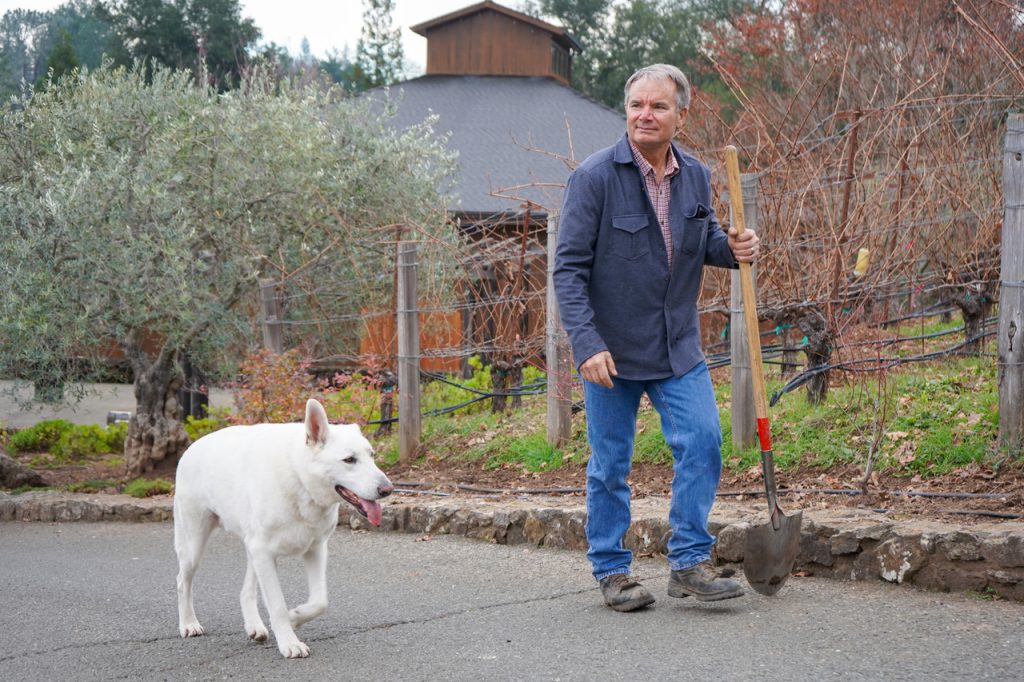
I am not sure how many of you made it to Unified in Sacramento this January. I did, it was my first time back since the pandemic. I had a good time catching up with friends and making new ones. The company was good and so was the wine.
If you had a chance to go to any the sessions you might have come across ones dealing with climate and weather conditions in the vineyard. I attended some of these and they were very informative. One was dealing with how to mitigate cold damage in grapevines. Another one talked about how to deal with drought in the vineyard. It is interesting how we adapt to the conditions around us and how we adapt those plants and animals we have domesticated.
One thing I have learned over the years is that, things do not stay the same. Change is inevitable. This is especially true in farming. You cannot expect to have the same growing conditions every year nor can you expect have the “right” crop every year. Times change and so do tastes and desires in food and wine. I know of plenty of vineyards that have pulled out one variety and planted another as trends changed. As a grower you have to mitigate these risks and stay relevant.
Growers that adapt and learn new techniques are able to get by in tough times. Things are not getting easier; input costs are still extremely high compared to years past. Water regulations in some states are problematic. And climate and weather factors make it difficult, to say the least. Grape crop insurance can be a useful tool to help you continue making a living.
With all that being said I have heard growers say that they can’t afford crop insurance. With margins getting tighter, crop insurance is a tool, in my opinion, that you should not forego. In the sessions I went to they discussed methods of handling the vineyard to mitigate damage. But what about those instances when you don’t make a crop or do not make much of one? This is when crop insurance is important. If you don’t have money to grow a crop the following year, you are out of business.
Crop insurance is designed to help a grower get enough money to be able to produce a crop the following year. It is not set up to replace profits lost. I have had winery owners complain to me that it doesn’t cover the cost of how much their wine is worth. While I can totally understand this, it is the growing costs that are being insured against. Crop insurance does not cover the production costs of making wine or juice etc.
Here are the Causes of Loss for Grapes out of a National Fact Sheet from the USDA:
Causes of Loss
You are protected against the following:
• Adverse weather conditions, including natural perils such as hail, frost, freeze, wind, drought, and excess precipitation.
• Earthquake
• Failure of the irrigation water supply, if caused by an insured peril during the insurance period.
• Fire
• Insects and plant disease, except for insufficient or improper application of pest or disease control measures.
• Wildlife or
• Volcanic eruption
Additionally, we will not insure against:
• Phylloxera, regardless of cause; or
• Inability to market the grapes for any reason other than actual physical damage for an insurable cause of loss.
Risks are different depending on growing regions throughout the US. Regional issues play a large part in decisions on whether or not crop insurance is right for you. And then how much coverage is needed for the risks involved in making a profitable crop. Are you concerned with late frost or freezes? Have there been issues with wildfires? Do you have a wildlife problem in certain areas of your vineyard?
Grape crop insurance is an Actual Production History (APH) policy. This means it uses the vineyard’s historical production per variety to determine how much is covered. Basically, you are covering an average of your tons per variety. Since crop insurance is subsidized the insurable varieties, prices per ton, premiums are set by the USDA. This also means that there is no difference from one insurance company to the next. Essentially you are insuring your future crop not your vines.
You can cover your historical production from 50% to 85% in 5% increments. You cannot cover 100% of your production. Because of this there is a built in “deductible”. For example, if you chose to cover 75% of your production then you would have a 25% production deductible. If your average is 5 tons per acre, at 75% you would be covered for 3.75 tons per acre. Your deductible would be 1.25. If you harvest less than 3.75 tons per acre you would have a payable loss.
The states where grape crop insurance is available are Arkansas, California, Colorado, Connecticut, Idaho, Maryland, Massachusetts, Michigan, Minnesota, Mississippi, Missouri, Nebraska, New Jersey, New York, North Carolina, Ohio, Oregon, Pennsylvania, Rhode Island, Texas, Virginia and Washington. Grape Crop insurance is not available in all counties in the above states though.
Crop insurance premiums are partially subsidized through the USDA Risk Management Agency. Take advantage of this valuable tool to keep yourself in business.
The process of designing sustainable packaging for liquids is a complex one. Today’s store shelves are lined with glass bottles of wine, spirits, juices, and more — all of which include packaging that may be elegant but is certainly not eco-friendly. For instance, in order to make glass, we need sand, and every year, the world uses 50 billion tons of sand to manufacture glass — a number roughly twice the amount that all the world’s rivers can produce. Moreover, removing this sand from riverbeds and shorelines disrupts ecosystems and leaves communities vulnerable to flooding. Glass is infinitely recyclable, but we make approximately 10 million tons of it every year, and our recycling statistics still have significant room for improvement. According to the most recent statistics from the Environmental Protection Agency, we recycle only 39.8% of wine and liquor bottles and only 15.0% of other glass jars.
Unfortunately, rigid plastic bottles are not the answer. As a material, plastic has revolutionized the way we do business and the way we live, having become a necessity in everything from our food packaging to our textiles and electronics. But with the raw materials necessary to manufacture glass slowly running out, manufacturers are now seeking ways to make plastic packaging more sustainable.
The answer to this problem is minimizing waste and reducing the materials needed to package products. Reducing packaging waste means less waste to deal with at the recycling plant or ending up in landfills, resulting in less plastic finding its way back into our environment.
Current Packaging Options forWine are not Sustainable
Today, it isn’t easy to imagine a wine industry without glass, cardboard, or plastic packaging. In relation to the broad scope of history, however, these packaging materials happen to be fairly recent inventions.
In 1869, John Wesley Hyatt treated cellulose from cotton fiber with camphor to invent the first synthetic polymer. While searching for an ivory substitute, he stumbled on a revolutionary material that forever freed manufacturers from natural materials such as stone, wood, metal, bone, or horn. Suddenly, manufacturers could make their own raw materials, which was hailed as a great win for the environment — plastic would save elephants, rhinos, and tortoises from the ravages of human greed, as well as put affordable manufactured goods within reach of all classes.
Roughly a century later, however, society’s optimism for plastic began fading. People first took note of floating plastic garbage on the ocean’s surface in the 1960s. Now, 8 million pieces of plastic pollution enter our oceans every day, amounting to 12 million tons of plastic waste dumped into the oceans every year. In total, we create 300 million tons of plastic waste each year — over 270 million tons of which end up in our environment after being dumped into landfills and oceans.
Despite the damage caused by plastic since its introduction to consumer markets over a century ago, recent studies have warned that the environmental impact caused by glass bottles — the primary packaging utilized by the wine industry — is even greater than that caused by plastic ones. According to experts from the University of Southampton who spearheaded one such study, “The environmental impact of glass bottles (new and recycled)…[was] the most [negatively] impactful packaging” for each category of drinks included in the study, “with plastic bottles always [showing to be] the second-most impactful.”
In essence, the University of Southampton study showed that, while traditional plastic packaging tends to cause a larger environmental impact “at the end of [its] life cycle,” glass bottles cause more harm to the environment overall. This is because glass bottles require more energy to produce and transport since they weigh more than other forms of liquid packaging, which releases greater quantities of carbon emissions at each step of their supply chain.
To compound this issue, the furnaces required to manufacture glass bottles run 24/7 and, according to AGC Glass Europe, “…cannot be stopped and cooled” so long as they are in operation, which typically lasts 15-18 years. Moreover, along with emitting larger quantities of carbon emissions (CO2), these furnaces can also release greater amounts of sulfur dioxide (SO2) and nitrogen oxides (NOx), further contributing to acidification and the formation of smog.
Alternative Packaging Solutions forWine Have a Long Way to Go
In light of the costs and environmental impact associated with manufacturing, filling, and shipping glass bottles, wine-makers have increasingly looked to more environmentally-friendly alternatives. Perhaps the most common and popular of these is cardboard, which has given rise to the popularity of boxed wine among eco-conscious consumer markets.
While both glass and cardboard are considered to be equally recyclable, cardboard used for boxed wine boasts one primary advantage in regard to sustainability: a lower carbon footprint. Additionally, cardboard costs much less than glass bottles to produce and ship and poses far less risk of breaking than glass.
However, alternative packaging like cardboard for the wine industry is not without its drawbacks. For one, wine cannot be poured directly into a cardboard box — it must be contained within a plastic bag that is then placed in the box. As such, boxed wine cannot age, making it a less appealing option for consumers with a more refined palate or those seeking a bolder taste in their wine. Moreover, the inclusion of plastic bags in packaging for boxed wine inherently makes them a less-sustainable option for both manufacturers and consumers.
Although there are more environmentally-friendly packaging options available within the wine industry, none currently available are completely sustainable. In order to achieve this desired level of sustainability, manufacturers should look to ways that allow them to lower the base amount of packaging used through a practice known as source reduction.
How Source Reduction Can Make theWine Industry More Sustainable
The overall goal of source reduction is to curb waste at the source before it is even created. In fact, the US Environmental Protection Agency (EPA) says source reduction is the most promising means to achieve sustainability.
The main goal of source reduction is to reduce the amount of material used in packaging so that less ends up in landfills or oceans when it’s no longer needed. To do this effectively, forward-thinking manufacturers must examine every stage of their packaging production process, from sourcing materials all the way down through shipping and disposal options after use.
Source reduction is the first step in any sustainable packaging strategy, and most manufacturers are finding that flexible packaging is the way to make it happen. The amount of plastic required for liquid packaging, for example, is cut drastically by using flexible packs instead of rigid plastic containers or bottles. Reducing the amount of plastic used in packaging means less plastic for consumers to recycle as well as reducing manufacturers’ carbon footprint by using less energy in the production process.
Source reduction also means ensuring that packaging does not add unnecessary weight or volume to products. Flexible packaging for liquids like wine is far lighter than heavy glass bottles. Less weight equates to less pollution from transportation costs.
Statistics prove that flexible packaging requires fewer resources and less energy to produce. For example, according to Robbie Fantastic Flexibles, a member of the Flexible Packaging Association, “the manufacturing of 780,000 flexible pouches consumes 87% less coal, 74% less natural gas, and 64% less crude oil in comparison to the manufacturing of rigid packages.”
Innovative and SustainablePackaging for Liquids
There are new and more sustainable ways to package liquids that result in less waste and greater ease of use for consumers. The design of rigid plastic and glass bottles has not changed significantly since they hit store shelves a half-century ago. But today, some manufacturers are designing flexible plastic packaging for liquids that will provide circularity throughout their supply chain and the product’s lifecycle.
For example, one new alternative to consider comes from AeroFlexx in the form of the AeroFlexx Pak. These paks are produced with up to 50% recycled material and include a self-sealing valve, allowing consumers greater ease in dispensing only the amount of product desired at a given time.
Unlike traditional glass bottles for wine, these innovative valves do not need to be closed by consumers. When consumers knock a package off the counter, it will not spill. When they drop it onto the floor, it will not splatter, and they can hold an entire package upside down without any components escaping. In addition, products such as these remove the need for additional components in the wine’s packaging — caps, corks, and lids, for example — helping to further reduce waste for both wine-makers and consumers.
These new flexible packages will allow consumers to use every bit of the product they purchase.
Unlike boxed wine that frequently uses non-recyclable plastic in its containers and dispensers, innovative flexible packaging for wine has the added benefit of being curbside recyclable wherever other similar products are accepted.
For retailers who ship large quantities of glass bottles and jugs containing wine, flexible packaging will offer a way to transport that product without waste due to breakage. Furthermore, lighter plastic packaging means they pay far less for shipping.
When forward-thinking manufacturers design flexible packaging for wine with source reduction, sustainability, and recycling in mind, it creates a win/win scenario. These sustainable packaging alternatives require fewer plastics to produce and less energy to ship, saving money in production and transportation, as well as in potentially-wasted product.
These changes in liquid packaging are not just good for the environment — they leave a positive impact on everyone involved.
About the Author
Sam Johnson has spent a decade drafting, editing, and managing content across an array of industries including entertainment, technology, environmental, political science, government relations, and more. obtained his MBA from the Crummer Graduate School of Business at Rollins College in Winter Park, FL, in 2017. After graduation, he consulted with the Office of Technology Transfer at NASA-KSC to help commercialize environmental remediation technology for startups.
Even though Oregon’s pinot noir wines tend to grab the bulk of the headlines, this region produces over 80 grape varieties. Among the most popular grapes grown include chardonnay, gamay noir, pinot gris, riesling, rosé, sauvignon blanc, syrah, tempranillo and zinfandel.
The Launch of the Alt. Wine Fest
In 2019, Mallory Smith and Martin Skegg launched the Alt. Wine Fest in Oregon’s Willamette Valley as a vehicle to showcase the full range of Oregon’s bounty. Described as “Oregon’s Other Wine Festival,” the forthcoming 2023 festival has expanded to include 35 winemakers pouring over a hundred wines. Other offerings include tacos, lawn games and a DJ.
The inspiration for this festival stemmed from Smith’s work at a bottle shop in northeast Portland, Oregon. She found that those customers asking for Oregon pinot noir were mostly from out of town. When she introduced non-pinot noir varieties to locals, they would be excited and surprised that those things even existed. On a similar note, they noticed that even people who worked in the wine industry in Oregon didn’t know that there were a lot of other grapes grown right in their backyard.
As Smith reflects, “We knew of many producers making ‘alt’ wines, but because we ran in those circles we didn’t realize how much it was an untapped market. So, the Alt. Wine Fest was not only an opportunity to highlight a lot of smaller producers and showcase underdog grapes, but also to give people the firsthand opportunity to discover, taste and explore these wines.”
They first launched the festival at the Old Schoolhouse, a wedding venue located in the heart of the Willamette Valley wine region in Newberg, Oregon. The owner and her family helped them get this festival off the ground, and this sold-out event exceeded their expectations.
When reflecting on the success of their inaugural festival, Smith points to a shift in the consumer market for Oregon wines. “Even though there are some corners of the industry that still believe anything other than pinot is a sideshow, there has been a shift in the last few years. People are more interested in the possibilities of these other grapes and the production of non-pinot wines has been slowly increasing. Generally, we had good support from the industry, and the likes of the Willamette Valley Wineries Association were enthusiastic about the event.”
Following a two-year pause due to COVID, they re-launched this festival. As they knew they needed to expand to accommodate the growing interest in non-pinot wines, they sought a larger venue. So, they moved to Abbey Road Farm, a winery, bed & breakfast and event space in Oregon’s Yamhill Valley. They kept the same formula but had more people and winemakers. This event sold out again. “It was good to see that people still had the same enthusiasm for the wines as before the pandemic,” Smith noted.
Moving forward, they hope to keep growing the event as best they can. However, they’re taking it slow to maintain the festival’s heart and soul. Smith notes, “This year, we may have a couple more winemakers, but the attendance will be about the same, as we don’t want it to get too crowded. We’re looking at the possibility of smaller side events. Maybe something educational, as that is one thing people have asked for, or dinners with winemakers or a tasting party.”
Winemakers Speak to TheirExperience at the Alt. Wine Festival
For Brianne Day, owner and winemaker of Day Wines (Dundee, Oregon), participating in the Alt. Wine Festival was a natural fit, given she produces 24 varieties of wine along with two pinot blends and two single vineyard pinot noirs. In addition to highlighting the range and bounty of what Oregon is capable of, she appreciates that most of the producers there have fun with their wines and brands with a more adventurous and creative take on winemaking and wine business creation. “It’s a fun and exciting subset of the industry to be a part of, and I enjoy being with peers who see it that way as well,” she states.
Day does not grow any fruits and sources from vineyards in the Columbia River Gorge, around the Willamette Valley and the Applegate Valley. Most of the varieties she purchases were planted years ago by growers who wanted to see other kinds of wine made in Oregon. Sometimes growers asked her what she would like to have grown for her. So far, she’s asked for more Italian varieties in southern Oregon. One grower planted the first Oregon Nero d’Avola, and another planted the first Oregon Zibibbo.
In her experience, these wines are pretty easy to make and bring to market. “The varieties grow well and ripen well in Oregon and in many ways are less challenging than making pinot.”
As non-pinot fruits are not as readily available to her as pinots, she cannot produce as many of these wines, as she can to meet the demands of the U.S. wine-buying market that appreciates adventurous and creative wines. Some of her wines are only available for sale in the winery because they are in such high demand, and she cannot make large quantities of them. “My biggest challenge is just keeping my distributors happy with what I can supply and having consumers be a little disappointed when we sell out of one of their favorites,” Day observes.
Among the non-pinots wines Melaney Schmidt and Malia Myers of Landmass Wines (Cascade Locks, Oregon) produce include chenin blanc, tempranillo, grenache and gruner veltliner. They head to the Rogue Valley for their warm-climate fruit, and for cool-climate fruit, they source from the Columbia River Gorge. Since their brand is still young, they feel they have the flexibility to work with whatever fruit interests them.
They find freedom in making a wine that hasn’t been examined to the point of exhaustion. As Schmidt observes, “You can work with another varietal and steer it in any direction that suits you. If I want to make a juicy, fruit-forward rosé of tempranillo, there is an openness from the consumer because there aren’t any preconceived thoughts about what winemaking style I ‘should’ adhere to.”
In their estimation, the Alt. Wine Fest provided them with a great forum to see and taste how others approach these esoteric varietals. “The event was a huge success and seeing so many people there eager to try new wines was incredible. I’m looking forward to doing it again!” Schmidt exclaims.
The Future of Alt. Wines inthe Willamette Valley
In particular, Oregon’s famed Willamette Valley has seen a rise in vineyards planting non-pinot grapes. According to Smith, producers have run into pinot fatigue when trying to sell into the broader U.S. market, and buyers are interested in different varieties. “It’s not controversial to say that the market is saturated with pinot, and there are already too many mediocre $50 pinots kicking around,” she adds.
Also, not every site is ideally suited for growing pinot noir grapes. As Smith states, “The valley is big, and there should be more exploration of what else works. There are plenty of winemakers who are vehement that trying to imitate Burgundy was a misstep and that the region has far more potential with other grapes.”
Furthermore, Smith predicts that climate change will make a difference. “Predictions show that within the next couple of decades, things will become very uncomfortable for pinot in the valley, so winemakers will have to look to other grapes. There are perhaps 90ish different varieties grown in Oregon, but many thousands more are available. Why not give some of those a try?”
The 2023 Alt. Wine Fest will be held on July 16, 2023, with information available on their website at www.altwinefest.com.
The Neal Family Vineyards in Napa Valley have always been known as prestigious, organically farmed vineyards. And now, going back to their beginnings over 50 years ago, they’ve shown the world what can be accomplished through mindful, organic farming methods and practices. Recently named the first Regenerative Organic Certified® vineyard in Napa Valley, the Neal Family Vineyard Estates becomes one of only five Regenerative Organic Certified® vineyard estates in the world as recognized by the Regenerative Organic Alliance.
Regenerative Organic Certification (ROC) is an agricultural certification for food, fiber and personal care ingredients. ROC was initially created to address our climate crisis, increased soil degradation and biodiversity loss while also addressing factory farming and fractured rural economies on a global scale. At its core, the certification is based and awarded on the farmer’s ability to adopt and use agricultural techniques that ensure healthy soil, provide ethical and humane treatment of animals and guarantee fairness for all farm employees and workers. There are no gray areas or exceptions within the mandates of the Regenerative Organic Alliance, established in 2018 and now recognized as the highest level of certification available. If a farm fails an inspection, there is a three-year waiting period to try again. One simple mistake or misuse of materials can cause a farm to start from scratch in the certification process.
Organic from Their Beginnings,Neal Family Vineyards Became Pioneersin Grape Growing Excellence
All four of the Neal Family Winery’s estate vineyards were certified organic by the California Certified Organic Farmers Foundation (CCOF) in 2009, followed by a biodynamic farming certification through Demeter Biodynamic Federation in 2021. In 2022, Patagonia’s Regenerative Organic Alliance added the coveted Regenerative Organic Certified® label to the Neal Family Vineyards after successfully meeting the stringent certification standards.
“It was really an interesting and eye-opening experience,” said Mark Neal, vintner, founder and owner of Neal Family Vineyards. “I’ve been raised in an organic farming environment going as far back as 1984, so based on the length of service, number of years we’ve been certified organic, and the successful farming techniques we’ve always used, I truly believed that gaining the Regenerative Organic Certification was within our reach. Sometimes if you’re just starting in organic farming, it can be a lot of work to bring your soils back to an acceptable condition. Fortunately, being organically certified in 2009, our soil was already very healthy and pretty much up to standard, so there wasn’t much more that we had to do. It was pretty simple to check those boxes. Additionally, with our chickens, cattle and goats, we met the corresponding acceptable standards for their use, care and overall management.”
But Neal told The Grapevine Magazine that the new and intriguing part of this certification was the component of worker and employee fairness. “It’s obviously important, but maybe hasn’t been formally addressed as part of an official certification process before, and I honestly wasn’t sure where it would lead,” said Neal. “It was a two-day process of interviews that included all of our workers, from the tractor drivers and operators up to our supervisors, many of whom are already considered generational or long-term employees because of their family histories of involvement and acquired quality skillsets within our vineyard operations in full-time, part-time and seasonal capacities.”
Neal said that while farms may find workers with organic or biodynamic farming experience, it’s more about finding that experience that coincides with the techniques, equipment and way of under-the-vine organic farming practices that the Neal Family Vineyards uses.
“Finding those workers can be hard, so I can see how caring for the overall wellness, safety and wellbeing of employees makes this a top-shelf certification that is more well-rounded, relatable and understandable to consumers,” said Neal. “Gaining the Regenerative Organic Certification demonstrates that a vineyard is all-encompassing in its operations and going above and beyond the organic process that is concerned mostly with the soil and land. We’re taking care of all components and contributors to our operation, including the employees, their wellness and their safety. And it’s very important to me to serve as a steward to Mother Earth and implement practices and policies that demonstrate our commitment to the three pillars included in the Regenerative Organic Certification mandates.”
Neal tells The Grapevine Magazine that the people aspect of the certification proves that it takes special people to want to work in a farm environment and in the fields. “In our line of work, everyone wants to talk about the harvest,” said Neal. “But if you really think about it, although harvest is a hectic time, it’s also singularly focused on one goal for the entire vineyard. For me, all of the other tasks that coincide from budbreak through June and on, like suckering, planting, cultivation and more, demand great focus, impeccable timing and a willingness to do whatever it takes to get the job done on time. Due to research, farming configurations have changed over the years, but the necessary related tasks can still be the most manual, strenuous tasks in the vineyard. Having and retaining quality people with specialized skillsets to take up the bulk of these person-hours is critical.”
Neal said the cover crops in his vineyards are generally half permanent and half cultivated, depending on the water capacity of the soil in that specific area. The areas that hold less water get cultivated, while those holding more water may be left to grow and remove or draw out the water naturally.
“It’s decisions like these that also show the tradeoff with certifications,” said Neal. “Particular types of soils allow for different methods. But if you leave more cover crops, you may have to irrigate more. When you turn that irrigation pump on, do you really know where the power is coming from to operate the pump? Is it coal, natural gas, wind, solar or hydrogen? As a user, you may never know what the real impact of the environment is in some situations.”
Helping Others throughLeadership and Mentoring
“I love being a leader in soil health and generational farming,” said Neal. “We are the largest organic farmer and one of the largest biodynamic farmers in Napa Valley. But I wasn’t aware of how few farms were under the certified organic label until I applied. Currently, only six to seven percent of Napa wineries are certified organic, and I desperately want that rate to increase and gain more of a foothold in our region. For the doubters out there, our experience spans more than 50 years, and I believe that I’ve shown that organic and biodynamic farming practices not only work in Napa, but they work well and present legitimate, beneficial choices to current vineyard owners. Organic options are so much more plentiful and available now that it’s much easier to achieve organic certification than just a few years ago. And in some cases, it’s actually more economical.”
Neal backs up these comments with his offer to help other farmers through discussions, seminars and through Jack Neal & Son Vineyard Management Services.
“I want to continue promoting soil health,” said Neal. “I want other farmers to know and realize everything they need is right there in front of them, from Mother Earth. In some instances, it’s even more cost-efficient to go organically. I currently participate in seminars regarding soil health and certified organic growing. My advice is to not leave any gray areas and get your farms certified. It’s no longer enough just to say that you’re growing organically. Get certified and remove any doubt. I want to see Napa Valley grow in organically certified farms, and I’m currently consulting with some of the biggest vineyards in the area to help them be successful. The previous higher cost of going organic is not as much of a hindrance anymore, especially when considering things like the cost of diesel fuel.”
Neal told The Grapevine Magazine that the decision to grow organically certified is the simple yet critical decision between farming for now versus generational farming with proper soil care.
“Honestly,” said Neal, “You can’t farm generationally if you’re abusing the soil with increased herbicides and fertilizer use. Why constantly pour more insecticides into the soil and then combat that with extra fertilizers that systematically destroy the very soil you need? Organic alternatives are readily available, so there’s no excuse not to find the one that works for you. With all of the options available now, growing organic is achievable and the right thing to do, and I’m excited to work with those that decide to do so. You’ll create better products, gain wider acceptance and most importantly, preserve our earth.”
Neal hopes to start a movement in the Napa region, helping farmers make changes that matter. He’s shown that after 56 years of organic farming practices, his methods can be very successful in the Napa region, and he is looking to be a leader in growing the number of farmers that move to organic growing methods. That movement started with Neal now working with major wineries in the region to convert their land to organic growing methods.
The Value of Regenerative Organic Certification to Neal and Napa Valley
Neal said the all-encompassing aspect of the Regenerative Organic Certification most moves him. “The practice of renewing and maintaining the health of the soil and land, ensuring proper care and management of the animals and of course taking care of the people that help you touch on the most important buttons of any undertaking,” said Neal. “This certification addresses everything related to our future. ROC presents a well-rounded organizational picture that gives the holder a prestigious place worldwide. It’s the highest mark we, as farmers, can achieve, and honestly, I’m honored to be a leader here in Napa, one of the most prestigious grape-growing parts of the world. I was raised with organic farming in my blood, pushing my dad to get our vineyards officially certified even when we were already doing everything right and farming organically from the start. I wanted to remove any doubt, so we can say that we’re not just farming organically; we’re certified in farming organically.”
More than anything else, Neal wants you to know that you can do it too.
One of the most critical pieces of equipment in a vineyard is the tractor because it can tow many different types of equipment used for various purposes. Vineyard owners must evaluate specific towing considerations to ensure a good fit with the tractor and for safety and efficiency purposes. Meanwhile, the towable equipment you choose can significantly impact grape yields and vineyard health.
To guide vineyard owners in the right direction, industry experts weigh in on choosing the best towable equipment and share new updates to this classic equipment that we can look forward to in the future.
Types of Equipment Towed in a Vineyard
The concept of towing equipment in an agricultural setting is nothing new, yet many different vineyard tasks can be accomplished by the simple act of towing. A tow-behind grape harvester is used to pull grapes from the vines, while a tow-behind mulch spreader clears away branches and vines while helping to improve soil and control weeds. There are tow-behind tillers used to prepare and improve the soil while improving water penetration. Tow-behind sprayers help manage weeds, control pests and fight disease.
Another type of tow-behind equipment common in the vineyard is a fertilizer spreader to supply nutrition to growing vines. Tow-behind mowers remove weeds that get in the way of vine growth, and tow-behind vine trimmers control growth on rough land areas and along fence lines and roadsides. Many vineyards also use trailers that are towed as carrying bins to haul away grapes or debris.
Benefits of Tow-Behind Equipment
Aside from being tremendously versatile and durable, tow-behind equipment offers many benefits in a vineyard. These types of equipment are often less expensive than self-powered options and are less complicated to maintain and repair. Towable equipment is a good option in fields with steep slopes because it gives the operator more control and is designed to be narrower and maneuver through rows.
The equipment can be pulled by different kinds of vehicles, not just tractors. For example, a tow-behind tiller or sprayer could be pulled behind an ATV, UTV or mower. Modern versions of these products have more power than you might expect and can help a vineyard save time and money due to the reduced strain on human labor.
Of course, this is a diverse industry, and each type of towable equipment has its own unique set of benefits and applications. For example, A1 Mist Sprayers has a robust mist sprayer lineup that can be used both in residential and rural applications.
“Besides our impressive compact footprint, the flexibility our lineup provides for the end user, regardless of available transportation, acreage size or vineyard, is truly unmatched,” Jon Kulzer, A1 Mist Sprayer division manager, told The Grapevine. “We have engine-driven options in a variety of sizes that can be easily transported through the vineyard on the back of an ATV, UTV or even commercial vehicle. If none of these options are available to you, then no problem. Our tractor, PTO-driven units can work great in a vineyard setting as well. Lucky for you, A1 Mist Sprayers are unique in their own ways and features universal parts that can be replaced or upgraded as time goes on.”
How to Choose Towable Equipment
When it’s time to invest in new equipment or upgrade a current fleet, there are certain towing considerations to keep in mind. Vineyard owners need to evaluate the vehicle size, towing capacity, connection mechanism and how much horsepower is required. The terrain of the vineyard is a consideration because hills and steep slopes may require special equipment. Tow-behind equipment will need to fit well between the rows of grapevines, handle the occasional tight turning radius and avoid bumping into vines to cause damage. Based on the size of the vineyard and a business’ budget, renting towable equipment or buying used equipment rather than splurging on shiny, brand-new machines may make more sense.
Paul J. Licata, the owner and president of BDi Machinery Sales, Inc., told The Grapevine Magazine that it is important to know the tractor specifications and technical information. These details include the tractor horsepower, PTO horsepower, gallons-per-minute flow rate, how many hydraulic remotes it has, tractor weight and overall tractor width, length and height.
“The selection or options of tow-behind equipment can be dependent on the vineyard’s tractor capabilities, or specs,” said Licata. “As an example, the size of the sprayer being considered has tractor PTO HP requirements, as well you need to know 3-PT hitch lift capacity and towing capacity. For both sprayers and cultivation tools that are tow-behind, a single-row or single-sided piece has one set of specs, while a multi-row sprayer or cultivator has different requirements.”
Licata said that frequently, bigger is better for equipment. However, he said that a vineyard must consider and balance the costs of running and operating a larger tractor with the fuel consumption necessary for larger models and two-sided equipment.
“The operator of the tow-behind equipment is very important as well of course,” Licata added. “The same operator knows the tractor and equipment, but if you are switching or have different operators, a single-sided machine can be much easier for an operator who may not be doing the task every time.”
Kulzer from A1 Mist Sprayers said that when it comes time to invest in a mist sprayer, there are a few things you need to take into consideration. The first question to ask yourself is what your current transportation setup is.
“Depending on what type of transportation you have readily available, this can help us determine which unit would be best for your situation,” Kulzer said. “Overall unit size and full-tank weight of the mist sprayer is very important to take into consideration. Next, what is your idea spraying setup for vineyard rows? Will you require a volute that can mist two rows at once, or can you get by with a setup for one row at a time? Ultimately, answering this question will help us choose which type of volute would work most effectively for your operation. Lastly, what would be the desired distance you would need for optimal coverage? Since not all vineyards are created equal, some would require larger mist sprayers that have the capability to mist up to 160+ feet. Thinking about these considerations will help narrow down the most ideal A1 Mist Sprayer for you and your vineyard.”
Care and Maintenance ofTowable Equipment
Licata from BDi Machinery said the three components to trouble-free operation in the vineyard are the tractor, the operator and the piece of equipment. Mistakes can happen, and once learned from, making adjustments are key to correct and efficient operation.
Licata recommends studying and reading the owners’ manuals for new equipment so that you understand the setup, servicing, maintenance, fluid specs and overall setup of infield parameters for the potential adjustments to specific applications. He also recommends paying attention to the speed of the tractor and maintenance needs. Going either too slow or too fast can be problematic, so it’s crucial to operate the machine at the correct speed for its application. Meanwhile, all equipment requires maintenance on a regular basis.
“Bearings and fittings need to be lubed, and belts need to be checked and adjusted,” Licata said. “Cleaning and removal of foreign debris allows for equipment longevity and long-term, trouble-free operation.”
Licata said that these days, most vineyards are servicing and maintaining their equipment onsite at the vineyard. Therefore, it is essential to have all the owner manuals and maintenance schedules from the manufacturer on hand.
“Vineyards should have an in-season and pre-season maintenance program that is followed strictly,” Licata said. “Waiting until the piece of equipment needs to be used or breaks is not the time to find out that something is broken due to poor maintenance practices. Following the manufacturer’s specifications for fluids is extremely important, so you’ll need to know the exact oil or fluid viscosity, mineral or synthetic based, adjustments and torquing specs.”
Kulzer from A1 Mist Sprayers said that the most common mistake his company sees vineyards make is end users not spraying with the wind or spraying on a day with high wind speed.
“Not spraying with the wind greatly impacts your ability to provide optimal coverage on your vines, which can lead them vulnerable to many pests and diseases,” he said. “Additionally, spraying on a day that has high wind speed could lead to potential damage to crops and create possible health related issues for both animals and humans. It is very important to follow these two tips when utilizing a mist sprayer.”
Updates and Innovationswith Vineyard Towing
We also asked our industry experts about new technologies and innovations in the world of towable vineyard equipment. Licata from BDi Machinery pointed to the CIMA EPA 2.0 System
(Delivery Proportional to Advance) that works with the full range of new CIMA low-volume pneumatic sprayers. When decreasing the forward speed, the system automatically reduces the quantity delivered to improve spraying quantity accuracy. When increasing the forward speed, it increases the quantity delivered.
“This system avoids product waste and assures treatment effectiveness, a great cost-saving and a reduction on the environmental impact,” Licata said. “Easy programming is guaranteed, as it is possible to save and manage up to 15 programs by entering the operation parameters.”
Licata also mentioned the OLMI Air impulse de-leafers that can be implemented multiple times during the growing season and are the pinnacle of leaf-removal technology.
“The machine is air-powered through a compressor to multi-diffusers that are rotating,” he explained. “The pneumatic machine shatters leaves to remove them from the canopy, as opposed to previous technologies that pull the leaves. Trials have shown traditional leaf pullers remove about 50 to 60 percent with control, while the air impulse de-leafer removes targeted leaves at 100 percent with control.”
The Rinieri Finger is another piece of machinery that Licata said is innovative in this industry. This weeder cultivator allows farmers to eliminate or reduce spraying by using this machine for organic weed control.
“The new range of Rinieri finger weeders is for fast, mechanical weeding, up to six miles per hour, with the Bio-disc, which breaks the ground near the plants and then the Bio-Star with rubber spokes for inter-row processing.”
When asked about innovative features regarding sprayers for vineyards, Kulzer from A1 Mist Sprayers said one of the most prominent statements he hears from the company’s customer base is that the flexibility to utilize these mist sprayers for multiple applications is incomparable.
“We think end users are becoming more prudent and looking for more compact, user-friendly mist sprayers that do not require a lot of space or downtime,” Kulzer said. “Moreso, end users are always looking for flexibility to utilize their mist sprayers for multiple applications outside of vineyard spraying. Several A1 Mist Sprayers feature an exclusive backflush system that allows for the end user to utilize the mist sprayer for a variety of spraying applications that requires different types of chemicals. All units have been designed to offer versatility to adapt to your spraying needs.”
Vineyards Require an Army of Protection from Disease, Fungi and Insect Pests
By: Cheryl Gray
Making wine is a science like no other, a science that comes with the ominous responsibility to guard winery crops against disease and fungi. Left unchecked, these vineyard enemies can wreak havoc from grape to root.
Companies that know the science behind how disease and fungi infiltrate vineyards strive to offer the latest defenses that are both effective and environmentally friendly.
Among the industry leaders isBioSafe Systems, a family-owned company headquartered in Connecticut that has been in business for 25 years. BioSafe specializes in providing advanced scientific solutions that offer products that focus on everything from vineyard crop protection to winery sanitation. As the company’s name implies, BioSafe offers products built upon sustainable chemistries for the agriculture industry and considers itself a branded leader in research, manufacturing and applications for this market. The aim is to stay ahead of diseases and fungi that endanger grape crops by constantly developing innovative formulas that offer sustainable ways to protect a winery’s investment.
Dr. Jodi Creasap Gee is a field research and development project manager for BioSafe Systems and has an extensive background in the science of how to protect vineyards from the destruction caused by disease and fungi. Dr. Creasap Gee also serves as a technical sales representative for the company’s northeastern division and assists growers in recognizing what they are battling and how best to do it using BioSafe Systems products.
“Pathogens consistently challenge vineyard managers across the United States, making quality fruit production a daunting task. Powdery mildew, downy mildew, Botrytis, black rot and Phomopsis are well-known troublemakers. Extra rain, sour rot and spotted wing drosophila (SWD) infestations are an unfortunate, yet not unrealistic, combination that can really burden your crop. Luckily, BioSafe Systems has several products that can be included in your regular spray program to keep clusters clean for harvest.
First and foremost, OxiDate® 5.0, our peroxyacetic acid product, packs the biggest punch with broad-spectrum activity on fungi and bacteria by destroying their cell walls. Disinfesting the surfaces of leaves and clusters with OxiDate 5.0, combined with a product with residual activity, can keep clusters clean and protected throughout the season.”
Dr. Creasap Gee points out how products from BioSafe Systems readily tackle diseases such as powdery mildew, downy mildew, sour rot and black rot. She adds that they can also accommodate a number of grape varieties.
“I’d like to note that OxiDate 5.0 can be used on concords and hybrid varieties with concord parentage that are sensitive to sulfur. Finally, OxiDate 5.0 leaves no residue on the leaves or clusters, so vines and clusters can be sprayed in the morning on the day of harvest without any residue concerns for processing.
Another material that controls powdery and downy mildews in vineyards is PerCarb®, sodium carbonate peroxyhydrate, which does have some residual activity. First, the hydrogen peroxide component damages pathogens’ cells on contact, leading to immediate cell death. The residual sodium carbonate prevents the development of fungal mycelium and spores for up to seven days post-application. Apply PerCarb early in the season to reduce fungal inoculum levels, then follow up with your regular fungicide program consistently. Rotating OxiDate 5.0 and PerCarb can keep vines and clusters clean throughout the season, especially during the immediate post-bloom timeframe.”
Biosafe Systems products also effectively ward off certain insects that can adversely affect vineyard health. Independent research, Dr. Creasap Gee says, shows that PAA products, such as Biosafe Systems’ Oxidate 5.0, can reduce populations of spotted wing drosophila by burning their eggs’ breathing tubes.
“Reducing desirable yeasts on the surface of the berries will deprive the spotted wing drosophila of their food source and prohibits the yeasts from breaking down the insecticide, increasing insecticide longevity.
For grape berry moth control, two of our materials have shown promising results: AzaGuard® and BT NOW®. AzaGuard, BioSafe’s azadirachtin product, is an insect growth inhibitor, meaning it prevents the larva from transitioning into the next stage, thus stopping the pest in its tracks. BT NOW disrupts caterpillar digestion when lepidoptera pests consume the Bacillus thuringiensis ssp. kurstaki (Btk) bacteria in this product. This strain of bacteria contains ‘cry toxins’ that bind to specific receptors in the insect’s gut, paralyzing certain digestive functions, leading to insect death.”
The ravaging effects of insects on vineyards are the focus of Pacific Biocontrol Corporation. Based in Vancouver, Washington, the company has been in business for nearly 40 years. It touts itself as among the first in its industry to champion the science of manipulating naturally occurring chemicals known as pheromones. Pheromones are what insects use to mate.
The science behind the products of Pacific Biocontrol Corporation zeroes in on disrupting the mating process. As a result, the products prevent targeted insects from multiplying and taking over a vineyard. By increasing the use of its scientific formulas throughout the viticulture industry, PBC is working toward an end result to boost efficacy while at the same time decreasing costs to grape growers.
One of the experts at Pacific Biocontrol Corporation is Jeannine Lowrimore, a technical sales representative who has been with the company since 2014. Lowrimore has more than two decades of pheromone experience and a Bachelor of Science degree in entomology from UC Davis. Addressing customer needs, Lowrimore says, is a priority.
“Providing excellent customer service while connecting with my customers is a favorite part of my business.”
Pacific Biocontrol Corporation has a wide-ranging pheromone product portfolio designed to protect vineyards, fruit and nut orchards from pests. One of its products is ISOMATE® VMB, which Lowrimore says disrupts insect mating by saturating the field with a synthetic pheromone formulation. The treatment, she says, keeps males from finding females, which means less mating and fewer insect eggs. Repeating the process through a well-managed mating disruption program can result in a long-term population decline of that pest, a cost-savings to vineyards.
ISOMATE® VMB is OMRI (Organic Materials Review Institute) listed and CCOF (California Certified Organic Farmers) approved. Lowrimore adds that products manufactured by Pacific Biocontrol Corporation are non-toxic and environmentally safe. When used as part of an integrated pest management program, ISOMATE® can control pest populations while conserving beneficial species.
Moving on, there is the family-owned Inland Desert Nursery in Washington for vineyards looking to plant new vines. The nursery business is here to supply clean, healthy grapevines to vineyards across North America. The company touts an impressive 150-plus acres of newly planted and well-maintained WSDA Registered (Washington State Department of Agriculture) rootstock and scion mother blocks. Ryan Wells is sales director for the Inland Desert Nursery. He holds a Bachelor of Science degree in horticulture from Washington State University and has some 25 years in the viticulture industry.
“Inland Desert Nursery is a certified grapevine nursery so our main crop is actually the cutting material during the dormant season. The cuttings are of higher quality and propagate much better when our grapevine canopy is managed during the growing season in a way that a typical grower would farm their vineyard to obtain the highest quality fruit possible.”
It is not only what Inland Desert Nursery provides but also how it protects its newly-planted cuttings from disease and fungi. Wells details what the company describes as an aggressive process.
“We use a preventative spray program in our vineyards that consists of sulfur and fungicides. Powdery mildew is really the only disease pressure we have in Washington state. Botrytis and sour rot can sometimes be problems in certain years if we have significant rainfall after the onset of verasion. Our spray program is mainly for powdery mildew prevention and starts when shoot growth is around four to six inches in growth.
We pay close attention to the fungicide mode of action and rotate fungicides through the season to avoid disease resistance. Sulfur is added to our tank mixtures for every spray because sulfur is a very good mildew eradicant. The only time we do not include sulfur is if the weather is too hot (90+ Fahrenheit). Eastern Washington is a very dry, desert-like climate, and overall mildew pressure is usually much lower than in other growing regions.
In addition to our mildew preventative spray program, we also make sure the canopy is not too congested by doing shoot thinning in the early spring, ideally when shoot growth is between 10 to 12 inches long. Later in the season, we will also do some leaf removal if necessary to ‘open up’ the canopy. This allows for dappled sunlight on the fruit which increases overall fruit quality and further helps to prevent powdery mildew on the fruit clusters. We do leaf removal and stripping either by hand labor or with a machine. Growers in Washington typically only do leaf removal on the east side of vines, for rows running north and south, because there is too much risk of sunburn to the clusters if leaves are removed on the west side of canopy from the intense afternoon sun.”
Whether working with new or established vineyard plants, methods to protect against disease, fungi and insect pests are based on science. Experts in the industry can help growers know what works best for their plants and grapes.
Wednesday’s “State of the Industry” session offers a perspective of where we are today, but you’ll want to attend Thursday’s General Session, “A Focus on the Future: Trends and Opportunities from Across the Globe,” to hear a dream team of industry experts for tackling the future. This session was designed for small, medium and large brands in mind and will include the latest proprietary domestic and global consumer insights and trends.
This not-to-be-missed session will take place on Thursday, January 26, from 9:30 to 11:30 a.m. at the Hyatt Regency (Ballroom).
Session receives 1 CEU: Professional Development – Leadership Skills, Meeting Facilitation. 1 CEU: Crop – Integrated Soil, Climate and Crop Data in Crop Management Systems.
Coppola‘s Domain de Broglie Bests All in 30th annual McMinnville Wine Competition Diverse panel of professional judges endorse quality of Oregon Wines
Competition Submissions increase 25% with high profile entries from Willamette Valley
Submissions from non-festival wineries again surpasses expectations
McMinnville, OR January 16, 2023: The McMinnville Wine Classic Competition completed its 30th annual professional judging on Saturday 1/7/23. All eight out-of-state judges arrived unfettered and ready to help elevate the competition. The wine competition has not missed an event including through the peak Covid years and is a dedicated fundraiser for McMinnville’s St. James School. It raises thousands of dollars for programs benefiting the school’s children. Organized by Rolland Toevs, Carl Giavanti and Jon Johnson and staffed by volunteers, the Mac Classic competition is one of the largest Oregon Only wine competitions in the state. Visit https://www.mcminnvillewinecompetition.com/
The competition draws professional judges from across the U.S. This year’s panel represents the full spectrum of the wine industry, including future MW Samantha Cole Johnson of Janice Robinson.com, Sommeliers like Fred Swan and Ellen Landis, Buyer Jusden Aumand from Tri-Vin Imports, and Wine Writers such as Clive Pursehouse the U.S. Editor for Decanter Magazine, Eric Degerman of Great Northwest Wine, Deborah Parker-Wong the U.S. Editor Slow Wine Guide, James Melendez aka James the Wine Guy, and Michael Apstein of Wine Review Online and Terroir Sense. See 2023 Judges Panel and bios on the website.
Wines were showing well, with distribution of Double Gold and Gold awards was across the state. Taking home top honors in 2023 was Domaine de Broglie, whose 2019 Dundee Hills Pinot Noir claimed Best of Show, Best Pinot Noir and Best Red Varietal, a first time ever for any winery in the state.
Cardwell Hill Cellars won Best Chardonnay again this year, a record fourth time, for their 2021 The Bard Chard, as well as Best White Varietal. Pike Road Winery won Best Dessert Wine for their Yamhill-Carlton AVA Route 47 Late Harvest white. Rounding out the awards was Durant Vineyards who gained the top spot in the Best Sparkling Wine category for their 2019 Brut sparkling wine. All Double Gold and Gold Medals are listed at the bottom of this page: https://www.mcminnvillewinecompetition.com/awards.
When we taste and evaluate wines we rarely know much about them. If this is the case at your winery you should seek to change this. Your winery team will benefit and each person will be amazed at the results. Europe knows so much more about their terrior because they have allowed themselves to track it.
Following is an easy system encouraged to our winemaking team in the 1990’s by Mr. Jacques Boissenot. Mr. Boissenot was a premier left bank Bordeaux consultant awarded, by Decanter Magazine, the title of “Winemaker of the Decade” in July of 2010. Wine Spectator, after Mr. Boissenot’s death in 2014, referenced him as Bordeaux’s secret weapon.
STARTING: Starting the process may be the most difficult part depending on what you know about your vineyard. Work with your vineyard teams to get as much data on paper about the specific plots of land and the varietal(s) on them. Record this data on an easy to read map similar to the older 1990’s photograph below.
Notice the clone and rootstock material have been listed on the aerial photograph of a Napa Valley property but one could just as easily draw this, use computer models or from a satellite image. This is the start of the process and you can record even more data by researching deeper into the soils.
Digging pits, with a backhoe, can reveal a great deal if willing to go that far. Make several copies of this image for your future harvest(s). Update it when needed as well.
HARVEST: During the harvest each year make sure to record, beyond typical grape chemistry, the harvest date of each block and to note that on the map. Assign a lot code to the wine made from that area in the vineyard and do your best to keep the lots pure from any outside blending for at least 8 to 10 months (mostly red wines here). If blending is forced, due to cellar and tank considerations, do your best to isolate samples or even a carboy just before the blending happens. Bring that sample to the tasting table when appropriate. Note from the photograph the date and lettering based on the harvest sequence.
SET UP A MEETING: Set up a meeting every year, or more often, with your vineyard team. Taste the wines blind and evaluate them. Have the vineyard give their comments about each wine. Explain to them the different oak used, yeast or techniques to have them understand to dig deeper into the wines glass to tasting the soils. If canopy management trials were done and kept separate remind them to search for that and be sure to identify any control lots of each wine as a reference. Make sure to allow the wines time to open up and for critical tasting of each wine in a relaxed environment. Don’t rush. Unveil each lot and speak about them individually. Note other conditions that may have affected certain nuances beyond the soils such as weather, virus, weak section, frost, irrigation issues, etc. Dig in with discussion what the soils brought to that specific wine glass at that instance. Record these observations and distribute them to the team.
EXCHANGE HARVEST STORIES: Talk about the harvest and each lot. For example: relate to the batch that was on a truck that broke down and the sunshine greatly warmed the fruit. Do you taste that extra heating? Was it desired as a wine or not? Speak about the fruit that was delayed at the crusher and what impact that may have had. Speak about the extremely successful lots and pinpoint how nice they are. Why are they so nice? What variables went into them being so nice? Share the memories of the harvest and each lot. You will be amazed at how much each one of you will recall about each day of the harvest down to the minute details. The team building becomes a huge secondary benefit to this process.
COMMIT TO A DECADE: Most likely the first year of doing this your team will squirm in their chairs and attempt to claim ignorance. You will all most likely struggle and why shouldn’t you? There is no base line for what you are doing but you must establish the baseline of knowledge. It won’t be until years three, four and five that that similarities will start to form and evolve and that’s only if Mother Nature cooperates. Excitement will start to build and draw everyone into what is happening. Once the excitement catches on the squirms at the table will turn into well thought out questions and well stated observations. Confidence. What if we do this next year? Could we pick the weak lot of Cab Franc separate from the strong rows? Why does the Merlot on our best land seem thin but tight? The questions will go on and now the true research and trials can begin. Make sure you commit to a decade at the very least to make sure this excitement catches on and pays off. If done properly it will.
BLENDING SESSION: Although the blending session can happen with the same tasting team it will most likely happen with another team. The discoveries need to be shared after a blind tasting with the blending team. See if they agree. Is a certain nuance truly an enhancement or does it push the wine out of balance? Get their feedback on the lots that are the best. Relate that back to the vineyard, the vineyard management and the soils. Did anything else contribute to the favorability of the wines?
EVOLVE: Start to slowly evolve as a cohesive vineyard and winery unit toward goals established and agreed upon to pursue. Small nuances of every aspect of what is happening in both the vineyard and the winery will start to raise questions from each person as to “how did that affect the wine”? Information will be passed along for certain processes that may have had a positive impact. The team will be looking for that same positive impact and trying to capture that again with knowledge and intent. Before they didn’t even know what they were looking for. Now they do. Critical thinking of each aspect of growing and winemaking will start to gain traction along with the sharing.
Photo of Pascal Bourreau families’ winery Domaine-Gefaudrie in the Loire
Summary: Promise yourself, if you don’t already track it, that you will formulate a map and start to track the wine lots within that map. However crude and basic you start is of little importance. Taste the wine lots individually before blending the wines to relate the vineyard soils to the glass. Sip the soil. Once you start to see the results the desire to build on the database will certainly kick in. In several hundred years we will know as much about our land as Europe does about theirs.
CAUTION!Try not to get too distracted with this new endeavor. We still have wines to rack, lab tests to do, tanks to empty and bottling schedules to keep. But ohhhhh what you will learn from this!
Winemakers will often tell you that a delicate balance between art and science goes into every bottle of great wine. Lab testing and analysis are crucial steps in the winemaking process and present opportunities to focus on the science side of wine through the use of specialized equipment.
Wineries should familiarize themselves with many different kinds of lab equipment, especially if they intend to handle this part of the process themselves. New technologies are making DIY lab testing more manageable and accurate; however, outsourcing lab work is still the preferred option for many wineries worldwide.
Types of Lab Equipment Used by Wineries
Among the various kinds of lab equipment used in a winery setting are meters, hydrometers, test kits and lab chemicals. The lab analysis setup for wine will test for pH, titratable acidity, brix for juice analysis and yeast-assimilable nitrogen. Other things to test for are alcohol concentration, volatile acidity and free and total sulfur dioxide.
For routine analysis, it is essential to measure soluble solids to determine the level of grape maturity, fermentation status and alcohol content. Knowing the pH and titratable acidity helps a winemaker determine the grape ripeness and stability of the wine. Sulfur dioxide levels indicate the amounts of unwanted microorganisms, browning enzymes and antioxidant levels. When you know a wine’s ethanol content from lab testing, you can ensure that your wine is in the sweet spot of 10 to 14 percent alcohol content. Meanwhile, the wine spoilage risk can be mitigated by volatile acidity testing, and sensory lab testing that is separate from the rest of the wine lab can detect “off” colors and smells with new wine.
Based in Columbus, Ohio, Mettler-Toledoprovides analytical instruments and application support for wineries that cover the entire vinification process. This company offers brix meters for determining the readiness of grapes for harvest, density meters for fermentation monitoring and UV/VIS spectrophotometers for analyzing various characteristics, such as color, phenol, glucose and fructose content.
“The most commonly used instruments are our Excellence Titrators to assess pH, total acidity and free and total sulfur dioxide in must and wine to ensure quality and consistency of products,” Luke Soposki, AnaChem technical market analyst for Mettler-Toledo told The Grapevine Magazine. “Frequently, the titrators are paired with an InMotion® Autosampler to increase sample throughput and minimize the amount of necessary interaction from laboratory personnel.”
Unitech Scientific, based in Hawaiian Gardens, California, has designed and manufactured over 20 enzymatic reagent kits for wine analysis to check glucose/fructose, malic acid, acetic acid, ammonia, primary amino nitrogen and free and total sulfites. Customers can use this company’s reagent kits with manual spectrophotometers and automated analyzer systems.
“Unitech’s analyzers meet the needs of every
type of winery, from our manual V-120 Spectrophotometer and affordable semi-automatic analyzer for boutique wineries to our fully automatic ChemWell-T for Wine and premier ChemWell for Wine,” Rulan Miao, the president of Unitech Scientific, told The Grapevine Magazine.
“We provide installation and thorough training for ChemWell customers and service and support all our analyzers. Unitech Scientific also offers microbiology culture media and accessories for yeast, bacteria and spoilage organisms, including Brettanomyces.”
When setting up a wine lab, you’ll need to consider the lab equipment’s size and placement location. There are additional considerations to keep in mind about storing lab chemicals to keep employees safe from accidental exposure. Yet suitable lab protocols will ensure more consistently good wine with refreshing predictability.
Another essential piece of equipment is the refractometer, which measures grape maturity and sugar content, as well as must concentration before fermentation. Refractometers help predict alcohol concentration, monitor fermentation and gauge residual solids and final alcohol content in wine. MISCO, based in Solon, Ohio and in business for more than 70 years, is the last remaining manufacturer of handheld refractometers in the United States.
“The beauty of the MISCO handheld digital refractometers is that the customer can select from a basic Brix-only instrument to an instrument with several winemaking scales, including Baume, Oechsle, KMV, Sugar Content (g/L), Mass Fraction, Sugar Estimated Alcohol, Actual Alcohol and Specific Gravity,” Kathy Widing, the director of technical sales for MISCO, told The Grapevine Magazine. “The customer can select up to five measurement scales per unit.”
Widing shared that the detector array in the MISCO digital refractometer has 1,024 detector elements supporting a resolution of more than 3,256 pixels per inch. Meanwhile, competing units only have 128 detector elements with 400 PPI. With 87 percent more detector elements, the MISCO units have more than eight times the resolution.
“To put this in perspective, it is roughly the difference between a two- to five-megapixel camera compared to a 20-megapixel camera, Widing said. “This provides MISCO refractometers with two to three times the measurement precision. Unlike competitors that offer only glass prisms, MISCO refractometers have a sapphire measuring surface, the next hardest substance to diamond, so they are virtually scratch-proof. The MISCO digital refractometer also features a large 24-character by two-line LCD display with a backlight, a stainless-steel sample well and a protective evaporation cover.”
MISCO refractometers are very easy to use and come with a detailed instruction manual. But when asked about possible challenges that wineries encounter when using refractometers, Widing shared three problematic scenarios: (1) not zero-setting the instrument before use, (2) not waiting a short time after applying a sample for the temperature of the sample and device to equalize and (3) not keeping the measuring surface clean.
In-House Lab v. Outsourced Lab
The decision to create an in-house wine lab or outsource this work to a professional laboratory company often comes down to winery size, production amounts, location and budget. If a winery has its own lab, it may get faster testing results instead of waiting for lab reports from an outside company. Having your own lab can help your winery improve record keeping and ensure more precise quality control. You can identify significant problem areas early to prevent potential production issues later on and get better analytical insights into a wine’s unique qualities. Some wineries with their own labs have found that they save on shipping and logistical costs over time, compared to paying those fees for outside wine lab services.
“One of the greatest benefits of having an on-site laboratory is the ability to readily analyze samples and obtain results versus aggregating samples and shipping them to a testing facility,” Soposki from Mettler-Toledo said. “This allows the vinification process to be more dynamic, with more flexibility to the workflow. Having an in-house lab can also be more cost-effective over time depending on the number of samples regularly shipped and analyzed. Lastly, with an in-house lab, Mettler-Toledo experts are always available for assistance with application support and interpretation of results. If there are sample results that fall outside of the expected range, we can provide assistance with result interpretation and suggest corrective actions.”
However, a great deal of training and experience are needed for a winery staff to handle its own lab testing. While hiring an outside lab may give you less control over the testing process, it can still be a cost-effective option for smaller and newer wineries. If you have limited staff or knowledge about wine testing, hiring an expert to handle this part of the process can make the difference between producing mediocre and fantastic wine.
“Operating an on-site laboratory includes additional business considerations that need to be evaluated on a case-by-case basis to decide if testing labs may be a better fit,” Soposki said. “To effectively run an on-site lab, dedicated personnel are necessary to get the best results from your analyses. Personnel need to be comfortable handling reagents and managing the purchasing process to ensure necessary chemicals are on-hand. Ultimately, while there are instrument options for any budget, the cost of ownership and maintenance needs to be evaluated.”
Miao from Unitech Scientific told The Grapevine Magazine that the advantages of setting up in-house testing are the timely availability and the low cost of your analyses. In this way, Unitech Scientific customers can avoid the expense and delay of shipping or delivering samples to an outside lab.
“In-house testing requires that sufficient time be set-aside for ordering materials and performing the analysis,” Miao said. “The key requirement is an experienced individual or a person willing and capable of developing the skills needed. Unitech Scientific provides step-by-step instructions with our reagent kits and simplified EnoLyzer applications for our EnoLyzer customers. Our technical support team is available to answer your questions.”
Innovations for the Modern Wine Lab
Although it is necessary to evaluate costs, staffing and expertise when choosing between building an in-house lab or using an outside lab, it’s important to note that new products and technologies are emerging every year. More affordable products now allow even small wineries to automate their labs and get themselves poised for future growth.
During the past 12 months, Mettler-Toledo has introduced three new products that fit seamlessly into the analytical workflows of wineries. The new EasyPlus UV/VIS Spectrophotometers are user-friendly instruments designed to quickly perform measurements crucial to the quality of the ingredients and the final wine product.
“These benchtop instruments come preloaded with 10+ color scales to make color measurements simple and efficient,” Soposki of Mettler-Toledo said. “Additionally, conventional spectroscopy can be used to perform analyses, such as phenol, glucose, fructose and malic acid content.”
A second new product is the DipenSix Liquid Handler, which can be integrated into a titration system with an InMotion® Autosampler. Soposki said this product automatically doses consistent and accurate sample volumes, aids in sample preparation and dilutions and performs cleaning before moving on to the next sample. The benefit of DispenSix is that each analysis is fully automated and performed in just a few minutes.
“Lastly, our new MyBrix handheld refractometer is ideal for determining the optimal harvesting time of grapes and measuring the sugar content of grape must before fermentation,” Soposki said. “It measures refractive index as well as sugar content in our preferred scale, with results displayed in just two seconds. Digital refractometers increase results reliability in comparison to analog refractometers by eliminating operator dependency and assisting with error detection.”
While discussing new technological innovations and enhancements that have come out recently for winery lab equipment, Miao from Unitech Scientific referenced the introduction of semi-automated and automated enzymatic analyzers. These updates complement the ease of importing lab results from these analyzers into PC spreadsheets with a management system that has revolutionized information flow within the winery.
“We continually improve the user-friendliness of our reagent kits,” Miao said. “For example, our ACS Powder has recently been replaced with a convenient liquid-stable ACS solution.”
“The latest technological innovation in refractometry is the move from the traditional handheld analog refractometer to digital handheld instruments,” said Widing from MISCO. “Besides the fact that a digital refractometer removes the subjectivity of visually determining where the fuzzy shadow line of a traditional refractometer meets the tiny scale division, digital devices offer an order of magnitude better accuracy and precision. Other new technologies include miniature refractive index sensors that can automate sample-taking with continuous sample measurements.”
Choosing the Best Lab Solutions
An increasing number of wineries, both large and small, are using analytical instruments in their production processes with the help of specialized suppliers that have extensive industry knowledge and offer ongoing support. In addition to choosing an experienced company to work with and settling on the best products for your needs, it’s also important to consider cleaning procedures and preventative maintenance plans to extend the longevity of your lab instruments. Soposki said that a well-cared-for and properly maintained lab instrument from Mettler-Toledo will last at least ten years before a replacement needs to be considered.
But however a winery chooses to approach lab testing, there is no denying its importance and need for attention to detail.
“Optimum wine quality requires that the winemaker closely monitor grape ripeness, fermentation completeness, sulfite levels and emerging wine spoilage issues,” said Miao from Unitech Scientific. “Timely lab results are much more sensitive and precise than traditional wine evaluation, and close monitoring of the fermentation and aging processes reduces contamination and enhances quality and yields.”
Even if you think your winery is too small to warrant an upgrade in lab equipment, it may be worth looking at what is now available for in-house testing. You might be surprised at your own capabilities and be enticed by potential winery efficiency improvements that can result from a modest initial investment.