Don’t Get Caught Off Guard During Wildfire Season: Tips for Your Winery

By: Markel Corp.

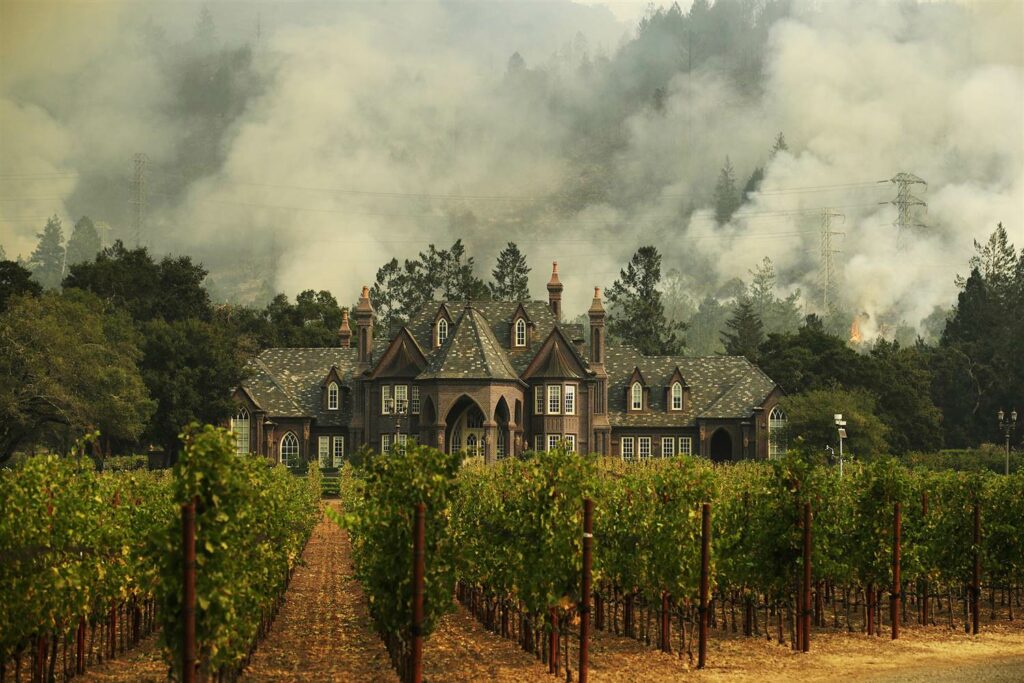
winery in front of a vineyard

Weather conditions and natural disasters occasionally take a toll on vineyards and other agricultural production systems. Due to climate change and prolonged drought, the frequency and severity of wildfires is expected to increase. These risks highlight the need for winegrowers and winery owners to be as prepared as possible to reduce risk.

Putting Your Plan Together

  Many wineries may have already revisited their evacuation plans and filed them with their respective state agencies. Staying current of wildfire season developments can help enhance your ongoing planning and preparedness. Technology can also support your wildland fire planning and response. Additional planning resources by the American Red Cross is available at: www.redcross.org/get-help/how-to-prepare-for-emergencies/types-of-emergencies/wildfire.html

Steps to Take Before a Wildland Fire Event

•    Take a close look at your program’s communication protocol for evacuations. Everyone should have a clear understanding of alarms that signal when you need to evacuate. Assign specific accountabilities to staff so everyone works collectively to achieve a positive outcome of protecting lives and property.

•    Work with your regional Forest Service to better understand emergency evacuation procedures in your area.

•    Coordinate with the American Red Cross, FEMA, and other emergency agencies to give them the locations of your evacuation sites. Invite your local fire department out as part of a fire pre-incident plan. They should be provided a map of your property, highlighting planned evacuation routes. They can also offer technical assistance to support your plan.

•    Prepare and post route maps for each site, including alternate routes. With a large fire, you may need to use “Plan B.”

•    Consider forming a cooperative agreement with another site to share resources and serve as an evacuation site.

•    Identify key equipment to be evacuated, including computers and other vital records. As part of your business continuity planning, programs should already have information backed up and stored remotely. But, in case you don’t, practice removing this equipment as part of your practice response.

•    Stock an ample supply of water and easily-prepared foods until rescue arrives.

Controlling Wildland Fire Exposures

Wildland fires are one of the most catastrophic threats to wineries.  Protecting your structures from ignition and fire damage is an important program objective second only to an evacuation plan. Taking precautions ahead of time can help reduce the exposure of a wildfire intrusion. There are a number of proactive measures a winery can take to mitigate the property damage a wildland fire can cause.

  To support a fire adaptive community philosophy, the local fire department or authority having jurisdiction for your program should require you to develop a landscape plan for the property. It is wise to seek their advice and incorporate their recommendations as you develop a plan specific to your location. You can learn more about fire adaptive community planning at the Fire Adaptive Communities, www.fireadapted.org

  According to the NFPA 1144 – Reducing Structure Ignition Hazards from Wildland Fires, fire protection plans should address four zones around a property.

What are the primary threats to property during a wildfire?

  Research around property destruction vs. property survival in wildfires point to embers and small flames as the main way that the majority of properties ignite in wildfires. Embers are burning pieces of airborne wood and/or vegetation that can be carried more than a mile through the wind, they can cause spot fires and ignite structures, debris and other objects.

  There are methods for property owners to prepare their structures to withstand ember attacks and minimize the likelihood of flames or surface fire touching the structure or any attachments. Experiments, models and post-fire studies have shown structures ignite due to the condition of the structure and everything around it, up to 200’ from the foundation. 

  This is called the Home Ignition Zone. (Or referred to in this document as the structure ignition zone.)

What is the Structure Ignition Zone?

  The concept of the structure ignition zone was developed by retired USDA Forest Service fire scientist Jack Cohen in the late 1990’s, following some breakthrough experimental research into how structures ignite due to the effects of radiant heat. 

The structure ignition zone is divided into three zones; immediate, intermediate and extended.

Immediate Zone

  The structure and the area 0-5’ from the furthest attached exterior point of the structure; defined as a non-combustible area. Science tells us this is the most important zone to take immediate action on as it is the most vulnerable to embers.

  START WITH THE STRUCTURES then move into the landscaping section of the Immediate Zone.

•    Clean roofs and gutters of dead leaves, debris and pine needles that could catch embers.

•    Replace or repair any loose or missing shingles or roof tiles to prevent ember penetration.

•    Reduce embers that could pass through vents in the eaves by installing 1/8” metal mesh screening.

•    Clean debris from exterior attic vents and install 1/8” metal mesh screening to reduce embers.

•    Repair or replace damaged or loose window screens and any broken windows. Screen or box-in areas below patios and decks with wire mesh to prevent debris and combustible materials from accumulating.

•    Move any flammable material away from wall exteriors – mulch, flammable plants, leaves and needles, firewood piles – anything that can burn. Remove anything stored underneath decks or porches. Intermediate Zone 5-30’ from the furthest exterior point of the structure.  Landscaping/hardscaping – employing careful landscaping or creating breaks that can help influence and decrease fire behavior

•    Clear vegetation from under large stationary propane tanks.

•    Create fuel breaks with driveways, walkways/paths, patios, and decks.

•    Keep lawns and native grasses mowed to a height of 4”.

•    Remove ladder fuels (vegetation under trees) so a surface fire cannot reach the crowns. Prune trees up to 6-10’ from the ground; for shorter trees do not exceed 1/3 of the overall tree height.

•    Space trees to have a minimum of 18’ between crowns with the distance increasing with the percentage of slope.

•    Tree placement should be planned to ensure the mature canopy is no closer than 10’ to the edge of the structure.

•    Tree and shrubs in this zone should be limited to small clusters of a few each to break up the continuity of the vegetation across the landscape. Extended Zone 30-100’, out to 200’. Landscaping – the goal here is not to eliminate fire but to interrupt fire’s path and keep flames smaller and on the ground.

•    Dispose of heavy accumulations of ground litter/debris.

•    Remove dead plant and tree material.

•    Remove small conifers growing between mature trees.

•    Remove vegetation adjacent to storage sheds or other outbuildings within this area.

•    Trees 30 to 60’ from the structure should have at least 12’ between canopy tops.

•    Trees 60 to 100’ from the structure should have at least 6’ between the canopy tops. If an evacuation becomes evident

•    If possible, identify the location and direction of the fire event. Remain cognizant that this can quickly change direction and speed.

•    Clearly explain your evacuation procedures to all that may be involved.

•    Identify special medical needs and gather emergency equipment and necessities, including trauma supplies for ready access.

•    Designate enough vehicles to evacuate everyone safely. Reinforce safe driving practices with all drivers.

•    Equip staff with emergency communications equipment (cell phones, walkie-talkies, whistles, flares, colored smoke canisters, etc.). Ask your local jurisdiction authority for suggestions.

•    Load key equipment, vital records, food, and water.

•    Ask qualified associates to disconnect and move LP gas tanks to a safer location, such as a gravel lot, or follow the manufacturer’s instructions to empty the tanks.

•    Warn firefighters of underground fuel storage or LP gas tanks before you leave. Making your facility fire resistant can help reduce property loss. However, keep in mind that these steps should be done only by assigned staff in conjunction with an evacuation and never require or allow staff to remain behind. Close and secure all doors and windows once combustible materials have been moved away from these openings.

•    Wet down buildings and roofs. There are commercial grade fire retardant products available that can help support your efforts to protect your property. But do your research ahead of time; and don’t let the application of these products reduce the priority of evacuating.

•    Have qualified personnel cut down trees in the fire path, bulldoze a firebreak, and cut field grass as short as possible.

•    Remove brush and dry vegetation near buildings.

  Fire EvacuationWhat you need to know

During wildfire season, you may be forced to evacuate in a hurry. People are your first priority; to include guests, staff and firefighters. Most fire evacuations provide at least a three-hour notice; but due to the scope of your operation, you may need to do it sooner. Take proactive steps before and during an evacuation to reduce anxiety and avoid injuries. Plan, prepare and practice.

Filing claims

  In the event your area experiences a wildfire event, it is highly likely it will not only be monitored by your insurance agent, in addition to your insurance company. Pre-loss documentation, such as video recordings and pictures of buildings, business personal property inventories, should be up to date and included as part of your evacuation materials. Working with your agent is a great resource to understand what might be necessary to help with documentation, if you should need it.

Rethinking Trellis Viability in the Age of Mechanization

By: Tracey L. Kelley

narrow path of a vineyard

Initially, when conceptualizing this article, we wanted to present the feasibility, maintenance and costs of the Lyre trellising system.

  However, research and interviews revealed that while it was once a viable choice, evolving production practices, reduced labor availability and other factors require growers to think more strategically. For cost-saving efficiency in the fruit zone, vine vigor and development of the finest product, growers need more modern trellis innovation.

  You know something interesting is about to happen when you contact a subject matter expert about a story angle and he or she says, “Um, that simply won’t work. Here’s why.”  Uh oh…

  What first piqued The Grapevine Magazine’s interest in the Lyre system was visiting American-based vineyards and hearing growers share their enthusiasm for it. Developed in the 1980s by Alain Corbonneau in the Bordeaux region of France, the Lyre trellis trains vines to grow up, allowing more wind and sun into the canopy for greater fruit yields and reduced mildew. It first entered into some mainstream vineyards because of a disaster.

  “The 1990s was a period of questioning canopy management and trellising. This was particularly evident in California, where (growers) were replanting after the AxR debacle,” said Richard Smart, author of Sunlight into Wine and world-renowned viticulturist specializing in canopy management, improving vineyard yield and nutrition management. The referenced debacle was AxR#1, or Aramon Rupestris Ganzin No. 1, a French-American cross rootstock devastated by the louse phylloxera.

  “There was a lot of the Lyre trellis installed in the Napa Valley and thereabouts at that time, probably more than anywhere else in the world that I am aware of,” Smart said. At the time, high-yielding growers in California, Oregon and Washington considered it a viable alternative—as did some in Texas and, to a limited extent, Missouri, New York and North Carolina. It’s a less-popular divided canopy choice where cold injury is common because of the extensive cordon development required. However, that’s not the only issue with it.

  “There may be 6–to–12 foliage wires and two fruiting wires. It’s, therefore, one of the more expensive trellis systems to install,” Smart said. “And its popularity soon waned because of problems with mechanization and subsequently, the effects of trunk disease—although this system is less prone than single curtain vertical shoot positioning (VSP). I hear mixed reports on the ease of mechanical harvesting, although it’s relatively easy to mechanically pre-prune.”

  So here’s one point where our story angle turned: how does a single choice of trellis impact all other aspects of production, labor and cost savings?

Labor+Mechanization=Different Trellis Choices

  “The top three trellis issues we’re asked to help with are labor savings, trellis systems that allow for more mechanization and stronger systems to hold the larger crop loads,” Jeff Miller told The Grapevine Magazine. Jeff Miller is COO of JSC Agricultural Supply, a division of Jim’s Supply based in Bakersfield, California. It manufactures trellising supplies, provides a full line of agricultural equipment and consults with growers about trellis systems and installation.

  A term frequently mentioned in the industry now is “no touch”: vineyards managed by mechanization and technology that reduce reliance on human labor. In France, where agricultural labor receives higher wages than in the United States, there’s an intense demand for advanced no-touch technology. Growers in Australia, Italy and Spain are adapting, too. At the 2017 Unified Wine & Grape Symposium, numerous panel experts—including Mark Krstic of the Australian Wine Research Institute, Aaron Lange of Lange Twins Family Winery and Vineyards in California, and Nick Pehle of Stone Hill Winery in Missouri—detailed the hows and whys of no-touch operations for everything from pruning and shoot thinning to leaf removal and harvest.

  “This is the direction the industry is heading,” Miller said. “It has to. With a shrinking workforce, more competition for labor, changing overtime laws and increasing minimum wage, growers are seeking solutions to limit the amount of labor needed in the vineyards.”

  These essential points circled our story angle back to trellis choices. Craig Macmillian is an ag specialist with Gold Ridge Research Conservation District in Sebastopol, California, who works with landowners to conserve, preserve and improve their properties. A former grower and winemaker, he said it’s not easy or inexpensive to convert horizontally-divided systems to vertical systems to allow for greater mechanization.

  “When I have seen people make a change, they were redeveloping the vineyard,” he said. “While horizontal systems like the Lyre are still excellent choices for high-vigor sites, you can’t pre-prune, prune or harvest mechanically. Most machines are designed for vertical trellises.”

  He went on to say that because both sides of the vine established on a horizontal structure require more touches, it takes additional time to work a block. “So with whatever labor you have, it’s very slow to get through a block. Doubling the amount of labor just isn’t practical. Costs are going up, and growers are paying more per hour, but more importantly, there simply aren’t enough people.”

  Here’s where the angle of this particular story could have easily jumped from the Lyre system and trellising in general to necessary mechanization due to immigration and adverse effect wage issues. In the United States, most farm labor comes from Mexico, but fewer people, in general, want to be involved with such hands-on, backbreaking work. So, while that topic is definitely an important feature to present another time, what’s interesting and more on target in this story is how growers, educators and manufacturers are innovating to accommodate where the industry is now and how planning should evolve to address key challenges before they happen.

Consider All Options for Now…and the Future

  To ensure the most healthy and productive canopy, Smart encourages growers to consider their options down the line, taking into consideration the overall operations of the vineyard.

  “My general preference in today’s market of constrained labor availability and cost is to use the vertically-divided Scott Henry system for cane pruned vines, and the Smart-Dyson for spur pruned vines,” Smart said. “The latter can be mechanically pre-pruned, and both machine-harvest well.” Smart partnered with John Dyson, a California and New York grower, to develop a split canopy system to improve yield and wine quality. Industry experts rely on the system to provide better grape-foliage balance.

  Miller added that “as the grower works to reduce their costs in the field, they’re moving towards a single bi-lateral cordon system 60–66 inches high. The system allows for uniformity to help with mechanization.”

  To new vineyard owners, Macmillian recommends installing the most basic trellis system possible at first. “Then put in a line post that has the ability to have retrofits put on it, so you can put on catch wires, additional catch wires, a crossbar, if that’s how you decide to go. Build up to what your needs eventually will be.”

  For ease of mechanized harvest, he referenced a California grower who established a cross arm that was up to about 18” wide. “While not horizontally divided, it was a way to capture the canopy without having to move the wires, which is what a cross arm will enable someone to do. It allows the canopy to be more open than with catch wires, but not flopping completely.”

  Macmillian also suggests people think about mechanization right from the beginning. “I don’t see that there’s going to be more labor in the future. In order to survive, vineyards are going to have to become increasingly mechanized. This applies to small, medium and large producers.”

What about the sense of community pride when people are involved in pruning, harvest and crush? Many vineyard owners rely on this assistance not only to provide a connection to tradition and as great promotion but also to manage costs more effectively.

  “If someone has a small enough vineyard—we’re talking a couple of acres—and they have that kind of community of friends, neighbors and relatives, hand labor is viable,” Macmillian told The Grapevine Magazine. “However, what I’ve found is most folks are excited to work for a couple of hours, then it’s not fun anymore. So there’s not much acreage you can cover that way. Now, in Europe, for example, domains—such as those in Burgundy, which tend to be very small—have folks from the community who come every year who pick at the end of the day, and that’s it. But we don’t have the same kind of tradition as they do there. And even in Europe, [use of] immigrant vineyard labor is increasing.”

  He added that “if you have a high-vigor site, a divided canopy trellis might initially be the right choice, but economically and logistically, it may not be the right choice. Which means you’ll have to deal with that vigor issue another way, and that’s the problem.”

  Miller said JSC tries to develop products to allow for a slight hybridization in operations, recognizing that while complete trellis retrofitting might not be an option for existing growers—especially those of a certain size—adapting technologies might bridge the gap.

  “In early 2018, JSC partnered with ECO Trellis out of New Zealand to add the ECO/ KLIMA suite of products to our product line,” Miller said. “The KLIMA pruning machine is a cane pruning system that reduces costs during the pruning process. We developed a cross arm that can adapt any existing trellis system over to be compatible with the KLIMA pruning machine. In addition, working with a grower on the Central Coast, we developed an extension that can be added in the early years of a high-wire system to help with the spur positions in the initial development of the vineyard.”

  University of Missouri Extension Services offers a comprehensive article that provides great detail in preparing for mechanized viticulture or preparing an existing vineyard for mechanization. It advises producers to first “develop a working knowledge of the abilities, limitations and requirements of currently available equipment.” Also included in this analysis is the importance of site selection, vineyard design, cultivar selection and trellising.

  “At present, single curtain, cordon-trained systems are the most conducive to full vineyard mechanization. Examples include the high bilateral cordon, mid-wire cordon with VSP and the Smart-Dyson and Ballerina systems. Of these, the former two are often preferred for their simplicity in management, and selection of either should be based upon cultivar growth and bearing habit, anticipated vine size and revenues and other site or regionally-specific considerations.”

  Basic touchstones for existing vineyards include close examination of trunks and cordons, as well as the density of canes and spurs; investigating the cost of repairing or retrofitting the trellis; and reasons for sagging between posts, whether it’s due to falling end assemblies, excessive line post spacing or inadequate tension prior to cordon establishment. U of M Extension offers an extensive checklist for established growers considering more mechanized operations.

Exploring the Diverse: Wines Within the Columbia Gorge Wine Region

By: Becky Garrison

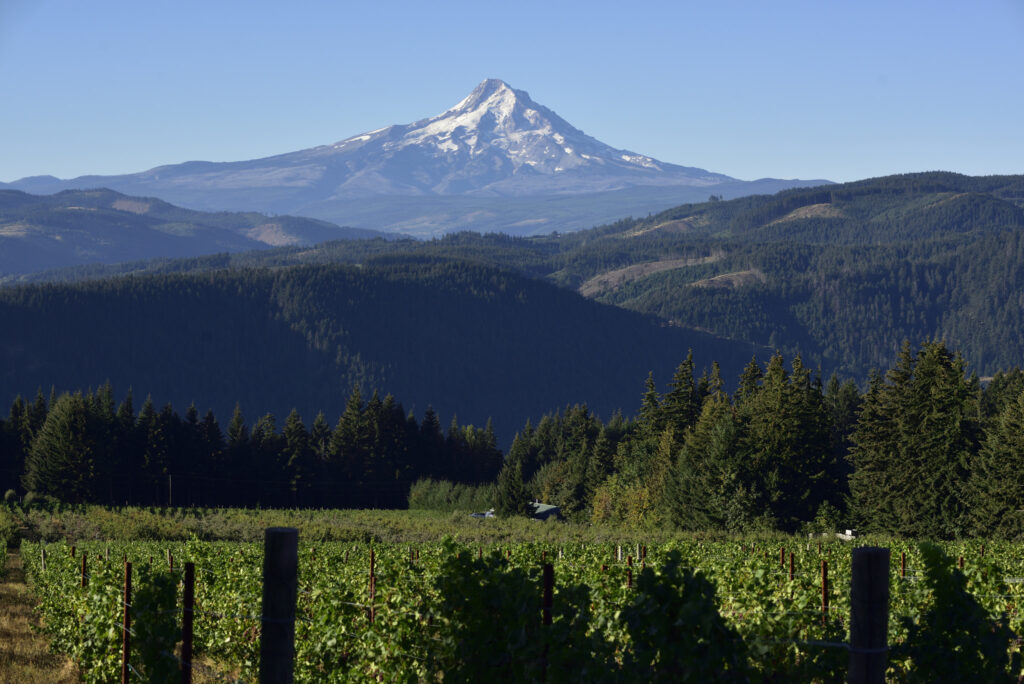
vineyard with an overlooking mountain

The Columbia Gorge Wine Region is defined by the Columbia River that cuts through the Cascade Mountain Range, as well as the Missoula Floods that scoured the region 15,000 years ago. Within this compact 40-mile region that includes Washington State and Oregon, lies the Columbia Gorge American Viticulture Area (AVA), as well as a portion of the Columbia Valley AVA.

  Lewis and Clark first made the Gorge famous during their 1805 passage to the Pacific Ocean, when they found this was the only sea-level passage through the Cascades. However, the first signs of this region’s winemaking potential did not occur until the 1880s when the Jewitt family, founders of the town of White Salmon in Washington State, first planted American vines.

  Soon other pioneer families followed suit with some of their original vines still standing. Case in point, during this time period, Italian stonemason Louis Comini planted Zinfandel wines in a vineyard located in The Dalles, Oregon. In 1982, Lonnie Wright, owner of the Pines 1852 Vineyard and Winery, rediscovered this now abandoned vineyard and nursed the vineyard back to health. He continues to grow grapes used for their Old Vine Zinfandel.

  In the 1970s, other contemporary pioneers began experimenting growing grapes on the south-facing slopes of the Underwood Mountain in Washington State. Over the ensuing two decades, well known wine makers began exploring the grapes of this region, and the Columbia Gorge AVA was established formally in 2004.

A founding member of the Columbia Gorge AVA and co-founder of Syncline Wine Cellars (Lyle, Washington), James Mantone made his first batch of wine in 1999 at Syncline using Pinot Noir grown at Celilo Vineyard, one of the oldest vineyards in Washington State. Early on, Mantone saw the potential of this area for winemaking. He describes his pull to this area. “We were attracted by the tortured topography, the jumbled soils, the varied aspects and elevations of the hills, the influence of the Cascades cooling the nights, the winds shaping vine photosynthesis, the marginal climate. Here was a place that could reward the winemaker with intimate sites that have the potential to produce grapes unique from neighboring sites.”

Rachael Horn, head wine maker and owner of AniChe Cellars in Underwood, Washington, describes the Columbia Gorge AVA as edgy, literally, and fringe in all kinds of ways. “We can grow a variety of fruit in the Gorge, due to a banana belt micro marine-climate while being surrounded by Continental climes.” She adds how these growing conditions produce a high degree of acid in fruit. “This keeps our wines fresh and less concentrated than nearby regions. Our diurnal difference is often 30 degrees or more, which facilitates the retention of native acids.”

  While the Pacific Northwest has become renowned for their juicy red wines, the diverse terroir of this region can produce grapes of almost every varietal. In fact, the Columbia Gorge AVA has the distinction of being one of the few wine growing areas in Washington State where white grape planting exceeds red grape planting with white grapes constituting about 64 percent of the total grape harvest.

  The more western vineyards possess a cool, marine influenced climate ideal for cool-weather loving white varietals such as Pinot Gris, Riesling, Gewürztraminer, and Chardonnay which are known for their crisp acidity. This area also produces bold reds such as Pinot Noir that grow well in this lush environment. Some of these western vineyards such as AniChe Cellars can be dry-farmed, as the soil receives upwards of 40 inches of precipitation annually, and does not require additional irrigation.

  Conversely, eastern vineyards with their continental high desert climate replete with abundant sunshine and just 10 inches of annual rainfall are perfect for growing hot-weather Rhône and Bordeaux along with Italian varietals such as Zinfandel, Syrah, Cabernet Sauvignon, and Barbera.

             Steve Bickford, one of the owners of the family-owned Mt. Hood Winery situated just outside the town of Hood River, observes how the local weather informs the grapes they chose to grow at their vineyard versus those grapes they decide to purchase from other AVAs.

  ”The west end is cooler, wetter and with less overall heat units needed for ripening. So, we grow many white wine grapes on the west end in Hood River, and a few reds; mostly Pinot Noir. The east end of the AVA is drier and hotter, and conducive to the bigger reds, like Merlot, Cabernet Sauvignon, and Syrah, So we buy some grapes from our eastern friends.”

  Even within a single vineyard, one can find a vast array of wines. For example, Nate Ready, Farmer/Winemaker, for Hiyu Wine Farm near Hood River, Oregon, opines how the different kind of microorganisms, plants, animals, and humans living in a symbiotic system allow him to grow 107 grape varietals. He creates 12 complex field blends through practices such as grafting multiple varieties on to one plant. Here Ready is inspired by natural mutations that happen over time with an eye toward history. He notes, “Each planting is a field blend based on a different moment in the European history of the grapevine.”

  Ready chose to situate his 30-acre family farm about 22 miles from the summit of Mt. Hood because he wanted to raise animals and garden in a way that resembles nature more than agriculture. “It works for all kinds of grapes because its a diverse and happy place to be a living, growing, being free of pesticides, herbicides, chemicals, and unnecessary human intervention.”

Graham Markel launched Buona Notte Wines, an Italian leaning winery, after working as an assistant winemaker for Hiyu. While the Gorge is not as diverse as the Italian peninsula, he finds places that grow different Italian varietals. Currently, Markel works with seven different vineyards for the seven different varietals that he makes. “Every vineyard is completely unique and seems to fit that varietal so well. I get Sauvignon Blanc form the cliffs of Underwood and Sangiovese from the rolling wheat fields just east of The Dalles. The two vineyards couldn’t be more different, and are only about 40 miles apart.”

  Luke Bradford, proprietor of Cor Cellars wanted to grow the kinds of grapes that would produce the wines he encountered during his trips to Europe such as the wines of Boudreaux and the Mosel, as well as the wines of central and southern Italy. “We wanted to be located in a cooler climate region while still having access to the warmer climate grapes.” Currently, their white wines are made using grapes grown in the Columbia Gorge while they get the grapes for their red wines from the neighboring Horse Heaven Hills AVA. 

  According to the Columbia Gorge Winegrowers Association, fifty wineries reside in this region with 95% of these boutique wineries producing 5,000 or fewer cases of wine each year. These wineries gatherer their grapes from over ninety vineyards (1,300+ vineyard acres planted) within this wine region, as well as surrounding AVAs with a focus on sustainable and organic farming practices.

  Given this boutique nature of the Columbia Gorge AVA, an event such as the 2017 Eagle Creek Fire had a very detrimental impact on that year’s harvest. In summer of 2019, neighboring Phelps Creek Vineyards,  Mt. Hood Winery and Stave & Stone Wine Estates, launched National Forest Week to help rebuild the hiking trails damaged in this fire. They released 8,376 bottles of three Pinot Noirs made with grapes from this fiery vintage. Each bottle sold generated $3 for the National Forest Foundation’s Eagle Creek Fire Restoration Fund.

  Moving forward, ventures such as the Columbia Gorge Express enable tourists without a car to travel from Portland, Oregon to Hood River to explore the town’s numerous tasting rooms, along with three breweries (Ferment Brewing, Double Mountain Brewery and Pfriem family breweries) and Hood River Distilling, home to brands such as Clear Creek Distilling and McCarthy’s Oregon Single Malt.

  Also, the East Gorge Food Trail worked with the Columbia Gorge Tourism Alliance to develop agrotourism within the region by focusing on local businesses that source ingredients within 150 miles. They chose to focus on the Eastern part of the Gorge this area was not as well developed for tourism as areas such as the towns of Hood River and Cascade Locks and areas like Mt. Hood. They designed a self-guided tour covering Mosier (pop. 433) to The Dalles (pop. 13,631) or The Dalles to Durfur (pop. 638). These tours encompass ten historic orchards and farms, restaurants, and seven wineries (15 Mile Winery, Analemma Wines, Garnier Vineyards, Idiot’s Grace Wines, Moody Tollbridge Winery, Sunshine Mill Winery, and Tierra de Lobos Winery).

  As they are at the beginning stages of this project, they hope to continue knitting together the stories that can connect people to the terroir and tastes of the Columbia Gorge AVA.

Practical Brettanomyces Control in the Cellar

By: Thomas J. Payette, Winemaking Consultant

yeast under a microscope

Many winemakers overlook some of the practical control aspects of minimizing Brettanomyces [Brett] growth in their wines.  This article will address some of the items and their circumstances that we should keep in mind while working with our juices and wines.  This article is more a reflection of experience than one jammed with technical data.  It is assumed the reader knows and is aware of Brettanomyces.  To better understand what a Brett microbe might look like please see the author’s portrayal photograph.  This is obviously humor ladies and gentleman to set the stage.

Cleanliness

  No doubt – the first aspect of controlling Brett is cleanliness.  A dirty cellar with poor equipment hygiene will make keeping most bacteria/yeast in the wines in check almost impossible to achieve.  A sound, clean winery will be the assumed premise of this article. Where you take your pomace after pressing should enter your mind in respect to Brett.  Insects from the pomace pile may not just stay at the pomace pile and they may assist in moving brett from the pomace pile to your open bin fermentation vessels or other winemaking contact surfaces, etc

Chemistry

  Most seasoned winemakers realize certain pH levels and free sulfur dioxide levels have limiting affects on many bacteria and spoilage yeasts.  This article will assume the winemaker has his/her finger on the pulse of their wines’ chemistries and understands these chemistry relationships and their influence on the wine.  This article is looking beyond the normal sound winemaking techniques one should already have in place.

Temperature

  Most wine bacteria grow more rapidly at higher temperatures.  If a winemaker keeps their wines stored, after alcoholic and malolactic fermentation, at or near 50 degrees F one will keep most damaging bacteria greatly in check.  It is the author’s understanding Brettanomyces can grow in a free SO2 of 27 ppm when the ambient temperature of the wine is 65 degrees F. The author has greatly used this understanding as a winemaking tool. 

  Often the author will speak with winery owners to negotiate this agreement: “If I can keep the cellar very cold (near 50 degrees F) in the summer months I will trade off little to no heat in the cellar during the winter.”  [This does exclude the lab area that should remain near 68 degrees F for most proper lab functions]  This is in essence a wash financially, in most regions, but a great help to the wines.  

  In practice, on the average, what may happen is the winery may bottom out in the cold months at 40-45 F and near a short-term peak of 65 degrees F during the summer months.  This small upward spike in temp, time wise, is minimal, given the colder months average, which most bacteria, Brett included, have no to little chance to bloom.  It is recommended one use this tool to his / her advantage and the author will often use the colder months after harvest to store his red wines at reasonably low free SO2 values to help soften and evolve the wines during the early months of aging the wine.  By the warmer months, one should bring the free sulfur dioxide level up to that appropriate to combat undesirable microbes.  Try using temperature as your primary tool and if you haven’t built your winery – don’t skimp on cooling!  

When using cold wine storage as your winemaking tool, keep in mind more gases dissolve in cold liquids than warm liquids.  This can be used to an advantage to soften or “micro-ox” some wines but make sure not to exceed what a wine can handle.  Also, understand a wine may evolve slower at lower temperatures since most reactions also slow at lower temperatures.  Wines are no exception to these rules of science.

Racking Timely

  Aging red wines on yeast lees for an extended period of time can be a stylistic tool in a winemaker’s tool box.  Further note these lees may contain unwanted spoilage yeast and microbes from the harvested fruit and/or equipment used to harvest/process the fruit.  If a red wine is stored on its lees it may be more likely to have a Brett bloom since most literature cites certain yeast/Brett populations are greatly reduced by racking the wine off the yeast lees. 

  Research tests on these lees may show active Brett populations that may not have bloomed, just after the yeast alcoholic fermentation.  If there is any doubt as to the condition of the lees, rack early after fermentation to reduce yeast/bacteria-starting loads.

Vacuum Storage

  Many winemakers store and age their cleanly racked red wines in barrel with solid silicone bungs tightly inserted.  Many new cellars have humidity control to help prevent the “angel’s breath” loss of wine from the barrel.  The same cellars may not be very cool especially in caves since the author has noted some caves, on the west coast, to be at between 62 and 65 degrees F without additional cooling.  With additional cooling, one should allow the humidity to drop to a level that evaporation does happen.  Barrels, with a vacuum in them, are less likely to develop spoilage issues due to a sound food science principal that few to no bacteria/yeast can grow in a vacuum. 

  With normal topping of the barrels, say every 4-6 weeks, one will keep most unwanted microbes in check, including brettanomyces. [The author has no data whatsoever that Brett cannot grow in a vacuum – only practical hands on data for this statement.]

Topping Barrels

  As mentioned earlier barrels may be a great aging vessel; yet, many are unclear as to when and how to top.  Topping barrels can be a stylistic tool even down to the frequency of topping.  In relationship to this article, make sure the topping wine for your barrels is Brett free.  One doesn’t want to make the wrong choice of a Brett infected wine source and unknowingly spread that culture throughout the winery spanning a number of barrels.  The author chooses to use similar wine known to be free from Brett of filtered wine, to the proper micron level, that Brett should not be an issue.  Topping, as mentioned in previous articles, can be a major potential source of cross-contamination.

Filtrations

  It is the authors understanding that Brettanomyces yeast has a size range of near 0.80 to 1.1 microns.  With this in mind, we can understand better what size filtrations may be needed to reduce or eliminate the potential of Brett.

  Filtration can be done at anytime during the wines life; but, if successful, with the storage and aging of the wines in the cellar one may just consider the filtration at or near bottling to be the safety net needed as a “just in case” measure. 

  Assuming all malic acid and fermentable sugar have been depleted, one may consider a 0.8 or 0.65 micron absolute pore size filtration.  Care must be taken to keep the pressure down during the filtration step to make sure excess pressure doesn’t allow the yeast to formidably shoulder through the filter media.  In some cases, winemakers and bottling lines have had to use a 0.65 micron rated filter since the 0.8 micron absolute filter can be difficult to obtain at writing of this article.

Summary

  It should be clear to the reader that beyond sound winemaking basics the best and less invasive control of Brettanomyces in fine wine making is temperature.  If winemakers don’t mind roughing it through the winter months, for the sake of the wine, they will be greatly rewarded in the summer months with a lavishly cool cellar. 

  It is highly recommended we all do this in the honor of fine wine making!  For the sake of your wine keep the cellar cool and Brettanomyces should be of little to no concern in your clean wine cellar!

References: 

  Amerine, M.A., Berg, H.W., Cruess,W.V. 1972. The Technology of Wine Making

  Verbal discussion with:  Mr. Jacques Boissenot, Mr. Jacques Recht, Mr. Joachim Hollerith, Mr. Chris Johnson and Mr. Pete Johns.

Short Course:

•   Trade cooling in the summer for limited heat in the winter in the cellar.

•   Let natural barrel vacuum work for you.

•   Filter when needed.

•   Don’t cross-contaminate.

The Best Bottling Machines: For Wineries & Choosing the Right One

By: Alyssa L. Ochs

As wineries first launch their operations or begin to grow larger, they have the option to either buy their own bottling machines or hire a mobile bottling company. Both of these options have their advantages and disadvantages; however, having your own bottling line can give you greater flexibility and control over the bottling process.

  With the input of bottling companies who work with wineries on a regular basis, here is some information about the bottling machine options available to wineries today and how to choose the right machine for your operations.

Types of Wine Bottling Machines

  When you’re looking at new bottling machines, important considerations are the machines’ sizes, speeds and efficiency. There are options for automatic filling and semi-automatic filling machines, as well as machines that work well with both wine corks and caps.

  Many small wineries start out with limited equipment for bottling, such as a basic bench-top manual filler and semi-automatic labeler. Then as these wineries grow, they must decide whether to purchase a bottling line, lease a bottling line, or hire a mobile bottler. To assess the size of bottling line needed, wineries must consider the total annual production, projected goals for the next five years and what a normal production day looks like for the staff.

  Matt DiDonato from the sales team at Prospero Equipment Corp. in Pleasantville, New York told The Grapevine Magazine how there are lots of options for wineries today, including semi-auto counter pressure fillers for carbonated products and standard gravity fillers for still wine products.

  “There are automatic machines that can fill both still and carbonated products from the same filler valve,” DiDonato said. “The speeds can range from 1,200 BPH up to 16,000 BPH.”

  Prospero has over 40 years of experience in the beverage industry and offers machines for bottling, capping and labeling, as well as packaging solutions for wineries. Prospero’s most popular machine among wineries is the GAI 1301 unit, which can run up to 1,600 bottles per hour.

  “It leaves plenty of room for growth for wineries to bottle up to 10,000 to 15,000 cases and beyond,” DiDonato said. “It also has an option to be equipped with a built-in rotating turret to do both cork and screw cap closures.” 

  Scott Anderson, the national sales manager for Inline Filling Systems (IFS), told The Grapevine Magazine about IFS’s offerings for semi-automatic and fully automatic solutions for wine filling. Based in Venice, Florida, Inline Filling Systems offers turnkey liquid packaging installations with over 700 packaging machinery products and engineering experience spanning 20 years.

  “Our semi-automatic units require operator involvement and do not have moving conveyors,” Anderson said. “These units are very efficient and still yield high production outputs in a small footprint. IFS automatic wine filling equipment can produce more than 100 750-milliliter bottles per minute if necessary. Powered conveyors and bottle management components move bottles to and away from the filling machine and the PLC controls on the filling machines initiate the filling cycles as long as bottles are provided to the filler.”

  For wine filling, IFS provides time gravity and overflow filling machines. Both of these systems are effective, but a client’s product, application and needs will guide a decision about which one to purchase.

  “All of IFS’s machinery is application-specific and involves client feedback with regard to the unique product properties and production goals, Anderson said. “IFS has clients that use both types of filling machines for wine packaging.”

  Based in San Luis Obispo, California, XpressFill Systems LLC has offered a premium bottle-filling system since 2007 that is designed with the highest quality components, ensuring ease of use and long life. Randy Kingsbury of XpressFill said that his company specializes in compact table-top fillers that are affordable and easy to operate. These machines are available in a two-spout and a four-spout configurations with fill rates of 240 to 450 bottles per hours, respectively.

  “Either configuration weighs less than 25 pounds, with a physical size similar to a case of wine,” Kingsbury said. “By using an efficient flow path there is very little waste due to priming for the initial fills or leftover wine in the system at completion.”

  Kingsbury said that the two- and four-bottle capacity Level Fill machines are most popular in the wine industry. This is because the Level Fill machine provides a quick and accurate way to fill bottles to the same levels in the neck for excellent visual appeal.

  “The optional gas sparge ensures optimum quality of the wine being delivered to the customer,” Kingsbury said. “The enclosed system minimizes exposure to the environment. Our equipment is extremely simple to set up and adjusts for various bottle sizes and to clean.”

New Bottling Machine Technology

  Technology is constantly changing when it comes to machinery in the beverage industry, which is good news for wineries looking to integrate new bottling machines into their operations within the next few years. For example, DiDonato of Prospero Equipment said that electro-pneumatic filler valves are a piece of new technology that wineries are particuarly interested in.

  “You can fill just about any non-viscous beverage product on this line, including wine, beer, soda, spirits, water and cider,” DiDonato said. “These valves allow for real-time adjustment from the control panel on the fly, which is a great savings of time and product loss.”

  Anderson of IFS said that one of his company’s core beliefs is constant improvement, which means that their equipment is constantly being enhanced based upon client feedback and equipment performance in the field per application.

  “IFS offers industrial-grade filling machines that run a wide variety of container ranges with few low-cost change parts and an easy-to-understand human-machine interface,” Anderson said. “IFS filling technology offers our clients the lowest total cost of ownership of equipment in the liquid filling industry. IFS filling equipment provides wineries tools to make them more profitable and efficient and offers their consumers a higher quality product than other solutions.”

  Kingsbury of XpressFill said that the newest developments in the wine industry relate to the types of packaging used for going to market.

  “There has been a real push to provide a type of packaging that yields better shelf life and is more versatile for settings where bottles are not allowed because of possible breakage,” Kingsbury said. “An increasingly popular option is providing wine in cans, with wine-in-a-bag being another option.”

  Having enough space for a bottling line is a common concern among wineries, especially smaller ones that are just starting to grow. Fortunately, new bottling equipment designs have been getting smaller in recent years to squeeze into tight spaces much better than in the past. Space-reduction technology often features machines that handle multiple purposes so that only one or two total machines are required for full functionality.

How to Choose the Right Bottling Machine

  There are many factors to consider when choosing a new bottling machine, such as the ideal size of machine for your production and the cost of buying a machine rather than using an outside bottling company. Ease of use, the level of customer service provided, ongoing maintenance and repair needs and the ability to upgrade in the future are also considerations. Talk to other winemakers to see what has been working well for your peers and get machine recommendations from experts in your area who know the ins and outs of bottling. Bottling machine dealers who have good reputations often provide helpful training, tech support, and reasonable service contracts.

  DiDonato from Prospero’s main piece of advice to wineries looking to buy a new bottling machine is to get references and call them.

  “Make sure the machine has a good track record in the market,” he said. “Try to get data or references on the oxygen levels.”

  Anderson of IFS said that IFS filling machines allow wineries and other liquid packaging professionals an opportunity to control their own destinies. This company’s robust machines are American-made and serviced and last at least 20 years.

  “IFS equipment is easy to understand and operate and requires very little maintenance,” Anderson said. “Additionally, IFS offers a full-service parts center with inventories for every machine IFS has ever manufactured over the past 23 years. In short, IFS equipment allows our clients to focus on business growth rather than a financial drain trying to get other providers’ equipment to run.”

  Kingsbury of XpressFill advises new wineries not to over-purchase a system that could take two or more years to reach the full capacity of the equipment.

  “It can be a major financial expenditure, which takes too long to ever recover the investment, if ever,” he said.

  For wineries looking for a system upgrade, Kingsbury’s advice is to perform a cost-benefit analysis based upon the downtime, maintenance and hourly operating cost of the current system versus the potential replacement.

  “Although a new system may have much greater production, the time for setup, configuring for filling and cleaning after filling may be much more labor-intensive and result in a net reduction in cost effectiveness.”

Paradisos del Sol: An Organic Vineyard Paradise

By: Nan McCreary, Sr. Staff Writer, The Grapevine Magazine

man posing beside a dog at a vineyard

When Paul Vandenberg was 10-years-old, he would wait eagerly for his mother’s copy of “Organic Gardening and Farming” to arrive so he could read it cover to cover. When he was 13, he made his first wine out of blackberries. It’s no surprise then that Vandenberg, after studying ecology in college, found his life’s work in an organic vineyard in Washington State.

  “I started working in the wine industry in 1983, just as the vineyard explosion was happening in the state,” Vandenberg told The Grapevine Magazine. “I had always been an organic gardener, but everyone thought I was ‘hippy dippy’ at the time.” Yet several years later, Vandenberg was at Badger Mountain Vineyard when the owner, Bill Powers, was having problems with herbicide drift from wheat fields that were 10 to 20 miles away. Out of frustration, Powers implemented organic farming techniques to help mitigate the problem. And that was Vandenberg’s entrée for his true passion: he was with Badger Mountain when it became Washington’s first certified organic vineyard, and later, was winemaker at Worden’s Winery when he produced the first organic wine in the state, which took Worden’s into the worldwide marketplace.

  Fast forward to 2004 and Vandenberg established his own playground, Paradisos del Sol Winery in Zillah, WA, in the Rattlesnake Hills sub-AVA of the Yakima Valley AVA. For the past 20 years, he has taken organic viticulture to new heights by growing grapes in a pesticide-free environment and producing wines that are pure expressions of the earth. In choosing land for his farm, Vandenberg went to great lengths to locate a property that would meet specific farming requirements. “I did not start growing grapes because I owned the land; I found land where I thought I could grow grapes with the least use of pesticides. It’s one of the sweetest spots on the planet. It has a fine, deep loam soil deposited by the great Missoula floods and is on a ridgetop where the leaves are bathed in high intensity sunlight.” It is this sunlight, Vandenberg said, that acts as a natural deterrent to powdery mildew, a potentially devastating grapevine disease.

  To assure ample sunlight in his vineyards, Vandenberg uses a Divided Canopy Quadrilateral Cordon System (Lyre) developed by UC-Davis research viticulturist Mark Kliewer. In this system, instead of using a single wire to support the cordon and maybe one or two wires to support some of the canopy, the grape grower uses a cross arm to create two cordons, separated horizontally by a meter. “The idea is to have two curtains rising from a cordon wire with an open space in between,” Vandenberg explained. “With more openness in the fruit zone, the fruit is well-exposed to light, which adds to color and flavor in the grapes, and deters powdery mildew.”

  Vandenberg describes his trellising system as a “low-vigor canopy,” defined by international viticulturist Richard Smart as a canopy with no more than 15 shoots per meter of cordon and a shoot length no greater than a meter. A low-vigor canopy on a single-wire system will yield a maximum of four tons per acre; by having a double trellis, the yield is double. “The key is balancing the sun and the shade,” Vandenberg said. “Pruning depends on the variety, and the size of its leaves and berries. But essentially all varieties have the same sort of canopy density, the same openness, and the same ability for light to come in for every leaf and every grape.”

  Vandenberg’s pest control strategies in his vineyard are not just in the canopy; they’re also on the vineyard floor. Here on the surface, cover crops grow year ‘round to support a lively complex of predatory insects in the dirt below. For example, dozens of blooming plants provide pollen and nectar for wasps, which prey on leafhoppers. Also, over 16 identified species of mushroom caps on the surface indicates mycelium (the vegetative part of a fungus) web below, which receives sugar from the grapevine roots and in exchange gives nutrients. The objective, said Vandenberg, is to create an environment of well-fed plants so they are able to use their own natural defenses to avoid predators like powdery mildew and leafhoppers. “Biodiversity creates stability and avoids the eruption of populations of pests,” Vandenberg told the Grapevine Magazine. “My soil is not just dirt; it’s a live complex of organisms. That’s what organic gardening is all about.

  The biggest pest problem at Paradisos del Sol, said Vandenberg, is pocket gophers. He is trying to manage this naturally, of course, by building boxes for barn owls, who are the number one predator for gophers. Vandenberg has installed an “owl cam,” so he can watch the owlets grow.

  Like his practices in the vineyard, Vandenberg employs as many natural processes as possible when making wines. “Great wine is grown, not made,” he said. “As a terroirist, I let the wine be what it is. I don’t adjust pH and acidity to some textbook standard.” Paradisos del Sol produces wines from 15 varieties of grapes. Reds include Tempranillo, Sangiovese, Zinfandel, Malbec, Pinot Meunier, Cabernet Sauvignon, Cabernet Franc, and two oddballs: Lemberger, a grape widely grown in Austria and Hungary, and Teroldego, a grape from northwest Italy. White wines include Chenin Blanc, Semillon, Riesling, Orange Muscat, White Muscat, and yet another oddball, Xarel·lo, one of the three grapes used in Cava. Vandenberg is the only person in the U.S. to commercially plant Xarel·lo. “Somebody’s got to plant these things and try them out,” he said.

  While Vandenberg grows multiple varieties of grapes, he releases only two varietal wines: a Sangiovese and a barrel-fermented and barrel-aged Chenin Blanc. He uses his red grapes to produce three wines, including a barrel-fermented and barrel-aged Rosé. He also creates blends with his white wines. Vandenberg eschews the use of new barrels, as he wants no heavy oak influences in his wines. “I grow grapes, not oak trees,” he said. “I believe you can get oak flavors in a 12-year-old barrel; my barrels are over 20 years old.

  Vandenberg does use fining and filtering techniques but puts minimal additives in his wine. Typically, ingredients listed on the label of a white wine are: 100% hand-picked sustainably grown organic grapes, yeast, bentonite clay, minimum effective so2 (potassium metabisulfite). Ingredients listed on the label of a red wine are: 100% hand-picked sustainably grown organic grapes, yeast, malolactic culture, minimum effective so2 (potassium metabisulfite). Vandenberg describes his winemaking practices as “old methods.” The wine goes in the barrel as grape juice, with no racking until it is pulled out of the barrel. “I try to provide the vine a perfect environment so that it is healthy and happy and produces fabulous tasting fruit,” he explained. “I don’t mess with it: I just let it do its thing. A barrel in a cool, dark room is a wonderful place to make wine. That’s why it’s been done that way for 2000 years.”

  Vandenberg describes Paradisos del Sol as a “small family estate winery.” He produces less than 2000 cases per year, and all is sold direct-to-consumer. Wine prices range from $7 to $48. Vandenberg runs the operation with his wife, Barbara Sherman (who manages the office), and only hires part-time employees during harvest and shoot thinning and leaf pulling. The vineyard is Certified Organic by the Washington State Department of Agriculture.

  Compared to other wineries, Paradisos del Sol is also an integrated farm, with chickens, turkeys, cattle, pigs, and sheep, who help mow the vineyard during the winter when grapevines are dormant. The tasting room, with views of Mt. Adams and Mt. Rainier, is open daily, and offers visitors an opportunity to taste not just wine, but food paired with the specific wines. The destination is very popular with families, as children can feed chickens and play with the cats and dogs that live on premises. Paradisos del Sol provides picnic facilities and free overnight camping for tents and self-contained RVs. Horses are welcome, with water available for them.

  Indeed, Vandenberg has created an organic paradise in the heart of the Yakima Valley. There, in this garden in the desert, he offers tours and talks to visitors who want to understand more about how he grows his grapes and produces his wines. “People don’t understand what organic means,” he told The Grapevine Magazine. “Organic means a systemic, all-embracing approach to gardening and farming. It’s about manipulating the environment in a way that is favorable to something we want to do.” As an enologist with over 36 years of experience, Vandenberg’s knowledge is vast, but his mantra is simple: “We are a traditional small wine estate dedicated to growing grapes without the use of pesticides and trying to make the best pure and wholesome wines we can.” For more information on Paradisos del Sol visit their website: https://paradisosdelsol.com/Home.htm

Nitrogen Use Remains An Important Part Of Winemaking

Pouring wine or champagne from the green bottle into the wine glass

By: Gerald Dlubala  

There are as many secrets and tricks of the trade-in producing great tasting wines as there are winemakers. But most winemakers can agree that the use of nitrogen is key to the process. Nitrogen application within the winemaking process can be used in every phase of production through dispensing in a tasting room. It is suitable for use in tank blanketing, equipment purging, pump and filter membrane testing, pressure transfers, must lifting and even with centrifuge use. Nitrogen’s predominant use, however, is still in the container filling function.  By introducing nitrogen during the bottle or can filling process to displace the natural oxygen present in the headspace of the containers, the winemaker can better control oxidation, the chemical reaction that can significantly change the consistency, flavor and bouquet of the wine while in its container.

  By controlling the oxidation rate, the shelf life of the wine is significantly extended. And with today’s consumer seeking more convenient packaging choices, the inherent usefulness and benefits of liquid nitrogen dosing increases.

Convenience Packaging Increases Need For Nitrogen Dosing

  “Nitrogen dosing is almost a must in today’s marketplace and will likely remain useful and important for the foreseeable future,” says Jim Fallon, Application Engineer for Vacuum Barrier Corporation, a complete one-source provider of custom and standard liquid nitrogen (LN2) solutions for all applications.

  “When you talk in general terms, there are continuous discussions regarding the reduction of waste and the movement to more recyclables in our environment,” says Fallon. “Realistically, in today’s market, that means more of a movement to aluminum as a more convenient, recyclable, environmentally friendly container for many rigid packaging applications. And in the case of wineries, that means an increase in aluminum can packaging. So now, in addition to the need for oxygen reduction, you’re talking about the need for adding pressure for container stability. Nitrogen dosing addresses both of these issues. The distributed dosage amount is fully customizable, being dependent on the amount of air that is left in the headspace of the container to be filled and where the in-line dosers are located with respect to the sealing, capping or corking operation.”

  Vacuum Barrier Corporation provides complete liquid nitrogen dosing systems, including all the necessary piping from the nitrogen supply through the doser that dispenses the nitrogen in liquid drop form. Using nitrogen in liquid form has shown to be more economical than standard gaseous use. The liquid droplets expand by 700x their volume, so a little goes a long way in pressurizing packages and purging headspace. By dispensing the nitrogen in a liquid state for dosing, it allows the nitrogen droplet to immediately fall to the bottom of the headspace before the rapid transition to its gaseous state, subsequently pushing the oxygen out. Regarding aluminum cans, that transition to gas also provides the necessary pressurization immediately before the seaming process to provide can stability and rigidity. When wineries choose to replace corks with screw caps, they add a little more headspace in the bottle that must be purged, affecting dose size. The entire liquid to gas transition and capping/seaming can take a second or less, so dosing amount and timing are critical.

  While dosing systems can become one of the most important systems in the packaging process, Fallon tells The Grapevine Magazine that nitrogen storage and auxiliary equipment are equally important to the process, and like the dosers, must be properly fitted to the needs of the end-user.

  “Storage vessels are generally available in two forms, larger bulk tanks or the smaller portable units called dewars. Bulk tanks are normally outside installations while the portable dewars are kept inside and located closer to where they are used. Both designs generally feature a double-wall construction with a vacuum space sandwiched between the two walls. That allows the tank’s outside surface to remain at the ambient temperatures while the inner space will be able to hold the proper cryogenic temperatures. To combat against any bit of temperature loss, insulated piping, using that same vacuum design, is recommended to maintain efficiency.”

Sizing Your Dosing System To Your Needs

  Chart Industries is a recognized leader in the design and manufacture of cryogenic equipment used from beginning to end in any liquid gas supply chain. Their liquid nitrogen dosing systems and cryogenic storage units are some of the most relied on throughout the wine industry.

  “Nitrogen dosing is done simply for oxygen reduction in the winemaking and bottling process,” says Tyler Jones, Product Manager of Dosing Systems for Chart Industries. “But the added benefits that come with nitrogen dosing include improved shelf life with better ability to maintain the integrity of the product as it ages. Everything ages, but not everything ages well, or properly. By dosing with nitrogen, we allow the wine to age well AND properly, staying true to the flavor profile that the winemaker came up with and intended for you to experience. Nitrogen dosing simply leads to a better product with a truer flavor. The doser is fitted in between the filler valve and cappers/corkers, delivering a single drop of measured liquid nitrogen that then expands 700x its volume during the transformation from liquid to gas. That’s enough to remove all other gases occupying that same space, effectively reducing the total package oxygen.”

  Chart Industries documented data on liquid nitrogen dosing suggests that extended shelf-life studies show a 90-95% reduction in headspace oxygen content and a 59% reduction in total package oxygen when compared to a traditional gas purge of headspace.

  Juancho Tabangay, Director of Sales – LN2 Dosing for Chart Industries, tells The Grapevine Magazine that their main focus is installing the properly sized liquid nitrogen dosing systems and storage for each customer they work with.

  “There is no one size fits all,” says Tabangay. “We can provide a vast range of storage and dosing options throughout many industries, so what is best for a particular winery ultimately depends on their specific nitrogen use and overall consumption needs. You don’t want your nitrogen supplier to have to deliver to you more than once a week, so we’ll properly size each part of the nitrogen storage, delivery and dosage system to meet that goal.”

Chart Industries is the first to provide a complete turnkey liquid nitrogen dosing system, from dosers, valves, piping, phase separators on to bulk storage options. They are the world’s leading single-source liquid nitrogen equipment and solutions provider across the whole liquid nitrogen chain from initial liquification through end-user dosing. Their equipment allows for high quality, low pressure nitrogen on demand resulting in a consistent, continuous supply of unsaturated liquid nitrogen. And while nitrogen use in winemaking is generally used for preservation, Tabangay says that nitrogen dosing is also a very efficient way to pressurize a variety of packaging, use in freezing applications like the trendy nitrogen ice cream, and to use in modified atmosphere packaging for coffees, nuts, formula, etc. And we all know how good those nitrogen dosed coffees and beers are.

  Being a complete turnkey system supplier, Chart Industries provides a full line of storage solutions based on your total consumption needs and flow requirements, providing tanks ranging from portable dewars to the largest bulk storage tanks. Their standard cryogenic tank is considered the industry workhorse, able to be customized when needed to fit any situation. They’re available in insulated horizontal or vertical configurations ranging from 524 to 264,000-gallon capacities, making them a reliable storage solution with reduced maintenance and low cost of ownership. Chart’s bulk storage tanks feature pearlite insulation or their own proprietary vacuum Composite Super Insulation system, making for a lightweight tank with high thermal performance and extended hold times while featuring reduced operational and installation costs.

When It Comes To Nitrogen Use In Wineries, Size Doesn’t Matter

  The Cave Vineyard and Distillery, located in picturesque St Genevieve, Missouri, uses the smaller, portable dewars in their winery operation. Marty Strussione, winemaker and owner, keeps four 50-pound nitrogen-filled dewars on-site at all times. Two of them are always in use and the other two are spares.

  “We use nitrogen two ways,” says Strussione. “We first use nitrogen for purging the oxygen out the bottles while they’re still empty, and then we also use it immediately before our capper to get the remaining oxygen out of the headspace before the bottle gets sealed.”

  On rare occasions, Strussione will use nitrogen to top off his tanks when needed, but that’s generally done with CO2.

  “I do think about different ways to handle the nitrogen supply, maybe something more convenient,” says Strussione. “But being a smaller winery, it’s just a matter of cost. We currently only put out about 20,000 bottles a year, so I can’t justify adding a bulk tank or onsite nitrogen generator right now. We do make use of an ozone machine, but that’s about the extent of it.”

  At the other end of the spectrum is Augusta Winery, a multiple international gold and silver award winner located in Augusta Missouri. Owner Tony Kooyumjian says, “We use nitrogen in all phases of our winemaking because each step in the process presents the opportunity to allow a certain amount of oxygenation, so the more of these opportunities that we can control, the better.”

  Kooyumjian uses nitrogen for both the bottle purging and reduction of headspace oxygen functions, but also in all of the lines to reduce the oxygenation occurring during liquid transfers. He was using so much nitrogen throughout the winery that over ten years ago he decided to purchase and install his own nitrogen generation system on-site to produce nitrogen on demand. While being costly upfront, Kooyumjian said that the system paid for itself within about three years. By doing it this way, his award-winning wines retain integrity, flavor and aroma with increased shelf life.

How Vineyards Should Tackle the Task of Dormant Weed Control

bushes vineyard plantation after harvest, autumn landscape

By: Alyssa L. Ochs

Like all plants that are grown commercially or even as backyard hobbies, grapevines are not immune to weeds and the damage they cause. Although your grapevines may not be growing at this time of the year, the weeds around them still are. In fact, the late fall season after harvest time is often considered to be the most important time for weed control. Here is some information about how vineyards can treat their soil for dormant weed control and tips for using herbicides after harvest.

The Importance of Dormant Weed Control

  Weeds can take a lot out of grapevines after harvest, which is why this type of vineyard maintenance is so important to learn about right now. This is an ideal time to get a handle on your vineyard’s weeds while the vines are dormant and have no leaves.

  Dormant weed control helps limit soil moisture loss and prevents more weed seeds from being deposited in the soil. Ultimately, it benefits next year’s crop yield by reducing the spread of disease and reducing competition between weeds and grapevines for both water and nutrients.

  Patrick Clark, the technical marketing manager and research coordinator for BioSafe Systems, LLC, and Taylor Vadon, BioSafe’s technical sales representative, told The Grapevine Magazine how the possibility of crop injury is considerably low during dormancy due to the lack of vegetation. Headquartered in East Hartford, Connecticut but serving customers throughout North and South America, BioSafe is a family-owned manufacturer of biodegradable disease-control products. The risk of crop injury due to herbicide exposure increases when leaves and buds form during the growing season. This is why vineyard managers of conventional, mature vineyards are advised to apply herbicides during the dormancy period.

  “The primary and most effective weed management options during this stage are pre-emergent herbicides used in conjunction with post-emergent systemic chemistries and burndown products,” said Clark and Vadon. “The use of systemic herbicides with a burndown product, such as AXXE, is ideal for removing the weeds from under the vines to ensure a bare soil area. By removing weeds from under the vines, a vineyard manager can maximize radiant heat from the sun to minimize possible frost injury leading up to and during budbreak. The reduction of weeds will also reduce nutrient and water competition when the vines transition from dormancy into the growing season.”

  “Furthermore, having bare soil under the vines is critical in maximizing the efficacy of any pre-emergent herbicides, as it will allow for full coverage of the area,” Clark and Vadon said. “After adequate rainfall or irrigation water moving the pre-emergent herbicide into the soil, the performance of these products will extend well into the spring and summer, which will reduce the competition of weeds during the growing season.”

Types of Weeds in Vineyards

  In many vineyards, you’ll find annual weeds that live less than a year and also perennial weeds that live more than two years. It is crucial that vineyard operators consider both types separately for dormant weed control strategies. Perennial weeds can include poison oak and Canada thistle. Meanwhile, some weeds should be controlled before the vineyard is established, such as bindweed and horse nettle. Weeds are also often classified as summer annuals and winter annuals. Weeds are very regionally specific, so take some time to learn about the weeds common to your area so you can devise a plan to kill them effectively.

  One common mistake that vineyards make with regard to dormant weed control is not applying burndown products and other post-emergent herbicides at the right target plant height. Clark and Vadon from BioSafe recommend treating target weeds at one to three inches maximum height to ensure complete coverage when using a burndown herbicide.

  “When weeds become too large or mature, obtaining adequate coverage by getting product contact throughout the target weeds becomes difficult, thus reducing efficacy,” they said.

  Weather is another persistent concern for vineyards looking to get weeds under control because rainfast timing varies with different herbicides. If you apply the herbicide too early, the product can get washed off the plant’s surface, thereby minimizing the effectiveness of the herbicide’s active ingredient.

  “It is important to note here that a vineyard manager or applicator should consult the product label to be sure of proper rates by plant height and best use recommendations,” said Clark and Vadon. “Understanding the products, proper timing and rates of application, tracking the weather conditions and good planning will ensure your chosen burndown product will be effective.”

Non-Chemical Weed Control Methods

  Weeds can be controlled by both chemical and non-chemical methods, and the choice of method depends on the severity of the weed problem and whether you plan to make organic wine with your grapes. One chemical-free weed control method involves applying a synthetic mulch made of a plastic or geotextile; however, this material can be difficult to keep in place and expensive. You can also apply organic mulch that is several inches deep to reduce weed growth. But be mindful of the fact that organic mulch can offset the nitrogen balance, introduce new seeds from the content of the mulch or create a habitat that rodents love.

  Black plastic and landscape fabrics work well for weed suppression if your vineyard can afford these materials and avoid damaging them during normal vineyard operations. Only the very tiniest vineyards can manage pulling weeds by hand, while machine weeders can assist larger vineyards if they are able to cut close enough to the roots or make multiple trips through the rows. Try planting a cover crop to out-compete weeds in your vineyard but ensure that your chosen cover crop doesn’t compete with the vines. Other organic weed control methods include soil solarization before planting and flaming with propane after planting. Animals, such as geese and sheep, can be used to control weeds without chemicals, as well as organic herbicides made with agricultural vinegar.

Weed Control with Chemical Aids

  If these methods aren’t effective or based upon a vineyard owner’s preference, chemical-based herbicides are commonly used to kill seedings in their earliest stages of formation. Some options are Prowl, Surflan and Diuron, while other herbicides are not used for vineyards because they will harm the vines. Alion is an herbicide that is used in vineyards with grapes that are at least five years old and with root systems that are at least 12 inches deep.

  Roundup PowerMaxx, Rely 280, Shark EW and AXXE are common systemic and burndown herbicides that control many plant species when rotated or tank-mixed. Clark and Vadon of BioSafe mentioned several pre-emergent herbicides for long residual management of tough-to-control weed species, including iChateau SW, Alion, Trellis and Matrix.

  For annual weeds, it is common to use a pre-emergent herbicide to interfere with the weeds’ germination. Glyphosate is often used in pre-plant situations, with multiple applications necessary for perennials that are well-established. Meanwhile, systemic herbicides are most common for perennial weeds, such as poison ivy, poison oak and Canada thistle.

  After harvest, you can apply a pre-emergent herbicide by itself or combined with another herbicide. This is usually done in both the spring and fall or done as a single winter treatment along with a post-emergent herbicide to address weeds that are currently growing in the vineyard. Coarse and sandy soil with little organic matter can use lower rates of herbicides, while silt and clay soil with high organic matter will need more of the product.

  To help vineyards control weeds after harvest, BioSafe offers AXXE, a broad-spectrum herbicide used for non-selective, weed control of grasses and broadleaf weeds for herbicidal burndown applications in established vineyards during dormancy. AXXE provides fast-acting results on many weeds, mosses, lichens and sedges.

  “This product is an herbicidal soap (40% ammonium nonanoate) comprised of a form of ammoniated pelargonic salts that provide rapid burndown of weeds and breaks down quickly leaving no harmful residue,” said Clark and Vadon. “These salts penetrate the cell walls of plants, disrupting the cellular functions of the targeted weeds and killing them within hours of application. AXXE is an American-made herbicide that is ideal as a tank-mix partner for systemic products to provide an innovative mode of action increasing efficacy and resistance management.”

Final Tips About Dormant Weed Control

  Just after Thanksgiving is an ideal time to apply herbicide in many parts of the country before a second application of residual annual grass herbicides in the late spring for late summer control. Regardless of what herbicide you use, always spray it at the weed foliage and soil rather than the vines’ leaves, shoots, or young wood. If weeds are sparse, it may be best to use a visual weed-seeking sprayer to reduce unnecessary spread of the herbicide. It also helps to place a grow tube around the vines to spray for weeds without injuring vines. In addition to deciding on chemical and non-chemical weed control methods, vineyards also need to plan ahead for the equipment required, such as sprayer technology that can fit onto the front of a tractor, a spinning disk under a dome to shield vines from herbicide contact, or a backyard-type sprayer for small vineyards.

  Clark and Vadon of BioSafe’s most important piece of advice about applying herbicide is that worker safety is always paramount. This means that vineyard managers, labor crews, and applicators must be aware of the rules and regulations of herbicide use and read product labels to understand handling and mixing procedures, personal protective equipment needed, and best use recommendations.

  “Regarding weed management in established vineyards during dormancy, we would recommend rotating and/or tank-mixing products from varying modes of action when developing a weed management plan,” said Clark and Vadon. “This will reduce the likelihood of resistant weeds from developing, thus ensuring the industry will have effective products for many seasons to come.”

News & Notes on the Canadian Wine Industry

By: Briana Tomkinson

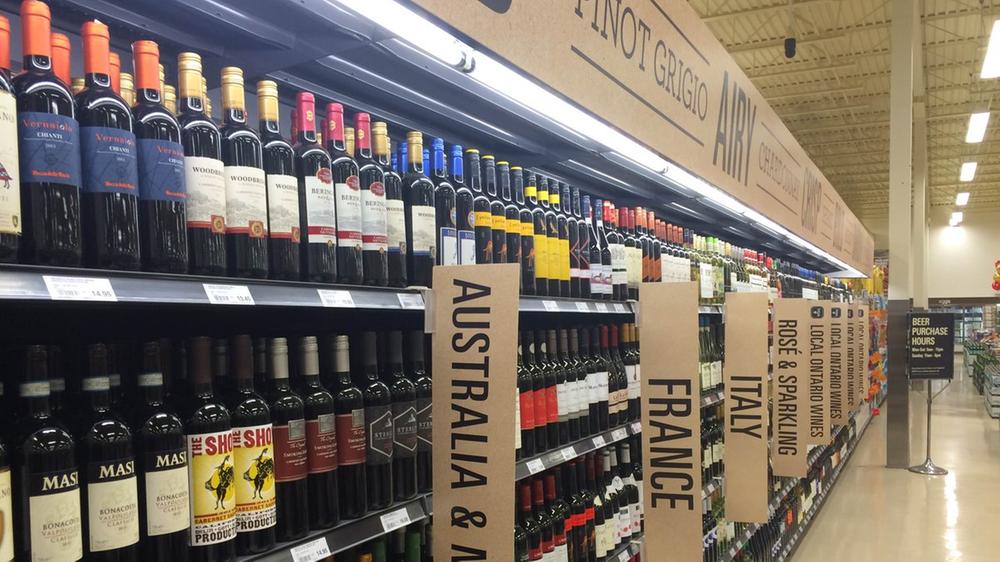
grocery stall of wine

Across Canada, provincial governments are slowly loosening restrictions for producers and retailers of wine, beer and alcoholic craft beverages. For most in the industry, relaxing regulations on what can be produced and where it can be sold can’t happen fast enough.

  Federal and provincial governments are also investing heavily in new programs to encourage Canadian winemakers to scale up their businesses, as well as agricultural science initiatives to improve growing efficiency and reduce crop threats.

  Meanwhile, one researcher at a Canadian university has proven that wine-drinkers really can judge a bottle by its label. Read on for more on these and other stories about what’s going on in Canada’s wine industry.

B.C. to Allow Imported Wine in Grocery Stores

  In July, British Columbia amended its laws to allow licensed grocery stores to stock wine from anywhere in the world. Previously, the province had only permitted locally produced wines with a Vintners Quality Alliance designation on grocery shelves.

  The previous policy caused friction with international trade partners, including the U.S., the Eu-ropean Union and New Zealand, who have all lodged complaints with the World Trade Organi-zation.

  According to an article published in Business In Vancouver magazine, there are at least 29 gro-cery stores in the province that are permitted to sell British Columbia VQA wine. Prior to 2015, wine could not be sold in the province’s grocery stores.

  The trend to open alcohol sales channels beyond the provincial liquor distribution board outlets is continuing in Ontario too. The provincial government announced in June that it would soon change the rules to allow sales of wine and beer in corner and grocery stores.

  According to an Oct. 5 article in CBC News, Ontario distilleries are now lobbying for permission to sell spirits in these outlets too. This follows recommendations from the Ontario Chamber of Commerce published in July that recommend making it easier for customers to buy all types of alcohol, including allowing online liquor sales.

Ontario Invests $15-Million to Grow Wine, Beer and Craft Beverage Industry

  In late September, the government of Ontario announced a plan to invest $15 million to boost local wineries, microbreweries and distilleries. The one-year transition funding is targeted at helping wineries grow their VQA business, promoting Ontario wine tourism, providing support for cideries and distilleries to scale up and expand their operations, as well as improving mar-keting, tourism, export and research initiatives.

The government also announced it would reduce red tape for producers. The changes will in-cluding allowing wineries, cideries and distilleries to keep serving booze in their tasting rooms until midnight, instead of being required to close at 9 p.m., and making it easier for producers to sell at farmers’ markets.

This news follows a few other notable funding announcements in the sector.

In August, the federal and provincial governments announced $75,000 in new funding to ad-vance the production of locally grown grapes in the Niagara region.

  A part of the Canadian Agricultural Partnership, the new fund includes $67,600 to develop a modern weather network with real-time information that will enhance eGrape, an existing in-dustry database. The database provides growers with information that can improve efficiency and productivity. The fund also includes $8,700 for an analysis of the wash water used to clean grape harvesters and to survey grape growers about water use practices.

  The Canadian Agricultural Partnership is a five-year, $3 billion commitment from federal, pro-vincial and territorial governments to improve Canada’s agri-food and agri-product sectors. 

  According to the Grape Growers of Ontario, grapes grown for Ontario wines contribute more than $4 billion annually to the province’s economy. The industry employs over 18,000 people.

Turns Out You Really Can Judge a Wine by Its Label

  New research from the University of British Columbia suggests that looks really do count—when it comes to wine, at least.

  Through a series of online surveys and in-person tests designed to determine each person’s branding and taste preference, the UBC study found that people were more likely to enjoy wine from a bottle with a design that reflected their personal identity.

  In a CBC News report on the findings, researcher Darcen Esau, a wine marketing consultant, said people thought the wine tasted better when they identified with the imagery on the label—no matter what was actually in their glass.

  The study, released in spring 2019, was conducted as part of Esau’s master’s program at UBC. Esau has since gone on to found TasteAdvisor (http://tasteadvisor.co/), an app that rec-ommends British Columbia wines, wineries and wine events or experiences based on your per-sonal profile and preferences.

Canadian Cidermaker Spared Paying $2 Million in Duties After Court Declares Cider is Wine

  A recent ruling by the Federal Court of Appeal found that a Canadian cidery was not required to pay the roughly $2 million in duties demanded by the Canadian government because the cider was technically considered Canadian-made wine, and therefore exempt.

  According to the Excise Act, any alcoholic beverage made from fermenting plants (except for grains) is considered wine. That’s important because the Canadian government imposes ex-cise duties on alcohol, but makes exceptions for Canadian-made wine.

  The Canada Revenue Agency argued that because Okanagan Premium Cider and Extra Hard Cider, produced by the Mark Anthony Group, was made using foreign-sourced apple juice concentrate and, in the case of the extra hard cider, foreign-produced spirits, the beverages were no longer “Canadian” and the alcohol duties should apply.

  The case centered on a key question: when exactly is wine “produced?” The judge determined that the test of a wine’s “Canadian-ness” should be applied at the time of fermentation, not bottling. He also noted that, if the assessment happened at the bottling stage, the addition of water, commonly added to cider after fermentation, would automatically disqualify the product from being wine since water is not a plant grown in Canada. 

164 wineries to showcase at Vancouver International Wine Festival next year

  The 42nd annual Vancouver International Wine Festival (http://vanwinefest.ca/), scheduled for Feb. 22 to March 1, 2020, will feature 164 wineries from 15 countries pouring over 650 varieties of wine.

  The festival has been named the top food, wine and hospitality event in Canada by New York’s BizBash for seven years running, and was recently named the best North American interna-tional wine festival by LUX Life Magazine.

  Just over 40 of the participating wineries are from this year’s featured country of France, with another 70 from North America. There will also be representatives from wineries in Italy, Ger-many, Croatia, Romania and the Iberian peninsula, as well as two Sake producers from Japan.

  Tasting events will feature over 200 French wines, and the country’s wines will be celebrated in more than two dozen more activities, including vine star seminars, vintage tastings, winery din-ners, a wine party and a Saturday lunch, Bon Appétit, which will feature all 43 participating French wineries. The festival will spotlight rosé wines from around the world, with an estimated 75 varieties to taste, many from Provence.

  The main event will take place at the Vancouver Convention Centre, however more than 25 res-taurants and other venues will host wine-related events all over town. Discounted advance tickets went on sale Nov. 6 while public event tickets go on sale Jan. 8. Tickets for trade events are on sale Jan. 22.

Post-Harvest Vineyard Maintenance: Tips to Finish the Year Off Right

narrow path of a wine vineyard

By: Alyssa L. Ochs

Although the busy time of harvesting grapes is winding down or has ended for many vineyards, there’s not much time to sit back and relax before more critical work must be done. Many post-harvest vineyard tasks should be on every vineyard’s to-do lists to prepare for next year’s crop and sustain the longevity of the vineyard’s operations.

The Basics of Post-Harvest Vineyard Management

  After the growing season ends and the grapes have been picked, grapevines go dormant and signal that it’s time to start preparing for next year. Some of the vital maintenance tasks to do after harvesting are removing bird netting, analyzing the soil with samples, repairing or replacing trellising and equipment, and planting a cover crop to reduce soil nutrient loss and control erosion. It is also the time of year to be proactive about pest control, consider irrigation strategy, stock up on new vines and put some thought into overall vineyard management strategy.

  As vineyards wrap up harvest operations and prepare for winter, some specialists may be helpful for advice, products and services.

•    Vineyard management companies

•    Pest control companies

•    Irrigation consultants

•    Nurseries

•    Trellising companies

•    Soil companies

Check and Repair Trellising

  Trellising is a big part of post-harvest maintenance, because, in most climates, grapevines need supports to secure the wood and summer shoots within the training system, and ensure proper ventilation and exposure.

  “Furthermore, the trellis helps to improve the implementation of viticulture work and facilitate mechanized procedures, like machine harvesting,” said Oliver Asberger, Vice President of PA Trellising Systems in Charlottesville, Virginia. “If a trellis is not designed right or maintenance is not kept up, it will lead to deficiencies in vineyard performance and higher costs in labor and parts.”

  Asberger told The Grapevine Magazine that two primary signs of a good trellis are tight wires and stable posts. “Each growing season, the trellis experiences pressure on its systems, and that leads to loosening of parts or even breakage,” he said. “To optimize the performance and keep costs down, the trellis is best fixed when the pressure is off and the vine is dormant.”

  PA Trellising Systems is a distribution company, rather than a vineyard management company, but it can offer advice on how to modify and repair existing materials if a vineyard notices a problem with its trellising system.

  “When it comes to new establishments, we guide the buyer to what options are available and optimal for post models, forms of galvanization, size and length, inside or outside hooks, set depth and use of accessories, like cross-arms or wire extenders,” Asberger said. “Also, we are able to customize our posts to offer the best solutions for a unique growing situation.”

  Another company that provides trellising products is Gripple, which offers the Gripple Plus for simple push-fit splicing, locking and tensioning system that is up to five times faster to install than traditional methods for broken trellis wires. Gripple joiners and tensioners have patented ceramic rollers that deliver a better grip and non-corrosive hold on the high tensile wires that are used in vineyards today. They can be used in conjunction with the Gripple Torq Tool or Gripple Contractor Tool to return tension to slacked or broken trellis wires quickly.

  “The Gripple Plus range is perfect for ongoing maintenance and allows for re-tensioning year after year,” said Erik Shortenhaus, Gripple’s Business Development Manager. “Gripple also provides pre-made cable bracing kits designed for the quick and easy repair of end post assemblies. Within our end post cable bracing kits, we offer a range of clips and end-fittings that are designed to quickly and securely attach to any end post material on the market, such as wood, drill pipe and channel steel. Additionally, Gripple offers a range of below-ground, percussion-style anchors that can be instantly load-locked and serve as a dead man anchor point or additional reinforcement for existing anchors. Gripple products make vineyard installation, maintenance and repairs simple and secure.”

  Shortenhaus pointed out that the growing season, crop load, weather, farming practices and harvest activities all contribute to possible wear on a vineyard’s trellis system. He said that the rigors of harvest, especially machine harvest, take a strenuous toll on a vineyard’s trellis structure, making this a prime time to check trellising.

  “Taking account of any damage that has occurred during harvest or over the year, and addressing it prior to next year’s crop, is essential to providing a solid, consistent and hassle-free foundation for your vines,” said Shortenhaus.

Check and Improve Irrigation

  Vineyard managers should remember to check their irrigation systems after harvest since machine harvesting can be rough on the vines and system. Look for physical damage, such as fallen hoses or emitters.

  Brett Curtis and James Bengtson of California’s Bennett Water Systems recommend using the post-harvest time as an “alarm clock” to handle yearly maintenance and “do an eyes-on evaluation with a full system flush and a line treatment to clean the emitters.”

  At the filter station, they recommend inspecting the sand for the sand media filter, working condition of the backwash valves and screen of the screen filter. Other recommendations are to check the pressure gauges to assess the accuracy of the pressure differential and to look for gasket leaks and other visible signs of failure.

  “Post-harvest irrigation is what lets you double-check that all of your fixes were successful before you put the system to sleep for the year,” said Curtis and Bengtson.

  Bennett Water Systems has knowledgeable key-account managers, salesmen and project managers who can perform evaluations, get to the root of the problem, and perform any fix that is required.

  “We have crews with years of experience both in installing drip systems for vineyards and performing repairs and regular maintenance,” said Curtis and Bengtson. “Whether it’s an issue with a pump, filter station or anything downstream of the filter, like pipe, tubing or emitter issues, we have a way to fix it or a solution to prevent it from causing issues in the future.”

Soil Enhancement and Maintenance

  One of the essential tasks to do post-harvest is evaluating the soil for determining nutrient and organic matter needs.

  “The vines utilize nutrients during the growing season, but not all nutrients are absorbed at the same rate,” said Coult Dennis of Superior Soil Supplements in Hanford, California. “The pH level of the soil makes a big difference in the availability of nutrients to the vines. Some nutrients are more readily available at lower pH; others are more available at higher pH. It’s important to look at the pH levels of both the soil and the irrigation water sources in order the make the best possible decisions regarding soil amendments.”

  Founded in 1983, Superior Soil Supplements dedicates themselves to building healthy soil and being California’s largest distributor of bulk agricultural soil amendments and landscape materials. It has facilities in Ivanhoe, El Nido, McFarland, Hanford and Coalinga and believes that balanced soil builds a strong foundation for crops, saving the farmer money on fertilizers and other crop inputs in the future.

  “Making sure your vines are set up for optimal growth in the spring is vital to having flourishing canes and ultimately, a strong and profitable yield,” Dennis said.

Order New Vine Stock if Needed

  After harvest is the ideal time to determine whether the vineyard will need new vine stock for the next growing season.

  “If you are looking to order vines for the spring of 2020, the best time to order vines is from August to December 2019 to ensure that varieties you want are still available,” said Ray Winter of Winterhaven Vineyard and Nursery in Janesville, Minnesota.

  Established in 2001, a year after starting a vineyard of over 14 acres and 6,000 vines, Winterhaven nursery specializes in cold-hardy wine grapes and sells many bare-root grapevines for red, white and table grape varieties. Winter said that the most important things for a vineyard to consider when ordering vines from a nursery should be whether the varietal is hardy to the growing location and if there is a market for them if the vineyard does not plan to use them in their wine.

Final Words of Advice

  In addition to these post-harvest maintenance tasks, vineyards will also want to spend time identifying and removing diseased vines, perhaps with the guidance of a local pest control company that specializes in vineyard pests. It’s also time to check vineyard equipment for routine maintenance or repair needs, as well as to identify which pieces of equipment to replace.

  Take time to reflect on the season and discuss with staff what went well and how to make improvements for the year ahead.

In closing, here are a few final words of advice from our industry experts to guide vineyards across the country through the post-harvest time of year and ensure a successful 2020 season.

For trellis maintenance, Oliver Asberger of PA Trellising Systems advises vineyards to establish a trellis that will last for the lifetime of the vineyard—approximately 25 years— and is mostly maintenance-free.

  “Too often, at the time of establishment, growers choose materials at lower costs or cut corners within the stability performance but later end up with extremely high maintenance and replacement costs,” Asberger said. “Also, in this era of less labor and more mechanization, a grower should consider if the system is set up to use technology in the future, even if the vineyard doesn’t currently own it. A later modification will be costly or not applicable at all.”

  Asberger also said that a trellis is best maintained during the dormant time because, with no canopy present, it’s easy to see loose or missing parts and replace them more cost-effectively.

“Doing this work when the canopy is present will hinder the effectiveness and most definitely will lead to damaging the shoots,” he said.

  Shortenhaus of Gripple also advises vineyards to take a visual inventory of their trellis systems and make any needed repairs or adjustments to give the vineyard a strong foundation for the next growing season.

  “Using Gripple for your trellising repair and maintenance needs couldn’t be simpler or more reliable, and it will effectively reduce your work time,” he said.

  Bennett Water Systems’ most significant piece of advice for irrigation is to remember that the system installed impacts yield directly.

  “The efficiencies of the system all play into it, such as pump efficiency, pressure losses, if supplements are going where you expect and need them and if your water is being evenly distributed throughout the whole field,” said Curtis and Bengtson. “For Bennett Water Systems, it is our goal to design and install a system with the highest distribution uniformity as possible that provides our customers with the tools that they need to produce maximum yields most sustainably.”

  Dennis of Superior Soil Supplements said that the thing his company sees most in California is a lack of organic matter in the soil. He said that organic matter should make up about 5% of soil composition and while this is difficult to achieve, adding any amount of organic matter will help. Organic matter helps retain moisture and nutrients in the soil, promotes beneficial soil flora growth to chelate nutrients, and breaks them down into a structure that can be used by the plant.

  “Compost is the least expensive and easiest way to build up organic matter,” Dennis said. “Compost can be derived from municipal green waste sources, as well as from manure and even processed sewage. Green waste is the most popular choice for vineyard applications. Like any other crop input, organic matter is depleted in the soil through the growing season and needs to be replenished.”

  Dennis recommends compost application as part of a grower’s yearly soil fertility program. “To maximize spreading efficiency, we often blend fertilizers, sulfur, limestone or dolomite with the compost, so the year’s soil needs are addressed with one pass of the spreader,” he said.

  Concerning ordering vines, Winter of Winterhaven Vineyard and Nursery said vines coming from a cold climate nursery tend to grow better than those purchased from warm climate nurseries, even though the genetics are the same.

  “We have had many customers tell us this,” Winter said. “After the fruit comes off our grapevines, we always try to do a fertilizer spray on the leaves to feed the vine and get them ready for the winter.”