Grape Selections from the VitisGen and VitisGen2 Projects

hand inspecting grapes using a magnifying glass

By: Janet van Zoeren and Tim Martinson

The VitisGen and VitisGen2 projects represent major investments in understanding grapevine genetics – and particularly in identifying markers associated with desirable traits for use in ‘marker-assisted selection’.   DNA markers identified by geneticists and breeders are now incorporated into several selections and mapping populations by grape breeding programs in California, Minnesota, New York, and Missouri.

  We asked VitisGen2 breeders to provide photos and brief descriptions of a few of their selections and mapping populations and the traits they incorporate.  Where appropriate, we have highlighted the verified presence of genes through the use of markers in blue.

USDA-ARS, Crop Diseases, Pests and Genetics Unit, San Joaquin Valley Agricultural Sciences Center,Parlier, CA

Craig Ledbetter, Research Geneticist

Y308-314-08 This is a mid-season table grape selection with powdery mildew resistance, which has the Ren4 gene. It was sufficiently attractive for trialing with other advanced table grape selections.  It was the first PM resistant selection to be brought in for evaluation by the California Table Grape Commission, where there were positive comments from evaluators regarding the fruit attractiveness and productivity.  It was finally removed from variety consideration because of excessive fruit acidity.  We have continued to use this accession as a quality parent for Ren4 crosses.

Y306-196-10 This natural dry-on-vine raisin selection has all the makings of a new raisin cultivar.  The vine is extremely productive and berries begin drying down in early August.  Dry product quality is very high and berries resist powdery mildew infection because of the carried Ren4 gene.  The selection is currently under yield evaluation to examine its commercial potential.

Grapes in Color Population

Color Population: It is difficult to identify new red-skinned table grape selections with high quality skin color, so a 300-vine population was created from red-skinned parents that differed greatly in the quality of skin color.  The reason for creating this population is to identify a DNA marker that is linked to high quality red skin color.  All fruiting vines are being phenotyped for skin color quality, and vine DNA profiles will be examined to identify any markers linked to high quality red skin color.  Depicted in the photo are fruit clusters from two vines:  a high quality red to the left of the trunk, and low quality red to the trunk’s right.

Y511-151-12 This is the first red-skinned selection with powdery mildew resistance to be evaluated for fruit quality in advanced selection trials.  Fruitful on both spurs and canes, the selection yielded between 950 to 1400 boxes per acre, depending on applied cultural treatments.  Vitis cinerea (Ren2) is the source of this selection’s powdery mildew resistance.  The round attractive fruit ripen in mid-September and produce a 7 gram berry with 21° Brix.  Consumer evaluations have been positive, with flesh texture and sweetness being notable positive attributes.

Y514-109-12 grapes

Y514-109-12 This late-season table grape selections owes its resistance to V. romanetii, the donor of Ren4.  It is currently being evaluated for the possibility of release in collaborative trials with the California Table Grape Commission.  The white-skinned selection has achieved 1076 boxes per acre in these trials, with clusters averaging 1.3 lb. on spur-pruned vines.  Fruit of this selection are particularly clean, due in part to its vigorous canopy that protects developing berries from both sunburn and ambering.  While this selection may or may not ever become a new cultivar, its genetics have already been used for several seasons to donate its unique combination of powdery mildew resistance and fruit quality traits to new seedlings.

Cornell Grape Breeding and Genetics Program, Cornell AgriTech, Horticulture Section, Cornell School of Integrative Plant Science, Geneva, NY

Bruce Reisch, Professor

NY12.0107.01 grapes

NY12.0107.01 This white wine grape selection is derived from a complex cross made in 2012, and confirmed through VitisGen marker analyses to carry both Run1 (for powdery mildew resistance) and Rpv1 (for downy mildew resistance). This particular vine was planted in 2014 as a single vine seedling, propagated in 2017, and planted in a six-vine plot in 2018. Fruit were netted and harvested in September 2020, and we expect to evaluate the first wine sample next spring.  The very long, moderately compact clusters bear fruit with mild flavors, and seem free of hybrid characteristics derived from North American species. One of its quality ancestors include ‘Muscat Hamburg’. It may have potential for high productivity.

NY10.0927.02 Another white wine grape selection bearing attractive clusters of light red fruit. As with its ‘Aromella’ ancestor, this selection has some flowery, aromatic components in the fresh fruit, likely derived from its ‘Gewürztraminer’ background.  The cross was made in 2010 and seedling vines were planted to a permanent vineyard in 2012. This selection was then propagated in 2017 and planted to a test site in 2018.  Fruit were harvested this year for sensory analysis in 2021.  According to VitisGen tests that were run on the seedling vines, this selection carries Run1 and Rpv1, as described above, but also carries Ren2 powdery mildew resistance from Vitis cinerea.

NY15.0416.01 This blue grape selection was created expressly for the interest in a juice grape with high levels of powdery mildew and downy mildew resistance. Another goal of the cross was to have relatively early ripening compared to ‘Concord’. The juice grape parent was a very early ripening selection created in the 1950s by the Experiment Station breeding program.  It was a hybrid of an early ripening blue labrusca grape with Concord.  The other parent donated resistance genes (Run1 and Rpv1) to the cross, and possibly Ren3 as well.  This cross was made in 2015 and vines were planted to a seedling vineyard in 2017.  Fruit were first observed in 2019 and the vine has already been propagated.  Small juice samples were made in 2020 from two harvest dates in September.  The flavor of the fresh fruit is quite similar to ‘Concord’.

4427075 grapes

4427075 This is a new wine selection in the Cornell-Geneva grape breeding program. Marker assisted selection results indicated the presence of two genes for powdery mildew resistance (Run1 and Ren2), and one for downy mildew resistance (Rpv1). The cross was made in 2014, and though we have no wine results yet, the flavors of the fresh fruit reflect a lack of wild grape off-flavors, and presence of pleasing fruity flavors. Fruit ripen mid-season.

4427025 grapes

4427025 This red wine grape also come from a cross made in 2014, so wine hasn’t yet been tested.  With large clusters that are not overly compact, the vine appears to have good yield potential.  In 2019, the vine had nearly no black rot in a planting with a great deal of black rot. Resistance to powdery and downy mildews are also excellent; DNA results indicate the presence of Run1, Rpv1 and Ren2.

4405008 grapes

4405008 During meetings with growers early in 2015, it was suggested that juice grapes with flavor profiles similar to current industry standards (Concord and Niagara) but harboring strong levels of disease resistance would be a desirable goal.  So, in June 2015 and 2016, a number of crosses were made with this goal in mind. There were several outstanding examples among the seedlings that began fruiting in 2018 and 2019.  Here is one such selection grown under fungicide-free conditions in 2019, with ripe fruit on September 19.  This young vine comes from a cross made in 2016 and is precocious and productive. Time will tell if these will be worthy of release; we have yet to determine juice suitability (though they do taste great!), winter hardiness, and stability across years and sites.  But several seedlings show promise.

NY06.0514.06 grapes

NY06.0514.06 This promising red wine grape selection, with excellent powdery and downy mildew resistance from the use of Run1, Rpv1 and Ren2, is already going out to trials with NE1720 University cooperators and others.  Though the cross was made prior to the start of the VitisGen projects, this selection was tested for presence of resistance genes using VitisGen resources.  The fruit have excellent resistance to bunch rot, and fruit and foliage have moderate resistance to black rot. The buds are moderately winter hardy, with expected temperature of 50% bud kill in mid-winter measured to be -15 °F.  Wine descriptors are as follows: fruity with notes of blackberry, plum, cherry; slightly herbaceous, with green pepper noted; good body and medium tannin; also, some have detected chocolate notes.

University of Minnesota, Grape Breeding and Enology Program, Department of Horticultural Science, St Paul, MN

Matthew Clark, Assistant Professor

E0012-01 Grapes

E0012-01 This selection is from a population of La Crescent x Seyval blanc. This selection has relatively large berry size and large clusters (169.83 g/l), and at harvest has 24.2° Brix, 2.91 ph, 12.17 g total acidity.  In the past we have harvested on 9/24/18. This vine has a low incidence of powdery mildew, which may be inherited from Seyval blanc (Ren3 resistance allele). There is downy mildew on the leaves, which is typical of its parent La Crescent. The clusters had no incidence of black rot, a common problem in the vineyard in 2019. The flavor and aroma profile includes honey, lemon, kiwi, pear, and gooseberry.

GE9408-01 Grapes

GE9408-01 Descended from Vitis riparia, ‘Carmine’, ‘Mandan’, and Landot noir 4511, this selection is from a cross of MN1094 x Seyval blanc. As a descendant of ‘Seyval’, our marker tests indicated that it also carries the Ren3resistance allele for powdery mildew. This grape produced a small (68.6 g), compact cluster but is interesting for its appeal in the wine, specifically the low titratable acidity (7.1 g/l) and moderate soluble solids (24.5 °Brix).  The wine was described as cherry, smoke, leather, berry, and with some tannin.

GE0733-01 Grapes

GE0733-01 This selection is a seedless table grape that is highly aromatic and has many tropical flavors. The parentage is unknown and will require DNA testing to confirm the possible parents. Most likely this selection is derived from Elmer Swenson’s breeding line and does carry the proper alleles at the SDI locus for seedlessness.  The leaves of this selection have no incidence of powdery mildew. The yellow berries are 2.3 g each, and clusters are 92.33 g.  Due to polar vortex in 2014 and 2019, this vine has not produced much fruit in USDA Zone 4. Primary clusters are large, but secondary buds or latent buds reliably produce smaller clusters. This is an earlier variety with harvest around the second week of September, 21.8 °Brix and total acidity of 6.69 g/l.

VB9276-01

VB9276-01 Wine described with muscat with floral notes including lilac and tropical fruits like banana. This selection is a cross of VB 86-4 and Frontenac. Selected for white wine, this selection has relatively low titratable acidity compared to other cold hardy hybrids at 7.11 g/l. The berries are smaller like ‘Frontenac’ and the bunches are loose like that parent as well. This selection is susceptible to black rot and powdery mildew. It is marginally hardy in our Zone 4 conditions.

GE9913-01 This selection is an offspring of the above (VB9276-01) crossed with ‘La Crescent’. Unfortunately it demonstrates severe susceptibility of leaves to downy mildew. However, the fruit appear to be immune, which is the same in ‘La Crescent’. Despite having muscat ancestors, this selection is more neutral in its flavor profile, not demonstrating hybrid or muscat characteristics. This wine is described like Sauvignon blanc. It is grassy, green fruit, with aromas of peach and citrus. This selection is not suitable for Zone 4 conditions without additional winter protection. It may also benefit from a longer, warmer growing season further south.

Clark Mapping Family

Fine Mapping Family MN 1264 x MN 1246 We developed this population of nearly 1000 individuals in order to fine map important traits that were previously mapped in our GE1025 population (Teh et al. 2017, Clark et al. 2018).  We are currently evaluating this population for resistance to powdery mildew, foliar phylloxera, and the presence of leaf trichomes. This planting was established in 2019 at the Horticultural Research Center and should produce its first fruit for evaluation in 2020. We hope to use this population to improve our understanding of fruit color, bunch architecture, flower sex, and fruit quality traits such as hybrid flavors.

  Funding for VitisGen2 is provided by a Specialty Crop Research Initiative Competitive Grant, Award No. 2017- 51181-26829, of the USDA National Institute of Food and Agriculture.

Follow us on Twitter for project updates and webinar announcements @VitisGen

Email Tim Martinson at tem2@cornell.edu with any questions or comments about the program or webpage.

Demystifying Wholesale Wine Distribution

stock of wine

By: Becky Garrison

  At the virtual Oregon Wine Symposium held February 16-19, 2020, Jeff Lewis, Director of Education & National Sales, Revana Portfolio, and Colin Eddy, National Sales Manager, NW Wine Company, presented a seminar titled “Demystifying Wine Distribution: A Winery Toolkit to Help Build and Navigate Wholesale Distribution Across the United States.” They designed the seminar for winemakers looking to enter the wholesale channel for the first time, and those with existing distribution looking to expand their markets.

  Lewis and Eddy opened their conversation with a brief history of the 21st Amendment ratified on December 5, 1933, which repealed the 18th Amendment that launched prohibition. The 21st Amendment left it up to the states to govern the production and sale of alcohol. While every state has its own specific regulations, most stuck to the 3-Tier System separating producer, distributor and retailer.

  According to Lewis and Eddy, this 3-Tier System has multiple benefits. From a regulatory and educational point of view, this system ensures the safe handling of alcohol so that the final prod-ucts are safe for consumers. From an economic angle, this creates billions of dollars of local, state and federal tax revenue. The commercial benefits prevent a given winery from dominating the marketplace.

  Eddy said a key advantage of expanding into wholesale distribution is a daily representation of your brand. “You’ve got salespeople out there telling the story of your brand and letting custom-ers sample your wares. No one can be everywhere.”

  Distribution also ensures the ability to deliver products to licensed accounts in designated territo-ries and collect payment in accordance with state and federal laws so that both the manufacturer and producer get paid on agreed-upon terms.

  Another development that began in 2020 was a rise of online wine sales, with consumers pur-chasing bottles directly from a winery, a website like wine.com or an online service such as Drizly. Large wholesalers rolled out online purchasing websites that allowed retail shops, bars and restaurants to purchase wines online without the presence of sales representatives. “The les-son here is that people are comfortable having wine delivered to their home, and online platforms are getting future customers easier and safer access. That is something that’s going to continue,” Eddy said.

Achieving Success in the Wholesale Distribution Market

  Winemakers interested in expanding their sales should first ask themselves why they are inter-ested in wholesale distribution. “It’s important to remember you’re creating a whole new sales channel, and with that comes a whole set of variables,” said Lewis.

  Among those variables include how existing sales channels will interact with this new wholesale channel and how a wholesale distribution channel will impact the sales of wine clubs or winery-only wines. Is there enough wine in production to execute this plan?

  Lewis and Eddy broke down their approach into a toolkit designed to help winemakers achieve success in the wholesale distribution market. Their first recommendation is to review the current distribution landscape. Currently, there are 1,126 unique wine distributors across the U.S. In breaking down these numbers, 37% of these distributors reside in four states, with 141 distribu-tors in California alone. Also, the list of distributors continues to shrink and consolidate market share. Presently, the top ten distributors as follows: 

Southern Glazers Wine & Spirits

https://www.southernglazers.com

• 45 States

• 119 offices

• 1100+ wineries represented

•225 Oregon Wineries Represented (total U.S. market share 32%)

Republic National Distributing (RNDC)

https://www.rndc-usa.com

• 23 States

• 94 offices

• 1000+ wineries represented

• Major recent acquisitions in Young’s Market (2020) and Opici FL (2021) (total U.S. market share 19%)

Johnson Brothers

https://www.johnsonbrothers.com/suppliers

• 23 States

• 36 offices

• 430+ wineries represented California only

• 70+ Wineries represented (total U.S. market share 10%)

Breakthru Beverage Group

https://www.breakthrubev.com

• 16 States

• 40 offices

• 660+ wineries represented

Empire Distributors, Inc.

https://empiredist.com

• 4 States

• GA, NC, TN, CO 580+

• wineries represented

WineBow

https://www.winebow.com

• 22 States

•. 600+ wineries represented

• National Wholesaler R. Importer

Heidelberg Distributing Company

https://heidelbergdistributing.com

• 2 states OH/KY, 90+ wineries represented

• Services 26,000 retailers

Wine Warehouse

http://winewarehouse.com

• California ONLY

• 70+ wineries represented

Horizon Beverage

https://www.horizonbeverage.com

• 5 States

• Northeast Based

• 260+ wineries represented

Empire Merchants

https://www.empiremerchants.com

• New York only

  At present, there are 11,000 wineries, with 80% producing less than 5,000 cases a year. Another 16% of wineries are classified as small, producing 5,000 to 49,999 cases, 2% are medium pro-ducing 50,000 to 4,999,999 cases, and 1% are large wineries that generate 500,000 cases or more.

  Next, they said to explore what markets to target. An analysis of the desired markets will help determine which distributors would work best for those particular products you’re looking to sell. Where are people consuming wines, and which wines are they drinking?

  Along those lines, look at regulations in these particular states to assess if this is a market where it makes sense to enter at this junction.

  Presently, 13 states are one-price states. In these states, there’s no different pricing for restaurants or retail outlets and no quantity discounts.

•    Kansas,

•    Missouri

•    Oklahoma

•    Oregon

•    Virginia

•    New Hampshire

•    Utah

•    Idaho

•    Montana

•    New Jersey

•    Mississippi

•    Pennsylvania

•    Ohio. Also,

  Channel pricing is prohibited in 16 states. In these states, you cannot separate on- and off-premise pricing.

•    Kansas

•    Oklahoma

•    Virginia

•    New Hampshire

•    Utah

•    New York

•    Arizona

•    Washington

•    Idaho

•    Oregon

•    Montana

•    New Jersey

•    Mississippi

•    North Carolina

•    Ohio

•    Pennsylvania

  In addition, quantity discounts are restricted in Connecticut, Idaho, Kansas, Louisiana, Maine, Missouri, Minnesota, North Carolina, Ohio and Oklahoma.

  Next, Lewis and Eddy addressed state-controlled and franchise markets. Unless one has particu-larly strong relationships in an individual state, these markets do not represent an ideal place to start, and it can become difficult to change distributors should the need arise.

  The state-controlled markets are in Pennsylvania, Mississippi, Utah, Wyoming, New Hampshire and Maryland (Montgomery County), where the wholesaler acts as a broker to the state, or you sell directly to the state as the manufacturer, creating another “tier” to sell through.

  The franchise market is loosely defined as a market or defined territory in which one has a con-tractually binding agreement of representation with a wholesaler. Generally speaking, franchise markets protect the wholesaler or distributor from losing revenue and brands they’ve worked to build over time. Before entering into one of these markets, research the franchise law agreements for that particular state and define the parameters around potential future releases. If possible, sign a contract with these parameters. Thirteen states are currently under a franchise market.

•   Connecticut

•   Georgia

•   Idaho

•   Maine

•   Massachusetts

•   Michigan

•   Montana

•   New Mexico

•   North Carolina

•   Ohio

•   Tennessee

•   Vermont

•   Virginia

  The final market type they addressed was price posting. In certain markets, the winery and dis-tributor must post their wholesale pricing in advance with the state. The five states that require monthly price postings are Connecticut, Delaware, Missouri, New Jersey and New York. Also, they touched briefly on special situations like SS packs, Cuvée cases, and other “work-around methods” in pricing wines for different premise-types.

Choosing a Wholesale Distributor

  Lewis and Eddy advocate asking your pre-existing relationships which distributors they would recommend. Also, define the distribution partner’s territory and assess if their market focus is in sync with those markets you’re looking to target. Then look at those distributors and determine where your positioning might be within their portfolio.

  Examine the number of their active accounts with a particular focus on those deemed their key accounts. Will a new brand get buried because they represent other similar varietals that will re-ceive greater attention from this distributor, or can they market a new brand effectively? Does the pricing for your wine fit in with this distributor’s portfolio? Where are their most active sales channels? For example, if a distributor primarily targets bars and restaurants for sales, they will not be the best fit for a winery looking to enter the retail market.

  Lewis added that another huge part of this equation is the sales team and territory. “You might end up splitting a state up because these mid-level and smaller distributors aren’t big enough to cover an entire state.”

  Be sure to explore the distributor’s overall operation. What is the size of their staff, and is this staff commissioned? Who are the key decision-makers, and what is their overall reputation with-in the wine industry? Is there an ownership change or other management issues? Are they look-ing to consolidate or expand? What is their timeline for paying their wineries, and do they pay them on time? Does their warehouse and inventory practices work for your particular needs?

  They recommend the SevenFifty website https://go.sevenfifty.com/ as a valuable source in identifying brand competitors and researching distributors, as well as price positioning and mar-ket positioning. The website also allows you to look at which producers wholesale distributors have in their book.

Launching a Wholesale Distribution Program

  Before releasing a particular wine, be sure your sales reps and brand managers have adequate resources so they can tell the story behind this vintage. Be clear where you want your wine sold, as well as the pricing for placements. Along those lines, register your labels when applicable, and allow for ample time for this registration process to be completed. Determine if you need addi-tional staff to manage both this new sales channel and inventory.

  When planning a market visit to a distributor, timing is everything. Many distributors hold their general sales meetings on Mondays and Fridays, with most of their sales staff in attendance. Hence, these meetings represent an opportunity to tell the brand’s story and have the staff taste these wines.

  When going on a distributor ride-along, be mindful that most ride-alongs occur Tuesday through Thursday from 10:00 a.m. to 5:00 p.m. The typical visit is six accounts, though it could be any-where from five to nine with a break for lunch. (You will be expected to pay for lunch). Ask to see a list of accounts you will be visiting in advance. In particular, you need to know if you are visiting on- or off-premise accounts, as that will impact your attire and the sales materials you need to bring. Know your pricing and be prepared with collateral. During these visits, be flexi-ble. The distributor arranged an entire day of appointments around your wines, so be mindful when they need to do tasks such as putting in an order. Also, expect the occasional cancellation.

  A few things Eddy suggested to keep in mind once you have a distributor in place include monthly tracking to check your inventory and update your distributor on progress versus goals. He said wineries should know when it’s time to change pricing and be aware of chain presenta-tion schedules. “You need to be clear with your distributor regarding where you want your wines sold.”

  Finally, nothing is more important than having a plan. “Have a plan going in. Check up on it, and follow up,” said Eddy.

Websites Are a Virtual “Garden”

By: Susan DeMatei

  I was reading an article about spring gardening tasks, and they were suggesting that spring was a great time for maintenance. The types of things recommended, such as cleaning and sharpening tools, checking bulbs and seeds for moisture or mold, mulching existing flower beds, and planning for new ones, all made sense and almost inspired me enough to get off the warm couch and go out to my shed to investigate. But, because I’m a nerd, my mind immediately followed the theme to a digital correlation.

  Websites are a virtual “garden.” Their goal is to appeal to customers, draw them in and create an inviting setting so they may stay awhile. We design new sections within them, like adding blogs or recipes, we plant new products and SKUs and prune old ones no longer available. Sometimes we get tired of the entire thing and change the color scheme and layout with new pictures or templates. Like a garden, we should tend to our websites because if we let them sit over time, their ability to function and attract customers dissipate. However, regular website maintenance is something that many don’t realize is necessary. So, for this week’s blog, here is a list of periodic maintenance tasks to help you keep your website in full bloom.

  ADA Compliance:  We didn’t just start with this because it fits alphabetically – but you can remember it that way. It’s crucial to ensure that your website abides by ADA Compliance guidelines because of possible hefty fines, potential lawsuits, and these accessibility enhancements open your website to more potential consumers.

  Things to ensure to check each month to remain ADA Compliant are:

  Image Alternative Text: Every image you add to your website should have good alternative text. Alternative, or “alt” text, is a description of the image in the code that Google and screen readers for the blind can read. This code should describe what your image portrays, such as “Customers enjoying a tasting in the tasting room.” The only exception is if an image is entirely decorative (such as a twirly graphic forming a text break or a background style). With each new image you add, you will want to add alternative text to remain ADA Compliant. This addition also benefits you from an SEO lens.

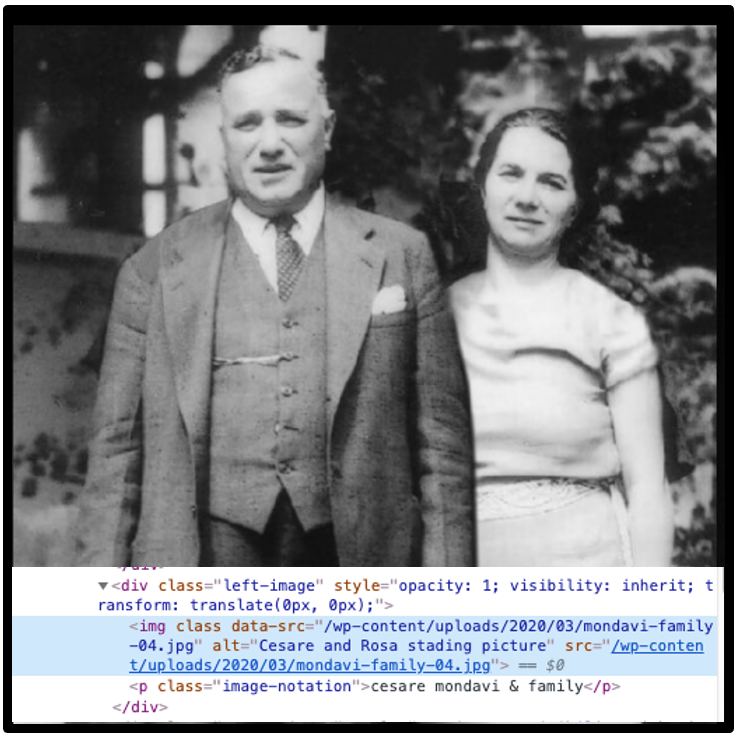
Cesare and Rosa stading picture

  In this example, even though the picture is called “mondavi-family-04.jpg”, the website developer has given the picture an alt name of “Cesare and Rosa stading picture” to go along with the text. Helpful, but check your spelling in tags, too!

  Text Contrast: Anytime your copy or text has been adjusted, it’s essential to make sure that the characters are easy to read and not impeded by background images that may become unclear or hard to see.

  Links: Any new links that you create or add also need to contain clear relevant text. A URL with a mess of unfriendly letters and code can make you non-compliant—for example, https://www.wineglassmarketing.com/Services/Social-Media-Marketing  as opposed to: https://www.wineglassmarketing.com/Services/345j345jk345b34fsd0v.

Always try your best to have a friendly marketing URL that denotes what page they are on.

  SEO Improvements: You might think that most website building systems handle this for you automatically, but the sad truth is they don’t. You should already have a Google Analytics tracking code on your site, and ideally, you should also have a Facebook Pixel set up to track activity. If you don’t, you’re just paddling around without a plan. From a monthly maintenance perspective, the critical things for this category are:

  Meta Titles and Meta Descriptions:  While most systems do give you Meta Titles by default, these are often very basic and don’t abide by best practices according to the leading SEO platforms out there, namely Google. The real problem on the other side of the coin is Meta Descriptions are usually empty by default or don’t follow the best course.

  A big part of this is knowing how to write proper Meta Descriptions so that your website traffic improves – these aren’t just keywords of standard search terms. There’s an actual strategy to doing this correctly. For example, you shouldn’t stuff keywords into your Meta Descriptions. One case study by SterlingSky shows that when they saw brands keyword stuffing their posts, 40% of the time, the listing was suspended or removed by Google and had to be added again. With any new page created or even any new product added to your website store, it’s surprisingly vital to make sure that you’ve added the appropriate Meta Descriptions.

Google's example of keyword stuffing

  Keep your “Google My Business” page up to date:  Since Google is the most widely used search engine, this gives you a significant advantage in using the free Google My Business tools. However, having accurate operating hours is critical, especially since we’re in a current teeter-totter between open and closed. Considering this fact, you may wish to check on your business hours more frequently than once a month. You wouldn’t want someone making the trip to your tasting room when you’re mandated to have your doors shut.

  If you don’t have a Google My Business page, it could increase traffic. According to Forbes, a study done in 2019 stated, “Google My Business is a critical channel, with 96% of local businesses being viewed at least 25 times per month in Search results, and 86% receiving more than 25 [views per month] in Maps. And there’s plenty of space for high numbers, with 49% of businesses receiving more than 1,000 average Search views per month, and 33% receiving 1,000+ on Maps.” As of August of 2020, Forbes explains, “Google My Business has yet to catch on with large companies and those focused on B2B it seems, but manufacturers that sell through local independent retailers should refocus on GMB and how it can help their retailers succeed.”

  Broken Links:  As offers change and products go out of stock, it’s essential to make sure that your links don’t break. So, this upcoming month, if a product went out of stock, was it a featured link in an email? If a customer opens that email a few months later as they’re cleaning out their inbox and clicks on a link, will that connection break?

  Privacy Policy Compliant: In 2020 we saw the introduction of two privacy policies that impact each of us: CCPA (California Consumer Privacy Act), obviously for California residents, and LGPD (General Data Protection Law) for Brazil. (In 2018, the GDPR for the EU was put into effect for anyone who displays their website to anyone in the EU.) These laws are worth reviewing to ensure any new forms you’ve created on your site and your cookie policies follow them. There are plugins for WordPress that can handle the necessary popups and wording.

  Social Media Ads and Posts:   You should monitor and “prune” your social media posts as well. Technically these aren’t part of your website but play a vital role in bringing people to your website. When sensitive issues are coming up in the world scene (as we saw many examples of last year), many leave their ads in place without adapting them to show empathy for those suffering or to bring awareness appropriately. Meanwhile, some go entirely the other way and turn off their ads or halt their social media presence altogether, effectively shutting the door on potential sales by showing the outreach of an emotional connection with the consumer rather than plugging a promotion.

  For instance, leaving your ads as they stand – which usually contain a call-to-action, can seem tone-deaf. You’ve heard the term “read the room”; we need to “read the news” in this case. For example, adapt your posts showing an empathetic thought regarding the displacement of families who have lost homes in wildfires. Being relevant helps prospects and consumers appreciate the heart behind your brand, build a connection with your team members, and feel motivated to keep connected with your company.

By way of review:

•   Image Alternative Text

•   Text easily legible

•   Links are friendly and easy to read.

•   Meta Titles and Meta Descriptions follow best practices.

•   Google My Business Up to Date

•   Check for Broken Links

•   Check your forms that they are compliant with privacy policies.

•   Check your Social Media Ads and posts to make sure they are relevant.

  Now you have a spring maintenance list to ensure more significant traffic to your site, correct hours, better ADA compliance, and SEO practices. We hope that with these tips, your 2021 season will bloom with well-functioning websites attracting flocks of customers that enjoy your online garden.

Fullerton Wines: Raising the Bar on Oregon Chardonnay

vineyard on a barn

By:Nan McCreary 

  Willamette Valley, located between Oregon’s Cascade Mountains and the Coast Range, shares a defining characteristic with Burgundy, France. Both are cool-climate growing regions situated at the 45th parallel north, and both are meccas for the holy grail of grapes, Pinot Noir. Yet, while Burgundy has long excelled at another grape, Chardonnay, Oregon has been late to the party. Fortunately, this is rapidly changing.

  “This is a good time to be in the Chardonnay business in Oregon,” winemaker Alex Fullerton said, “and it’s a good time to be a Chardonnay drinker in the valley.” Fullerton, who, with his parents, Eric and Susanne, founded Fullerton Wines in 2012, is one of many winemakers championing Chardonnay as the new rising star of the Willamette Valley.

  Chardonnay vines were first planted in the Willamette Valley along with Pinot Noir in the mid-1960s. Much of what was propagated was a single clone grown in California, called 108, which didn’t ripen sufficiently in the cool Willamette Valley.

  “The first 20 vines we planted in our small vineyard near Beaverton were Davis 108 clones,” Fullerton told The Grapevine Magazine. “They were monsters. They were super vigorous and kept growing vegetatively but wouldn’t ripen. They were used to a dryer climate.”

  In 1974, David Adelsheim, co-founder of Adelsheim Vineyard in the Chehalem Mountains AVA, spent a vintage working in Burgundy. There he noticed that Chardonnay ripened earlier or at the same time as Pinot Noir, whereas Oregon growers were picking Chardonnay two weeks after Pinot Noir.

  “He figured it must be a clonal thing,” Fullerton said.

  In 1984, Adelsheim helped import some of the earlier ripening Dijon clones he saw in France, which turned out to be perfectly suited to Oregon’s climate. That was a turning point in the evolution of Chardonnay in the Willamette Valley.

  Throughout the 1980s and 1990s, the movement to bring over better clones spurred the revolution. Growers began experimenting with other clones in addition to classic Dijon clones, including California heritage clones which tend to be less vigorous. 

  “Our climate is changing,” Fullerton said. “It’s warmer, so it’s a good idea to get a diversity of clones up here.”

  According to Fullerton, clone selection is only part of the Chardonnay story in Oregon.  The refinement of site selecting, winegrowing practices, pick times and winemaking decisions also contribute to Chardonnay’s continuing success. Fullerton, which makes an 80% to 20% ratio of Pinot Noir vs. Chardonnay, sources grapes from all over the Willamette Valley.

  “We have a great narrative for Oregon Pinot Noir and what you get from different soils and AVAs, and we are starting to map that out for Chardonnay,” he told The Grapevine Magazine.

  “We have both volcanic and sedimentary soils here, and we’re continually experimenting with which clones do better in which regions.”

  Fullerton strives for diversity in the vineyard, planting some one-acre blocks with as many as 10 different clones in each block. “This broadens the expression of each individual site. If you plant only one clone on one site and vinify that separately, you will get an expression of terroir through the lens of only one clone. If you’re interested in seeing what a site does, you’re really better off seeing multiple clones planted together because you can find which sites are best and express the ultimate complexity of that site.”

  When it comes to harvesting, a growing trend in the Willamette Valley is to pick early. Early harvest helps retain acid and keep alcohol and sugar levels low. Fullerton, for example, picks Chardonnay a full one-to-two weeks ahead of full flavor development on the vine. “With Pinot Noir, you don’t pick until the flavor is in the fruit, but with Chardonnay, if the grapes are tasty and flavorful, you should have picked a few days ago to get the style we’re looking for. We have to keep a close eye on the grapes. They ripen very quickly.”

  In the winery, Oregon winemakers are generally striving for a leaner, crisper style of Chardonnay. Like many others in the valley, Fullerton is moving toward fermentation in larger barrels and away from oak. These include barrels as large as 350-, 500- and 600-liters, which allow for ingestion of less oxygen than smaller barrels as the wine ages. Wineries also use malolactic fermentation for white wines and aging sur lees by letting the gross lees settle, then reincorporating the desired solids back into the juice for fermentation and aging. Malolactic fermentation reduces harsh acids in the juice, and aging sur lees helps extract aromatics and adds texture to the wine.

  While Pinot Noir remains the signature grape of the Willamette Valley – as of 2018, there were 20,000 acres of Pinot Noir compared to 2,400 acres of Chardonnay – more and more winemakers throughout the valley see the potential of Oregon Chardonnay as an exciting alternative to the oaky, buttery styles that earned popularity in California. Still, it is a work in progress. For one thing, Chardonnay is very site-specific.

  “Today, we can identify which Pinots come from which appellation,” Fullerton said, “but we are not there yet with Chardonnay. With more experience and knowledge of soils and microclimates, eventually, we’ll be able to blindly pick out the appellation.” 

  Specifying an “Oregon style” of Chardonnay is even more difficult because the wine also reflects the winemaker’s choices. Chardonnay has long been known as “the winemaker’s canvas” because it is a grape easily manipulated in terms of flavor and aromas. “Oregon is developing its own style,” Fullerton said. “I don’t like to compare Oregon Chardonnays with White Burgundy, but generally, we’re trending toward the leaner, acid-driven styles of French Chardonnay. As our style evolves, I see more similarities than differences.”

  A testament to Oregon’s enthusiasm for Chardonnay is the increasing popularity of the annual Oregon Chardonnay Festival. Founded in 2012 as the Oregon Chardonnay Symposium, the celebration has evolved from an industry-focused technical panel and tasting to an education seminar for consumers and professionals and one of the region’s largest varietal-specific tastings. “If you’re interested in Oregon Chardonnay, you want to go to this event,” Fullerton said.  “It’s very educational and impressive to see how many good Chardonnays Oregon is producing.”

  For Fullerton, delving into the nuances of Burgundian wines is a labor of love, so it’s no wonder that he and his winery are adapting and promoting the latest trends in Chardonnay. His father, Eric, owner and proprietor of Fullerton Wines, gifted him with a trip to Champagne, the Loire and Burgundy for his 18th birthday, and this is where he got the wine bug.  “I was totally fascinated by wine all throughout college until I began working at wineries – Penner-Ash Cellars and Bergström Wines. These are the wines that speak to me.”

  As a winemaker, Fullerton oversees an 8,000-case production of Pinot Noirs, Chardonnay and some Pinot Gris. Their signature Pinot Noirs and Chardonnays include Three Otters (named after the Fullerton Family Crest, which features three little otter heads) and Five Faces (an acronym for the five members of the Fullerton family), as well as an extensive portfolio of single-vineyard wines. Many have received 90-plus ratings from Wine Enthusiast, Wine Spectator and Robert Parker. Viticultural practices include organic, biodynamic and sustainable farming.  Fullerton Winery offers three opportunities for tasting: Live virtual tastings, on-site tastings at the Portland Wine Bar and their tasting room at Fullerton Winery in Corvallis.

  Winemakers throughout the Willamette Valley agree that this is an exciting time for Chardonnay. With nearly 700 wineries and over 25,000 vineyards planted, there are many options for experimentation and ushering this relative newcomer into the future. Asked if Chardonnay can compete with Pinot Noir, Fullerton said, “Oh yeah. We can’t leave Chardonnay out of the story anymore and just consider Pinot Noir in the Willamette Valley.” 

  Clearly, the time is ripe for Oregon Chardonnay, for more information, visit…http://www.fullertonwines.com/

Yeast & Yeast Derivatives Become Easier to Use With More Flavorful Results

person pouring yeast derivative

By: Gerald Dlubala

  Winemakers choose a yeast strain based on several enological characteristics, including its tolerance to temperature, ethanol and sulfur dioxide, ability to provide quality fermentation, and ability to produce the desired aromas with minimal potential for foaming or clumping. Each fraction of the yeast contains specific, targeting properties that allow them to aid in the fermentation process and improve the overall quality of the wine. Yeast is the catalyst for creating up to 80% of all of the aroma-active compounds found in wines, including two of the most important ones, higher alcohols and esters. Yeast derivatives, used to improve wine quality, color, oxidation and mouthfeel, can also mimic the effects of a wine aged on lees when using targeted products selected and identified by experts. The better a winemaker understands them, the better wine they will produce.

  Using active dry yeast has become the preferred method for winemakers to get consistent fermentation and flavor complexity in their wines from batch-to-batch, negating much of the inherent risk of going with natural or spontaneous fermentation. Natural fermentation brings a high degree of unpredictability regarding starting times and stuck or sluggish fermentation cycles that can affect and diminish the quality, flavor and aroma of the wine. Conversely, active dry yeast is the freshest format available and ready to ferment upon contact.

  Traditionally, the active dry yeast is poured onto the surface of at least 10 times its weight in room temperature tap water and gently stirred to avoid or break up any clumps. If needed, there is a 20 minute waiting period to acclimate and have less than a 10-degree Celsius (50 degrees Fahrenheit) difference with the tank temperature. Once it reaches the ideal temperature, the mixture is transferred into the tank with aeration. Additionally, most suppliers recommend the use of rehydrating agents, or yeast derivatives, in the rehydration water.

Expediting Fermentation While Reducing Costs: Fermentis E2U™ Yeast

  Fermentis by Lesaffre, experts in the fermented beverage industry, offers an easier way for winemakers to start the fermentation process by streamlining the rehydration process or completely bypassing it with their line of certified E2U™ active dry yeasts.

  “As a winemaker, it’s always great to have options,” said Fermentis Regional Sales Manager Anne Flesch. “With our E2U™ line of yeasts, you can direct pitch or rehydrate. It is the winemaker’s choice as to which method is the best for them at any given time.”

  Flesch told The Grapevine Magazine that for practical purposes, the best way to direct pitch E2U™ is to pour the yeast directly on top of the tank, or, for whites and rosés, during tank filling after settling. When choosing to rehydrate E2U™, it can be accomplished under a wide range of temperature options, in water from 15-37 degrees celsius (59-98.6 degrees Fahrenheit).

  “Whatever option a winemaker chooses, the wine’s organoleptic characteristics (flavor, wine and color) or composition (levels of alcohol acidity) are not compromised,” said Flesch. “Both standard and E2U™ protocols result in the same performance in fermentation kinetics, so it is ideal for the winemakers who are looking to expedite their process without sacrificing anything related to quality. When time is the most crucial, as time in the cellar during harvest, this helps save that time.”

  Expediting the winemaking process and gaining more time always seems to be on the agenda for winemakers, and by direct pitching yeast, there are benefits throughout the entire process.

  “By choosing to direct pitch E2U™ yeast, the amount of water and heat needed for yeast rehydration is decreased along with the amount of water, energy and additional products used to clean the rehydration materials,” said Flesch. “The winemaker is bypassing traditional rehydration and the time, labor and personal miscues that come along with that process. There is a reduction of chemicals, needed water and heat sources, and labor hours needed, reducing labor costs. A streamlined fermentation task is completed faster and results in saved time and higher quality of work with no investment in rehydration agents, materials or cleaning chemicals. In some cases, a winemaker may potentially be able to replace their propagating/mother tank.”

  “Safety in the winery is also an important issue,” said Flesch. “Comfort and safety levels of production workers can rise by negating the need for extra water hauling or unnecessary ladder use. The possibility of dust inhalation from a yeast-derived product is a real health hazard for cellar workers during harvest. Our Certified E2U™ fermentation aids and functional products work to target and improve those conditions by offering a range of products that are under a physical form, like micro-granulated powder, or a liquified form that offers fewer inhalation probabilities and high dispersibility rates.”

  Fermentis created the first yeast liquid autolysate, ViniLiquid, in its fermentation aid portfolio. It has many advantages, including increased safety, superior pump-ability, quick availability to the yeast and shorter fermentation versus using a dry autolysate.

  “Conditions can dictate whether it is advantageous to rehydrate E2U™ before use, but if you choose to rehydrate, you can successfully do so using cold tap water, reducing heat consumption,” said Flesch. “For example, if conditions are toxic or challenging for yeast or your fermentation is stuck or sluggish, rehydrating E2U™ for use is recommended. Sometimes to completely restart a stuck fermentation, our protocol recommends the building of a starter culture. We do recommend rehydration in the case of secondary fermentation for sparkling applications.”

  Flesch told The Grapevine Magazine that the ability of their E2U™ yeast to be directly pitched is due to the high quality and expertise behind the production of the active dry yeast. The strength of the membrane developed during the multiplication process and the drying technology is the key to producing active dry yeast that is highly resistant to rehydration conditions. E2U™ has a four-year shelf life from production date with a recommended unopened storage temperature of less than 20 degrees celsius (68 degrees Fahrenheit).

  “In short, use of yeast and yeast derivatives certified E2U™ can benefit the winemaking community in critically important ways,” said Flesch. “Fermentation is easier, less time-consuming, and more worry-free. Seventy-five percent of winemakers use active dry yeast with their fermentations,” said Lesch. “If all winemakers decided not to rehydrate, we could save up to 600,00 hectoliters (~ 16 million gallons) of water and significant energy each year.”

  “Yeast hydration is now a matter of preference, not efficacity, and yeast derivatives are easy and quick to use,” said Flesch.

Enhancing Natural Processes Through Biotechnology Research and Innovation: AEB Group

  The AEB Group enables winemakers and brewers to improve their natural fermentation processes by offering custom-based solutions using biotechnology and treatment processes. They are the first North American company to develop reactivators to automatically and reliably rehydrate active dry yeast.

  Marco Bertaccini, Regional Sales Manager, told The Grapevine Magazine that AEB Group researches and looks towards providing winemakers the tools and products to take on the latest consumer taste trends, including different strains of yeast and the use of derivatives to match current consumer demand.

  “You know,” said Bertaccini, “in the past, the trend in wines has been the traditional big and bold flavors. For us, that meant using our FERMOL Meditterranée for the big, bold reds and FERMOL Chardonnay for the traditional whites. That demand for the traditional style of wine is still there, but not to the degree that it was. Consumers today are really into fresh, light and easy-to-drink wines with enhanced flavors.”

  For Bertaccini and the AEB Group, that translates into focusing on ester development and the transformation of amino acids into acetate ester. Their current focus is on the increased demand for easy-to-drink wines that feature a fresher variety of aromatics, especially those including citrus. Through research at the University of Modena and Reggio Emilia in Italy, AEB Group has ascertained and developed yeasts that express more of the natural flavor and aroma profiles of wine styles currently in demand.

  “We develop yeast extracts that boost amino acids for certain specific profiles,” said Bertaccini. “The nutrients and amino acids in juices naturally express varietal-specific profiles that we all would recognize. Since we know that aminos are precursors for esters, we can replicate and target specific aminos to produce more of what we want in any specific varietal.

  “For example, we offer our FERMOL tropical strain for white wines, which enhances and delivers more of that fresh, citrus-based flavor and aroma in a Sauvignon Blanc. Chardonnay wines benefit from our FERMOL fleur yeast. For red varietals that already contain great, natural, fresh fruit and berry flavors and aromas, we’ve developed our FERMOL red fruit strain to enhance all of those desirable qualities. These strains use and enhance the unique oenological features of the wine to produce a wine that is easy to drink with fresher aromatics.”

  Bertaccini told The Grapevine Magazine that AEB Group’s latest New Zealand trials featured their Levulia Torula strain and resulted in a huge success. Levulia Torula is an organic, non-saccharomyces yeast developed for varietal aroma enhancement. It is a strain for alcoholic pre-fermentation,  present naturally in the native flora of the must, contributing positively to the organoleptic complexity of the wine while limiting the production of volatile acidity. Levulia Torula is used in sequential inoculations, 24 to 48 hours before a classical strain of Saccharomyces cerevisiae. Its rapid establishment in the must makes it ideal for limiting the spontaneous development of separate strains of unwanted native yeasts. After the growth of the Saccharomyces cerevisiae, the population of Torulaspora delbrueckii dies down and rapidly begins its autolysis during alcoholic fermentation, where it supplies nutrients and contributes to the detoxification of the medium. It also helps reduce the sensations of astringency in the mouth through the release of polysaccharides.

  “We initially only made a small quantity for the trials, but it became wildly popular and quickly sold out,” said Bertaccini. “Levulia Torula provides excellent dominance in fermentation and great control over microorganisms. It is organic and usually paired with another inoculation for a strong fermentation finish. We are seeing the demand grow and now have much more available because of the success of our New Zealand trials.”

  Because it is organic, Levulia Torula has a shorter recommended shelf life of two years and is suitable for all grape varietals, including Sauvignon Blanc, Chardonnay, Gewurztraminer, Colombard, Riesling, Muscat, Sémillon and more.

When to Upgrade a Bottle-Filling Machine & the Options Available

machine filling up wine bottles

By: Alyssa L. Ochs 

  Bottle-filling machines are crucial pieces of equipment in the winery for getting products onto store shelves and into consumers’ hands. If your winery has been using the same filling machine for a long time, it might be time to consider an upgrade to match your current level of production and evolving needs.

  Here is an overview of different bottle-filling machines to consider for an upgrade, how to compare this equipment, and tips for choosing the right product for your winery.

Bottle-Filling Machine Options

  Although bottle-filling machines serve the same basic purpose and have similar functions, there are many options available. Overall, there are three different categories of bottle-filling systems: manual, semi-automatic and automatic. A logical place to start with choosing this type of equipment is to first consider the winery’s size.

  Rod Silver handles marketing and sales for XpressFill Systems, LLC in San Luis Obispo, California. He told The Grapevine Magazine that manual fillers are more suited to very small wineries and home vintners because these devices fill just one bottle at a time. However, this is not practical for many wineries in operation today. XpressFill manufactures bottle- and can-filling machines handcrafted and custom-made for the wine, beer, spirits, olive oil and juice industries. The company also offers a volumetric filler, level filler, carbonated beverage counter-pressure bottle filler and hot fill bottling filler. 

  “It is more labor-intensive and less costly, and the production rate ranges from 100 to 200 bottles per hour,” Silver said about manual fillers.

  The next step up is the semi-automatic filler, which requires some manual manipulation of the bottles but automates the fill start-and-stop sequence. These machines can typically fill between 200 and 500 bottles per hour.

  “Small to medium wineries can benefit from semi-automatic fillers in achieving an economic and efficient bottling process,” Silver said. “Even larger wineries will often utilize a semi-automatic filler for smaller bottling runs where it is not cost-efficient to start up a production line.”

  For large wineries, fully automated production lines are the way to go for maximum capacity and efficiency. However, Silver said that wineries should be aware that this setup requires a substantial capital investment and routine maintenance.

Jay Langejans, sales and spirits industry expert for Fogg Filler Company, told The Grapevine Magazine that Fogg’s gravity fillers are best for flat wines. He said its carbonated fillers are best for carbonated wines and still and sparkling wines on the same filler. Fogg filling machines have many applications, including wine, juice, antifreeze, bottled water and pharmaceutical products. Based in Holland, Michigan, the company also offers capping machines, bottle sanitizers, cap sanitizers and sorters.

  “The F2 Series gravity filling machine is recommended for small wineries and fills 30 to 100 standard wine bottles per minute,” Langejans said. “For medium-sized wineries, the F6 Series gravity filling machine fills 90 to 150 standard wine bottles per minute, and for large wineries, the F9 Series gravity filling machine fills 150 to 200 standard wine bottles per minute.”

Comparing Different Bottle-Filling Machines

  Depending on a winery’s needs, bottle-filling machines can be straightforward, operated by hand with manual controls. Filling machines can also be semi-automatic, increasing efficiency on the bottling line while staying within an equipment budget. Fully automated machines reduce labor in the bottling process but require significant commitments of space and money.

  Langejans from Fogg Filler said, “Your production capacities for the whole line or the winery, in general, should be considered when picking the right-sized machine.”

  In addition to the size and the degree of automation, some bottle-filling machines have special features, such as the ability to apply screw caps, which may be enticing for a winery with specific bottling goals. Other differences to consider when choosing a filling machine are speed, portability and ease of maintenance and cleaning.

  The number of spouts on the machine determines filler speed, but the amount of wine in the holding tank is also a factor for how fast the bottles fill up. It can be beneficial to have an adjustable machine to fill different-sized bottles and other types of wine packaging. Semi-automatic machines that apply screw caps eliminate the need for spinners and corkers, which can ultimately increase bottling speed. Although screw capping is a more expensive feature, it uses less labor and creates better consistency.

  Cost also varies depending on the filling machine. There is an industry-standard of between $2.00 and $4.00 per case for mobile bottling. Multiplying annual case production by that amount will give vintners a sense of how that compares to buying or upgrading a filling machine.

  Many wineries start looking into semi-automation when they get to approximately 4,000 cases per year, and then at full automation when producing between 5,000 and 10,000 per year. An entirely manual bottling process for a small winery might require an investment of around $10,000. Once the winery reaches 2,000 cases per year, that investment looks more like $20,000, and then up to $40,000 as they exceed 4,000 annual cases produced.

When Is It Time for an Upgrade?

  For many wineries, there comes a time when it is necessary to reconsider a current bottle-filling machine either because of functionality or capacity. When that time comes, wineries must assess their current and projected production levels. Of course, if the current system keeps breaking down or requires constant repairs, this is a clear sign that a replacement should likely happen sooner than later, so production speed and product quality don’t suffer.

  Silver from XpressFill told The Grapevine Magazine that there are five primary factors for evaluating the benefits of an upgrade: cost of equipment, rate of production, cost of maintenance, cost of labor and equipment lifetime.

Choosing the Best Bottle Filling Machine for a Winery

  While the mechanics of a bottle-filling machine are important in getting the most out of this time-saving equipment, it’s also beneficial to work with a trustworthy and reliable equipment provider. Consider the usefulness of the technology and how relevant that technology would be to winery operations. Also, consider the amount of staff training required to operate the machine and ensure workers’ safety and productivity.

  Silver from XpressFill said new wineries should not over-purchase a system that could take two or more years to reach the equipment’s full capacity.

  “It can be a major financial expenditure that takes too long to recover the investment, if ever,” he said.

  For wineries trying to decide when to upgrade a bottle-filling machine, Silver said to perform a cost-benefit analysis based on the downtime, maintenance and hourly operating cost of the current system versus the replacement.

  “Although a new system may have much greater production, the time for setup, configuring for filling and cleaning after filling may be much more labor-intensive and result in a net reduction in cost-effectiveness,” he said.

  Calculating the pros and cons of investing in a new machine can be challenging and time-consuming, but it can also be worth the effort if it saves the winery money and helps get more wine out in the world for people to enjoy. Regarding cost, special feature options and customer service level, it pays to shop around before settling on a new machine or investing in the winery’s first filling system.

All About Winery Pumps:Choosing the Right One

By: Alyssa L. Ochs  

  Moving wine from one location to another is an integral part of a winemaker’s responsibilities, and for this job, you’re going to need an effective pump. There are several types of pumps commonly used in winery settings, and each one has a unique purpose and specialty. It’s a good idea to have a clear understanding of winery pump options available because choosing the right pump can either help or hinder your operations, ultimately making your winery more or less efficient over time.

Types of Pumps Used in Wineries

  Depending on what you need a pump to do in the winery, you might choose a piston pump, diaphragm pump, centrifugal pump or peristaltic pump. Other products commonly used in winery settings include volumetric pumps, Moineau pumps, flexible impellers and gear pumps. Meanwhile, you can find customizable pumps in various sizes and configurations.

  Jeff Hannan, product manager for centrifugal pumps at Gorman-Rupp Pumps, said the company’s Super T and Ultra V Series pumps equipped with the Eradicator solids management system are the best for handling waste such as seeds, stems, skins and all other types of stringy solids.

  Headquartered in Mansfield, Ohio, GR Pumps designs and manufactures pumps and pump systems for the food and beverage industry and at least a dozen other applications. The company also manufactures submersible, rotary gear and standard centrifugal pumps to handle waste applications, sump applications and other fluid-handling needs.

  “With the ability to pass up to three-inch spherical solids, Super T and Ultra V Series pumps are designed to eliminate clogging and increase up-time,” Hannan said. “With thousands of installations in the toughest applications you can find, these pumps have a proven track record for performance and dependability.”

  The Eradicator’s three-part solids management system consists of a lightweight inspection cover, an innovative backplate that incorporates an obstruction-free flow path, and an aggressive self-cleaning wear plate with integral laser cut notches and grooves. This is combined with a revolutionary “tooth” design to constantly and effectively clear the eye of the impeller. 

  “Upgrade kits are available for existing Super T or Ultra V pumps in the field,” Hannon said. “The upgrade kits provide everything you need to put the best self-cleaning pump technology in the industry to work for you.”

  Ross Battersby, who handles sales and design for equipment and machinery at Carlsen & Associates, said his company sells three main pumps for winery applications. Carlsen & Associates is a Healdsburg, California-based premier wine equipment supplier that has engaged in researching and refining the winemaking process for over 20 years.

  Carlsen’s Waukesha 130 positive displacement pump is a versatile pump with many applications, including filtering, barrel-filling, emptying and bottling.

  “These pumps must in three-inch lines from the de-stemmer to the tank at 15 tons per hour, transfer wine in two-inch lines at up to 130 gallons per minute, and also go in reverse,” Battersby said. “You can use pressure transducers, switches, float switches, batch controllers and timers with this pump.”

  Another popular Carlsen pump is the Yamada NDP 25 double diaphragm air pump. It runs on a max of 22 cubic feet per minute of compressed air and is commonly used by boutique wineries for transfers, press pan duty, small tank pump-overs and barrel filling.

  “Air pumps are the gentlest of pumps when set up correctly and can be used in nearly all situations,” Battersby said. “There are two principle controls on the pump, a ball valve to control airflow and thus pump flow, gallons per minute and a pressure regulator that will control line pressure, commonly not above 30 psi, depending on the application. With our Electric Air solenoid, you can use float switches and timers to automate the pump. A key feature is the ability to shut off against the pump without damaging anything.”

  Battersby also mentioned the 2085/10 or 15 hp centrifugal pump. These large-scale transfer pumps move wine in three-inch lines at speeds between 250 and 350 gallons a minute. They are often used in tanker truck loading and unloading, large-scale wine blending, racking off huge tanks, press pan duty on large presses and pump-overs for massive red fermenters.

  “The scrolled impeller, combined with a variable frequency drive, means there is little-to-no sheer in the pump head, so provided the correct line size and speed is selected, there is no cavitation,” said Battersby. “They are extremely efficient and easy to use.”

  Battersby said his company previously sold a line of flexible impeller pumps, less-expensive pumps that perform various tasks. These are entry-level pumps commonly used by small startup wineries. However, Carlsen & Associates stopped selling these products because the maintenance and service requirements failed to meet the company’s standards for quality.

  “The rubber impellers break up over time, they fracture if they go in reverse, they leak and you can never run them dry,” Battersby said.

  Another pump-like product from Carlsen is the Bulldog Pup, an inert gas-powered barrel racking wand that works by sealing the racking wand in a barrel or keg. The Bulldog Pup displaces the wine using compressed inert gas to push it out of the barrel, into the wand and out of the hose to a tank or barrel.

  “At about $700, it is the least expensive ‘pump’ you can buy and also the gentlest, with the fewest moving parts,” he said. “These units also stand the test of time with readily available spare parts, a design that hasn’t changed and reliability that’s second to none. You can find these in the Carlsen & Associates Annex section.”

Maintenance for Winery Pumps

  A big part of having pumps in the winery is keeping them clean, sanitary and working well for many years.

  Hannan said that consideration must be given to reliability, the low total cost of ownership and overall uptime when selecting a pump for any waste application. He also said that it’s best to choose pumps that are easy to maintain and designed to prevent clogging. 

  “Gorman-Rupp Super T and Ultra V Series pumps equipped with the Eradicator solids management system are the best choices for self-priming, solids-handling pumps for any maintenance department,” Hannan said. “Externally adjustable clearances between the impeller and wear plate in combination with the new lightweight inspection covers are just a couple of the features that make routine maintenance on these pumps easier than ever.”

  Battersby from Carlsen said that just like a car, a pump will stop working when you need it most without preventative maintenance.

  “Change O rings and seals on a regular basis,” he said. “Change gearbox oils on schedule. Grease the fittings regularly. Treat your pump with respect. Without it, you won’t be pumping wine, and you may not have a job! Keep basic spare parts on your workshop shelf, such as O rings, diaphragms and maybe a speed control. That way, if it breaks, you can replace it with minimal downtime and then replace your spare parts. It is not a huge investment, considering the loss if the pump breaks down and lays idle waiting for repair. During bottling or harvest, this can be critical.”

Qualities of a Good Winery Pump

  A good winery pump should be tolerant of solids and sediment while also keeping oxygen out of the wine. Pumps shouldn’t agitate the wine during their operation and should be relatively easy to clean, sanitize and maintain. Many wineries look for pumps that have compact designs so they don’t take up too much space. Portability is also desirable for pumps if there’s a need to move them around the winery space. Staff training and safety are also important considerations; choose pumps that are easy to operate with a low learning curve so that multiple staff members can use them regularly.

  Battersby offered a few “dos” and don’ts” about using different types of pumps in a winery:

•   Lenticular filters and air pumps are not good together.

•   Small hoses use a small pump. If you don’t have one, slow the big pump way down.

•   Every bend and valve and rise in elevation will cause line loss. Don’t make your pump work hard by pumping too far or through too many obstacles.

•   Pumps are the core of a winery and winemaking. Gravity works to a degree, but to be efficient, you have to use a pump.

•   Rarely does a pump affect a wine. Poor pump operation or maintenance will definitely contribute to poor performance and affect your wine.

•   Barreling down, an air pump is usually best. You can shut off against it. It doesn’t have to be super large as you fill 60-gallon vessels, so running 20 gallons per minute is a fine speed.

•   When transferring huge volumes of wine, use a centrifugal pump and large lines. Put the horsepower to use and get the job done.

•   For must pumping, use a positive displacement pump, progressive cavity pump or peristaltic pump. These pumps will handle the solids of must with little-to-no damage (exemption for whole berries with progressive cavity pumps) and be able to move the must long distances on overhead lines. The Waukesha positive displacement pumps can also be used for wine movements for the rest of the year. Commonly, peristaltic and progressive cavity pumps are put away after harvest.

Choosing the Right Pumps for Your Winery

  For safety and sanitation, winery pumps should be made using food-grade stainless steel with food-safe seals and lubricants. You can also find pumps with special options to suit the winemaker’s needs and preferences, such as non-marking wheels, remote control for off-site operation, pressure and flow sensors, automatic valves, flow meters and different types of connectors. Even with the highest quality pumps on the market, you might need to repair them after heavy use. Therefore, it’s a good idea to work with companies with readily available replacement parts just in case the original parts wear down over time.

  Battersby said that the criteria for choosing a pump are what you are pumping, what size hoses you are using, how far you are pumping, the type of pump you like and how much you’re able to spend. In small wineries, pumps must be able to do many tasks, but it’s advisable to always have at least two pumps so there’s a backup.

  “Some small wineries that pump must have two identical pumps in case one fails, Battersby said. “Not a bad idea if you are handling machine-harvested fruit, which will have metal from the vineyard in it. In larger wineries, you want a pump that satisfies the attributes for just one task, such as must pumping, transfers or bottling.”

  Battersby also said that all pumps are not equal and that while quality pumps cost more money, they are more likely to run for decades with basic and ongoing maintenance. So, while cheap pumps are more affordable to buy, they usually do not have the same levels of service, parts or performance, which will end up costing you more than the high-quality pump in the long run.

  “In cellar operations, you want robust, reliable, dependable pumps with a service crew that can supply advice, technical support, spare parts and training,” Battersby said. “This is what we specialize in at Carlsen and Associates.”

Keeping Your Vineyard Free of Wildlife Pests

lone deer in a vineyard

By: Cheryl Gray

  While admirably beautiful in their natural habitat, wildlife can wreak havoc in vineyards, unwittingly destroying a harvest not intended for them. Imagine a roost of more than a million pesky birds, and you have an immediate visual of an economically damaging enemy.   

Experts say that birds, rabbits and deer are among the most troublesome culprits. In response, vineyards worldwide have deployed a range of deterrents to protect their grapes, turning to manufacturers with innovative products designed to solve a potential challenge.

Oh Deer   

  One of the leading providers of wildlife deterrence is Pennsylvania-based Trident Corporation, in business since 1984. Its fencing and accessories are used not only in vineyards but also in national parks, public gardens and animal rescue projects. Trident services winery and vineyard clients across the United States, including Texas, California, South Dakota and South Carolina. Among its primary fencing products is one to deter deer. Cody Parks, Trident’s Marketing Specialist, touts the company as the largest distributor of deer fence systems in the U.S.  He tells The Grapevine Magazine why deer are so troublesome to vineyards. 

  “Deer seem to be one of the largest pests for any sort of outdoor growing operation, primarily because deer can wreak havoc on young plants. They love to eat young trees and plants as soon as they start to bud. This could stop the plant from growing and prevent it from producing a yield. It could potentially kill the plant entirely depending [on] how much of it was eaten. Even full-grown plants aren’t safe. Deer will rub their antlers on trees to remove the velvet which will remove the bark and expose the sensitive area of a tree,” says Parks.

  “We offer a range of fences in various sizes, strengths and materials. The fences are polypropylene plastic or varying degrees of metal from steel hex to welded wire to fixed knot. We also offer a few different post and gate options. Our most popular fencing for wineries/vineyards is the extra-strength poly fence. It is an effective deterrent and is cheap to cover large expanses of land. As far as other wildlife, we do offer certain fencing that helps protect against rodents.” 

  Parks says that Trident has earned its top spot in the industry by introducing innovative products. “One product we introduced into the market is the poly fence with reinforced bottom edge. The reinforced bottom edge makes it more secure when staking the fencing to the ground,” he says. “We are in a very niche market for our products, and the majority of places that sell this type of [deer] fencing source it from us. However, we do offer a tiered price list for some businesses, and all of our inventory is at an on-site warehouse.”  

The bird is the word

  Birds present a different type of worry for grape growers. Bouchaine Vineyards, located in the Carneros region of Napa Valley, California, is noted for its environmentally friendly approach to pest control. Bouchaine was the first Fish Friendly Certified vineyard in Napa Valley. It also holds Napa Green Land and Winery Certifications. 

  Bouchaine Vineyards features an integrated pest management program that includes bird boxes and raptor perches stationed throughout the vineyards. The bird boxes attract bluebirds that feed on pest populations, along with owls and hawks that control gopher damage. Chris Kajani, winemaker and general manager for Bouchaine Vineyards, explains how her company uses another grape defense method to protect crops from pesky birds.   

  “Our vineyard is surrounded by telephone wires which pesky birds sit on and then swoop down to snack on grapes all day. To mitigate this bird damage, we have daily site visits from our falconer from véraison through harvest. Blackbirds and starlings are terrified of falcons and will fly off when one is released. Our falconer will fly her birds multiple times a day if the bird pressure is high. We also provide demonstrations to guests who are interested in falconry throughout the year.” 

  While some vineyards rely on Mother Nature to handle their wildlife challenges, others turn to technology options. Sutton Agricultural Enterprises provides answers. Headquartered in Salinas, California, the company counts among its clients vineyards in Salinas Valley and throughout the country.  

  Sutton Agricultural began under another company name in 1956. It became a pioneer in bird deterrence, initially through sales of pyrotechnic devices. John Sutton bought the company in 1973 and continues as operations manager to this day. He says the most common bird pests include European starlings, horned larks, house finches, crows and Old World sparrows. According to Sutton, vineyards are an irresistible dining spot. 

  “One of the disadvantages of vineyards is their proximity to rural areas, rolling hills, open habitat. Put yourself in their shoes (or little tiny feet). You live near a vineyard, maybe in a grassy field or wooded area. Late in the year, when there’s very little natural vegetation to eat, a human comes out to the vineyard with a little thing that looks like a flashlight, holds it up, and smiles. This is the signal well known to birds. The time has come to feast,” Sutton says. 

  Those in the industry, he says, will recognize that “flashlight” as a refractometer and his description of how birds spot an inviting vineyard as a bit of well-known industry humor. However, there is nothing funny about birds swooping down and damaging grape crops. That’s where Sutton’s company comes in, armed with an arsenal of equipment for vineyards to scare off unwanted, winged dinner guests safely. Those tools include visual, sonic and physical deterrents. Its most popular products include exclusion netting, propane cannons, pyrotechnics and a variety of visual items.  

  “We have been the exclusive U.S. importer and distributor of Zon propane cannons and Zink bird-scaring pyrotechnics for more than 50 years. These two brands are leaders in their fields and have consistently provided the best propane cannons and pyrotechnics available on the market,” says Sutton.

  Pyrotechnics and cannons are designed to frighten and disorient birds and other wildlife. A sonic blast, for example, can be as loud as an ambulance siren or a jackhammer.  

  In addition to natural defenses, netting, fences and technology, there are even more options. Michigan-based Avian Enterprises, LLC, offers vineyard pest control solutions through a variety of bird repellants. The company’s trio of products – Avian Control Bird Repellent, Avian Migrate Goose and Bird Repellent and Avian Fog Force TR Bird Repellent – are manufactured in Michigan. 

  Avian Control Bird Repellent spray works by triggering an adverse but non-toxic reaction whenever birds get too close to vineyards. It stimulates the bird’s trigeminal nerve to create an unpleasant sensation, making vineyard grapes far less appealing. Growers use either a hand-held sprayer or an air blast sprayer to distribute the product on their grapes. It is usually applied once a week during bird season and through veraison.  

  “Avian Control Bird Repellent is one of the only liquid bio-pesticides on the market that is EPA registered for fruits and vegetables, including wine grapes,” says Avian Enterprises’ president, Jon Stone. “What distinguishes it from any competition is the enhanced efficacy provided by the combination of the active ingredient, Methyl Anthranilate, and the proprietary inert ingredients. When formulated together, [they] allow for greater effectiveness by having a more potent initial repellency and by exhibiting a much slower biodegradation rate. The end result is a much more effective and longer-lasting repellency on crops, including wine grapes. Methyl anthranilate occurs naturally and is found in bergamot, black locust, gardenia, jasmine, lemon, mandarin oranges and strawberries. MA is completely biodegradable, as are all of the ingredients in the Avian Control formula.   

  “Our winery/vineyard customers are located in every state that grows wine grapes,” Stone says, “predominantly California, Oregon, New York, New Jersey, Texas, Washington, North Carolina, Virginia, Minnesota, Michigan and Ohio. Most of our wine grape customers initially contact us after speaking to one or more of their friends or colleagues in the wine grape or vineyard industry who currently spray Avian Control Bird Repellent on their grapes during the growing season and have excellent results. Avian Control Bird Repellent has become the best alternative to netting.”

  Wildlife pest deterrents are as numerous as the pests themselves, four-legged or fowl. No matter the vineyard location, whether overlooking the San Francisco Bay or on a more rural terrain, pest control is an essential element to protecting grape crops year-round and critical to gaining maximum grape yields during harvest. Companies specializing in these services keep a lookout for cutting-edge methods to keep pace with the ever-growing demand.

Improving Yield and Fruit Quality with Precision Management Tools

vineyard staff inspecting crop machine

By: Becky Garrison

At the United Wine Symposium Virtual Conference and Trade Show held online from January 26-29, 2021, Dr. Nick Dokoozlian, Vice President of Winegrowing Research at E&J Gallo Winery, Bob Thomas, Mesa Vineyard Management, and Dr. Lav Khot, Asso-ciate Professor of Precision Agriculture at Washington State University, offered their insights regarding precision management in vineyards. In their presentation, these ex-perts gave their perspectives regarding how growers seeking to thrive in this ever-changing market can produce high-quality fruit while reducing inputs through techno-logical inventions.

Addressing Yield Variability and Fruit Quality with Technology

  Dokoozlian described how E&J Gallo assesses the overall performance of their vine-yards. “Yield maps have been a vital and critical element to advancing precision prac-tices,” he said. They outfitted their mechanical harvester with yield monitors that pro-vide real-time monitoring of plant growth and canopy health, plant and soil water and nutrient status, pests and diseases. “We take that data and model it against other block data layers including soil type and plant available water content to better under-stand the causes of yield and fruit quality variability.”

  After a few years, Gallo developed a model that explained a good portion of their block yield variability. Not surprisingly, most of their vineyards showed significant variability, with up to 40% of the vines in a block producing below the mean block yield and 30% producing below the mean block fruit quality. The parameters driving this variability included plant available water, subsurface soil compaction, and soil texture.

  In Dokoozlian’s assessment, plant water availability in the soil is typically the most significant variable driving vineyard yield and fruit quality variability. Early season irrigation management is critical with low vigor vines, requiring irrigation more frequently and much earlier than high vigor vines. To determine those vines that need additional wa-ter, they began to understand the power of remote sensing. Through satellite images, they learned to spot those areas where the vines are stressed and need more water compared to other sites where the vines are not stressed and receive adequate water.

  Simply adding emitters to low vigor vines using a traditional drip system failed to pin-point these specific areas that need additional water. “When we flip the switch on our drip irrigation systems, we typically apply the exact same water to all vines in the block. We irrigate that block somewhere in the middle of those two ranges to hit the average. But the reality is we’re under watering or over watering many vines,” Dokoo-zlian said.

  Dokoozlian said precision irrigation (VRDI) is an effective tool to manage vineyard variability. VDRI can irrigate individual portions of the blocks independently from each other. After two months of using VRDI, they noticed improved canopy uniformity with yields increasing 10–15% and water use efficiency – tons produced per unit of applied water – increasing from 15-20%. Also, fruit and wine quality was maintained or im-proved.

  Despite these promising results, Dokoozlian points to the need for more research to optimize irrigation timings and amounts for desired vine response using VRDI and asess the impact of fruit quality uniformity on wine quality. At present, the cost and operational complexity of VRDI systems are the primary challenges for growers looking to adopt VRDI in their vineyards.

Variable Rate Fertilization

  In his presentation, Bob Thomas spoke to how variances in the soil due to different nutrients can be addressed by changing the methods used to fertilize the soil. The standard fertilization – adding nutrients through the drip system – works correctly in most instances. In this method, each vine receives the same nutrient addition with minimal application cost. Also, compost is usually applied by a spreader at a fixed rate.

  Through aerial imagery, Thomas illuminated how Mesa Vineyard Management could spot weaker growth in areas of lighter soil that they needed to address. “We looked at variable rate applications to apply different rates down the row,” he said.

  They started by putting the basic data on a bigger map to image the soil map. A prescription map featuring the flow rate was loaded into the platform to show the different zones along with the amount of compost they wanted to spread in each zone. This platform monitored tractor rotation in the field with compost applied at the prescribed rate.

  Calibrating the spreader is the most crucial step, according to Thomas. The compost was measured and adjusted to fit the desired rate of application. They set the spreader to apply the highest rate on their prescription map and slow the rate of discharge by closing the flow down to a lower rate. In Thomas’ analysis, this method can be used for pre-plant soil preparation to add soil. “A prescription map allows you to apply specifi-cally what is needed at the desired rate in the desired location.”

Benefits of Mechanical Pruning

  During Thomas’s talk, he noted that mechanical pruning works best when set up cor-rectly from the beginning rather than retrofitting later in the process. He briefly ad-dressed the pruning limitations on labor availability and how labor cost gave rise to mechanical pruning as an alternative. “If you track man-hours per acre, pruning can be one of the most labor intensive man-hours in the winery,” he said.

  Mesa Vineyard employed several methods to minimize the man-hours per acre, rang-ing from pre-printed coordinates to box pruning the entire cord using a variable rate pruning method. This method allows a technician to prune two rows simultaneously while adjusting the pruning blades’ location up and down or side to side as the blades move down the row.

  In Thomas’ estimation, “This method of pruning has the ability to leave a large number of growing plants, thus allowing for the potential of increased yields.” Also, hand cleanup after mechanical pruning is not necessary every season.

Use of Intelligent/Precision/Smart Sprayers

  Lav Khot addressed technological developments beneficial to growers when applying chemicals or pesticides. In particular, he pointed to the technological developments afforded by intelligent precision or smart sprayers. In addition to targeting the specific areas in the vineyard where these chemicals are needed, these sprayers also help cut down on any drift that can impact both the plant’s environment and the customer consuming the wine and grapes. “There’s a moral issue of reducing maximum residue limits or pesticide residues on the produce,” Khot said.

  Khot introduced the audience to the new laser-guided, variable rate intelligent sprayer. Khot briefly described the universal automatic control system that can be retrofitted on existing sprayers for those who wish to adapt an existing sprayer.

  He focused on how to make these sprayers both intelligent and effective. First, use a sensor that can read a canopy’s attributes, such as volume and density, and adjust the spray rate accordingly. “We’re already using what is called LIDAR (Light detection and ranging) to get the point cloud data of the canopies,” he said. One can also utilize remote sensing data to map the canopies using drones.

  A Pulse Width Modulation System can be employed to activate the nozzles on the back of the sprayer. This allows the sprayer to fine tune the individual nozzles by controlling the amount of liquid coming out of each nozzle. In this work, nozzle selection is critical to ensure accurate results. Once the base dosage – one ounce of liquid per cu-bic foot of canopy – is optimized for chosen crop and canopy architecture, this pro-cess reduces the need to estimate the dosage and application rates.

  In conclusion, Khot points to the necessity of educating those operating this equipment on how to utilize this technology best. “We need to have a service sector for growers to use this technology properly. In the next few years, we’ll see some of that happening as more growers try to use this technology,” he said.

Tow-Behind Equipment for the Vineyard

vineyard machine in action

By: Alyssa L. Ochs

From sprayers to mulchers, mowers and cultivators, many pieces of large equipment are used in the modern vineyard. Most vineyard owners are already familiar with the types of machinery that work well for grape growing purposes. However, recent innovations have apparatuses that are towed behind powered vehicles and useful in a vineyard setting.

An Overview of Tow-Behind Equipment

  Sprayers are a common type of equipment towed behind tractors to disburse pesticides and fungicides. Multi-row sprayers serve to reduce labor and soil compaction with the ultimate goals of controlling pests, mildew, fungi and diseases.

  Mulchers are used in a vineyard to clear away vines, branches, grass and bushes to clean up the planting area. Specialized mulchers crush vine shoots and are attached to a tractor to chop up debris for later use or disposal. Mulchers are vital because they help improve soil fertility, control pests and weeds and produce useful organic material.

  Another towable piece of equipment is the mower, used in vineyards to cut tall weeds that impede grape growth. Vineyard owners can ensure proper growth of cover crops by shredding vines, tree prunings and leaf debris.

  The cultivator is effective in controlling weeds without the use of chemicals. Cultivators uproot weeds mechanically while creating zero emissions, waste or pollution when used for hoeing, weeding or soil aeration. Vineyard staff often use cultivators for hoeing vines after the heavy rains at the end of winter.

Features to Look for inTow-Behind Equipment

  When a vineyard is in the market for a new sprayer, they should look for equipment that offers complete coverage to wrap around vines and over and under leaves. Other beneficial features include width and height adjustment for rows, wind covers to keep spray from blowing away, the ability to maneuver well, lightweight construction and different tank size options.

  Based in Oliver, British Columbia, Canada, Munckhof Manufacturing offers various equipment for vineyards and orchards. These include sprayers, soil working machines, sweepers, mounting equipment, bin handling devices, pre-pruners, trimmers and hedgers. For sprayers, Munckhof sells high-density tower sprayers, conventional output sprayers, herbicide sprayers, skid/gun sprayers and vineyard tower sprayers that are lateral row configurations.

  Dennis van den Munckhof told The Grapevine Magazine, “Conventional radial output sprayers have been the catch-all standby for decades, but we build high-efficiency towers and output systems today that are simple and do a great job of directing the output and closing the drift distance between the sprayer and the target.”

  For mulchers, vineyard owners typically consider how finely machines chop up the crop residue, the vibration, and the power draw balance for performance and machine longevity. Another consideration is the different sizes available to suit the vineyard’s land. Mulchers can be attached to the front or the rear of a tractor and have adjustable collecting rakes to catch residue and break it down further into a fine mulch.

  A vineyard mower should efficiently cut through thick cover crops and tree and vine prunings. It should also be able to reach under overhanging branches and vines and cut overgrown areas without the need to clear material first.

  Cultivators move at the tractor’s speed, which is about four to seven miles per hour. When looking for a new cultivator, consider a model with an adjustable spring-loaded retraction system and a weeder head that spins around the vines.

  According to Paul Licata from BDi Machinery Sales, Inc. in Macungie, Pennsylvania, the new Rinieri Bio-Dynamic product is ideal for fast inter-row mechanical weeding of vineyards, hemp, orchards and other cultivation applications. BDi Machinery offers various innovative specialty agricultural machinery, including sprayers, hedgers, leaf removers, shredders, cultivators, pruners, mowers, row mulchers and more. This company has been in the industry since 1996 and prides itself on being a partner to its direct customers and customers of its dealers to provide the latest technological advances in agricultural equipment.

  “The Bio-Dynamic product features a Bio-disc, a toothed disc that breaks the ground near the plants, a Bio-Star head and a patented rubber star, which is available in different sizes,” Licata told The Grapevine Magazine. “Through its rays, it performs the inter-row processing and eliminates weeds near the plants.”

A Look at New Technology and Innovations

  Although many features of sprayers, mulchers, mowers and cultivators have remained the same for decades, there have been some useful updates to these machines recently. For example, vineyard owners can now buy sprayers with more nozzles per head for improved efficiency and with better airflow designs. Other modern developments include electrostatic sprayers, GPS navigation and automatic sprayer controllers and monitors for precise application.

  There are new laser cutting and robotic welding technologies used today on modern mulchers. Mulchers are also being designed now with higher resistance to wear over time.

  For mowing, vineyards can invest in robotic mowers for more precise cutting between grapevines with a central computation system. Sensor data to plan paths and automate motors with GPS positioning can help new mowers get closer to plants without damaging them.

  Meanwhile, cultivator manufacturers create more powerful models that work better in difficult soil conditions.

  “The Rinieri BioDynamic has the Bio-Disc group that is a new technology and innovation,” said Licata. “Machines are equipped with two discs for vineyards and work for other applications too, such as hemp and blueberries, while the orchard version has three or four discs.”

  “Equally new and innovative is the Bio-Star that is available in three different sizes, with a diameter of 21, 27 and 37 inches,” Licata said. “It has rubber spokes of three different consistencies – soft, medium and hard – so you can choose according to the type of soil and culture.”

  However, integration of new technology does not necessarily mean the product is better or the best suited for the vineyard’s needs. Continued education about new technologies will help vineyard managers make wise purchasing decisions and not complicate operations with minimal benefit.

  “Be wary of overly complicated ‘new tech’ output systems,” said Munckhof. “If you want to integrate new tech into your operations, I would recommend looking to computer monitoring and metering to aid in decision making and compliment a proven design.”

Maintenance Considerations for Towable Equipment

  As with any piece of equipment used in a vineyard, sprayers, mulchers, mowers and cultivators will need to be maintained and repaired over the years. If possible, talk with other vineyard owners and operators about the machines they use and their ease of maintenance. With regular use, it will be necessary to check for debris stuck inside the equipment and to assess the sharpness of the cutting blades from year to year. These are things to discuss with the manufacturer or dealer before making any major purchase for the vineyard.

  When buying any new agricultural machinery, read the owner’s manual to learn proper machine operations and maintenance. Reduce wear and tear by lubricating cables and chains and pressure-washing the equipment to prevent mud build-up, rust and eroded enamel coatings. A little extra work in maintaining machinery can go a long way in avoiding future hassles and huge expenses.

Final Tips and Words of Advice

  Munckhof told The Grapevine Magazine, “The best advice I could give to prospective buyers is to keep it simple and look for a machine that is a match to the crop they are trying to protect.”

  He also said to consider the product’s serviceability and what kind of support you can expect to get in the years ahead. “We have been in business since ‘79 and still see equipment from the early ‘80s in commercial use. Credit due to the operator’s maintenance, but also because we offer parts and support and because the machines are designed to last.”

  Similarly, Licata said the most important thing for an operator of a vineyard is working with a trusted machinery distributor that provides service, parts and support. “Although machines are built to be durable, when issues happen in the field, the support to getting back up and running as quickly as possible is essential.”