Controlling Those Pesky Pests and Debilitating Diseases In Your Vineyard

By: Gerald Dlubala

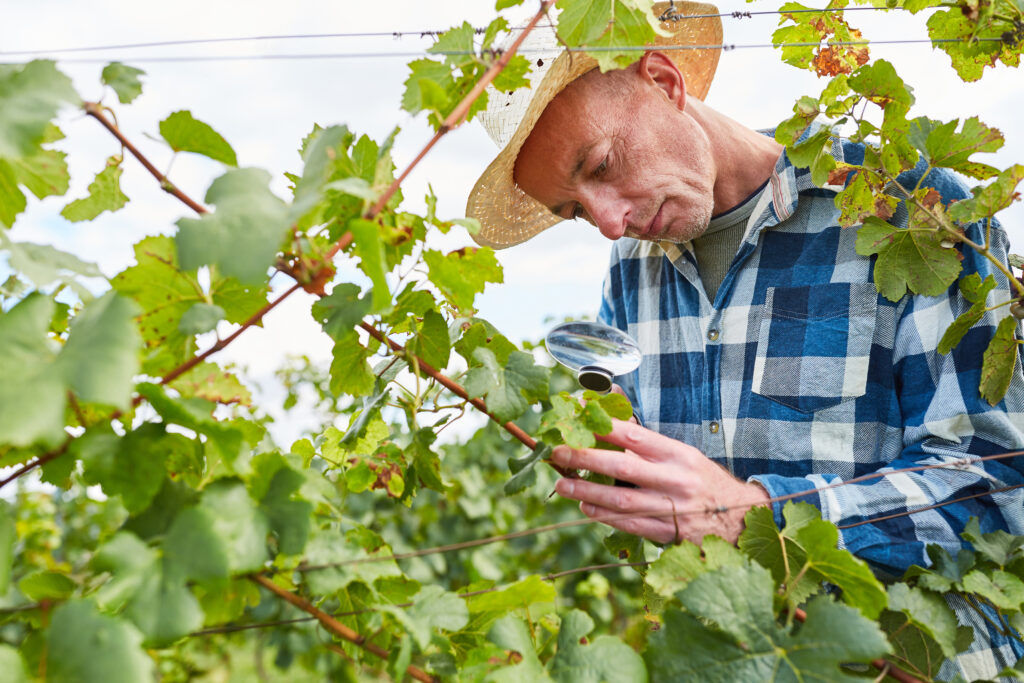
man inspecting crops

Pest and disease management are always on the minds of vineyard managers and grape growers. Because of that, it’s also on the mind of Don Yadon, the Southern California Sales Manager for Sym-Agro Inc, serving the horticultural and agricultural markets with a comprehensive assortment of fertilizers, fungicides, biologicals and pesticides.

  “Because of the potential damage to vines and fruit by the end of the growing season, it’s an annual ritual for both growers and field consultants to focus on Vine Mealy Bugs, Leafhoppers and a trio of mites, including the Two-Spotted, Willamette and Pacific Spider mites,” said Yadon. “Under favorable conditions, mite pest populations can grow exponentially in a short time and overwhelm the vine’s ability to manufacture downstream carbohydrates, leading to less marketable fruit. Mealybug and leafhopper populations have a similar effect but can also devastate fruit appearance and quality.”

  Sym-Agro offers an Organic Materials Review Institute (OMRI) certified solution labeled Cinnerate, an emulsified Cinnamon oil that controls pest mites, mealybugs, and leafhoppers by interfering with the pest respiration system through either physical contact or fuming activity. By its nature, Cinnerate is environmentally and plant safe, working in concert with critical beneficial predators to keep pest populations below threshold levels. In addition, it is a great companion when used with mating disruption products. Cinnerate can be tank-mixed with narrow range oils and can be applied with sulfur if desired.

  “Cinnerate is effectively used with both organic and conventional grapes as a successful and sustainable solution to control pests,” said Yadon. “Applications of Cinnerate are most effective when starting early in crop development before canopy become dense. Cinnerate controls pests through contact, so adequate coverage is paramount for success. Growers using multiple applications of Cinnerate during the season are experiencing less disease and insect pressure, higher quality fruit, and a more robust beneficial predator resume. And early applications naturally result in lower pest populations even before the availability of beneficial predators.”

  Debilitating crop disease is another issue that has to be addressed early. Yadon said that future trends in the wine industry would likely include increases in mechanical field practices, including harvesting and pruning. These increased practices will transform basic vine architecture and impact both insect and disease behavior patterns. Additionally, changing weather patterns combined with the possibility of increasing heat and accompanying water restrictions will impact vines, increase trunk disease pressure,  lessen foliar disease pressure, and impact insect populations and species.

  “Sym-Agro offers a robust lineup of fungicides and bactericides for use on all types of grape crops that includes multi-site mode of action compounds with very low resistance and excellent crop safety,” said Yadon. “Powdery Mildew probably causes the most damage, followed by Botrytis and Sour Rot, so growers dedicate significant resources to assure disease-free grapes. Powdery Mildew is especially problematic, so control starts at budbreak to knock down spores that overwinter and stop the disease from gaining an early foothold. The best Powdery Mildew strategy is preventative and flexible enough to include a curative if an expression starts to develop. Resistance management is also important, so early applications with a multi-site mode of action fungicide with low resistance are the best guard against resistance later in the year. Conditions for favorable Botrytis growth usually show up later in the growing season, but early-season treatments from budbreak to early bloom are warranted if necessary.”

  Sym-Ago’s Instill copper bactericide/fungicide is an ideal choice for budbreak treatments to reduce overwintering Powdery Mildew spores and Phomopsis, a type of fungus. Instill is a low-dose multi-chelated copper that protects new bud tissue. It has 14-21-day protection and is rain safe in just a few hours. Tank mixing Instill copper with sulfur at budbreak enhances control. Instill can safely be used all season long for preventative control of Powdery Mildew, Botrytis, Downey Mildew and Sour Rot.

  Along with being an option for mite, mealybug, and leafhopper control, Cinnerate is also an OMRI-certified replacement for oxidizers or potassium carbonates and functions as a contact curative fungicide for Powdery Mildew. Additionally, Cinnerate is an effective pre-harvest treatment for post-harvest fruit quality in table grapes.

  “And now, our growers have an additional and powerful Powdery Mildew and Botrytis fungicide to use in conventional and organic grapes called ProBlad Verde,” said Yadon. “It comes from the Lupin plant as a seed protection protein and has a multi-site mode of action with meager resistance potential. ProBlad Verde is most effective when used as a preventative, providing 7-14-day protection, and can be positioned as a stand-alone or with other fungicides. Due to its curative and preventative action, it works well early to keep the disease in check and works well after the onset of ripening to keep fruit disease-free.”

  Yadon tells The Grapevine Magazine that Sym-Agro dedicates significant resources to test and validate the efficacy of their products, paying very close attention specifically to offering products that do not mark, spot or damage the fruit. As a result, Sym-Agro offers value-added products with proven, successful, plant-safe patterns of use that result in superior formulations and effective, practical applications.

  “A high percentage of the products we offer are biochemicals or biological and therefore plant-friendly,” said Yadon. “The grower’s plants and trees do not have to manipulate or metabolize any chemicals because they are not alien to the plant. Our products leverage secondary plant defenses that add to plant health, disease, and insect control. In the future, you’ll see an increase in the use of beneficial predators, less dependence on chemical pesticides, and increased use of plant-friendly pesticides and sustainable products that stimulate a plant’s internal defenses via ISR (Integrated Stress Response) and SAR (Systemic Acquired Response) pathways. Fewer broad-spectrum insecticides will be in demand, and we’ll likely see an increased demand for anti-stress products like Sym-Agro’s ECKOSIL to strengthen plant cell walls and make it more difficult for pests to penetrate leaf surfaces. We will also likely see expanded use of mating disruption products in pest control.”

Suterra: Using Mating Disruption To Deter Vine Mealybug’s Destructiveness

  “Vineyard managers tell us that their biggest pest challenge is the increasing spread of the vine mealybug (VMB),” said Emily Symmes, Ph.D., Senior Manager of Technical Field Services for Suterra, a global leader in sustainable pest control. “The vine mealybug is a triple threat because it not only infests and feeds on the fruit resulting in unmarketable bunches, it also spreads grapevine leafroll viruses that eventually kill otherwise healthy vines. In addition, vine mealybugs also produce a sticky residue called honeydew that leads to the contamination of clusters with sooty mold, degrading the value of the crop.”

  Vine mealybug is the primary insect concern because it is an invasive species that also happens to be the most aggressive of the mealybug species that attack grapes. It has more generations, produces more honeydew, and is the only mealybug that spreads to all plant parts, from roots to upper canopy leaves. As an invasive species, there are fewer natural checks and balances in place to help mitigate populations.

  “While there are a few chemical management options available, the more these are used, the higher the likelihood that insecticide resistance will develop,” said Symmes. “The good news is that there are Integrated Pest Management (IPM) options for VMB management that do not pose a risk of resistance development, including pheromone mating disruption products, ant control, and natural enemies such as parasitoids and predators.”

  Suterra has a long history of innovation. Along with helping growers by using unique pheromone-based products to protect crops with zero harmful residues, Suterra was the first company to manufacture products that lower the population of the vine mealybugs by disrupting their mating habits. In addition, their CheckMate® products reduce damage and extend the lifespan of conventional tools by helping fight insecticide resistance and contribute to maximizing the efficacy of insecticide inputs where needed.

  “Mating disruption products have now been shown for decades to be a reliable Integrated Pest Management (IPM) technique,” said Symmes. “The wine and grape growing industry is incredibly progressive and sustainably-minded. As a result, we are seeing more regions establish and take steps to collaborate on programs for area-wide mating disruption, with its use increasing dramatically year over year as growers realize the benefits and return on investment.”

  Suterra’s CheckMate® VMB-F and CheckMate® VMB-XL are synthetic replicas of the vine mealybug sexual reproduction pheromone. Both CheckMate® products can be used to complement any spray program and are compatible with all other integrated pest management IPM tools, from beneficial natural enemies to conventional insecticides. The flexibility and compatibility of the products have led to widespread adoption of mating disruption for vine mealybug since Suterra first registered them.

  CheckMate® VMB-Fis a sprayable pheromone most often applied using conventional vineyard spray equipment and can be tank-mixed with many common agrochemicals. Symmes said they’ve seen aerial applications via drone and helicopter depending on the time of year and vineyard access. Most will use standard spray equipment during the season, typically spraying about every 30 days, depending on the local climate, amount of pest activity, and grape variety. No additional education or licensing requirements exist for the CheckMate® VMB-F application beyond what you’d have for any insecticide application.

  CheckMate® VMB-XL is a membrane dispenser. These are easily attached once per season to the cordon or trellis in a uniform pattern using a specially designed hook attached to the dispenser, allowing them to emit pheromone all season long. CheckMate® VMB-XL is approved for organic production by the EPA’s National Organic Program and is popular with organic and conventional producers who prefer to hang this once per season over intermittent spraying. Based on recent trials in Europe, CheckMate® VMB-XL is the longest-lasting VMB dispenser on the market.

  “By hanging VMB-XL dispensers or spraying VMB-F microcapsules, vineyard managers confuse flying male vine mealybugs so they cannot find females to mate with,” said Symmes. “While naturally reducing the pest’s overall populations and thereby decreasing crop damage, our solutions are safe for all of the beneficial species as well. However, it is important to note that although area-wide mating disruption is not necessary for mating disruption to have great impacts within individual vineyards, coordinated efforts in monitoring and disruption would benefit the entire industry. In many permanent crops, there is a desire to move toward automation when it comes to monitoring which is understandable given labor issues and advances in technology that show potential for this approach. However, fully comprehensive monitoring and visual scouting programs remain the gold standard when we engage with growers. Trap-based monitoring is only one of several approaches to gain the information necessary to develop an effective IPM program, especially for invasive pests like vine mealybug.”

Sustainability Is Key To Long-Term Pest Control

  “We see that most vineyard owners measure sustainability in generations,” said Symmes. “When you’re the fifth generation in your family to grow on land, no one cares more about the sustainability of that land than you. Suterra partners with growers looking to reduce the adverse impacts of pest control in their vineyard and on the planet by avoiding the ever-increasing applications of insecticides. Sustainable pest control, especially species-specific tools like CheckMate® VMB, allows growers to effectively reduce populations and damage while eliminating all non-target species and adverse environmental impacts, leading to healthier waterways, protection of pollinators and other non-target species, and a reduction in carbon emissions from spray equipment. That means improving biodiversity and protecting pollinators, topics that are important to the fruit and wine consumer. It also helps achieve greater worker safety for farmworkers and vineyard managers and eliminates any concern over harmful crop residues.”

Software for Wineries: High-Tech Launches Wineries to New Heights in Productivity

By: Cheryl Gray

staff inputting order in tablet

Wineries worldwide use technology to their advantage when it comes to saving one of their most important assets––time. The right software applications simplify collecting, sorting and maximizing data. The type of software to use often comes down to the winery’s size, its specific needs and finding the best return on investment.

VinNOW

  Wineries with small budgets but big plans can turn to VinNow of Mesa, Arizona. The company was founded in 1999 by software engineer Ted Starr. VinNOW is designed to operate in either a single, stand-alone computer environment or a network of multi-POS operations and multiple locations.

  “VinNOW runs securely on your computer, not in the cloud. This ensures that if you lose your internet, you still have access to all your data and can still make sales. Having the program and your data on your local network also allows for better data security and gives you the peace of mind that you can do your business no matter what,” said Starr. 

“VinNOW is one program, using one database, that stays in your local system’s control. This is the advantage of having been created by winery owners: Knowing the winery environment and challenges.”

  With 40 years of industry experience, Starr and his team have poured their expertise into developing a versatile software program to suit wineries of any size. Starr added that customer support comes from a team knowledgeable in both software engineering and what wineries need to maximize production. 

  “VinNOW is comprised of professionals with many years of experience in both computer technology and the wine industry. Our expert team is intimately familiar with a winery’s needs and has the technical knowledge to offer and support our specialized integrated system for winery management. VinNOW was created by winery owners who are also software developers and have decades of hands-on winery experience. VinNOW offers a personalized and specialized approach that is dedicated to, and in touch with, the business needs of a winery,” Starr told The Grapevine Magazine.

  “VinNOW is dedicated to providing a quality, comprehensive software application specifically engineered to meet the needs of the wine industry. We provide personalized live customer service and support and pride ourselves in remaining a hands-on, efficient company. This means that when you contact us, you will be dealing with someone who understands your needs and can directly and personally handle any question.

  “With VinNOW, you don’t just receive a software package. You enter a relationship with a software company that has been in the wine business for over 22 years and is directly interested in the health and prosperity of wineries. Should you need us, our support team is available seven days a week to assist you with VinNOW. Our VinNOW support team is always eager to answer your questions and assist you with what you want to accomplish.”

  VinNOW, Starr said, is a fully integrated software system that is ideal for managing inventory, customer data, purchase records, tasting room and internet sales. The software program also manages email marketing and wine clubs with automatic credit card processing. For shipping needs, VinNOW generates UPS, FedEx and GLS shipping labels. VinNOW also allows wineries to track those shipments. It integrates with other software programs such as QuickBooks, Vertical Response, Constant Contact, VinoShipper and ShipCompliant. It also can export information to other email systems.   

  Another innovation from VinNow is VinTracker, a bulk wine tracking module. Starr says that VinTracker allows wineries to track products, everything from what wine is in which containers to what work has been performed on-site.

  Starr said that VinNow allows its winery clients to provide customers with targeted messaging rather than generic correspondence, which is vital to keeping and expanding a winery’s client roster. COVID-19 made this function a critically important tool. 

  “One of the challenges wineries have in a COVID-19 environment is keeping in touch with their customers in order to maintain and keep interest in that business relationship. VinNOW excels at data reporting and allowing a winery to target market instead of having to send the same generic message to everyone,” said Starr. “With VinNOW, wineries can create lists for an almost unlimited set of data points. For instance, you have the ability to create a list of people who have purchased above a certain dollar level, a specific varietal, has purchased futures in the past or are just on an interest list or in a specific range of zip codes. 

  “You can then refine your search to target market customers such as those associated or never associated with a wine club, or even inactive wine club members. Any data element that VinNOW captures can be used to create a specific marketing list to meet your needs.”

Dimensional Insight

  Helping wineries keep in touch with their customers is also a focus of Dimensional Insight, in business since 1989. Headquartered in Burlington, Massachusetts, Dimensional Insight is an analytics and data management firm specializing in integrating data from different sources and displaying the information wineries need in whatever way they need to see it. The company’s trademark Diver Gateway product allows access to data on any device. Its applications are specific to the wine industry for both wineries and distributors. Nancy Berkowitz serves as Industry Vice President.

  “Users of our software have the flexibility to do self-service reporting and analytics while ‘diving to the lowest detail’ from dynamic dashboards and scorecards. As a result, they are able to get unprecedented insight into the state of their business, and can make better, more informed decisions that help drive increased sales, bottom lines and customer satisfaction,” said Berkowitz.

  With COVID-19 mandates changing the wine industry, not to mention overall industry-driven shifts, wineries have to focus and pivot quickly. Berkowitz told The Grapevine Magazine that Dimensional Insight can help them do just that for data management and analysis.

  “In this economic climate, where there are fundamental shifts in how people are buying products and what they’re buying, it’s most important for wineries to look at not only the bottom line but also any associated numbers. What is changing? Are these short-term changes or long-term changes? To best assess this, wineries need to look at their outlier data to see what the causes for these changes are and determine how to handle them,” Berkowitz said.

  “It can be hard to pinpoint some of this data when you have huge data sets that pull together many diverse sources. That’s why we have an assisted analytics tool that uses AI to proactively look for these outliers or different data points and helps bring these issues forward for analysts. Wineries should make sure they look at not only sales and pricing data but also all data affecting the changes––operations, marketing, finance, economics and more. Then they can focus on short-term and long-term bottom-line goals based on what they discover.”

  Dimensional Insights also offers its winery and distributor clients other unique options and partnerships to expand their businesses.  

  “We also collect daily invoice level data from distributors for wineries through our BeverageLink division. Dimensional Insight has partnerships with the NielsenIQ as part of the Nielsen Connected Partners program and the National Alcohol Beverage Control Association for data relating to sales, pricing and more.” 

  Berkowitz said that Dimensional Insight looks to the future of winery software to increase its use of artificial intelligence and cloud services because of the large amount of data to be handled. 

  “Artificial intelligence is a focus for software and technology. This must be taken for what it is and must truly be understood by the wineries. Not just the results, but why those are the results of the AI software. Otherwise, the results can’t be trusted. Wineries are moving to the cloud for better service and lower costs. We offer the Dimensional Insight cloud for this purpose. All in all, we see technology continuing to move toward better data integration so wineries can capitalize on the data available such as eCommerce and more.” 

Innovint

  Napa Valley’s InnoVint, founded by Ashley Leonard in 2013, combines the expertise of winemakers and Silicon Valley software engineers with a focus on providing winery clients with mobile, flexible and intuitive winery management software designed to save time and streamline the production process. InnoVint is 100% cloud-based, which means that wineries can access the software wherever they are on any device. The company touts ease of use, saying that small wineries can use the applications in less than an hour. InnoVint offers training and an online support center.

  Experts agree that winery software will continue to be a critical tool for successfully expanding a winery business by keeping a connection with the most crucial element of that success—customers.

How and Why to Use Biologicals and Organics in the Vineyard

By: Alyssa Ochs

lavender crops in a vineyard

As interest in sustainability continues to grow in the wine industry, an increasing number of vineyard owners have become curious about transitioning their operations toward more organic, biodynamic and regenerative agriculture practices. Meanwhile, professionals looking to establish new vineyards or alter certain aspects of their techniques may be interested to learn about the benefits and challenges of taking this kind of approach to increase the vitality of their land and promote the natural health of grapevines.

  It’s important to understand what the use of biologicals and organics means in a vineyard setting and new innovations that are making this approach feasible for vineyards of all types and sizes. Fortunately, there are experienced companies and consultants available to guide vineyards through this process to achieve greater long-term sustainability.

Understanding Organic-Biological Viticulture

  There are a lot of different terms used loosely to describe sustainable and environmentally friendly viticulture. These terms are commonly misunderstood and misconstrued, overshadowing the overarching goal of being as gentle on nature as possible during the grape-growing process. “Biological” refers to the science of living organisms and applying natural sciences to certain structures and processes. “Ecological” is the study of living beings within their environment and is commonly used to describe environmental protection. “Biodynamics,” as it relates to vineyards, involves using natural means and taking cues from nature for growing practices, such as star constellations and phases of the moon. “Biodynamic viticulture” typically means only using organic fertilizers and applying the principles of Austrian anthroposophist Rudolf Steiner to view all aspects of the vineyard as whole entity with a holistic approach. The purpose “organic viticulture” is to eliminate manmade chemicals and additives from the winemaking process. However, the legal definition of what qualifies as “organic wine” varies from one country to another.

  Ultimately, there are various types of products, treatments and strategies that fall under the umbrella of biologicals and organics for winemaking.

  For example, BioSafe Systems provides sustainable products that improve quality and are safe on the environment. Taylor Vadon, technical sales representative for BioSafe, told The Grapevine Magazine that botrytis, powdery and downy mildew are some of the most economically concerning pathogens to treat in grapes because they affect quality and visual appeal. BioSafe Systems’ two most effective organic fungicides are OxiDate5.0 and PerCarb to kill and suppress a broad spectrum of fungal and bacterial pathogens, even ones that may have developed resistance to other fungicides.

  “OxiDate5.0 is a liquid that utilizes peroxyacetic acid and hydrogen to oxidize the outer cell membrane of vegetative bacterial and fungal cells, endospores, making it an effective all microorganisms,” Vadon said. “PerCarb is a water-soluble granular that when put into solution releases 27 percent hydrogen peroxide by weight to oxidize organisms like OxiDate 5.0 but is much more alkaline and leaves a five-to-seven-day residual to inhibit growth. Both OxiDate 5.0 and PerCarb leave no lasting effects on the environment and allow workers to return to the vineyard after sprays have dried, increasing productivity.”

  Meanwhile, Acadian Plant Health is a division of Acadian Seaplants Limited and world leader in biostimulant solutions that are sustainably sourced and scientifically proven to increase crop survivability, yield and quality. The company’s products are used in soil and foliar inputs on over 70 crops in more than 80 countries worldwide

  Holly Little, PhD, the director of research and development for Acadian, told The Grapevine Magazine that her company has seen had many grape-growers gravitate to Acadian® Organic and Stella Maris® Organic products, which offer all the benefits of the conventional product with organic certification and enhanced compatibility with other inputs.

  “Some of the key benefits for sustainable growers are improvements in plant health, including improved root growth and nutrient uptake, as well as abiotic stress tolerance,” Little said. “There are also additional benefits with improved bunch elongation, which helps with airflow within the bunch, which helps limit the environment that diseases like to grow in.”

  Little also said that there are some really interesting things occurring with soil health and soil microbes with regard to sustainability.

  “We’ve found that the use of Acadian seaweed extracts stimulates the beneficial microbial populations,” she said. “This is a really unique response. Many times, people advocate adding soil microbes, but often the soil environment isn’t right for what you add, so it is only a temporary benefit. By altering the natural populations, we believe that this can be a more long-term and sustainable option.”

Benefits of a Biological/Organic Approach

  Now, perhaps more than ever before, it is a good idea for vineyards to start recognizing the importance of biological and organic approaches in their operations and being open to the potential benefits offered.

  Natalie Winkler from Traditional & Biodynamic Vineyard Consulting told The Grapevine Magazine that conventional farming through the use of synthetic fertilizers, pesticides, herbicides and insecticides kills life in the soil. This can result in deep compaction and loss of structure in topsoil, water runoff, erosion and the loss of farmable land. This consulting company specializes in the conversion and establishment of vineyards to organic, biodynamic and regenerative farming systems, with services ranging from “a la carte” to all-inclusive for each vineyard’s unique needs.

  “Simply put, conventional farming is not sustainable because it degrades the soil continuously,” Winkler said. “In opposition, organic and especially biodynamic methods regenerate the soil by increasing microbial life, therefore organic matter, water retention capacity and vine nutrient uptake. Organic, regenerative and biodynamic farming allow us to grow a premium crop every year, while replenishing the soil so it can continue to produce for generations to come.”

  Little from Acadian said that newer and non-traditional products can address the many grape-growing challenges become more numerous every year, such as improving plant and soil health and also aiding in the long-term sustainability of the vineyard.

  “Acadian Plant Health’s products are a good fit for grape-growers looking for a more organic/sustainable management program or conventional program,” Little said. “They offer a range of benefits with one product, and application programs that can be tailored to achieve different objectives in a vineyard, making it easily adaptable to different growing styles and environments. The healthier plants are less susceptible to stress, including disease, and are more productive.”

  Vadon from BioSafe pointed out that even if a vineyard defines itself as “conventional,” organic products may still be best fit for certain applications.

  “In many cases, it has been documented that botrytis, powdery and downy mildews are developing resistance to certain FRAC groups,” Vadon said. “Fungicide resistance management starts with rotating fungicides with different FRAC groups, but in some cases, that is not enough. Using an organic broad spectrum contact fungicide mixed with a conventional fungicide that has the potential to develop resistance, strengthens spray programs by killing resistant and nonresistant organisms, thus reducing the chance for further mutational resistance to develop.”

Challenges of Sustainability in the Vineyard

  However, many vineyard owners are concerned about whether sustainability measures will require more ongoing maintenance and upkeep, if they will be more time-consuming and whether the payoff will really be worth it in the end.

  Winkler from Traditional & Biodynamic Vineyard Consulting said that the biggest challenges in transitioning vineyards to organic, regenerative and biodynamic farming are bringing life back into the soil and subsoil and promoting vine roots to grow deeper to access nutrients and water.

  “The transition period can be stressful on vines because conventional vineyards are often addicted to synthetic fertilizers,” Winkler said. “Weening plants off of fertilizers takes time. The vines must be reeducated into becoming more independent.”

  Winkler said that establishing an organic and biodynamic vineyard from scratch is much easier because getting started in this way from the beginning allows the vines to thrive in their environment because they are adapted to this natural way of farming.

  Vadon from BioSafe said, “Many organic pesticides require more frequent applications to stay ahead of common pests found in the vineyards. If a vineyard has high mildew pressure and has not been sprayed for an extended period, some organic fungicides might not be able to manage to an acceptable level where others could.”

Vadon also said that knowing a product’s strength, such as being broad spectrum, and limitations, such as no residuals, is important for knowing how it fits into your vineyard’s program.

  Little from Acadian pointed out that there are so many products on the market now that make a lot of different claims, so it is nearly impossible to differentiate between products that are effective or not. To address this issue, she recommends looking for data from real and replicated research, peer-reviewed science and on-farm demonstrations.

  “Consistency of biological products can be another challenge,” said Little. “Natural products have an inherent variability, and not all manufacturing methods account for this. Ideally, a manufacturer can show consistency in physical characteristics and bioefficacy over manufacturing times and years. Acadian® Organic and Stella Maris® Organic have been through rigorous quality assurance, and the consistency of our products is of the utmost importance to Acadian Plant Health™.”

Sustainability Tips and Advice for Vineyards

  Experts in the fields of biodynamics, eco-friendly agriculture and organic viticulture have been devising new solutions to common challenges so that these approaches are more practical and profitable for vineyards. Meanwhile, the professionals we consulted about sustainable viticulture had many helpful ideas about how to choose the right solutions for a vineyard and additional ways to focus on responsible grape-growing.

  For example, Winkler from Traditional & Biodynamic Vineyard Consulting said that farm machinery focused on weed management has developed significantly in recent years.

  “One can now find a perfectly adapted implement to almost every vineyard’s soil,” Winkler said. “The combination of a uniquely adapted weed management plan and the introduction of animal grazing can help with timely weed control and increase organic matter. This allows vineyards to move away from herbicide use and build soil health.”

  Vadon from BioSafe said that sustainability comes in many forms but that one of the most important ways to practice it in a vineyard is to rotate a pesticide’s mode of action or in the case of fungicides, FRAC groups.

  “Fungicides have different ways they kill an organism, and continually using the same mode of action back-to-back greatly increases the chances for developing mutational resistance,” Vadon said. “Reducing the chances of mutational resistance developing is the key to keeping the fantastic products available to us in the grape world, viable for years to come.”

  Little from Acadian said that some of the best advice comes from other growers, so learn about their successes and failures and then evaluate how to incorporate their best practices into your operation. She recommended reviewing different products with a critical eye and experimenting with new things while keeping track of what works and what doesn’t.

  “We have a number of different application programs depending on what the key benefits someone is looking for,” Little said. “Soil applications throughout the season are beneficial in building soil microbial populations and with plant stress resistance. Soil applications during natural root flush times will increase root growth leading to enhanced nutrient and water uptake. Foliar applications will help improve stress resistance, but also increase bunch length early season and help with uniformity of growth. When it makes sense for the grower, I recommend a combination of foliar and soil applications of Acadian Organic® or Stella Maris® Organic to gain the most benefits.”

Is Your Wine Club Keeping Up With Modern Subscription Models?

By: Gaynor Strachan Chun

If COVID taught us nothing, it is that re-occurring sales are key to survival, and that customers are surprisingly resilient and creative with changes in channel or delivery methods. The post-COVID conversations around alcohol distribution include the so-called “fourth tier” of instantaneous delivery (Instacart), and online options like buy online now and pick up in store later (BOPUIS).

  At the same time as these channels evolve, the elasticity of the traditional Wine Club is stretched as well. It is now estimated that the average person is a member of two re-occurring subscriptions and 35% belong to three or more. 

  Why are we moving so swiftly into a subscription economy? For wine, it’s a perfect storm of three factors.

1. Our culture of consumerism is changing. The mindless and haphazard consumerism of old is giving way to thoughtful and curated purchases where the brand and its products add value to our lives. This significant change in consumer thinking and behavior has fueled, among other things, the rocketing growth of subscription models. Subscriptions meet the needs of concerns such as waste reduction and finding quality time with family. And, wine clubs need to catch up to remain relevant, resonant and competitive.

2. We’re curious. The primary consumers for subscriptions are young urbanites, 25-44 years old. What they have in common is a sense of discovery. They want to try new things and like being presented with options. Most subscriptions offer monthly mystery boxes, surprises, or trial sizes, giving customers a new product to try. This brings an additional level of excitement to the unboxing experience and gets consumers to expand their product knowledge and preferences.

3. We don’t value “saving” like our parents did.Our parents wanted the lowest price so they could show off the best quality brand they could afford. The new consumer is interested in saving time. The financial incentive is there, but you can’t just give a small discount to this group and expect to call it a day on your benefits alone.

  Only a few years ago, the model was simple. You joined a club to gain exclusive access to products and VIP perks. These membership clubs were found in categories such as luxury apparel, food and wine.

  However, with the onslaught of COVID, the dramatic increase in E-commerce, digitally native brands, and the growing influence of the Millennial mind-set and their expectations as consumers, the world of “clubs” has evolved. The consumer has moved on. Have you?

3 Subscription Models Have Emerged

3 Subscription Models

  A McKinsey Report lays out the current state of subscription models very clearly. What jumps out is that the traditional model of Subscribe for Access has been usurped by the newer models of Subscribe for Replenishment and Subscribe for Curation. And, while Subscribe for Replenishment accounts for a healthy one third of subscriptions, it is not a relevant category for wine clubs given its focus on essential household, wellness and grooming products. Which leaves the wine industry needing to evolve the traditional wine club model, beyond offering a choice here or there, to compete within Subscribe for Curation.

  What does this mean? Successful Subscribe for Curation offerings have the following imperatives as the foundation of the subscription offered:

•   Move from a focus on transactions to long-term relationships.

•   Shift from acquisition focus to retention.

•   Shift from selling products to selling experiences

•   High levels of personalization, flexibility and surprises.

•   A highly anticipated unboxing experience.

•   Impeccable customer service.

  In other words, focusing on delivering a great experience that puts the consumer in charge of what they order and keeps them coming back for more by including gifts, exclusive content, and other surprises.

Attracting New Subscribers and Keeping Them

curation subscription initiation and cancellation triggers

  Wineries traditionally relied on converting their tasting room visitors to club members. However, attracting members who will never visit your tasting room is an increasingly important consideration in any conversation around future revenue growth. We all know a subscription model is good for business – it delivers increased and predictable revenue, contributes to savings in customer acquisition spending, increases loyalty and lifetime value, and can reduce operational costs due to predictable demand. Therefore, understanding the triggers that cause a potential subscriber to sign-up and those that cause them to cancel is a critical component when evolving your current club model to a subscribe for curation model.

  The initiation triggers point to consumers’ desire to discover new things and especially, new things someone else recommends. A strong social media presence and refer a friend incentives are key to this discovery process. Cancellation triggers hinge on the experience – either the overall experience or the perceived value for money vis-à-vis the experience. Given the need to elongate subscription lifetime values, every step of the experience offered needs to be executed at the highest level. Consumers not only expect it, but they also know what a great experience feels like. After all, the average consumer now has somewhere between 3 and 10 subscriptions (excluding media and entertainment.

Less is More

  There is a reason most companies only offer 3 levels of subscription. Our brains think in threes. More choices are not better. They can cause confusion, delay the decision, or result in the potential member walking away.

  Rather than thinking about the subscription levels from your product line-up perspective, structure the levels from the consumer’s perspective – I want you to curate this for me, I want the option to add from a defined list, I want to make all the choices for myself. This will help reduce the number of levels and increase conversion.

Looking Ahead

“The measure of intelligence is the ability to change”

-Albert Einstein

  There’s never been a greater time than now to be open to evolving our business models.  Changes in demographics and consumer trends have been coming for years and wineries who aren’t willing to look at adapting their Wine Club programs leave themselves open to becoming less relevant with consumers as the attitudes and behaviors continue to evolve.   Gaynor Strachan Chun is the Director of Strategy at WineGlass Marketing, a full-service direct marketing firm working within the wine industry in Napa, California.www.wineglassmarketing.com.

Why Everyone is Talking About Organic Wine

By: Hanifa Sekandi

2 red wine glasses

Is organic wine a hangover cure? Could this be the answer you have been looking for to quell your day after Reisling’s woes? If it is possible to imbibe and wake up early without the thunderous plus of a headache to remind you of the night before, then surely everyone wants in on this vino du jour. Eating organic greens, grass-fed meat, and poultry and reading the labels of packaged or premade foods to see if they contain preservatives has become ever more pressing. Understanding the connection between what goes into our body and how this impacts one’s overall well-being is at the forefront of consumer goods. It is not just the food industry but also the beverage, wine, and spirits sectors. The scientific revolution ushered in a lot of excitement where increasing the shelf life of food with the use of additives seemed like a promising endeavor.

  Sometimes novel ideas have a downside. In the case of preservative-laden consumer goods, things are not always as they seem. The zealous approach to preserve anything and everything did not take into account the impact such ingredients may have on individuals on a long-term basis. Yes, one could argue that not all additives are bad for you and are necessary. Particularly when one thinks of vintage wines that would indeed spoil without the use of sulfur dioxide (SO2). You are certainly not going to find an organic aged Bordeaux or Pinot Noir that is organic. Alas, most wine enthusiasts understand this and know when purchasing organic wines that the lifespan is short therefore, these wines are meant to be enjoyed upon purchase. The distinction of what constitutes an organic wine is not universal and differs from country to country. The United States has taken on a more stringent approach than Europe and Canada.

What is Organic Wine?

  Since the designation of organic wine varies around the world, it is a case of it depends on where you live. This requires consumers to do their due diligence and research to understand that not all organic wines, although placed in the organic wine section, are made the same. Some organic wines may contain sulfites. If an allergy or sensitivity is a concern, then knowing how to read wine labels is essential. You might be wondering, what exactly are sulfites? Sulfites are preservatives used to maintain freshness and prevent bacteria growth, and in the case of wine, to reduce oxidation.

  Sulfites also influence the taste and appearance of wine and increase shelf life. So that well-aged full-body vintage wine contains this preservative. For some people, sulfites are a sensitivity or allergen that may result in side effects. This ranges from a headache to a rash, hives, stomach pain, swelling, and in severe cases anaphylaxis. Wine free of added sulfites is favorable for individuals with this concern. Keep in mind that even organic wine contains a small amount of naturally occurring sulfites.

  In the US, wines that are labeled organic must be made with organically grown grapes. Winemakers adhere to the rules and regulations of organic farming therefore, the use of fungicides, pesticides, chemical fertilizers, and herbicides is not allowed. The same standard used to evaluate organic foods by the United States Agriculture department is used to assess organic wines. There is no acceptance for simply using organic grapes. It also extends to how the wine is harvested and the yeast utilized for fermentation. Also, how the wine is stored must follow organic processing standards to receive a USDA organic certification. Before storage potassium metabisulfite is used to sterilize and sanitize non-organic wine barrels which would, in turn, impact an organic wine and hence is not permitted. Another rule is that additional sulfites cannot be added to organic wine and if so, it will not be deemed organic by the National Organic Program.

  A wine bottle labeled as “Made with Organic Grapes” signifies that this vintner used organic grapes for their wine but there are added sulfites. Winemakers who choose to produce wines with preservatives are permitted to use non-native yeasts (yeast that is not organic) during fermentation. They may also use up to 100 parts per million additional sulfites. In Canada and Europe, sulfites are allowed and this distinction is made on wine labels. If you see a wine labeled “100% Organic” in Canada, this means that it is made with certified organic grapes and does not contain added sulfites. A regulation distinction that falls in line with the regulations found in the US. A wine with this certification would be permitted for sale in the US since it meets the strict requirements. 

Not All Wines Are Made Equal

  The European Union has allowed the terminology “organic wine” on wines made with organic grapes but contain sulfites. Whereas organic wine in the US must contain less than 20 parts per million of total sulfites to get an organic seal of approval. This departure in regulation has limited European wineries who consider their wine as organic to enter the US market and be designated as such. Vintners in France and Canada, for example, countries that both allow for some leniencies. Argue that additives permit stabilization and longevity of wines. No preservatives mean these wines have a short lifespan — only a few years after bottling. 

  The solution would be to pivot the same way the food industry has and look for organic preservatives to maintain the integrity of the wine. It is hard to change a processing practice that has proven fruitful and effective. Further, this niche wine selection is still in its infancy. Perhaps the growth in organic wine consumption in places like France, where the drinking of organic wine has seen a dramatic increase in the last few years and continues to grow. May usher in an innovative way to preserve wines. Germany is the leading organic wine-growing country.  Vintners in Germany could take the helm and steer this aim in the right direction. If it can be done in the food industry, it is only a matter of time before an expert winemaker finds the solution or middle ground.  So there can be a fair import and export of organic wine trade with European, Canadian, or other organic winemakers worldwide who have a strong desire to enter the robust organic wine market in the United States.

  As more vineyards in France convert to organic they may take the lead as premier organic wine producers and surpass Germany who has the most amount of organic vineyards. With an increase of organic wine producers in France, which houses approximately ninety percent of the global organic wine-growing regions. France has a surplus of wine reserves more than the percentage of organic wine drinkers in its country could possibly drink. Hence, getting access to more consumers in this niche is essential. The US, with its strict regulations, has a high demand for this niche market. But, it lags considerably behind other organic wine-producing regions in production.

An Organic Viniful Future

  By 2023 an estimated 1 billion bottles of organic wine will be consumed. Germany takes the lead with the consumption of the most organic wine consumed. But this might be due to availability more so than popularity; proximity and ease matter. And setting a high standard for quality and wine cultivation has been the norm for German vineyards for decades. 

  Whether or not wine-producing countries will agree on what makes a wine organic. The reality is there is a demand for wine producers to not only take on sustainable cultivation methods but also consider what goes into each barrel of wine they make. As trendy as hangover-free wine may be, it is more than just about staving off a headache it is about the food and beverage industry’s responsibility to their consumer. Understanding that there need to be options. There is a fine balance that can be met.

  Further, organic wine enthusiasts are not necessarily bidding adieu to classically-made wines; they simply desire choice. If organic wines could be the answer to hangovers or possible side effects for some, it is worth exploring for those looking for an alternative. Of course, there is no direct evidence to support the notion that organic wine is the answer wine drinkers have been looking for to solve a dreaded hangover.

  It cannot be argued that people are finding that organic wine does not have the same side effects as its older sibling wines that contain additional sulfites. This is why it has gained a lot of popularity among health-conscious consumers who tout this day-after pleasant effect.  Another step that organic winemakers are moving towards is producing wine with lower sugar content. This coupled with no additional sulfites could be a winning strategy since high sugar content in alcohol is also responsible for the horrible day after feeling that many feel after one too many.

  As the organic wine industry grows and consumers demand cleaner options. The old school way of making wine and the new school approach will need to find a happy medium. So, wine drinkers can continue to experience the rich history of a slowly-aged oak barrel wine while welcoming a fresh organic wine that compliments a modern lifestyle.

Notable Organic Wines

Dry Farm Wines: This vineyard goes a step further and calls its wines pure Natural Wines. They take on a purist approach when it comes to farming and harvest pure natural wines that are not only lower in sulfites but are sugar-free, vegan, biodynamic/organic, free of toxins, contain lower alcohol and keto, and paleo-friendly. Sounds like wine magic, right?! This winery offers a great selection of reds, whites, rose, and sparkling wine. They offer you an opportunity to try a box of different wines and if you would like monthly subscriptions.

Frey Vineyards: As the first US winemakers to be certified organic and biodynamic, Jonathan and Katrina Frey have been crafting organic wines for over forty years. A standout quality of the vineyards where their wines are made is that they use a biodynamic farming method which means that the natural habitat where their vines grow is cared for with consideration of the animals and plants that inhabit the land. The 2018 Biodynamic Chardonnay with a smooth vanilla creamy finish is a delightful organic selection.

How’s Your Mouth Feel?

By: Tod Stewart

couple drinking wine

The latest vintage of Domaine de la Bon Bouche sets the lips tingling as if tickled by the eyelashes of an angel as it flits on gossamer caresses, coming to alight gently on the tongue. Resting its silky wings, it envelopes the palate in a cocoon of velvety, glycerol-induced unctuousness. Wrapped in a creamy, viscous robe, it perches supplely on the papillae, mustering the steely resolve required to resume an ultimately suicidal (though heart-arrestingly warm and generous) slink down…down…down. Without gritty tannin, without harsh heat, without even a suggestion of chalkiness, it bids, adieu mon amour to my spent taste muscle and departs in a gush of crisp, crunchy yet at once satiny tactile replay.”

Sick of this yet?

Me, too. So let’s get on with it.

  Obviously Domaine de la Bon Bouche is not a real wine, winery, or marketing gimmick (okay, hold that last possibility). Nor is the “review” the product of a real “wine writer” (though considering some of the reviews I actually have had the displeasure of reading, it’s not much of a stretch to think it could be).

  However, if you study that exercise in vinopomposity you’ll notice something interesting. Not once…once…were aromas and flavours ever mentioned. Coincidence? I think not (mostly because I wrote it that way on purpose).

  The point, insofar as there is one, is that there’s a dimension to wine (and spirits and beer and all the other goodies that slide over your palate) that goes beyond smell and taste. It is the middle ground between light and shadow, between science and superstition, and it lies between the pit of man’s fears and the summit of his knowledge. This is the dimension of imagination. It is an area which….(Sorry, but I’ve been dying to shove the “Twilight Zone” intro into one of my bits.) Actually, it’s the dimension of the tactile and it is the zone where those elements that give wine textures roam. The things that make them “silky” or “furry.” “Gritty” or “velvety.” “Round” or “sharp.”

  A highly extracted Alsace Gewurztraminer can come off as almost oily or “creamy” on the palate. A brisk, unoaked Chablis can be steely. A raw young Cabernet will be puckeringly astringent. These non-flavour components are responsible for what the cork dorks generally call “mouthfeel.” When a wine has a particularly noteworthy mouthfeel you tend to resist the urge to swallow it right away. Instead, you hold it in your mouth, roll it around, maybe even chew on it a bit before sending it on its way.

  Some of you, perhaps a very few of you, might care to know where these textural elements originate. Given that I fall into the latter group, and I’m writing this, I’ll give it a brief once over then let the truly curious Google the night away.

  Rumour has it (or maybe it’s actually the truth, who knows, but I’ve got a deadline pending and can’t waste too much time researching), that two French dudes named Semichon (which, translated, means “half chon” and shouldn’t be confused with Semicornichon, which, translated, means “half little pickle”) and Flanzy (whatever) suggested (to whom nobody is sure) that substances called pectins produced tactile sensations in the mouth. (Actually, a fellow named von Follenberg discovered these things in 1914, but it’s harder to riff on his name.)

  Pectins fall into the larger phylum of polysaccharides, and within this party of “Ps” reside a few interesting members including Arabinogalactan proteins (AGP’s – originating in a galaxy far, far away populated – secretly – by those of Arabian descent), Type II Rhamnogalacturonas (RG-IIs; sung, albeit with difficulty, to the tune of The Knack’s My Sharona) and Mannoprotiens (MP’s; typically found dozing in Canadian parliament but also, apparently, found in wine – or into wine, as the case may be.) By the by, I’m not making this stuff up, at least not the names; the descriptors are, however, proudly my own.

  I’ve never really been a “leg man” when it comes to wine (and let’s just call them “tears” instead of legs), but the thickness of those somewhat syrupy-looking trails that slither down the inside of the glass point to the presence of glycerol (and alcohol). The more glycerol the “oilier” or more viscous the wine will feel on the palate.

  Anyway, numerous tests concluded that these fine thingamajigs do, in fact, combine to alter the textural nuances of a wine. And efforts have been made, usually by the pointy-heads, to analyze, categorize and compartmentalize tactile variants. The results, for good or for ill, being “texture wheels” (similar to the oft-cited UC Davis “aroma wheel”).

  So now we know what creates texture in wine. But what causes textures to differ? The answer is found in both nature and nurture. 

  “But how is this going to impress my dinner guests/date/boss/Arabinogalactan-in-waiting?” you whine annoyingly. To which I answer, “All good things in time, grasshopper.” But seeing as there’s no time like the present, here we go.

  If you think about it, texture factors largely in how a wine will tango with a particular morsel of food.

  The zesty, electric acidity and mild sweetness of a kabinett level German Riesling offers the perfect foil for a creamy/salty dish, while the cleansing sparkle of a fine glass of fizz drums down the oily character of smoked salmon. The drying astringency of an austere young Bordeaux can be quelled by the proteins in a rare steak. And like the flavours and aromas of a wine, its texture can change with age.

  Some feel that the texture of a wine is the most important aspect of the whole experience. David Ramey of Sonoma’s Ramey Wine Cellars is one of those types. How important is texture to him? “From my perspective, it’s huge. I don’t care if a wine smells like apples, peaches or whatever, but I really care that it feels good in my mouth. Focusing excessively on a wine’s aroma is like focusing on cologne while making love – it’s not the main event.” I’ll take his word for it.

  Here’s something you can try at home (where else these days?) with minimal cash, fuss and planning that will show you how wine and food can both complement and contrast, and how important the textural aspect can be in making food and wine matches work.

  Get yourself a brisk, zesty Sauvignon Blanc (Loire Valley, Niagara, California, New Zealand, etc.). Hit up the cheese monger for a creamy/crumbly young goat cheese, and the fish monger for a few fresh East Coast oysters. Don’t mess with the purity of the oyster by adding gloopy condiments; knock it back au naturel on the half-shell and follow it with a gulp of the wine. The bracing acidity of the wine marries nicely with the briny bivalve creating a sensation of textural lightness. Now try the same routine with the cheese instead of the oyster. The tang of the young cheese matches the zippy grapefruit zing of the wine, but its palate coating creaminess welcomes the wine’s cleansing quality. A great textual match, but on an entirely different level.

  I recently (finally) got out of the house to celebrate the reopening of Chef Daniel Boulud’s Café Boulud in the swanky Four Seasons Hotel Toronto. Not only was I treated to a rather spectacular lunch (with some to-die-for duck), I also had the extreme pleasure of matching the various dishes with wines from one of my favourite Champagne houses: Ruinart. I asked the hotel’s Wine Director and Sommelier, Julie Garton, what her views were on the importance of textural elements in wines.

  “Texture in wine can be very important for pairing,” she informed me, “especially with red wine as it tends to have higher tannin levels. Many factors contribute to the texture/tannin level of wine, including the thickness of the grape skins, ripeness of the grapes, length of maceration and the vessels used to age the wine. Together, these factors can create different textures which can be described as silky, firm, plush, or grippy. As a result of the texture, the wine can pair better with different foods and cooking methods. White wines aren’t without textures either. Certain wines are known for having a creamier or oily texture despite having tannins.”

  She also mentioned that texture helps to balance the respective weights of both the wine and the food matches. Champagne, she assured, made for a fantastic food-pairing partner, notably due to its textural elements. I nodded in agreement (as it is rather bad manners to talk with your mouth stuffed).

  “The bubbles can certainly help to add a creaminess to the texture of the wine. However, often the production method, for example, barrel fermented and aged, along with the dosage level and the type of grapes used tend to have the largest impact on the weight and texture of a Champagne. An Extra Brut Blanc de Blancs will often feel leaner on the palate than a Blanc de Noirs, or a Vintage Champagne, which with age will show more richness.”

  Favourite matches? “A pairing I’ve always loved is Champagne with fried chicken,” she admits. “Champagne is great with fried foods because of its high acidity. The acidity and the bubbles help to cleanse the palate and cut through the fattiness and oiliness of the dish.” Which also confirmed another wine and food rule: simple wine with complex food; complex wine with simple food.

  In the end, writing about wine textures can be a bit difficult, mostly because it’s writing about something we feel. And what we feel, as we all know, often goes beyond words. 

Non-Fungible Tokens The Continued Evolution of Blockchain Use

bitcoin rested on laptop
A non-fungible token (NFT) is an original, autochthonous asset of value that cannot be replaced with an identical asset. An NFT has a unique, traceable print that has the capability to take on disparate forms and fluctuating values based on market or other forces for trade in a monetary or financial transaction.

NFT’s are specific units of data stored in a digitized blockchain, usually for the purpose of covert exchange between parties. Because an NFT has a unique digitized signature, it is nigh impossible to replicate but easy to assign value as agreed upon between parties (buyer and seller) using a “smart contract” as the agreement vehicle.

For example, an artist may digitally create an image authenticating it using blockchain. However, when purchase of an NFT does not necessarily convey the bundle of legal rights generally associated with ownership of a physical or digital item – it instead conveys ownership of a unique token identifier associated with that NFT. The token identifier is unique but traceable and stored in a public database that serves as a ledger. Anyone can verify data regarding the image: who created it and when, ownership, tracing ownership, etc. This is a secure transaction because the authentication marker as part of the blockchain cannot be copied. It is digitally secure and digitally traceable to the source.

Digital art, a cartoon, a memory collage-like tokenized collectibles, a pair of gym shoes, an important tweet can be sold as NFT’s through the blockchain. The ability to use NFT’s as a method of payment and smart contracts as a contracting vehicle allows anyone who understands the technology or at least understands this digital process to buy and sell worldwide in a secure, traceable environment. The first NTF transaction happened in 2014 with a tradable blockchain marker affixed to the digital artwork.  In the first quarter of 2021, over 200M was spent on NFT’s using online platforms.

Smart contracts, blockchain technology, and NFT’s are the trading blocks to be used in place of traditional contractual vehicles and hard currency. Understanding how this technology works will help clients avoid being taken advantage of by an unscrupulous contracting partner or running afoul of tax, ethics, and other regulatory compliance requirements. Blockchain and NFT’s are here to stay.

Dan has practiced law in Silicon Valley since 1977. The Firm’s practice is limited to regulatory law, government contract law, and international trade law matters. Dan has received the prestigious “Silicon Valley Service Provider of the Year” award as voted by influential attorneys in Silicon Valley.

He has represented many very large global companies and he has worked on the massive US Government SETI (Search for Extra Terrestrial Intelligence) project as well as FOEKE (worldwide nuclear plant design certification), the Olympic Games, the first Obama town hall worldwide webinar, among other leading worldwide projects.

Dan has lectured to the World Trade Association, has taught law for UCLA, Santa Clara University Law School and their MBA program, lectured to the NPMA at Stanford University, and for the University of Texas School of Law.

Dan has lectured to various National and regional attorney associations about Government contract and international trade law matters. He has provided input to the US Government regarding the structure of regulations relating to encryption (cybersecurity). He has been interviewed about international law by the Washington Post, Reuters and other newspapers.

He is the author of four books unrelated to law, one of which was a best seller for the publisher, and of dozens of legal articles published in periodicals, technical and university journals distributed throughout the world. He serves as an expert witness in United States Federal Court regarding his area of expertise.  

MINUTILLO’s e-newsletter and all of its content is provided for information and very general purposes only. It is not intended to provide or offer any specific or general legal advice, or to create an attorney-client relationship. Before acting or relying on any information provided in this e-newsletter, consult an attorney who is an expert in the appropriate field of law. 

Vineyard vs. Vineyard: Water Is The Great Unequalizer

grapes submerged in water

By: Orest Protch

The Impact of Water Irrigation is more then turning on your Sprinkler or Drop Irrigation. Although the water you see may look, well, boring, when you delve deeper into its secrets, you are entering the realm of rocket science, with a dash of magic and a pinch of voodoo.

  Vineyard water chemistry is more than just pH and a few other high school level chemistry tests. It can possibly explain why some vineyard wines can be award winning some years and other years be best forgotten.

  Vineyards take their raw water from lakes, rivers, water wells and in some cases use treated potable municipal waters. No two waters carry the same chemical and nutrient loading. And this loading taken from the same source can even vary daily, monthly and yearly.

  One side of a lake may have different water chemistries than the other due to the way water flows through it. It can have numerous streams and rivers feeding it, each draining a different watershed. These may be draining mineral outcroppings, storm sewers, municipal wastewater plant discharges, mines, farms and even burnt forests. Each of these will add differing kinds and amounts of chemical elements and compounds to waters. Even a few hundred meters apart, water samples will show varying amounts of TDS, total dissolved solids and TSS, total suspended solids. One stream may discharge its nutrient load farther into a lake than another.

  As an exercise, If your vineyard is on a lake or river, download a satellite image and mark its location in relation to all of the above. You may be shocked at what you see.

  At one point in my career as a research chemist in a pulp mill first owned by Proctor & Gamble and then by Weyerhaeuser, I believed that the seasonally changing chemistry of incoming river water for the mill was impacting the final pulp fiber morphologies in different ways throughout the year. The mill pumped in 6.3 million litres per hour, 24 hours a day.

  I proved that individual elements such as iron, calcium and sodium in the river water, in parts per million (ppm) and parts per billion (ppb), were impacting the final processed fiber properties by interfering at the chemical bonding sites of the fibres at the molecular (atomic) level. 15 pulp mills in both corporations changed the way they ran their processes.

scientist using atomic absorption spectrometer with graphite furnace
The author in 1997 using an AA, atomic absorption spectrometer with graphite furnace, to do accurate and precise river water analysis. His stereoscopic microscope photography work was later verified by using scanning electron microscopes by corporate chemistry PhD’s.

  I then carried this type of testing later in my final career as a senior lab technologist for an oil company using an ICP-OES, (Inductively coupled plasma optical emission spectrometer). The flame of this instrument burns at a temperature 2,000°F hotter than the surface of the sun. I measured elements down to the very low ppb level and high ppt levels in daily/weekly process and environmental samples from lake water, river water, fresh water wells and brackish water wells. Even in the harsh industrial environment of oil production, as in the pulp mill, the changing water chemistries manifested their effects.

The author in 2018, as the senior lab technologist for an oil company, using an ICP-OES (Inductively coupled plasma optical emission spectrometer) to do elemental analysis of various types of water samples down to the very low ppb, high ppt level. The plasma flame burns at a temperature 2000°F hotter than the surface of the sun.

  Plant roots absorb the waters and simple elements such as iron and cobalt and along with plant enzymes and biological catalysts, create the complex chemicals in grapes. Throughout the complicated grape’s biological chemical processes, water chemistry changes can inadvertently modify chemical reactions and the final reaction product can change.

  What happens in a vine is the equivalent to the most complicated industrial chemical processes known.

 A vine takes simple elements from the water and soil and creates extremely complex molecular chains that would take the largest industrial facilities to duplicate.

During all chemical reactions, elements and chemical compounds look for reaction bonding sites and at the molecular level zero in on specific locations of individual molecules of plant cells. Plant cells absorb these and start creating sugars, acids, phenolics, ethonals, enzymes, montoterpenes and a host of other products that give the mature grape its final properties. But as in all complex chemical reactions, simplicity does not exist. Different atoms, due to their concentrations, may battle it out for molecular bonding sites.

  Elemental bonding sites are the drivers of all reactions. Some chemical bonds prefer other elements if they are available and so the final molecule may not be the one a vineyard wants in a grape. It all comes down to concentrations and availability of needed as well as competing atoms.

Chemical reactions do not occur with the grace and choreography of synchronized swimmers forming their final complex shapes. Instead they are more like the chaos found on the rugby field where each element tries to be the alpha and fights and blocks for supremacy and forming what can either be a desired or undesired molecule. One misallocated atom can change the properties of a molecule and a grape.

  Figure 1 is part of an actual 2019 Government lake water analysis report for the local vineyard industry. If this report had been generated by a third party commercial laboratory for me at my previous work position, I would have rejected it. Look at the number of decimal places and zeros of elements such as cobalt and iron. Research papers show all the elements in the figure are important for grape development. This analysis was obviously done on a very basic ICP, Inductively Coupled Plasma Spectrometer, found in all commercial labs.

table showing 2019 Government lake water analysis report for the vineyard industry

Figure 1: Part of a 2019 Government lake water analysis report for the vineyard industry. Most industrial chemists would reject it outright. The number of decimal places to the last number indicate the lower detection limit of the instrument used and the ‘<’ sign is like a flashing hazard light to question the analysis precision and its worth to you.

  Figure 2 is the type of analysis that an instrument like the ICP-OES that I used can give. It can reach detection levels by a factor of 100 to 1,000 lower than a basic ICP. In this case the difference between the detection limit of 5 decimal places in cadmium and chromium with 6 decimal places was the quality of the standards used to calibrate the instrument on a daily basis. Analytical standards can vary batch to batch.

Analysis from an ICP-OES
Figure 2: Analysis from an ICP-OES adds more decimal places making it more accurate and useful for better understanding of actual water chemistry.

  Why is it important for vineyards to have the most accurate and precise analysis of their waters? Just like in metallurgy and metal standards, trace amounts of elements can have large impacts on chemical and physical characteristics.

  The analysis report in Figure 1 lists iron composition at <0.010 mg/L. This is completely useless information for a vineyard and a waste of test analysis money.

  What if the mg/L of iron required to make a grape that creates that reproducible excellent wine that you are striving for is between 0.0012 mg/L and 0.0079 mg/L and anything out of that range changes your grape’s characteristics? This kind of tight elemental tolerance is the most critical aspect of a metal’s metallurgical grade. Why would the extremely complicated chemical composition of a grape be any different?

lab scientist analyzing sample

  The best instrument for extreme lower detection limits is an ICP-MS, Inductively Coupled Plasma Mass Spectrometer. It can not only easily go to the very low ppb, but to the very low parts per trillion range. A basic ICP will cost about $75,000, (all these costs in CDN$) an ICP-OES $140,000, an ICP-DRC (Inductively Coupled Plasma Dynamic Reaction Cell) $200,000 and an ICP-MS upwards of $500,000. All contract labs will have an ICP, some will have an ICP-OES and perhaps a few an ICP-DRC and only a very few will have an ICP-MS. For any given sample, the analysis cost reflects the cost of the instrument and the professional level of the analyst. For example, an ICP water analysis may cost $100, an ICP-OES analysis $150, ICP-DRC $200 and using and ICP-MS $300.

  These are all just examples and the actual costs will be determined by working with your contract lab’s client account manager. If asking for XRD analysis for leaf and soil analyis, there is only one lab that I know of in Canada where the analysts are all PhD’s. I only used that lab. You get what you pay for.

  Remember, this is a long term endeavor, much like your goals to create great award winning wines year to year.

  Your winery, land and associated equipment are worth many millions. The quality of your wines and your reputation is priceless. Do all that you can to win awards every year. In the next article we can discuss the rocket science of soil chemistry. Cheers!

Determining Which Vegetative Index is Best for Your Vineyard

a vast vineyard

By: Michelle Podolec, Extension Suport Specialist, Cornell AgriTech

The Takeaway

•   Canopy sensors are optical devices that use reflectance at different wavelengths to differentiate between healthy, vigorous plants and unhealthy, stressed plants. The information gathered using the sensors can help vineyard managers identify and address vineyard issues.

•   Optical sensors used in canopy sensing have improved a lot over the 45+ years since the introduction of normalized difference vegetation index (NDVI). NDVI was one of the first vegetative indexes (VI), and uses satellite-based optical sensors. It is still the most commonly used vegetative index in viticulture.

•   Other vegetative indexes use combinations of different wavelengths to measure canopy attributes. This may not only indicate leaf area “quantity” but may also identify information about leaf healthy or quality, and may add additional information to the vine size prediction.

•   More recently, affordable tractor-mounted sensors have provided close-range metrics of canopy density and health.

•   In this study of different VI, there was no clear overall winner. Researchers suggested the development of a multi-VI application that would allow vineyard owners to customize to their unique vineyard traits may offer a future potential for innovation.

vineyard apparatus in determining the vegetable index

Background

  Canopy sensors are used to differentiate between healthy, vigorous plants and unhealthy, stressed plants. The sensors used in canopy sensing have improved over the 45+ years since the introduction of normalized difference vegetation index (NDVI). NDVI was one of the first vegetative indices (VI), and uses satellite-based optical sensors. Currently, vineyards use proximal reflectance sensors (e.g. CropCircle) to collect spatial information on grapevine canopy NDVI. The information gathered can help vineyard managers identify and address vineyard issues. Most previous studies use NDVI, but there are many new modes available.

  When used, sensors are aimed at the actively growing region of the canopy throughout the season to determine leaf area “quantity” (i.e. are there a lot of leaves in the region of interest or not?) Could researchers identify the most effective VI currently available?

Methods

  In this study, researchers used the Taylor et al. (2017) protocol of sensing surveys to review a variety of commonly utilized vegetative indices and see if the most effective combination or approach to vineyard analysis could be identified. Using this method, the researchers showed that strong vines will have a high NDVI signal and weak vines will have a low NDVI signal and this correlates with vine size (measured as vine pruning weight in dormancy1). Therefore, we can use NDVI sensors to spatially map vineyard vine size and use it in our spatial crop load (Y:PW ) calculation2. Each VI was ranked, and the paper contains a useful table of rankings. The researchers found there was no overall winner VI, each performed well in at least one area.

vineyard apparatus with light

Conclusions & Practical Considerations

  No individual VI was found to be ‘best’ at predicting pruning weight. Ideally, operators would have access to a fully automated modeling software that would allow them to select the best fit for their vineyard from single or multi-VI applications.

  Further studies would be needed to adapt an automated modeling software to a wider variety of vineyards, trellis systems, soils and other vineyard traits. The authors add that there are several active projects that are looking to identify reflectance wavebands and/or Vis to identify other leaf “quality” attributes like nutrient or pest status.

References

1.  Taylor JA, Link K, Taft T, Jakubowski R, Joy P, Martin M, Hoffman JS, Jankowski J, Bates TR. 2017. A Protocol to Map Vine Size in Commercial Single High-Wire Trellis Vineyards Using “Off-the-Shelf” Proximal Canopy Sensing Systems. Catal Discov into Pract 2:35–47.

2.  Taylor J, Dresser J, Hickey C, Nuske S, Bates T. 2019. Considerations on spatial crop load mapping. Aust J Grape Wine Res 25:144–155.

  Michelle Podolec is extension support specialist with the statewide viticulture extension program, based at Cornell AgriTech in Geneva, NY.

Contact Seeding for Cold Stabilization

cold tanks in a facility

By: Tom Payette, Winemaking Consultant

Potassium Bitartrate Stabilization

  During the winemaking process and before bottling, there may be instability with a juice or wine termed Tartrate Stability or Tartrate Instability.  Unknowing customers often view these crystals as a fault and are therefore unsure of whether or not to consume the wine.  Once a customer is turned off by sediment, such as a tartrate precipitate, it may be difficult to get them to return to your label.  An in depth discussion below is to help winemakers achieve desired results in their cellars not undesired results in their bottled wine!  Winemakers are encouraged to make sure wines are bottled that will be sediment free.

Mechanism

  Tartrates are, very simply, a chemical salt made when potassium and tartaric acid combine making cream of tarter.  This cream of tarter [Potassium Bitatrtate] is harmless and is used, in the refined form, to cook meringues.  When most grapes arrive on the crush pad there is often a significant quantity of tartaric acid and potassium available in the grapes to result in instability.  Furthering the complication is the fact that the crystals are encouraged out of solution, forming further precipitation, in the presence of alcohol.  The fact that the winemakers have completed a successful fermentation will only force more of the crystals to precipitate. The processes to remove these crystals are largely a time temperature relationship.  Over time, and at low temperatures, most to all of the tartrates will form and fall out of solution.

3.65 pH Bifurcation *

  A very interesting phenomenon does exist with tartrate stabilization in wine made from grapes that all winemakers should understand.  (This may not apply to fruit wines) For a wine above a pH of 3.65, one should expect the pH to rise as tartrates form and fall out of solution.  For a wine below a pH of 3.65, the pH will drop to a lower pH value.  The shift, of the pH, is usually about 0.06 pH units but it can go as high as 0.19 pH units.  This knowledge can be used, factored into and forecasted by the winemakers’ ultimate plans for a certain wine’s final pH.

Tartaric acid and pH relationship

  Noting the example above, one must understand another relationship.  In both examples, whether the pH rises or lowers during tartrate stabilization, the tartaric acid level will decrease in the wine as it has formed in a salt and precipitated.  The tartaric acid has formed with potassium and become insoluble at that temperature during that time.  If the wine were to warm, however, the salt could re-soluablize negating the above statement.

Temperature and Potassium Bitartrate Formation

  As noted previously, the precipitation is largely influenced by a time temperature relationship.  Wine allowed to store over long periods of time will most likely achieve stability and it can be bottled.  With the advancement of sophisticated chilling systems in the wine industry, another process can be used.  Wines were often chilled for two to three weeks at 27 degrees F and allowed to drop their tartrates during this time.  This process was often successful but it did have its failures due to complexing agents that prevented the tartrates from forming.

Contact Seeding

  Perhaps contact seeding is more widely used today especially with wines that are blended late in the winemaking process or for getting younger wines ready for bottling sooner.  This process rarely fails and it does allow acid additions to be made even hours prior to using this process.  Some winemakers claim this action can be intrusive and beyond gentle processing; yet, others would have it no other way.

Procedure

  For those interesting in contact seeding, a procedure follows.  One must have an adequate chilling system, mixer, tanks that have little temperature stratification and a filtration system that can filter reasonably rapidly.  A properly sized plate and frame filter is sufficient for most winemakers while using a pore size pad of roughly 7 microns.  It is assumed the wine is clean enough to go through the filter pads without clogging and at a rate that will not allow the wine to warm too much potentially redisolving the tartrates previously formed during the filtration process. It is best to always check a wine first to make sure the wine is unstable before proceeding with this process.  One may be able to eliminate this process if the wine is already stable.

1.Chill the wine in need of stabilization to approximately 27 degrees F or potentially lower if the alcohol level is high enough and if greater stability is desired.  The wine will be stable at the seeding temperature of the wine at seeding so this temperature reduction step is critical.  (In the unusual case that the wine is below 8% alcohol, one would not want to chill the wine this cold.)

2.Start to mix the wine with a Guth or Keisel style tank mixer after the desired temperature has been reached.  Wait until the wine is thoroughly mixed and then double check that the desired wine temperature has been achieved and holding.  (Mixing may be done in a non-splashing pump over fashion with a pump, or two, that does not bleed any air into the system)

3.Weigh 3.0 (three) grams of Potassium bitartrate for every liter of wine in the tank.  Example:  for a 5000 liter batch of wine we would weight out 15000 grams of potassium bitartrate or 33.0 pounds.

4.Mix this amount of cream of tartar in water or wine before adding it to the tank.  (This step may be avoided but make sure no clumps exist in the cream of tarter and understand a larger quantity of oxygen may go into the wine if the substance is added dry)

5.Add the cream of tartar mixture to the chilled wine while mixing and mix for 3.0 hours or longer.  Make sure all the cream of tartar stays in solution and settling does not occur.  Make sure the temperature has remained at the desired level, as well, during this process.

6.After the 3.0 hours, mixing may stop but the chilling must remain on and continue to hold the desired temperature.

7.Allow the wine to settle overnight, or longer, if keeping the wine cold is not a concern.  [Recent research has shown an additional three days at 27.0 degrees F will improve the final conductivity results favorably on the wines.]  The wine could remain in contact with the seed for months as long as the temperature of the wine is not allowed to rise. After the overnight settling period and when filtration is desired. 

8.Vent the tank and start from the racking valve filtering on coarse filter pads making sure the filtration will go rapidly.  (One may want to remove any sediment “plug” first out of the racking valve by purging into a bucket before starting filtration.)

9.Continue to filter very cold into a clean, tartrate free, receiving tank.

10.Filter down under the manway door to the bottom of the tank as any filtration would be performed making sure to get all of the wine possible out of the tank.  Leave the solids behind.

11.If using water to push the wine through the filtration system keep in mind these crystals are water-soluble.  Make certain to use cold water and very limited amounts to not redissolve the cream of tartar making the wine unstable once again.  Do not dilute the wine with the water.  Perhaps consider using CO2 or nitrogen as well.

12.It is recommended to purge or sparge the receiving wine tank with Carbon Dioxide and the tank headspace of the wine tank being filtered during this process to eliminate or reduce the potential for oxygen uptake.  Other gases may be used such as nitrogen or argon.  (Keep in mind the principal that gases are more easily dissolved into a cold liquid solution during this step.)

13.Once the filtration is finished one may allow the tank of wine to warm and a representative sample of the tank’s contents may be taken to test that the cold stabilization action was successful and completed as desired.

14.Always double check the stability of the wine just prior to bottling and remember if more tartaric acid were added – the wine may become unstable once again.

Time / Energy / Quality

  The above process works very well to achieve cold stability.  The cream of tartar needed does have a cost factor yet the payback may be in the limited cooling cost for shorter periods of time during this process.  Others argue this process is damaging to the wine and it is over production on wine to support chilling a tank for 14 days or more.  This process will often work, yet the longer a winemaker stores a wine at cold temperatures – the more chance that the same wine will take in more dissolved gases.  This greatly increases the chance for oxygen uptake and potential oxidative reactions with that wine causes further damage.  Much of the above is determined by how each winemaker handles his or her wine and each factor should be considered.

Calcium Tartrate Stability Unaffected

  The reader should keep in mind that the process of cold stabilization in this manner does not necessarily affect calcium tartrate stability and many of the lab tests to check stability will not measure this form of instability either.

Miscellaneous Pointers:

  The winemaker must keep in mind that wines blended after cold stabilization must be reestablished or at least checked to determine their stability.  Two cold stable wines blended together will not always result in a cold stable wine and most often will reveal an unstable wine due to the chemistries of each wine and their resulting blend.  This may even be true with same blends cold stabilized separately.

  Make sure when purchasing the seed that it comes from a company that is aware of your use.  The cream of tartar seed size needs to be small enough to make sure the crystals have the proper surface for the seeding to be effective.  The seed particle size is best at 35 micrometers.  This will give the fastest rate of precipitation and growth.  A mix between 30 and 140 micrometers will do fine for this operation and is most likely the size mixture found commercially.

  One may re-use the seed from tank to tank using on whites first and then on reds.  If the seed is used in conjunction with bentonite, after cold stabilization has been achieved, then the seed must be retired.  This re-use of the seed may greatly drive down the cost of the seed per gallon as one moves it from tank to tank.  [The author has used one set of seed for over 40,000 gallons (8 – 5000 gallon tanks) of wine with success and has not experienced a failure of the process]  Cross-contamination is less of an issue at this time because the wines are generally moving toward filtration and bottling in stainless steel tanks or equivalent for sanitation purposes.

  Ion exchange and cross-flow filtration are rapidly approaching our industry.  These processes can be used to obtain cold stability should your winery have the technology and equipment to do so.

  In step three above the author has had success reducing this amount to 2 grams per liter as long as the wine is clean, chilled properly and at a desired cold temperature.

  Common sense tells us that if we can do this process in the winery, during colder winter temperatures, our chilling systems will be more effective and the cellar temperature will be more conducive to the complete process.  This applies to the filtration and making sure the wine does not warm too much during filtration.

  Be careful when rinsing the tank after filtration.  Ice may fall!

Summary

  This is just one method of achieving cold stability for a winemaker working with grape based wines.  Other ways are successful and may achieve the same results just as well.  Each winemaker is encouraged to try the process that works best for them and their particular cellars.  This process does have the quality of shorter chilling time and reduced utility bills plus faster turn around time for a specific wine – should those goals be desired.  Recall non grape fruit based wines may perform differently.

*  The 3.65 Bifurcation term was not located in any research literature by the author and it is a term the author has used to describe this phenomenon in his cellar work.

  Tom Payette, Winemaking Consultant, has over 30 years’ experience with winery start-ups and assisting wineries already established in the industry.