Drinks Development, Initial Legal Concerns and Protections

By:  Louis J. Terminello, Esq. and Bradley Berkman, Esq.

It’s invigorating to be in the presence of a creative. A glance at the dictionary reminds us that the definition of creative is one who is capable of creating original things. The drinks business has no dearth of creatives. The industry is replete with driven and creative people who generally take the form of winemakers, brewers, distillers, and brand developers/owners. Their palette is in fact their palate and their medium is a must, mash and/or unique package design. Praise the beverage entrepreneur – they take our tastebuds to new and exciting places. But, as the poet Robert Burns instructed in 1785, the best laid schemes o’ Mice an’ Men Gang aft agley (Scottish for often go wrong). In more contemporary words, without proper planning, and a bit of luck, all original ideas risk plummeting from the lofty perch where creatives reside.

  Enter stage left; The drinks lawyers who can assist with legal issues surrounding brand creation and launch.  Careful business planning coupled with a punch list of the legal issues likely to be encountered during the process of drink creation is a harbinger of success. What follows are the first few legal concerns that should be considered and sorted through prior to a project launch.

The Novel Idea and the Need to Protect It

  For the entrepreneurial brand developer, creative inspiration can come from anywhere and at any time. Ideas for beverage flavor profiles may come while preparing a unique meal or from stumbling on an accidental blend of flavors while creating a cocktail at home. Brand names may be inspired by a song, or book, or emerge from the ether like an apparition. But the apparition must take physical form if it is to ever end up on the shelves or back bars of saloons everywhere. For the brand developer, without their own means of production, a manufacturer is required. Choosing the right producer is a complicated process with many sub-parts. 

  The first step of course, which may seem obvious, is discussing formulation and taste profile with potential brewers, distillers, or wineries, but how do we protect the novel idea from being misappropriated by a dishonest party. Clearly, the process requires the brand developer to share his secret idea with others to determine if, in fact, the producer can make the stuff.  The dangers of disclosure are obvious – the producer has the ability to take your idea and bring it to market on his own leaving the brand developer out in the cold. In fact, this could happen with anyone the brand developer discusses their new concoction with.

Nondisclosure Agreements-Protecting the Secret

  Prior to engaging in any discussions with any potential producer, it is incumbent on the brand developer/owner to have a well-drafted nondisclosure and confidentiality agreement (“NDA”). The core function of the NDA is to prevent a producer, or any other party, from disclosing the developer’s idea to another or independently producing the product without remuneration to the brand developer. The NDA should call for injunctive relief in order to stop the activity complained of as well as other damages, including money, should that be an available remedy. Commencing good faith negotiations with an honest opposite party is what we all expect and want. However, the developer’s next million, maybe even billion-dollar idea should be protected from the outset with a well-crafted NDA and should be entered into with any party prior to discussing the novel idea.

Intellectual Property Including Trademark

  More importantly, there is a greater area of concern related to protecting one’s brand ownership. The next area of concern and of paramount importance is that the brand name and associated designs and logos be protected. The reader is likely aware that the next item on our brand launch checklist is protecting one’s intellectual property through a trademark (TM). For the uninitiated, trademark applications are submitted to the United States Patent and Trademark Office (USPTO), which once granted, identifies the brand owner of the product, and protects ownership of the name, design, logo, or symbol. A trademark allows the holder of the TM to pursue legal action against a party who may try to use the mark as its own and without the consent of the true trademark holder.

  The first step in the TM process, once the brand developer has come up with a name and/or logo, is to search the USPTO database to be sure the mark is not held by another person or entity, and that the name is available for use. There are only a few more disheartening things than investing resources in brand name development only to find out that it has been trademarked by another party. It should be noted here that all is not lost if the mark is already held by another party.

  These issues are best explored in another article but suffice it to say, there may be ways to gain control and ownership of the TM. Also, as brand sales grow and the brand increases in value significant equity will reside in the brand name. Protecting that equity is paramount particularly if an interested and significant buyer knocks on the door and desires to purchase the brand for enough money which allows the brand developer to retire to their own Caribbean island for the remainder of their days.  It’s important to note that there are various legal mechanisms available to trademark holders that protect their ownership rights to the mark while allowing other parties to use the mark to fulfill contracted obligations.

  Generally, trademarks can be licensed to another party for any use whatsoever but generally, in the world of beverage alcohol, nonexclusive licensing agreements are often used in production and distribution agreements granting limited rights to the non-mark holder. Note that licensing agreements can be complex and are discussed here only to point out their existence and present the option. Any licensing agreement must be carefully drafted to protect the rights of the parties and all trademark matters should be handled by a competent Intellectual Property attorney.

Formula Protection & Production Agreements

  After sourcing a reliable producer for the drink idea, the next crucial step is negotiating and entering a formulation and packaging agreement. It is highly probable that the producer selected will assist in developing the formulation. It is also not uncommon to secure the services of a third-party formula service provider to create the liquid beverage. Whichever avenue is pursued, the brand owner must be sure that they will have ownership rights to the finished product, particularly if the formulation is unique, and that no other party shall have the right to the formula absent the brand owner’s consent. An agreement memorializing all terms of formula ownership must be drafted and executed by the interested parties.

  Well-crafted supply and bottling agreements are the next integral part of the brand development process. In a nutshell, once a partner producer is identified, the brand owner and producer will commence negotiating the essential terms of the business relationship. Essential terms will include items such as production and purchase quantities, pricing and payment terms and delivery terms. Issues such as how to deal with adulterated products and recalls should be memorialized also. In sum, this agreement will memorialize the rights and duties of the parties and ideally will allow for the smoother production of the finished goods allowing the brand owner to focus on securing distribution, selling and marketing to consumers and other brand-building activities.

  In conclusion, the areas above are the first few items that should be addressed when launching a new brand. Protecting the developer/brand owners’ rights in all aspects of product introduction is essential and working with seasoned beverage law professionals should be seriously considered. Experience tells us that brand launch problems can be avoided upfront with proper and competent Beverage Law and business law guidance.

Brunello di Montalcino 2019-Great Material & Spirited Character Animate a Lustrous Vintage

vineyard under blue sky

By: Raffaele Vecchione (Founder and Editor of WinesCritic.com)

An in-depth analysis of a rich, sunny vintage with over 150 Brunello di Montalcino 2019 tasted.

  2019 is assuredly a vintage that will be remembered over the years thanks to the perfect amalgam of technological and phenolic maturity and the sheer quantity of grapes the producers took to the winery.

  This extraordinary year,  at a historically difficult time, which raised many doubts about climate change and the seasonal trends it brings, arrived like Manna from heaven for National and International producers and wine merchants.

The waiting was over, Brunello di Montalcino finally signed its name on the register and it did it in grand style.

  The 2019 followed two difficult vintages; the 2017 was decisive, vibrant and distinguished itself with a solid acidic impression and some slightly herbaceous matrices. (https://www.winescritic.com/brunello-di-montalcino-2017-la-maestria-dei-produttori-viene-fuori-nel-difficile-millesimo/)

  The rainy 2018 which was difficult to manage cultivation wise was pleasant with great harmony albeit unstable and rather fragile in some expressions.

  2019 was everything producers look for in a vintage. A sunny year, sometimes hot, dynamic and rich, solid and layered, complex and territorial. The right amount of well distributed rain contributed to the maturity of the grape without ever being cause for alarm. The harvest, which went smoothly during a window of time when the weather was mild and dry, framed an almost perfect picture for the winemakers.

  In 2019 the most memorable event was the exceptional absence of storms (hail, frosts, drought or excess rain) which we have unfortunately become more accustomed to over the last few years.

  A few rain showers, perfect for lowering the temperature and reinvigorating the grapes, arrived in the middle of July and August without doubt contributed to making this a great year.

  In the glass the vintage is distinguished by notable material in the sip, thanks to a perfectly centred grape harvest; lively tannins, rigid at times but noble and fine nonetheless thanks to the quality of the fruit and the producer’s interpretation of the right amount of refinement in barrels of different dimensions.

  The finale is always fresh, harmonic and balanced, highly appreciated from the start.

  Over the last few years we are witnessing wines being bottled earlier than the classic time during which the major part of producers usually bottle. They are trying to bottle before the classic month of September, bringing it forward to July or even March or April in order to benefit from the longer period in the bottle before the new vintage is released onto the market,at the same time this keeps the freshness and character of Sangiovese more fragrant and tasty.

  New containers are arriving in the wineries, there’s a crazy search for wooden barrels which are taller rather than wider (refinement vats), these are useful because they increase the contact surface of the wine to the most noble part of the wood.

  The production is also helped by the  great enthusiasm and willingness to work on expressions which are born from the territory, in particular from single vineyards.

  The ever more expert merchants are looking for territorial wines which are easily to recognise and trace back to the vineyard. This concept of the vineyard allows us to take some prerogatives in order to understand the evolution of a single parcel over time which is rigorously vinified whilst carefully maintaining maximum attention towards truly bringing out its unique particularities.

  The primary analysis during the tastings of 150 Brunello di Montalcino allowed us to place it alongside the great vintages of 2010, 2015 and 2016. Maybe the right mix between the different vintages would bring us something new and unexpected in the structure of the 2010, the power and astringent character of the 2015 and the class and elegance of the 2016.

  It has an agile and sinuous movement and is immediately striking to the taster by showing the right amount of material and freshness.

  About ten wines would have been on the podium to contend for the title of best wine of the vintage.

  In the end the one to win the highest recognition and take home a perfect score was Giodo, a union of balance, class, elegance and quality of material.

  Demonstrating the right concentration and the right determination in the alternation between fruit and citrus which always distinguishes the great Sangiovese. It will continue to grow over time and will give the best of itself from 2025 onwards.

  The painstaking work done by Bianca Ferrini and Riccardo Ferrari, respectively owner and agronomist/oenologist of the winery was perfectly directed by Carlo Ferrini, the World famous consultant oenologist.

  Behind him the fantastic competitive challenge between three Titans. Renieri and Fuligni are incredible wines which tell the story of the greatness of the vintage in different manners. Renieri is spicy and decisive, creating remarkable salivation which makes the expression absolutely gastronomic and pleasing with the edgy traces which distinguish a thoroughbred Sangiovese.

  Fuligni has an auster character, composed and rigid at times, a wine that we need to understand and read in an introspective manner to truly appreciate the quality which distinguishes it. There’s no need to shout and in the 2019 vintage the symphony is regal and dashing.

  Pietroso is exciting in the deep traces which alternate between the fruity character of cherries and sour cherries mixed with candid notes reminiscent of the freshness and elegance of magnolias, gardenias and hawthorn.

  In the Olympus of expressions which are more unique than rare is Madonna delle Grazie, produced by Il Marroneto it steals the scene with captivating nuances and the mastery of a select few. It’s the tannins profile which is exciting, dense and compact, absolutely integrated from the start.

  On the same footing we find Vignavecchia di San Polo, it’s the best expression ever made in the winery, the method and the Venetian rigour have born great fruit and given satisfaction with a wine which is precise and essential with character to sell.

  Still tying on points (98) are different profiles and different visions from producers who have their fingers on the pulse of great wine production.

  Piero, Vigna del Suolo, Giovanni Neri and Vecchie Vigne respectively, then Talenti, Argiano, Casanova di Neri and Siro Pacenti are all incredible wines which border on perfection of execution and underline the depth of the vintage.

  A heartfelt thanks to all the producers who participated in our tasting and who welcomed us during the harvest period.

History in a Glass 

3 wine glasses different colors of wine 3rd glass being filled by pouring wine from bottle

By: Tod Stewart

As with everything, wine is not immune to the whims and vagaries of tastes and trends. In fact, some of the most historically popular (and important) wines have practically fallen off the modern wine aficionado’s radar. Yes, sherry, m’dear, I’m talking to you. The good news is that your moment in the spotlight may be returning.

  Sherry sports the distinction of being an incredibly significant yet incredibly misunderstood player in the wine game at the same time. This is likely due to a double whammy of being unfairly associated with “grandma’s wine” and erroneously associated with something sweet. The sweet stuff your (probably British) grandmother once drank (or maybe still does) isn’t what most Spaniards would regard as sherry. In fact, sweet, or “cream,” sherry is a decidedly English concoction developed to satisfy a certain palate. Most “true” sherries are really quite dry (fino sherry is perhaps the driest wine commercially made). But let’s back up a bit. What exactly is sherry?

  Sherry is the product of a demarcated area of southern Spain’s Andalusia, close to the Atlantic Ocean. It’s important to stress that authentic sherry is Spanish. Period. Full stop. Sure, “sherry style” wines are produced around the world, but the real deal comes from Spain. Yet considering the influence of the British on the development of the sherry trade and with sherry firms sporting names like Duff Gordon, Osborne, Williams & Humbert and John Harvey & Sons, you might be tempted to think it’s made in England. Andalusia is a hot region with little rain. The chalky albariza soil plays host to the white Palomino Fino grape variety (along with some Pedro Ximénez and Moscatel planted in the less favorable barros and arenas soils).

  While unique soils and grape varieties are the cornerstones of sherry’s character, the production methods and maturation process really give the wine its character.

  Sherry begins life as a dry white wine, which is then lightly fortified (usually to about 15 percent alcohol via the addition of a grape spirit and wine mixture) and is left in barrels filled only two-thirds full. A typical table wine would oxidize under these conditions. But the damp sherry cellars filled with oxygen-rich Atlantic air create ideal conditions for the development of flor – a yeast blanket that covers the surface of the wine and both protects it from deterioration and eliminates harmful, vinegar-producing bacteria.

  The wines designated as fino, the lightest and driest style of sherry, go on to mature for a year or so. The flor allows finos and sherries based on the fino style, like amontillado and palo cortado, to mature, for the most part, biologically since the flor does the aging. Barrels with little or no flor are given additional fortification and designated as oloroso. These wines are given an extra dose of alcohol and allowed to age oxidatively, as oxygen does the aging.

  After the cellar master determines which barrels are going to result in what, the wines are introduced to soleras for final blending and maturation.

  A solera is basically a series of barrels. Each contains the same style of wine but of differing stages of aging. Fully mature wine is tapped off the bottom barrel. This barrel is topped up with slightly younger wine from the barrel above, which is topped up with even younger wine from the barrel above it. New wine is introduced to the first barrel in the chain. (Then it tells two friends, and they tell two friends and so on. Sorry, but that paragraph just set itself up.)

  This constant blending, referred to as “dynamic maturation” (as opposed to “distressing maturation,” which is what I’m personally experiencing), results in a supply of fully mature wine that is always consistent. Stylistically speaking, finos and their ilk tend to be lighter and more delicate, while olorosos are darker and nuttier. Cream sherries (e.g., Harvey’s Bristol Cream) are typically blends of sweet wine with drier wine before being sold to old people in the UK. Serve finos cool, the others less cool. Also, don’t forget they are wines, so treat them like wine and not like, well, not like whatever stuff you keep sitting open in a dusty decanter on the mantle for eternity.

  Even if you understand sherry’s complex creation cycle, you still aren’t out of the woods when it comes to fully comprehending the stuff. And honestly, the industry itself is partially to blame for a lot of the confusion.

  I mean, just as you are getting the concept of “dynamic” aging and how it results in uniformity of the finished (and non-vintage, I should add) wine, you run smack into sherries proclaiming to be a 20-year-old or a 30-year-old. Having made peace with the claim that fino sherries are light, fresh and delicate and should be consumed within six months, you are hit with something called a “very old fino.” This happens right after you’ve been told that an amontillado is, more or less, an aged fino. Huh? Oh, yeah, and don’t forget manzanilla, which is a fino aged near the sea (And how “near” counts for near?). What’s a palo cortado (and why are there three levels of the stuff)? The verdict seems to be constantly out. And what is PX? Sounds like a virus. Is “amoroso” a sherry or an aphrodisiac? Is cream sherry a dairy product? And what are we to make of a “Palo Cortado ‘Almacenista’ Solara Matured by Vides 1/50”? Did Torquemada use this stuff to extract confessions? “Cardinal Fang, make the heretic learn about sherry!”

  Luckily, developing a taste for sherry is a fair bit easier and more pleasurable than actually understanding it on a technical level. But, for some, it might not be the smoothest ride.

  Sherry is a bit of an acquired taste. In my university years, I had read about the wonders of dry fino sherry long before I ever had the opportunity to taste it. And when I did, I couldn’t believe people actually drank it, let alone waxed rhapsodic about it. It can indeed have floral overtones, but in general, fino sherry is an oxidized, high-alcohol number that smells not of a particular vinifera but, depending on the style, of sea spray, bitter almond and green olive. Darker styles like oloroso and amontillado lean toward notes of walnut, sultana raisin, fruitcake and yes, varnish. In other words, not pinot grigio. Thank God. Sherry remains staunchly traditional and demands that you conform to it rather than vice versa. Like other complex forms of art, you often don’t fully appreciate it until you’ve looked at it, listened to it or tasted it a number of times. You mature; so does your palate.

  So, what’s the future looking like for a wine as complex and traditional as sherry? For some answers, I spoke to Victoria González-Gordon López de Carrizosa, from the historic González Byass, a legendary sherry bodega (and creator of the now legendary Tio Pepe brand) with roots stretching back into the 1800s. 

  “Since the sherry ‘glory days’ of the 1970s and 80s, producers have adapted significantly to the changing demands of international markets,” she emphasized, noting that while volume sales are still important in traditional markets like the UK and Holland, González Byass has focused efforts on moving away from volume production, aiming instead at high quality, premium sherries. “Much emphasis has been put on education,” she notes, as sherry is a wine that needs to be understood: its particular production methods, styles and versatility.”

  She reveals that “change has been constant since the turn of the century, as sherry producers have looked to establish sherry as quality, world-class fortified wine. As a result, the Consejo Regular Jerez, the governing body for sherry, is initiating changes across the board in order to prepare the region for the future. This includes expanding the production areas for sherry, which will allow more wineries to promote their wines as sherry. In addition, new grape varietals are being approved for production, responding to the demand for native varietals and those that can adapt to the changing climate – and to allow for more innovation in the future. Another important factor is a change in regulations so that different wines and styles are more easily understood by the end consumer.”

  Creative bartenders, it would seem, may be the engine driving sherry’s future popularity.

  “It is clear that mixology is helping us reach new, younger consumers,” González-Gordon López de Carrizosa confirms. “We believe this is an important way to communicate the versatility of sherry. In markets like the USA and Canada, it is great to have our sherry ‘name called’ or specifically mentioned as an essential ingredient in a well-made cocktail. We are proud to have González Byass sherries featured in cocktails on top mixology lists and in the very best bars in major, trend-setting cities around the world. Often, this experience can be the first and very important step to introducing our wines to consumers and giving them a chance to learn about this fascinating drink.”

  As they say, what goes around comes around, and it seems the time is now for a bit of a sherry renaissance.

Guarding the Flavor and Clarity of Wines Through the Right Filtration Systems

wine filtration machine

By: Cheryl Gray

Wine is a vulnerable product. From grape harvest to filtering the best from your fruit, the tools of the trade include filtration systems designed to tackle problems associated with mineral additions, oxygenation and other culprits that can threaten a wine’s flavor profile.

  Experts in the winery filtration industry include Aftek Filtration Systems. The company, based in Rochester, New York, has been in business for nearly 40 years. Aftek works with multiple sectors in the food and beverage industry, including wine, beer, hard cider, distilled spirits and kombucha.

  Jim Russell represents Aftek. He describes two common problems wineries must control and how Aftek can help. 

  “After selecting the correct media and proper processes to reduce or eliminate mineral addition or absorption, our next most common culprit seems to be oxygenation. It has been noted that with colors and flavors susceptible to oxygenation, this is something to minimize and eliminate.”

  Russell also lists the problems that affect filtering wine.

  “If we consider wine as a solution, certain additions may cause items in a solution to precipitate out as a solid. Adjusting brix levels and even the type of sugar (liquid vs. granulated) has seen drastic effects on filterability. Blending two different types of products may also cause a precipitate. Gum-arabic and certain ‘mouthfeel’ additives can be inherently difficult for membranes. Color-intensifier, especially crossflow-derived retentates, will not pass a membrane. Beta-glucans can also be problematic for membrane filtration and is hard to test for.”

  Russell adds that looking at other areas, such as pad filtration and cartridges, while purging tanks and lines with gases, such as nitrogen, is a good idea.

  “Cartridges are very good and neutral on absorption or minerality uptake, the limiting factor seems to be the volume to process for bulk solids. By selecting a pad (Eaton Becopad) that is water jet edges versus knife cut, we minimize leaking and not only have less loss but lower DO uptake. Going to the Becopad can achieve low to no drip loss and the lack of DE/perlite means no minerality uptake. These are also available in lenticular/modules. If you are looking for even higher processing in flow and volumes, consider the crossflow by Della Toffola. This equipment is going to give the highest quality with minimal effort.” 

  Russell cautions against cutting costs that may seem viable but could eventually cost more in the long run. 

  “Using fewer pads seems like you are saving money until you understand the mechanism being done in filtration. By reducing area, we increase flow per square meter, as the pads are designed to be about 0.5 bar or less on clean start-up.

  This increase in flow causes soft materials to impact the matrix of the pads at high velocities, prematurely reducing the filtration area. It has been noted that in some cases, we have seen three flow times with double the area.

  By targeting when you have multiple pad changes out per batch on certain varietals, it might be good to try to increase your area where possible. If this isn’t the case, it could be worth looking at using a slightly more open pad to reduce the loading.”

  As for cartridges, Russell says it is important to protect the full life of your membrane filtration system.

  “Premature clogging on membranes seems to be the biggest cause of not achieving full life on your membrane. Common factors include but aren’t limited to not pre-filtering tight enough, letting too much time pass from the last pre-filtering, improper enzymes for pectins or beta-glucans, improper cleaning, improper storage and unfilterable additions are a few of the most common.”

  Aftek can also help with the selection of crossflow equipment. Russell says that because labor and materials costs have risen, crossflow for processing wines is an increasingly valuable weapon in a winery’s arsenal.

  “Ceramic membranes are less impacted by pectin’s and can take more solid loading per area than their polymeric counterparts. The cleaning cycles done at higher pressure and the innate material strength lend to better regeneration. They also can take clay/bentonite fouling where the polymeric versions would be ruined. The selection of full-automatic systems also lends to less operator variability and better cleaning cycles.”

  Filter Process & Supply is another company offering filtration products for wineries. Based in New Jersey, Filter Process & Supply works with its customers to help guide their processes of choosing the right filtration products. The company works with customers to deliver a timely shipment of filtration products and offers suggestions on ways to improve the filtration process. That includes working with clients to identify cost savings, increase throughput and provide technical support.

  Peter Wojnarowicz, the company’s manager of applications, describes some other challenges in filtering wine.

  “One of the biggest issues we see when reviewing existing applications is undersized filter equipment, causing you to have too much flow for too little surface area. This creates a flow velocity that can ultimately affect filter life. If you start with a high differential pressure, it could cause filter life to be cut short. There are exceptions, especially with viscosity-related products. The pore size of either synthetic or cellulose media can be affected by higher flows. If the pore size is below 1-micron, flow reduction is important for filter life. Impaction of the media at higher flows typically shortens the filter life.”

  Wojnarowicz describes some of the solutions his company recommends and why those recommendations are important for wineries to consider.

  “With wine, the maximum flow we tend to recommend is a 1/2 gallon per minute per square foot, but ideally, we would like to see a more conservative flow rate of a 1/4 to 1/3 gallon per square foot. So, for example, if we have a surface area on a 40cm X 40cm pad that is roughly 1.5 square feet, and we are using a 20-plate filter with same media throughout, the flow rate is seven to 10 gpm based on 30 square feet. With a divider plate using two-stage filtration, the flow would need to be lower.”

  Next, Wojnarowicz describes multiple methods of filtering and clarifying wines. 

  “For smaller wineries, cartridge filtration and a small plate filter, typically a 20cm X 20cm, work well from 25 to 100 gallons, depending on how many plates are used. For larger volumes in the range of 200 to 1000 gallons, a 40cm X 40cm plate filter will work well, also based on the number of plates. Then, there are various-sized lenticular filters/stacked disc (same) filter systems. We have small, medium and large systems depending on the volume of beverage that will be filtered. We have been working with lenticular filtration and clarification in different industries for about 25 years. 

  For volumes from 500 to 1,000 gallons, a crossflow system is something that may be a good investment. Currently, we recommend cartridges, plate filters and lenticulars, and we will review the pros and cons of each in more detail with a customer.”

  Choosing between stacked discs, plate fillers or lenticulars, Wojnarowicz explains, depends on the production needs.

  “While both use the same media, plate filters have some drip loss, whereas stack disc systems are completely sealed. Higher pressures are attainable in stacked disc systems, which is good if the filtration run is nearing its end and a change-out can be avoided. 

  Typically, lenticular systems have a lower cost for the equipment but higher operating costs when compared to internally ported plate filters. To charge a lenticular, it could be up to four times the cost compared to charging a plate filter with the same square footage.”

  Since lenticulars are closed systems, the wine, Wojnarowicz says, is subjected to higher pressures because it goes through finer pore sizes, which may lead to other problems.

  “Potentially, higher pressures can strip out. We typically do not like to go above 20 psi when filtering. Pressures higher than that may be okay if the beverage run is near completion, but, if the process run is at a halfway point, it is probably better to change out and start with new media.”

  Wojnarowicz adds that with proper training, minimizing drip loss in plate-filtered wine can be reduced to half a gallon or less.

  The Vinter Vault, with two locations in California and a third in Texas, offers customers custom filtration setups, with the crossflow system being the largest. Company president Ryan Horn adds that The Vinter Vault also offers DE filtration, cartridge, plate and frame, as well as lenticular systems.

  No matter what filtration system a winery installs, the goal is to produce wine with clarity and flavor that will maintain its integrity until it is uncorked and poured. Equally important is to perform filtration in a cost-effective manner by minimizing product loss through proper training and technique.

The Evolution of California’s Winery Industry (2013-2023)

A Decade of Challenge, Change and Resilience

Napa Valley Sign outside of Vineyard says Welcome to this world famous wine growing region

By: Mike McNulty, Managing Principal at EPIC Insurance Brokers & Consultants

Over the past decade, California’s wineries have witnessed changes in the property insurance marketplace that would have seemed impossible ten years ago. As an insurance broker focused on the winery industry, I have seen firsthand how movements in the insurance marketplace have reshaped how our wineries do business. As we look for a way forward, it helps to look back at the road that brought us to where we are today.

  Think back to harvest time in 2013; vintners prepared to reap the rewards of a long and sunny year, enjoying a high-yield, high-quality crop of fruit. We were all a little nervous about another dry year (California’s rainfall was less than 34% of what forecasters had hoped to receive). And while the state was in the grip of what we eventually realized was its worst drought in recorded history, there was no question that the California wine industry was ascending.

  There was so much confidence in the future of California’s wineries that insurers were fighting for the right to provide property and liability coverage. In 2013, the average winery owner/operator could expect four to five insurers to compete for their business, each offering broad coverage, low deductibles, and attractive pricing.

  As the wine industry grew and expanded, it sprawled, literally. New wineries were established further and further from urban centers, nestling closer to and even within California’s forests. Proprietors created tasting “experiences” as their properties became tourist destinations. They used the backdrop of California’s incredible geography to blend their wineries into the picturesque terrain with breathtaking results.

The Rise of Climate Change

  We would soon discover the unmanaged fuel in those woodland areas were ticking time bombs.

  The drought of 2013 would last for another 4 years in most of California – killing plant life, felling trees by the millions and creating acres of tinder ready for a spark. California is no stranger to wildfires, but most of the state’s coordinated efforts went into suppression, not prevention.

  According to the California Department of Forestry and Fire Protection, 601,635 acres of California burned in 2013 wildfires – worryingly ahead of 2013’s rolling five-year average of 449,178 acres of yearly wildfires.

  Our current five-year average for California wildfires has grown to 1,158,028 acres. To give a sense of scale, that is on par with the entire Grand Canyon National Park set ablaze every year. There is every indication that this is the “new normal.”

2023: The Dynamic Shifts

  The insurance industry was not ready for the increasing magnitude and severity of wildfires in California. Blazes like the Glass Fire of 2020, which spread from Napa into Sonoma Valley, threatened the stability of carriers who had once competed for the privilege of serving California wineries.

  Their retreat was not subtle. Coverage policies became more restrictive, narrowing the safety net wineries had come to rely on. For many, the cost of insuring their wineries became prohibitively expensive. And it was not just about the cost – the very availability of comprehensive insurance became a luxury item.

  Proprietors bolt sprinklers onto rooftops, create fuel breaks, remove trees, bushes, and anything else a blaze could use to sustain itself. In many cases, these owners are frustrated to learn their efforts are not enough to get insurers’ attention and support.

Embracing Technology and Collaboration

  We have discovered there is no turnkey answer to the threat of climate change. But wineries have two advantages that might have been unthinkable 10 years ago: emerging technologies and a willingness to collaborate with competitors for mutual survival.

  Early detection can make all the difference in responding to a wildfire event. Communities can install camera monitoring systems throughout the community in hopes of catching fires before they get out of control. Once a novelty, flying drones are now table stakes for many wineries. They conduct routine flyovers and capture aerial imagery that can persuade insurers of the comprehensive scale of their mitigation practices.

  These images and high-fidelity satellite imagery can now be used in tandem with data analytics to optimize fire mitigation planning and prevention. Companies like FortressFire use aerial assessments augmented with site inspections and other indices to identify and correct fire vulnerabilities that might otherwise have been overlooked.

  Wildfires do not respect property lines or municipal jurisdictions, so homeowners and businesses in wine country have banned together to coordinate their mitigation strategies collaboratively.

The New Normal

  Over the past few years, California wineries have undergone a profound transformation, confronting challenges that have reshaped their operational landscapes. As the threats of climate change and shifting insurance dynamics loomed, the industry’s response was pragmatic: leveraging technology, refining practices, and fostering collaboration.

  The road ahead for California’s wineries remains uncertain, with climate unpredictability and financial challenges. However, the past decade has shown the wine industry’s proactive strategy, built on innovation, collaboration, and strategic adaptation, has equipped their communities to overcome the challenges it faced. It’s a strategy of resilience we should all hope to emulate, including the insurance industry.

Mike McNulty headshot

Mike McNulty is managing principal at EPIC Insurance Brokers & Consultants. Mike holds over 30 years of experience in the insurance industry, specializing in cost and risk management. He oversees the delivery of extensive insurance and risk management solutions to clients in the consumer beverage business.

Custom Crush Host & Guest

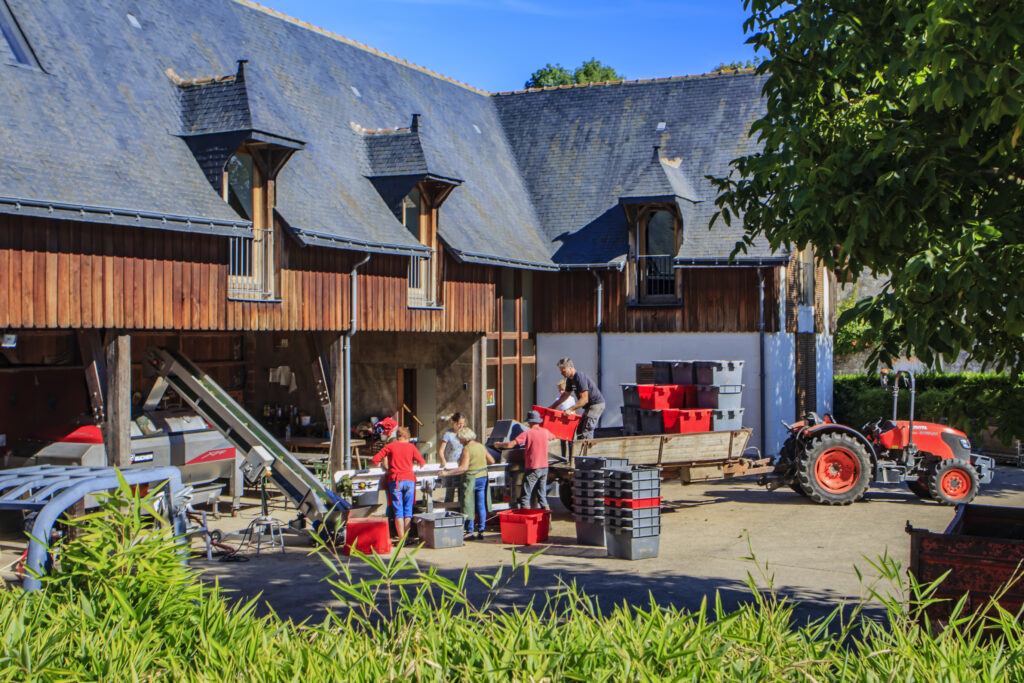
Photo of winery building with grape crushing equipment and people using bins to put grapes on crushing equipment

By: Thomas J. Payette, Winemaking Consultant

Having been on both sides of custom crush not only as a winemaker as a host winery but also as a winemaking client in another’s winery I feel especially adapted to help people with custom crush endeavors.  Making sure your grapes and wine get the excellent treatment they deserve is always the top consideration.  You want to make excellent wine, without winemaking flaw, as a bottom line.

Choosing Your Custom Crush Partner

  Make sure to choose a custom crush winemaking facility that is adapted to your size and style.  If you care for the products that winery makes that is a key asset that you can hopefully build on but it is not a given your wines will be as clean and assertive as the winery making your wines.  Research the winery you plan to be involved with and make sure they are the correct fit.  Research their sanitation and explore if brettanomyces could be a long term issue, especially if making reds and moving the bulk wine back to your facility.

Discuss How Far to Go

  Discuss with the winery how much of the process you plan to have done at their facility.  Will they just crush and ship? Will they crush, ferment, press and ship?  Will they crush, ferment, press, age, bottle and ship?  What should the label say?  What should they expect from you?  If you are building a new winery building are there contingencies’ for a construction delay on your end?  There are many ways to configure what your needs are and the winery should have some idea of how long you plan to stay and what their role is in your vision.

Communication

  Now we can see communication is already a huge part of this relationship.  Beyond how long you will stay at the winery leads into division of responsibilities.  Who will decide the yeast, enzyme, nutrient, style, maceration, whole cluster press, crush and press, etc?  Will tanks be available?   Should you bring your own tanks and barrels to the winery to be helpful?  What can the winery supply to you in the way of fermentation capacity and how soon will the wine get into your barrels so the production path is clear for their grapes and wines?  Map out a process with the winemaker and/or GM to make sure a plan is in place.

Priority

  Every harvest comes with new challenges.  Often winemakers are already stressed with their own fruit and winemaking demands only to find owners and GM’s piling more on them with custom crush.  Make sure the winemaking team really wants you there and that they will treat your fruit with the same respect as their own.  Is the winemaker being compensated extra for your presence?  Should they be?  Are they happy you are “on board” or is this process a thorn in their side?  Are you just in their way? This is hugely important to your success as a client in their cellar and what are your buffers or remedies if you find your expectations are not being met?  This happens and you need expertise to know when things are not just right.

Expertise

  Make sure you have expertise on hand to help coax your winemaking process along.  Make sure a detailed plan has been placed, on paper, for the resident winemaker to follow.  Make sure the plan has the flexibility needed to shift to address the potential abnormalities every harvest has.  This ability to make decisions on the fly will be imperative to your overall wine quality success.  Not knowing the ins and outs can lead you subject to agreeing to things you may not have agreed to and having the wines suffer in the process.  Make sure you don’t become “second fiddle” for the cost of a “front row seat”.

Being a Priority

  Keeping yourself in the forefront will be a delicate balance.  Harvest has everyone under stress and that starts to show quickly in the game.  Make sure level heads approach reactionary winemakers with compromise and offering solutions.  It will help the stress level of the onsite winemaker remain low and you will gain respect.  This will typically pay off later when you do need a little something extra from the winemaking team.  They will respectfully step forward and help on the back end.  Show that you understand the shoes they are in and that you are not only present to help them navigate the waters, with them, but ready to look after your wines, too. 

How to get the Best

  Getting the best is by getting along.Communication is the key.  If your fruit is being delayed from the 10:00am delivery slot originally planned – place the quick call to the proper winemaking team person and let them know calmly. 

Chances are something else has shifted that day already and the team easily navigates this new slot.  It always works out well beyond any planning but if the team is veteran – they have seen it all and will refocus their energy to a more immediate task that may have been slated for later that day.  This same approach goes for all during the year.  Plan and communicate.

Flexibility

  The above has certainly addressed the issue of flexibility.  This is farming at crush.  Harvesters break down, picking crews get out of sequence, lug deliveries may have been delayed or any other host of things could happen.  Many situations are out of your control so plan for the worst and accept a good day.  They happen more frequently than this article might suggest.

Good….Great Relationships

  Keep a great relationship, even at your own expense, while having wine made in another’s facility.  That doesn’t mean you need to role over and accept poor treatment of your fruit and wines but rather go the extra mile to have the winemaking crew want to help you.  Help them when possible on a task they are working on if the winery environment allows it.  If you can help them clear a path to work with your fruit – they will respect that.

Doing Work Yourself

  Will you be able to do work yourself on their premise and in their facility?  This can be key from crushing fruit to racking tanks and barrels or filtering wine.  If things are being slow to get done ask if you can come in and do the work yourself provided you have the knowledge and skills.  Some wineries will allow this and in some cases it is the best solution for on site quality control.  Will the custom crush winery assign their top personnel on your lots or will they focus on theirs?  Human nature comes into play here and you need to protect your investment.  If late Friday work orders delivered to a non veteran winemaking staff should become the norm for what needs to be done to your wines – this should sound alarm bells to you.

Lab Testing

  Will the custom crush winery supply lab numbers to you?  Do you trust their lab numbers, expertise and how will you know if the numbers are trust worthy?  The difference in a pH reading of 3.88 and 3.76 could have a huge influence on how you may want to handle that wine.  Make sure to use outside labs to help validate the internal numbers being supplied to you.  It is great insurance for your wines and you soon know how reliable the internal winery numbers are and how often you need to seek outside numbers.

Record Keeping

  How much access will you have in the record keeping?  Will the custom crush winery hold those records close to their chest or is it an open book?  Do they keep as detailed records as you hope to see?  Address this before becoming a client of theirs.  Is it up to them to keep track of blends or yourself?  Perhaps it is best to run the records parallel so you can confirm your confidence in what you receive.  It will help in any case especially in the event of a computer crash or other catastrophic events.

Sanitation

  When courting a winery, as a potential custom crush facility, make sure you are happy with what you see in terms of sanitation.  Don’t expect that the overall sanitation regime will change once you “get married”.  Look at the process and procedures that each winery might have in place to understand how they clean certain segments of the winery.  If you plan to move the wines in bulk to your facility be careful not to contaminate your brand new winery with spoilage microbes that could affect your wine styles for years if not forever.

Summary

  Make sure to look out for number one when looking to do custom crush.  Many honorable facilities exist but be on your toes to make sure you know when things are not headed in the proper direction for your wines.  Make sure you are getting your monies worth and that the wines you intend to craft are indeed shaping up in the proper fashion.

•    Know what your goals are and express them.

•    Explore the winery that will best fit the goals.

•    Make business arrangements to achieve the goals.

•    Communicate throughout all the winemaking process.

•    Have a commanding presence while remaining flexible.

  A big thanks to Rombauer, Laird, Braman, Prince Michel and numerous other wineries for allowing me custom crush access and experience.

Storms on the Way?  Hail No!

vineyard with hail damage

Image 1: Vineyard with hail damage

By: Kirk Williams, Lecturer-Texas Tech University

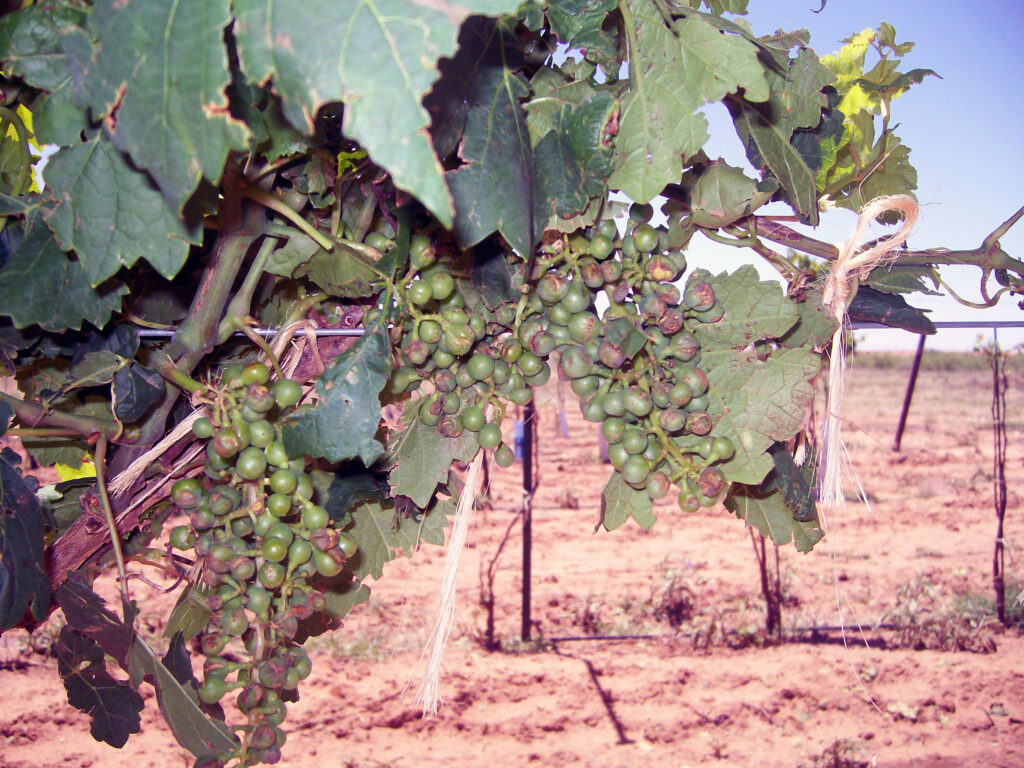
For many grape growers that are East of the Rocky Mountains, hailstorms can occur throughout the growing season from late Spring through the Fall.  Hailstorms can reduce shoot growth, reduce yield and occasionally damage the woody parts of the grapevine.   The severity of these hail events can be mild to severe.  Multiple hailstorms are possible in some years at hail prone vineyard sites.  An example of an extremely severe early season hail event is seen in Image 1.  Late season hail events can cause fruit damage, increase disease issues and cause leaf area loss which can impact fruit ripening.    Leaf area loss can decrease carbohydrate production and storage which can reduce bud hardiness in the dormant season as well as reduce growth and yield the following growing season.   An example of a late season hail event can be seen in Image 2:

Image 2 late season hail event

 Image 2: Late Season Hail Event

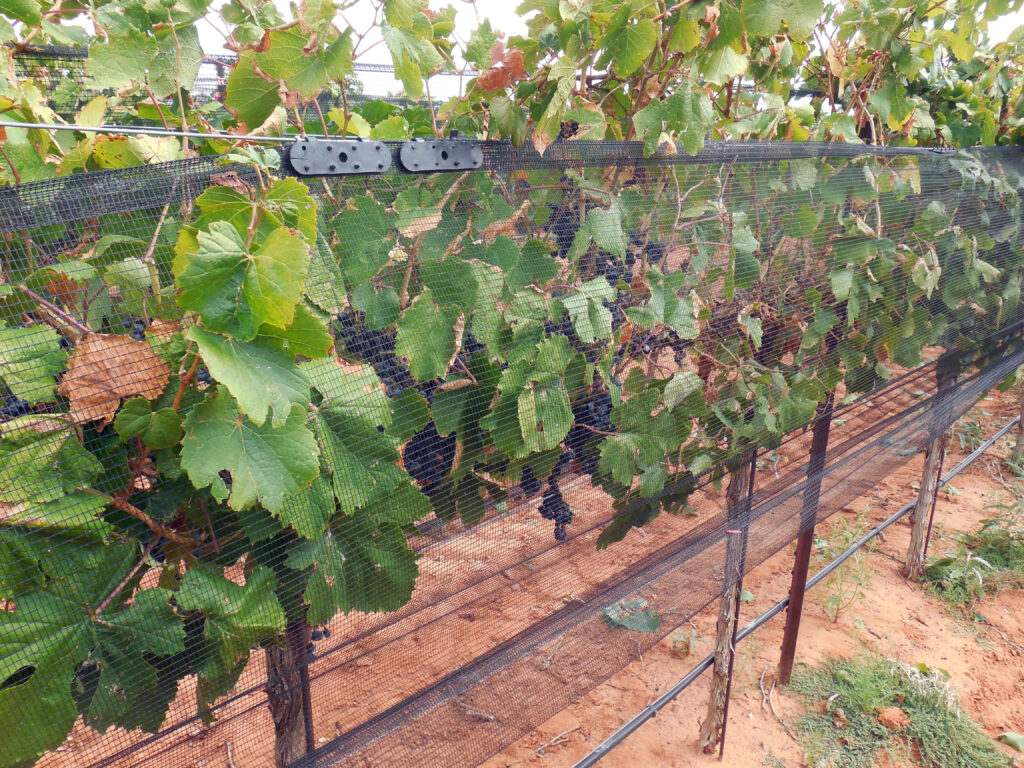
  A strategy that is being adopted for reducing the impact of hailstorms on grapevines is the use of hail netting.   Hail Netting is a high-density polyethylene woven fabric that is installed on both sides of the grapevine canopy.  The hail netting is flexible and can absorb energy from falling hailstones to prevent damage to the canopy and fruit.  The mesh spacing on hail netting is much tighter than on bird netting and is around 4mm by 6 mm (0.16 inches X 0.24 inches).   A common width of the hail netting is around 40 inches although other widths are available.  Most hail netting has reinforced edges on the top and bottom of the netting. 

  The hail netting is usually attached to the top catch wire using clips and then the netting is attached below the canopy, sometimes to the drip line or sometimes to an additional wire that is added for that purpose.   Hail netting use is limited to vertically shoot positioned trellis systems with catch wires high enough to spread the hail netting vertically.  Varieties that have a mostly upright growth habit are preferred but a wide range of varieties are being grown under hail netting.  Hail netting does promote upright shoot growth as the shoots are held in place vertically and compressed by the hail nets.   See Image 3 for an example of hail netting and its installation.  Hail netting is installed as a permanent part of the trellis system and is usually lowered soon after final pruning is completed to prevent damage from early season hailstorms.   Hail netting is usually installed after a vineyard has started producing fruit but when installed soon after planting, hail netting can prevent hail damage to the developing woody portions of the grapevine which can prolong the productive life of the grapevine.  

Image 3 showing hail netting and its installation in vineyard

Image 3: Hail Netting Installed 

While hail netting does prevent damage from hailstorms it does require extra steps to complete work in the vineyard.  To do work in the canopy, the hail netting must be raised up prior to the work and then lowered after the task is complete.   Having dedicated lower wires that the hail netting is attached to and are loose enough to move up to the cross arms can speed up raising and lowering of the nets.  Hailstorms can quickly develop especially in the late Spring and early Summer when canopy management practices are taking place so care should be exercised to raise the hail netting on just a few rows at a time.   At harvest time, the hail netting must be raised and rolled up to be out of the way of harvesting activities whether harvesting is done mechanically or by hand.  The hail netting will usually stay raised and rolled up until final pruning is completed.  

  Installing hail netting requires a substantial investment in vineyard infrastructure.  The hail netting and clips will cost around $1,600 to $2,000 per acre depending on the density of the vineyard.    Installation of the hail netting is estimated to take eight to ten hours of labor per acre.  While the cost of the hail netting and installation is expensive, the saving of a crop from a severe hailstorm or reducing crop loss from several small hailstorms will recover the cost of the hail netting.  The hail netting has an estimated life of eight to ten years when properly cared for. 

  In addition to prevention of damage from hail, hail netting can reduce bird damage.  If bird pressure is high, birds can still get into the hail netted grapevine canopy from either the bottom or top where there are narrow openings.  Tying the bottoms of the two panels of hail netting together can prevent most of the birds from getting into the grapevine canopy.   Under heavy bird pressure, the tops of the panels of hail netting may also need to be tied together. 

  Hail netting reduces hail damage but can the closely woven fabric impact the grapevine canopy?  In a study that took place on the Texas High Plains, two varieties of grapevines were studied with and without hail netting and it was found that there were differences.  Grapevines grown using hail netting had a change in the vine canopy’s microclimate. The hail netting was found to make the canopy cooler, reduced air and leaf temperatures and altered the moisture level in the canopy.  This change was likely due to reduced canopy airflow in the netted vines.  These canopy microclimate changes could cause increased disease pressure for grapevines grown under hail netting. 

  The change in temperature and light due to the netting affects the vine’s leaf gas exchange, a key process for the plant’s health and growth. Differences were also noticed between grape varieties in the study (Malbec and Pinot Gris). For instance, the rate at which the fruit matured was influenced both by the netting and the type of grape. 

  The study showed vines without netting had more clusters. The ‘Malbec’ variety, in particular, showed lower yields under netting. Additionally, netted vines, especially ‘Pinot Gris’, showed less vegetative growth. 

  Installing hail netting can prevent crop loss, preserve grape quality and improve grapevine longevity in areas that receive hailstorms during the growing season.  While hail-netting is beneficial for protection against hail, it is essential to understand its broader effects on grape growth, disease pressure and yield and adjust your vineyard practices accordingly. 

  References: Ruland KT, Montague T, Helwi P (2023) Impact of hail-netting on Vitis vinifera L. canopy microclimate, leaf gas exchange, fruit quality, and yield in a semi-arid environment. Viticulture Data Journal 555: e108805.

  Kirk Williams is a lecturer in Viticulture at Texas Tech University and teaches the Texas Tech Viticulture Certificate program.  He is also a commercial grape grower on the Texas High Plains.  He can be contacted at kirk.w.williams@ttu.edu

The Essentials of Grape Crop Insurance

By: Trevor Troyer – Vice President at Agricultural Risk Management, LLC

Grape cultivation is an art that dates back thousands of years, producing some of the finest wines and fruits enjoyed worldwide. However, vineyard owners face a range of challenges, from unpredictable weather patterns to diseases that can decimate their crops. That’s where grape crop insurance comes in. In this article, we’ll explore the importance of grape crop insurance, its benefits, and how it can safeguard the livelihood of vineyard owners.

The Importance of Grape Crop Insurance

  Grape crop insurance is a specialized form of crop insurance tailored to the unique risks associated with grape production. Grape crop insurance is an Actual Production History policy.  You are using an average of your historical production to determine the expected crop tonnage and value. It serves several critical purposes:

Protection Against Natural Disasters

  Vineyards are vulnerable to various natural disasters, including hailstorms, frost, excessive rainfall, and wildfires. A sudden and severe weather event can devastate a grape harvest, leading to significant financial losses. Grape crop insurance helps vineyard owners recover from these unexpected setbacks.  You are also covered for wildlife damage which could include birds, bears, deer etc.

Financial Stability

  Grape crop insurance promotes financial stability for vineyard owners. It provides a safety net that allows them to continue their operations even in the face of adversity. This stability is crucial, as the grape cultivation process is a long-term endeavor, with vines taking years to reach full production potential.  Grape Crop insurance is there to keep you growing.

Support for the Wine Industry

  The grape industry is a cornerstone of the global wine sector. Grape crop insurance not only benefits vineyard owners but also contributes to the overall success and sustainability of the wine industry. It ensures a consistent supply of high-quality grapes, which is essential for winemakers and consumers alike.

Types of Grape Crop Insurance

  There are several types of grape crop insurance policies available to vineyard owners:

Yield Protection

  Yield protection policies provide coverage based on the actual grape yield. If the yield falls below a certain threshold due to covered perils, the policyholder is compensated for the loss.  You can choose coverage levels from 50% all the way to 85% of your historical average.

Whole Farm Revenue Protection

  This type of insurance covers all the crops on the farm, including grapes, making it suitable for vineyards with diversified agricultural operations.  You can have yield coverage and have Whole Farm Revenue Protection (WFRP) in addition as an extra layer of security.

Government Assistance

  The USDA provide support to grape crop insurance programs. Subsidies and incentives make these policies more affordable for vineyard owners, encouraging wider adoption and helping ensure the sustainability of the grape industry.  Your premium is partially subsidized through the USDA, the amount of subsidy changes with coverage levels.

Availability

  Grape crop insurance is available in the following states; Arkansas, California, Colorado, Connecticut, Idaho, Maryland, Massachusetts, Michigan, Minnesota, Mississippi, Missouri, Nebraska, New Jersey, New York, North Carolina, Ohio, Oregon, Pennsylvania, Rhode Island, Texas, Virginia and Washington state.   Crop insurance may not be available in all counties in these states.  But in a lot of cases, if you have a mature producing vineyard, you may be able to get coverage through a special request to the USDA.

Conclusion

  Grape crop insurance is an essential tool for vineyard owners, protecting their investments and ensuring the longevity of their vineyards. It safeguards against the unpredictable challenges of nature and diseases while promoting financial stability and supporting the larger wine industry.

Preservation of the Genetic Diversity of Wine Grape Varieties

The Old Vine Conference

Old Vine From Angelica Vineyard - Ph Credit Catena Zapata

Old Vine From Angelica Vineyard – Photo Credit Catena Zapata

By: Judit Monis, Ph.D. – Vineyard and Plant Health Consultant

Recently, I did some research on “old vine” heritage  grapevines after seeing a post on LinkedIn that showed a vineyard with characteristic “red leaf” symptoms likely due to viral infection. There are “old vine” projects throughout important winegrowing regions in the word.  The definition of an old vine ranges from 35-50 years, but if you ever heard me give presentations at meetings, my motto is: “vineyards should live to be over 100 years”.  My search brought me to the Old Vine conference held last October. 

  A non-profit company registered in the United Kingdom with a mission to safeguard and preserve old grapevines through research and education.  The non-profit organizes yearly conferences.  In 2023, the old vine hero award was given to Dr. Laura Catena, the managing director of Catena Zapata winery.  Many of you know that I am originally from Argentina.  Hearing about an award given to a compatriot in my field inspired me to write about her presentation.  

Malbec, Argentina’s Signature Variety

 Dr. Catena’s presentation: “How an agricultural philosophy is using science to preserve the past” focused on the history of Argentine viticulture as it relates to old germplasm.  Especially, how her family’s winery put Argentine’s malbec wine into the world’s map.   The malbec variety is originally from France and was brough to Argentina in the mid-19th century by a French viticulturist named Miguel Pouget. Dr. Catena referred to her father, Nicolas, as responsible for starting to use malbec in a single variety wine in the mid-1990s. 

  After the vineyards  grown in France were affected by phylloxera in the 1800’s,  many malbec plantings (among other varieties of grapes)  were decimated by the pest.  However, in the absence of phylloxera, the plants brought to Argentina survived and became an important reservoir of malbec’s genetic material. The family business celebrated last year the 100th birthday of their Angelica vineyard planted in 1922. Presently, collaborative work with INTA (the equivalent to our USDA) is helping Catena and other vineyards characterize the present germplasm.

Dormant Old Vines in a California Vineyard

Dormant Old Vines in a California Vineyard

Sélection Massale, the Renewed use of an Old Practice

  In the past, and due to  economic restrictions, importations were not allowed into Argentina.  Therefore, it was unusual for grape growers to plant clones of specific varieties.  Instead,  cuttings of the original plants introduced from France in the mid-1800’s were propagated to make new plants.  These were generally planted on their own roots (i.e., not grafted).  The vineyards are most often planted with cuttings that have been selected in the vineyard based on visual observation or the quality of wine produced from its grapes. Generally, a number of “good looking” or well performing vines are marked in a vineyard and used to collect budwood that will be propagated or grafted to produce new vines. This process of field selection is known as sélection massale. Since the selection is done based on visual aspects and vines are generally not grafted, viral symptoms are generally masked, therefore vines infected with virus are often selected.

  The advantage of using field selections versus a clone of a given variety is the genetic diversity that can be found in the vineyard.  Of course, not always this is an advantage, as a vineyard with genetic diversity might be more difficult to manage because some vines may be taller or more vigorous than others, may need more or less water, nutrients, etc. As it relates to wine production, some of the fruit from some vines may mature earlier than others creating difficulty during the harvest of the fruit.  However, an interesting study from the Catena Wine Institute showed that the variation among the vines was so wide that some vines could produce only one bottle of wine, while others could produce up to seven bottles.  On the other hand, the genetic variation in the vineyard allowed more resilience as the vineyard overall was more resistant to inclement weather such as freeze, hail, or wind.

Viral Disease Introduction to Argentina Occurred with Imported Vines

  At some point in history Argentina’s nurseries and vineyards started their own clonal selection.  In addition, the Argentine market eventually opened its business to import plant material from nurseries in Europe and recently from California’s Foundation Plant Services (FPS).  According to Dr. Catena, this is when the majority of viral and fungal diseases were introduced into Argentine vineyards. Vineyards planted with older field selections at Catena Zapata appear to be healthier than the newer introductions planted.  This information matches research by Jimena Balic performed by Santa Carolina Winery  in Chile.  Dr. Balic reported at the 19th International Congress of ICVG the detection of more virus infected vines in nursery propagated clones compared to Santa Carolina’s own heritage field selections.  Interestingly, a study in California by  Kari Arnold determined that the older vines were infected with more viruses than the newer plantings

  We know that important viral diseases (fanleaf, leafroll, rugose wood, and red blotch) are present in Argentina.  Further, .  Many of the original field selections have now become infected with fanleaf (transmitted in the soil by nematodes) or leafroll (transmitted from vine to vine by mealybugs).    As a trained medical doctor, Dr. Catena mentions that the winery is serious about keeping viruses out of the vineyard.  However, the imported plants that brough the viral diseases have spread along different vineyards not only affecting a broad area since introduced.  Since virus testing is expensive and ranges between $150-$250/sample compared to the cost of $4 per plant, not every plant can be tested.  Catena Zapata’s strategy is to test their grafted clones but the field selections that are not grafted are rarely tested

Argentina Grapevine Certification Program is Different from California’s

  In Argentina each nursery is responsible for maintaining and testing their own mother and increase blocks.  In other words, there is not a central foundation block such as what is maintained by FPS. 

  Besides a few commercial nurseries, many wineries have nurseries that provide the cuttings or grafted plants grown in their own vineyards.  Just like in California, there is a list of viruses that the certified vines must be free of.  Similarly, the certification of grapevine plants in Argentina is optional.  In reality, very few vineyards are planted with certified vines and most vineyards are planted with non-grafted vines as phylloxera in not yet ubiquitous. 

Disease Testing and Elimination

  During my long career as a plant pathologist working in diagnostics and pathogen elimination, I was fortunate to have been able to apply tissue culture techniques to preserve heritage clones in California.  I am also fortunate to have visited vineyards planted with these clones. Feedback from clients has always been that the vines perform similar to the original selection or clones but have the advantage of being healthy and more productive, even 30 years after being planted.  I have covered diagnostic testing and tissue culture disease elimination in other articles. 

  I will mention here briefly, the meristem tissue culture technique.  The method relies in growing the apical meristematic dome of a vine cutting to create a new plant.  The smaller the meristem size is, the higher probability of eliminating viruses, especially those that are phloem limited.  In her presentation, Dr. Catena mentioned that she expects that the meristem culture method may improve over time.  In my opinion the method works very well.  It requires manual labor and experience but it is the best method available for disease eradication.   Perhaps one day, we could replace technicians with sophisticated robots with the capacity of dissecting minute portions of the meristem under the microscope! However, in my experience technicians I have worked with have been able to perform the repetitive tasks over and over with fine and quick precision (almost like robots!).   The meristem tissue culture is a true and tried method that promises to improve the health of new grapevine plantings.

Conclusions

  I have learned through Dr. Catena’s presentation and the Old Vine Conference  that there is a huge amount of generic diversity that needs to be preserved in grapevines.  The health status of different vineyards varies and depends a lot on their care and isolation.  The use of meristem culture for disease eradication offers an advantage in heritage selection preservation. One usually thinks that the method is used solely for virus elimination but an added bonus is the elimination of bacterial and fungal pathogens.  Tissue culture methods of grapevine heritage selections and  clones are performed in a laboratory in vitro under sterile conditions. Another tissue culture application is the preservation of plant material in small vessels creating a germplasm repository bank.  The preserved plant material would be readily available for propagation and planting to replace affected vines in the case of viral infection (or other issue) in a vineyard.

  Judit Monis, Ph.D. provides specialized services to help growers, vineyard managers, and nursery personnel avoid the propagation and transmission of disease caused by bacteria, fungi, and viruses in their vineyard blocks.   Judit (based in California) is fluent in Spanish and is available to consult in all wine grape growing regions of the word.  Please visit juditmonis.com for information or contact juditmonis@yahoo.com to request a consulting session at your vineyard or virtually.

Our Five Top Marketing Priorities for 2024

By: Susan DeMatei, Founder of WineGlass Marketing

If you’re like most of us, the holiday marketing campaigns are well underway, and you’re now focusing on next year’s budgets and plans. Choosing your marketing priorities for 2024 is a bit like assembling IKEA furniture—you’re looking for simple, clean lines and straightforward instructions. But you soon realize you are missing some tools to assemble the Järvfjället and wonder if you should have gone with the Ödmjuk instead. So, grab your metaphorical Allen wrench, and let’s build a marketing strategy that’s as sturdy as it is stylish, with just the right amount of snarky commentary along the way.

1. Know Thy Customer:  Your customers aren’t generic – they are unique and won’t be won over by vague, generic messages. If you write copy like everyone else and post the same boring stock bottle shots like everyone else, it’s like you’re trying to impress your date with poetry you found on the internet—it might sound good, but it won’t resonate unless you know what makes their heart skip a beat.

CRAWL

  Learning about your customer is simple and doesn’t require a degree in statistics or even that much time – you start with following their behavior. What posts do they comment on, and which ones fall on deaf ears? What emails have the best click rates, and what pages on your website do they go to? You should be constantly looking at behavioral data for your marketing. Ignoring these analytics is like throwing a surprise party and not checking if anyone RSVPed— you might be celebrating alone with a cake shaped like disappointment.

WALK

  Once you see their likes and dislikes, refine your messaging. If customers respond well when discussing food, is it recipes or dining out? Is it ethnic elaborate food or simple comfort food? Understanding these preferences is called a persona and will help you brainstorm content that resonates with your customers to position your product within their lifestyle.

RUN

  It is improbable that you have a single, homogeneous customer persona. You will find several groups, which you can start to parce using behavioral data (like buyers vs. nonbuyers), customer segments (like club members versus nonclub members.), or even demographic data (like Millennials and Baby Boomers). When you’re ready to take your marketing to the next level, start segmenting email lists, targeting social media content, and presenting dynamic website content to your different audiences.

2. Pay Attention to the Care and Feeding of Your Website:  I know what you’re thinking: “Whatever, I can skip this section. I already have a website. I got that to a good place two years ago.” But, your website, much like a garden, requires continual attention. Regular updates with fresh content and imagery and adjustments based on evolving consumer trends and product offerings are essential. You can’t just plant it and forget it; neglecting certain areas may result in withering while others become overgrown. Keep your online landscape flourishing by tending to it regularly.

CRAWL

For many of you, the interweb is a confusing black hole full of acronyms and technology. But even if you don’t know your DNS from your IP Address or your WordPress from your WooCommerce, this is no excuse to bury your head in the silicon sand. I don’t know exactly what my mechanic does either, but I still take my car to get it tuned and the oil changed. Technology is constantly evolving, so websites are continually decaying. If you don’t know how to update plugins, check for broken links, or monitor your hosting server’s performance, hire someone who does. Or risk hackers, frustrated customers, and lost sales.

  Maintenance Doesn’t Have to Be Expensive. See our Packages>> https://wgits.wineglassmarketing.com/product/website-maintenance-packages/

WALK

  If the extent of your website deliberation up to this point has been limited to confirming you like the pictures, you’re not alone. But your website is a highly visible and effective tool for every step of the customer lifecycle, from acquisition to loyalty. Evaluate what you need your website to do (and there will be multiple objectives, so try to put it in a hierarchy of importance). If your number one marketing objective is to drive traffic to the tasting room, does everything on your website home page make visitors want to come to your winery? Too many times, we throw everything we’ve got to say to a visitor on the home page, and it overwhelms them, which causes them to leave. Your business priorities change frequently, certainly seasonally, so consider your website part of your overall marketing communication and update that home page regularly.

RUN

  Not only does your business change and technology advance, but our own behavior evolves. For instance, as of 2022, 59.16% of all website traffic comes from people using mobile devices, compared to 47.19% at the end of 2019 (Worldwide; StatCounter). So, in those short three years, mobile viewing became more critical. What do your own Google Analytics say about your site visitors? Knowing that we “read” on a full PC screen but “skim” headlines and subheads on the phone, what have you done to change your content to be bite-sized? Are silhouette bottle shots the best way to showcase your wines on the phone? Or should tight label shots be considered for a store refresh?

  Websites used to be like brochures; they were designed and used until you needed a new one, and then you threw out the old one and replaced it with a new one. Now, smart marketers believe websites should be alive and continually evolving. Unless you’re going through an entire rebrand, you should be able to keep the bones of the site for years and focus on updating new content weekly or monthly. While working on your website is not as glamorous as the latest social media craze or as flashy as a viral meme, it will be seen by more people than any other channel, digital or IRL, so focusing on this area should be a high priority for any marketer.

3. Appearance Matters:  The intersection of technology like smartphones, the popularity of apps and social media tools like filters and editing, and our ever-increasing pace of processing information have created the perfect storm for visual storytelling. From icons to emojis to Instagram, to say we are a society that relies on visuals is an understatement. And flawless photos are every teenage girl’s selfy norm, so you better have a game plan for decent marketing photography.

CRAWL

  We sell a product that is glass, curved, and sometimes has foil or screen-printed text. It is not as simple as snapping a selfie of you and your bacon bloody mary for Instagram #SwineAndShine. Luckily, we all have excellent cameras on our phones, hundreds of photo editing apps for pennies, and thousands of free YouTube videos with tips on how to use them. There is literally no excuse for bad images except laziness and complacency. So make 2024 the year you say no to bright reflections, lip marks or spots on wine glasses, and fuzzy label text.

WALK

  Just because you can do something yourself doesn’t mean you should. I can cook at home, but I’m not going to spend all day on a 20-ingredient Mole sauce when I can enjoy a professional chef’s version via DoorDash in 38 minutes. Your time has value, and if you’re doing other important things like making wine, selling wine, or managing the business, it’s time to call in a professional. You can save money/time on the frequency you post on social media or how complex your next club party is but don’t skimp on your marketing visuals. They are the one tool you have in your arsenal that helps you acquire, connect with, sell to, remind, and retain customers in every single channel.

Picture showing wine bottles in first box, 1 wine bottle in second box, and a wine bottle being held behind a women's back saying Visual strategies include props, models, colors, lighting, backgrounds, angles, symbols, composition, and contrast to make your images look different than other brands.

RUN

  You develop a visual strategy by combining your visuals with your customer data and personas above. This is next-level thinking about composition, contrast, lighting, angles, or props that tell your story. The goal is to present a style that is all your own and continues your brand’s story.

4. Invest in Marketing:  I was teaching a class on social media content last spring, and we were talking about boosting strategies. A gentleman who had been quiet for most of the class finally spoke up with disdain in his voice and said, “It’ sounds like you have to pay these suckers to do anything. Nothing is free anymore.”

  I don’t know why he thought marketing was ever free, but it isn’t. (If that hasn’t occurred to you, let me be the one to burst that bubble.) It doesn’t matter if you make one hundred cases of wine or one million; it is unrealistic to assume that people will magically buy your wine because you made it. You must have a marketing budget and a plan to sell your product.

CRAWL

  Start with the items that will get you the most impact (assuming you already have a workable website and reasonably good imagery because those are priority #1.) You will need two things to survive as a business – customers coming in and orders going out. Social media and email are the typical utensils chosen for these deceivingly simple accomplishments.

  You’ll want to pay your social media channel of choice to help consumers see your content – a minimum of $100 to $200 monthly. If you do not do this, expect only about 7% of your followers to see you. For emails, you’ll want a professional email platform like Mailchimp with a template to create HTML emails. That will run you anywhere from $13 up to a month.

WALK

  The Small Business Association recommends spending 6-8% of your gross sales on marketing. Meta and Google are two of the most efficient places to do that. Both channels are mailable for multiple objectives, such as driving visitors to your tasting room, adding people to your mailing list, or selling wine.

  If Boosting is training wheels, crafting a killer News Feed Ad opens up a world of creative possibilities, lets you target your audience with surgical precision, and can deliver superior results. It’s like upgrading from a tricycle to a turbocharged motorcycle without breaking the bank.

There are numerous targeting, message, and graphic concerns, so if you can partner with a professional, you may find that money well spent. If you are set on DIY, plenty of training videos are online. It is best to start slow, learn, and iterate. Expect to spend $500-$2,000 a month.

RUN

When your business needs more customers, you have more wine to sell, or you just want a double shot of caffeine, marketing is an effective level to toggle. There are multiple print magazines and online outlets to partner with for visibility and sales. You can also lump in sales support channels like Instacart ads in this area. A professional media planner or trained marketing professional should be consulted if you’re entering this carnival because the rides are expensive, and the media planners work on commission. Like the ringmaster, their goal is to separate you from your money and sell you a shiny story that is primarily a sales spiel.

5. Relax Your Grip:  Our final bit of advice for 2024 is to be open to new ideas. Our customers are changing, carrying new consumption patterns, attitudes, and travel preferences. I couldn’t disagree more with the Wine-Searcher article last week saying that wineries exhibit ageism if they don’t double down on Baby Boomers as a target audience because they drink wine now. Boomers are, and have been, fabulous customers and should be provided with all the best marketing and customer service deserved by their years of support. But to assume that Millennials, who are forty and relatively wealthy, by the way, will be interested in the same products, price points, and experiences is a mistake. 2024 is an excellent year to start testing out additional bifurcated strategies.

  Let’s take it out of generational context. Name one other tourist or luxury industry that has serviced customers the same way for almost 50 years without evolution (assuming wine tourism took off in the 1970s.) Cinemas now have iMax and streaming, museums have concerts and children’s exhibits, hotels have changed, spas have changed, shopping habits have changed. To offer the same essential tasting experience and product marketing that you have for decades will only be successful for a few more years before it’s phased out.

  Listen and be observant of your customers and be open to new ideas. Be a willow, not an oak, and don’t be afraid to try new things. You’ll be rewarded with new customers for years to come.