
Corey and Rachel engage in a lively discussion with Stephen Thompson, founder of Weld Manufacturing. They explore the importance of quality merchandise in the hospitality industry, the evolution of Weld, and how to create non-gimmicky branded goods that enhance the guest experience. The conversation also delves into the balance between trends and timelessness in merchandise, the significance of regionalism, and creative marketing strategies that resonate with consumers.
Month: January 2026

Chestnut Flower Extracts as Natural Agents for Wine Stability
In this episode of The Wine Lab, we explore appassimento, the traditional practice of drying grapes before fermentation, and how it reshapes wine long before yeast ever gets involved. From ancient Roman preservation methods to modern Amarone and passito wines, we look at how dehydration concentrates sugars, alters acidity, and transforms texture and aroma.
Easy Reduction Testing for Wines
The wine smells good however…

By Thomas J. Payette, Winemaking Consultant
Just because your wine smells good doesn’t mean it can’t smell better. Always keep this in mind as a winemaker or winery owner. The largest violation of “house palate”, a process where winemakers overlook their wine flaws because they taste their own wines too often, is the oversight that their wines may be reduced. Reduced or reductive is a broad term that covers many sulfide compounds ranging from hydrogen sulfide, rotten egg, to other more complex aromatics that may smell like cabbage, dill weed, onions or garlic.
Early detection of these flaws is imperative to clean up the wines and to make sure these compounds do not evolve toward other more difficult to remove compounds, mercaptans, often needing ascorbic acid additions to make the wine reactive to the most commonly used remedy copper sulfate.
Copper sulfate trials are extremely easy and there is no excuse for each wine created not to go through at least three quick trials with copper sulfate to see if the wine aroma will indeed become improved.
When? I recommend each wine be reviewed:
1. Anytime one suspects a wine to be reduced or smells hydrogen sulfide in the fermenter.
2. Review all wines just after the fermentation process as a blanket rule process to discover any wines that may improve from the copper sulfate addition.
3. Three months prior to bottling and preferably before any stability processing actions have been taken. Bentonite removes copper ions.
4. Roughly three days before bottling.
Why? As suggested, in the first sentence of this article, winemakers should review each wine’s aroma to see if faults exist. Some of the faults do not express themselves directly as Hydrogen Sulfide or Mercaptans. Some wines may have just enough of one of these compounds, or both, to lightly mask the underlying fruit expression. Winemakers may not know a nice smelling wine can actually smell nicer. It is an easy test – so why not run these trails!
Where? Most winemakers will perform this test in the winery laboratory, away from the chill of the cellar floor, where a wine will have the ability to open up and allow for undisrupted critical analysis of the wine’s aroma. If winemakers cannot find this tranquility in their winery, it is recommended to take a sample home and do the trials in a home environment. One must be able to focus and have conditions for the wine to open up. This is critical.
Tools Needed:
• Clean wineglasses with a narrow focused opening to the bowl (I.N.A.O. style). All the exact same size and style.
• Glass watch covers for each glass (optional but highly recommended)
• Representative samples of each wine to be sampled. Between 65-70 degrees F.
• 1.0% Copper Sulfate solution (One percent)
• Spit cup – but not suggested to taste these trials.
• Clear and “in tune” nasal passages
How? This test is very easy to perform as long as the environment is proper for the aroma analysis. If possible, work closely with someone else to mix up the wineglasses after treatment so you will be blind on this analysis. If this can’t be done – do proceed since experience will help take any bias out of the results.
1. Place three (“aroma free”) dry clean wine glasses on a table and label them x, 4 and > or any other random characters that may not lead a person to select one wine glass over another but allow them to identify what glass or glasses may be different.
2 .Fill each glass with the same quantity of wine. This is often between 80-100 milliliters per wine glass depending on the wine glass size.
3. Have another person place 1 drop of the 1% Copper Sulfate into one of the glasses and to swirl all three glasses equally to mix the addition into the wine and to treat each glass equally with a swirl.
4. Place watch glasses over each of the glass openings and leave the glasses to sit for about 5 to 10 minutes.
5. Approach the wine glasses and remove the watch glasses one at a time to smell the aromas in the headspace of the glass. Go through the wines at least three times and perhaps more to select the wine that smells the best. Record your results.
6. Leave the wine glasses for another 15 minutes or longer and re-approach in the same fashion by smelling each wine individually and select the glass or glasses that smell the best.
7. After determining that the wine is actually changed and changed for the better, have the person that added the copper sulfate to the glass reveal the glass that was treated.
8. Mentally extrapolate after collecting all the data whether the addition of copper sulfate had a positive impact on the wine or not. Be aware not to select the copper sulfate addition wine – just because it is different. The wine should smell better – not just different.
9. Once an addition is deemed helpful, proceed to making the adjustment in the cellar as referenced below under calculation. This test is not quantitative.
This test is sometimes known as a triangle test.
Spicing it Up!
Once you and your assistant get comfortable with the test, he or she can be instructed to switch around the treatment regime to perhaps treat two of the three wineglasses. This will keep the person smelling the wines “on their toes” to actually identify what wine smells better and to truly focus on the improved wine.
Referencing the fact that a spit cup was listed under the “Tools needed” list above, one should have their spit cup ready. This should be used if by habit one should accidentally taste the wines. Remember, technically, Copper Sulfate is a poison so winemakers should resist tasting our trails and only focus on the aromas.
One can build on this test to correct Mercaptans, also. Mercaptans are Hydrogen Sulfide based compounds that have transformed to a more complicated chemical compound. Ascorbic acid trials may need to be tested for effectiveness in these cases. Reference other sources to review this process as it will not be covered at this time.
Calculation:
In my opinion there is no truly reliable calculation for this test to determine quantitatively how much copper sulfate to add. In most cases it is best to add small quantities of copper sulfate to a wine nearing the range of 1.0 gram per 1000 gallons to as low as one-half a gram per 1000 gallons to clean up small defects. This is a good starting point. From experience, you may start to recognize a wine that may need more Copper Sulfate to combat more pungent aromas. This chemical is a strong oxidizer so use limited amounts. Overuse could have serious downsides to your wine.
Removal of Copper After Use
In most cases, only small amounts of copper sulfate are used to clean up a wine so we rarely need to address lowering the copper content in the wine. Please recognize when larger quantities have been used. Use an outside laboratory to actually measure the amount of residual copper in your wine. In many cases, for white wines treated prior to protein fining with bentonite, they may clean up on their own. I have seen copper levels drop significantly after protein fining and filtering of white wines. Many years ago, wines may have needed a “Blue-Fining” but one rarely has those issues in today’s winemaking plus they are not permitted in the United States.
The Future
According to some scientist we need to more closely look at nutrients and their role with the yeast. In some cases too much or too little nutrients may cause Hydrogen Sulfide production and it is thought to link into the micronutrients. Nitrogen issues may not be the driving factor here. This will help us stay away from using copper sulfate, which does have adverse affects to the wine in addition to cleaning the wine up sensorialy. Until that time we need to address the problem in a fashion we can, such as copper sulfate. Stay tuned.
Other Helpful Tips
Caution is expressed not to confuse a change in aroma in the wine with this being considered better. This is called “Stripping”.
Caution is also expressed not to consume / taste wines that have added copper sulfate added during these trials.
Do these trials next to any wine that may be a follow-up bottling for that wine to see if consistency is achieved and to focus on other nuances that may easily be changed.The Tax and Trade Bureau does regulate the amount of copper sulfate a winemaker may use or have in its finished wine product. Please research this amount and have a clear understanding of the use of copper sulfate. It is a strong oxidizer and considered poisonous.
A reduced character may become hard to notice if the wine has just been racked, transferred, filtered or in any way brought into a less anaerobic state. These reductive compounds may be just under the threshold of the human nose sensitivity and difficult to smell. If this same wine is bottled, the reductive character may become very pronounced.
Screw cap wines may need more serious aroma reviews and evaluations since these seals are more anaerobic than previous seals.
Caution is urged when making wine to be bottled under screw cap to make sure no underlying reductiveness is present. Outside labs also offer “headspace sniffing” if one feels they need additional help. With canning this are even more of an issue as well as residual copper ions.
Wines exposed to light may become “lightstruck”. Light struck is a term used to describe that light has attacked an amino acid and caused a mercaptan-type aroma. This phenomenon is somewhat more common with flint bottles and sparkling wines.
Do these trials. They are easy and you may really appreciate the end result.
References:
Amerine, M.A., Berg, H.W., Cruess,W.V. 1972. The Technology of Wine Making
Dharmadhikari, M.R., Wilker, K.L. 2001. Micro Vinification.
Zoecklein, B.W., Fugelsang, K.C., Gump, B.H., and Nury, F.S. 1999. Wine Analysis and Production
Verbal discussion with Mr. Jacques Boissenot, Mr. Jacques Recht, Mr. Joachim Hollerith and Mr. Chris Johnson.
Short Course:
• This is qualitative and not quantitative
• Make sure the change in aroma is not just “stripping”
• Copper Sulfate is a poison – be careful to check residual copper present after larger uses.
• Know when to use outside lab “electronic sniffers”
Winegrapes on High Calcium Soils
Why some high calcium soils produced excellent grapes
By Neal Kinsey, Kinsey Agricultural Services
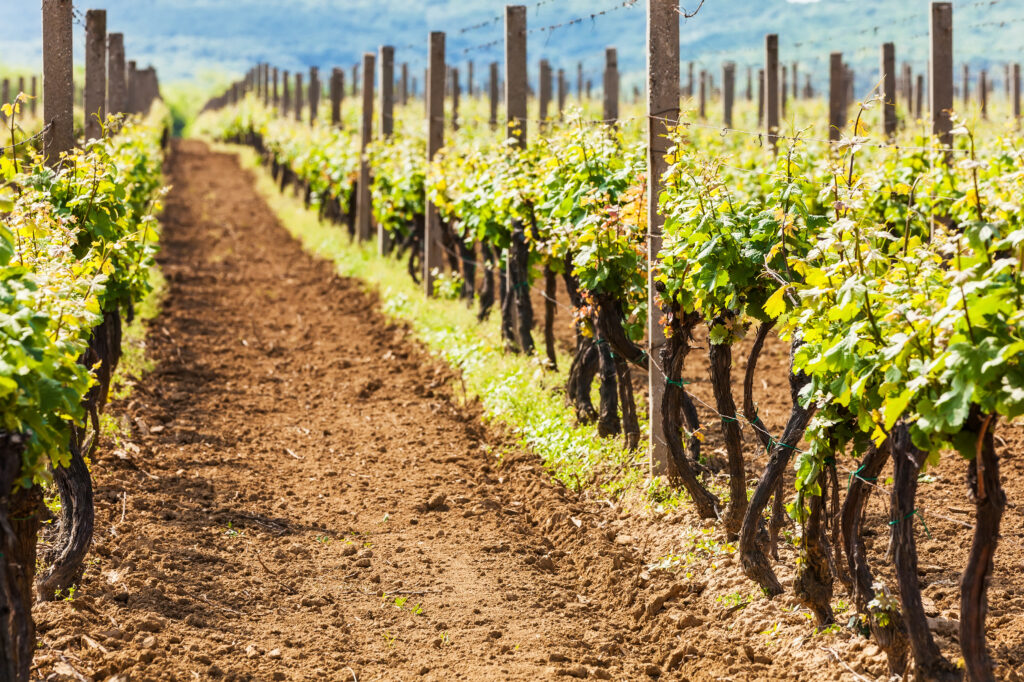
One quandary that continually presents itself for vineyards as well as other crops is why some high calcium soils produced excellent grapes while others in the same vicinity (and sometimes the same variety in the same vineyard) looked and tested exactly the same, but were of less quality and at times even a definite problem in terms of the wines produced.
When that happens, could it be the soil test being taken incorrectly? It could be, especially if there are wide variations in the soil test numbers, and particularly the expression of cation exchange capacity, from year to year. But what if the soil tests are basically consistent from year to year and look the same in the good and bad areas?
First, consider that when results seem inconsistent from the use of the same methods that can ordinarily identify why soils have good or average or poor fertility, something more must be considered. There is usually a good, common-sense answer, we just must search to find what it is and use it to solve the problem.
We have worked with soils producing from excellent to extremely poor wines that measured exceedingly high in calcium since the 1970’s. From that experience it has become evident that the problem is more than just too much calcium, as some soils with higher calcium levels produce better wines than others that have lower concentrations in the soil where poorer results have been experienced.
Considering all the soils that were analyzed from year to year, the problem seemed relatively rare, but still the problem was always present in enough soils to be of concern and continue looking for a sensible solution. These different areas are not normally submitted for a comparison. Most of the time such soils were either doing well or doing poorly, not enough of both in the same vineyard for growers to be sufficiently concerned to pay the cost and have both analyzed separately. And the few times it was done, the good and bad soil all looked to be bad.
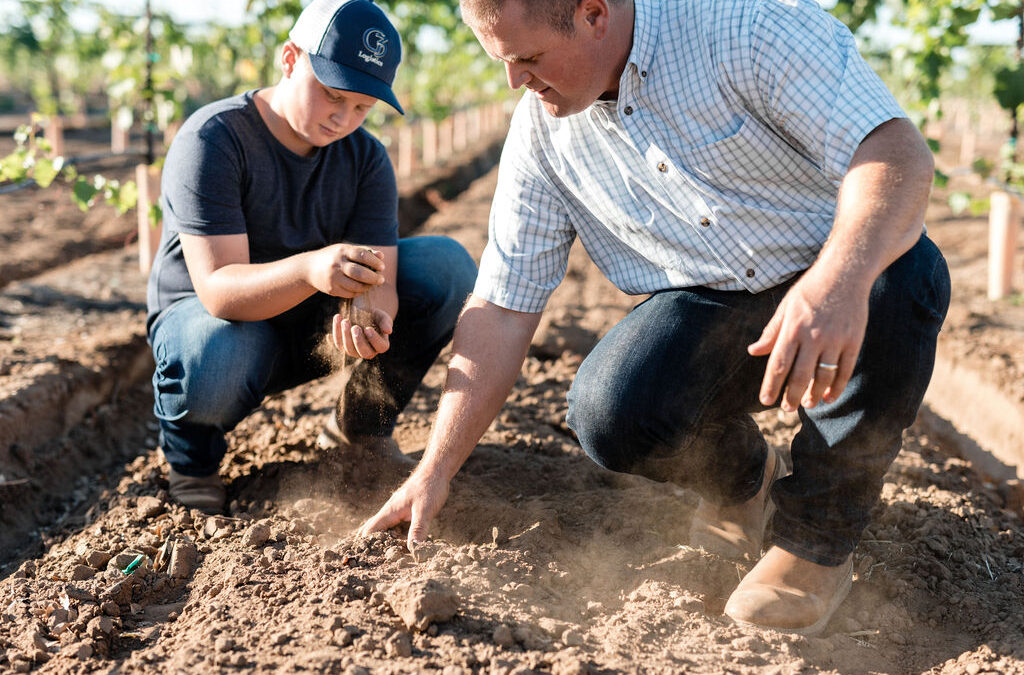
Around 2005, while reviewing some of the original work of Dr. William Albrecht there was a clue that just “jumped out” from a page on his explanation of measuring cation exchange. He explained that the sum of the cations was generally the best approach to determine the soils cation exchange capacity due to the costs involved, but there was a more accurate way it could be used to establish that number. But he did not say what it was. Still his comment was sufficient enough to point out that, though generally too costly to use for the general soil test, there is a more effective way to determine how many positively charged cations can be attracted and held on the surface of soil particles until enough acidity from plant roots or soil microbes could release them for use by the plants growing there.
For years some concerned educators and consultants had asked the question, “But when you measure calcium, what about the influence of free calcium?” This was referring to the amount of calcium in an available form in the soil which was so plentiful there could not be enough negatively charged clay particle for all of them to be attracted and held – adsorbed – by a more limited number of clay colloids present?
Here was a possible way to differentiate between how much calcium was present in a soil, but also how much was able to be attracted and held and how much more was present that had no negatively charged clay particles to attract and hold them – thus the “free calcium” still there that influenced the sum of the cations, but the assumed negatively charged clay particles were not actually abundant enough to be holding them along with the other normally needed cations, namely magnesium, potassium and sodium.

Since the “sum of the cations” was used to calculate the amount of negative charge provided by a matching amount from the clay colloids in a soil, the Cation Exchange Capacity was thus overstated. This also eventually showed that the amounts needed of the other cations (especially Mg, K and Na.) when extremely excessive in a vineyard soil can also be overstated, making it appear such soils needed more than they could tolerate.
This was the beginning of the process that ultimately helped determine and define not only soils that had too much calcium, but also magnesium, potassium, or sodium, or some combination of those. This was then causing the “sum of the cations” to over-inflate the amount of negative charge (expressed as the cation exchange capacity)?
This took time to work out and discover, it did not all come to be understood at once, because there was no protocol developed to determine all of this at the time. The initial efforts began with the crop of 2006, but it took years of actual field work to solve the myriads of problems this has created. And that field work was based on results that when achieved more than paid for what needed to be done and increased profits by increasing either yield or quality and oftentimes both at once.
Initially it was thought that only a few dozen such tests would be needed based on the volume of soil we saw before beginning this project. But as the results became evident and the word spread to others with similar problems in their grapes, that numbers has grown to be hundreds per month, especially from the extremely high calcium soils of the Western United States, Austria, France, and Germany.
In fact, reputable long-established wineries from Europe have sent samples for analysis with no mention of such a problem, but by doing the tests properly, it was possible to point out what was happening. One example was a winery that had a history of many prize-winning wines, but the soils they submitted did not reflect that. And when we pointed out that these were problematic vineyard soils, the owners admitted that on these vineyards the quality of the grapes had been slowly declining over the last 20 years, but the soil tests still appeared to be the same as when the vines were doing their best.
The normal soil test does not detect such problems, even if you can identify and test the areas good and bad. An extra test that adds another 50% to the cost of each test must be performed and there is no protocol that has been written up and described to do so. The reason it can be done is due to actual hands on “field” or vineyard soil work.
The key is in soil chemistry that applies to the verified saturation of all the nutrients most involved in affecting the soil pH. This type of experience is not written up and published to this point, because the results are from on-site experience, not officially randomized, replicated experiments. The only way to learn it works is by doing this type of testing and following through with what is necessary on each specific vineyard soil. Because the circumstances can vary greatly from one soil to another, perhaps the best way to learn if there is merit to the process is to send two soils – one from the good and one from the bad, or to increase the odds of a lucky guess, several bad areas to see if they can be correctly identified and why.
Until Cation exchange capacity and base saturation of nutrients are accepted as a valid way to conduct that research it is not likely to be considered for research, because it is the only testing method at present to identify the differences that exist and need to be corrected to achieve the proper results.
True science begins with observation. Using the proper tests both the good and the bad and the reasons why can be determined.
“We can always prove a definite theory wrong. Notice, however, that we never prove it right.”
Richard Feynman (1918-1988), American theoretical physicist & Novel Laureate
A Short Primer on Exporting
For those who desire to enter the export market

By Brad Berkman & Louis J. Terminello of Greenspoon Marder LLP
Given the rates of consumption of alcoholic beverages in the U.S., specifically, the volume declines across all commodities, it may be wise for suppliers to consider markets abroad to sell their wares. Wine exports from the U.S. make up only a small percentage of wine sales, but markets such as Canada, Europe, Japan and the UK are active importers of U.S. produced wine. As a note, the U.S. Department of Agriculture reports that there was $1.27 billion in export value shipped from the U.S., with the top three markets being Canada with $459 million in exports, followed by the European Union with $167 million and the UK with $165 million in export value.
For those in the wine business who desire to enter the export market, this article examines some key topics regarding the export of alcoholic beverages, and in particular, wine, and essential elements required to remain in compliance with federal and state regulations.
The reader should bear in mind that the general concern of both the federal and state governments is the protection of excise tax revenue generated from the production and domestic sale of alcohol. When beverage alcohol is exported outside the U.S. or outside the borders of any state, no excise tax is imposed by either level of government. Simply stated, no excise tax liability exists for the export of beverage alcohol. However, strict rules apply and sufficient documentary evidence is required to support exportation; the absence of which will require the exporter to pay the tax that lawfully is not due. The examining auditor needs to be satisfied that a sufficient showing of export has been substantiated; a demand for payment of tax will be imposed.
Export from the Bonded Premises
For wine producers, federal regulations allow for the exportation of wine from a bonded wine premises for exportation under a variety of circumstances, including to a foreign country, for use as supplies on vessels (such as cruise ships) and aircrafts, and transfer and deposit into foreign trade zones and customs bonded warehouses for storage pending exportation. Wine may also be removed from the bonded premises for export to U.S. armed forces for use overseas.
Proof of Exportation
As noted above, sufficient and acceptable documentation as proof of export is mandated. The Alcohol Tax and Trade Bureau (TTB), in an industry circular, indicates that acceptable proof of exportation includes all documents that substantiate the transaction as a removal for export. Generally speaking, acceptable proof includes:
• Purchase orders
• Inland bills of lading
• Ocean bills of lading
• Letters of Credit and proof of payment
The reader should keep in mind that in almost every instance, wine exported beyond state(s) borders is not subject to state excise tax either. The above documentation will likely be sufficient proof of export for state auditors; however, regulations and requirements should be researched by each state.
Staying with state issues, there may be additional permitting or registration requirements imposed on the party desiring to export wine. In Florida, where this writer resides, a mere export registration is required prior to engaging in export activities. As an additional note, Florida applies Tied-House principles to exporters in that exporters are precluded from holding a vendor’s license (see Florida Statute §561.22(1)). Again, thorough research is required at the state(s) level to ensure compliance prior to commencing export operations.
Bonded wineries are not the only types of federally licensed manufacturers permitted to export. The same rights are granted to breweries and distilleries. In fact, U.S. importers and wholesalers/distributors are permitted to export as well.

Wholesaler Export Withdrawal without Payment of Tax
Wholesalers are permitted to export wine to foreign countries, for use on vessels, such as cruise ships, free trade zones and customs bonded warehouses, transfer to a manufacturing bonded warehouse and to U.S. armed forces overseas.
Federal law requires that any party purchasing alcoholic beverages for resale domestically or in foreign commerce must hold a Wholesaler’s Basic Permit before beginning operations. Untax paid wine may be removed from the wholesalers’ licensed premises for the purposes stated above; however, an application must be made to TTB on a proscribed form entitled “Withdrawal of Spirits Specially Denatured Spirits or Wines for Exportation”. A TTB officer will review the form and circumstances surrounding the shipment for export and will issue an approval (or denial) prior to the untax paid wine being removed for export. TTB requires that every shipment prepared for export must complete the above process. Additionally, each container or case of wine must be marked with the word “Export,” though certain exceptions exist.
In addition to the above, a bond must be secured before untax-paid wine may be removed for exportation. The export bond can either be a one-time or continuous bond in an amount sufficient to cover the excise tax which would normally be due.
Wholesalers Removing Tax-Paid Wine
Tax-paid wines can be exported to all destinations stated above, but a Wholesaler’s Basic Permit issued by TTB is required (and as a reminder-check your states requirements). With tax paid wine, the exporter is permitted to obtain a refund on the tax paid product through a process called drawback. The wholesaler must file the appropriate forms with TTB, including one entitled “Drawback on Wines Exported” to be eligible for the refund. It should be noted that exports to foreign trade zones and vessels or aircraft require that different forms be submitted to TTB to be eligible for a refund. Also, drawback is permitted on exports of beer and distilled spirits.
Other Considerations
Finally, exporters must consider the requirements of the country to which wines (or other alcoholic beverages) are being shipped to. A certificate of origin certifying the country of origin of the wine will likely be required, as well as other documents. The exporter should be aware of the duties and taxing structure of the receiving country, as well as becoming familiar with the general industry practices of the receiving county to ensure proper product pricing, sufficient exporter margins and general terms of payment. Finally, legal issues should be considered, including the issue of contracts and dispute resolution with the exporters in the country partner. If a long-term business relationship is considered, a sufficient contract memorializing key terms should be put in place between the parties.
Export markets are a unique and promising opportunity for U.S. wine producers (and beer and spirits producers as well) and wholesalers. Understanding the rules of the road and ensuring both U.S. and foreign compliance issues and business practices are essential to creating a profitable and trouble-free trade environment.
Where The Vines Grow, Nature Speaks
For the love of wine and Mother Earth
By Hanifa Sekandi
As sentiment that many Millennial and Gen Z consumers hold dear in a modern world where consumerist practices often lead to cutting corners to yield profits. It’s true, these wine enthusiasts value sustainable cultivation practices as much as they value the quality of the wine. They are also willing to pay premium prices for brands that go the extra mile. Just like fast fashion has seen its demise, drinking for sport is also at its tipping point. It’s not just a matter of what looks good or about feeling that buzz. One could call it a renaissance that is calling consumers back to the formalities of the past, where wine is sipped slowly over a slow-cooked meal. Each bottle is selected with care. The quality of the wine is just as important as the quality of the food served.
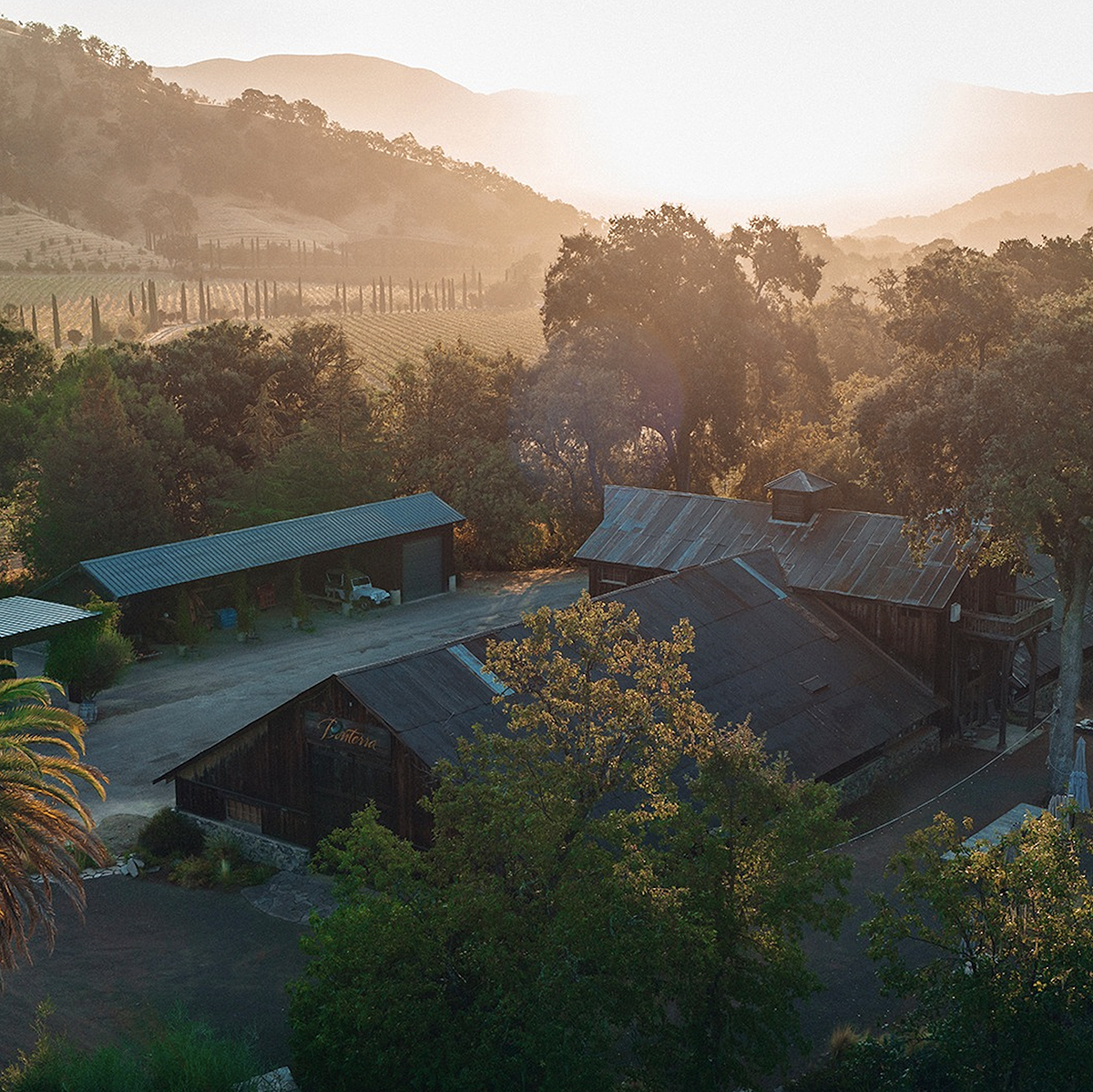
Every bottle of wine has a story that is more than meets the eye. As you stroll through the vineyards you will feel the rich soils that feed the vines that intertwine and gently kiss one another; a story of how a wine is brought to life with love. At Bonterra Organic Estates, each bottle tells a story that calls to a future where planet, society, and industry harmoniously co-exist. Where nature and wine are not in opposition.
We had the pleasure of gaining insights from Joseph Brinkley, Bonterra’s Senior Director of Regenerative Organic Development. Bonterra is heralded as America’s #1 Organic Winery due to its commitment to regenerative organic agriculture.
Bonterra is the largest producer of Regenerative Organic Certified® wines in the U.S. Are there specific biological products that have delivered the biggest measurable improvements in soil health and vine resilience?
As a part of our ongoing commitment to holistic farming and operational excellence, we trial and use a variety of organic-approved products and methods. To date, the most effective biological tool has been the use of predatory mites in some years when we have had mite flare-ups. We have also used soil-applied biologicals to maximize root growth and increase nutrient availability. As far as the aerial plant parts go, we have used an organic-approved biofungicide tank mixed with our more commonly used organic fungicides to activate the vines’ physical and biochemical defenses, thus reducing the amount of sulfur or oils needed to keep the fruit free of powdery mildew.
You use sheep, chickens, and insectaries extensively. Can you describe one “closed-loop” biological system you’re proud of?
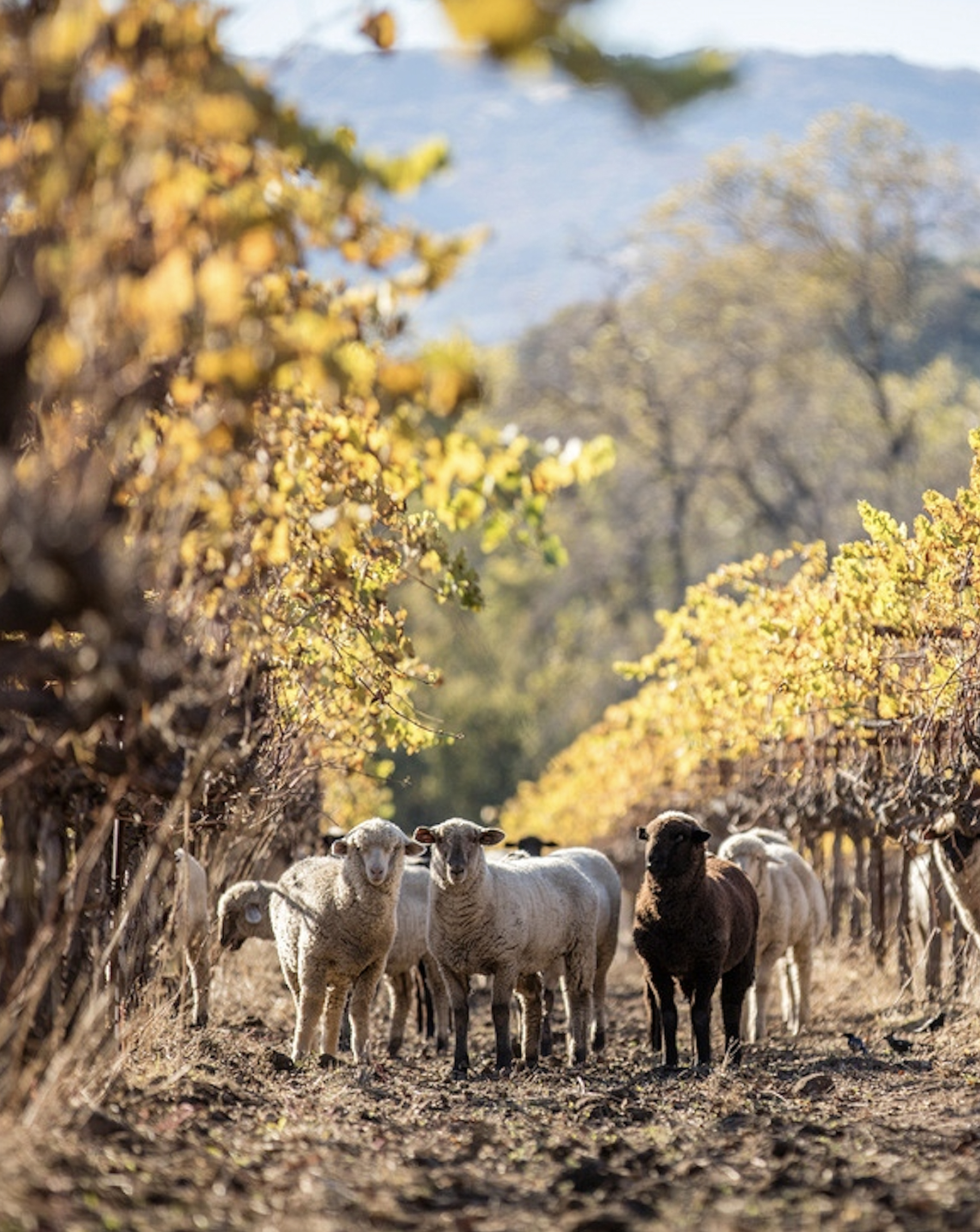
We have used sheep in our vineyards for about 15 years. The benefits they bring to our soil health, including weed management and soil fertility, are noteworthy and something we are proud of. The integration of ruminants in a perennial cropping system using cover crops is a great example of a “closed-loop” system. We sow a cover crop in the fall. We bring the sheep in late winter once we have a good stand of forage for them. They eat the cover crop down as well as any other plants growing in the middles and under vine. We typically get about 2 to 3 rotations, allowing for re-growth and multiple grazing passes.
Each one of these growth cycles adds organic matter, root exudates, and other necessary soil health components. The sheep not only save us multiple tractor passes, saving both diesel usage and the associated emissions, but additionally, the sheep provide living fertility to the vineyards – something that tractors can’t provide. In this way, we are utilizing the wisdom of the natural world and life processes to create healthy and resilient farm systems with great yields, high-quality fruit, and minimizing the potential negative impacts of what could otherwise be an extractive, high-input farming approach.
How do you track and measure carbon sequestration or biodiversity gains from your biological practices?
In addition to biennial soil sampling with more traditional organic matter testing, in 2024, we installed several Agrology meters in our vineyards. These are devices that measure soil and environmental parameters to assess soil health, moisture levels, and other factors critical for regenerative agricultural practices. More specifically, the meters measure soil respiration, transpiration, and CO2 flux in the canopy, all of which can be used as indicators of healthy soil functioning.
Climate change is generating hotter summers. How are biological inputs helping you manage water stress and canopy health?
Biological inputs are just one tool, but it’s really our holistic, regenerative farming system that makes the biggest impact. By creating healthier soils through cover crops, compost, integrating sheep, reduced tillage, and well-timed farming practices, we improve water retention and root strength, which helps vines stay resilient during extreme heat events. That translates to more balanced canopies, better protection for the fruit, and less stress during hotter, drier summers, all yielding higher quality fruit.
What’s the biggest myth conventional growers still believe about scaling biological and organic farming?
I’d like to start by saying that growers, like in any other business, respond to market signals and consumer demand. The best way to increase the uptake of regenerative farming in any sector is for our customers to support, via their dollar, those growers and businesses committed to these practices. As more distributors, retailers, restaurants, and individual consumers demand products grown and produced regeneratively, the more uptake we will see on the grower side of regenerative farming.
There is also the myth that organic and regenerative farming cannot scale because it is inherently too expensive or too complex. What is often labelled as “higher cost” is a short-term view that ignores the true cost of conventional farming, including impacts to clean air, water, soil health, and community well-being. When those externalities are accounted for, organic systems are far more economically rational in the long run.
Consumer buying decisions indeed fuel the market. Concerning the organic wine category, it is an integral element to building a community where regenerative farming is not shied away from due to cost or the myth that scaling is impossible. What makes this possible is a growing community of vineyards practicing regenerative farming, highlighting the benefit of sustainable wine cultivation beyond a singular point of view. Bottomline, what happens on farms is not isolated. It is important to see where and how your food grows and understand that it is part of an ecosystem that must coexist.
Is organic wine a niche? Older demographics may believe so and lean towards non-organic wines due to cost. A buying decision that may also be rooted in the idea that all wines are the same. Or that don’t be fooled by the sticker adage, a common viewpoint held by older wine consumers. Many people do not think about agriculture’s reliance on pesticides and synthetic fertilizers when purchasing a bottle of wine. What is needed to change this? More education and entry to the industry. The more the merrier will help this niche category become an industry standard, encouraging those who may be price-conscious to see the personal benefits of consuming organic wines. The benefits will outweigh the cost when they are pushed to the forefront of marketing initiatives.
Grgich Hills Estate began farming organically without synthetic inputs in 2000. Their holistic approach to organic farming and winemaking, while building a community by fostering education, is promising for the future of organic winemaking. Ivo Jeramaz, Head Winemaker and VP of Vineyards and Production at Grgich Hills Estate, believes it is possible to farm without pesticides and fertilizers, a belief rooted in his formative years in Croatia. He provides great insights into the benefits of regenerative agriculture.
Grgich Hills earned Regenerative Organic Certification in December 2022. Which biological amendments do you rely on most for your famous Rutherford Dust Cabernet?
Vermicompost tea, fish emulsion/hydrolysate, and liquid kelp are the amendments we find are most useful across all our vineyards, including in Rutherford.
How does reducing soil compaction tie into your overall biological soil-health strategy?
Reducing soil compaction is vital to our soil health strategy. Because compacted soil is lacking in porosity, oxygen and water are unable to be easily stored – a substantial hindrance to the development of microbial life. Maintenance of our soil microbiome is a pillar of our soil health strategy, so compaction is something we prevent and attempt to undo wherever possible. The most effective strategy to limit soil compaction is through the root growth of plants.
Can you describe your cover-crop and compost program and how soil organic matter has increased over the decades?
The primary purpose of our composting regimen is to enhance the growth of our cover crop. The composition of seeds we sow varies from year to year, as we take note of which plants do best in each of our different vineyards. The combination of compost and cover crops enriches microbial life, which directly contributes to increases in SOM, as their remains become a part of that metric.
It was my goal when I began managing our vineyards to increase SOM across our vineyards, but I found that organic and even biodynamic methods were unable to affect growth meaningfully, and we remained at around 2.5% SOM across our vineyards. After the implementation of regenerative farming, we saw a 2% increase in SOM as of 2025 across our 360 acres of vineyard.
With Napa getting hotter and drier, which biological practices are now essential to achieve physiological ripeness without excess sugar?
Companion planting is the most salient way to see the benefits of regenerative agriculture when it comes to the changes in climate that have been on the rise in recent years. Not only do the root systems of these plants structure soil, improving water holding capacity, but they also act as soil armor. We allow the dead plant matter to remain in our rows throughout the summer, as it creates a barrier against the sun that keeps our soil cool. This is crucial during late summer heat waves, as bare soil cooked in the sun allows heat to rise and cook the ripening grapes on the vine. This protection means we don’t have to worry about overripening even in the most excessively hot years.
Mike Grgich proved California could beat France in 1976. What would he say today about farming regeneratively and biologically on the same Rutherford Bench?
When Mike Grgich was growing up in former Yugoslavia prior to the Second World War, all farming was performed naturally, without chemical additions. I was brought up much the same way in the Croatian town where I grew up, so we had that advantage when coming to the United States; we knew that farming without artificial pesticides and fertilizers was feasible. Mike was a big supporter of our natural farming initiatives, and I know he would be proud to see how far we’ve come.
Both wineries exemplify hope in a bottle. A return to the past and a leap forward into a future. Regenerative farming is a great possibility. Those who question this surely have never experienced the delight of opening a Grgich Hills Estate 2014 Miljenko’s Selection Cabernet Sauvignon or felt the wonders of a Biodynamic®, Single Vineyard 2020 ‘The McNab’ Cabernet Sauvignon by Bonterra Organic Estates dance on their palate. But when they do, there is no denying that the hands that nurture the soil and harvest each grape with the utmost respect in Mother’s garden, free from pesticides and fertilizers, made this. No, not all wines are the same; some are simply unique and of value, wines worth more than their weight in gold. Wines that give more than they take.
How does the “One Big Beautiful Bill Act” affect your grape crop insurance?
By Trevor Troyer, Agricultural Risk Management
I have been getting asked, “How does the One Big Beautiful Bill Act affect my crop insurance?” Does it make any changes to grape crop insurance? Will it lower my premium or increase my premium?
Lawmakers passed the One Big Beautiful Bill Act (OBBBA) on July 4, 2025. There were several changes made to the Federal Crop Insurance Act that affect growers, and the OBBBA made several improvements to crop insurance programs. Crop Insurance is a valuable tool that is used to mitigate risk and is an essential safety net for many producers. It also included updates and increased coverage options and, in some cases, higher premium support. Below I have summarized some of these to help you understand how you may be impacted in the next year.
One of the most significant changes that was made was expanding the benefits for Beginning Farmer or Rancher (BFR). In the past if you qualified as a Beginning Farmer or Rancher you would receive an additional premium subsidy of 10 percentage points greater for the coverage level you had chosen. In addition to the extra premium subsidy all administrative fees would be waived. You would also receive an increased percentage of any transitional yields from 60% to 80%. This means when you have a low yield that triggered the Yield Adjustment (YA) endorsement in your production database, you would be able to substitute a higher percentage. BFR benefits in the past lasted for 5 years. With the passing of the OBBBA these benefits are now expanded to 10 years. In addition to the 10% premium subsidy rate a BFR will receive an additional 5% premium subsidy for the first two crop years. Then a 3% premium subsidy rate increase for the third year and an additional 1% for the fourth year. These BFR changes will increase premium support and allow more growers to qualify for this benefit, and for a longer period.
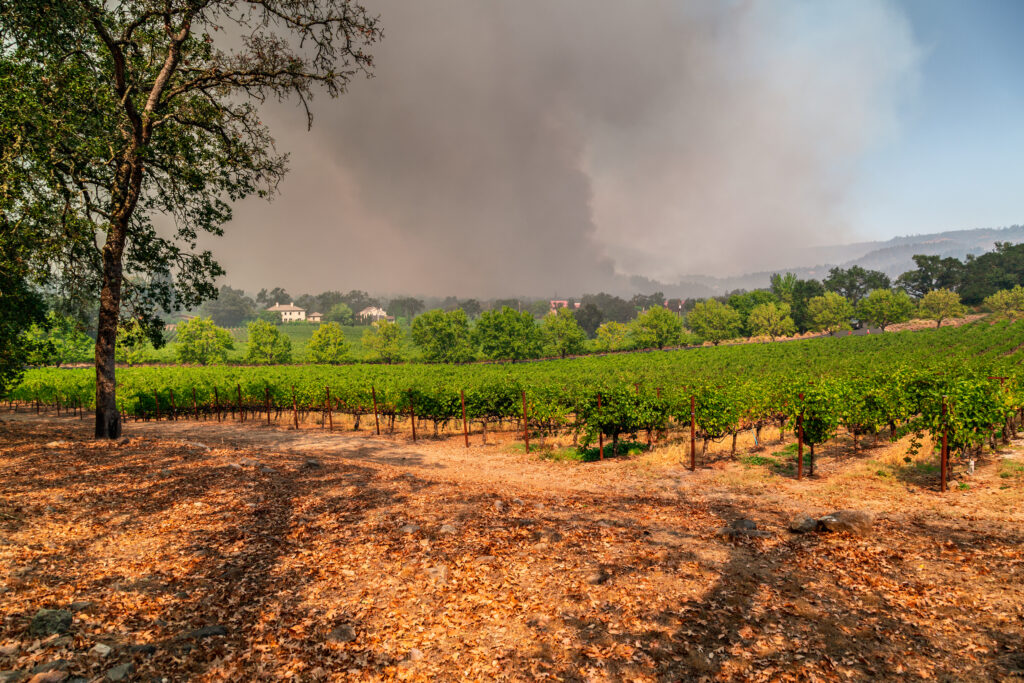
The One Big Beautiful Bill Act also amended Area Based Crop Insurance Coverage and Supplemental Coverage Option. I won’t get into all of these because some are not applicable to grape crop insurance. One that does interest a lot of vineyard owners is Fire Insurance Protection Smoke Index or the FIP-SI endorsement. The premium subsidy for this has gone from 65% to 80%. This may make it an interesting option for those in areas where fires can cause significant smoke taint damage.
Here is what it says in the USDA Risk Management Agency’s Fire Insurance Protection – Smoke Index Fact Sheet – “The Fired Insurance Protection-Smoke Index (FIP-SI) Endorsement covers a portion of the deductible of the Grape Crop Provisions when the insured county experiences a minimum number of Smoke Events as determined by the Federal Crop Insurance Corporation (FCIC) in accordance with the Smoke Index Data Provisions (SIDP) and identified in the actuarial documents.”
This endorsement is based on your underlying policy’s guarantee. In other words, the prices per ton and the average tons used for the underlying policy and your coverage level. You can never cover 100% of your average production with crop insurance. You can only cover up to 95%, even though a policy may not have that high coverage. Grape crop insurance only goes to 85%, and this is done with optional endorsements etc. FIP-SI covers the deductible portion up to 95%. If you had 50% coverage on your grapes it would cover 45% of your deductible. If you had 75% coverage the FIP-SI endorsement would cover 20%, etc.
You sign up for Fire Insurance Protection – Smoke Index by January 31st. This is the Sales Closing Date for Grape Crop Insurance in California. The insurance period for FIP-SI begins on June 1st and ends on November 10th. You do not need to report your acres separately as it uses the underlying policies acres.
Here is the Cause of Loss from the 26-FIP-SI Endorsement:
Causes of Loss
(a) This Endorsement provides protection for Smoke Events that meet the County Loss Trigger when the minimum number of Smoke Events occur in the county as identified in the actuarial documents. Triggered counties will be determined after the end of the Insurance Period.
(b) Individual vineyard yields are not considered under this Endorsement. It is possible that your individual vineyard may experience reduced yield(s) and you do not receive an indemnity under this Endorsement.
(c) The notice provisions in section 14(b) of the Basic Provisions do not apply to this Endorsement.
(d) Once published, FCIC’s determination in section 8(a) is final and is a matter of general applicability, presumed to be accurate, and will not be changed.
So, you may not have any Fire or Smoke damage to your vineyard or grapes but still receive a payment. This is based on your County. No adjuster is required for this. You are not required to file a Notice of Loss with your crop insurance agent. Or you may have a loss and get a claim payment for your grape crop insurance and for FIP-SI as well.
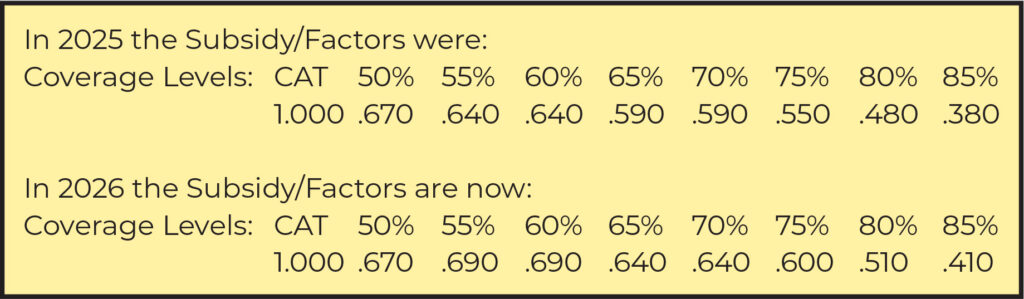
Another major change that comes out from the OBBBA, that will make difference to a grower’s premium, is an increased subsidy rate.
An increase in the subsidy portion of the premium will decrease the Producer Premium for that same level. It also opens the door for some to increase coverage as they will be receiving more support. A higher coverage level means that you have more of a chance of having a claim paid.
With grape crop insurance you are covering an average of your historical production per variety. Coverage levels go from 50% to 85%. You have a built-in production deductible with your coverage. If you choose 70% coverage you have a 30% deductible. You would have to have a loss of over 30% to have a payable claim. So, if you had a loss of 40% of your average production you would get paid on the 10% past your deductible.
With an increased subsidy it might make sense for some to move up another 5% or more in coverage.
As an example, I ran a quote for 10 acres of Chardonnay in Sonoma County in California. The set price per ton is $2401. I used an average of 4 tons per acre for the quote. So, at 70% your guarantee would be 2.8 tons per acre. If you harvest under that you would have a payable claim. The 2025 premium per acre was $119, for the 10 acres $1190. For 2026 the premium per acre is $99.70 and then for 10 acres $997. As you can see this does make a difference. Whether or not you decide to move up in coverage, saving money while mitigating risk is always important.
USDA Risk Management Agency Administrator Pat Swanson said. “We’ve moved quickly to put American farmers first, ensuring they have the protection they need when unavoidable natural disasters occur. We encourage all producers to work with their crop insurance agent to understand how these historic changes will benefit their operations.”
Engagement Strategy
How tasting rooms can build connection, loyalty, & increased visits
By Corey Krejcik, Founder of Thirsty Bandit
In the world of wine, customer engagement is more than just a marketing metric—it’s the heart of what transforms a casual visitor into a loyal guest, a repeat buyer, and ultimately a wine club member. Today’s consumers want more than just a pour in a glass; they want connection, storytelling, and a sense of belonging. Taking time to create a thoughtful engagement strategy ensures that your tasting room stays top-of-mind, stands out amongst regional competitors, and becomes the cornerstone for creating memorable experiences that keep guests coming back for all their celebrations in life. In this article, we will explore just a few proven strategies to help tasting rooms and wine brands strengthen their presence, grow their audience, and increase tasting room traffic.
Showcasing Authenticity Through Social Media
Social media has quickly become the first touchpoint for consumers to discover a brand. Decisions are made in seconds based on an Instagram post or Reel, and visitors immediately begin assessing whether your tasting room feels approachable, exciting, educational, or simply forgettable. The goal isn’t perfection, it’s preserving your brand’s presence, personality, and authenticity.
More than ever, guests want to peek behind the curtain: to see how your wines are made, meet the people who pour them, and learn something new along the way. A strong social media presence allows prospective visitors to understand who you are as a company and what you value. It’s an opportunity to highlight your ethics, celebrate partnerships with local businesses, share sustainability initiatives, and highlight the culture that defines your space.
This step is vital for all tasting rooms and wine-based businesses. Being visible in the community, announcing your presence with confidence, and spotlighting the individuals who make your operation thrive all contribute to why someone may choose to walk through your door. Every post, every Reel, should feel like an open invitation—a glimpse into your world that encourages guests to spend their time within your space.
Tapping Into User-Generated Content
User-generated content is one of the most powerful tools available to tasting rooms and wine brands—largely because it’s free and inherently trustworthy. When guests share their experiences, they offer something no marketing campaign can manufacture: raw, honest perspective. Promoting your brand and style is only half the work; the rest delivers an experience that guests genuinely want to talk about. Today’s consumers rely heavily on peer reviews, photos, and firsthand stories before choosing a new space to visit.
Enhancing your physical environment plays a significant role in this. Cozy seating areas, thoughtful design details, intentional signage, and photo-friendly corners invite guests to document their visit. Everyone who walks into a tasting room is looking to make a memory and creating a space that supports that is both an honor and a privilege.
Once these moments exist, encourage tagging and sharing across social platforms. Small incentives—monthly giveaways, discounts, or simple recognition—go a long way in motivating guests to post photos and reels. Reposting their content expands your reach and amplifies your message in a way that feels genuine because it comes from real visitors. When you create an atmosphere that people want to return to repeatedly, their shared experiences begin to build momentum—allowing your brand identity to start working for you.
Partner With
Influencers Who Match Your Brand
The world of influence has changed. Today, it’s no longer only about celebrity endorsements, it’s about voices right from your community, or even from your own backyard. For tasting rooms, micro-influencers are often the sweet spot. These are people steadily growing their presence on social media, with high engagement and audiences that feel like real, vibrant communities.
These influencers become trusted voices. When guests see someone on screen who feels like them, someone who lives the lifestyle they aspire to, values the same things, and shares their interests—your message resonates.
The most effective partnerships are built on alignment. Seek creators whose content naturally blends with your world: lifestyle, food, wine education, travel, local tourism, or hospitality. Their authentic experiences—from behind-the-scenes tours to candid meals and tastings—allow them to showcase your tasting room in a way that feels genuine, not promotional.
Invite them to highlight aspects of your space that reflect your identity: private tastings, cellar tours, intimate winemaker dinners. These experiences convert their audience’s curiosity into real interest—and often lead to strong traffic and new tastings from people inspired by those shared moments.
Embracing this kind of community-based marketing—engaging with people who genuinely believe in what you do—doesn’t just create awareness. It builds connection, interest, and momentum that brings more guests through your door.
The Power of
Email Marketing
While social media gets attention, email builds action. Tasting rooms with strong email programs consistently drive more return visits and larger purchases.
Segment your audience into groups such as club members, locals, tourists, online purchasers, and event attendees. Tailor content accordingly:
• New releases or limited wines
• Behind-the-scenes vineyard or cellar updates
• Invitations to seasonal events
• Special offers or bundle opportunities
• Seasonal offers or bundles for the holidays
• Wine club releases
• Winemaker specific events
• “Come back and see what’s changed” messages.
Each one of these topics has the power to bring someone new or back into your tasting room. Creating a catchy hook, curated photos, fun text or testimonials, or an action item only aids in bringing traffic to your door.
The most effective emails tell stories. They aren’t just sales pitches. They remind customers why they love your brand and why they should come back right after they’ve left. You want to be the spot. Where they go to celebrate, catch up with friends, come for knowledge and education, and become someone your staff recognizes as soon as they walk through the door.
Expanding Reach with Virtual Engagement
Virtual content isn’t a pandemic-only strategy, it remains a powerful way to stay connected with customers (and their friends) who can’t visit often. Creating a series of short educational reels focused on wine basics, tasting notes, food pairings, and “Wine 101” insights keeps long-distance guests engaged and ensures your tasting room stays on their must-visit list when they’re back in the area.
Fun, personality-driven content filmed with your staff and winemaker—especially casual Q&As—consistently leads to high engagement and fosters a sense of belonging among viewers. From personal experience, I’ve had guests come in specifically to try the wine featured in a video. These moments allow your team to shine, show off their expertise, and share in the excitement of what is being poured.
Virtual tasting programs are another strategy that continues to deliver results. Families may grow and spread out geographically, but a Zoom tasting brings everyone together in a meaningful way. Wine has no geographical boundaries; it connects people across time zones and continents. Offering curated tasting kits for these sessions adds both convenience and value.
This kind of core content goes a long way in keeping guests near and far tied to your story. Virtual tastings can strengthen remote teams, provide a fun twist for book clubs, or simply offer a laid-back Friday night experience. It has become one of my go-to recommendations whenever programming is discussed.
In-person events still carry tremendous weight and drive significant engagement, but we now have the world at our fingertips. Leveraging virtual opportunities helps you remain connected to the people championing your success—no matter where they are.
Seasonal
Programming That Creates Urgency
Seasonality is one of the strongest drivers for return traffic. Curated, limited-time experiences give guests a reason to visit now rather than later. When programs run too long, they create an “I’ll get to it eventually” mindset—and that delay can stretch into months. Short windows create urgency, and urgency inspires action.
Seasonal programming also generates excitement. Social posts, emails, and phone inquiries can build a lively buzz around your tasting room. When word spreads that an event is high demand, it elevates not just that experience, but the visibility and desirability of your entire event calendar. Some strong seasonal ideas include:
• Cozy fire pits with s’mores-and-wine pairings
• Wine and chocolate experiences for Valentine’s Day
• Classes and pairings hosted by local cheesemongers
• Winemaker dinners
• Rosé release events
• Harvest festivals with grapes fresh from the vineyard
• Barrel tastings and cellar previews
The magic of seasonal events lies in their exclusivity—no one wants to miss out. Leaning into those short, intentional windows pays off. And if something is wildly successful, bring it back later in the year with a “Back by popular demand” twist. It shows your guests that you listen to them, pay attention to what resonates, and genuinely care about delivering the experiences they want.
Engaging Wine Club Members Like True Insiders
Your wine club is the heartbeat of your business. The people who commit to your brand and your wines are one of your most invaluable assets. They’re lifetime fans, enthusiastic advocates, and often the reason new guests walk through your doors. They become walking billboards for everything you do—and not capturing or nurturing that energy is a missed opportunity in every way.
Members love to feel exclusive, so designing a club structure that offers member-only bottles, tiered perks with meaningful benefits, and private events just for them helps reinforce that feeling of being “in.” In with you, in with the brand, and part of something they genuinely care about.
Our job as educators and stewards of hospitality is to make that experience feel personal. Adding birthday touches, noting preferred wine styles, or remembering intricate details about their lives all make a profound impact. These gestures remind your wine club members that they matter—because they do.
When members feel appreciated and recognized, retention naturally increases. We see it all the time: a guest joins, has an incredible experience, brings a friend to a pickup event, that friend joins, and the cycle continues. Their enthusiasm becomes contagious.
If you’re unsure where to begin, start here. Build your club, find your people, and pour energy into it. The return will be felt tenfold inside your tasting room—and you’ll be grateful if you invested in it from the start.
Building Local Partnerships and Community Presence
Supporting local is bigger—and more important—than ever. In the post-pandemic landscape, consumers are more intentional about choosing small businesses and hometown staples over big-box options. If you’re searching for something to pair with your wines, your own backyard is often the best place to start.
Not only do local products naturally complement your wines through shared regionality, but purchasing from nearby producers also puts money right back into the mom-and-pop shops your community loves. Local cheeses, fresh honey, artisan chocolates, they’re all just down the street, and they add depth and meaning to every experience you create.
Highlighting these businesses creates a beautiful cyclical effect: you feature their products, your guests fall in love with the pairing, they visit those partners and then return to your tasting room when you collaborate again. The support flows both ways, strengthening visibility, sales, and community connection.
There are countless ways to collaborate with local partners. A few favorites include:
• Local restaurants for pairing dinners
• Boutiques for sip-and-shop events
• Nonprofits for fundraisers or charity tastings
• Hotels, gyms, wedding venues, and other hospitality businesses
• Breweries and distilleries for dual-passport promotions.
Today’s customers are actively looking for this kind of involvement. They want to see how you’re engaging with and supporting the community around you. They want to visit the businesses you highlight and feel confident that their dollars are making a difference. Neglecting those local connections can turn new guests away before they even taste your wine.
Supporting local partners ultimately supports your own success. When you lift each other up, everyone flourishes—because at the end of the day, we’re all on the same team.
Conclusion:
Engagement Is an Ecosystem
Customer engagement isn’t a single tactic—it’s a holistic ecosystem that touches every aspect of the tasting room experience. Each of the strategies outlined above strengthens your business, positioning it as a must-visit destination for both new and returning guests.
When visitors feel like they are part of your story—truly part of the team—they don’t just come once. They return, bring friends, advocate for your brand, and celebrate life’s moments alongside you. That kind of loyalty is priceless.
For me, there is no greater honor than this. We are memory-makers, educators, innovators, and facilitators of joy. We have the unique opportunity to create something magical—experiences rooted in community, identity, and shared passion. Taking the time to thoughtfully enhance your tasting room and all it offers solidifies your space as a grounding point in your community. And honestly, isn’t that an incredible thing to be?
Malolactic Inhibitors in Winemaking
Practical tools for reliable fermentation control
By: Andreea Botezatu, Ph.D., Associate Professor and Extension Enology Specialist, Texas A&M AgriLife Extension
Malolactic fermentation plays a central role in winemaking and can be either beneficial or detrimental depending on wine style and chemistry. In some wines it contributes complexity and softness, while in others it reduces freshness or creates instability. The challenge is not deciding whether MLF is good or bad, but ensuring that it happens only when it fits the intended wine profile. This challenge has become more pressing in warm growing regions, where fruit often arrives with unusually high pH values that make spontaneous MLF more likely and more difficult to control.
Traditional approaches include temperature control, sulfur dioxide management, and sanitation, but these methods alone are often insufficient for modern high pH wines. Additional tools such as lysozyme, chitosan based products, DMDC, nisin and fumaric acid now play important roles in suppressing or delaying malolactic activity. The following sections describe how these inhibitors work and how to use them effectively in commercial winemaking.
Winemakers often inhibit MLF to preserve the crisp aromatics of delicate whites such as Riesling, Muscat, Sauvignon Blanc, Trebbiano, and Blanc du Bois. These wines rely on bright acidity and fragile aroma compounds that can be dulled by malolactic activity. Off dry and sweet wines are also at risk because residual sugar provides a nutrient source for lactic acid bacteria, increasing the likelihood of haze, volatile acidity, and off odors. Sparkling wine bases require microbial stability before tirage, because unwanted MLF in bottle can cause turbidity or pressure issues.
Warm climate fruit presents unique challenges. Grapes may arrive with pH values above 4.0, and sometimes even above 4.2. Tartaric acid additions may not fully correct such elevated pH, and alcoholic fermentation can increase the pH further. Once pH rises above 3.8 or 4.0, sulfur dioxide loses much of its antimicrobial power, allowing lactic acid bacteria to grow quickly. Excessive tartaric acid additions can result in a sharp, unbalanced palate, so winemakers must sometimes suppress MLF even in red wines where full conversion is traditional.
Sulfur dioxide remains the most widely used tool for inhibiting MLF. The active antimicrobial form is molecular sulfur dioxide, and its effectiveness depends strongly on pH. At pH around 3.1 to 3.3, relatively small free sulfur dioxide additions can suppress Oenococcus oeni. At pH 3.6 or higher, the required free sulfur dioxide concentration becomes very high and may cause sensory defects. Binding reactions further reduce the available molecular sulfur dioxide. Although sulfur dioxide is essential, it becomes unreliable as the sole inhibitor in high pH wines.
Lysozyme provides targeted inhibition of Gram positive bacteria. Derived from egg white, it breaks down the cell walls of Oenococcus oeni, Pediococcus species, and Lactobacillus species, while leaving yeast unaffected. Lysozyme can delay MLF until alcoholic fermentation finishes, suppress early spontaneous activity, or prevent MLF entirely in wines where freshness is a priority. Its limitations include allergen labeling requirements, potential protein instability, and the need for bentonite fining before bottling. It is effective but less reliable at very high pH.
Chitosan derived from fungal sources provides another microbial control option. It disrupts bacterial cell membranes and promotes flocculation and settling. Chitosan reduces populations of lactic acid bacteria and Brettanomyces and can be used in both tank and barrel applications. It functions primarily as a population reducer rather than a permanent inhibitor. When paired with sulfur dioxide, chitosan can significantly improve microbial stability, particularly in moderately high pH wines.
DMDC, also known as Velcorin, is a strong antimicrobial agent typically used at bottling. It inactivates essential microbial enzymes and kills yeasts and bacteria quickly. DMDC breaks down into carbon dioxide and methanol within hours, leaving no sensory trace. Because it is toxic in concentrated form, DMDC must be applied with certified dosing equipment. It is particularly useful for sweet wines, low sulfur wines, and high pH wines, providing strong protection at packaging even when other inhibitors have limitations.
Fumaric acid has become a valuable tool because it serves two roles simultaneously. It is both a potent acidifier and an effective inhibitor of malolactic activity. Fumaric acid is significantly stronger than tartaric acid, so small additions can produce meaningful reductions in pH. This is especially useful in warm climate wines where starting pH values are high and tartaric acid alone cannot achieve the desired acidity. Fumaric acid also suppresses Oenococcus oeni, and additions of 300 to 600 mg per liter can delay or prevent MLF. Its dual action makes it one of the most efficient tools for improving stability and sensory balance in high pH wines.
Nisin is an antimicrobial peptide produced by Lactococcus lactis and is gaining attention as a possible MLF inhibitor. It targets Gram positive bacteria including Oenococcus oeni, Pediococcus species, and certain Lactobacillus species by disrupting their cell membranes. Nisin is approved for food use in many applications, but approval for wine varies by region and must be verified before use. When permitted, it can be effective at low concentrations and does not affect yeast. Its effectiveness can be influenced by binding reactions in wine, but it remains a promising option for warm climate winemakers working with high pH grapes.
Environmental factors remain central to MLF control. Cooler temperatures slow lactic acid bacteria considerably, and storing wine at 8 to 10 degrees Celsius can halt or delay MLF. Alcohol concentration can inhibit bacteria, although the effect varies among strains. pH is the single most influential natural control factor. Wines at pH 3.2 or lower resist MLF naturally, while wines above pH 3.6 encourage rapid bacterial growth. Wines above pH 4.0 are extremely challenging to stabilize without a multifaceted inhibition strategy.
Effective inhibition strategies typically involve combining several tools. A well managed sulfur dioxide program and cold storage provide the base layer. Lysozyme offers targeted control of Oenococcus oeni. Chitosan reduces microbial populations and strengthens sulfur dioxide activity. Fumaric acid increases acidity while inhibiting malolactic metabolism. DMDC at bottling provides a strong final safeguard for wines at high microbial risk. Used together, these tools create a robust defense system that protects wine quality and stability.
If MLF begins unexpectedly, prompt intervention is essential. Corrective measures may include increasing sulfur dioxide to achieve molecular targets, cooling the wine, adding lysozyme if allowed, applying chitosan to reduce bacterial populations, racking off lees, sterile filtration, and applying DMDC at bottling. Unintended MLF often signals deeper problems such as inadequate sanitation, poor sulfur dioxide control, or inconsistent temperature management. Addressing these issues reduces long term risk.
As climate patterns shift and more wineries pursue fresher, lower sulfur styles, reliable MLF inhibition becomes increasingly important. Modern inhibitors provide flexibility across diverse wine styles and chemistry conditions. A careful combination of chemical, biological, and environmental strategies remains the most effective path to producing stable, expressive, high quality wines.
For more information please contact…
Andreea Botezatu, Ph.D.
Assistant Professor of Enology and Extension Specialist.
Texas AgriLife Extension, Department of Horticultural Sciences.
E-Mail: abotezatu@tamu.edu
Phone: 979-845-8563
Demystifying Wine for the Next Generation
Q&A with Winemaker Eric Martella

By: Allie Nelson
As both an educator and winemaker, Erik Martella has spent decades thinking about how people encounter wine, not just as a beverage, but as an experience shaped by history, hospitality, and human connection. A Lecturer and Wine Specialist in Appalachian State University’s Department of Chemistry and Fermentation Sciences and proprietor of Erik Martella Wines, Martella brings together industry experience and a deep belief in experiential learning.
That philosophy is at the heart of the Wine and Fine Dining for Emerging Professionals Program, a two-day immersive initiative Martella created at the university. The program introduces participants to the fundamentals of wine, fine dining, and professional etiquette through behind-the-scenes restaurant experiences, tastings, and a culminating fine-dining meal shared with local business and community leaders.
Martella reflects on the motivations behind the program, what students are seeking from wine experiences, and how innovation in education and American viticulture can shape a more engaged wine culture for the next generation.
How did the idea for the Wine and Fine Dining for Emerging Professionals program come about? The idea was actually born of frustration with all the hand-wringing within the industry about decreasing wine sales. While those conversations are important, it seems that the only solutions being offered are either technology (social media, AI, novel packaging) or the old “make wine accessible” trope. I wanted to do something concrete to get more people excited about the history, traditions, stories, and experiences associated with fine wine.
What gap did you see in students’ preparation for professional life that this program is designed to fill?
The disruptions from the COVID shutdown meant that many families were simply unable to include fine dining experiences in their lives while these students were growing up. And, as young adults, they haven’t been of drinking age long enough to have had much of an opportunity to explore the world of wine. This program walks students through the fundamentals of wine and fine dining, including table manners and etiquette, from the perspective of the Business Meal, an experience they are likely to encounter very soon after graduating.
What did you want students to feel and understand at each stage of the course?
I wanted students to feel like they had a back-stage pass to the world of wine and fine dining. The first session is a behind-the-scenes tour focusing on how restaurants operate, how service works, how intention shapes experience. Students see that what can seem fancy for its own sake is actually based on core ideals of quality and creating amazing experiences. But all this requires the efforts of real people, so I thought it was important to also inspire empathy among the students for hospitality professionals.
The wine session provides basic vocabulary and orientation to wine without overwhelming them. We emphasize that tasting is subjective, but language matters. By the time they reach the final dinner at Artisanal, the goal is for students to feel curiosity and excitement about tasting unfamiliar wines, not anxiety or self-consciousness.
In the etiquette session, I wanted the information to be very tactical. While a lot of this information seems like common sense, people don’t know it unless they’ve been taught it. Having the students pre-read the materials puts everyone on a level playing field and prepares them for the group exercises that make up the session. Here, I wanted students to come away feeling like they had real strategies for presenting themselves well and putting others at ease during fine dining experiences.
For the culminating dinner, I wanted students to understand first-hand how amazing good wine, good food, and good company can be, and I wanted them to come away with one thought: “I want more of this!”
What conversations did you see unfolding at the culminating dinner between students and community leaders, and why are those intergenerational interactions so important?
What stood out most was how quickly the conversations moved beyond career advice. Yes, there were questions about graduate school and career paths, but real connections were made. In a post-event survey, the Table Hosts overwhelmingly supported keeping the ratio of three students to one Host rather than increasing the number of students at each Host’s table. They valued the opportunity to make deeper connections as much as the students did.
Those intergenerational interactions matter because they humanize success. Students see accomplished professionals as people who once felt unsure themselves. At the same time, the professionals are reminded what it feels like to be new to the world of wine and fine dining.
How would you describe the mindset of this new generation when it comes to wine? What are they curious about? What turns them off?
Most students see wine as just another option in the world of beverage alcohol, and they see it primarily in terms of its intoxicating effect. Most students have no idea what the world of wine has to offer in terms of aroma, flavor, and food pairing experiences, let alone its variety, history, and geographical and cultural significance, until someone opens that door for them. Opening that door also helps them understand why some wines are so expensive and others quite affordable. High prices are a major turn off, especially when students don’t understand how they might be justified. Interestingly, for some, knowing that high-priced wines exist makes them suspicious of lower-priced wines. So they avoid wine all together: “I can never afford the good stuff and the cheap stuff must be bad!” Fortunately, students are curious about everything and they’re surprisingly adept at taking individual wines on their own terms.
What role does education play in shaping how this generation will engage with wine long-term?
Unfortunately, the attention economy seems to reward three main voices related to wine: wineries with big advertising budgets, the ‘no safe level of alcohol’ crowd, and those who use the wine snob trope for humor or derision. Educational programs such as this one are ways to provide this generation with a broader perspective on wine and to bring context to what those voices are saying. I think efforts like this, driven by the industry and by enthusiasts rather than by individual brands, is the key to reaching this generation. We need to be telling the story of Wine, with a capital W, and we need to do it in-person with glasses and open bottles in front of us. That’s what gets students excited and engaged, and it just so happens that’s also the foundation that gives every winery’s brand story its power, including my own.
You’ve spent more than two decades in wine, and now focus on muscadine-based fine wines. How do you define “innovation” in American viticulture today?
I think a lot of innovation in American viticulture falls into the category of increasing precision. Take irrigation as an example. It’s only been about 75 years since flood irrigation and movable sprinklers were replaced by PVC-piped permanent overhead sprinklers, which were themselves replaced by drip and root-zone irrigation. Now, some vineyards are focusing on irrigation strategies that encourage vines to develop the deep root systems compatible with dry farming. It’s always been about giving vines water, but leveraging science and technology to do it ever more thoughtfully and precisely.
There’s also a lot of exciting work happening around developing new varieties and rediscovering old ones to meet changing or challenging growing environments. I’m a big fan of this kind of innovation: matching the grape variety to the ecosystem instead of asking the ecosystem to bend to the grape you want to grow. We just need some marketing innovation to go along with it to help sell esoteric varieties!
What excites you most about the potential of native American varieties, like muscadine, that haven’t historically been seen as “classical” fine-wine grapes?
Cabernet Sauvignon, Chardonnay, etc. are global. There’s good reason for that – they turn into amazing wine! Working with native varieties is an opportunity to create wines with totally unique characteristics that can’t be found anywhere else in the world. I secretly enjoy it when people are somewhat befuddled by their first glass of dry muscadine wine. By the second glass people usually have a pretty good idea what the wine is all about and how its parts actually do fit together. But you only get one opportunity to taste it for the first time!
If you could offer one piece of advice to young professionals feeling intimidated by wine, what would you tell them?
If you’re intimidated by wine, you’re probably worried about getting the show aspects of the experience wrong. There’s really only one component of the show that you need to worry about: smelling and tasting wine with focus and intent. You can know nothing about a wine and even mispronounce its name, but if you take your time to authentically experience the wine, to savor it, your audience will be happy…even if the audience is yourself and you’re second-guessing the bottle you picked up at the grocery store for no other reason than it was on sale.
About the Author: Allie Nelson is a communications professional specializing in food and beverage, with more than nine years of industry experience working with small wineries and hospitality-driven businesses. She holds the WSET Level 3 Award in Wines and is a French Wine Scholar and American Cider Professional. She currently serves as PR Manager and Digital Marketing Specialist at Tabletop Media Group in North Carolina, where she works with food and beverage clients including the North Carolina Wine & Grape Council.
