


Page 23 - GrapevineMarApr 2022
P. 23
In The Winery


               tank to the concrete. In recent years, some owners
               in the U.S have elected to mount the tank onto a
               stainless steel ‘skirt’ which is then infilled with a
               concrete slurry after the tank has been placed on
               the concrete slab. This method is very common in
               New Zealand and results in a very clean and tidy
               facility, with no projections for hoses to catch on
               and easy wash-down.”


                 While some tank styles were once commonly used
               for winemaking, they are becoming less common
               now in modern times. For instance, concrete has
               been a less common material for wine tanks in
               recent decades due to safety concerns and the pop-
               ularity of stainless-steel tanks. Yet more recently,
               concrete has become much safer to use and comes              Image Credit: Onguard Seismic Systems
               in egg shapes and square shapes to increase the
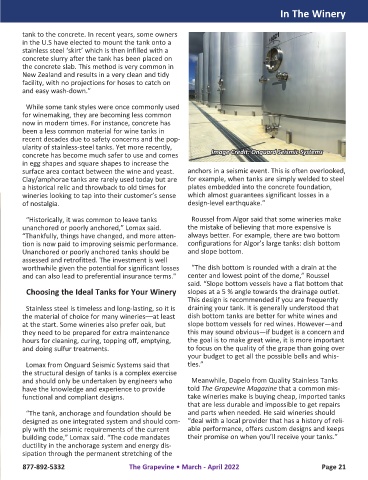
               surface area contact between the wine and yeast.     anchors in a seismic event. This is often overlooked,
               Clay/amphorae tanks are rarely used today but are    for example, when tanks are simply welded to steel
               a historical relic and throwback to old times for    plates embedded into the concrete foundation,
               wineries looking to tap into their customer’s sense   which almost guarantees significant losses in a
               of nostalgia.                                        design-level earthquake.”

                 “Historically, it was common to leave tanks          Roussel from Algor said that some wineries make
               unanchored or poorly anchored,” Lomax said.          the mistake of believing that more expensive is
               “Thankfully, things have changed, and more atten-    always better. For example, there are two bottom
               tion is now paid to improving seismic performance.   configurations for Algor’s large tanks: dish bottom
               Unanchored or poorly anchored tanks should be        and slope bottom.
               assessed and retrofitted. The investment is well
               worthwhile given the potential for significant losses    “The dish bottom is rounded with a drain at the
               and can also lead to preferential insurance terms.”   center and lowest point of the dome,” Roussel
                                                                    said. “Slope bottom vessels have a flat bottom that
                Choosing the Ideal Tanks for Your Winery            slopes at a 5 % angle towards the drainage outlet.
                                                                    This design is recommended if you are frequently
                 Stainless steel is timeless and long-lasting, so it is   draining your tank. It is generally understood that
               the material of choice for many wineries––at least   dish bottom tanks are better for white wines and
               at the start. Some wineries also prefer oak, but     slope bottom vessels for red wines. However—and
               they need to be prepared for extra maintenance       this may sound obvious—if budget is a concern and
               hours for cleaning, curing, topping off, emptying,   the goal is to make great wine, it is more important
               and doing sulfur treatments.                         to focus on the quality of the grape than going over
                                                                    your budget to get all the possible bells and whis-
                 Lomax from Onguard Seismic Systems said that       tles.”
               the structural design of tanks is a complex exercise
               and should only be undertaken by engineers who         Meanwhile, Dapelo from Quality Stainless Tanks
               have the knowledge and experience to provide         told The Grapevine Magazine that a common mis-
               functional and compliant designs.                    take wineries make is buying cheap, imported tanks
                                                                    that are less durable and impossible to get repairs
                 “The tank, anchorage and foundation should be      and parts when needed. He said wineries should
               designed as one integrated system and should com-    “deal with a local provider that has a history of reli-
               ply with the seismic requirements of the current     able performance, offers custom designs and keeps
               building code,” Lomax said. “The code mandates       their promise on when you’ll receive your tanks.”
               ductility in the anchorage system and energy dis-
               sipation through the permanent stretching of the

               877-892-5332                      The Grapevine • March - April 2022                            Page 21


          Grapevine Main Pages GV030422_Layout 1-1  copy.indd   21                                                  2/24/22   3:34 PM

