


Page 69 - Grapevine JanFeb 2021_REV
P. 69
International News


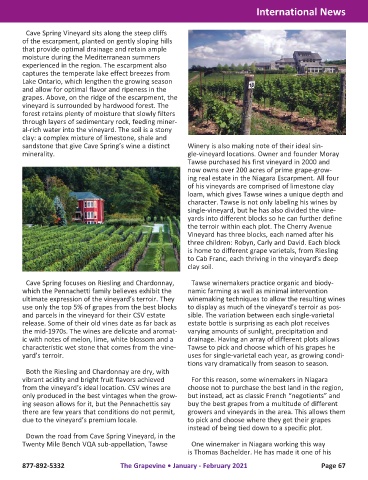
                 Cave Spring Vineyard sits along the steep cliffs
               of the escarpment, planted on gently sloping hills
               that provide optimal drainage and retain ample
               moisture during the Mediterranean summers
               experienced in the region. The escarpment also
               captures the temperate lake effect breezes from
               Lake Ontario, which lengthen the growing season
               and allow for optimal flavor and ripeness in the
               grapes. Above, on the ridge of the escarpment, the
               vineyard is surrounded by hardwood forest. The
               forest retains plenty of moisture that slowly filters
               through layers of sedimentary rock, feeding miner-
               al-rich water into the vineyard. The soil is a stony
               clay: a complex mixture of limestone, shale and
               sandstone that give Cave Spring’s wine a distinct    Winery is also making note of their ideal sin-
               minerality.                                          gle-vineyard locations. Owner and founder Moray
                                                                    Tawse purchased his first vineyard in 2000 and
                                                                    now owns over 200 acres of prime grape-grow-
                                                                    ing real estate in the Niagara Escarpment. All four
                                                                    of his vineyards are comprised of limestone clay
                                                                    loam, which gives Tawse wines a unique depth and
                                                                    character. Tawse is not only labeling his wines by
                                                                    single-vineyard, but he has also divided the vine-
                                                                    yards into different blocks so he can further define
                                                                    the terroir within each plot. The Cherry Avenue
                                                                    Vineyard has three blocks, each named after his
                                                                    three children: Robyn, Carly and David. Each block
                                                                    is home to different grape varietals, from Riesling
                                                                    to Cab Franc, each thriving in the vineyard’s deep
                                                                    clay soil.

                 Cave Spring focuses on Riesling and Chardonnay,      Tawse winemakers practice organic and biody-
               which the Pennachetti family believes exhibit the    namic farming as well as minimal intervention
               ultimate expression of the vineyard’s terroir. They   winemaking techniques to allow the resulting wines
               use only the top 5% of grapes from the best blocks   to display as much of the vineyard’s terroir as pos-
               and parcels in the vineyard for their CSV estate     sible. The variation between each single-varietal
               release. Some of their old vines date as far back as   estate bottle is surprising as each plot receives
               the mid-1970s. The wines are delicate and aromat-    varying amounts of sunlight, precipitation and
               ic with notes of melon, lime, white blossom and a    drainage. Having an array of different plots allows
               characteristic wet stone that comes from the vine-   Tawse to pick and choose which of his grapes he
               yard’s terroir.                                      uses for single-varietal each year, as growing condi-
                                                                    tions vary dramatically from season to season.
                 Both the Riesling and Chardonnay are dry, with
               vibrant acidity and bright fruit flavors achieved      For this reason, some winemakers in Niagara
               from the vineyard’s ideal location. CSV wines are    choose not to purchase the best land in the region,
               only produced in the best vintages when the grow-    but instead, act as classic French “negotients” and
               ing season allows for it, but the Pennachettis say   buy the best grapes from a multitude of different
               there are few years that conditions do not permit,   growers and vineyards in the area. This allows them
               due to the vineyard’s premium locale.                to pick and choose where they get their grapes
                                                                    instead of being tied down to a specific plot.
                 Down the road from Cave Spring Vineyard, in the
               Twenty Mile Bench VQA sub-appellation, Tawse           One winemaker in Niagara working this way
                                                                    is Thomas Bachelder. He has made it one of his

               877-892-5332                    The Grapevine • January - February 2021                          Page 67


          Grapevine Main Pages G010221_Layout 1-1 .indd   67                                                        12/21/20   2:15 PM

