


Page 42 - GrapevineMarApr 2022
P. 42
Around The Vineyard


               any, do biodynamic practices have when it comes        Following the 2020 wildfires, Brooks Wines only
               to helping mitigate the impacts of wildfires on the   made about 20% of its annual production due to
               West Coast and global climate change? Following      the level of impact the smoke had on grape qual-
               are reflections from five Pacific Northwest Detmer   ity. “Once you’re under a blanket of smoke, there
               Certified Biodynamic focusing on addressing these    doesn’t seem to be much you can do about that,”
               21st-century challenges in their vineyards and win-  Jarreau said.
               eries.
                                                                                  As a biodynamic winemaker, Jarreau
                                                                                has a limited number of tools in her
                                                                                toolkit from an organic standpoint to
                                                                                alter their wines. “We did a number of
                                                                                experiments. Some wines were really
                                                                                nice and drinkable, but others were
                                                                                obviously smoke impacted.” Ultimately
                                                                                they chose to sell their wine in bulk,
                                                                                and it was bottled and used elsewhere.
                                                                                Also, they launched a fundraiser to
                                                                                compensate their growers for their
                                                                                losses.

                                                                                  Moving forward, they are exploring
                                                                                how animals can be part of the solu-
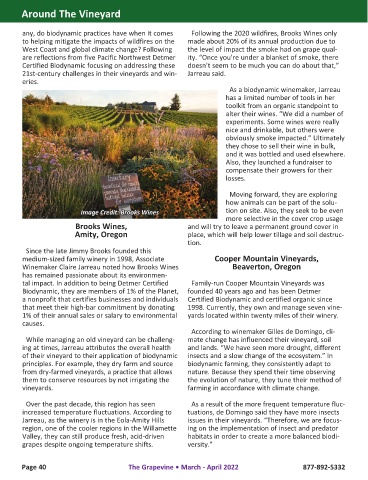
                                  Image Credit: Brooks Wines                    tion on site. Also, they seek to be even
                                                                                more selective in the cover crop usage
                                Brooks Wines,                       and will try to leave a permanent ground cover in
                                Amity, Oregon                       place, which will help lower tillage and soil destruc-
                                                                    tion.
                 Since the late Jimmy Brooks founded this
               medium-sized family winery in 1998, Associate                 Cooper Mountain Vineyards,
               Winemaker Claire Jarreau noted how Brooks Wines                     Beaverton, Oregon
               has remained passionate about its environmen-
               tal impact. In addition to being Detmer Certified      Family-run Cooper Mountain Vineyards was
               Biodynamic, they are members of 1% of the Planet,  founded 40 years ago and has been Detmer
               a nonprofit that certifies businesses and individuals   Certified Biodynamic and certified organic since
               that meet their high-bar commitment by donating      1998. Currently, they own and manage seven vine-
               1% of their annual sales or salary to environmental   yards located within twenty miles of their winery.
               causes.
                                                                      According to winemaker Gilles de Domingo, cli-
                 While managing an old vineyard can be challeng-    mate change has influenced their vineyard, soil
               ing at times, Jarreau attributes the overall health   and lands. “We have seen more drought, different
               of their vineyard to their application of biodynamic   insects and a slow change of the ecosystem.” In
               principles. For example, they dry farm and source    biodynamic farming, they consistently adapt to
               from dry-farmed vineyards, a practice that allows    nature. Because they spend their time observing
               them to conserve resources by not irrigating the     the evolution of nature, they tune their method of
               vineyards.                                           farming in accordance with climate change.


                 Over the past decade, this region has seen           As a result of the more frequent temperature fluc-
               increased temperature fluctuations. According to     tuations, de Domingo said they have more insects
               Jarreau, as the winery is in the Eola-Amity Hills    issues in their vineyards. “Therefore, we are focus-
               region, one of the cooler regions in the Willamette   ing on the implementation of insect and predator
               Valley, they can still produce fresh, acid-driven    habitats in order to create a more balanced biodi-
               grapes despite ongoing temperature shifts.           versity.”


               Page 40                           The Grapevine • March - April 2022                            877-892-5332


          Grapevine Main Pages GV030422_Layout 1-1  copy.indd   40                                                  2/24/22   3:34 PM

