Vineyard Insurance

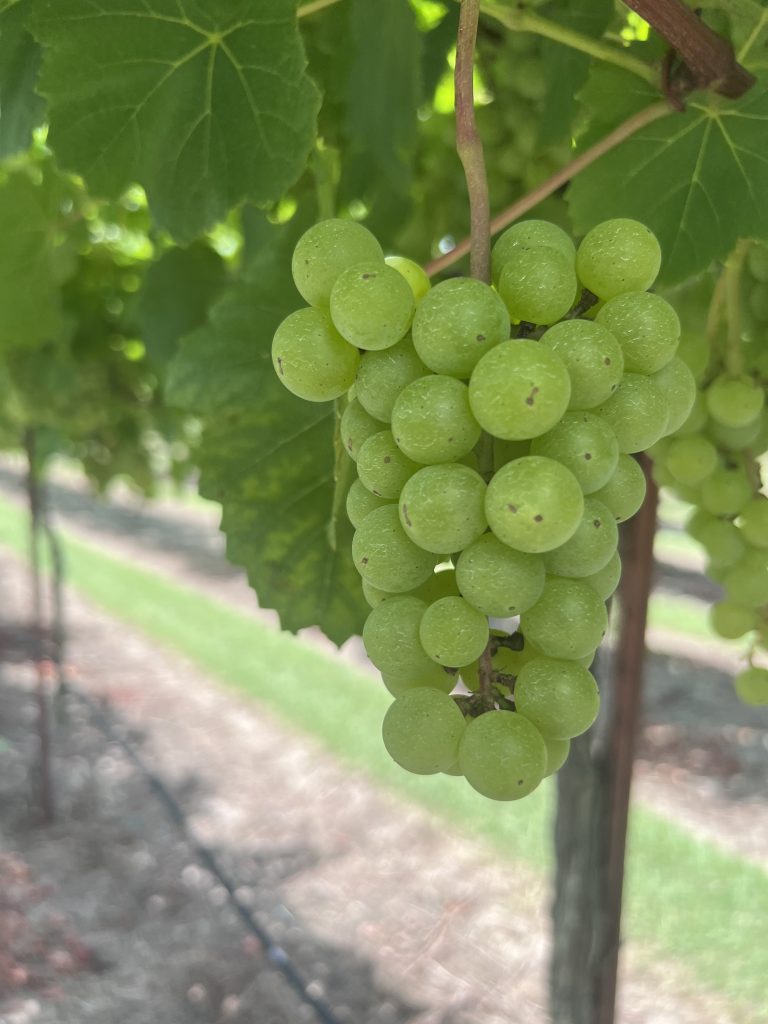
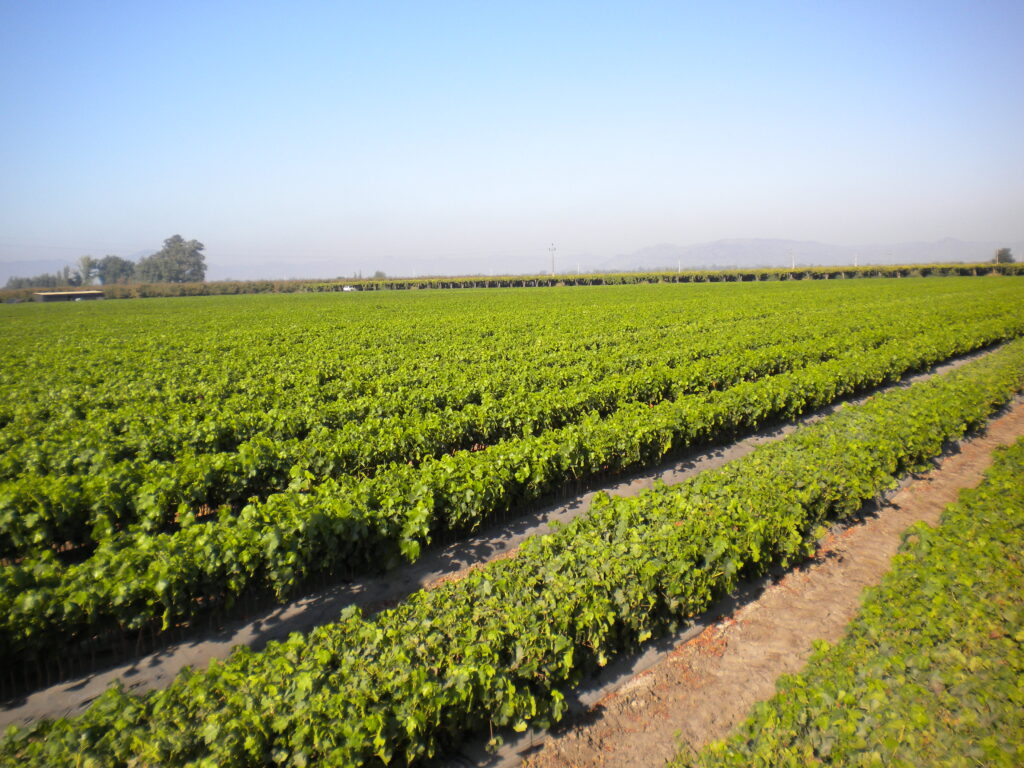
PHOTO SHOWING A VINEYARD GROWING ON TRELLIS

By Trevor Troyer, Agricultural Risk Management

That’s a question I get a lot.  Some growers think that they should wait until they know for certain that they have a loss when they finish harvest.  You should turn in a claim as soon as there is a weather event or other cause of loss situation.  This helps to document what is happening during your growing season as it unfolds.  It also gives the adjuster time to come out if needed to inspect before the harvest.

  You might have a situation where you have a late frost/freeze event for multiple nights.  Primary buds may be damaged in your vineyard.  Other nearby vineyards may have mild to moderate damage.  It’s good to document these weather events when they happen and open up a claim.  You may have other weather events that occur over the growing season that contribute to your tonnage being low.

  Even if you are not sure about the extent of the damage, you should contact your agent and have them open up a claim for you.   Depending on your coverage level you may think that you won’t have a loss.  At this point don’t worry about the deductible percentage of your crop insurance policy.  Call your crop insurance agent and open up a claim.  It is not hard for the adjuster to withdraw the claim after you harvest, if it turns out your production was ok.

  It is always better to have a claim open than not in this type of situation.  There’s no way early in the season to figure out how much your yield will be down but if the claim is open and documented its better for all.  This gives time to have an adjuster assigned, time to do an inspection and to document any visible damage and then to document any added damage several months later as well.  Damage can very well be cumulative during the year should you experience several weather events and other things that could reduce your yield.

  Here’s what it says in the 2025 Basic Provisions of the Common Crop Insurance Policy:

14. Duties in the Event of Damage, Loss, Abandonment, Destruction, or Alternative Use of Crop or Acreage

Your Duties –

     (a) In the case of damage or loss of production or revenue to any insured crop, you must protect the crop from further damage by providing sufficient care.

     (b) You must provide a notice of loss in accordance with this section. Notice provisions:

(1) For a planted crop, when there is damage or loss of production, you must give us notice, by unit, within 72 hours of your initial discovery of damage or loss of production (but not later than 15 days after the end of the insurance period, even if you have not harvested the crop).

  Per the USDA Risk Management Agency, you have from 72 hours of the original cause of loss or until you discover it and up to 15 days after the end of insurance.  I do not recommend waiting till 15 days after the insurance period, however, it does happen, and I am sure some growers will do it.  I have had vineyard owners call me and say that their tons are down for a certain variety.  That’s fine but I recommend that you open up a claim across all the varieties you have planted.  Then we have to piece together what happened.  What was the cause of loss?  When was it?  Was this the only thing or were there other weather events?  It is always much easier for everyone if the claim is turned in close to the date of damage.

  Losses do get paid but it is much easier on everyone, including the grower, if you report causes of loss right after they occur.  That doesn’t mean you have to know for sure that you will have a loss, just that an event happened that may cause your crop to be reduced by harvest.

  Here are the Causes of Loss out of the Grape Crop Provisions from the USDA RMA:

10. Causes of Loss.

(a) In accordance with the provisions of section 12 of the Basic Provisions, insurance is provided only against the following causes of loss that occur during the insurance period:

     (1) Adverse weather conditions;

     (2) Fire, unless weeds and other forms of undergrowth have not been controlled or

     pruning debris has not been removed from the vineyard;

     (3) Insects, except as excluded in 10(b)(1), but not damage due to insufficient or improper application of pest control measures;

     (4) Plant disease, but not damage due to insufficient or improper application of disease

     control measures;

     (5) Wildlife;

     (6) Earthquake;

     (7) Volcanic eruption; or

     (8) Failure of irrigation water supply, if caused by an insured peril that occurs during the insurance period.

(b) In addition to the causes of loss excluded in section 12 (Causes of Loss) of the Basic Provisions, we will not insure against damage or loss of production due to:

      (1) Phylloxera, regardless of cause; or

      (2) Inability to market the grapes for any reason other than actual physical damage from an insurable cause specified in this section. For example, we will not pay you an indemnity if you are unable to market due to quarantine, boycott, or refusal of any person to accept production.

  Number 1 on the list is Adverse weather conditions.  This could be just about anything, frost, freeze, drought, excess moisture, and hail.   Fire is listed as well and because of this there can be damage several miles away from any given fire due to smoke.  If you do have smoke taint you will need to get an independent lab to check for smoke taint markers.  You can also have rejection letters from wineries stating that they don’t want the grapes due to smoke taint. Insect and disease damage are covered but you must show that you have application records, for example, spraying.  Wildlife is another one that can cause problems – deer, raccoons, birds and others.  Earthquake and Volcanic Eruption I have never seen a claim turned in for.  .  Number 8, Failure of irrigation water supply, is something that can be a big problem for growers.  Certain areas rely heavily on irrigation.  If there is a drought and your well or reservoir dries up, then that is a payable cause of loss.

  Don’t wait to contact your agent about a potential situation or adverse weather that may reduce your crop.  Even if you are not sure if something is a covered loss it is best to reach out to your agent.  That is what your they are there for.

A Note on Federal & State(s) Tied House Distinctions

a man sitting in front of his laptop computer on his cell phone

By Brad Berkman & Louis J. Terminello of Greenspoon Marder LLP

For the beverage marketer, operating within its confines is virtually mandated to avoid regulatory scrutiny and potential administrative action by state and federal regulatory authorities. Most marketers do indeed adhere to general tied house restrictions when developing and executing programs. However, it is also likely that the distinction between federal and state tied house laws is overlooked. The purpose of this article is to instruct the reader on the distinctions between the two to avoid potential missteps that may lead to regulatory adversity. An effective way to conduct this analysis is to examine select statutory and code provisions.

A General View of State Tied House Evil

  Using Florida law as an example, Florida Statue §561.42 is the state’s tied house statute. In part, the statute states:

561.42 Tied house evil; financial aid and assistance to vendor by manufacturer, distributor, importer, primary American source of supply, brand owner or registrant, or any broker, sales agent, or sales person thereof, prohibited; procedure for enforcement; exception.—

(1) No manufacturer, distributor, importer, primary American source of supply, or brand owner or registrant of any of the beverages herein referred to, whether licensed or operating in this state or out-of-state, nor any broker, sales agent, or sales person thereof, shall have any financial interest, directly or indirectly, in the establishment or business of any vendor licensed under the Beverage Law; nor shall such manufacturer, distributor, importer, primary American source of supply, brand owner or brand registrant, or any broker, sales agent, or sales person thereof, assist any vendor by any gifts or loans of money or property of any description or by the giving of any rebates of any kind whatsoever. No licensed vendor shall accept, directly or indirectly, any gift or loan of money or property of any description or any rebates from any such manufacturer, distributor, importer, primary American source of supply, brand owner or brand registrant, or any broker, sales agent, or sales person thereof;

  Florida’s tied house evil essentially prohibits upper-tier industry members from having a direct or indirect financial interest in a vendor of alcoholic beverages. They shall also not assist any vendor by any gifts or loans of money or property of any description or by the giving of any rebates of any kind whatsoever (unless there is a stated exception in the law).

  By comparison, below is a partial reprint of the Texas tied house evil statue. Even a quick reading shows similarities with Florida law.

Sec. 102.07.  PROHIBITED DEALINGS WITH RETAILER OR CONSUMER.  (a)  Except as provided in Subsections (b), (d), and (g), a person who owns or has an interest in the business of a distiller, rectifier, wholesaler, class B wholesaler, or winery, or the agent, servant, or employee of such a person, may not:

(1)   own or have a direct or indirect interest in the business, premises, equipment, or fixtures of a retailer;

(2)   furnish, give, or lend any money, service, or thing of value to a retailer;

(3)   guarantee a financial obligation of a retailer;

(4)  make or offer to enter an agreement, condition, or system which will, in effect, amount to the shipment and delivery of alcoholic beverages on consignment;

(5)   furnish, give, rent, lend, or sell to a retail dealer any equipment, fixtures, or supplies to be used in selling or dispensing alcoholic beverages, except that alcoholic beverages may be packaged in combination with other items if the package is designed to be delivered intact to the ultimate consumer and the additional items have no value or benefit to the retailer other than that of having the potential of attracting purchases and promoting sales;

(6)  pay or make an allowance to a retailer for a special advertising or distribution service;

(7)   allow an excessive discount to a retailer; or

(8)  offer a prize, premium, gift, or similar inducement to a retailer or to the agent, servant, or employee of a retailer.

  The essential takeaway is that, generally, state-level tied house statutes essentially contain similar prohibitions, including:

•Direct or indirect interest by an upper tier industry member in a vendor

•The upper tier industry member provides money or things of value to a vendor.

Federal Tied House by Comparison

At the federal level, alcohol beverage law regulations can be found in Title 27 Chapter 1 of the Code of Federal Regulations (C.F.R.), and federal tied house regulations can be found in Part 6.1 through 6.153 of that section.

Interestingly, certain parts of federal tied house prohibitions resemble those of the states, as illustrated in the following section of the C.F.R.:

§ 6.21 Application.

Except as provided in subpart D, it is unlawful for any industry member to induce, directly or indirectly, any retailer to purchase any products from the industry member to the exclusion, in whole or in part, of such products sold or offered for sale by other persons in interstate or foreign commerce by any of the following means:

(a) By acquiring or holding (after the expiration of any license held at the time the FAA Act was enacted) any interest in any license with respect to the premises of the retailer;

(b) By acquiring any interest in the real or personal property owned, occupied, or used by the retailer in the conduct of their business;

(c) By furnishing, giving, renting, lending, or selling to the retailer, any equipment, fixtures, signs, supplies, money, services or other thing of value, subject to the exceptions contained in subpart D;

(d) By paying or crediting the retailer for any advertising, display, or distribution service;

(e) By guaranteeing any loan or the repayment of any financial obligation of the retailer;

(f) By extending to the retailer credit for a period in excess of the credit period usual and customary to the industry for the particular class of transactions as prescribed in § 6.65; or

(g) By requiring the retailer to take and dispose of a certain quota of any such products.

  A careful examination of the above reveals an expressed and distinct element of federal tied house. The reader should pay specific attention to the use of the term exclusion, which is further defined in § 6.151 and § 6.152:

§ 6.151 Exclusion, in general.

(a) Exclusion, in whole or in part, occurs:

(1) When a practice by an industry member, whether direct, indirect, or through an affiliate, places (or has the potential to place) retailer independence at risk by means of a tie or link between the industry member and retailer or by any other means of industry member control over the retailer; and

(2) Such practice results in the retailer purchasing less than it would have of a competitor’s product.

(b) Section 6.152 lists practices that create a tie or link that places retailer independence at risk. Section 6.153 lists the criteria used for determining whether other practices can put retailer independence at risk.

§ 6.152 Practices which put retailer independence at risk.

The practices specified in this section put retailer independence at risk. The practices specified here are examples and do not constitute a complete list of those practices that put retailer independence at risk.

(a) The act by an industry member of resetting stock on a retailer’s premises (other than stock offered for sale by the industry member).

(b) The act by an industry member of purchasing or renting display, shelf, storage or warehouse space (i.e., slotting allowance).

(c) Ownership by an industry member of less than a 100 percent interest in a retailer, where such ownership is used to influence the purchases of the retailer.

(d) The act by an industry member of requiring a retailer to purchase one alcoholic beverage product in order to be allowed to purchase another alcoholic beverage product at the same time.

  Placing retailer independence at risk is a fundamental element of the concept of exclusion. TTB investigators, when examining a case for exclusion, look for the presence of evidence of Subsection 2 § 6.151 – that is, did the industry members’ actions result in the retailer purchasing less of a competitor’s product as a result of those actions or practice. § 6.152 provides us with guidance as to practices that give rise to exclusion, but that same section states that the list is not exhaustive.

  For the alcohol beverage marketer, this presents a unique challenge. After all, the goal of both the sales and marketing teams is to increase sales through shelf or back bar presence or placement on a wine list. A natural extension of a placement of this sort is that another brand very likely will lose its spot on the aforementioned selling real estate.

  The lesson to be gleaned under federal tied house regulations is that brand builders should put practices in place that arguably feature their brands at retail and allow consumers to make the choice. Retailers will govern themselves based on consumer preference rather than on the exclusion of one brand over another, thereby putting retailer independence at risk.

  Tide house violations can take many forms and can occur both at the state and federal levels. Investigators are well versed in building and prosecuting cases of tied house violations. Though the discussion above does not address the full scope of potential violations, it is incumbent on marketers of alcohol to be aware of state and federal laws in this area and tailor their programs with the objectives of sales success and regulatory compliance.

Covered Bridges Winery

Covered Bridges Winery main building from the outside

By Gerald Dlubala

Covered Bridges Winery started on 75 picturesque acres in Winterset, Iowa, in Madison County. Yes, that Madison County, of The Bridges of Madison County movie fame, and the birthplace of John Wayne.  They have since expanded to another 12 acres where the winery now sits.

  Kevin and Jean Fifo and their friends, Kevin and Rose Boyle, purchased the property in 2002.

  “We were all living in the suburbs of Des Moines,” said Fifo. “Kevin Boyle grew up on a farm in north central Missouri. At the time I traveled for a living but were looking to get out of the hustle and bustle of city life. We looked at properties and found 75 acres in Winterset, about 30 minutes southwest of Des Moines. We contacted the Boyles and asked if they wanted to buy half and start a winery. They were on board, so we moved into the farmhouse on the property, even though we really wanted to build. There were 50 acres of trees and 15 acres in the Conservation Reserve Program (CRP), along with a small farm pond. The acreage was reasonably clear, but we had to buy out of the CRP contract. Besides that, going through it and preparing it for planting was a straightforward process.  The first grapes went in the ground in 2004, and our first commercial harvest was 2008.”

Getting Started

  “We spent the first eight years out on the farm with the winery housed in an old, converted pole shed,” said Fifo. Our production facility started at 800 square feet with an output of as much as 1000 cases annually. But other than the wine, there weren’t any truly good reasons to come out here. We were just a property on a dead-end gravel road. We bought the property the winery now sits on about 10 years ago, and Kevin Boyle, a furniture maker and cabinet maker by trade, designed and laid out the new building. I was a project manager by trade, and we both had done the contracting on our own homes, so I acted as the general contractor to get everyone lined up and arranged and built the building. We then opened the new tasting room and production facility in August 2016.”

  “The first varietals we planted included Marechal Foch, Frontenac, La Crosse, Edelweiss, and Geneva Red,” said Fifo. “We planted a little of everything, working with other wineries and universities to get an education as to what we are getting into. We wanted to plant cold-hardy varietals that were in demand and known to produce excellent-tasting Iowa-made wines.”

  Fifo told The Grapevine Magazine that they found the Geneva Red varietal to have a better tannin structure than other reds and subsequently turned out to be a good blender.

  “We still use it today as an integral part of our blends,” said Fifo. “We’ve since added La Crescent and Marquette vines and will wait for spring to see what happens there. Madison County sits in a big shallow bowl and is about a half zone colder than our surrounding counties. We tried to grow Seyval grapes, but they’ve never grown well here, and Marquette has also struggled at times. We’ve restructured our Marquette vines but are still struggling with production at times.

Local Influence Resonates Throughout the Winery

  “We are in Madison County, Iowa, of Bridges of Madison County fame, so we have a tourist-oriented county because of that movie and by being known as the birthplace of John Wayne,” said Fifo. “We are fortunate that the tourists are already coming to this area for those reasons, but Iowa wineries are also very much a tourism industry, so we contribute to bringing in winery tourism.”

  “Sitting in the North River Valley just north of Winterset, we have one of the most outstanding views in the entire state,” said Fifo. “We have a wraparound patio to look down into the valley across farm fields with a picturesque silo. Guests really enjoy the peace and quiet that accompany those views.”

  Fifo said that the prominent feature in their tasting room is a 16-foot arch-topped window overlooking the valley.

 “With views like ours, building orientation was, and is, important,” said Fifo. “There are wood-finished ceramic tile floors reminiscent of our famous covered bridges. We feature local artwork in our tasting room, from quilts to photographs to pencil sketches and stained glass. All of our wall sconces are custom-made with bridge silhouettes on them. There is a powerful local influence on everything we do and produce. We’ve always been adamant about supporting locals, and it’s the foundation of everything we do. Our founding principle was to be 100% Iowa-grown and produce wines. To this day, we still are. Most of our traffic is Midwest-based, but we bring in people from all over the world because of the bridges. We are open year-round, featuring a wide variety of music, events, and local vendors. Hours vary per season, but events go on year-round. You must remain truly diverse in this business and give folks a reason to return.”

  “As to available wines, we continue to feature over 20 labels available here at the winery, so there is something for everyone,” said Fifo. “Our wines go from dry to sweet, in reds and whites, and we offer some specialty wines like port-style wines and bourbon barrel-aged reds, which are currently a popular feature. A lesson I’ve learned coming up in this business is that you make sweet wines for customers and dry wines for yourself. Roughly 70% of what we sell has at least some sweetness to it, meaning anywhere from 1 1/2-3 % residual sugar, which, because of the amount of acidity we carry, are considered off-dry wines by Midwestern standards, but are extremely popular. We always rotate two dry reds and two dry whites. These are wines that I’m especially proud of because they’re all Iowa-produced, award-winning, recognized wines. We submitted 11 wines and took home seven golds from the Iowa State Fair commercial competition this past year.”

Lessons From a Winemaker’s Journey

  Fifo reflected on his winemaking journey, which led him to be one of the most awarded authorities in Iowa winemaking. He mentioned three essential keys to his success, all of which he says help him continue living the winery life he loves so much.

•   You need a good product. “It took us eight years to make really good wines from the hybrid grapes we grow,” said Fifo. “It’s easy to get that first bottle sold in the tasting room, but you have to earn the purchase of the second bottle.”

•   You must be able to adapt. “When I first started, all winemaking was based on California wine growing techniques,” said Fifo. “And obviously, we can’t grow California grapes here, so there was a lot of learning about the different grape varietals and acidity levels involved. You can either fight it or embrace it, and we choose to adapt and embrace it.”

•   You need a great venue. “You have to give your guests reasons to come back, and we do that,” said Fifo. “In addition to all of our local charm and outstanding views, our event schedule makes sure that there is always something going on here to make our guests want to come and spend time with us, whether that includes wine-related classes or events, bands, or local markets featuring local vendors that may not have a physical storefront. We do as much as we can outside. We have a 20-by-30-foot outdoor stage for music and events, weather permitting, of course. We feature solo artists, acoustic sets, and duets on our patio, and we can even move some performances indoors if necessary. We can seat 72 inside. We also offer charcuterie plates, pub-style mixes for snacks, and chocolates for wine pairing.”

Future Expectations Include Giving Back

  “We’d really like to perfect our wine club program and get it up and operational no later than November of

this year for our first wine club release,” said Fifo. “Additionally, we’ve built another 40 by 60 feet of enhanced production space, which is almost completed. Our tasting program is stable, as are our event schedules. We host weddings, receptions, graduation parties, corporate events, for example. Wholesale expansion is always tough, but we’re in some local specialty restaurants that take time to educate their staff about Iowa wines. Shelf space is so hard to get, especially for locals.”

  Fifo retired from his day job a couple of years ago, so he’s excited about having the time and opportunity to give back to Iowa’s wine industry. He was named Winemaker of the Year in Iowa in 2020. Additionally, he serves on the Wine Growers Association Board of Directors. He also serves on the Advisory Board at Iowa State with the Midwest Grape and Wine Industry Institute.

  “I’ve earned a good, strong reputation for making quality dry wines,” said Fifo. “I’m immensely proud of that. I’ve presented to the Iowa Wine Growers Association at their annual conference about making dry reds in the Midwest. It’s still a hard sell. To the average person, only sweet wines are produced here in Iowa. I love changing their mind, but they won’t come to that conclusion on their own. They must be convinced. But I love collaborating with other winemakers and helping to bring up and encourage the next generation of winemakers. It’s still an agricultural industry that demands a lot of hard work, so new winemakers need encouragement to keep our industry going. Iowa winemaking is a very cooperative environment, and the best thing that could happen is for more folks here to make great Iowa wines. You want people to go to our wineries, have great times, and seek out other Iowa wineries.”

  Fifo said there is a never-ending set of challenges for winery owners, from chillers and equipment that may not be working correctly to simpler things, including clogged restrooms, so an owner must be well-versed in every facet of a production and service-related business.

  “It really is a great industry,” said Fifo. “We continuously meet great and wonderful people who come through our winery. We’ve also met awesome and interesting characters within the industry. But overall, we’re having a ton of fun here, and I encourage folks to seek us out along with other Iowa wineries for some great experiences and excellent wines.”

  For more information on Covered Bridges Winery, including hours of operation and event schedule:

Covered Bridges Winery

2207 170th Trail

Winterset, Iowa 50273

www.CoveredBridgesWinery.com

Info@CoveredBridgesWinery.com

515-729-WINE

A Plant Health Perspective of Peruvian Viticulture Practices

The author visiting flowering vineyard in Ica, Peru

By  Judit Monis, Ph.D.

Last August I participated in the 2nd International Table Grape Conference (CIUM 2025) in Lima organized by PROVID Peru ( the Peruvian association of table grape producers) as an invited speaker.  I was asked to address the audience on plant health issues related to grapevine grafting.  This is not surprising as I specialize in the study of graft transmissible diseases.  Although I had performed virtual consulting work during the pandemic, this was my first time visiting the viticultural regions in Peru.  Peruvian vineyards are mainly planted for the production of fresh grapes (table grapes) and pisco (a brandy produced from fermented grape juice).  However, a small proportion of grapevine plantings are dedicated to wine production and these are found planted in higher altitude regions (sometimes higher than 10,000 feet) of the country.  Most table grape varieties are patented by privately held genetic development companies.  This presents a challenge to plant propagation as it relates to plant health. While patented varieties are highly traced and inspected for consumption quality features, they do not participate in certified programs and often, it is difficult to obtain information about their health status.  Therefore, it is common and expected to find these varieties infected with graft-transmissible pathogens due to the nature of propagation and the trend of grafting onto rootstocks (material could be infected with graft transmitted pathogens prior to grafting).  

Grapevine Diseases Present in Peruvian Vineyards

  We know that grapevine pathogens (disease causing agents) originated in the same place where Vitis (the grapevine genus) species originated.  These disease agents (bacteria, fungi, and viruses) were introduced to other places in the world with the grapevine propagation and planting material.  Specifically, the varieties and clones that are grown in vineyards around the world belong to the Vitis vinifera species (of Eastern European and Asian origin) while the rootstocks grown commercially belong to American Vitis species.  When grape cultivation started countries were not set up with quarantine programs, neither modern diagnostic tools we use today (e.g., deep sequencing, PCR, ELISA, etc.) to detect pathogens were available.  Consequently, since the early days of grapevine cultivation European and American grapevine pathogens have been moving from one site to another for many generations.  Further, with the present trend of grafting grapevine varieties to rootstocks that are resistant to phylloxera, salinity, and nematodes there is an increased potential of disease transmission  There has been a limited amount of testing surveys in Peru, however, the commonly known diseases caused by fanleaf virus Leafroll viruses, Pinot Gris virus, Vitiviruses, and fungal trunk pathogens have been reported to be present in Peruvian vineyards.  My own work has shown the presence of the Red Globe strain of Grapevine leafroll associated -2 (GLRaV-2 RG) and fungal pathogens.  The most frequently found fungi associated with trunk diseases found were: Phaeomoniela, Phaeoacremonium spp. and Ilionecrtria (previously known as Cylindrocarpon spp.) species.  These pathogens cause rapid and severe decline of plants.  In the projects I was involved, up to a 70% mortality was observed three years after planting.  Although, it is difficult to be a detective when we perform testing after a vineyard has been established, my suspect is that the virus and fungal pathogens were imported to the vineyard with nursery planting material. Therefore, it is critical that foundation and nursery plant material be tested for important pathogens prior to their propagation and planting.

The Climate in Northern Peru Allows Two Yearly Harvests

  During my time in Peru, I had a chance to visit productive vineyard blocks in the Ica region. My visit in August coincided with the South American winter season. I was surprised to see that the vineyard blocks had green foliage and were flowering, rather than being dormant as expected in other grape growing areas I have visited!  I learned that due to Peruvian mild climate, it is possible to manage artificially the vineyard blocks to induce them to produce fruit in desirable timeframes. To accomplish this, the application of chemicals is needed to induce dormancy.  Manipulating the harvest time is a trade advantage as the fruit can enter the American, Chinese, and/or EU markets without competing with Chilean produced fruit.   In the Northern Peruvian grape growing areas such as Piura with a warmer and desertic climate, certain vineyard blocks are managed to allow two yearly harvests. This strategy is used to increase producer’s profits, recuperate investments earlier, and have more flexibility entering the export market.  Highly fertile and vigorous grape varieties  that are pruned twice a year to allow an additional harvest are planted in Piura. The double harvest practice is only possible when applying climate protection systems, such as removable or fixed plastic covers to protect the crop from inclement weather. Although this trip did not allow a personal visit to the Northern region, it was impressive to see the extensivity of the high-tech infrastructure utilized for grape growing from my airplane window. In my opinion, while the increased production of grapes in Peru may appear to be profitable, the vineyard operation creates added stress to the vines.  Consequently, if applied long-term the life span of vineyards will be negatively impacted as stressed vines are more susceptible to diseases caused by bacterial, fungal and/or viral pathogens. 

Conclusions

  Plant certification programs have been developed worldwide to reduce the risk of introducing and propagating plant pests and/or pathogens that are detrimental to grape production.  Although, certification programs are not perfect and do not exclude every important pathogen, it provides one extra level of confidence. My Peruvian colleagues have voiced concern and wish SENASA (the equivalent to USDA APHIS – plant health inspection service) would provide formal quarantine and testing of introduced patented varieties into the country. Plants of patented varieties are restricted, and although they are propagated locally, they had been imported from areas where pathogens are present. It is my hope that in the future, genetic companies that produce patented grapevine varieties be more transparent and participate in quarantine and certification programs to avoid carrying important pathogens that could cause important outbreaks.

  Judit Monis, Ph.D. provides specialized services to help growers, vineyard managers, and nursery personnel avoid the propagation and transmission of disease caused by bacteria, fungi, and viruses in the vineyard.  

Judit (based in California) is fluent in Spanish and is available to consult in all wine grape growing regions of the word.  Please visit juditmonis.com for information or contact juditmonis@yahoo.com to request a consulting session at your vineyard.
T.V. Munson

L to R: Dr. Jeffrey Savell, Vice Chancellor and Dean, College of Agriculture and Life Sciences, Mr. WB Bunson, Ms Susie Munson – TV Munson family members, Dr. Amit Dhingra, Profession and Head, Department of Horticultural Sciences with the ASHS Hall of Fame Plaque

By Amit Dhingra, Professor & Head, Department of Horticultural Sciences, Texas A&M University

Mr. T.V. Munson, the “Da Vinci of Denison,” was a Texas horticulturist who changed the course of the global wine industry. From designing new horticultural tools to flying machines, and from developing new ornamental and fruit varieties including magnolia, strawberries, and over 300 grape varieties this U.S. horticulture legend traveled more than 50,000 miles on horseback across the southern United States searching for wild grapes. He was recently inducted into the American Society for Horticultural Science Hall of Fame, a recognition that places him among the most influential horticulturists in history.

  More than a century ago, Thomas Volney Munson (1843–1913) dedicated his life in Denison, Texas, to studying native American grape species, meticulously cataloging, breeding, and testing hundreds of varieties. He conducted this work during a time when Europe’s vineyards were being devastated by the root-feeding insect Phylloxera. Munson recognized that the wild grape species of North America carried natural resistance to this destructive pest. Through his collaboration with French scientists, he supplied resistant rootstocks that ultimately saved European vineyards and secured the future of the wine industry worldwide.

  For his groundbreaking contributions, Munson was awarded the Chevalier du Mérite Agricole by the French government. His work remains one of the most significant horticultural achievements in history, placing Texas at the heart of global viticulture. Yet his influence extends far beyond grapes. His meticulous record-keeping, belief in biodiversity, and deep understanding of adaptation continue to inspire scientists who see in his work a model for how agricultural heritage and modern innovation can come together to address global challenges.

The Munson Legacy Project: Science in Service of Heritage

  Building on this remarkable legacy, Texas A&M University’s Department of Horticultural Sciences has launched the Munson Legacy Project, which is a multi-year research and education initiative designed to preserve, characterize, and celebrate Munson’s scientific contributions through the integration of modern genomics, data science, and student training.

  The Munson Legacy Project represents a convergence of heritage and cutting-edge research. Its mission is to safeguard Munson’s cultivars for future generations while uncovering new insights into their unique traits. The project aims to source and authenticate as many of T.V. Munson’s grape varietals as possible, map their genomes through DNA sequencing, and share that information globally via an open-access repository of DNA-tested cultivars.

  Using state-of-the-art molecular tools, Dr. Amit Dhingra’s research team is sequencing and analyzing Munson’s hybrids and parental lines to identify genetic factors that confer resilience to drought, heat, and disease—traits that are critical for profitable production under increasingly extreme environmental conditions.

  The project also serves a vital educational purpose. It provides hands-on training for graduate students and research personnel in horticultural genomics, molecular biology, and data curation, aligning perfectly with Texas A&M’s land-grant mission to integrate education, discovery, and service. Students participating in the program gain practical skills that prepare them for careers at the intersection of science, technology, and profitability.

  A key component of the project is its collaboration with Grayson College, which houses the historic T.V. Munson Collection. Texas A&M’s Horticultural Sciences team will provide correctly identified materials, DNA data, and repository access to Grayson College and other designated partners. This collaboration ensures that both the physical vines and their digital genetic profiles remain preserved, validated, and publicly accessible for research and teaching worldwide.

Connecting Past & Future

  Munson’s original work demonstrated that the diversity of native grape species holds the key to environmental resilience. The Munson Legacy Project extends that vision into the genomic era. By analyzing the DNA of these cultivars, scientists can trace evolutionary relationships among species, identify adaptive genes, and use that knowledge to inform modern breeding and biotechnology approaches.

  The data generated through this project will have broad applications, including:

Rootstock improvement: Identifying genetic traits that enhance drought and pest resistance.

Environmental resilience: Breeding vines suited to emerging viticultural regions with changing climates.

Biodiversity conservation: Preserving unique genotypes that might otherwise be lost through neglect or environmental pressure.

Historical preservation: Providing a scientifically validated archive that honors Munson’s contribution to the heritage of Texas and the world.

 In doing so, the project transforms Munson’s 19th-century field notebooks into a 21st-century scientific resource which will be a living bridge between the past and the future.

From Denison to College Station: A Texas Legacy Continues

  Texas A&M University is uniquely positioned to carry Mr. Munson’s legacy forward. The state’s vast ecological diversity that ranges from arid plains to humid coastlines, mirrors the environmental gradients that shaped Munson’s original breeding programs. With its 1300 soil types and 11 different growing regions, Texas is the world’s laboratory of all types of terroir and is home to one of the fastest-growing wine-producing regions in the United States, and the department’s research directly supports the needs of this expanding industry. By linking genomic data with field performance, the Munson Legacy Project aims to provide Texas growers with new, scientifically validated tools to improve productivity, sustainability, and product quality.

  Beyond its local impact, the project holds international significance. The online data and DNA-certified plant repository will be accessible to viticulturists, geneticists, and historians worldwide, enabling collaboration and cross-referencing with other germplasm collections. In this way, Munson’s legacy originally born in Texas will once again serve a global community.

Celebrating Munson’s Legacy through the Spirited Learning™ Program

  While the Munson Legacy Project anchors the scientific effort, the Department of Horticultural Sciences also celebrated Munson’s life and achievements through the Spirited Learning™ program, an experiential learning and professional development platform for Texas A&M students that fosters engagement with the Texas horticulture industry and the broader community.

  In September 2025, the program hosted a special event titled “Texas A&M Honors T.V. Munson: Savior of the World’s Vineyards.” The event brought together more than 500 attendees, including students from over 100 majors, faculty, administrators, alumni, and leaders from the pecan, wine, nursery, and other horticultural sectors.

  The program included the celebration of T.V. Munson’s induction into the American Society for Horticultural Science (ASHS) Hall of Fame in 2024, the highest honor bestowed by the Society to individuals whose contributions have profoundly shaped the field. During the event, the ASHS Hall of Fame plaque was formally presented to members of the Munson family by Dr. Jeffrey Savell, Vice Chancellor and Dean of the College of Agriculture and Life Sciences, symbolizing both national acclaim and Texas A&M’s stewardship of Munson’s legacy.

  Jeffrey W. Savell, Ph.D., vice chancellor and dean for Agriculture and Life Sciences, called Munson’s impact “a powerful reminder of the difference one person can make.”

  “He made a tremendous impact on the wine industry, and his legacy continues to shape agriculture and horticulture more than century later,” Savell said.

  The event highlighted how historical insight and modern science converge through the Munson Legacy Project, illustrating how legacy can inspire innovation. It also encouraged students to view horticulture not only as a discipline of cultivation but as a dynamic field that connects science, technology, art, business, culture, and sustainability.

  Through this celebration, the department not only honored one of Texas’s greatest scientific figures but also strengthened its commitment to engaging the public in understanding horticulture’s relevance to everyday life from vineyards and orchards to urban gardens and global food systems.

Texas A&M at the Forefront of Global Horticulture

  Horticulture is an interdisciplinary profession that integrates the science, technology, art, and business of producing and improving high-value, healthful, edible, and beautiful plants, including fruits, vegetables, nuts, tea, coffee, flowers, wine, medicinal plants, turf, and ornamental plants, along with the design and management of landscapes and interior spaces. Horticulture emphasizes sustainability, food security, wellness, and environmental enhancement, supporting both human well-being and ecosystem resilience.

  The Munson Legacy Project is one of several initiatives positioning Texas A&M University as a global leader in horticultural innovation, including the genetic conservation of grapevine germplasm. It reflects a broader vision shared by the department’s faculty and staff to unify research, teaching, and Extension around the principles of sustainability, wellness, and food security.

  By combining historical preservation with genomic research, the project offers a model for how traditional agriculture can connect with high-technology innovation. It also underscores the importance of public–private partnerships in supporting long-term, mission-driven research that benefits society.

  The project’s outcomes are expected to contribute to international databases and collaborative networks focused on plant biodiversity and climate adaptation. Its findings will also inform industry training, student education, and policy dialogue, ensuring that Munson’s legacy continues to influence not just vineyards but the broader scientific and horticultural communities.

Looking Ahead

  As the Munson Legacy Project advances, the team envisions expanding its reach to create a comprehensive digital atlas of grape diversity, integrating DNA data with environmental, phenotypic, and historical information. The goal is to provide an enduring platform for innovation that adapts to new technologies while preserving the wisdom embedded in Munson’s original work.

  The project exemplifies Texas A&M’s commitment to connecting heritage with innovation. It embodies the university’s land-grant mission to serve society through science and education, demonstrating that the lessons of the past remain vital tools for addressing the challenges of the future.

  Through the Munson Legacy Project, T.V. Munson’s spirit of inquiry, resilience, and collaboration continues to guide the work of scientists, students, and growers. His vines, once rooted in Texas soil, now grow in the digital landscapes of global science, a living proof that a legacy nurtured with vision can bear fruit for centuries to come.

You Can’t Market to Everyone

three generation of positive women smiling while looking at camera and hugging isolated on grey

By Susan DeMatei, Founder of WineGlass Marketing

At first glance, it may seem logical to take a broad approach to wine marketing—after all, shouldn’t the goal be to sell wine to anyone who’s willing to buy it? Not exactly.

  In practice, marketing to “everyone” is a fast track to appealing to no one. You water down your message, misfire your tactics, and wind up wasting both budget and energy trying to reach people who were never going to buy from you in the first place. Smart marketing is selective, not scattershot. And that’s where demographics come in.

  At their core, demographics are just the quantifiable details about your customers—things like age, gender, income, education, and marital status. But in the hands of a capable marketer, demographics become strategic tools. They help decode how different consumers make decisions, what cultural cues they respond to, and how best to approach them with offers they’ll actually care about.

  Wine, with all its history, nuance, and ritual, may be universally loved—but not uniformly understood. That’s why understanding the demographics of your audience is one of the most important investments a winery can make. Not in the abstract, but in the applied: how different generations buy, what they value, and how to speak their language.

Age Isn’t Just a Number-It’s a Strategy

  Among all demographic variables, age remains one of the most predictive indicators of consumer behavior in the wine space. Your 67-year-old customer and your 27-year-old customer may both enjoy Chardonnay—but the stories, channels, and experiences that led them to that bottle couldn’t be more different.

graph reflecting results of a 2023 benchmark segmentation stury of wine drinkers vs non-wine drinkers

  So how do you use this knowledge?

  You start by recognizing that each generation brings a unique set of preferences, priorities, and expectations to the table. These differences are shaped not just by age, but by shared cultural context—what technology they grew up with, how they were marketed to as teens, and how they define things like quality, authenticity, and value.

  Here’s a breakdown of how different generations engage with wine—and what your winery should do about it.

The Silent Generation (Born 1928–1945):

The Loyal Traditionalists

  While their presence in the market is shrinking, their loyalty is unwavering. The Silent Generation prefers reliability over novelty and is far more likely to value a long-standing relationship with a winery than to chase the latest release.

  They tend to gravitate toward established varietals, classic packaging, and consistent pricing. Most importantly, they still respond to print. Think newsletters, phone calls, and handwritten notes—not push notifications.

Action Step:  Reinforce value and familiarity. Printed materials, bundled discounts, and a personal touch go a long way.

Baby Boomers

(Born 1946–1964):

The Experience-Driven Collectors

  Boomers are the architects of modern wine culture in the U.S. They invented the wine tasting as vacation activity. They made critic scores a thing. They turned mailing lists into badge-worthy status symbols. For much of the past three decades, they were the ones buying the library vintages and signing up for vertical tastings with religious fervor.

But time changes habits. As they approach retirement, Boomers are buying less and moderating more. They still want quality and ritual—but they also want convenience and value.

Action Step:  Focus on smaller format options, curated selections, and loyalty programs that emphasize connection over exclusivity. They still appreciate prestige—but they now appreciate sensible pricing just as much.

Generation X

(Born 1965–1980):

The Forgotten Powerhouses

  Gen X is frequently left out of marketing conversations. This is a mistake.

Despite their smaller size, Gen Xers are in their peak earning years, and they value quality and reliability in their purchases. They’re skeptical by nature—raised in an era of economic uncertainty and cultural disillusionment—and they’re not easily swayed by flash or trend.

  They also exist at the intersection of analog and digital. They read emails and engage with apps. They’re on social media, but they also like printed tasting notes. They’re pragmatic, fiercely independent, and allergic to anything that feels like a sales gimmick.

Action Step:  Speak directly and respect their intelligence. Offer clear value, consistent product quality, and customer service that rewards loyalty without fluff. Combine digital convenience with occasional analog moments.

Millennials

(Born 1981–1996):

The Values-Driven Explorers

  Millennials are the largest consumer cohort in U.S. history, and they’ve been quietly reshaping wine culture for years. Where Boomers sought status, Millennials seek alignment. They care less about Robert Parker scores and more about soil health. They want transparency, flexibility, and values that match their own.

  They are also deeply influenced by visual storytelling. Experiences matter—but only if they’re worth posting. They prefer inclusive, approachable brands that make wine feel less like a secret society and more like a good party.

Action Step:  Show your work. Be transparent about sourcing and sustainability. Ditch the formality and engage authentically on digital platforms. Offer flexible wine club options and behind-the-scenes storytelling. And yes, your label design matters—don’t let it look like a Word doc from 2003.

Generation Z

(Born 1997–2012):

The Unfiltered Futurists

  Gen Z isn’t just digital-first—they’re digital-only. If your website isn’t optimized for mobile, if your online store takes more than five seconds to load, or if you’re still asking people to download PDFs to join your club… you’ve already lost them.

  This generation values fun, flexibility, and visual relevance. They will try your wine if it appears in a trending video. They will buy it if the branding makes them feel something. But they won’t stay loyal unless you earn it—every time.

  And they have no patience for old rules. They like slushies, canned wines, pet-nats, sweet reds, and anything that gets people together. They’re not here for tradition. They’re here for the moment.

Action Step:  Prioritize mobile, visual storytelling, and interaction. Think sampler drops over verticals. Think memes over mailing lists. Your wine club should feel like a community, not a contract.

A Note on the Underage (for Now): Generation Alpha

  Gen Alpha is still pre-legal-drinking-age, but they’re already influencing your customer base—through their Millennial parents. They’re the reason your tasting room has crayons and juice boxes now. And they’ll be of legal age by 2034.

  Smart wineries are thinking ahead: creating family-friendly experiences, building tech infrastructure, and embracing sustainability initiatives now—so when Gen Alpha gets here, you’re already fluent in their expectations.

In Summary:

Choose Your Audience Before You Choose Your Campaign

  Marketing to everyone is marketing to no one. Demographics, and particularly generational cohorts, give you a powerful filter for your strategy. They tell you who your audience is, where they’re most comfortable, what they care about, and how to speak to them in a way that resonates.

  So the next time someone says “our wine is for everyone,” feel free to politely disagree—and then ask them which generation actually signs the credit card slip.

P.S. This blog is based on decades of research, but we’ll never pretend it’s the final word. People are complex. Trends shift. If you’ve seen different behavior from your own customers or cracked the code on reaching Gen Z through interpretive dance and Instagram stickers, we’d love to hear it. Knowledge is meant to be shared—preferably over a glass of something interesting.

  Susan DeMatei founded WineGlass Marketing; the largest full-service, award-winning marketing firm focused on the wine industry. She is a certified Sommelier and Specialist in Wine, with degrees in Viticulture and Communications, an instructor at Napa Valley Community College, and is currently collaborating on two textbooks. Now in its 13th year, her agency offers domestic and international wineries assistance with all areas of strategy and execution. WineGlass Marketing is located in Napa, California, and can be reached at 707-927-3334 or wineglassmarketing.com.

The Heartbeat of the Tasting Room

By Rachel Brown, Thirsty Bandit

What makes a great tasting room great? Is it the decor? The view? The glassware? While these tangible items are great for stylistic enhancement of a tasting room, it’s the intangibles that go the distance: the community, the friendships, and the engagement that can only come from deep bonding and the craftsmanship of storytelling. At the root of all of it: wine education.

  Wine education is the pulse point and the heartbeat of the tasting room. It connects the bridge between the product and the experience, parceled prettily for guests that come into the tasting room. It takes casual, laid-back tasters to life-long fans and repeat customers. With so many tasting rooms sprouting up like wildflowers, the education-driven programs and intense staff training separates the extraordinary from the ordinary and keeps customers coming back for more.

  For me, storytelling is everything — the engagement, the connection, the real-life application. Even the most stunning tasting room can’t make up for a team that struggles to articulate the wines or connect with guests. Wine — its artistry, its beauty, its ever-changing nature — should become a kind of love language, a part of your genetic makeup. To truly inspire others, the wines must first become meaningful to the staff, woven into their lives as more than just products, but as personal staples worth sharing.

  This level of storytelling doesn’t come easily, I’ll admit. It takes a lot of time— not just being behind the tasting bar walking your team through the wines, but creating digestible materials for existing staff and new employees coming in. And not just on your wines either, but the wines of your region against the world. Vintage comparisons side-by-side, different barrels and their flavor profiles, blind tastings, roleplaying tasting room scenarios. These training tasks aren’t luxuries, they’re necessities. 

  While programs like WSET have their place and are invaluable certifications to attain, they aren’t wholly necessary for every tasting room. Really, it comes from creating a culture that makes asking questions okay. Fostering that open communication is imperative. Letting people learn and grow in the way that makes the most sense for them. For every staff member I’ve hired and trained, my first question is always: What’s your learning style?

  Being able to create educational programming is one thing but being able to apply it to everyone in a way that makes it stick for them is where I’ve found most of my success. Having multiple sources of information— training binders, educational videos, flash cards, quizzes and customer-based scenarios allow for every member of the team to receive a cohesive training program in a way that suits them best. 

  This level of training fosters both confidence and authority when speaking about your wines. The more knowledge and assurance we can equip staff with, the stronger and more seamless the guest experience becomes. It’s reflected in their dialogue, their ease during tastings, and their ability to handle questions that go beyond the standard portfolio — topics like vineyard management, barrel integration, and bottle ageability.

  When the basis of knowledge is applied, the focus shifts to the guests walking into the tasting room. Now, those within the industry can wax poetic about acid levels and PH and back blending, but for the guest coming into your tasting room— who may be a novice or a pro— those numbers and figures won’t mean the same as they will for the seasoned veterans.


This is where storytelling comes in. Teaching your guests about wine, adding context and information, but not overwhelming them. Real life application travels much farther than any of the technical jargon we study. In my experience, the first thirty seconds of interaction with a guest lets me know the level of information I need to provide. Body language cues are another one of those intangibles that staff needs to be able to pick up on. Some guests will want to know PH and soil composition. Some simply want to know how to hold their glass or what pairs best with their Friday night pizza night. Both of which are amazing pieces of information to know, by the way.

  My staff is trained to begin every tasting with two key questions: “Have you been here before?” and “What do you like to drink?” While simple, these prompts open the door to truly meaningful conversation—allowing us to share the winery’s story, discuss the region’s climate and terroir, and start building a personalized experience. From there, thoughtful follow-up questions naturally unfold: Are you looking for something more fruit-forward? Higher in acidity? A touch of sweetness? This subtle game of twenty questions helps narrow the focus, guiding your team toward two or three well-matched wine recommendations that are tailored to each guest’s palate.

  If your guest loves Riesling from the Rheinhessen in Germany, automatically the staff should be able to guide them to a wine on the portfolio, if you’re not currently offering one. If you are currently offering a Riesling, they should be able to do a quick compare and contrast based on what the guest likes to drink and how it either matches or differs from what you’re currently offering on your portfolio. 

  Often, guests don’t know how different regional nuances can be in wine. For example, Cabernet is not a one-size-fits all sort of wine. French Cabernet is vastly different from that coming out of Napa Valley. Without staff explanation, a guest may be set up for failure and disappointment if they try it expecting something else. It’s a missed opportunity to not only set the expectation early on, but it’s a level of hospitality that often goes missing in tasting rooms. Teach them about your area. Tell them who you are. What you stand for. All these puzzle pieces shape into the guest experience within the tasting room. 

  This is what we, as life-long wine lovers and educators, are here for. To give them the information they want, to make it fun, approachable, something they can take home and use in their everyday life. This is where education morphs into hospitality. It emboldens staff to move around their dialogue and use some key life phrases. For example, explaining tannins to someone who has never heard the term before. Making the comparison to steeped black tea or bitter dark chocolate puts a very real image— and often an experience— at the forefront of their mind. 

  The key is the invitation. To open the dialogue. To let the guest at the bar know that they can ask whatever they want— without fear of judgement or an eye roll. We all started somewhere. This openness, the willingness to take time, to answer their questions and make them comfortable takes a maybe standard experience and makes it remarkable. They know they’ll be welcomed and heard. This, to me, is the highest level of hospitality. What a thing it is to be a steward in someone else’s wine journey. What a privilege to foster the ‘light bulb’ moment of wine. 

  All these things blended together add up to a high-quality visit to your tasting room. Vision, education, ethos, and regionality are things that need to be learned. A guest may forget exactly what malolactic fermentation is, but they won’t forget the uniqueness of a grape that’s harvested at midnight on the shores of a nearby lake, or if the winemaker’s mother makes the bread used for their private tastings. Those details will stick with them long after their visit ends.

  As approachable as we can make wine, the better. The ‘pinky up’ stereotype permeates the wine world and often makes it so that inexperienced drinkers are terrified to dip their toe into the barrel. Staff training, educational documents, supporting videos, and customer roleplay set up any tasting room for success. Foster and nurture your staff. Encourage them to fold the wines in your portfolio into their everyday life with their favorite dishes and foods.

  We’re here to offer more than just a product — we’re here to offer a purpose, an experience. And that experience begins with your people. It’s your staff who make the wine approachable, memorable, and meaningful — and that kind of impact doesn’t happen without education. Yes, the wine may bring guests back, but it’s the staff who shape the experience and give it lasting value. There’s no better feeling than seeing a returning guest light up as they share what they learned during their last visit — how they used that knowledge, and how proud they were to pass it on to friends.

  Developing a strong, well-rooted wine education program can transform every aspect of your tasting room. Its impact will resonate throughout your business — from your team’s confidence to the guest experience. I encourage every tasting room to grow collectively: hold regular tastings, ask thoughtful questions, and invest in ongoing education. That commitment to knowledge and care is something your guests will notice — and remember. Because in the end, it’s not just about what you pour — it’s about what you share.

 About the Author

  Rachel Brown is a Level 2 Sommelier with over nine years of experience in the wine industry. Certified by WSET, ISG, and the Napa Valley Wine Academy, Rachel has dedicated her career to curating exceptional wine experiences — from building tasting rooms and leading educational classes to hosting intimate private dinners. Her passion lies in making wine approachable, engaging, and unforgettable for everyone she meets. Outside of her work in the wine industry, she enjoys reading, writing, and spending time with her husband where they live in West Chester, PA.

More Than Just Wires & Post

trellis poles in a vineyard

By Alyssa L. Ochs

For today’s modern, successful vineyards, trellises are much more than just a system of wires and posts. Trellises are crucial to a vineyard’s grape quality and productivity because of their impact on airflow, sun exposure and pest and disease management.

  If you’re starting a new vineyard or thinking of upgrading your current trellis system at an existing one, it’s important to know your options and carefully choose the right setup. In this article, we look at the various trellis systems available to vineyards and their pros and cons. By understanding their installation and maintenance requirements, vineyard owners can make the best decisions while factoring in specific grape variety needs, costs, labor demands and future goals.

Types of Vineyard Trellis Systems

  Alexander J. Wiesen, owner of Empire Trellis, told The Grapevine Magazine about the three main types of trellis systems vineyards use. The family-owned, Empire, Michigan-based company specializes in complete turn-key trellis installations and travels for installations within the U.S. and Canada.

  Wiesen explained that vertical shoot positioning (VSP) works well for quality wine production and allows for mechanization. VSP offers beneficial sunlight penetration and uniform ripening of the grapes.

  However, this type of system isn’t ideal for high vigor vines and requires more canopy management. If you don’t diligently remove leaves and thin shoots, canopies can become overly dense, which limits airflow and increases disease risk.

He shared that high cordon trellis systems are low-maintenance and straightforward. They’re ideal for warm climates and make vineyard work easier for crews, while being affordable to manage after installation.

  However, shading can be an issue, and there’s the potential for lower fruit quality with this type of trellis. You may experience unwanted shading below the fruiting zone, which can lead to muted flavors in finished wine.

  Meanwhile, a T-trellis or single wire system is cost-effective and suitable for mechanized pruning and harvest. This system often only requires a single horizontal wire that’s supported by posts, making installation and maintenance easier than other systems.

Yet, Wiesen advised that this approach gives vineyard operators less control over the canopy and that it may not suit premium varietals adequately. This low-input option is a practical choice but may lead to uneven ripening or difficulty managing grapevine diseases.

Trellis Offerings from Empire Trellis

  Empire Trellis offers various solutions for vineyards to consider for their trellis systems. For example, Wiesen’s company offers VSP trellises, which are among the most widely used systems among vineyards, especially for premium wine grapes. He said that VSP systems are ideal for varieties with upright shoot growth.

  Empire Trellis also offers high cordon systems, which are common in warmer regions and work well for vigorous vines. Wiesen said his company’s high cordon systems offer simplicity and help lower labor costs.

  There are T-trellis and single wire systems available at Empire Trellis that provide economical solutions for certain table grapes and are favored among mechanized vineyards.

  “We also work with growers to design hybrid or adaptive systems tailored to unique site conditions,” Wiesen shared while discussing his company’s customizable systems. “For each trellis system, we offer and distribute options for end posts made of wood, line posts made of metal or wood, tensioners, anchors, and wire.

Trellis Products from Walton Lumber  

  We also connected with Wil Hochstetler from Walton Lumber to learn more about additional trellis options. Walton Lumber is a Millington, Michigan company that goes beyond just selling posts, supplying the backbone of America’s vineyards, orchards, pastures, landscapes, and fences.

  The wholesale lumber company has been in business since 1932 and ships high-quality posts and fencing materials nationwide. It specializes in mill-direct shipments in truckload quantities and is committed to being a one-stop source for fencing and trellis solutions.

  “We offer all wood posts,” Hochstetler told The Grapevine Magazine. “We have an array of different species, including red pine, southern yellow pine and lodgepole pine.”

  Hochstetler explained that you can order the posts in a doweled or tapered form. Doweled means the posts are the same diameter from one end to the other. But with tapered posts, the ends vary in diameter, and the posts taper slightly from one end to the other.

General Installation & Maintenance Considerations  

  According to Hochstetler from Walton Lumber, “The best way to install wood posts is with a vibratory post driver mounted on an excavator.”

  Weisen from Empire Trellis emphasized how essential proper installation is to a trellis’ performance and longevity. He explained how the installation process begins with accurate post spacing and alignment, and then anchors must be properly installed, especially if you’re dealing with sloped or loose soil.

  Correct wire tensioning and spacing are vital when installing a new trellis. Weisen also mentioned the need to factor in drainage considerations to avoid post degradation.


Regarding maintenance, Weisen said that vineyards should check and re-tension wires each year. They should also inspect the posts for corrosion and damage.

  During these annual inspections, it may be necessary to replace damaged clips or cross arms. Throughout the year, vineyard operators should monitor for signs of stress from wind, machinery, or the vine load.

  “Well-maintained trellis systems are safer for crews, better for vine health and more cost-effective over time,” Weisen said.

Ensuring Your Trellises Last Long-Term 

  According to Hochstetler at Walton Lumber, “Treated wood posts will last 25 to 30 years.”

  Weisen agreed that a well-installed and maintained trellis system can last up to 30 years; however, longevity depends upon the materials used and the environment.

  To extend the lifespan of your vineyard trellis system, Weisen recommended using galvanized or stainless-steel components that will resist corrosion. You can also choose treated wood posts to prevent rot and aim to prevent soil saturation around the posts.

  Additionally, Weisen suggested that vineyards make a point to inspect and replace worn hardware before it fails. It is also important to take steps to protect trellis systems from tractors and other implements you commonly use in the vineyard.

How to Choose a New Trellis System  

  If you are looking to buy a trellis system for the first time for a new vineyard or upgrading from the system you already have, it’s important to consider several factors, such as your climate, slope, and grape varietals.

  “Post size is an important factor when planning a trellis system,” advised Hochstetler from Walton Lumber.

  “Are you planning to harvest the crop with a harvester?” he continued. “If so, you should use posts no bigger than four inches, so the posts do not interfere with the harvester.”

  “The strongest wood posts are southern yellow pine,” Hochstetler added.

Weisen from Empire Trellis said that grape varietals must be a consideration because some varietals need more sun or airflow, while others benefit from shade. He said climate is significant because vigor control and canopy exposure strategies differ between hot and cool regions.

  Soil conditions and vigor are also factors, as well as slope and topography.

“Steeper slopes may require shorter rows, special anchor systems or custom configurations,” Weisen said.

  When choosing a new trellis system, it’s also wise to keep future mechanization goals in mind as some trellis systems are better suited to machine pruning and harvesting. By staying focused on your budget and long-term goals, you can balance the initial cost of a trellis system with the long-term return on investment.

  An additional consideration Weisen mentioned is labor availability.  “Systems that reduce labor inputs, such as VSP with machine assist, are gaining popularity,” he said.

The Future of Trellis Systems  

  At first glance, trellis systems may seem relatively straightforward. Yet, as vineyards evolve with the times, so do the structural designs that support them.

  Trellis systems are seeing innovations and high-tech advances in terms of automation, materials used and data management to help grape-growers run efficient and adaptable operations.

  For example, Wiesen has seen increased automation in the industry and noted that trellis systems will need to adapt to accommodate machine automation with pruning, weeding, spraying, harvesting and shoot positioning.

  There are also new materials being explored for trellis systems, such as composite posts and corrosion-resistant alloys. These materials are gaining traction among forward-thinking vineyards because of their longer lifespan potential and sustainability.

  Meanwhile, planting and trellis design are beginning to be driven by integrating sensors and monitoring systems. An increasing number of vineyards are considering the impacts of climate change and intensifying weather patterns that affect growing grapes.

  “More vineyards are rethinking canopy structure to manage sun exposure, wind and water stress,” Wiesen said. “Sunshades are also becoming more popular.”

  Although technology will never replace the specialized skills and intuition of an experienced grape-grower, these innovations offer opportunities to make vineyard management more efficient and sustainable. By exploring these new tools, vineyard owners can overcome and adapt to changing conditions to spur on the next generation of successful winemaking.

Purchasing a Forklift for Your Winery

By Thomas J. Payne, Winemaking Consultant

Most hands-on winemakers praise, cherish, and respect their forklift.  Maximizing the use of the winery forklift is crucial to saving labor and dollars.  Try to take the labor energy and dollar savings and re-invest it into focusing on winemaking’s finer details.  A great deal of thanks is owed to the forklift industry for saving our aching backs with these hugely useful tools. 

Factors to Consider:  Energy source, size, number of wheels, tire size and material, load capacity/size, lift height needed, fork length, options (tilt, side shift, rotating head) turf.

Energy Source:  Electric is recommended for any type of indoor use.  These are quiet and they do not emit carbon monoxide gases that can build to levels of toxicity in an indoor environment.  Make sure the electric power source at your winery will be ample and properly configured to charge the forklift when speaking to suppliers.  Propane and other fuels are only recommended in well-ventilated areas and typically outdoors.

Size:  Do the best you can to get the smallest size forklift possible that will be able to handle the largest jobs anticipated.  This will help conserve space in the winery by limiting the “swing room” needed to properly navigate certain areas.  The smaller the turning radius, the larger amount of space that will be conserved for product storage and that equals greater return for the use of your building(s) floor space and overall utility bills. Look at doorway openings you plan to enter and exit rooms through and make sure the lift will be able to enter these areas.  Look at any ceiling supports and/or free span areas to be confident the storage area can be maximized with the use of the forklift.

Number of Wheels:  There are four-wheel and three-wheel models to consider.  In general, it can be said the four-wheel models may have a touch more stability while balancing loads at heights.  These, in my opinion, do not seem to have a swing room radius to that of a three-wheel model.   The extra swing room one gets from a three model makes the three-wheel model a better choice for the small winery.  Drive both types before deciding on this feature and review the overall needs before locking in on a choice. 

Tire Diameter Size and Material:  The size of the tires makes a major difference in terms of the terrain it may operate on.  Larger tires may operate on more infirm surfaces, such as gravel dust, while smaller tires get stuck easily when driven off concrete or macadam surfaces.  Pneumatic tires and solid tires are the choices but do keep in mind pneumatic tires may have less stability mostly at higher stacking heights.  Most indoor winery forklifts have solid tires.  The tire material will make a significant difference, especially in the cleanliness look of your winery.  White tires are an option with most companies, and they leave less marking on floor surfaces if that is a concern to you and your operation.  Keep in mind a forklift is often limited by even minor changes in flooring level heights so small edges, even an inch or more, in the flooring will need to be overcome if the winery has them.  The tire size affects this.

Load Capacity/Size:  The load capacity will range greatly with your needs.  The size of the load one can lift will vary with the size and weight of the lift.  Smaller wineries will want to review the following numbers at a minimum.  If handling four standard 60-gallon barrels on racks one must calculate the weight to consider this will weigh approximately 2800 pounds.  Then consider if your building and barrel room program is set up to stack these three, four, five and even six high while full. (Please do your own in-house calculations to generate your own numbers, review with your forklift supplier and winery safety personnel).  The next potential calculation can be the bottled warehouse goods.  Assuming 60 cases per pallet in standard glass one must calculate that load will be near 2600 pounds.  Please remember the load size and fork length can greatly impact the height level of lift.  Larger cumbersome items become unstable while smaller items keep the center of mass more manageable.   [See the Rotating Head section]

photo showing forklift

Photo Credit: ForkliftTrader.com

Height:  Review the above comments to understand the weight of an item factored in with the maximum height it may be stacked will influence the model forklift needed.  The higher one desires to lift heavier items the heavier the actual forklift should be.  Other items to consider are:  Will a side shift feature exist on the lift?  Does the lift have a tilt feature (most do)?  How long are the forks on the lift?  Has an extension to the forks been made, such a rotating head, which will affect the load capacity?  These are all important considerations to keep in mind.  Keep in mind that in most cases the lifting beams are triple recessed masts that extend upward one mast at a time allowing for better navigation while stacking.  Again, the above-mentioned four or three wheel models will factor in greatly due to stability.

Fork Length:  Look at the many variable day-to-day items one may use the forklift for at your location.  Handling bins, pallets, and barrels may be the top needs for the lift.  Size the forks to fit these needs both in length, width, and thickness and that the width may be adjusted between the forks.  There are forklifts with thicker forks that have issues with getting into and out of certain areas.  I prefer the thinnest thickness and width possible in conjunction with the best length.  Most winery’s find 50-to-52-inch fork length ample ( some prefer 42 inches as well ).  Double check to make sure this will manage your needs and your equipment set up.  Wineries also source removable fork extensions that can be used for odd jobs and easily placed on or off the existing forks.

Options to Consider

Rotating Head:  Forklifts also offer options that a winery may find useful.  Make sure that if you think you will select and add an option in the future, that the unit selected will have the space or control levers present for that option and enough capacity, especially hydraulic, to run the option.  The feature that comes to mind the most and perhaps is one of the best adaptations of the forklift to the winery trade, is the dumping option; they dump forward or use a 360-degree perpendicular rotating head feature.  If handling fruit in bins, this feature should be highly considered.  A rotating head is very practical feature for use in the winery. It also helps with other material handling such as pomace, lees filter cakes, tasting room and winery refuse etc.

  Side shift as previously mentioned is a great asset in terms of stacking palletized case goods, barrels and other materials that should have uniform stacking.

  When adding additional options be sure to investigate the actual load capacity of that individual option.

NOTE:  In the past I have been able to obtain forklifts with both side shift and the rotating head feature.  This, however, is becoming difficult to obtain directly from the manufacturer.

  Other options could include a cage roof, lights, capitulating forklifts (hydraulic center swivel), and a host of other items to discuss with your sales representative.

  Always keep safety in mind when having personnel operate the forklift.  Make sure they have taken courses with an emphasis on safety since these units have obvious potential safety concerns.

Also to Consider

•    In the humid east coast region’s summer weather, we notice considerable condensation when taking the forklift from the cooler cellar and warehouse rooms outside.  There are forklifts that are made to resist condensation, resulting in electrical issues, so that feature could be explored as well with your supplier.

•    Longer forks increase the swing room radius needed; make sure the rating of the floor will manage the weight of the lift as well as the items(s) carried.

•    Relate the above into the PSI (pounds per square inch) per tire surface contact point and investigate your flooring. 

•    Watch items on the other side of what is being handled to make sure the forks do not pierce walls etc.

•    Make sure loose items are secure before raising them to certain heights.

•    Know when to get off the forklift and use a pallet jack, walk behind models or other means. 

•    Always, always, always be safe on or around a forklift.

Floor:  In all cases make sure the floor load will manage the forklift PSI rating.   This includes the flooring any tractor trailers may drive into.  While setting up numerous wineries with engineers involved, they have always found the forklift was the single greatest psi rating issue to review when discussing the floor load ratings.  As mentioned before, abrupt surface level changes of an inch and a half or more may be just enough height change to restrict a forklift from going into certain areas.  Review this feature, also, in your building before selecting or sourcing a forklift.   Make sure the flooring has an ample roughness to the floor, so traction is maintained.  A light broom concrete finish is often ample or an epoxy with at least some aggregate.  Avoid slick glazed concrete surfaces and if your winery has glazed concrete floor be especially cautious to keep it dry.  These floors become very slick when wet!

As you can see, one does not just venture out and buy any forklift.  Research must be done taking into consideration what one expects to do with the lift, factor in any building limitations and move forward from there.  Select the smallest forklift possible that will adapt to your building and be able to do the largest job expected. The above is essential to maximize the forklift’s use for your operation, maximize your capital and keep labor costs at a minimum.

Practical Tips

man with clipboard counting bottles of wine

By Nick Fryer, Vice President of Marketing, Sheer Logistics

Managing beverage inventory has never been simple, but in today’s environment it’s harder than ever. Geopolitical tensions, climate-related disruptions, shifting consumer demand, and rising logistics costs have all made supply chain management a high-stakes balancing act for wine, spirits, and beverage brands.

  Take the March 2025 tariff scare, for example. When the U.S. threatened new duties on European goods, hundreds of Chianti orders were suddenly grounded in Tuscany. For importers, it was a stark reminder that sales performance alone doesn’t determine success. If products aren’t where they need to be, when they need to be, revenue is lost. Similarly, when President Trump announced a 25% tariff on Canadian whiskey, some Canadian provinces ordered the removal of American-made spirits from retail shelves, causing a 66% drop in sales between March and the end of April.

  So how can beverage producers minimize delays, manage risk, and keep shelves stocked without overcommitting inventory? Below, we’ll break down the most effective tools and strategies to build resilience—from smarter freight partnerships to just-in-time inventory systems that actually work.

How to Forecast Seasonal Spikes and Holiday Demand

  Many reports have appeared in the last year bemoaning customers who are drinking and spending less. Even as some note declines in wine sales, there are still plenty of spikes that businesses can take advantage of.

  Food and beverage consumption has major seasonal variations. So much so that entire studies have been done to determine the environmental and psychological factors at play. Most craft beverage operations don’t need in-depth academic research on the issue, though. What they need is clear and accurate predictive analytics.

  The best way to forecast seasonal spikes is through forecasting platforms. Usually powered by AI and advanced algorithms, this technology uses internal, historical sales data as well as external market, season, and weather trends to determine when certain products will be in demand. The value of this is that it not only improves sales approaches but it helps craft beverage operations avoid supply chain disruptions.

  Businesses can plan what to have in stock, where, and then bolster shipping operations accordingly. Forecasting demand makes it much easier to ensure that inventory and logistics are ready for demand spikes like holiday demand rather than overwhelmed by it. There’s a competitive advantage in this as well.  Businesses that can get ahead of seasonal trends the most from them.

Tips on Selecting Reliable Freight Partners for Your Craft Beverage Shipments

   As e-commerce customers demand increasingly quick and easy deliveries, that pressure invariably trickles back to the businesses targeting those customers. For that reason and many others, having a reliable freight partner is an invaluable part of any beverage manufacturing or distribution operation. Here’s what to look for:

Craft Beverage Experience:  Most wines, if not sold in cans or boxes, are sold in fragile glass bottles that need to be handled with care at every step. That’s why a logistics partner with some experience in this industry is so important.

Proper Compliance and Permits:  Transporting spirits across national and state borders comes with legal requirements that can cause lengthy delays if not complied with. This again is an area where experience helps, as it ensures that logistics teams have better knowledge of permit systems and are up to date on regulations.

Cold Chain Capabilities: The right freight partner needs to have cold chain capabilities that match the needs of your products to ensure end-to-end quality control. In-transit conditions should protect the integrity of your product, not degrade it.

References:  Track-records speak volumes. Hearing from others who have worked with a logistics team is a great way to get a sense of their reliability. It’s also worth checking public records on insurance claims histories, etc., for potential red flags.

Technology and Tracking: Many wineries and beverage makers are shipping their products for delivery over long distances. Freight partners that offer up-to-date technology and tracking can make these journeys far less stressful.

  Tracking ensures transparency and makes it easier to keep customers accurately informed on delivery times. It’s also important that tools like routing technology are in use to keep transit as efficient as possible.

Flexibility:  How would the team respond to a last minute delivery request due to demand spikes? What plans do they have in place to deal with delays? These questions can expose the flexibility and resilience of a freight partner and how well they can pivot in tight situations.

The Trick for Maintaining Product Integrity in Transit: Packaging and Temp Control

  Wine and many other craft beverages are adversely affected by temperature variations. That said, even when temp control has been maintained, damaged packaging can give the impression of a damaged product. Maintaining quality in transit is all about addressing both areas.

  IoT (Internet of Things)devices that track environmental factors can help keep wine packaging and its contents in perfect condition. The devices will automatically flag if temperature or humidity levels go out of range so that logistics teams can quickly intervene. This then prevents condensation from forming that could damage packaging. It also stops chemical reactions from occurring, such as accelerated fermentation, which could degrade product quality or even lead to bursting cans. This is a common problem with wine spritzers transported without proper temperature control.

  Packaging itself also impacts temperature control. In this instance, however, it’s not about whether wine is stored in a bottle or a can but how it’s packed in transit. Insulated boxes, for example, ensure that even if there’s a delay on the road, wine is still kept at a steady temperature.

How to Cut Inventory without Sacrificing Stock Availability

  Shipping delays are often discussed in terms of what goes wrong in transit. It’s the reason why GPS tracking and data-driven routing are so important. However, many delays actually begin in the warehouse with inventory issues.

  Overstocking can crowd storage areas and slow fulfillment, while understocking has its own issues. The last thing any craft beverage operator wants is demand coming in that their inventory levels can’t match. Here’s how to balance both:

Predictive Analytics:  This technology empowers businesses with insights that allow them to cut the inventory that’s unlikely to sell and instead only stock what’s needed. This makes deliveries much easier to manage as stock is easier to find. It also prevents stockouts and the costly shipping delays that come with them.

Inventory Tracking:  Another way to reduce inventory without threatening availability is through better tracking. Here again, IoT sensors can be useful. RFID tags are another tracking option. Either way, these devices can automatically track inventory levels in real time and, when paired with an IMS, help automate restocking to keep up with predicted demand. This prevents businesses from holding onto too much stock while still ensuring that they have enough to meet customer demand.

FINAL POUR:

Key Takeaways for Reliable Shipping & Inventory

  The trick to addressing shortages and delays in craft beverage operations comes down to inventory and shipping management. Here’s a quick overview of how businesses can make these areas more reliable:

•    Track inventory and use predictive analytics to forecast demand and prevent warehouses from being overloaded with stock or scrambling due to shortages. Data takes the guesswork out and puts the balance back.

•    Invest in great packaging and temperature control in order to protect the quality of your products throughout the logistics network.

•    Pick freight partners carefully based on their experience, use of technology, and the kind of flexibility they can offer.

  Nailing the above can help businesses prevent and handle delays. Most importantly, it builds systems that can thrive no matter the season or the directions this industry takes.

Author Bio:

  Nick Fryer is the Vice President Of Marketing, Sheer Logistics with over a decade of experience in the logistics industry, spanning marketing, public relations, sales enablement, M&A and more at 3PLs and 4PLs including AFN Logistics, GlobalTranz, and Sheer Logistics.